What Is PR in Social Media? A Practical Guide for 2026

A journalist used to decide whether your story got told. Now a stranger with 400 followers can decide it for you, at 11pm, in a video you won’t see until morning.
That is the short version of what happened to public relations over the last decade. Press releases did not die. They just stopped being the front door.
So what is PR in social media, really, and how much of your old playbook still applies? This guide covers the definition, how social media PR differs from traditional public relations, the strategies that hold up, and how to measure any of it.
What is PR in social media?
Social media PR is the practice of managing your brand’s reputation and building relationships with your target audience directly on social media platforms, without a journalist in the middle. It borrows the goals of traditional public relations - shaping public perception, earning trust, protecting the company’s reputation - and runs them through social media channels where your audience answers back in real time.
At its core, social media PR is a strategic communication process. It covers monitoring what people say about you, replying to feedback you did not ask for, building relationships with creators and reporters, and publishing the kind of thought leadership that makes your company worth quoting.
The shift happened for a boring reason: that is where the people went. There were 5.79 billion social media user identities worldwide as of April 2026, and 94.7% of the world’s internet users open social media every month. Public relations followed the audience, the way public relations always has.
Most social media PR strategy work breaks down into five moving parts:
Brand messaging: one recognisable voice across all your social channels
Social media reputation management: watching mentions and responding while they still matter
Community engagement: actual relationships with your social media audience, not reply-guy theatre
Crisis communication: a plan written before you need it
Thought leadership: putting your people into public discourse as sources, not spokespeople
If you want the vocabulary sorted first, our social listening glossary defines most of the public relations and social listening terms used in this article.
Traditional PR vs social media PR: what actually changed
If you have worked in communications for more than ten years, you remember the rhythm. Write the press release. Send it to your media list. Wait. Traditional public relations was a broadcast: brands talked, and audiences maybe listened.
Social media PR broke that model. Your audience talks back now, tags you in complaints, and expects a reply in hours. Public relations professionals working today report that the line between earned media and social media has mostly dissolved, and
comms pros surveyed by PR Daily expect that blur to keep going.
Here is the comparison, minus the hand-wringing:
Aspect | Traditional PR | Social media PR |
Communication model | One-way broadcast | Two-way dialogue |
Speed | Days to weeks for coverage | Response expected in hours |
Reach | Filtered by media gatekeepers | Direct access to potential customers |
Targeting | Broad demographics | Precise audience segments |
Measurement | Hard to attribute | Trackable metrics and engagement |
Crisis response | Formal statements, press conferences | Immediate acknowledgment on social platforms |
Content control | High control over messaging | Shared control with user-generated content |
None of this means traditional media is finished. Press releases still do a job, and traditional media pickup still carries weight that a viral post does not. Wire press releases remain the cleanest way to put a dated, quotable fact on the record. Media relations opens doors no amount of posting will. Press conferences still exist for a reason. Plenty of traditional PR tactics survived the transition intact, and a good public relations strategy uses both.
The real change is speed. A story that once took three days to build now peaks in six hours. That is why PR teams monitor social media continuously instead of clipping coverage on Fridays, and why traditional PR skills alone no longer cover the job.
Why combining social media and traditional PR beats either one alone
Treating these as separate departments is how brands end up with press releases saying one thing and a TikTok saying another.
Your brand’s reputation now forms in public
Your brand’s reputation is no longer a summary someone writes about you. It is the running total of what people say when you are not in the room, and most of that happens on social media channels you can read.
This is where social listening tools earn their keep. You can watch conversations across social media platforms, forums, review sites, and news, and catch a problem while it is still a complaint rather than a headline.
Say a customer posts about a defect. Under traditional public relations, you might learn about it when a reporter calls. With social media PR, you see it the same hour, reply in public, and often close it out before anyone else notices. That kind of direct communication does more for your brand’s reputation than a quarterly statement ever will, and it shifts brand perception faster too.
Platforms like YouScan also pick up visual insights - your logo in a photo with no text mention attached - which is exactly the type of brand monitoring that keyword-only tools miss.
Where public relations meets digital marketing
Public relations and marketing have overlapping goals and different instincts. Marketing wants attribution. Public relations wants trust. Both want brand visibility.
The practical fix is shared inputs. What your PR teams learn from social media conversations should reach product and sales. What social media marketing learns about messaging should reach the public relations side. Insights from social listening vs social monitoring belong in both places, not in one team’s slide deck.
Public relations also drives website traffic in ways that show up in search. A well-placed story, amplified across your digital channels, raises brand recognition and branded search at the same time.
How to build a social media PR strategy
Most social media PR efforts fail for the same reason: nobody wrote anything down. A workable social media PR strategy needs five things, in this order.
1. Define the target audience you actually need. Not “everyone in fintech.” The specific people whose opinion changes your business - buyers, analysts, regulators, the twelve practitioners everyone else quotes. Your target audience for public relations is usually narrower than your marketing target audience, and that is fine.
2. Decide what you want people to believe. Public perception is the point. Write the three sentences you want repeated back to you, then check whether anything you publish supports them.
3. Pick two social media platforms and do them properly. Being mediocre on six beats nothing, but not by much. Match the platform to where your audience argues, not to where your competitors post.
4. Decide what your PR efforts will produce. Press releases for material news, yes - but also research nobody else has, executive commentary on industry trends, and responses to whatever the sector is arguing about this month. Public relations campaigns should have a calendar, not a mood.
5. Set the measurement before you start. Baseline your brand mentions and sentiment now, so you can prove the PR strategy worked later.
None of this needs a big team. Two PR professionals with a clear social media PR strategy will out-perform five improvising, and a PR firm can cover what you cannot staff in-house.
That is a social media strategy a team can execute without asking permission daily. It also stops PR campaigns from becoming a series of unconnected posts.
8 social media PR strategies that hold up
Enough theory. These are the digital PR strategies most PR professionals can run without extra headcount.
1. Fix your brand messaging before anything else
Brand messaging is the part everyone skips. Then three people run the accounts, and the brand sounds like three people.
Write it down. Are you formal or dry-funny? Do you apologise fast or investigate first? What do you never joke about? A one-page voice document, plus templates for the five situations you handle weekly, does more for brand recognition and a positive brand image than any campaign.
2. Track brand mentions before someone else does
Knowing what people say about you across social media channels, forums, and news is the foundation of everything else here.
Social media listening tools track brand mentions, run social media sentiment analysis, and alert you when volume spikes. A
mention wall gives the whole team the same view. AI-powered platforms go further and read images, so your brand sentiment analysis is not blind to half the internet. YouScan recently added Moltbook monitoring as a source, in English and Ukrainian, which matters if that is where your category argues.
3. Reply like a person
Copy-paste replies are worse than silence. People can tell.
Direct engagement means personalised responses, taking criticism without getting defensive, and joining relevant discussions instead of announcing things at people. When someone mentions your brand, good or bad, they have handed you a free conversation. That direct communication is the whole advantage social media handed public relations. Community engagement is mostly just answering.
4. Build influencer partnerships that outlast one post
Journalists, analysts, and creators are all on social platforms, and you can engage with their work long before you need anything from them.
Follow them. Comment with something other than “Great post.” Share their work without asking for a share back. Then, when you have company news, you are not a stranger in the DMs.
The best influencer marketing runs on mutual respect and mutually beneficial relationships with business partners who actually use what you sell. With influencer marketing platforms like Influencity, you can manage creators and partnerships, while social listening provides you with an organic starting point and deeper context of what the audience is talking about online.
5. Highlight client testimonials and other people’s words
Social proof is the least glamorous and most reliable content you have. Client testimonials, reviews, case studies, screenshots of someone being delighted without being asked.
Get permission, then post it. Third-party praise carries weight yours cannot, and it gives potential customers something concrete instead of adjectives.
6. Make something worth sharing
What spreads? Emotional resonance, practical value, timing, a real number nobody else published, or a mild willingness to have an opinion.
Data you collected yourself works. Behind-the-scenes content works. Expert commentary on trend analysis works when you are early. Visual listening research shows visual storytelling generally outperforms text-only social media posts, which is a polite way of saying nobody reads your paragraph.
7. Use user-generated content on purpose
User-generated content - reviews, photos, unboxings, complaints that got resolved well - is social proof you did not have to write.
Encourage it with hashtag campaigns or by simply asking. Always get permission before resharing. Customer experience insights pulled from user-generated content will also tell you how people actually use the product, which is rarely how you designed it.
8. Tie PR campaigns to what the business is measured on
PR campaigns that run parallel to marketing campaigns waste both. Coordinate the calendar, share the messaging, and agree in advance what counts as a win.
Public relations campaigns work best when the rest of the company knows they are happening. Share what you learn from social media conversations with product and sales. When public relations and social media marketing pull the same direction, both do better.
Social media PR by platform
Every social media network rewards something different, so a single social media strategy copy-pasted across five accounts underperforms on all of them.
LinkedIn carries B2B public relations, corporate communications, and thought leadership. Long-form posts and employee advocacy do the heavy lifting with business partners and industry peers.
X is still where breaking news and public discourse move fastest. Plenty of journalists monitor it for leads, which makes it useful for media relations and rapid crisis response.
Instagram is visual storytelling and influencer partnerships. Instagram monitoring shows how your products actually appear in customers’ photos.
Facebook has become a groups-and-community platform. Useful for local PR activities, community engagement, and older
audience insights.
TikTok reaches younger audiences and rewards unpolished content over produced content. PR teams that treat this social media network like a broadcast channel get ignored.
Reddit deserves a mention it rarely gets. It is where people ask whether your product is any good, and those threads rank in search.
Crisis management on social media
Something will eventually go wrong on social media. Crisis management is the difference between a bad week and a bad year for your company’s reputation.
Before it happens
Write the plan while nothing is burning. Defined roles, an approval chain that works at 10pm, pre-drafted holding statements, escalation thresholds, and a named spokesperson.
The pressure is real. In the USC Annenberg 2026 Global Communication Report, 91% of public relations professionals said polarisation has raised the importance of communications inside their companies - and more than 40% said that in some situations, saying nothing is the better call. Crisis management now includes deciding whether to speak at all.
We have written before about Brexit on social media and how brands responded to war, and the pattern repeats: the companies that had a position before the moment arrived handled it best.
During
Catching a crisis early is where social listening tools prove themselves. AI social listening flags anomalies in volume and sentiment, which buys PR pros the hours that decide how the story goes. Most PR professionals only discover how good their monitoring is during a crisis, which is a bad time to find out.
When it hits:
Acknowledge fast: silence reads as guilt
Lead with empathy: explain later, care first
Be specific: what happened, what you are doing, when you will update
Keep updating: an information vacuum fills itself
Afterwards, run the post-mortem and update your PR crisis management plan for future strategies. Reputation crisis examples from other companies are cheaper to learn from than your own. Good crisis management is mostly rehearsal.
Measuring social media PR: from brand mentions to media coverage
Proving the value of public relations has always been the hard part, and most PR efforts die in the reporting rather than the doing. Social media at least gives you numbers.
Track these:
Share of voice - your brand mentions against competitors
Sentiment ratio - positive to negative, tracked over time
Engagement rate - relative to reach, not raw
Reach and impressions - how many people saw the social media posts
Media coverage - pickup of your social media content by outlets
Message pull-through - whether that media coverage used your framing
Native analytics cover the basics. Social media monitoring tools and social media listening software handle cross-platform work and visual mentions. Social listening dashboards keep it visible without a weekly export, and a brand health tracker turns scattered numbers into a trend line. Continuous brand health tracking is what lets you say public perception changed and prove it.
Then translate. “Negative sentiment dropped 22% after we changed the refund policy” lands with executives. Engagement rate does not. PR professionals who report in business language get budget; the rest get asked to justify their existence.
Social media PR examples worth studying
Astronomer and Gwyneth Paltrow
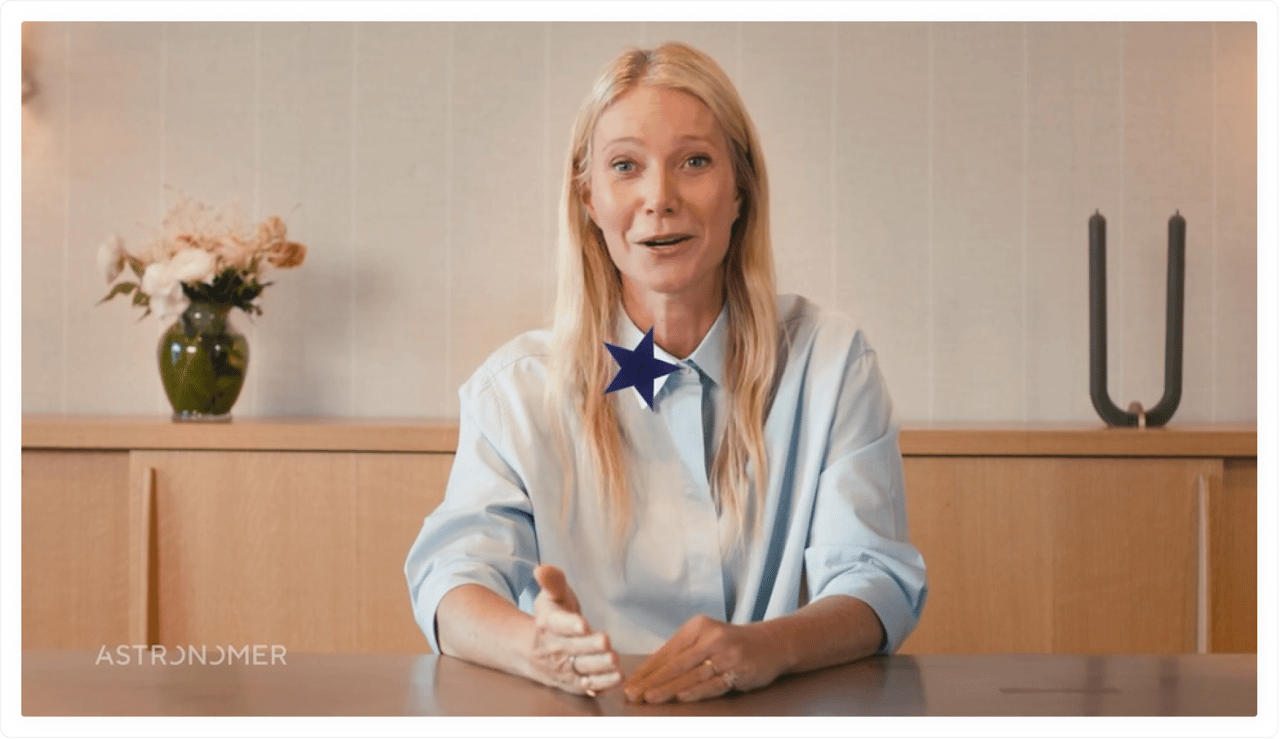
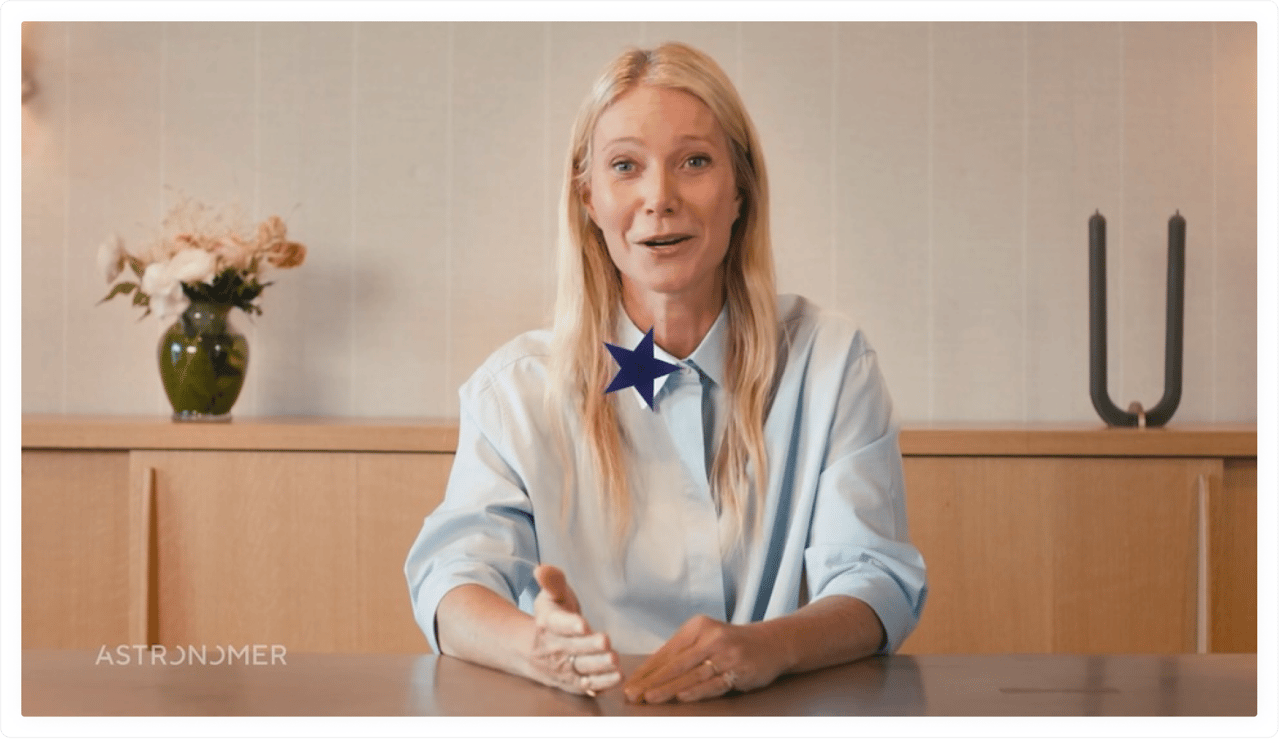
After Astronomer’s CEO and HR chief were caught on a concert kiss cam and resigned, the company hired Gwyneth Paltrow - Chris Martin’s ex-wife - as a “temporary spokesperson.” In a deadpan video, she answered “the most common questions” by explaining data workflow automation and ignoring the scandal entirely. Astronomer’s interim CEO afterwards described the company as a household name, which it had not been the week before, as Fortune reported at the time.
It worked because the timing was right and the joke was self-aware. That is public relations doing something a paid campaign could not. Social listening 101 stuff: they read the room before they wrote the script. Picking the right social media marketing tools to track that sentiment is half the work.
Gap x Katseye (2025)
Gap’s “Better in Denim” campaign with girl group Katseye became its most viral ever. Gap later reported 8 billion media impressions and 500 million views, alongside its strongest comparable sales quarter since 2017. Set to Kelis’s “Milkshake,” it leaned on nostalgia and casting that looked like the actual target audience - a deliberate contrast with a competitor campaign that had drawn backlash weeks earlier. Brand mentions climbed for the whole run, and the campaign did more to increase brand visibility than the season’s paid spend.


Beyoncé x Levi's (2025)
The year-long REIIMAGINE campaign closed with “The Denim Cowboy,” restaging classic Levi’s ads with Beyoncé at the centre. The point is not the celebrity budget. It is that sustained influencer partnerships build something a one-off viral moment cannot: a year of consistent association, and steady brand visibility instead of one spike.


Emerging trends in social media public relations
A few emerging trends in public relations worth planning for. Press releases are not going away either, they are just no longer the first place the news breaks.
AI-written content is now cheap enough that volume no longer signals effort, which pushes value back toward original research and named humans. Employee advocacy keeps growing for the same reason - a person is more credible than a logo, and employees raise awareness in networks your brand account cannot reach.
Micro-influencers keep beating large accounts on engagement and cost, and the brand advocates you already have will outperform anyone you hire. Search is shifting too: people ask questions inside social media platforms and AI assistants, so what those systems say about you is assembled from public conversation rather than your homepage. Tracking industry trends inside those conversations is becoming part of the job.
Whether you use a PR agency, an in-house team, or a PR firm on retainer, the requirement is the same - a deep understanding of what is already being said, before you decide what to say.
Where to start
Public relations on social media is not a separate discipline anymore. It is the main one, with traditional PR as the specialist tool it has quietly become.
Public relations professionals have spent a decade adapting to this, and the tooling finally caught up. The brands that do well on social media listen more than they publish, prepare for crises before they arrive, and can show what changed. If you want the real-time picture - including the visual mentions text-only tools miss - brand reputation monitoring is the place to start.
Request a demo and see what people are already saying about you.


FAQs
What does PR mean on social media?
PR on social media means running public relations work directly through social platforms: managing your brand’s reputation, replying to customer feedback, building relationships with creators and journalists, and handling crisis communication in public rather than through a newsroom.
What is PR for an influencer?
For an influencer, public relations covers managing their personal brand image, securing partnerships, handling press requests, and dealing with reputation problems when they arise. Many work with a PR agency or manager for the same reasons companies do - the stakes rise with the audience size.
What does PR mean on Instagram?
On Instagram, PR usually means building awareness through visual storytelling, partnering with creators, responding to comments and DMs as part of reputation management, and producing content that earns coverage elsewhere. It is also where product-in-the-wild photos live, which is why brands monitor images and not just captions.
How is PR different from social media marketing?
Marketing is trying to sell something. Public relations is trying to make people trust you, which sells things more slowly and more durably. They use the same social media platforms and often the same content, but success looks different: marketing counts conversions, public relations counts reputation, sentiment, and who repeats your message without being paid to.