Brand Sentiment Analysis: How to Measure and Improve Your Brand's Reputation

Most brands have no idea what people actually think of them. Not really.
They know their NPS score. They see their review ratings. They track social media followers and email open rates. But the actual texture of how customers feel — the frustration buried in a three-star review that starts with "great product, but," the enthusiasm in a Reddit thread they'll never read, the quiet disappointment that never becomes a support ticket — that's mostly invisible to them.
Brand sentiment analysis is the attempt to fix that.
It's not a perfect window into your customers' heads. Nothing is. But it's a significantly better one than most brands are currently using. This guide covers how brand sentiment analysis works, how to measure brand sentiment in a way that actually changes decisions, and why in 2026 it matters in ways it didn't used to — because your public sentiment data is now directly shaping how AI systems describe you to people who've never heard of you.
What is brand sentiment analysis?
The short version: it's the process of figuring out how people feel about your brand based on what they say online.
The longer version involves natural language processing, machine learning, sentiment classification across social media platforms, forums, online reviews, and customer surveys — plus the infrastructure to do that at scale across thousands of daily brand mentions. A fuller breakdown of the terminology lives in the social listening glossary, and broader context on how it connects to overall brand analysis is worth understanding if you're new to the practice.
But the thing that actually matters is the shift in question it answers. Most tracking tools ask: how many people mentioned us? Brand sentiment analysis asks: how did they feel when they did?
Those aren't the same question. A spike in brand mentions after a product launch could mean customers love it. Or it could mean you have a quality control problem going viral. Without sentiment analysis, you're treating both identically — which is just what happens when you track volume without context.
Brand sentiment vs. brand awareness — why the distinction matters
A lot of brands track awareness. Far fewer track sentiment. The ones that only track awareness are frequently surprised when things go sideways — because awareness tells you how many people know your name, and sentiment tells you what they think when they hear it.
High awareness with low brand sentiment is a genuinely difficult position to be in. You're not unknown — people have formed an opinion, and it's not a good one. That's harder to fix than simply being undiscovered.
Brand perception isn't just a softer version of brand awareness. It's a different measurement of a different thing. The brands that understand this are also the ones that bother to measure brand equity beyond vanity metrics — tracking how the emotional associations around their brand are changing, not just whether more people can name them in a survey.
Why is brand sentiment analysis important?
Here's a pattern that comes up more often than you'd expect: a leadership team feels reasonably good about where the brand stands. Product is solid, team is engaged, numbers are mostly fine. And then something breaks publicly — and in hindsight, the early warning signs were there for months in places no one was watching.
Brand sentiment analysis doesn't prevent that. But it makes it significantly less likely, because it's essentially a continuous scan for patterns in customer feedback that manual monitoring will never catch at scale. Rising negative sentiment around a specific product feature. A shift in how a particular demographic talks about you. A complaint theme appearing simultaneously across social media comments and customer surveys. These things have a trajectory before they have consequences, and sentiment data shows you the trajectory.
There's also an upside that gets less attention. When positive sentiment climbs around a specific message or product experience, that's signal too. A solid brand health tracker will surface this — the campaigns and customer experiences that are actually building something — so you can invest in more of what's working rather than spreading budget evenly across everything.
And brand loyalty, customer loyalty, customer experience quality — all of these show up in sentiment trends before they show up in revenue. The companies that use sentiment tracking well have months of lead time that their competitors don't.
How brand sentiment analysis works
At the technical level, it runs on natural language processing (NLP) and machine learning to read and classify textual data by emotional tone. That's what distinguishes AI social listening from basic keyword monitoring — and it's a meaningful distinction in practice, not just in theory.
The three core sentiment categories
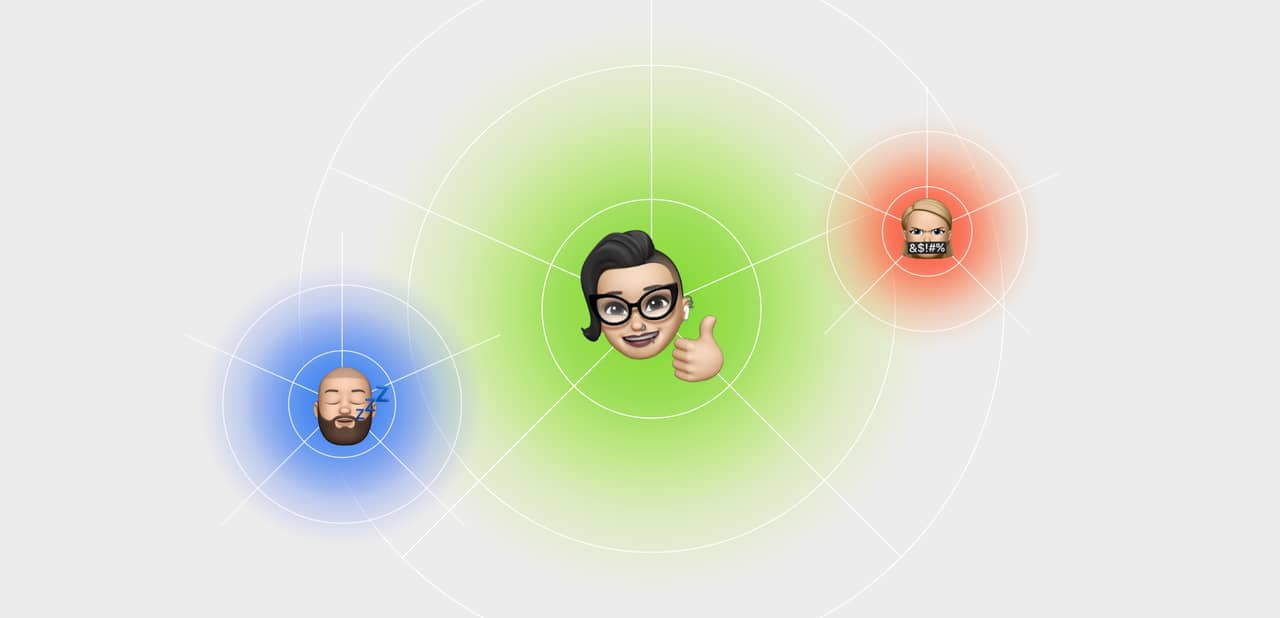
Most sentiment analysis models classify brand mentions as positive, negative, or neutral. This is the basic framework and it works well enough as a starting point.
Positive sentiment is praise, enthusiasm, recommendation. Negative sentiment is frustration, disappointment, criticism — your early warning signs. Neutral sentiment is mentions with no emotional charge: your brand was referenced, but the person writing it didn't feel either way strongly.
That neutral category is easy to dismiss. Don't. A consistent rise in neutral sentiment, combined with a drop in positive, often signals disengagement — customers who've stopped having expectations of you. That can be a harder position to recover from than active complaints, which at least mean people still care enough to be disappointed.
The fundamental problem with simple sentiment classification is context. "Just what I expected" reads as positive to any system scanning for the word "what" or looking at surface-level word choices. Modern sentiment analysis algorithms trained on actual human language — sarcasm, irony, emoji, compound sentiment within a single sentence — handle this considerably better than earlier systems did. Not perfectly. But well enough to build real brand sentiment tracking on top of.
Aspect-based sentiment analysis
Standard sentiment classification gives you an overall score. Aspect-based sentiment analysis tells you which specific part of the experience generated that score.
This sounds like a minor technical improvement. It isn't. If your overall brand sentiment looks stable, but there's concentrated negative sentiment around your onboarding process specifically — or your packaging, or a specific product line, or your customer service response times — you've identified a fixable problem. Without aspect-based analysis, that signal gets averaged into a number that looks fine and leads to no action.
For brands with complex product lines or service operations, aspect-based sentiment analysis is frequently where the actionable insights actually live. The top-level number is context. The breakdown is the conversation.
Customer sentiment and the emotions behind the data
Positive, negative, neutral. Fine as a starting structure, but it papers over something important: "negative" covers a lot of ground.
Anger and mild disappointment both register as negative sentiment. They don't warrant the same response. A customer who's been waiting three weeks for a resolution is in a different state than a customer whose expectations were slightly off from what you delivered. Treating them the same way — which is what you end up doing if you're only tracking the top-level sentiment classification — produces responses that miss the point.
The brands that consistently improve their customer sentiment scores tend to track customer emotions at a more granular level: distinguishing frustration from genuine anger, recognizing enthusiasm versus satisfaction, catching fear or confusion before it turns into a complaint. This is one of the things that separates social listening vs social monitoring as practices. Monitoring catches the mention. Listening — real listening — tells you what the mention meant and what kind of response it actually needs.
Natural language processing, machine learning, and how they work together
NLP is what allows a system to read language the way a person would — accounting for slang, sarcasm, emoji, and the context that changes meaning. Machine learning is what lets the system keep getting better at that as it processes more data.
Without these, you're doing glorified keyword tracking. With them, you can extract meaningful insights from textual data at a scale that no team could manage manually.
The practical difference shows up in accuracy over time. First-generation sentiment analysis algorithms missed obvious context constantly — "sick product" classified as negative, that kind of thing. Current sentiment analysis tools built on modern NLP and machine learning infrastructure are significantly better at nuance: multilingual analysis, informal registers, compound sentiment. Not perfect. But good enough to build reliable brand sentiment tracking on top of — which is the benchmark that actually matters.
How to measure brand sentiment
There isn't one correct way to do this. The right approach depends on your data sources, team size, and what you're actually trying to learn. But here's a framework that holds up across most situations.
Step 1 — Collect customer feedback from social media and beyond
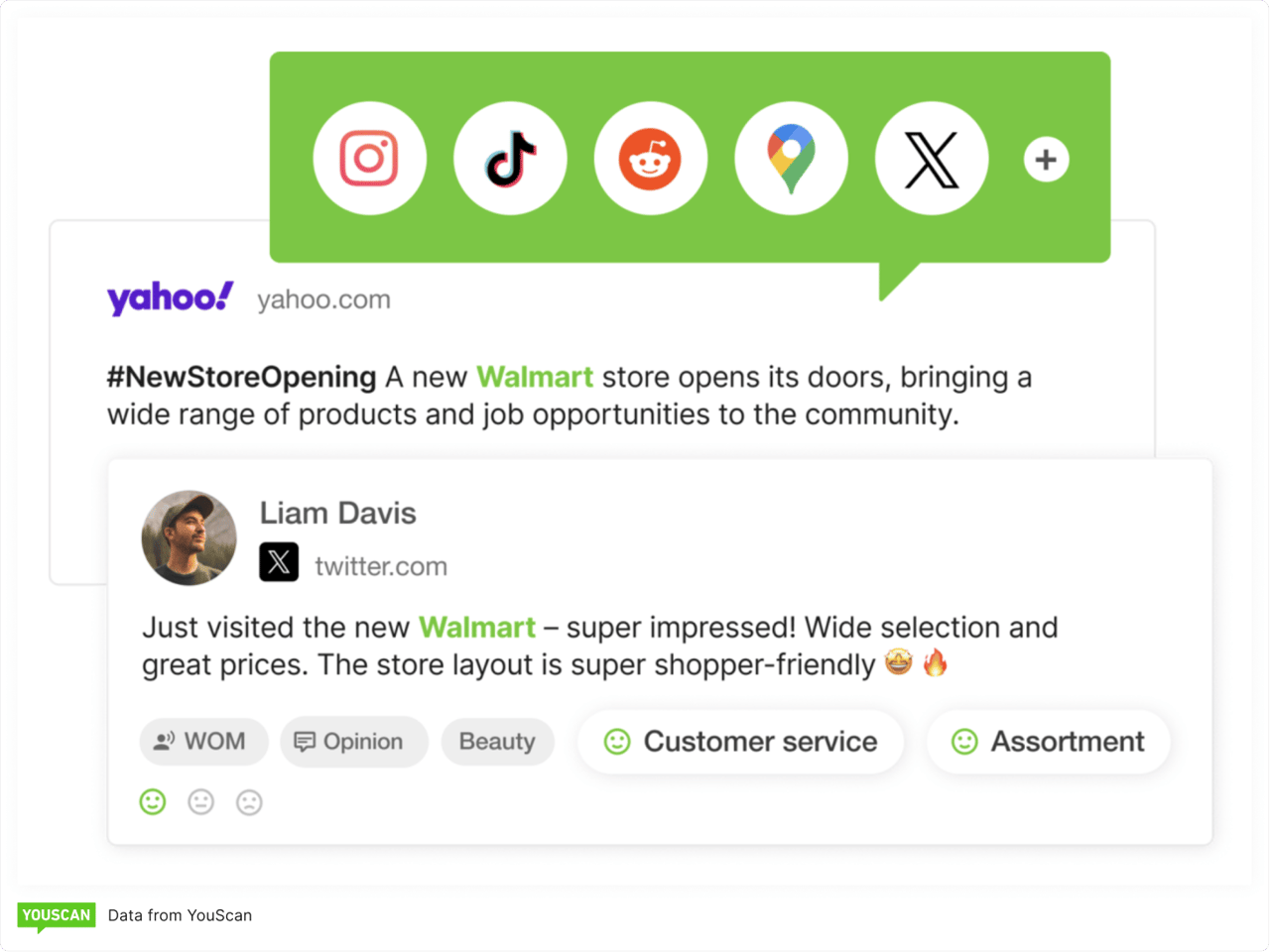
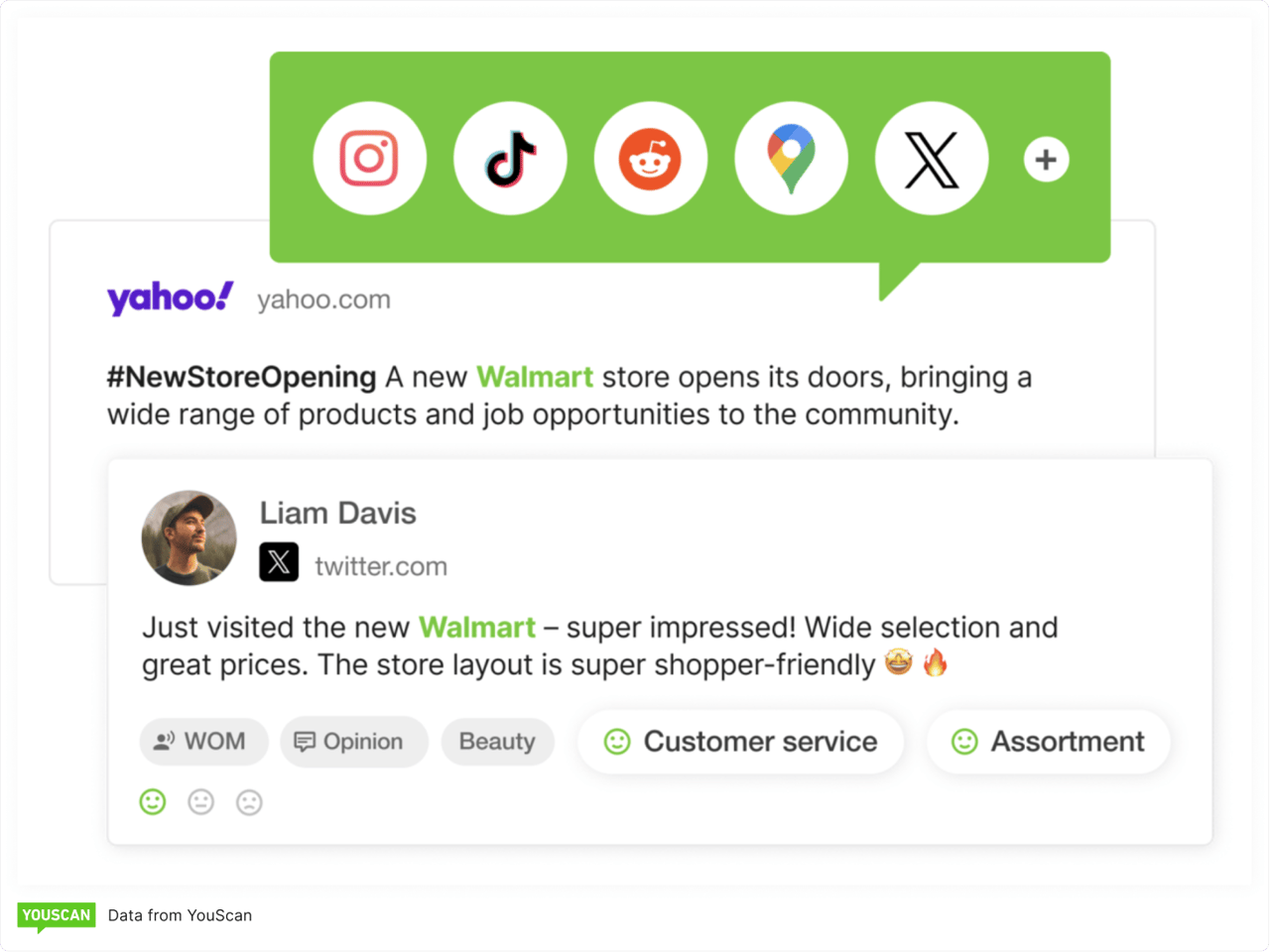
Sentiment analysis is only as good as the data it's running on. Most brands are working from an incomplete picture — usually because they're only pulling from one or two sources and treating that as representative of overall brand sentiment.
Social media is the obvious starting point — Twitter/X, Instagram, TikTok, LinkedIn, Facebook, social media comments across all of them. High volume, real-time, emotionally charged. But it's not where all important conversations happen, and social media data alone skews toward certain demographics and certain kinds of feedback.
Online reviews on Google, Trustpilot, G2, and similar platforms tend to be more considered — customers who take time to write a review usually have stronger feelings, in either direction. Forums like Reddit and Quora contain unfiltered customer opinions you'd rarely capture through a direct survey or focus groups. Support tickets are pre-categorized negative sentiment that arrives daily and gets underused.
Direct customer feedback through NPS surveys, CSAT forms, and structured focus groups adds a layer of sentiment data that's harder to get from passive listening — customers responding to specific questions rather than venting or praising unprompted.
At any meaningful scale, manually monitoring all of this breaks down fast. The right social media monitoring tools track brand mentions across these sources automatically, surface sentiment shifts as they happen, and let you respond quickly instead of catching up a week later.
Step 2 — Build sentiment scores and classify what you find
Once you have the data, you need a consistent method to analyze sentiment and turn it into something you can actually use.
The basic formula to measure brand sentiment: (positive mentions ÷ total mentions) × 100. If 700 of your 1,000 brand mentions are positive, your sentiment score is 70. That's the floor of usefulness. More sophisticated sentiment scores weight by source authority, recency, and emotional intensity — a scathing review on a high-traffic platform carries different weight than the same complaint in a low-visibility forum, and your scoring methodology should reflect that.
Beyond the headline number, break it down. Sentiment scores by topic or product line, by channel, by customer segment. Negative brand sentiment concentrated in one area is a focused problem with a focused solution. Negative brand sentiment spread evenly across every touchpoint is a different kind of diagnosis. Treating them identically is one of the more common mistakes in sentiment-driven decision-making.
And watch the direction, not just the number. An overall sentiment score of 65% positive doesn't tell you whether to be concerned. A score that was 72% six months ago, held at 70% for three months, and is now at 65% tells you something is changing. That's what you act on.
Step 3 — Build a brand sentiment tracking system
A one-time sentiment analysis is a snapshot. Useful, but limited. Consistent brand sentiment tracking over time is where the intelligence actually accumulates.
The brands that get real value from this have defined baselines, consistent data sources, and regular comparison periods — so when they make a significant change (a product update, a pricing change, a messaging shift), they can actually measure whether brand sentiment moved, and by how much. That's how sentiment analysis becomes a feedback loop for decisions rather than a periodic report that no one acts on.
A solid trend analysis capability makes patterns visible before they become problems. And a well-configured social listening dashboard is the difference between sentiment tracking as an occasional project and sentiment tracking as an operational practice — one that pulls brand mentions and sentiment data from multiple sources into a single, usable view.
Competitive brand perception — how you stack up against the market
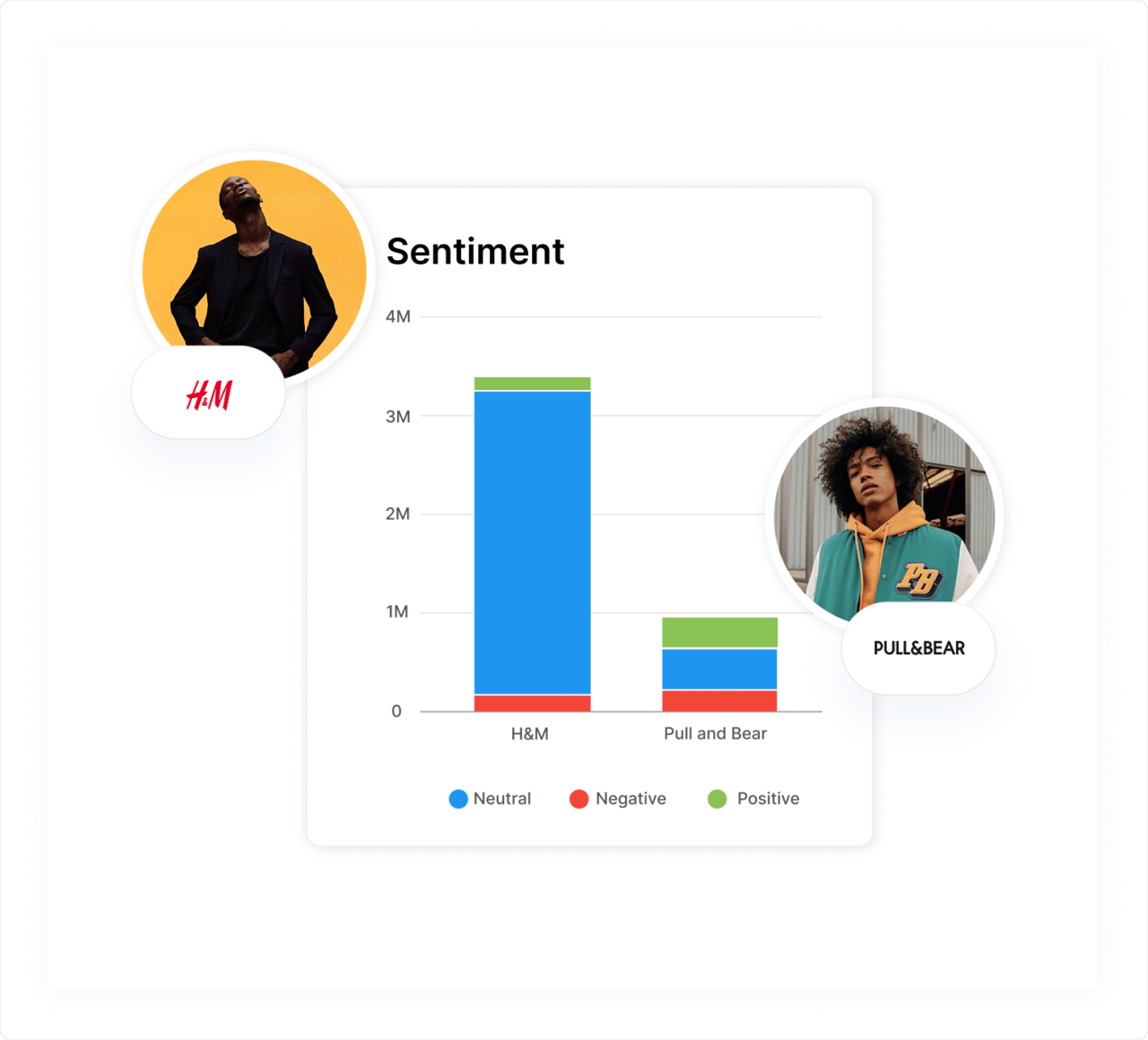
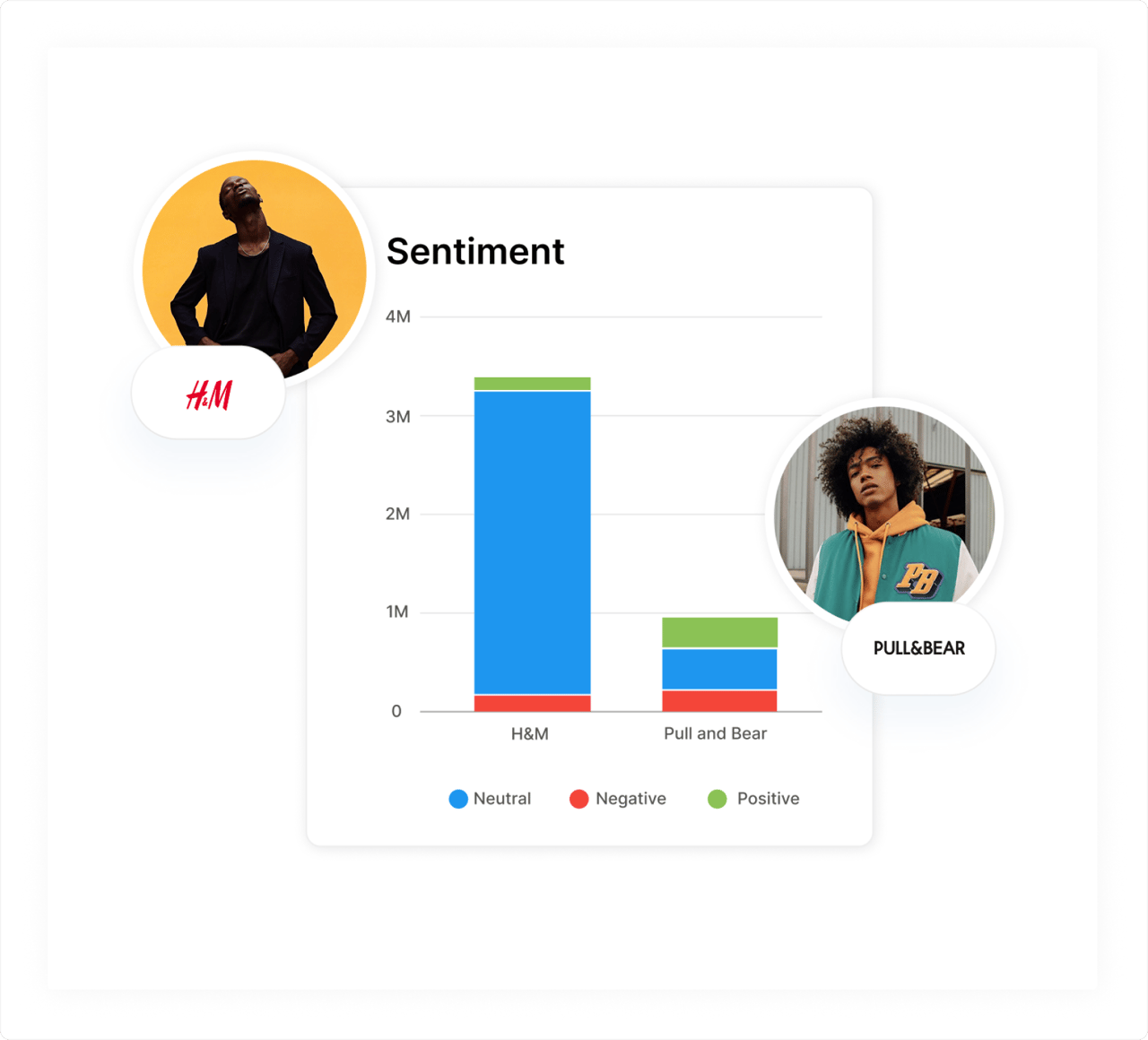
Most brands run sentiment analysis on themselves. Far fewer apply the same analysis to their competitors — which is a missed opportunity, because context matters enormously here.
A sentiment score of 65% looks different depending on whether your main competitor is at 55% or 80%. Without competitive benchmarking, your internal numbers are floating in a vacuum. You don't know if 65% is strong for your category or represents a problem you should be working on.
Beyond benchmarking, competitive brand perception analysis surfaces things your own data can't. If a competitor starts generating a spike in negative brand sentiment over a product issue, that's intelligence about what customers in your shared category care about right now — and often a window to position against it before their dissatisfied customers start actively searching for alternatives. Brand sentiment tracking that covers only your own brand misses that entirely.
This kind of analysis also feeds informed decisions that go beyond marketing into actual business strategy. When customer perceptions shift at a category level — not just around your brand but across the competitive set — sentiment data tends to capture it well before it shows up in anyone's sales figures. Social listening tools that monitor multiple brands simultaneously make this practical at scale. Combine that with regular brand reputation monitoring for your own brand and you're no longer reacting to your market — you're watching it move.
How to improve brand sentiment
Tracking it is half the job. Here's what actually moves the numbers.
Address negative feedback before it escalates
Not all negative feedback is a crisis. That's worth saying clearly, because treating every complaint as an emergency is exhausting and counterproductive.
But all negative feedback is data — and most brands leave most of it unread, unacknowledged, or responded to too late to matter. The patterns that define brands that handle this well are pretty consistent.
They respond quickly. According to McKinsey research, 79% of customers expect a reply on social media within 24 hours. Missing that window doesn't just mean a delayed response — it means the complaint has been sitting publicly unanswered, and everyone who saw it has already formed an impression.
They acknowledge issues publicly before taking them private. A short, visible "we hear you, we're looking into this" in the public thread does more work than a prompt direct message that leaves the original complaint looking ignored. This sounds simple. It's surprisingly rare.
They distinguish between a one-off complaint and a repeating pattern. One unhappy customer is an edge case. Ten customers raising the same specific issue about the same touchpoint is a brand health signal that warrants a real operational change, not just a faster support response. Ongoing brand monitoring is what makes that distinction visible — you can see whether negative spikes are isolated or whether they're building into something.
The way you know your response process is actually working: your negative brand sentiment spikes resolve after you respond rather than continuing to climb. If they're lingering, the response isn't landing.
Build customer loyalty and protect brand health
The majority of sentiment improvement doesn't happen through crisis management. It happens in the lower-drama, unglamorous work of engaging customers when nothing is wrong.
Responding to positive brand mentions. Acknowledging customers who say good things about you unprompted. Using sentiment insights to identify what your audience actually connects with — and building more of that intentionally rather than assuming you already know.
The reason this matters for brand health specifically is resilience. Brands with strong customer loyalty absorb bad news cycles differently. Their customers extend the benefit of the doubt, contextualize problems, and sometimes defend the brand publicly. That buffer isn't built during a crisis — it accumulates through consistent positive brand sentiment reinforcement over time. A brand loyalty deficit shows up most painfully when things go wrong.
Looking at social listening examples from brands that have done this systematically, the pattern is pretty clear: they treat sentiment data as operational input — something that continuously informs customer engagement strategy — rather than a quarterly report that gets presented and filed.
On the brand health side specifically: if customer satisfaction scores are trending down but your overall sentiment looks fine, the aggregate number is hiding something. Break it down by segment, by channel, by topic. The divergence usually points to a specific friction point in the customer experience that hasn't surfaced at scale yet but will.
Use sentiment insights for stronger marketing campaigns
If you're running marketing campaigns without looking at the sentiment data that follows them, you're missing roughly half the feedback.
Clicks and conversions tell you if people engaged. Sentiment tells you how they felt after they did. A campaign that drives significant traffic but produces flat or declining brand perception in the days following it is underperforming in a way that traffic metrics will never show you — and that pattern will compound if you keep running the same message.
The brands that get real value from this approach identify which themes and brand values generate genuine positive customer emotions from an audience, then tailor marketing strategies around what they observe rather than what they assume. They also catch audience expectations gaps before those gaps compound: if your campaign messaging is implying something your product experience isn't delivering, sentiment analysis shows you that mismatch early. Customer expectations are set by marketing. Sentiment tells you whether the reality is meeting them.
Brand sentiment analysis and public sentiment in AI search
This is the part most brand teams are genuinely behind on. And it's moving fast.
How AI search shapes your brand reputation
When someone asks ChatGPT, Gemini, or Google AI Overviews whether your brand is worth trusting, the answer they get is built partly from the aggregate public sentiment surrounding your brand online — forums, review platforms, Reddit threads, news coverage, social media data. The AI isn't reading your website copy. It's synthesizing what people have been saying about you, and how consistently they've been saying it.
At Google I/O 2026, Google confirmed that AI Overviews now reach 2.5 billion monthly users. A significant and growing share of how people discover and evaluate brands is happening inside AI-generated summaries — summaries that reflect sentiment, not just facts. This isn't a hypothetical future shift. It's already the channel.
The implication: brands with consistent, substantive positive public sentiment get more favorable framing in AI answers. Brands with meaningful negative brand sentiment in heavily cited sources — or brands that simply aren't discussed with any depth anywhere — get hedged language, cautious framing, or get left out of relevant answers entirely.
A few things that matter more because of this:
Forum presence. Reddit alone accounts for approximately 21% of citations in AI Overviews. Authentic customer opinions in those communities are already being used to generate AI responses about your brand. Whether you're active in those communities or not. Try also listening on Reddit - you'll be surprised what insights are hidden there.
Review depth, not just volume. Twenty detailed, specific reviews do more for your AI representation than a hundred two-sentence ones. The AI is looking for signal. Generic five-star ratings don't provide much of it.
Brand mentions in credible industry content. PR and thought leadership that places your brand in authoritative contexts improves how AI systems characterize you — not just how human readers find you. The two audiences have started to overlap.
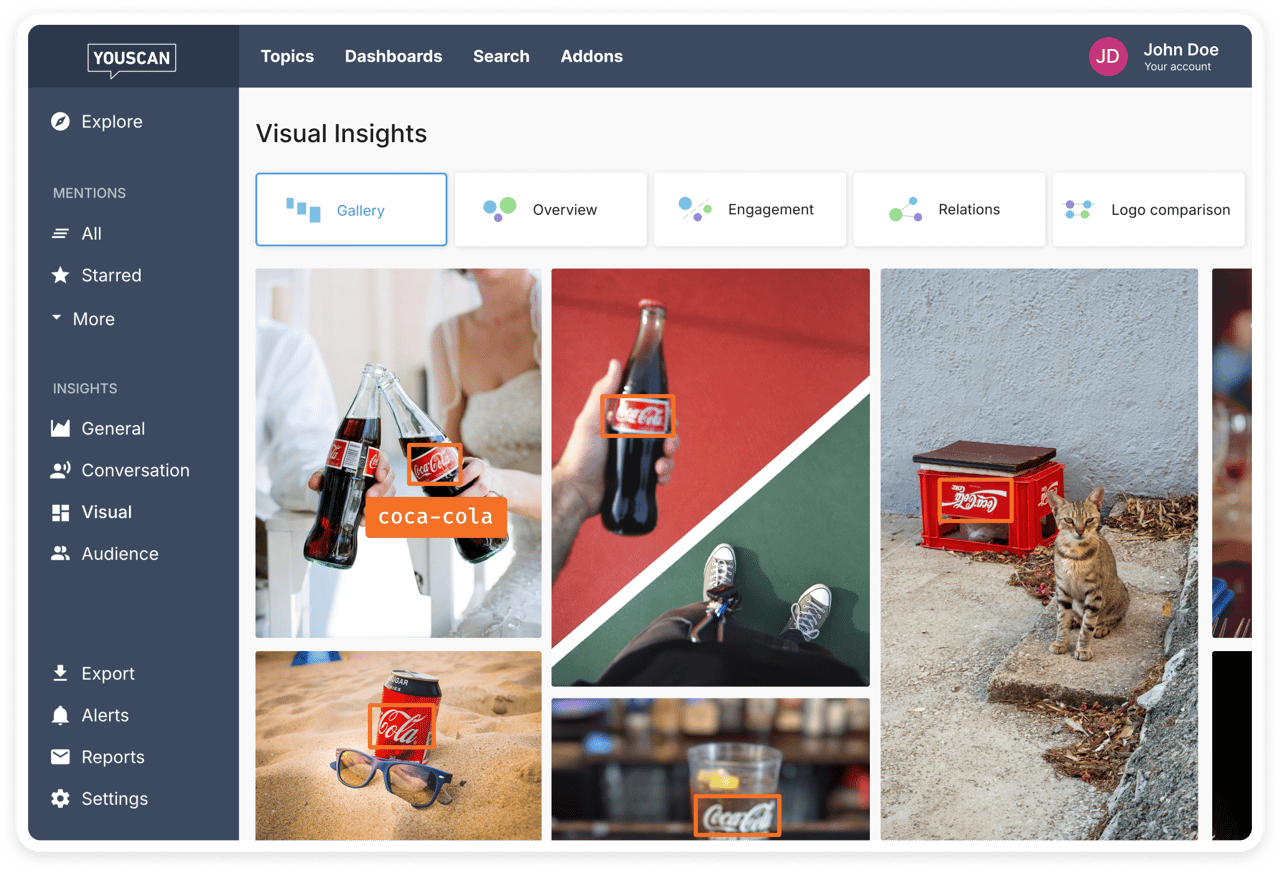
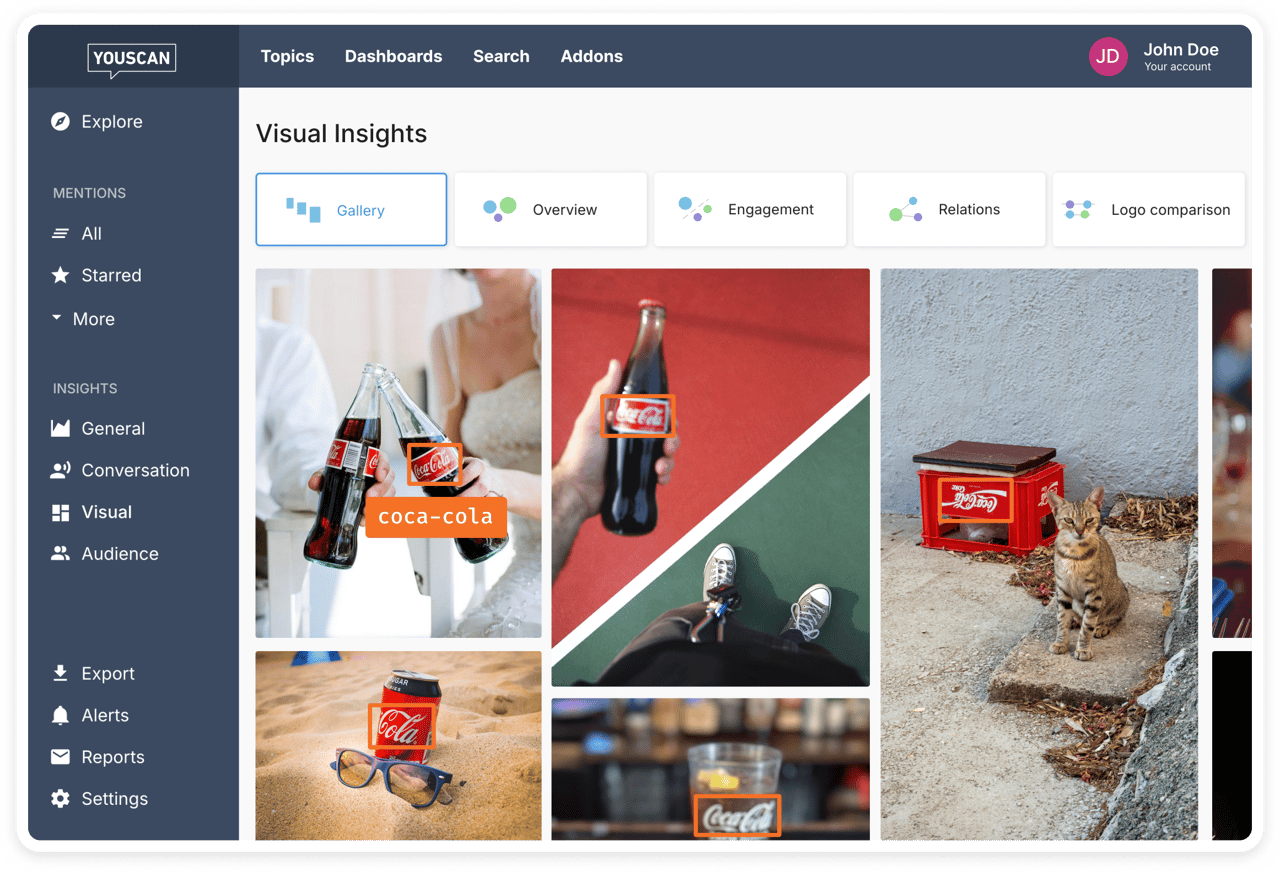
YouScan's Visual Insights extends this further — tracking how your brand appears in images and video, including brand mentions that exist in visual form without any accompanying text. If you want to understand what visual listening actually captures that standard sentiment tracking misses, it's worth understanding before your competitors figure it out.
How top brands use brand sentiment analysis — real examples
Four cases. Each illustrates something different, which is the point.
L'Oréal's challenge is scale. A global audience, dozens of product lines, ongoing conversation about individual products across multiple languages and markets. As their marketing team described in their social media listening case study, the core value of brand sentiment analysis for them is collecting customer opinions "as natural as possible" — unprompted, in customers' own words, not shaped by survey structure. The output isn't just faster crisis response. It's product development decisions that are grounded in what customers actually say rather than what they say when someone is asking them directly.
Coca-Cola's case is about geography and operational depth. Their interview on social media monitoring describes a team of six country managers using brand sentiment analysis to track public perception across Central Asia and the Caucasus in six different languages. The challenge isn't translation — it's understanding how sentiment expresses differently across cultures, and making that data comparable across markets. That kind of operational rigor is what separates brands that run sentiment analysis reports from brands that actually make decisions with them.
Publicis went somewhere most brands haven't. By combining standard NLP-based brand sentiment analysis with visual listening, they track how and where their brand appears in images and video — catching brand perception signals that have no textual form at all. Martin Miliev, VP of Social Intelligence at Publicis Groupe, described it directly: "We chose YouScan for its intuitive UX, advanced visual analytics, and wide platform coverage." The visual layer isn't a nice-to-have for a brand operating at that scale. It's a different category of customer insight.
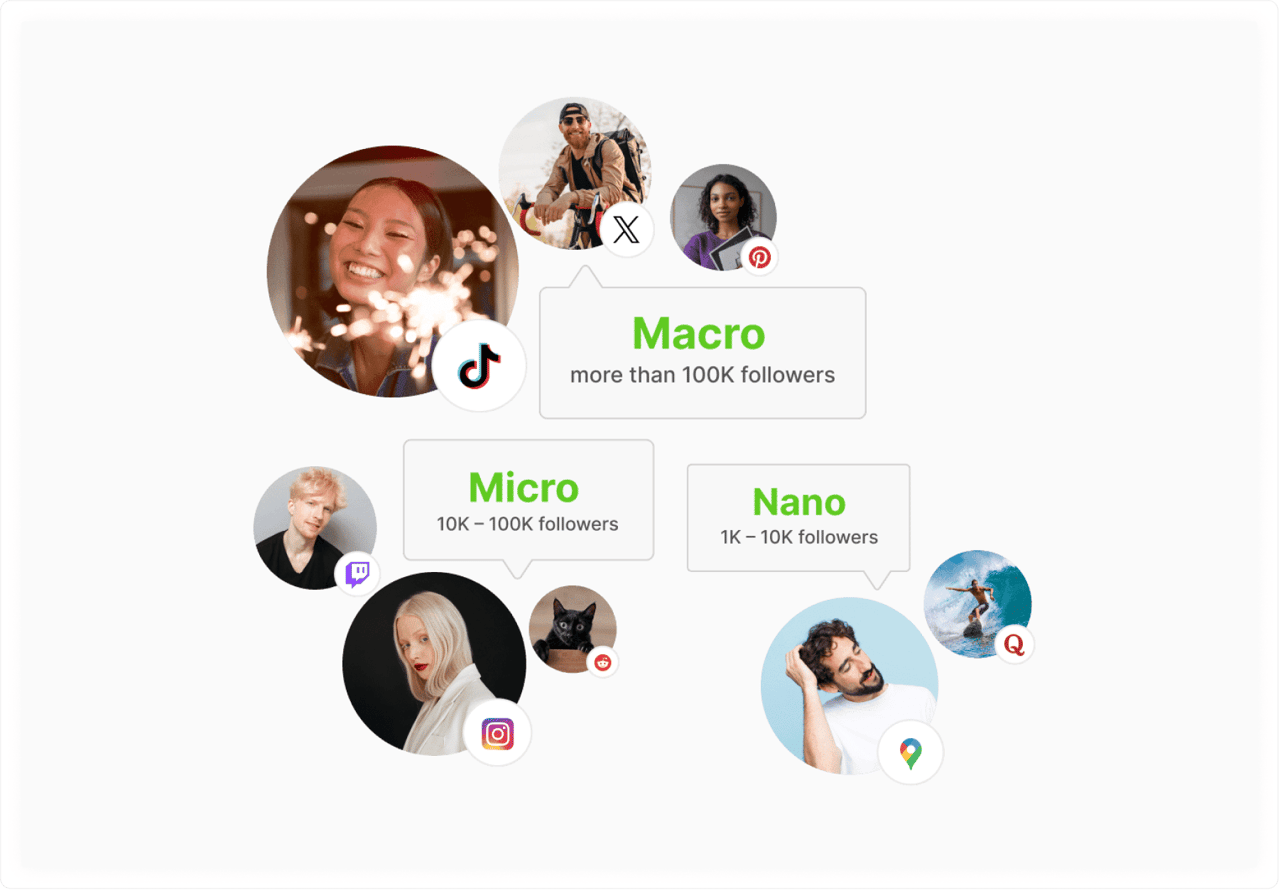
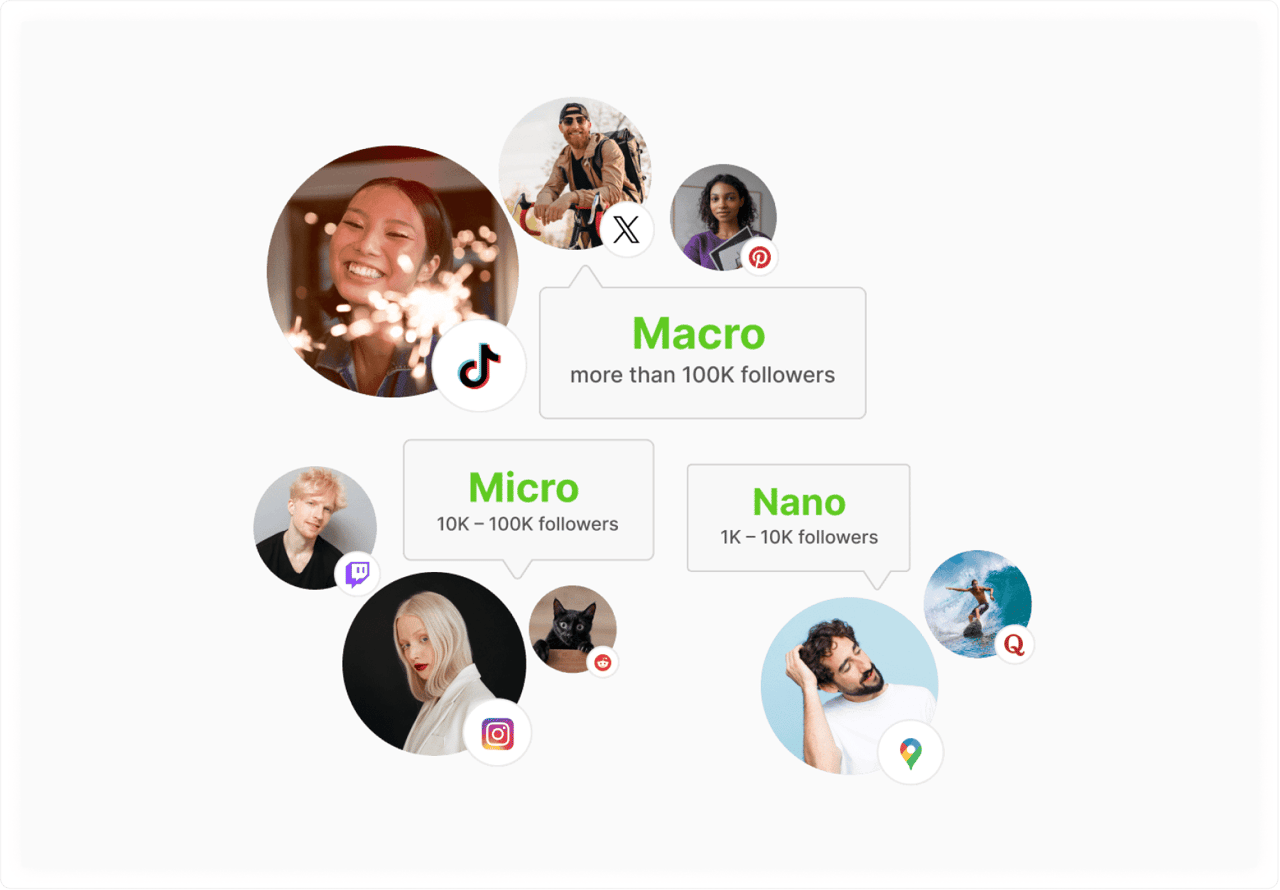
AeroCool is the simpler story, but it's instructive. They used sentiment tracking to identify which conversations were generating genuine customer engagement — and built their influencer marketing strategy around that data instead of around follower counts and assumed reach. The result was marketing efforts with real sentiment outcomes attached to them, not just impressions that may or may not have landed.
Conclusion
Brand sentiment data is one of the more honest mirrors a business can hold up to itself. It shows you how customers actually feel — not how they answered a structured survey, not what the revenue figures imply, but what they say when they think no one from your company is reading.
Most brands have better access to that information than they're using.
The companies that consistently improve their brand reputation, build deeper customer loyalty, and catch problems before those problems have names — they're not doing something exotic. They're just tracking sentiment consistently and acting on what they find. The gap between them and everyone else is mostly operational, not technical.
If you want to see what that looks like in practice — for your brand, your competitors, and your category — book a demo with YouScan and we'll walk you through it.
FAQ
What is brand sentiment analysis?
Brand sentiment analysis is the process of measuring and interpreting the emotional tone behind online conversations about a brand. It uses AI and natural language processing to classify brand mentions as positive, negative, or neutral — and increasingly, to identify specific customer emotions like frustration, enthusiasm, or disappointment. The goal is to understand brand perception at scale, so you can act on shifts in customer sentiment before they affect brand health or customer loyalty.
How do you calculate a brand sentiment score?
The basic formula: (positive mentions ÷ total mentions) × 100. If 650 of your 1,000 brand mentions are positive, your sentiment score is 65. More sophisticated sentiment scores factor in weighted emotional intensity, source authority, and recency. AI-powered sentiment analysis tools calculate this automatically and adjust for context and nuance that manual counting would miss — including sentiment classification across multiple languages and platforms simultaneously.
What's the difference between brand sentiment and brand awareness?
Brand awareness measures how many people know your brand exists. Brand sentiment measures how they feel about it. High awareness with low brand sentiment means you're well-known for the wrong reasons — which can be harder to fix than low awareness alone. Both matter, but brand sentiment is the stronger predictor of customer loyalty, brand health, and long-term revenue outcomes. Tracking awareness without sentiment gives you an incomplete picture of where your brand actually stands.
What are the biggest challenges in sentiment analysis?
Sarcasm and irony are notoriously difficult for sentiment analysis algorithms to detect consistently — a customer saying "brilliant, another delay" reads as positive to a basic system scanning for positive words. Multilingual analysis adds complexity, especially across dialects and informal registers. Volume is another challenge: the quality of your sentiment insights depends on the completeness of the data being fed in. And not all feedback maps cleanly to positive, negative, or neutral, which is why modern sentiment analysis models are trained on diverse, real-world textual data rather than formal language.