Social Listening Query Writing Competition 2026: What the Best Queries Teach Us

Meet the winners of the 2026 Social Listening Query Writing Competition and learn what made their Boolean queries stand out, with tips for query writers.
One research question, one Boolean query, and weeks of careful work. The Social Listening Query Writing Competition is back, and this year's entries raised the bar again.
New to it? The competition is run every year by The Social Intelligence Lab. Pros from brands and agencies all get the same research question and write one query to find the conversations that answer it. The judges score how relevant the results are and how well the query is built. The competition gives the industry a shared benchmark for what a good query looks like, and since every insight starts with a query, that standard directly shapes the quality of the decisions built on social data.
We ran the 2026 edition together with The Social Intelligence Lab and Unwritten, inviting social intelligence pros from brands and agencies to put their query-writing skills to the test, with every query built and run in YouScan. Below, meet this year's winners and the lessons their queries hold for anyone who builds searches for a living.
What was the 2026 topic?
This year, entrants had to find US consumers explaining why they choose wired headphones over wireless ones. Simple to say, tricky to query: the conversation is everywhere, and most of it doesn't come with a location tag.
Entries competed in two categories, Brand and Agency, and were judged by Filipe Silva and Mike Jaxa Chamiec of Unwritten on four criteria:
Relevancy rate: the share of collected posts that actually answer the question
Breadth: signal volume, weighted by relevancy
Structure: a logical, readable Boolean query
Rationale: the written logic behind it
Relevancy and geography together made up 60% of the score.
Welcome the winners!
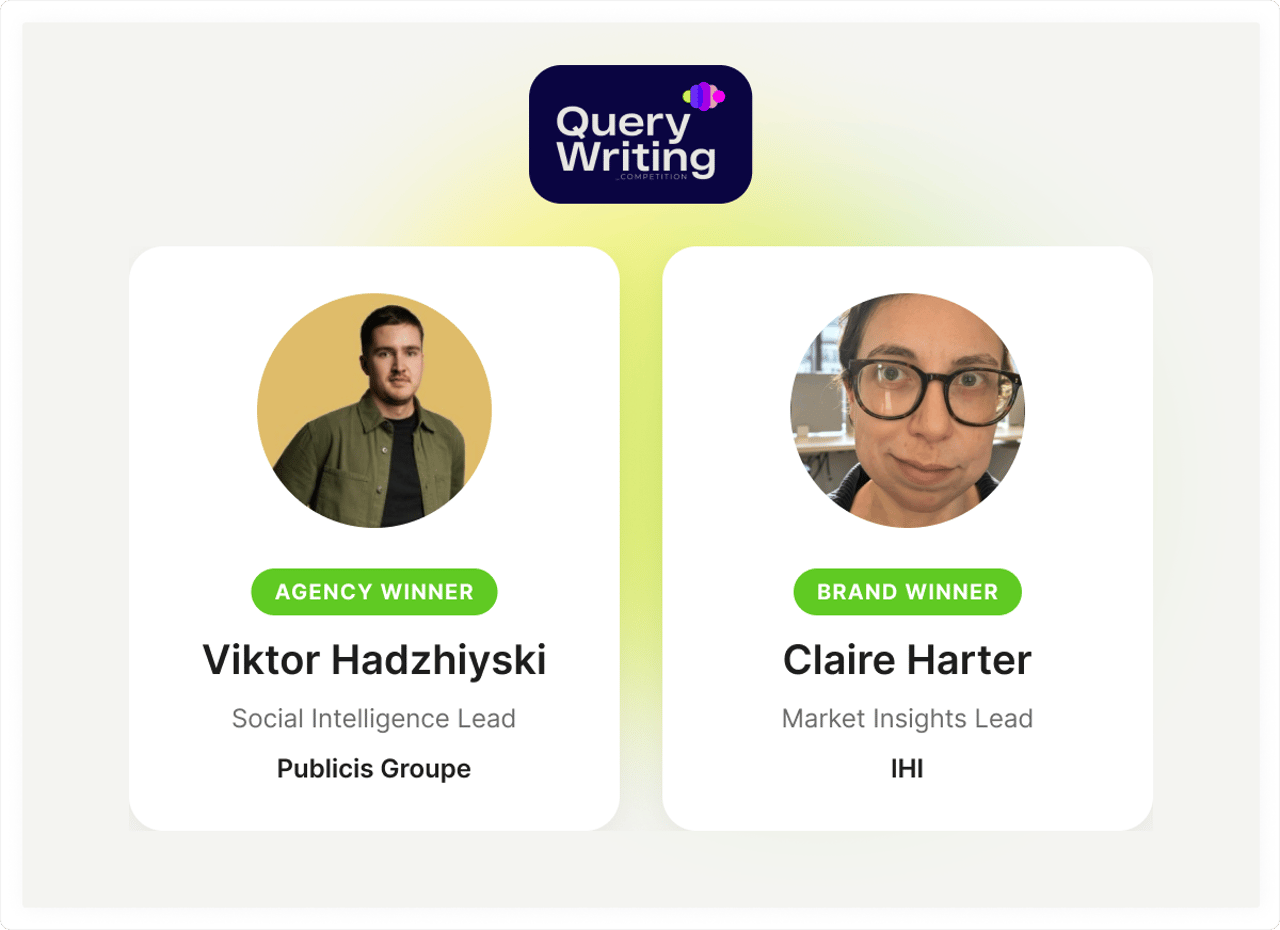
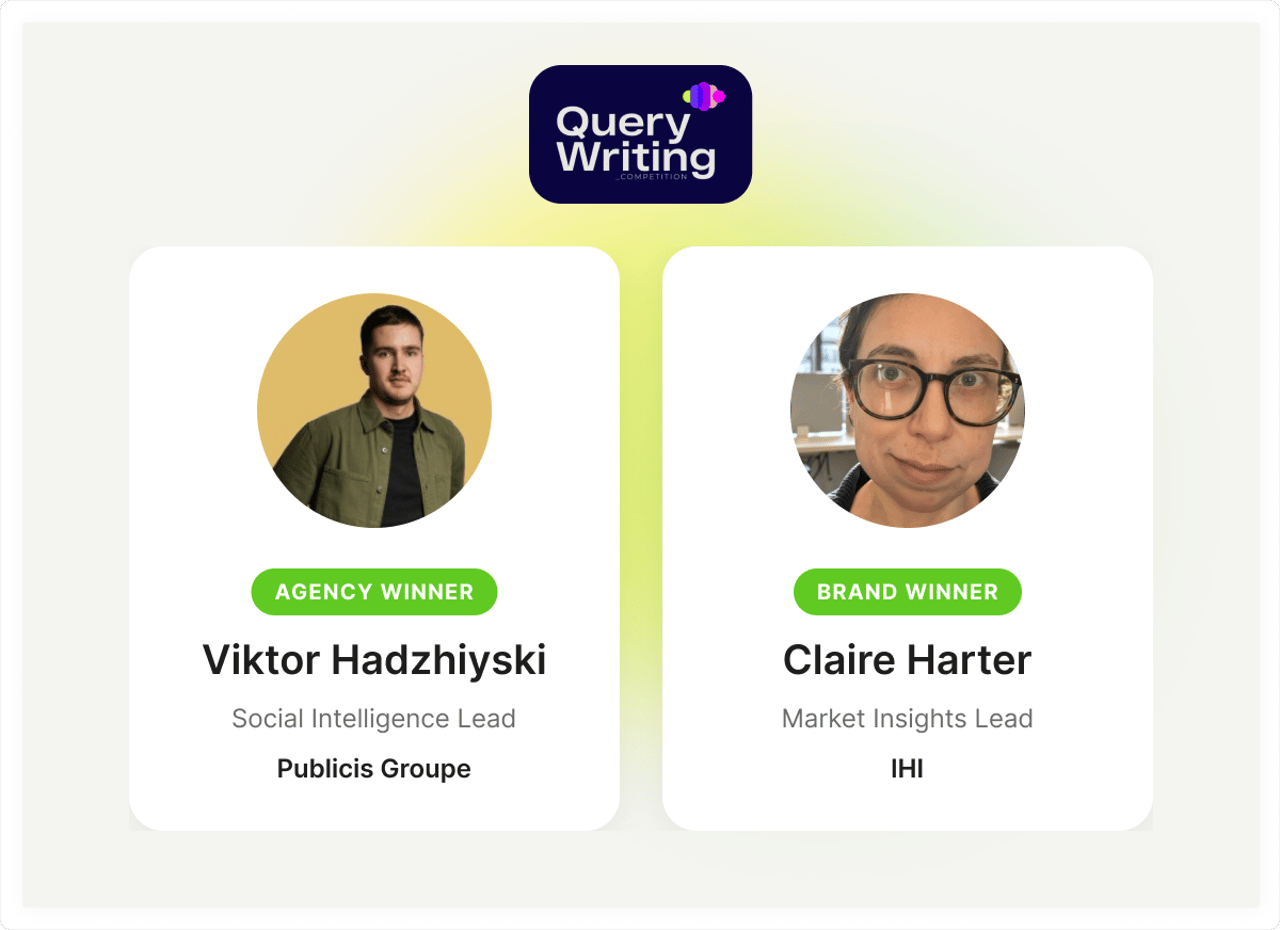
Agency winner: Viktor Hadzhiyski, Social Intelligence Lead at Publicis Groupe
Brand winner: Claire Harter, Market Insights Lead at IHI
Both won on precision, not scale. Their datasets were among the smallest in the competition, yet about half of what each collected answered the research question, nearly double the field average of 25.6%. Congratulations, Viktor and Claire!
6 lessons for writing better social listening queries
We went through the judges' notes on this year's top entries. The winning queries weren't built on one clever trick, but on habits any query writer can adopt.
1. Don't chase volume
It's tempting to cast a wide net, but more mentions usually just means more cleanup later. The average entry pulled in over 64,000 mentions. The winners each had under 4,000 and got much more out of them. So before you widen a query, check whether the extra posts will actually help answer your question.
2. Borrow people's words
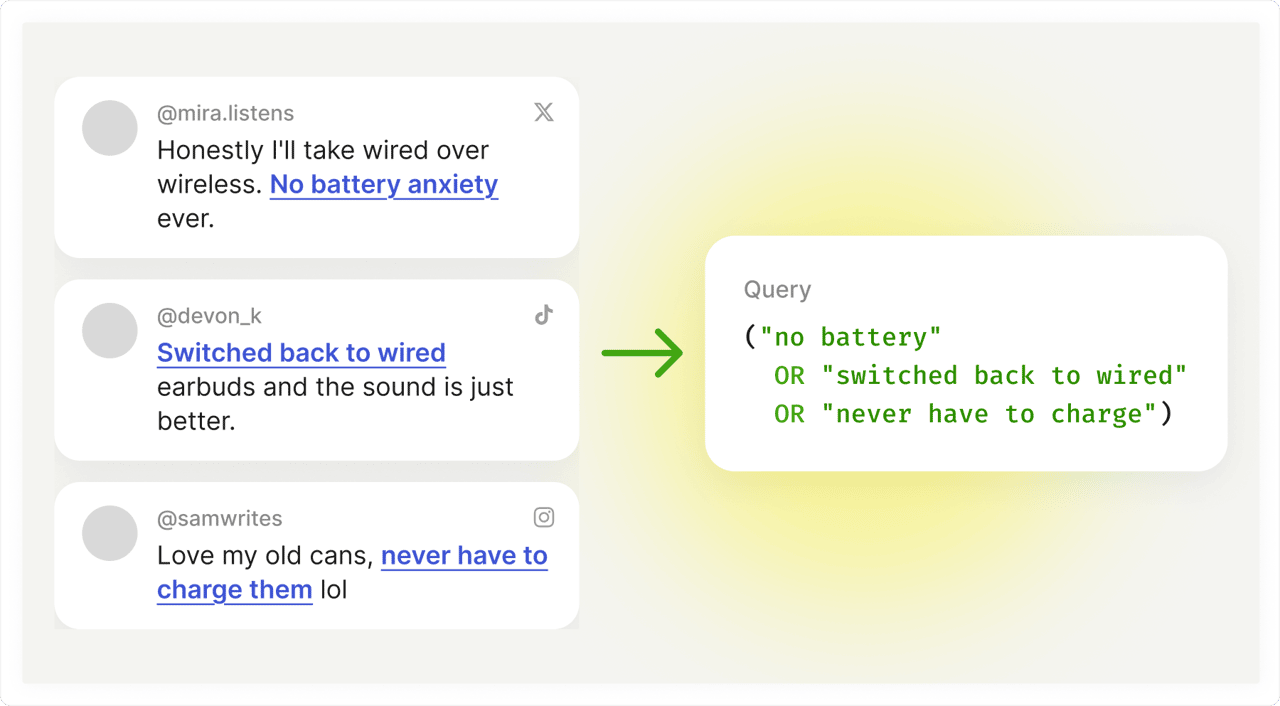
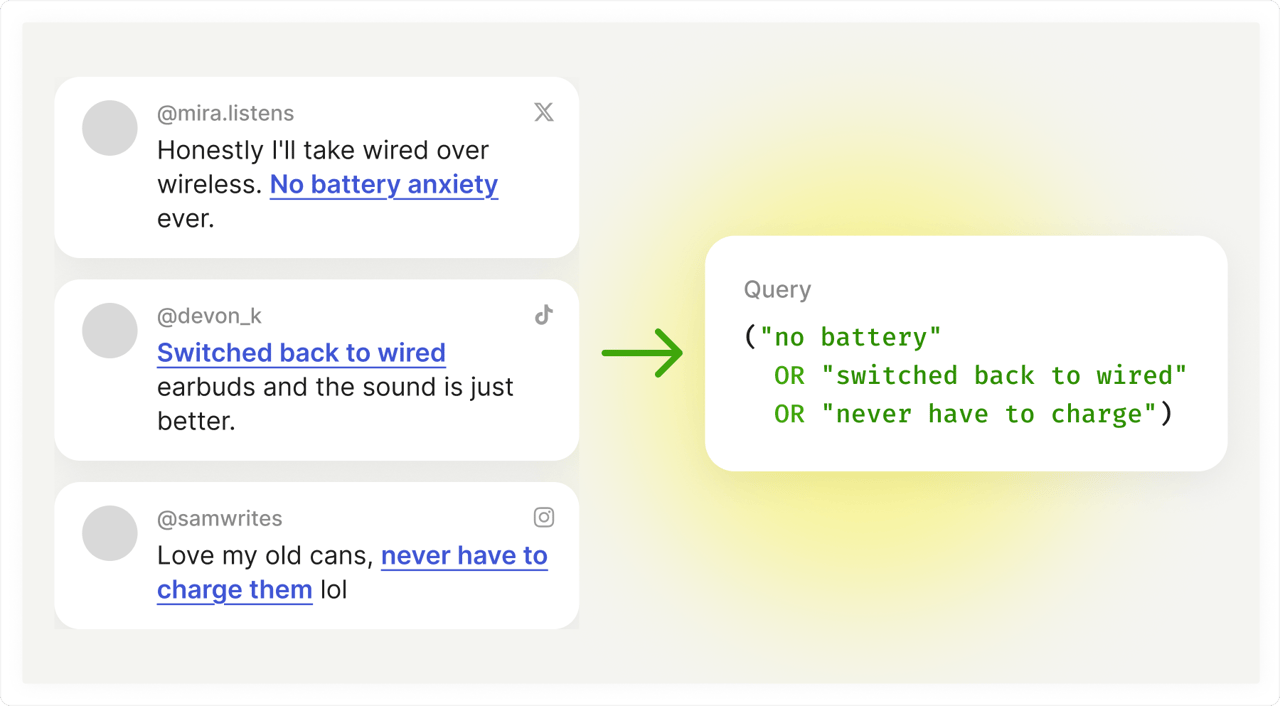
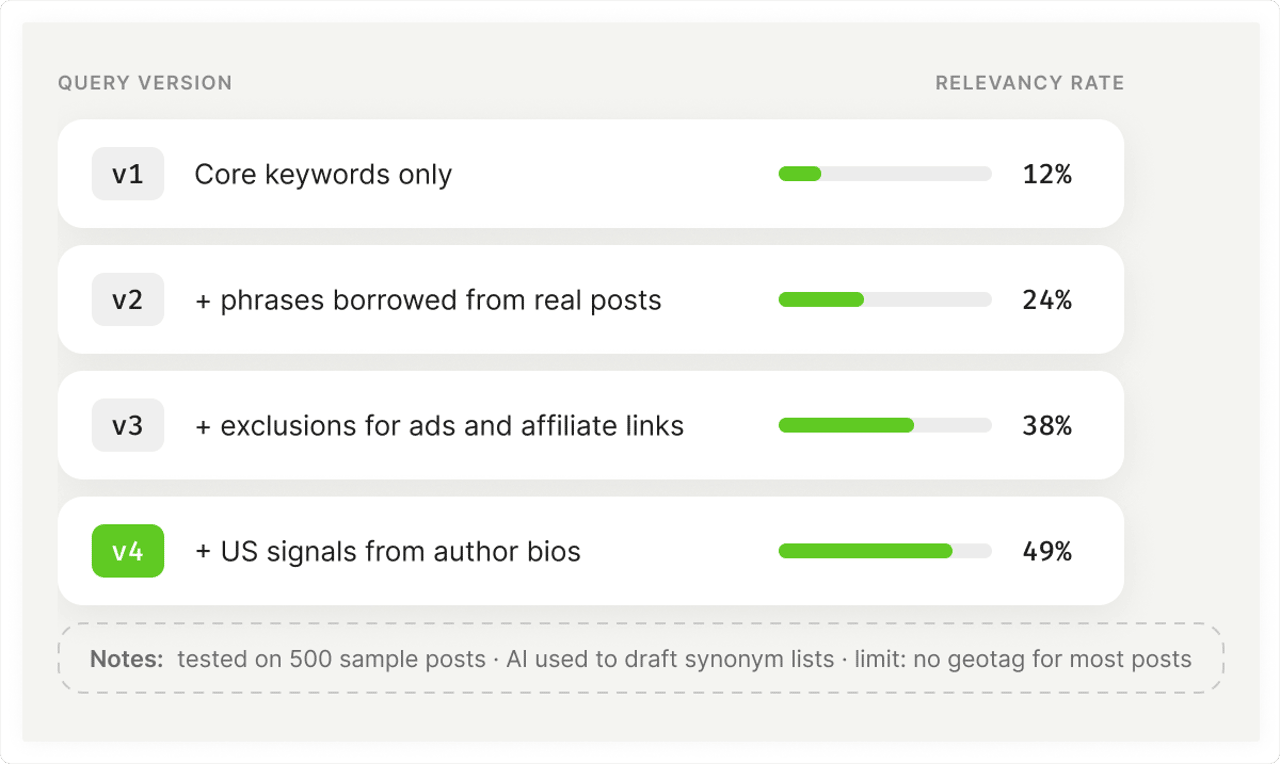
Read a good chunk of real posts before you write anything, and use the phrases people actually use. Long lists of exact phrases are slow to build and often overfit, but they work when they come straight from the conversation rather than from your assumptions.
3. Capture both sides of the story
If you want to know why people prefer one thing, don't only search for people praising it. Someone complaining about the other option often explains themselves much more clearly. Claire did exactly that, and her dataset ended up one of the richest in the competition.
4. Spend real time on exclusions
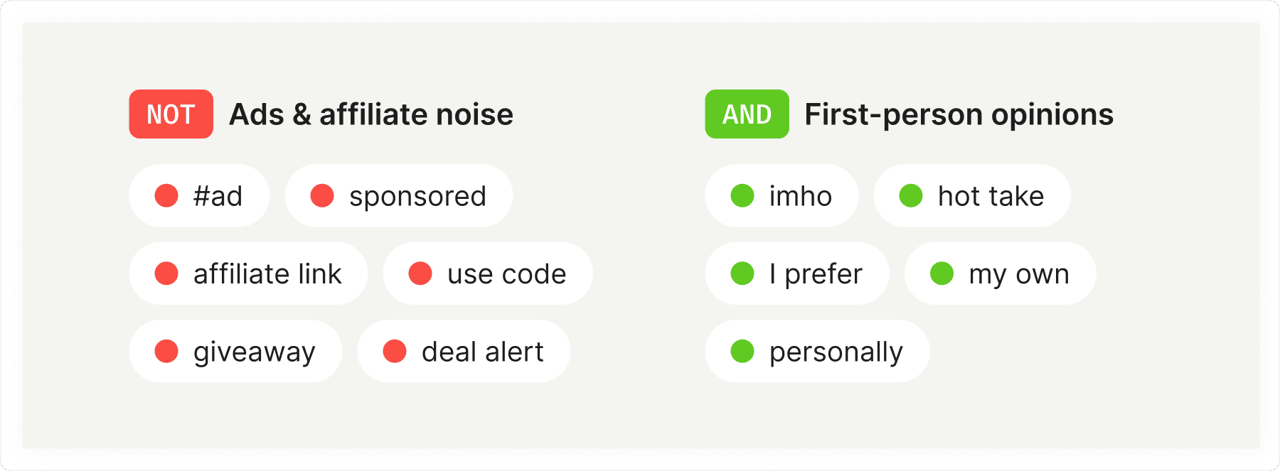
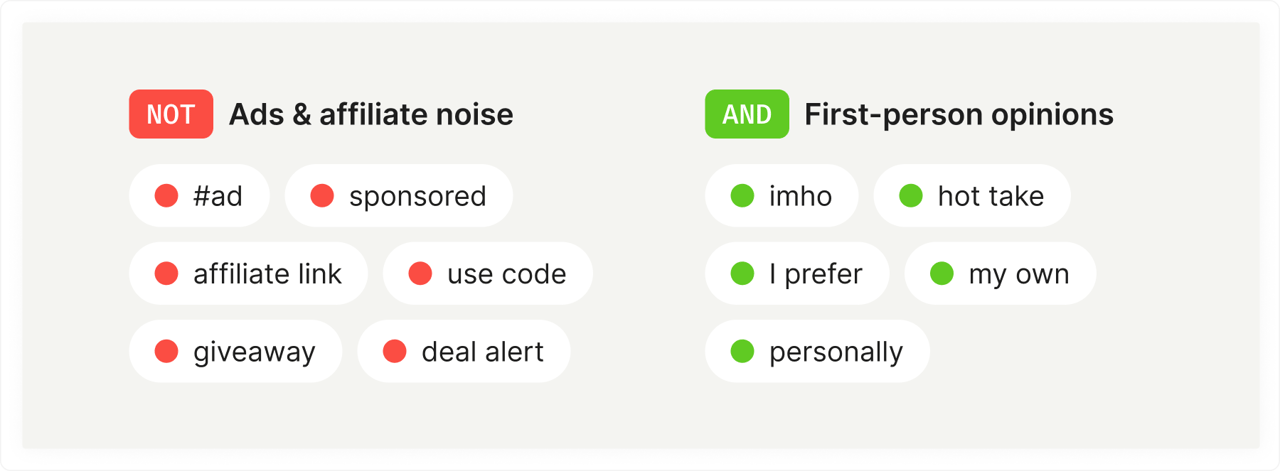
There's no shortcut here. Precision mostly comes from slowly finding and excluding noise like ads and affiliate links. It also helps to filter for people talking about themselves. Small markers like "imho" or "hot take" are a cheap way to keep reposted news out.
5. Get creative with location
Geotags only cover some of the posts. For the rest, look at author bios: cities, local nicknames, sports teams, universities. It works the other way too. Excluding signs of the wrong country, like other countries' flags or British spellings, cleans things up a lot.
6. Document the journey, not just the result
Pro tip: explain the journey, not just the final query. Show how you tested the query, what you changed along the way and where its limits are, and if you used AI, say what for. It makes your work easier to trust, reuse, and defend.
Until next year
A huge thank you to everyone who took part, to our partners The Social Intelligence Lab and Unwritten, and to our judges for another great edition. Stay tuned for the next challenge.
Want to try building queries like these yourself? Book a demo, and we'll show you how it works in YouScan.