Brand Health Tracker: Metrics, Methods and What to Do With the Data

Your customers are talking about your brand right now. Instagram, TikTok, Reddit, review sites, Discord servers nobody on your team has heard of. Some of them love you. Some are annoyed. A few switched to a competitor two quarters ago over something you never saw.
Are you listening?
Most companies aren't, at least not properly. They commission one big survey a year, park the deck in a shared drive, and act surprised when market share slips. Then someone asks why, and nobody has an answer that goes deeper than "the market is tough right now."
A brand health tracker fixes that. Done properly, brand health tracking turns a once-a-year guess into a monthly read on what your customers actually think. Here's what to measure, how often, and what to actually do when the numbers move.
What a brand health tracker is (and what it isn't)
A brand health tracking system measures how customers perceive, remember, and choose your brand over time. Not once. Continuously, at regular intervals, using the same questions and the same sources so the numbers stay comparable.
The word "tracker" is doing the heavy lifting there. A one-off study gives you a photograph. Ongoing brand health tracking gives you a film. Only one of those tells you which direction your brand is heading.
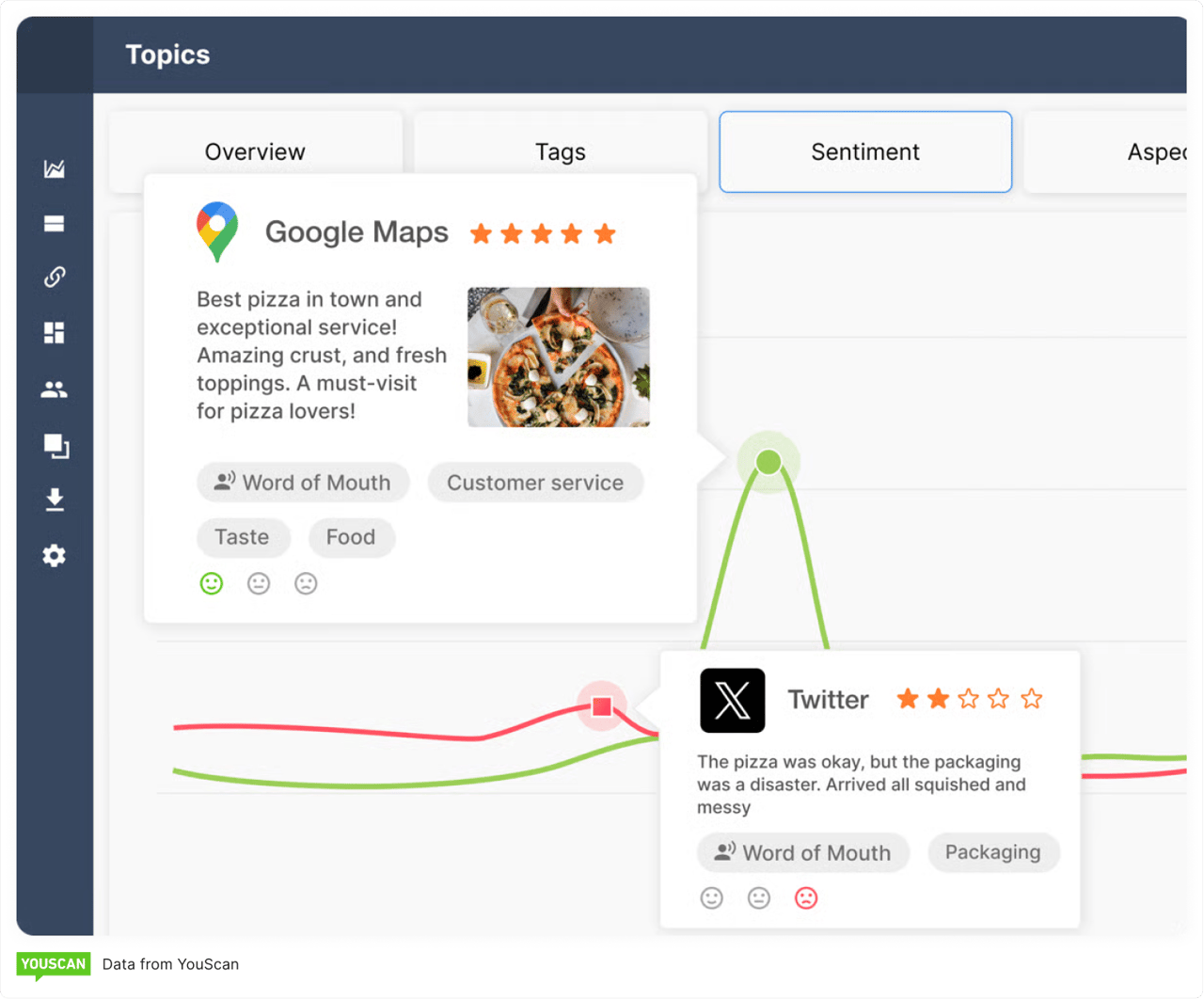
Most teams arrive at brand health tracking from one of two directions: market research, where a brand tracker means a quarterly survey with a panel behind it, or social, where it means a dashboard of mentions and sentiment. Both are half right. The useful version pulls them together, plus behavioural data, into a single view of overall brand health.
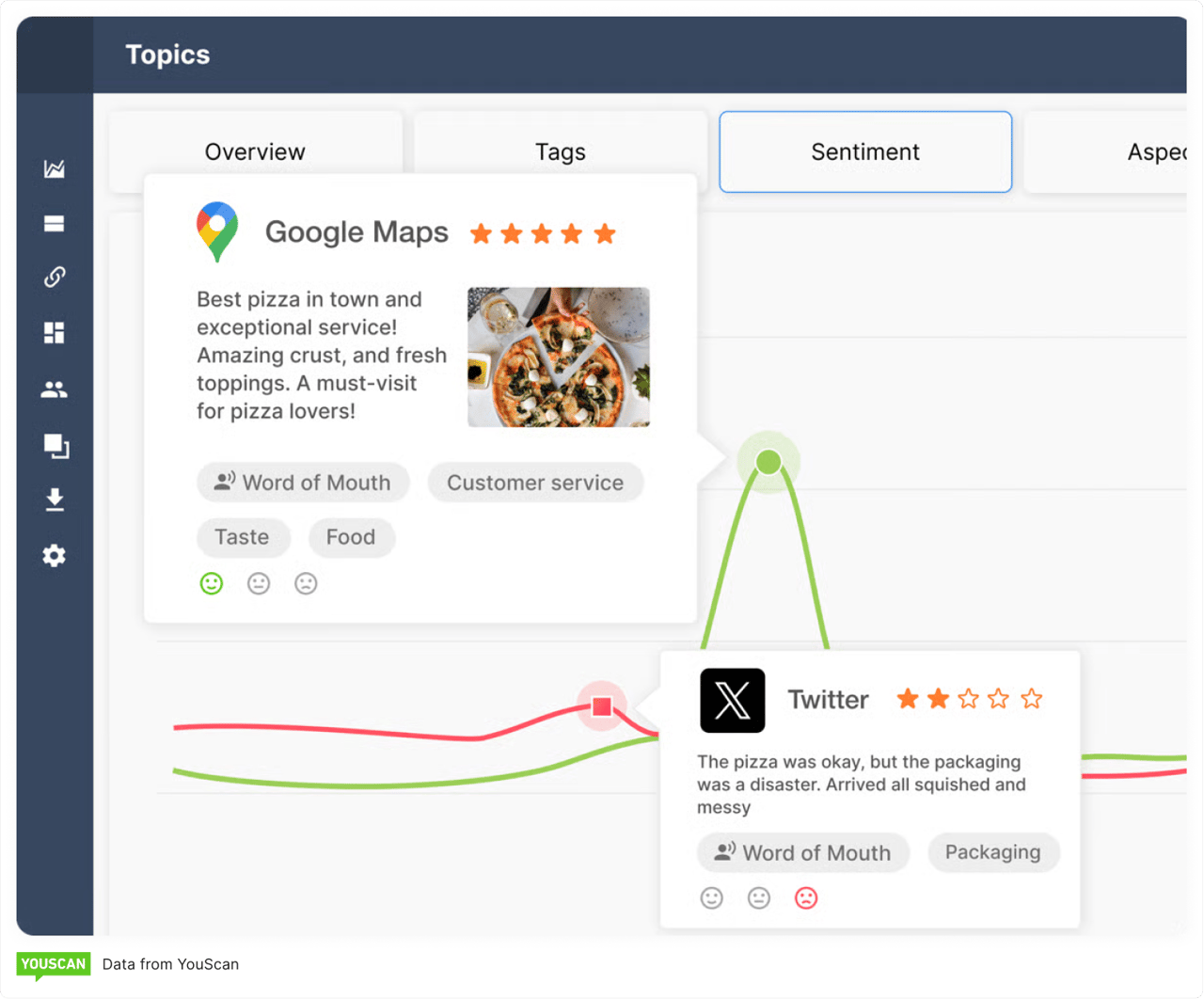
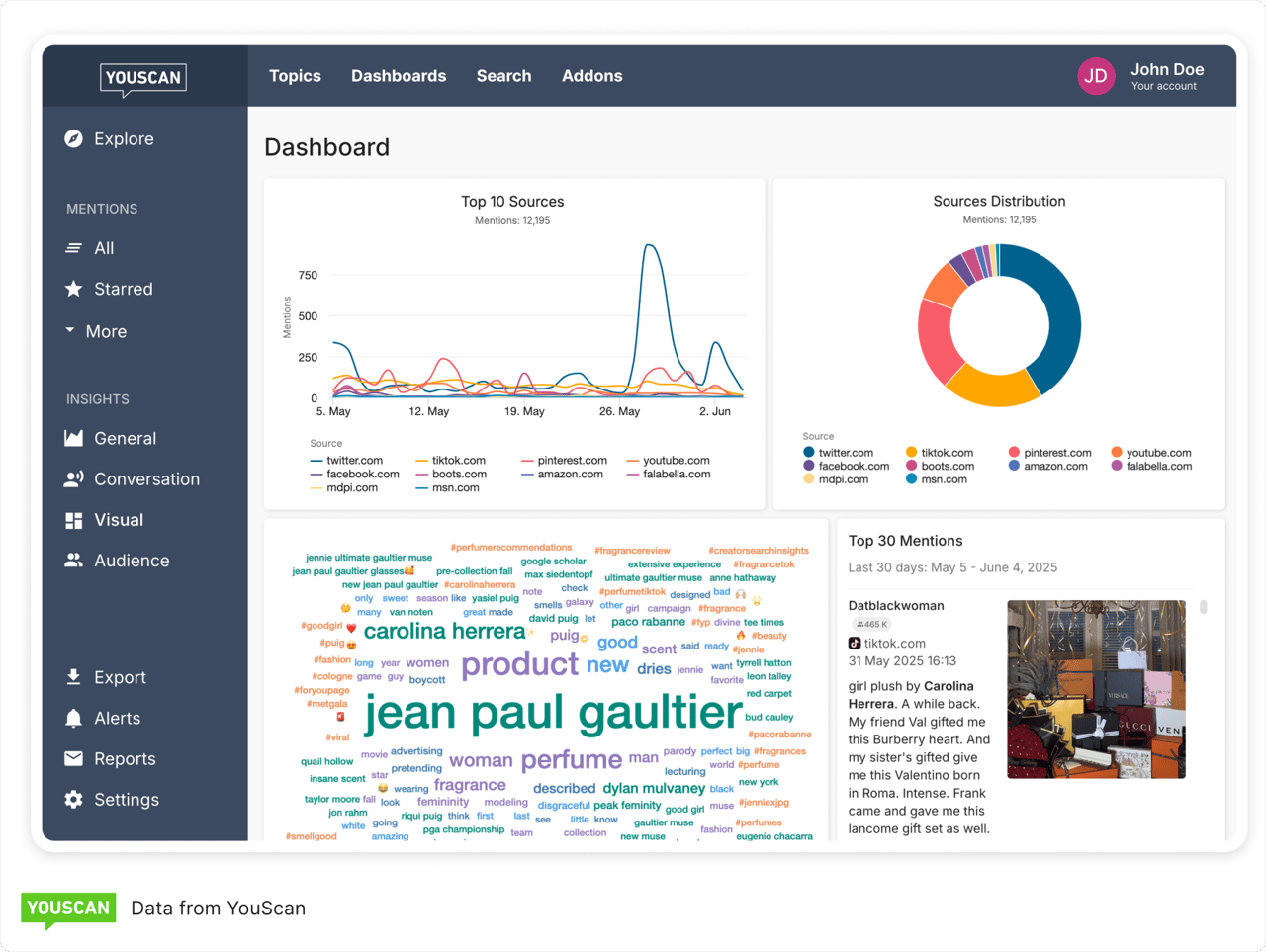
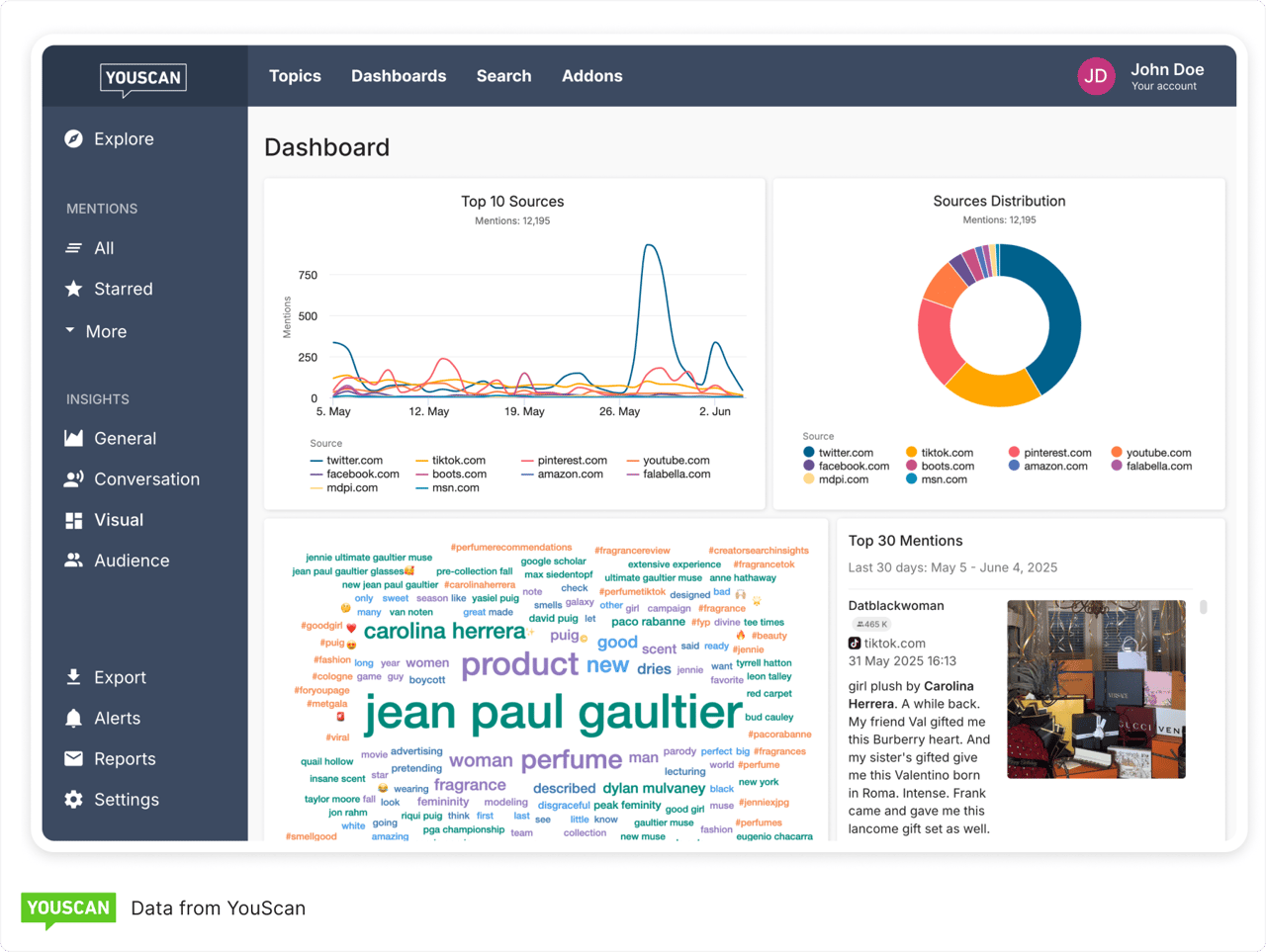
Source: YouScan
How a brand tracker actually works
Three data streams feed a modern brand tracker.
Survey responses give you the numbers you can't observe: unaided recall, consideration, brand favorability, stated preference. Social listening tools give you the unprompted material — the insights consumers volunteer when no researcher is in the room. Behavioural analytics and social media analytics tell you what your customers actually did — branded search volume, direct traffic, repeat purchase rates.
Any one stream on its own will mislead you. Surveys are slow, and people fib in them, politely. Social skews toward whoever's loudest. Analytics say what happened, never why. Together, they give you a complete view of brand performance that survives a hard question from your CFO.
Why tracking brand health beats waiting for the sales report
Here's the uncomfortable part about not tracking brand health. By the time weak brand health shows up in revenue, you've already lost the quarter.
Brand metrics are leading indicators. Research from brand health metrics specialists suggests shifts in brand health typically surface one to three quarters before they appear in revenue or market share figures, and some practitioners put the lag at a longer six to twelve months. Sales data is a rear-view mirror. Consumer perception is the windscreen.
And perception is increasingly the purchase decision. Edelman's 2026 brand trust research found that 88% of consumers rate trust in the brand as an important or critical purchase criterion, level with quality at 89% and value at 88%. Trust isn't a soft attribute for the last slide anymore. It sits alongside price.
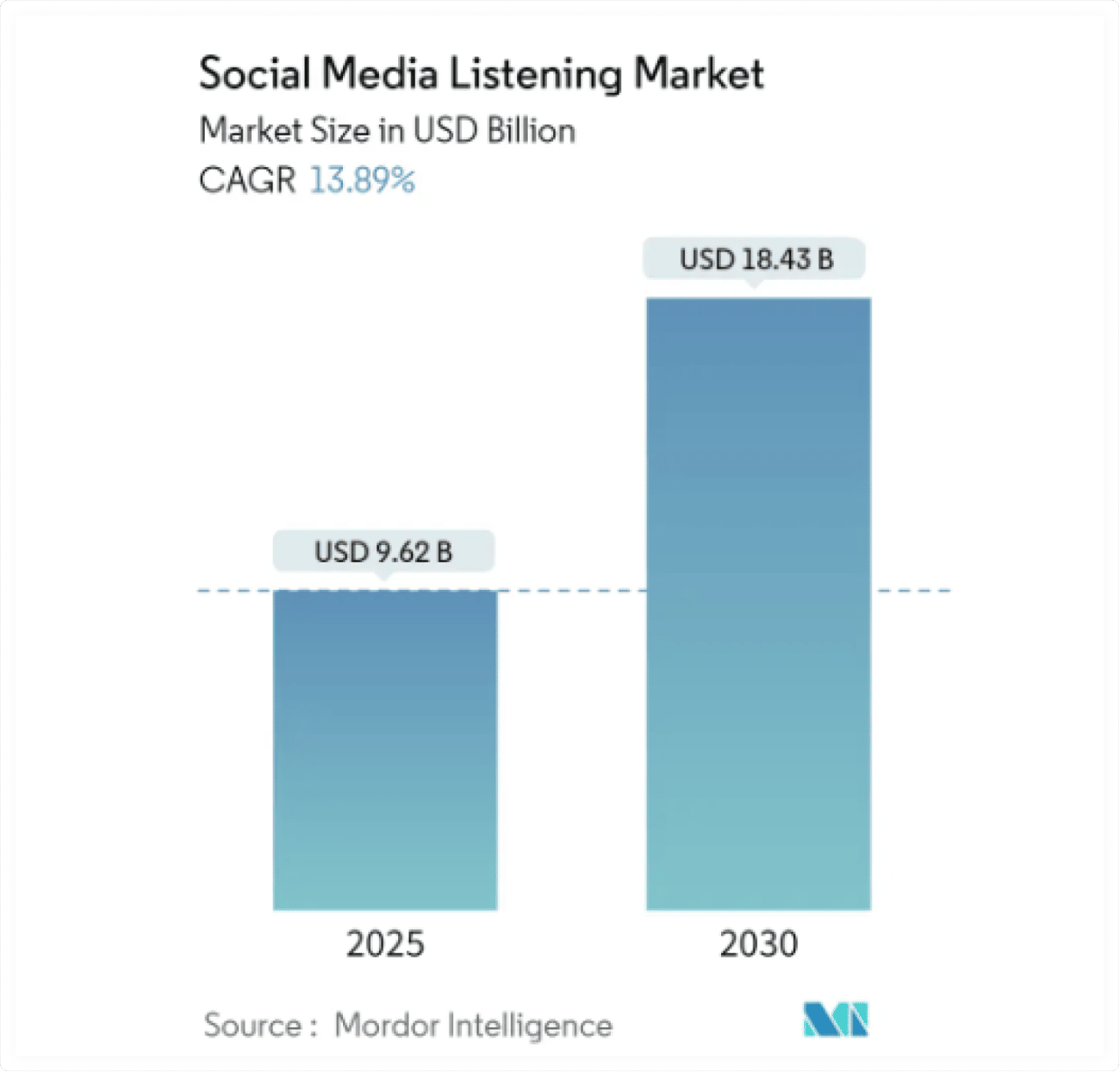
The money is following. The social media listening market is expected to grow from USD 10.91 billion in 2026 to USD 20.51 billion by 2031, at an 11.19% compound annual rate. Nobody spends that because dashboards are fun. They spend it because not knowing what customers think costs more.
Skip brand health tracking, and you're exposed on three fronts. You miss the early signs of a reputation crisis building, because social media monitoring tools aren't watching. You make strategic decisions on assumptions about your target audience that expired 18 months ago, when informed decisions need a current read on consumer perception. And you can't tell the board whether last year's campaign built any brand equity, because you have no baseline to compare against.
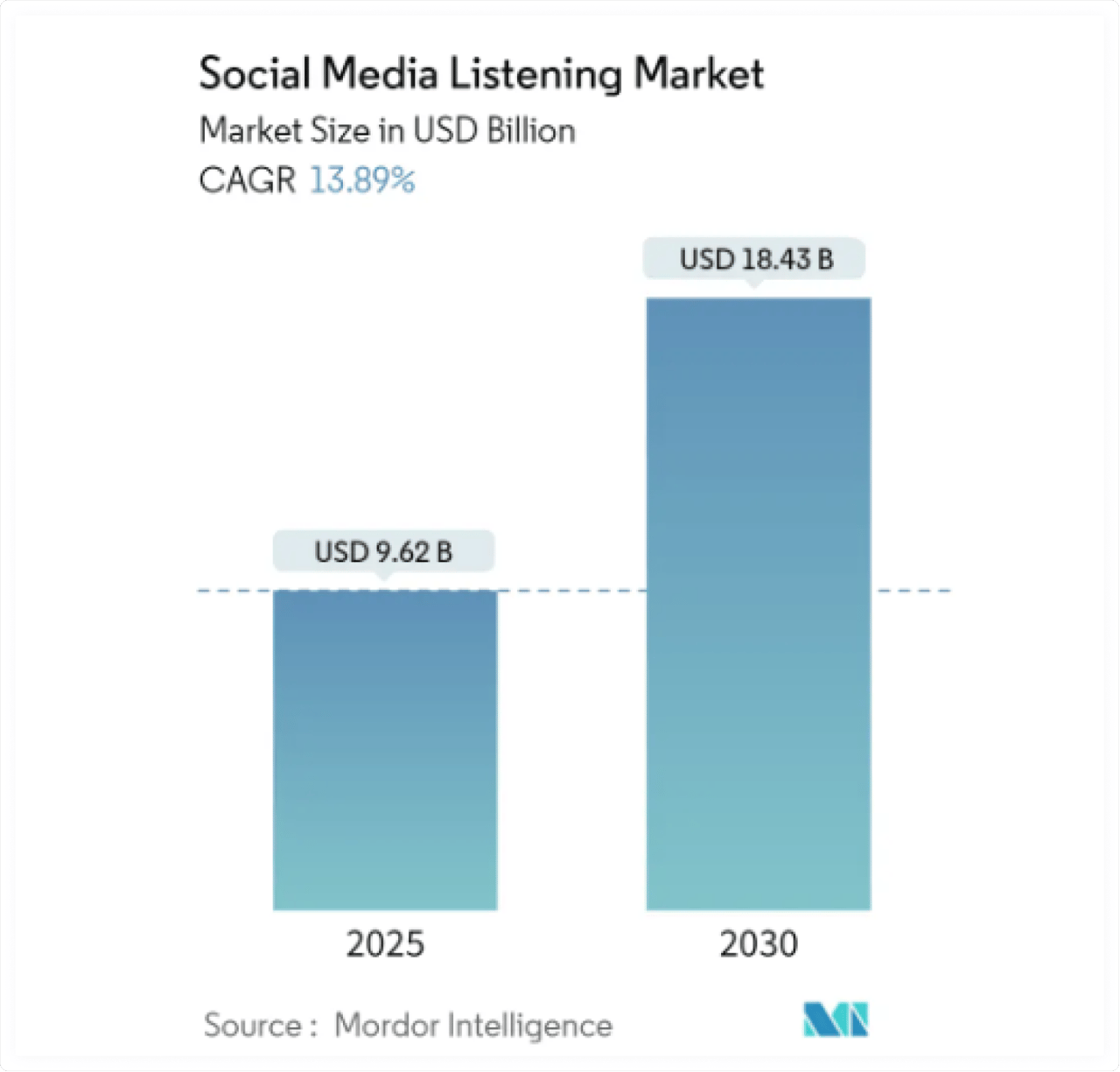
Source: Mordor Intelligence
Core brand health metrics worth your time
Not every number deserves a dashboard slot. The key metrics are the handful that genuinely predict brand growth. The rest are surface-level metrics that look great in a board deck and tell you nothing.
Map your core metrics to the journey customers actually take, from never having heard of you to choosing you on autopilot. That's where every serious brand tracking programme ends up, because it mirrors how the market actually behaves.
Brand awareness: do customers know your brand exists?
Awareness is the entry ticket to every other perception metric. If consumers don't know your brand exists, nothing else matters.
Track two flavours. Unaided recall is when consumers name your brand without prompting: expensive to build, and the number worth watching. Aided recognition is picking you out of a list, easier to move and easier to fool yourself with.
Surveys are the standard method, but branded search volume and unprompted mention share are faster proxies, and a brand awareness campaign will move aided recognition long before it moves unaided recall. Social media analytics tools show you how often your brand comes up without you having paid for it.
Brand favorability and consideration
Recognition without warmth is just familiarity. Favorability measures whether customers actually like what they know, and consideration measures whether you'd make their shortlist.
Watch the conversion between the two. High recognition with low consideration is the most diagnostic pattern in brand tracking — people know you and have a reason not to buy. Price, relevance, an old reputation you haven't shaken. Repositioning work starts here.
Brand sentiment and what consumers say unprompted
Sentiment measures the emotional temperature of what consumers are saying, and more usefully, which way it's moving.
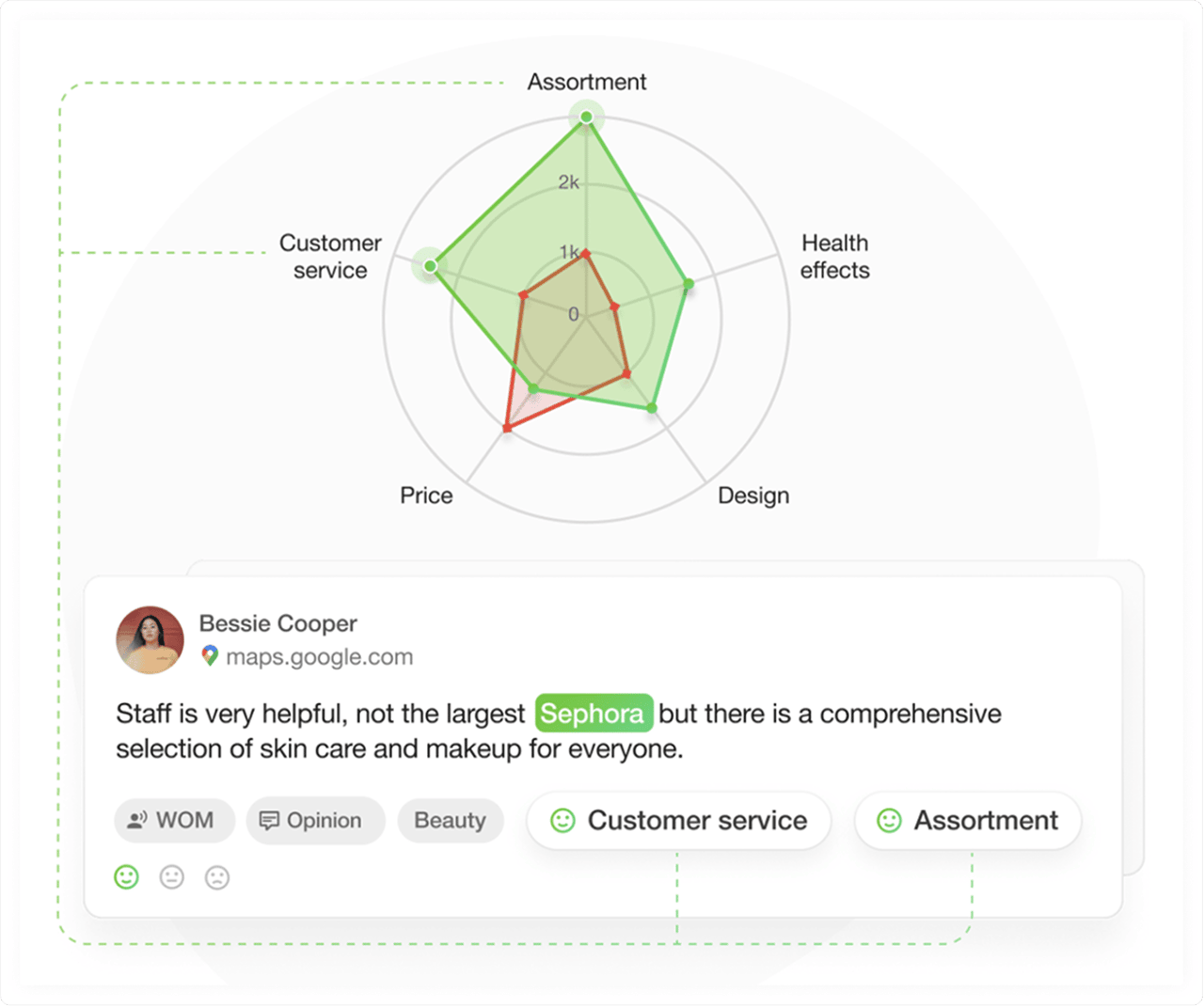
Decent sentiment analysis tools go past three buckets and detect frustration, delight, disappointment, and sarcasm. Visual insights add the half of the conversation that has no text in it at all, where your logo shows up in photos nobody tagged. A 70% positive month sounds fine until you learn last month was 85%. The trend is the signal. The snapshot is noise.
Negative sentiment spikes cluster around predictable events: launches, price changes, and an influencer partnership that landed badly. Brand sentiment analysis helps you separate a real problem from a bad Tuesday, and it's usually the first place your brand's reputation shows stress.
Brand trust, brand loyalty, and repeat purchase
Trust is slow to build and quick to lose, which makes it the metric most worth protecting, and the one that most reliably converts into loyalty. It shows up in review ratings, repeat purchase, and in how customers talk about you when they're recommending something to a friend.
Brand loyalty is trust with a receipt. Do those customers come back? Do they stay loyal when a cheaper option appears? High-trust brands get more forgiveness when things go wrong, which is why customer loyalty is the closest thing to an insurance policy your marketing budget can buy. Track brand loyalty through repeat purchase rates, renewals, and how often customers recommend you unprompted on social media. Consumers rarely announce that they've stopped caring, so continuous brand reputation monitoring catches erosion before it becomes churn.
Net Promoter Score, with caveats
Net Promoter Score is popular because it's one number everyone already knows. NPS = % promoters − % detractors. Promoters score 9–10, detractors 0–6.
Treat it carefully. NPS measures stated intent among customers who already bought from you, and says nothing about consumers who considered your brand and walked away. A company can post a healthy NPS while awareness quietly collapses among under-30s. The real value sits in the follow-up question: why that score? That free text is where the actionable insights live.
Brand preference and market share
Preference is the closest survey metric to actual behaviour: given a real choice, which brand do customers pick? Track it against market share, ideally alongside a proper brand analysis, and you can see whether perception is running ahead of or behind commercial reality.
When the two diverge, that's interesting. Preference above share usually means a distribution, pricing, or market coverage problem. Share above preference means you're winning on availability and habit, which is fine until a competitor turns up with better product quality and a bigger budget.
Share of voice against competitors
Your brand doesn't exist in a vacuum. Every metric above needs a competitive benchmark, otherwise a five-point gain means nothing — your two nearest competitors might have gained twelve.
Competitor analysis turns absolute numbers into relative position, and it's where a lot of the genuinely useful market insights come from. Run it against the same three or four competitors every wave, or the comparison falls apart. That's what your CEO actually wants to see: how our brand compared to the field.
Three brand tracking mistakes that waste the budget
Most brand health tracking programmes fail the same way. Somebody buys a tool, switches on every metric, and produces a monthly report nobody reads.
Chasing vanity metrics. Impressions, follower counts, total mentions. They move for reasons unrelated to brand health. If a number can't change a decision, it doesn't belong on the dashboard.
Skipping the quality data check. A sentiment score built on bot traffic and spam comments is worse than no score, because it looks authoritative. Bad inputs give you a confident, wrong read on brand perception.
Measuring the wrong customers. Tracking only existing customers tells you about satisfaction, not about the market. Lapsed buyers and non-buyers hold the sharpest consumer insights, because they can tell you why consumers who considered your brand chose one of your competitors instead.
How to build a brand tracker that answers your critical questions
Work backwards from the decision, not forwards from the tool. Every ongoing brand health tracking programme that survives its second year starts with a question somebody actually needed answered.
Start with business goals, not the metric menu
Write down the three or four critical questions the business needs answered this year. Are we losing younger customers? Did the rebrand shift brand perception? Is our premium positioning still credible after the price rise?
Then pick the smallest set of core brand health metrics that answers them. Tying measurement to business goals is the only way you'll defend the budget in year two.
Blend survey data with continuous social listening
Run brand tracking surveys quarterly or twice a year for the metrics you can only get by asking: unaided recall, consideration, brand equity attributes. Keep social listening running the whole time underneath. If the difference between the two modes isn't clear to your team, social listening vs social monitoring is worth ten minutes.
The economics have improved sharply here. Zappi, launching its own brand health tracker, cited independent research showing a 40% reduction in research costs versus traditional approaches. Continuous measurement is no longer a large-enterprise luxury.
Use customer feedback you already own
Support tickets, reviews, cancellation forms, NPS verbatims. Your customer feedback archive is the cheapest brand health data you'll ever get, and most teams never analyse the text.
Don't just track the star rating. A brand can hold a steady 4.2 while complaints about one specific issue triple underneath. Aggregate scores hide exactly the negative feedback you need to see. When the same theme appears in social mentions, support tickets, and reviews at once, you've found something systemic. A trend analysis tool will surface the pattern faster than a human reading tickets.
Pull behavioural signals from Google Analytics
Google Analytics gives you branded search traffic, direct visits and returning-visitor rates. All three move with recognition and preference, and cost nothing extra.
Cross-reference that data with your survey waves. If stated recall is climbing but branded search is flat, one of your two sources is wrong. Usually the survey.
Watch brand positioning drift
Positioning isn't something you settle once in a workshop. It's what people perceive you to be. Track the attributes attached to your brand and you'll catch shifting perceptions early: a premium brand slowly described as "expensive," a challenger called "everywhere" rather than "different." Those small language changes are usually the first evidence that customer expectations have moved.
The social listening glossary is a useful reference if the terminology in this section is new to your team.
How often should you track brand health?
Brand health tracking works best when the cadence matches the metric. Measuring everything on one schedule wastes effort.
Continuously: sentiment, mention volume, brand monitoring alerts. A story can go from a single post to national coverage inside a day, and crisis management only works if you find out early.
Weekly: support themes, engagement rates, competitor activity. Enough signal to spot a developing issue, not so much that you chase daily noise.
Monthly: recognition proxies, share of voice, brand positioning attributes. Track brand perception on this cadence too — attributes need a long window before a shift means anything.
Quarterly: the full survey wave — consideration, preference, competitive benchmarking, and the items you use to track brand equity across the year. This is your board-level view of overall brand health, where genuine market shifts show up rather than weekly wobble.
Around campaigns: measure before, during, and after. Otherwise, you'll spend the next year arguing about whether it worked.
One caveat. When you're tracking brand health, consistency beats sophistication every time. A modest brand tracker you actually run each month is worth more than an elaborate one that slips to "we'll do it next quarter."
From dashboard to decision-making
Data that doesn't change a decision is expensive decoration. Three ways to make brand health tracking earn its place.
Set alerts, not reports. Nobody reads the monthly PDF. Everyone reads the Slack alert saying negative mentions are up 300% since 9am. Configure thresholds and let the system interrupt you.
Correlate brand metrics with commercial outcomes. Run your key performance indicators against acquisition cost and retention over 18 months, and you'll learn which key metrics actually predict revenue in your category. In some markets, it's trust. In others, it's customer loyalty, or plain consideration. You won't know until you check, and checking is what turns opinion into data-driven decisions.
Route actionable insights to whoever can act on them. Product complaints go to product. Messaging gaps go into the campaign brief. Brand health insights stuck inside the research team are wasted. This is the step that separates informed decisions from interesting slides.
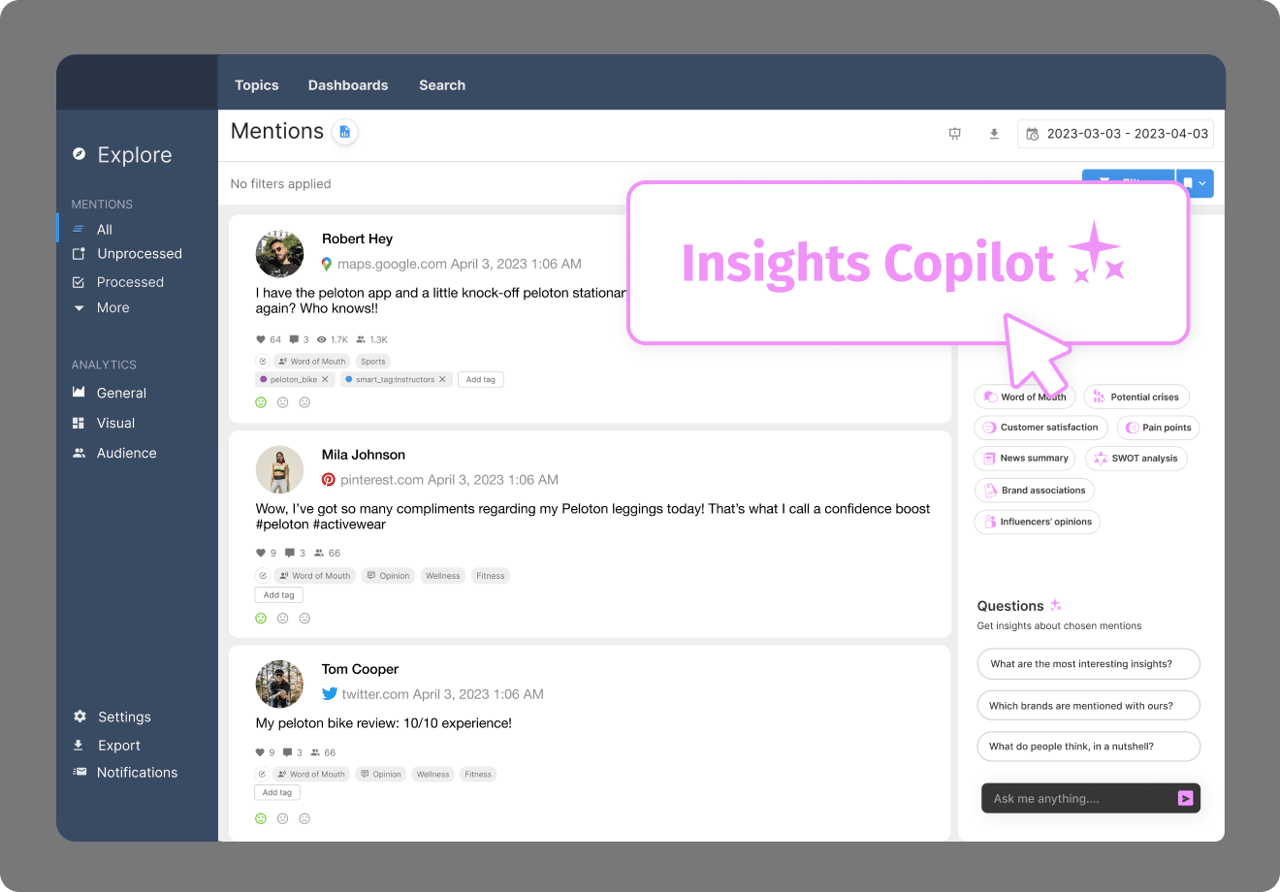
The point isn't a prettier dashboard. It's smarter decisions made earlier, by people who'd otherwise be guessing about market trends. Social listening dashboards help mostly because they shorten the distance between a signal appearing and somebody seeing it, and Insights Copilot shortens it further by answering the question in plain language.
The data source nobody was tracking last year
One genuinely new wrinkle. AI agents now discuss brands with each other on networks built for bots, and those conversations shape narratives that later surface on human platforms. YouScan's Moltbook monitoring tracks brand mentions there, so false product claims and misleading competitor comparisons get caught upstream of Reddit and X.
Niche today. Probably not niche in two years.
Final thoughts
Brand health tracking measures the thing that decides whether customers pick you next time, early enough for you to react. That's the whole argument, and it's why brand tracking is now a standard line item rather than a research luxury.
Start smaller than you think. Three metrics, one competitor set, a fixed monthly cadence. Add complexity only when the simple version stops answering your questions. The brands making genuinely data-driven decisions aren't the ones with the most dashboards. They're the ones who agreed in advance which numbers would change their minds. Your brand's success depends less on the framework than on whether anyone acts on the insights it produces.
Request a YouScan demo to see how to measure brand health, sentiment and competitor benchmarking in one place, and stay ahead of changes before your customers make them for you.
FAQs
What is a brand health tracker?
A brand health tracker is a system that measures brand awareness, perception, sentiment, trust, brand loyalty, and preference at regular intervals so you can see how the numbers move. Modern trackers combine panel research with social listening and social media analytics rather than leaning on one source, so you get both what customers say and what they do.
What is a brand health check?
A brand health check is a point-in-time assessment across recognition, consumer perception, customer satisfaction, competitive position and messaging consistency. A check tells you where your brand stands today. A tracker tells you which way it's heading, which is why most brands eventually move from one to the other.
What is an example of brand tracking?
A typical setup: monthly NPS and social media sentiment, quarterly awareness and consideration surveys against three named competitors, and continuous alerts on mention spikes, which is where the fastest-moving insights show up. You then measure all of it before, during and after a major campaign to isolate its effect on brand health.
How do you calculate a brand health score?
Most brand health scores are weighted indexes. A common split weights brand awareness at 25%, brand sentiment at 30%, customer satisfaction at 25% and brand preference at 20%. The weights matter less than keeping them fixed — change the formula and you lose the ability to compare periods.