Social Media Competitive Analysis: How to Learn From Your Competitors

Here’s something most marketing teams won’t admit: they have no idea what their competitors are actually doing on social media. They’ll glance at a rival’s Instagram every few weeks, maybe screenshot a post that got a lot of likes, and call that “competitive intelligence.” It’s not.
A real social media competitive analysis is messier than that—and way more useful. You’re pulling data on how competitors show up across social platforms, what their audience responds to, where they’re dropping the ball, and what it all means for your own social media strategy. Done well, it’s the closest thing you’ll get to reading your competitors’ playbook.
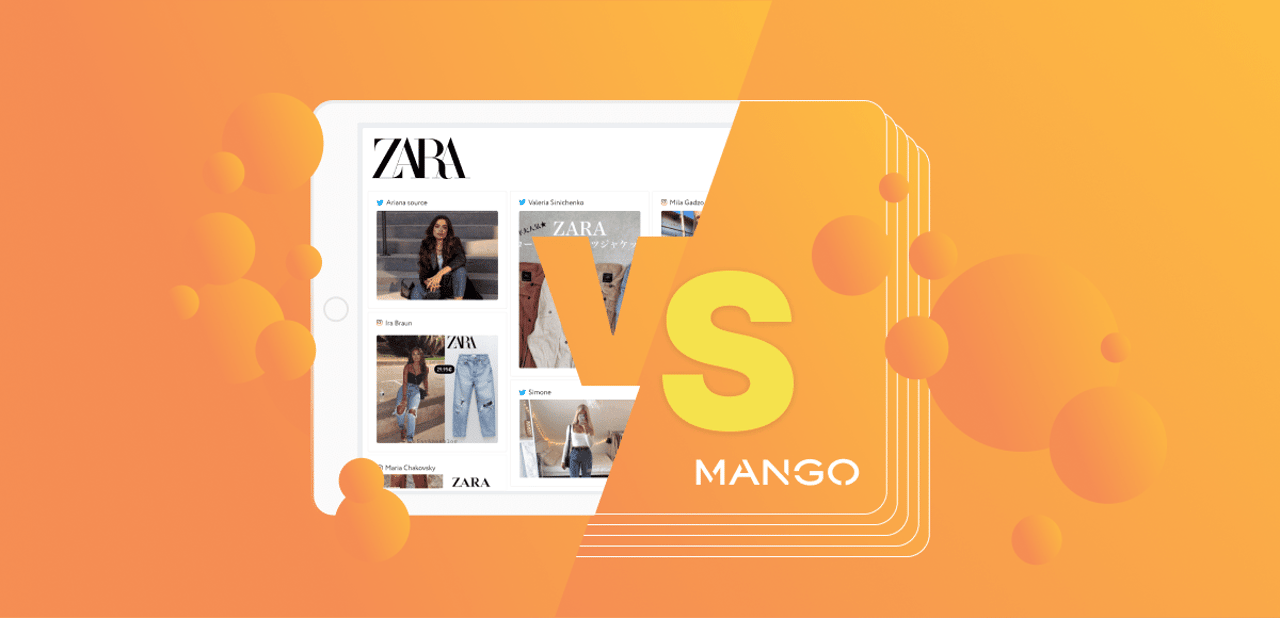
We ran one ourselves using fashion retail brands. This guide walks through exactly how we did it—and how you can too.
What social media competitive analysis actually is (and isn’t)
The short answer? It’s studying your competitors’ social media performance so you can make smarter decisions about your own. You’re tracking things like follower growth, engagement rate, posting frequency, customer sentiment, and the type of social media content that gets traction.
What it’s not: copying. If you come out of a competitor analysis just mimicking someone else’s feed, you’ve missed the point.
The real value is building a solid understanding of the social media landscape around your brand. That means looking at both direct competitors and indirect competitors—anyone fighting for your target audience’s attention, even if they don’t sell exactly what you sell. You want to decode consumer behavior. What makes people engage? What makes them complain? Where are the market gaps nobody’s filling?
That’s where the competitive insights live.
Why competitor analysis on social media is worth your time
Competitor research is one of those things that sounds optional until you realize what you’ve been missing. Your engagement rate might look fine in a vacuum. But compared to your top competitors? Maybe it’s half of theirs. You just didn’t know because you never checked.


Benchmarking against industry standards is the obvious benefit. But there’s a less obvious one: you start to see patterns in what resonates with your shared audience. What kind of brand voice gets people talking. Which content trends are rising. Where competitors’ customers are frustrated—and where that frustration creates openings for you.
And then there’s risk. If you’re not monitoring competitor moves, you can get blindsided. A rival launches a viral campaign, shifts positioning, or gets caught in a PR mess that drags your whole category down. Social listening tools like YouScan make it possible to track all of this across multiple social platforms without losing your mind.


How to actually run a social media competitive analysis
Alright. Here’s the process. It’s not complicated, but it does require discipline—especially the part where you have to keep doing it.
Pick your competitors (and pick the right ones)
You probably already know your biggest rivals. But your social media competitors aren’t always the same as your product competitors. Someone with a totally different offering can still be eating your lunch on Instagram if they’re targeting the same people.
When we did our fashion retail research, we picked Zara, H&M, and Mango as the big players, plus COS and Arket—two smaller brands in a higher price tier (both owned by H&M Group). That mix matters. You want a view of the full competitive landscape, not just the obvious names.
Search your relevant keywords on Google and directly on social channels. Check who your audience already follows. Five to ten competitors is the sweet spot.
Benchmark performance and track the key metrics that matter
Start with share of voice. It tells you who owns the conversation. In our research, Zara had 53% of all social media mentions. H&M came in at 19%, Mango at 13%. COS and Arket were at 11% and 2%. That alone tells a story about social media presence—but it’s only the beginning.
Because here’s the thing: volume without quality is noise. You need to look at customer sentiment too. We found that COS and Zara attracted more negative social media posts than the others—but COS also had the highest share of positive posts. Weird, right? That’s the kind of nuance that makes sentiment analysis worth the effort. It tells you about real brand perception, not just who’s loudest.
Beyond that, track follower growth, engagement metrics, posting frequency, audience growth, and the types of social posts that get traction. If the tools you’re using offer historical data, even better—you’ll see whether a competitor’s social strategy is trending up or fading.
Dig into competitors’ content strategy and content performance
This is where it gets interesting. You’re not just counting competitor posts. You’re figuring out why some of them work and others flop.
AI-powered social media listening tools can sort mentions into categories—design, price, quality, customer service, whatever’s relevant to your industry. For Zara, the top discussion themes were design, price, assortment, customer service, and quality. Design was mostly positive. Customer service and price? Not so much.
That’s a content performance analysis in action. And it’s directly actionable. If your competitor’s customers keep complaining about service on social, that’s a gap you can fill. If their design-focused user generated content is blowing up, that tells you what your shared audience actually cares about.
We found actual Zara complaints where customers never received orders and got zero help—then vented about it publicly. H&M had similar themes but with different intensity. These aren’t hypotheticals. They’re real competitive insights sitting in plain sight on social media.
Don’t just look at failures, though. Study the viral posts too. What content trends are competitors riding? Reels? Carousels? Long-form? That feeds directly into your own content strategy. (If terms like “share of voice” or “aspect-based sentiment” are fuzzy, the social listening glossary breaks it all down.)
Identify gaps in brand voice and social presence
Where your competitors are weak is where you should be strong. Simple idea, hard to execute without data.
We expected Instagram to dominate for every fashion brand we studied. Wrong. It was the top platform for Zara (76% of mentions) and Mango (66%), but H&M’s biggest platform was Twitter. Arket showed up more on Instagram and YouTube than Twitter. These aren’t minor details—they change how you allocate resources for your social strategy.
Brands that skip TikTok monitoring can miss up to 40% of their online mentions. Forty percent. If you’re not there, you’ve got a blind spot the size of a billboard.
Also look at brand voice. Is your competitor’s tone stiff while their audience wants casual? Are they ignoring user generated content you could amplify? Are they absent from competitor conversations on Reddit? Inconsistent posting schedules? Every gap is an opening in the social media landscape.
Use competitive intelligence to evaluate influencers
Your competitors’ influencer partnerships reveal more than you’d think. According to The Drum, 73% of marketing teams increased influencer spend even during the pandemic—so this isn’t a corner of the market you can afford to ignore. You might also want to peek into TikTok to find influencers there. Trust me, this is a treasure trove.
During our Mango research, we found a London-based blogger with 1.2 million followers who’d featured a Mango sweater as a favorite piece. Over 55,000 likes. She wasn’t paid. She just liked the product. That kind of organic match is exactly what most influencer programs fail to find because they start with spreadsheets instead of social listening data.
We also spotted a market gap: Arket and COS showed up far more in male creator content than Zara or H&M. Both have men’s collections, but only the smaller brands were visible in that space. That’s the kind of insight you don’t stumble on—you find it by doing the work. For a visual view of how these competitive insights come together, check the social listening dashboards.
Turning competitive analysis into actual competitive insights
Data without decisions is just a report nobody reads.
Run a SWOT analysis. Map your strengths versus competitors, your weaknesses, the opportunities hiding in underserved audience needs, and the threats from competitor moves or market shifts. Use your competitor analysis to set benchmarks grounded in reality—not some generic “industry average” from a two-year-old blog post. If the top player in your space posts three times a day at a 4% engagement rate, that’s your bar.
Feed these insights into brand monitoring, reputation management, brand loyalty work, and even product decisions. If competitor conversations keep surfacing the same complaint about sizing or shipping—that’s market research your product team needs too. Keep an eye on industry events and relevant keywords that trigger spikes in competitor activity.
And look—this isn’t a one-time project. Consumer sentiment shifts. New social platforms pop up. Competitors adjust. The brands that stay ahead are the ones running this monthly, with real-time monitoring on top.
Don’t stop at the obvious social platforms
Instagram, TikTok, X, YouTube—yes, obviously. But forums, review sites, and blogs carry consumer sentiment that never makes it to mainstream social channels. And now there’s a newer wrinkle: AI-driven networks like Moltbook, where bots discuss brands and trends among themselves. Sounds weird, but it’s real, and those conversations sometimes leak onto human-facing platforms. YouScan recently launched Moltbook monitoring specifically for this.
The more social channels you cover, the more complete your competitive social media analysis gets. Miss a channel, miss the insight.
Get started with a free template for social media competitive analysis
If this is your first time, keep it simple. Build a spreadsheet. Columns for each competitor. Rows for key metrics: share of voice, follower growth, engagement rate, posting frequency, content themes, sentiment breakdown, platform distribution.
Update it monthly. You’ll start seeing patterns—which competitors are gaining ground, which content trends are dying, where market gaps are widening. Social media benchmarking over time is what turns a single competitive analysis into an actual competitive advantage.
For brands ready to go beyond spreadsheets, AI social listening platforms like YouScan automate the data collection, let you customize reports, set alerts for competitor moves, and run brand sentiment analysis at scale. Want to see what that looks like? Request a free demo.
FAQ
What is a social media competitive analysis?
It's the process of studying your competitors' social media performance — follower growth, engagement rates, content strategy, customer sentiment, posting frequency — so you can make smarter decisions about your own. The goal isn't to copy what they're doing. It's to understand what works in your space, spot gaps they're leaving open, and benchmark your performance against reality instead of guesswork.
How often should I run a competitive analysis?
At least quarterly, with real-time monitoring on top. Social media moves fast — competitors adjust strategies, sentiment shifts, new platforms emerge. A one-time analysis gives you a snapshot. Regular updates give you the trends and patterns that actually inform strategy. Monthly is ideal if you have the tools to support it.
How many competitors should I track?
Five to ten is the sweet spot. Include a mix of direct competitors and indirect ones — brands targeting the same audience even if they sell something different. Too few and you miss context. Too many and you drown in data without acting on any of it.
What metrics matter most in a competitive analysis?
Start with share of voice to see who owns the conversation, then layer in engagement rate, sentiment breakdown, posting frequency, content themes, and platform distribution. Volume alone means nothing — a competitor can dominate mentions and still have terrible sentiment. The nuance is where the real competitive insights live.