What Are Brand Mentions? How to Monitor, Analyze, and Use Them
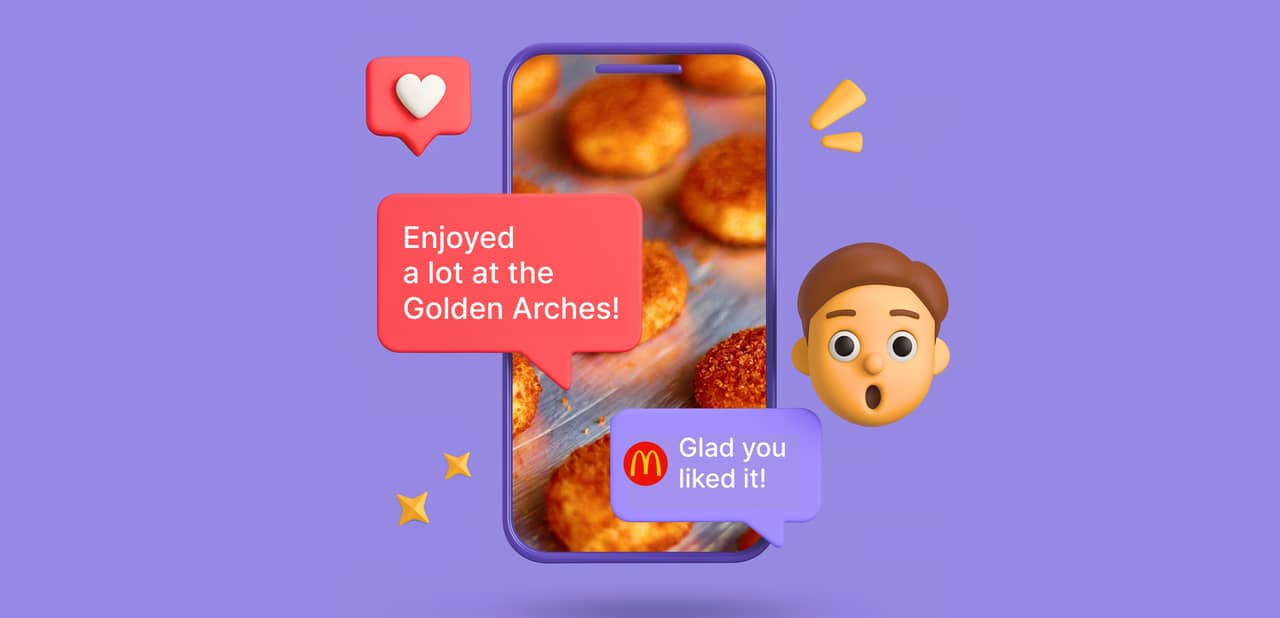

Here's something that happens dozens of times a day for most brands: someone writes your name in a Reddit thread, drops it in a podcast, or posts a photo of your product on Instagram without tagging you. And you never find out.
Most brand mentions don't come with a notification. They don't require a tag. Some aren't even text — they're a meme with your logo, or a YouTube vlog where your packaging shows up in the background for two seconds and then it's gone.
Those conversations are quietly shaping your brand reputation whether you're paying attention or not. The brands that build a system for catching, reading, and acting on mentions have an edge that's hard to replicate. This is how to build that system.
What are brand mentions?
A brand mention is any online reference to your brand — your company name, a product name, a campaign slogan, an image of your packaging. Basically anything that identifies you, anywhere on the internet.
The obvious ones: someone tweets at you, a news article names your product, a customer leaves a review. But brand mentions go well beyond what you'd naturally think to check.
There are two types worth distinguishing.
Linked mentions include a hyperlink back to your website. Direct SEO benefit — when a credible site mentions you and links back, search engines read that as an endorsement. Good for rankings, good for referral traffic.
Unlinked mentions reference your brand without a link. Far more common, especially in social media posts and online communities. They don't pass SEO authority directly, but they matter — both as brand signals and as outreach opportunities you can convert into backlinks. Most brands dramatically underestimate how many of these they have.
The ratio of linked to unlinked mentions is a useful signal for brand health. High-authority publications tend to link; casual social mentions rarely do.
Types of brand mentions
Not all brand mentions look the same, and they don't all live in the same places. Before you set anything up, it's worth knowing what you're actually trying to catch.
Social mentions
The highest-volume type. Posts, comments, stories, and videos on TikTok, Instagram, LinkedIn, X — this is where most user mentions happen, and most of them don't include a tag. Your brand could be part of hundreds of social media posts today and you'd have no idea without social media monitoring tools set up to catch them.
News and industry publications
Lower volume, higher stakes. A mention in a trade publication or on a major news site carries real authority — and it rarely includes a backlink, which is why tracking it matters for both reputation management and link reclamation.
Review platforms
Google Reviews, G2, Capterra, TrustRadius, Yelp. This is where potential customers actually make up their minds. One pattern of negative sentiment on a review site tells you more about a product problem than a hundred positive tweets. These mentions are also frequently missed by monitoring setups that only watch social.
Blogs, forums, and online communities
Reddit threads, Discord servers, niche Quora answers. Nobody in an online community is trying to be polite. This is where your most honest feedback lives, and it almost never includes a tag or a link to you. Manual checks of relevant online communities are worth building into your brand monitoring workflow even if your automated setup is solid.
Video and podcast mentions
A podcast host citing your product to 50,000 listeners. A YouTube creator comparing you to a competitor in a review. None of that shows up in a keyword alert. These are high-influence mentions that most brands simply miss.
Visual mentions
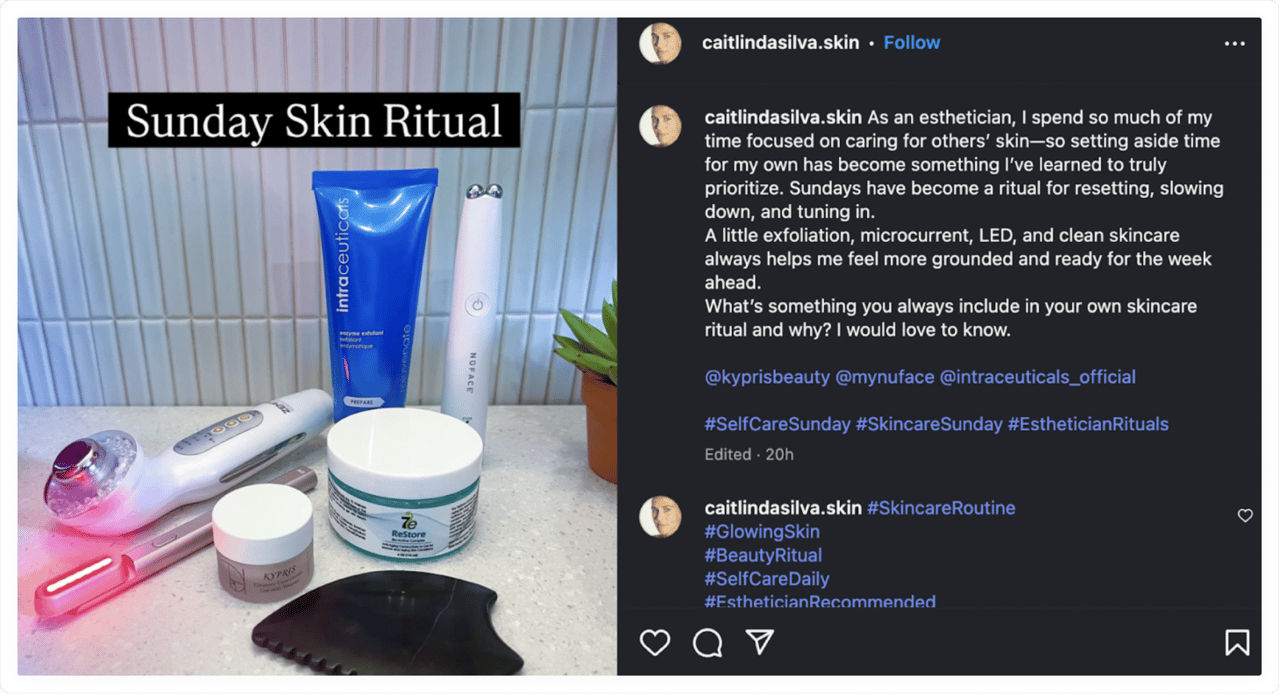
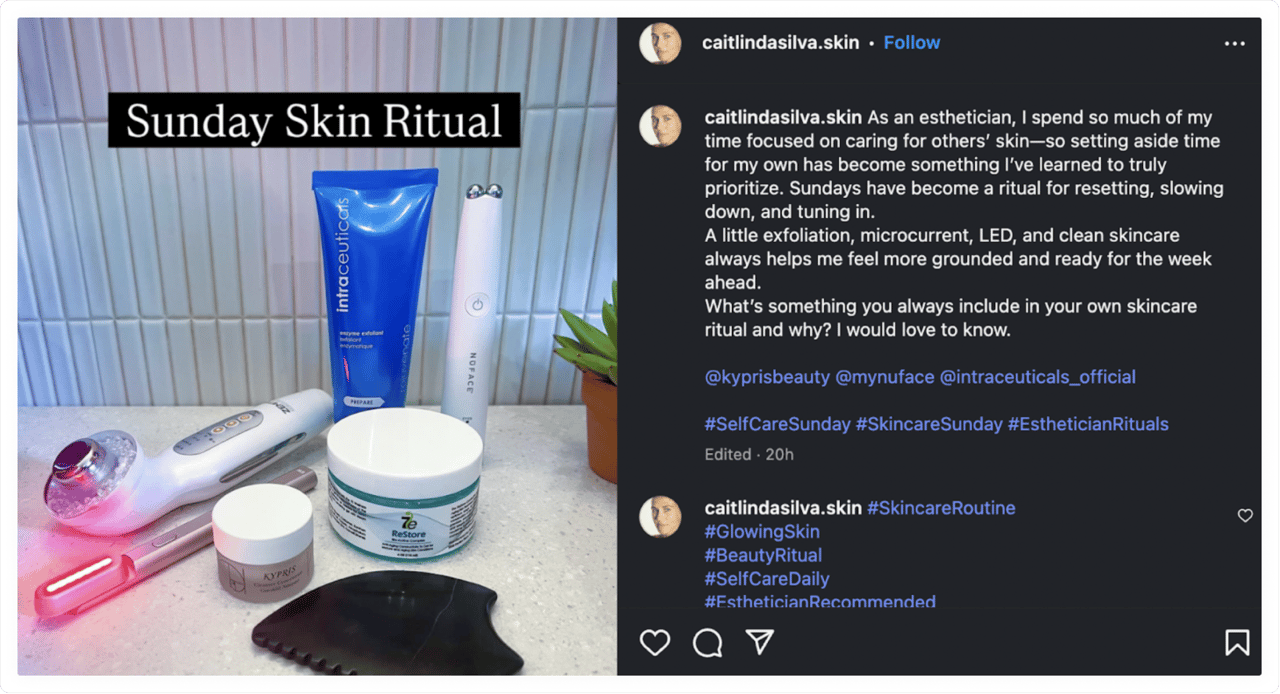
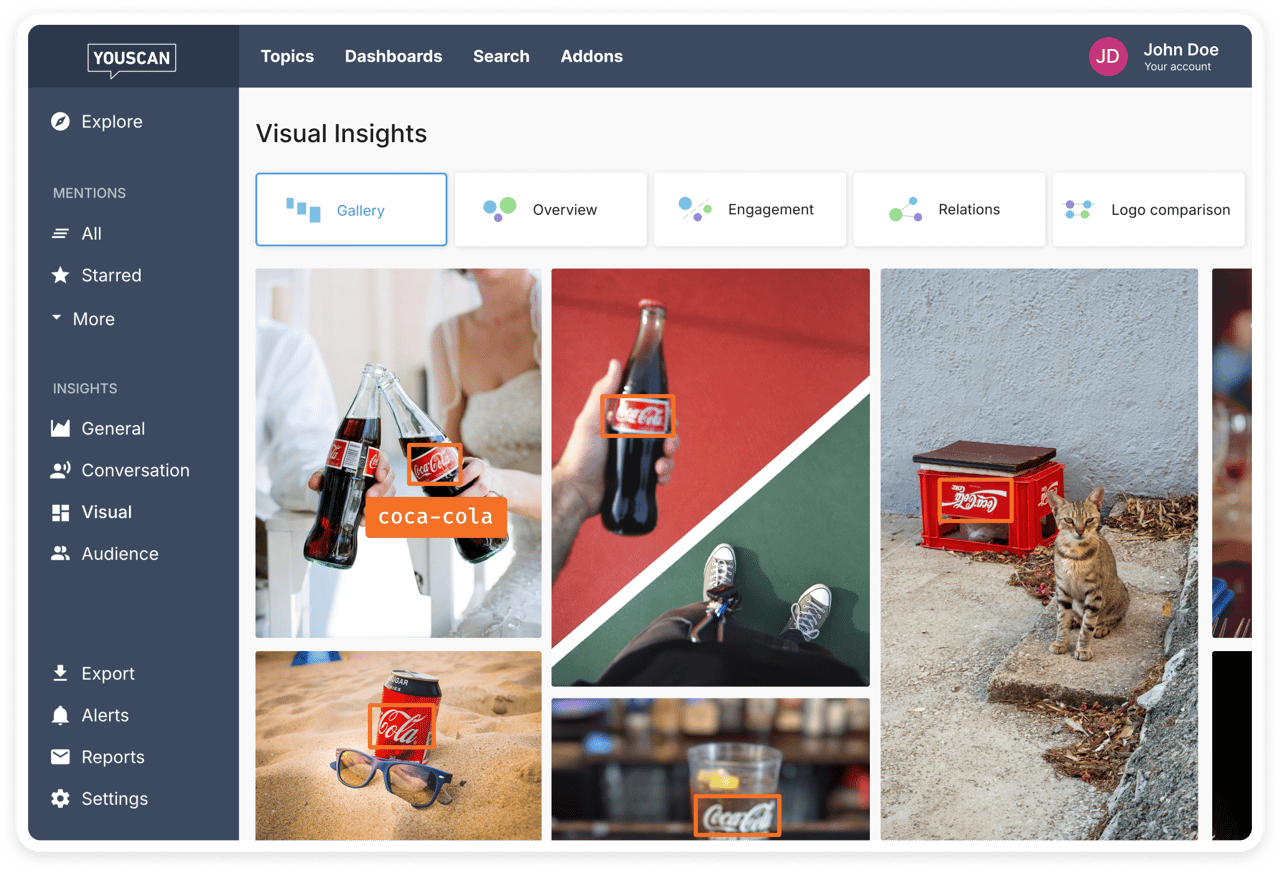
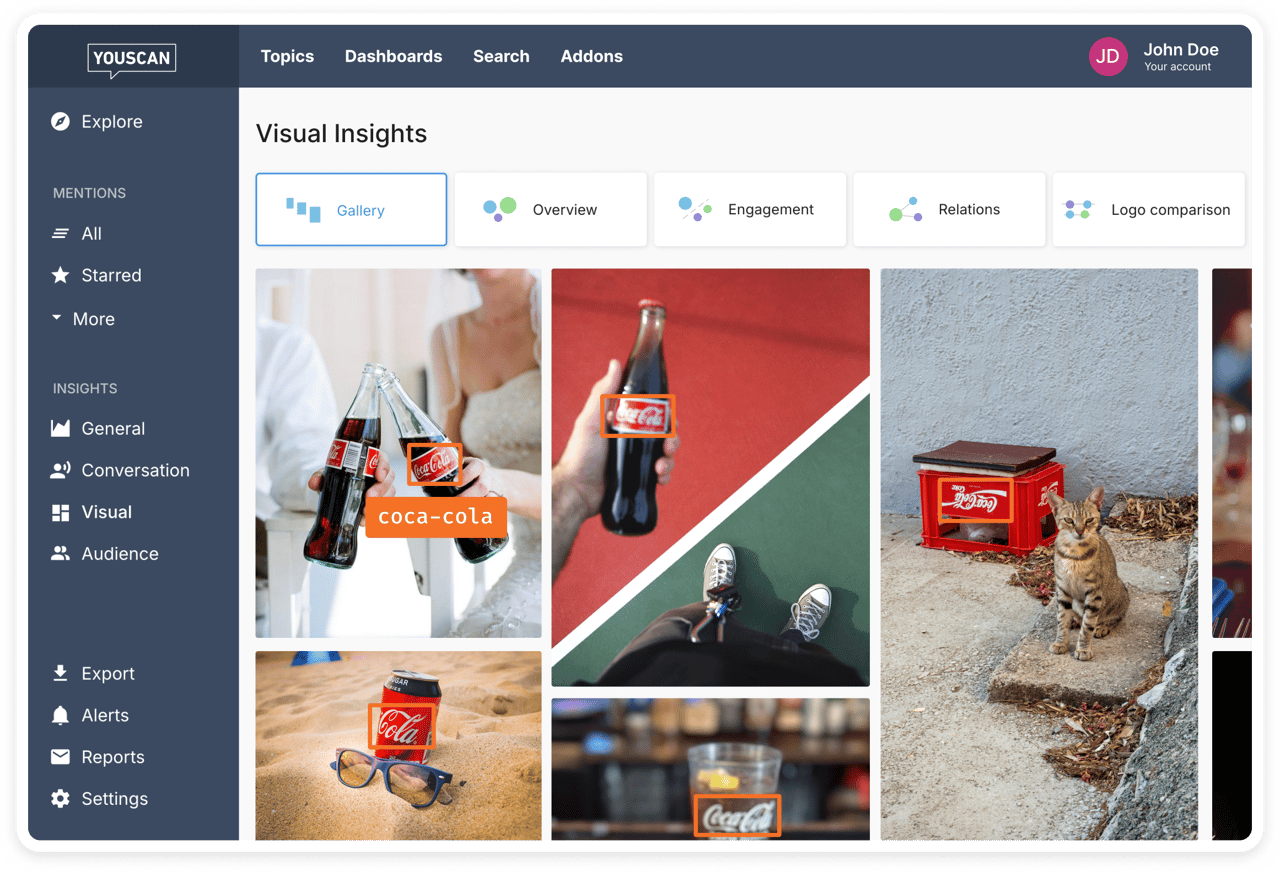
Your logo in a meme. Your product in an unboxing video where the creator never says your name. An Instagram story where someone's wearing your brand without tagging it. Visual mentions are increasingly common and completely invisible to text-only monitoring tools. AI-powered social listening platforms with image recognition — like YouScan — are built specifically to catch this.
Why brand mentions matter
The short answer: because they're where real perception lives, not in your press releases.
Brand visibility and search engines
Every mention — tagged or not, positive or negative — extends your brand's footprint across the internet and across social media platforms. High mention volume on authoritative sources sends signals to search engines about your relevance and credibility. Some SEO practitioners note that consistent brand mentions across trusted sites can contribute to how search engines rank your pages, even without a direct link — an effect tied to how Google understands brand entities. Whether or not you're optimizing for it, it's happening.
Brand reputation and public perception
Brand reputation lives in the conversations you're not part of. Public perception is built through thousands of small signals — review platforms, forum comments, social proof from real customers. The only accurate way to understand it is to monitor brand mentions in real time and track brand sentiment analysis over time. Waiting for a crisis to start paying attention is how reputations get damaged. By then you're already behind.
Public relations and what most brands miss
For PR teams, PR in social media has evolved to put brand mentions at the center of the work. Every mention in an industry publication, every journalist's quote, every bit of social proof from a trusted voice — it all shapes how stakeholders and potential customers perceive you.
The trust dimension matters more than most teams acknowledge. According to the Edelman Trust Barometer, 81% of consumers say brand trust is a deal-breaker or deciding factor when making a purchase. That trust is built largely by what others say about you — not what you say about yourself. Which is exactly why mention volume and quality is how most agencies prove their work. It should be.
Customer feedback at scale
People don't hold back online. Brand mentions are where you hear the unfiltered version of what's working and what isn't — not the polished survey answer, not the focus group response. Your target audience, left to their own devices, is brutally honest. That's actually valuable.
Competitor analysis
What people say about other brands is just as useful as what they say about yours. A proper brand analysis built on real-time mention data will surface competitor weaknesses, emerging complaints, and positioning gaps faster than any quarterly report you're paying for.
Where to find brand mentions today
Social media is the obvious place to start. It's also incomplete on its own. Brand mentions show up across a wider range of channels than most monitoring setups actually cover:
Social channels and social media platforms: TikTok, Instagram, LinkedIn, X, Threads
News sites and industry publications
Review platforms: Google Reviews, Yelp, G2, Capterra, TrustRadius, App Store
Online communities: Reddit, Discord, Quora, niche forums
YouTube, Spotify podcasts, Twitch streams
Moltbook monitoring — a newer platform YouScan now supports in English and Ukrainian, worth tracking as it grows
If your brand is visual — consumer goods, fashion, food and beverage — a meaningful share of your mentions happen in images and video with no text attached. Standard keyword monitoring misses all of it.
How to track brand mentions effectively
Start with Google Alerts
Free, two minutes to set up, covers news articles and indexed web content. It won't touch social media, review platforms, forums, podcasts, or visual content. No sentiment analysis, no historical data. It's a floor, not a brand monitoring strategy. Use it as a first layer and nothing more.
Build a brand monitoring workflow
A real setup covers multiple sources, tracks sentiment automatically, and surfaces critical mentions before they escalate. Here's what it looks like:
Define what to monitor: brand name, product names, executive names, branded hashtags, and common misspellings
Set up email notifications for new mentions and real-time alerts for negative sentiment spikes
Filter aggressively — high-impact mentions first, not every result with equal attention
Set a review cadence: daily during live campaigns, weekly for steady-state monitoring
One thing worth getting clear before you build this: social listening vs. social monitoring are not the same thing. Monitoring is reactive — catching mentions and responding. Listening is strategic — finding patterns, informing product and marketing decisions. You need both. Most teams only do one.
Track mentions across multiple sources
Text mentions in blogs, forums, and news sites. Social mentions across platforms. Visual mentions in images and video. Review platform activity. All of it contributes to how your brand exists online. Monitoring one channel means you're managing one slice of reality and calling it the whole picture.
Check communities manually
Automated tools don't reliably surface Reddit, Discord, and niche forums. Manual checks in communities relevant to your industry — even monthly — will catch relevant mentions and candid product feedback that algorithms miss.
How to analyze brand mentions
Tracking is the easy part. Analysis is where actual value gets created.
Sentiment analysis and brand sentiment
Start with the basics: sort mentions into positive, neutral, and negative. Then track how brand sentiment analysis shifts over time — especially after campaigns, product launches, or media coverage. A sustained spike in negative sentiment after a launch tells you something the campaign team needs to hear. More advanced platforms go further than a three-bucket split, detecting frustration, urgency, or enthusiasm in the text — which helps you decide which mentions actually need a response and which are just noise.
Brand health and historical data
A brand health tracker typically combines three numbers: mention volume, share of voice relative to competitors, and sentiment ratio. Look at these monthly, compare quarter-over-quarter. One week of data is almost never meaningful on its own — patterns over time are what give you something actionable. Historical data is particularly useful for diagnosing when something actually started going wrong, which is almost never when you first noticed it.
Advanced analytics
Modern brand monitoring platforms group mentions by topic automatically. If 30% of your negative mentions this quarter cluster around onboarding friction, that's a product team problem — not a messaging one. Platforms like YouScan add AI-powered dashboards that group mentions by emotion, topic, and influencer impact, giving you valuable insights without requiring manual review of thousands of posts. For social listening examples from brands actually using this kind of analysis, the case library shows what useful output looks like in practice.
For terminology and definitions, YouScan's social listening glossary is worth bookmarking.
How to act on brand mentions
Reply — including to untagged mentions
When you respond to a mention someone didn't expect you to see, it lands differently. It signals that there are actual people behind your brand. Short and genuine beats templated every time. Don't overthink the response — a simple acknowledgment or thank-you is enough.
Amplify positive mentions and social proof
Positive mentions and strong UGC are organic social proof — and they're probably more persuasive than any ad you'll run this quarter. Repost with credit, pull into email campaigns, use in outreach. UGC content examples from across industries show which tactics actually convert. YouScan's social listening dashboards make it easier to filter and surface quality UGC across social channels without manually scanning every platform every day.
Flag critical mentions early
Not every negative mention needs a crisis response. But some do, and the window to act before something compounds is short. A wave of similar complaints, a viral post from a high-reach account, a negative angle in a news article — these need PR or support involvement before they build momentum. Early escalation is cheaper than damage control. Almost always.
Feed insights back into marketing campaigns and product decisions
Brand mentions are a focus group that runs 24/7 for free. The patterns in how your target audience talks about you — the exact language they use, their recurring complaints, the features they keep praising — should directly inform product decisions, positioning updates, and marketing campaigns. If monitoring ends in a report that doesn't change anything, it's not worth doing.
Which metrics to track
Most of these don't need a long explanation:
Mention volume over time — is awareness growing or fading?
Share of voice — what percentage of total online conversations in your space involve your brand vs. other brands?
Sentiment ratio — the positive/negative split, and whether it's shifting
Platform breakdown — where are most of your mentions coming from? TikTok? Reddit? News sites?
High-impact mentions — posts from high-reach accounts or from high-authority domains
Unlinked mentions — backlink opportunities waiting to be reclaimed
For a framework around actually measuring all of this, how to measure social media engagement covers the setup most marketing teams use.
Choosing the right brand mention tools and brand monitoring platforms
There's no shortage of social listening tools. Here's an honest breakdown of what each tier actually gives you.
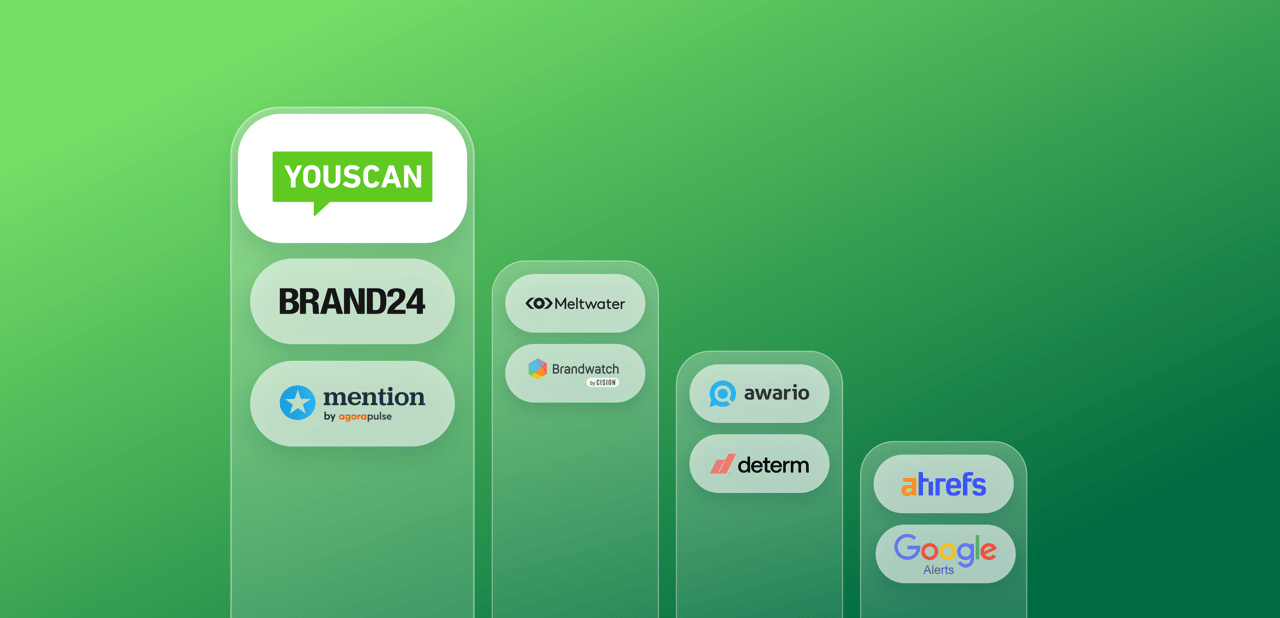
Google Alerts is free and covers news and indexed web content only. Good first layer, nothing more.
Social media management tools like Hootsuite or Sprout Social include mention tracking as one feature among several. Fine if you're already in those platforms and don't need deep analysis.
Dedicated brand monitoring tools — Brand24, Mention, Brandwatch — offer broader cross-channel coverage, sentiment analysis, historical data, and email notifications. This is where most mid-market teams should land.
AI-powered social listening platforms like YouScan add visual recognition, emotion analysis, and advanced analytics for brands that need to catch mentions beyond text. Enterprise plan options exist for teams operating at scale.
The most important factor isn't the feature list. It's coverage. Does the tool actually monitor the places where your audience mentions you — including the visual ones? For a more practical look at how brand monitoring and reputation management plays out across different brand sizes and industries, the case studies there are worth your time.
Ready to monitor your brand mentions? Try YouScan for free.
FAQ
What is a brand mention?
A brand mention is any online reference to your brand — your company name, product name, or even an image of your packaging — on any digital platform. Mentions can be tagged or untagged and carry positive, neutral, or negative sentiment.
What's the difference between linked and unlinked brand mentions?
Linked mentions include a hyperlink to your site and have a direct SEO benefit. Unlinked mentions reference your brand without a link — far more common across social media and online communities. Many can be converted to backlinks through targeted outreach.
How do I find brand mentions for free?
Google Alerts covers news and indexed web content. Manual searches on Reddit, TikTok, and LinkedIn fill some gaps. These methods miss most social mentions, all visual content, and anything that requires sentiment analysis.
How do I analyze brand mentions?
Use a monitoring tool to sort mentions by sentiment, source, and volume over time. Look for topic patterns, sentiment spikes, and shifts after campaigns. The goal isn't to read every mention — it's to gain valuable insights early enough to actually act on them.