AI in Social Media: The Tools that Actually Move the Needle


Sure, they post content, track likes, and monitor mentions. But they're missing about 80% of the social media conversations happening about their brand.
Why? Because in 2026, your customers are talking about you in images, videos, and visual contexts that traditional AI tools completely ignore. They're showing your product in their Instagram stories without tagging you. They're creating TikToks featuring your logo without using your hashtags. And if you're only listening for text mentions, you're basically flying blind.
According to Social Media Examiner's 2025 AI Marketing Industry Report, 60% of marketers now use AI tools daily, up from 37% in 2024. That's not because AI is trendy. It's because artificial intelligence has fundamentally changed what's possible in social media marketing. The question isn't whether to use AI anymore—it's which AI tools actually deliver results versus which ones just add noise to your workflow.
Let's get into it.
What is AI in social media?
AI in social media uses machine learning and large language models to analyze text, images, and video content; automate workflows, and generate insights from massive datasets that would be impossible for humans to process manually. It gives your marketing team pattern recognition abilities to analyze millions of social media posts in seconds.
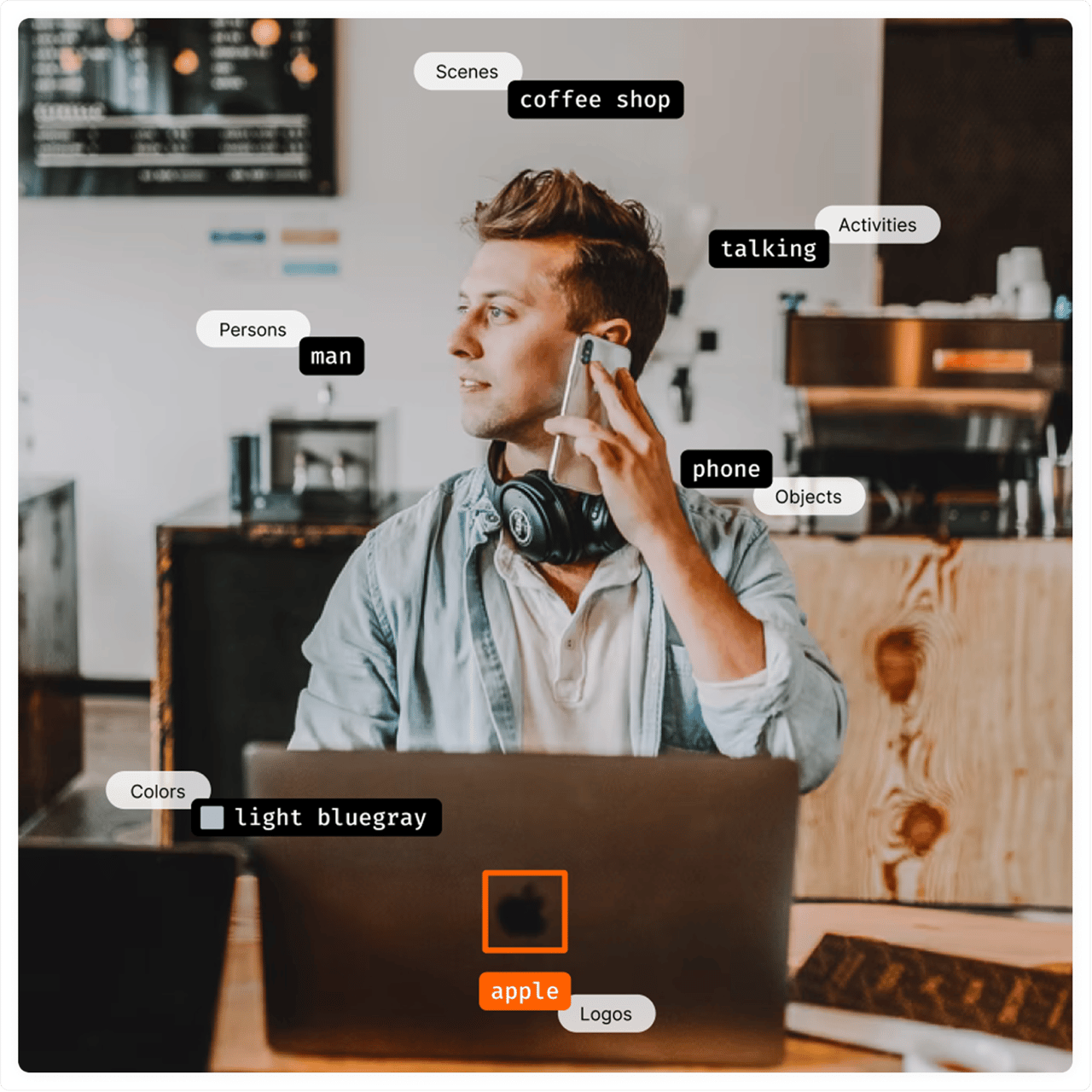
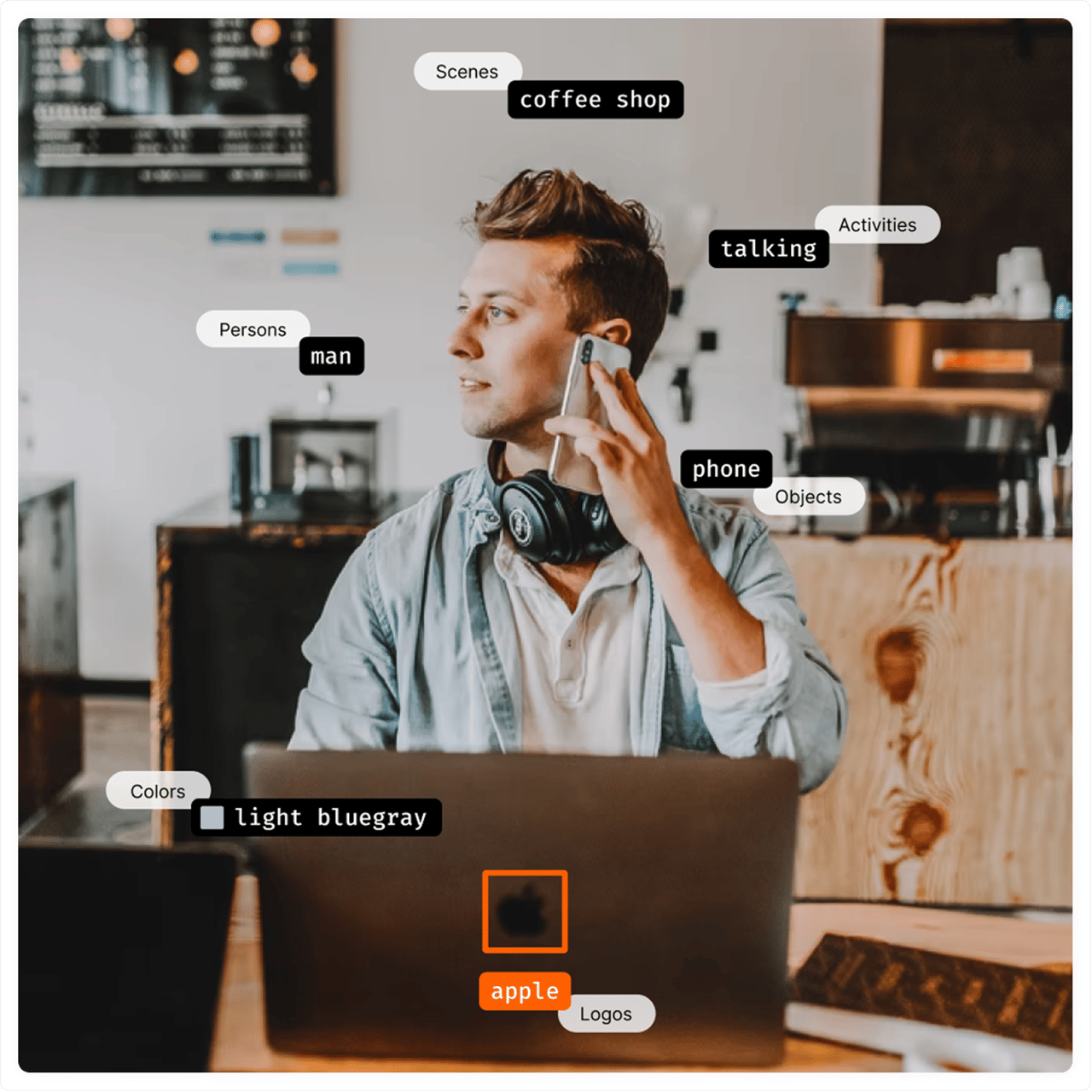
The technology relies on NLP to understand context, sentiment, and meaning in social media conversations. But here's where it gets interesting: advanced AI systems like YouScan's Visual Insights now detect brand mentions in images through computer vision, catching your logo, product, or even scenes associated with your brand in photos and videos. This visual monitoring captures roughly 80% more brand mentions than text-only social listening, helping you analyze data from unstructured data sources that most brands ignore.
The real difference between old-school social media monitoring and AI-powered social listening comes down to understanding versus counting. Traditional tools could tell you how many times someone mentioned your brand. AI tells you why sentiment shifted, what's driving engagement, and which upcoming trends will impact your business next quarter.
11 practical ways to use AI in social media
Most articles about AI in social media focus on what's possible in theory. Let's talk about what actually works in practice. Here are eleven use cases that smart marketing campaigns are deploying right now.
1. Analyze social data faster for actionable insights
AI systems process millions of social media posts in minutes, surfacing the actionable insights that matter to your business. Instead of scrolling through endless dashboards, you can ask questions in plain English and get summarized answers that help you gain insights faster than traditional data analysis methods.
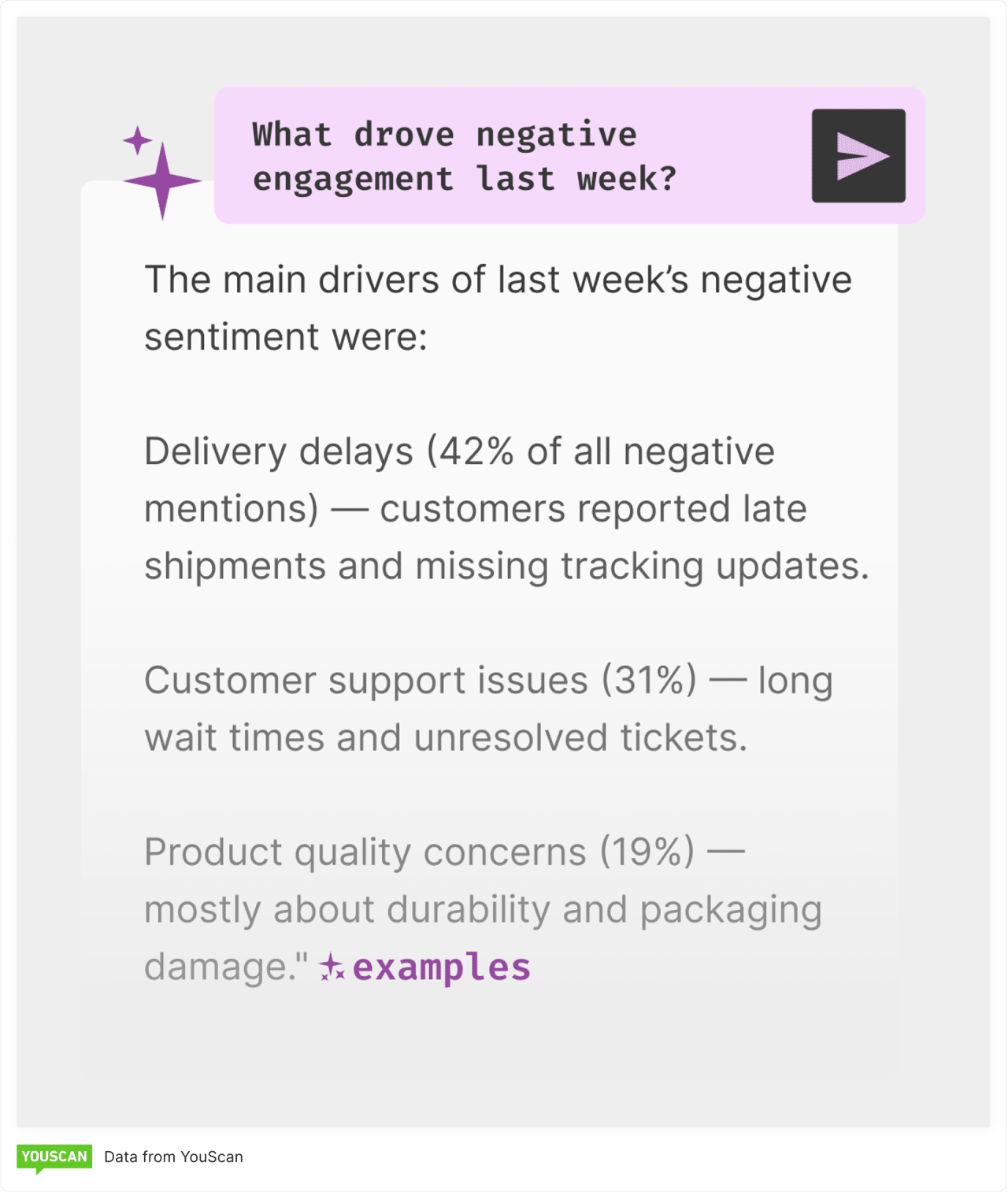
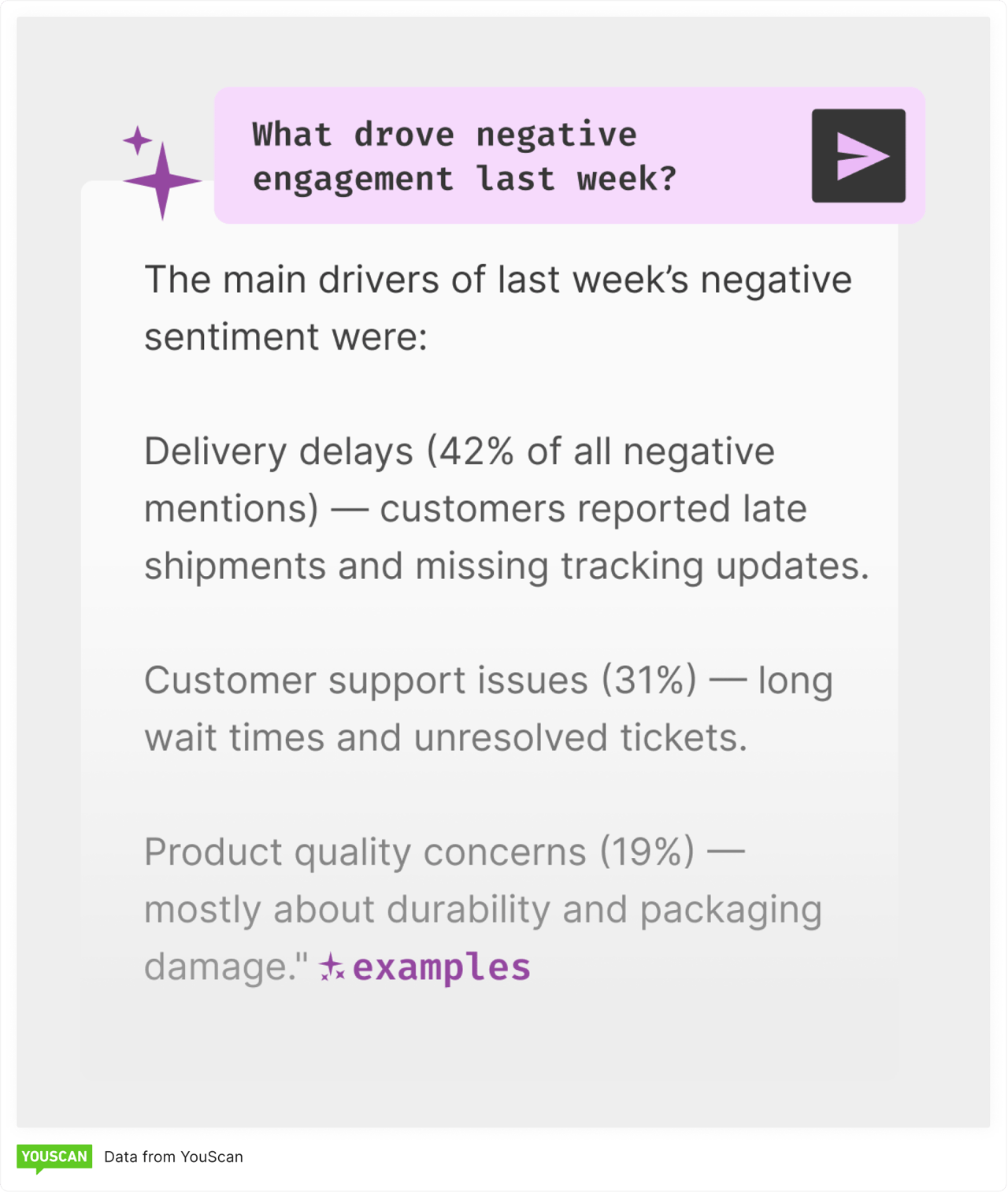
YouScan's Insights Copilot exemplifies this approach. Ask it "What drove negative sentiment last week?" and it returns a summary explaining the key drivers, complete with citations to specific posts. This conversational interface cuts research time from hours to seconds, helping you automate tasks that used to require manual labor.
2. Social listening with text and visual recognition
This is where most social media monitoring falls short. Traditional tools only track text mentions—but your customers aren't just writing about you. They're photographing your products, recording video content, sharing memes, and creating user-generated content that includes your brand visually without using text tags.
Visual Insights technology detects your logo, product packaging, and even contextual scenes in images and videos. A customer posts a photo of your product on their kitchen counter without mentioning your brand name? You'll still know about it. Someone creates a TikTok featuring your competitor's product alongside yours? You'll catch that comparison and gain deeper insights into competitive positioning.
This matters because visual content dominates social media platforms. With 71% of social media images now AI-generated according to recent data, the ability to analyze visual content at scale isn't optional—it's survival. Other users are creating AI-generated content about your brand constantly, and you need to see it.
3. Audience segmentation and personalization at scale
AI algorithms cluster your audience by interests, sentiment patterns, and visual context. This goes way beyond basic demographics. You can identify which customer segments discuss certain product features, which communities drive word-of-mouth growth, and which audience groups exhibit early warning signs of churn. These AI insights help you understand user engagement patterns and audience engagement metrics that drive business growth.
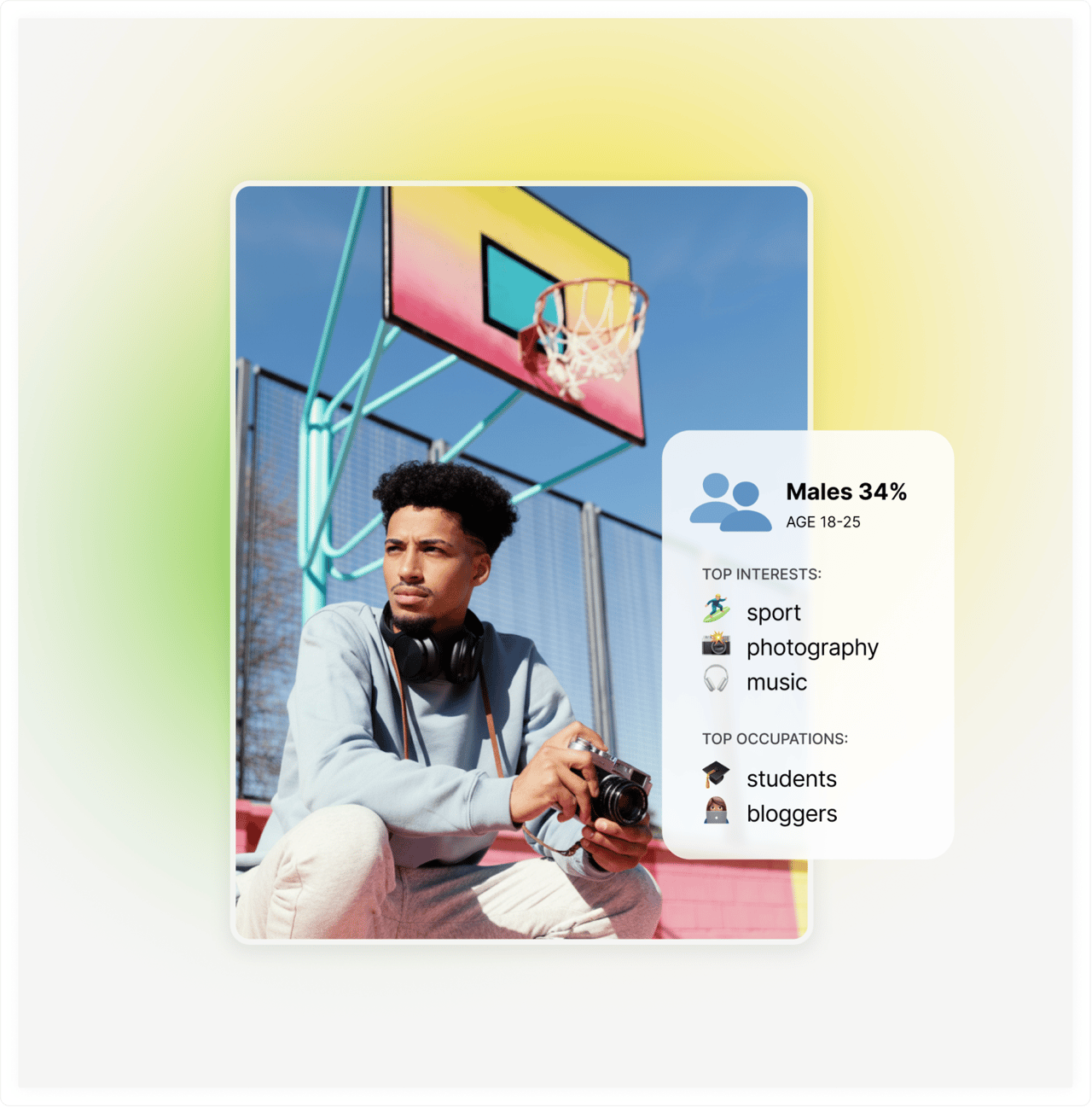
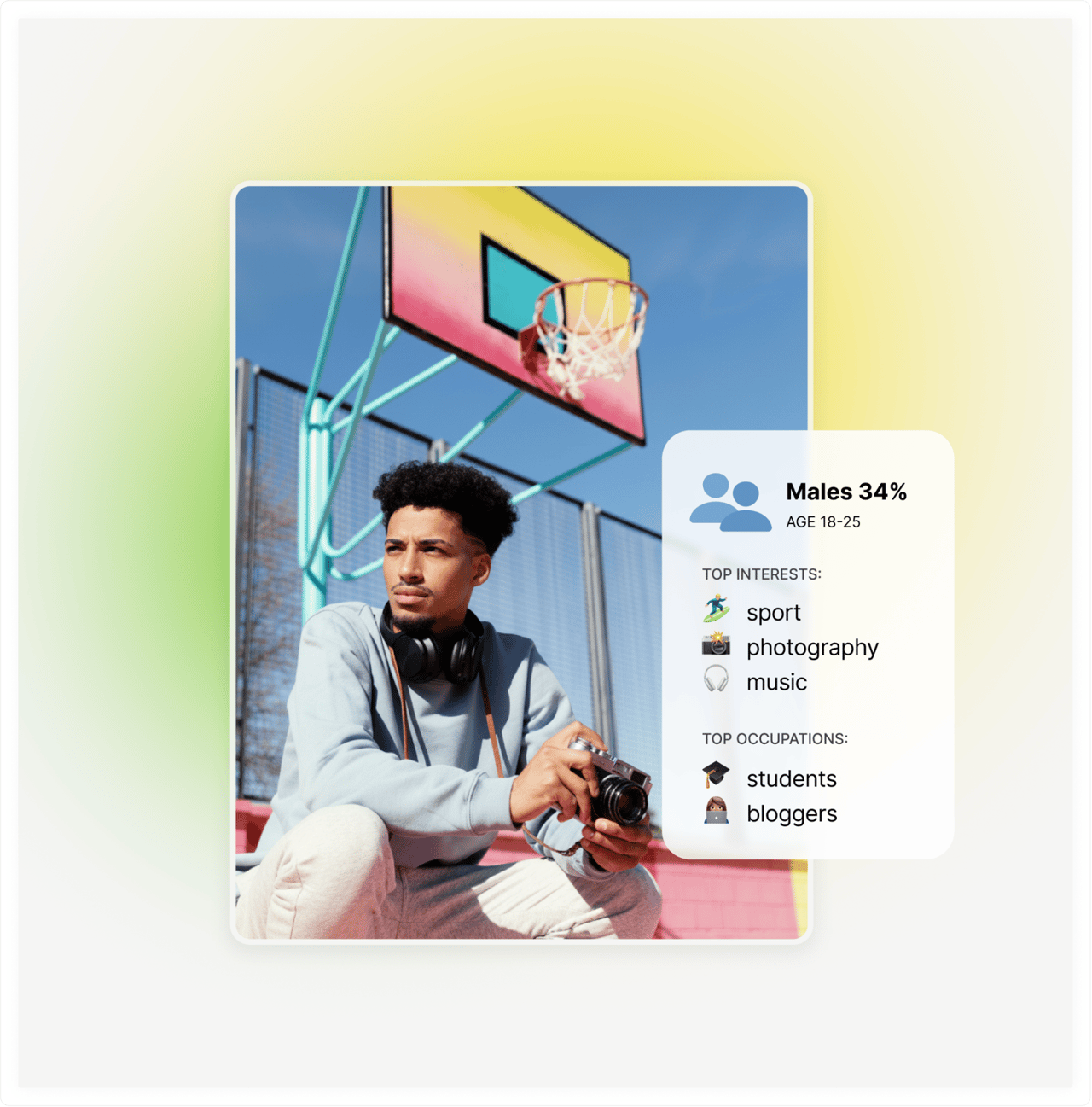
The result? Marketing campaigns that feel personal because they're built on data-driven insights about actual behavioral patterns and consumer preferences rather than assumptions about what your right audience wants.
4. Creative ideation and copy generation
Generative AI tools like ChatGPT, Jasper, and Claude fasten the ideation phase. You can generate creative ideas, explore dozens of headline variations, explore different content angles, and draft social media posts in minutes. Some tools can even generate images to accompany your content creation efforts.
But here's the catch: AI-generated content needs human oversight to maintain your brand voice and authenticity. Christina Inge of Harvard DCE puts it well: "Your job will not be taken by AI. It will be taken by a person who knows how to use AI." The magic happens when you use AI to amplify your creativity, not replace it. High quality content still requires a human touch.
5. Repurpose long-form content across platforms
Take your webinar recording, podcast episode, or research report and let AI tools extract key points, generate platform-specific snippets, and adapt the online content for different social media platforms. A single piece of content creation work now feeds your social media management strategy for weeks, helping you post content consistently.
This approach addresses one of the biggest pain points in social media marketing: maintaining consistent content output without burning out your team. By automating routine tasks, you can stay ahead of competitors while focusing on strategy.
6. Scheduling and timing optimization
Predictive analytics identify the optimal posting times for your specific audience. Instead of guessing when your followers are most active, AI systems analyze user engagement patterns and recommend precise windows for maximum reach.
Some tools go further, automatically adjusting posting schedules based on real time insights about when your audience is actually online and engaged. The AI model learns from your performance data to come up with the best recommendations.
7. Ad creative optimization and testing
Generate multiple ad creative variants, test different headlines, and automate A/B testing analysis for your ad campaigns. AI systems can predict which targeted ads will perform best before you spend your entire budget finding out the hard way, delivering numerous benefits to your marketing efficiency.
Machine learning models learn from your campaign performance, continuously fine tuning recommendations to improve results over time. This data-driven approach helps you create more effective ad campaigns that reach the right audience.
8. Crisis detection and issue monitoring
This might be the highest-value use case most brands overlook. AI listening flags sudden spikes in negative user sentiment, emerging issues, and potential PR crises before they explode across social media platforms and affect public opinion.
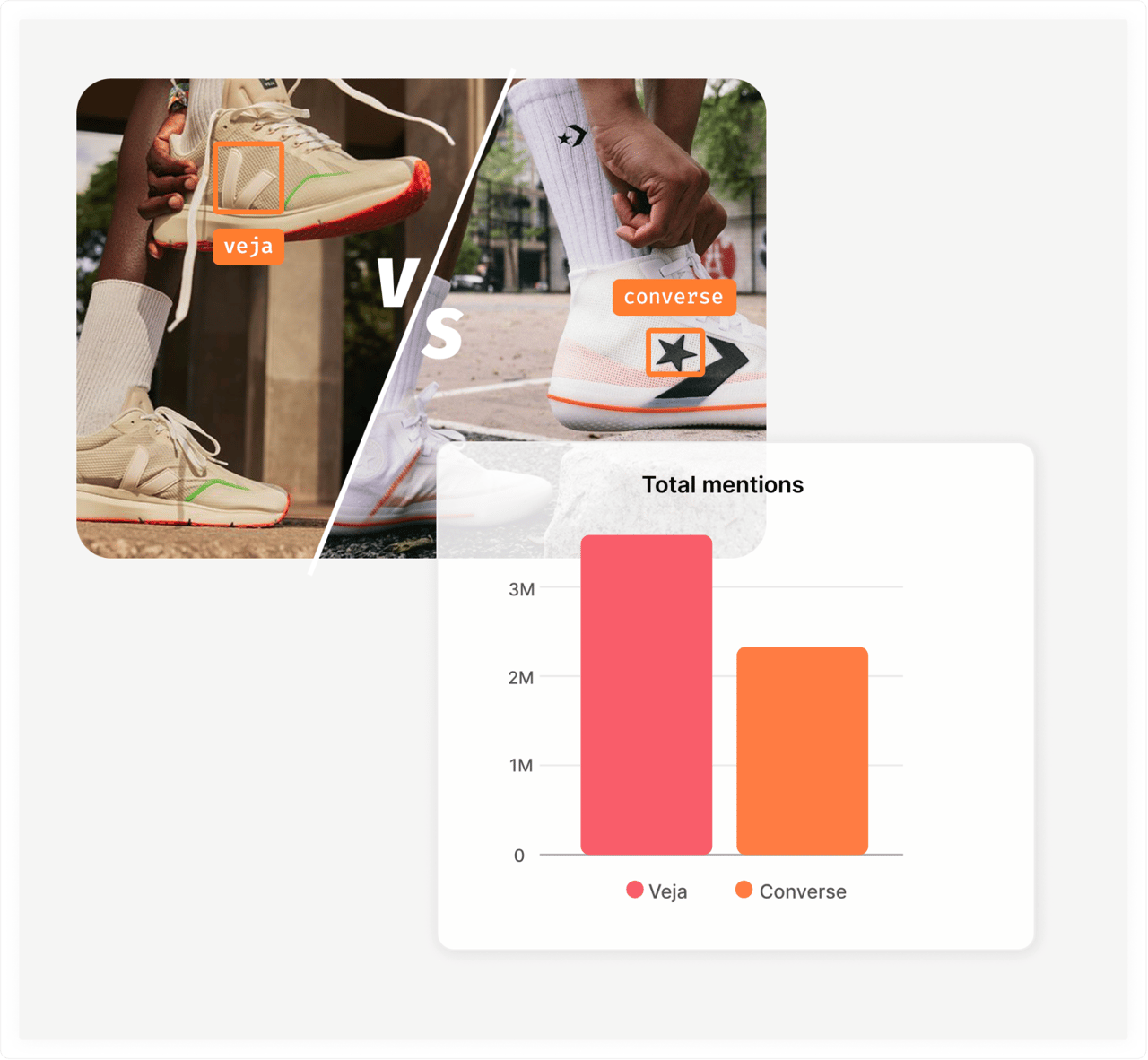
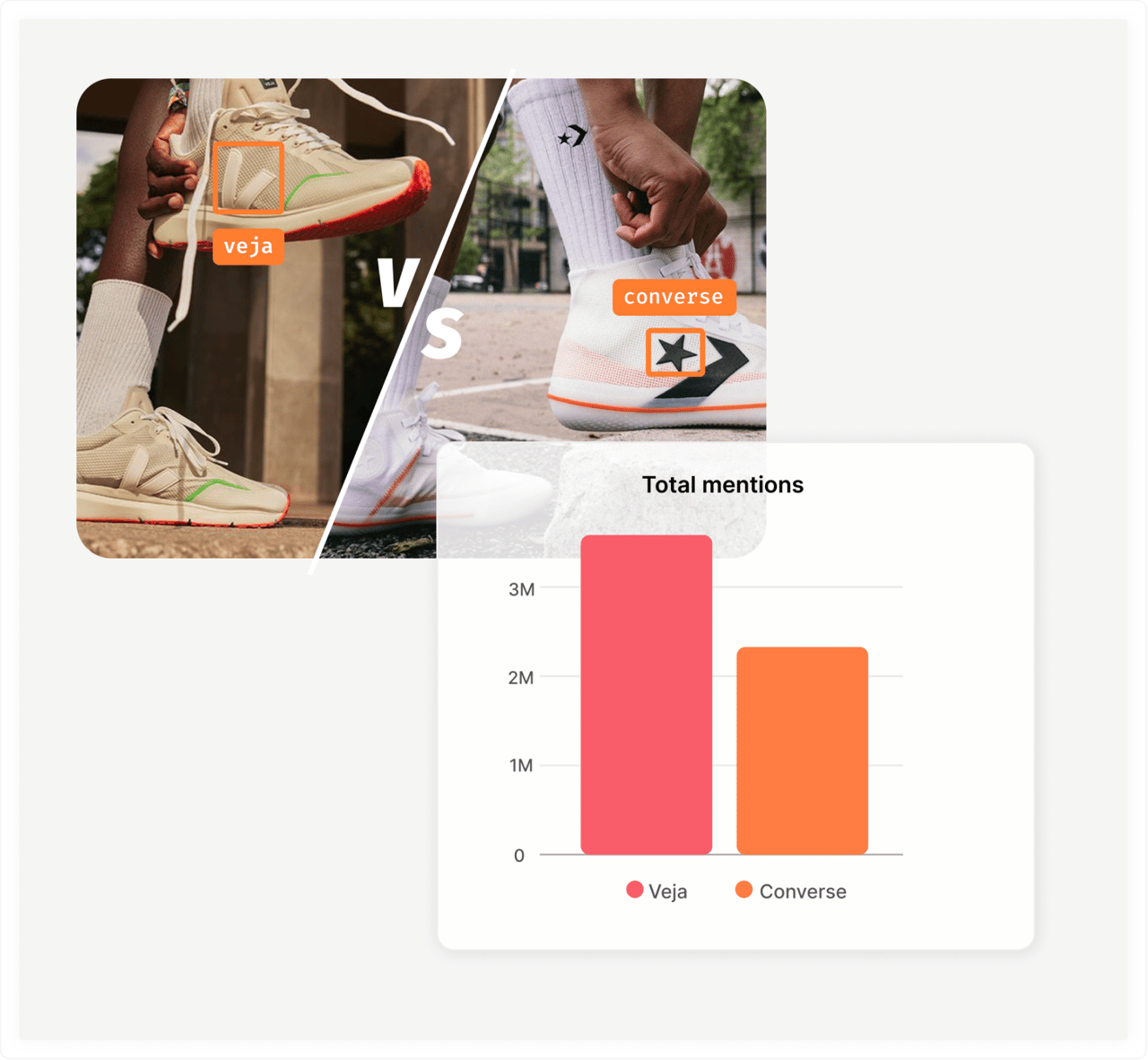
YouScan's approach shines here because it monitors both text and visual content. If people start sharing screenshots of a product defect or posting negative videos about customer interactions, you'll get alerted immediately—even if they're not tagging your brand directly.
Learn more about crisis management strategies and brand reputation protection.


9. Chatbots and customer care automation
AI-powered virtual assistants handle common customer queries, freeing your team to tackle complex issues that require human judgment. These systems help you automate tasks and improve customer interactions at scale. The AI technology has matured significantly—987 million people now use AI chatbots, with 80% of companies either using or planning to adopt them for customer service by 2025.
The critical factor? Training data quality. Your chatbot is only as good as the customer data and conversations you use to train it. Quality inputs lead to better customer service outcomes.
10. Accessibility improvements at scale
AI automatically generates alt text for images and captions for videos, making your social media content accessible to users with visual or hearing impairments. This isn't just good ethics—it expands your potential audience and often improves SEO.
Given the volume of video content most brands now produce, with the help of a video editing tool that provides user-friendly features such as music visualizer, screen recorder, video compressor, teleprompter, voice cloner, and AI avatar generator, manual captioning would be prohibitively expensive. AI makes it routine.
11. Competitor and influencer intelligence
Identify trending creators in your niche, track competitor campaigns, and monitor emerging trends, hashtags, and communities before they hit mainstream awareness. AI tools analyze network effects, user engagement patterns, and audience overlap to surface partnership opportunities you'd never find manually.


The brands that spot rising influencers early get better partnership terms and more authentic relationships. As the landscape evolves, even virtual influencers are becoming part of marketing strategies. This competitive intelligence helps you stay ahead of market trends and position your brand strategically in the digital landscape.
Deep dive: AI social listening as the hidden growth lever
Unlike old keyword monitoring that just counted mentions, modern social listening understands context, measures user sentiment, and explains why trends are happening. This approach helps you gain insights that drive business growth.
Let's look at these real use cases:
Brand context discovery: Your customers show how they actually use your product in real-life settings. Maybe your kitchen gadget keeps appearing in dorm rooms, suggesting a younger audience than you targeted. That's a strategic insight, not just a vanity metric. Advanced visual analysis reveals these unexpected use cases. Even text in images gets analyzed for deeper context.
Campaign tracking without hashtags: Your influencer marketing campaign generates tons of user generated content, but people forget to include your campaign hashtag. Visual recognition catches those mentions anyway, giving you accurate ROI data.
Crisis detection before it trends: Someone posts a photo showing a product defect. Within minutes, other customers reshare it. Visual AI spots this pattern immediately, alerting your team before it becomes a trending topic. That is how you can handle crisis communication and, if needed, online reputation repair.
The real innovation? Explainable AI through YouScan's Insights Copilot. Rather than just showing you that sentiment dropped 15%, it explains why—summarizing the key themes, identifying the trigger events, and citing specific social media posts as evidence. You're not drowning in data. You're getting actual understanding of customer data and what drives changes in user sentiment.
Benefits, risks, and ethics of AI in social media
AI in social media delivers clear advantages. You gain scale (analyzing millions of social media posts), speed (real time insights instead of weekly reports), and depth (understanding context that manual analysis misses). Predictive analytics help you spot emerging trends before competitors, and sentiment analysis reveals how consumer preferences shift over time. These capabilities provide actionable insights that drive measurable results.
But let's talk about what keeps AI researchers up at night.
Bias is the big one. AI models learn from data sets, and if those data sets contain biases, the AI will amplify them. A facial recognition system trained primarily on one demographic performs poorly on others. Content moderation AI might flag certain communities' dialects as hate speech while missing actual harmful content that could spread misinformation. These aren't hypothetical problems—they're documented failures that damaged real people and brands, raising serious ethical considerations.
Privacy concerns intensify as AI systems analyze customer data at an unprecedented scale. Yes, social media posts are public. But when AI analyzes that data to build detailed profiles of individual users, the ethical considerations become blurry. You need clear data privacy policies and transparent practices about how you're using AI insights.
Hallucinations happen when AI generates plausible-sounding information that's completely wrong. This is particularly dangerous in social media marketing where AI-generated content might make false claims about your products or competitors. Always verify AI outputs before publishing.
Content repetition is the aesthetic problem. When everyone uses the same generative AI tools to generate social media posts, platforms start feeling eerily similar. The algorithmic style of AI writing becomes obvious, and audiences tune it out. Differentiation requires injecting genuine brand voice and perspective—the human element AI can't replicate. The vast majority of successful brands use AI to support their creativity, not replace it entirely.
Ethical guidelines to follow:
Keep human oversight in the loop for final decisions, especially anything customer-facing.
Make sure you're transparent about when and how you're using AI.
Prioritize brand-safe data sets that won't introduce unwanted biases.
Focus AI systems on insight generation and data analysis rather than unchecked publishing of ai generated content.
Regularly audit your AI tools for unexpected biases or drift in performance.
Consider the far reaching implications of how you deploy AI technology in ways that affect democratic societies and public discourse.
Platform and ecosystem shifts to watch in 2026
Understanding where social media platforms are headed helps you invest in the right AI capabilities today.
Meta's rolling out AI-generated video feeds, emphasizing algorithmic content generation over chronological timelines. The implication? Your organic reach depends increasingly on understanding what their AI algorithms prioritize. You can't game the system, but you can create content that aligns with what the AI is trained to surface.
Snap's partnership with Perplexity brings conversational AI to social discovery. Users increasingly search for products and information through social platforms rather than traditional search engines. Social media is now a primary brand discovery tool, with TikTok, YouTube, and Instagram replacing Google for many consumers.


LinkedIn keeps improving AI post generation and analytics. B2B marketers can now use AI tools to optimize professional content at scale. But the platform also penalizes obvious AI-generated slop, so quality still matters.
Creator-first generative AI tools are proliferating. Platforms are building AI directly into their interfaces, making content creation easier but also more homogeneous. The brands that stand out will be those using AI for insights—not just output.
The strategic takeaway is that platforms automate more content creation and AI-generated content becomes ubiquitous, the differentiator shifts to an insight-driven strategy. Everyone can generate posts and create content with AI. Not everyone understands what their audience actually wants based on data-driven insights. This is where AI social listening provides a competitive advantage that compounds over time, helping you future-proof your social media strategy and stay ahead of competitors.
Choosing your AI social stack
You don't need every AI tool. You need the right ones working together to deliver actionable insights that drive results. Here's how to think about building your social listening stack:
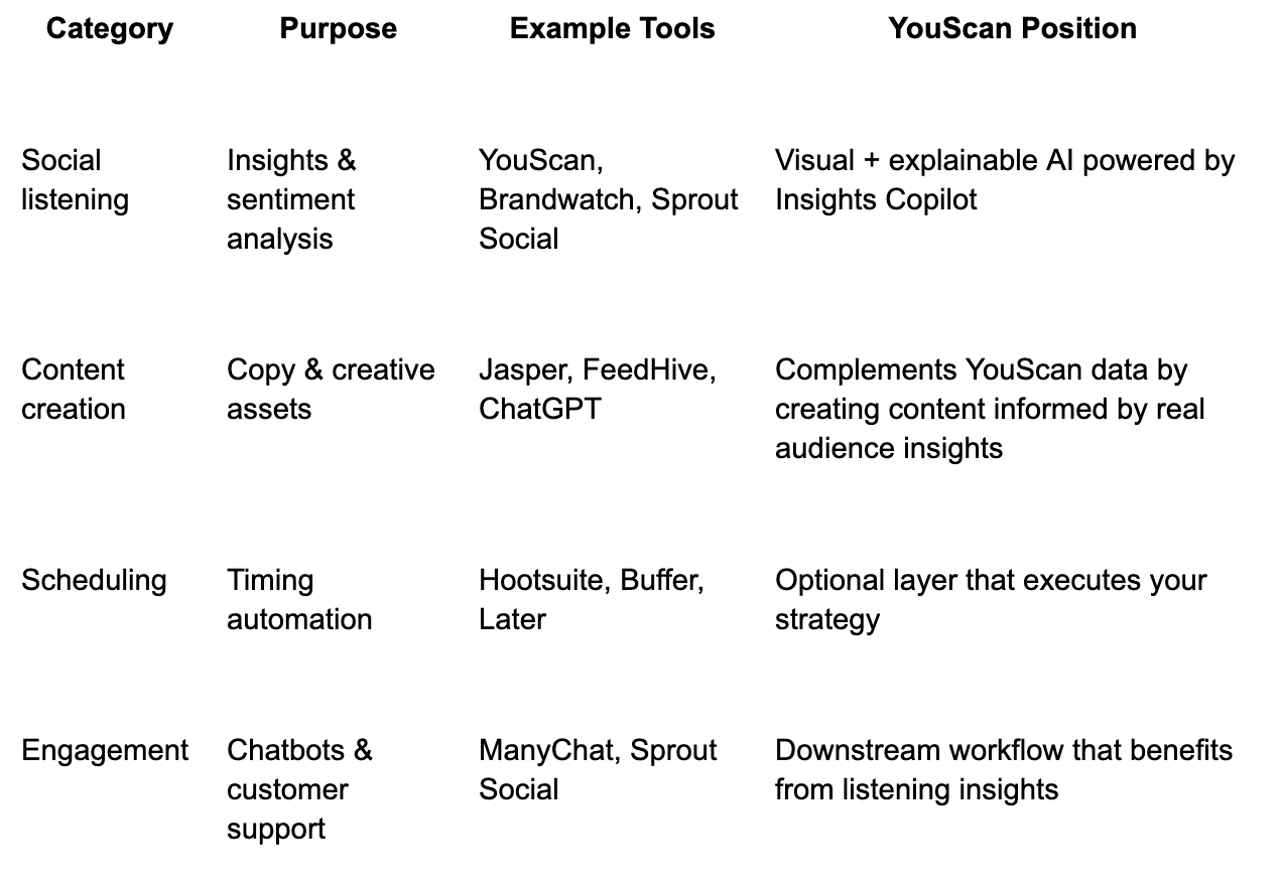
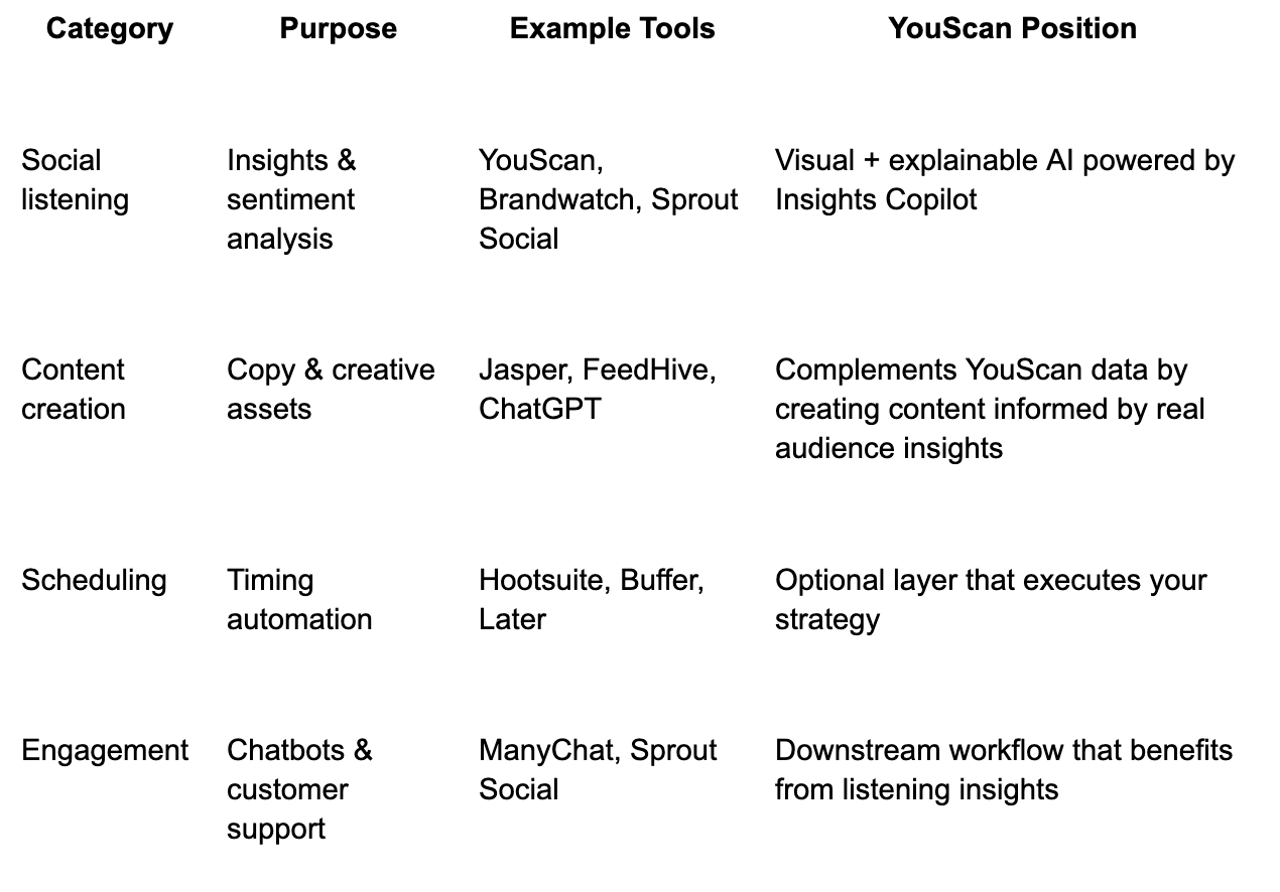
The logical sequence: listen first, understand what's working through AI insights, then create content informed by those insights. Most brands do this backward—they create content, post content, and hope for the best. Then they wonder why user engagement and audience engagement remain flat despite posting consistently.
If you want AI that listens before it speaks, start with social listening. The insights you gain inform everything else in your social media management strategy. Visual recognition ensures you're catching the full conversation. Explainable AI helps you understand why trends emerge, not just that they exist. Compare different social listening platforms to find the right fit. Speaking of, YouScan is recognized as a leader on G2 for social listening.
Explore alternatives to Brandwatch, Meltwater competitors, and Talkwalker alternatives to compare options.
Example workflow: from insight to content
Here's how this works in practice with real social listening examples:
Step 1: YouScan's Visual Insights detects a spike in photos featuring your product in a specific use case you hadn't considered. Maybe your standing desk is unexpectedly popular with gamers who initially bought it for office work.
Step 2: Use Insights Copilot to summarize why this trend is happening. The AI explains that gamers appreciate the adjustability for switching between gaming and productivity setups. It cites specific social media posts showing the dual-use configuration.
Step 3: Your content team ideates new creative ideas based on these AI insights. They plan a campaign highlighting versatility, create content showing both use cases, and adjust targeting to include gaming communities. This content creation is informed by actual customer behavior, not guesswork.
Step 4: Schedule and test this content using your publishing tools. Run A/B tests on messaging that emphasizes different benefits.
Step 5: Monitor performance and sentiment shifts through social listening. Did the gaming community respond positively? Are you seeing increased engagement from that segment? Are competitors noticing and responding? Track sentiment over time to measure impact.
This loop—detect, understand, create, measure—shortens the time between discovering an opportunity and capitalizing on it. The brands moving fastest through this cycle win market share from slower competitors.
Conclusion: AI that listens wins the social game
Most brands are using AI backwards. They're focused on what it can produce: more social media posts, more content, more automation of routine tasks. But the real power of artificial intelligence in social media isn't in output—it's in understanding. The transformative power lies in analysis, not just generation.
The brands winning in 2025 aren't necessarily creating the most content. They're the ones who understand their audience most deeply, spot emerging trends earliest, and respond most strategically. They're using AI to listen, analyze, and comprehend before they speak. Explore YouScan's powers to see insights in action.
FAQs
What does AI mean in social media?
AI in social media refers to AI systems that analyze content, automate workflows, and generate actionable insights from social media platforms. This includes natural language processing for understanding text and social media conversations, computer vision for analyzing images and video content, sentiment analysis for gauging user emotions and user sentiment, and machine learning for identifying patterns and emerging trends.
How to tell if a social media post is AI?
AI-generated social media posts often exhibit certain patterns: overly formal or formulaic language, lack of personal anecdotes or specific details, perfectly structured content with no natural flow variations, generic statements without unique perspectives, and absence of genuine emotion or personality. However, sophisticated generative ai tools are becoming harder to detect, and the best approach combines human judgment with dedicated AI detection tools.
What is the 30% rule for AI?
The 30% rule suggests that AI generated content should make up no more than 30% of your social media output to maintain authenticity and audience trust. The principle recognizes that while AI tools can accelerate content creation and help you create content faster, over-reliance on AI leads to generic, impersonal social media posts that audiences tune out.
What is the 5 5 5 rule on social media?
The 5 5 5 rule is a content distribution guideline for social media management: spend 5 minutes finding relevant content to share, 5 minutes creating original content, and 5 minutes engaging with your audience. While not specifically about AI, the principle becomes more powerful when enhanced with AI tools.