10 Best Brandwatch Alternatives to Consider for Social Listening in 2026


Twenty years ago, about 5% of Americans had a social media account. Today there are 5.79 billion social media user identities worldwide, roughly 70% of everyone alive, and social media has stopped being a channel you check on Fridays.
That’s the opportunity and the problem in one sentence. Your target audience is telling you exactly what it thinks, constantly, across dozens of social media channels. No team of social media managers can read all of it.
So you buy a tool. And if you’ve been shopping, you’ve almost certainly landed on Brandwatch: the category’s most recognisable name, and one of its most expensive.
Here’s the thing. Brandwatch is genuinely good at what it does. It’s also built for one kind of buyer, a large organisation with a dedicated research function and a budget to match. If that’s not you, you’ll feel it in the quote, in the onboarding, and in the six weeks you spend learning Boolean syntax.
This piece covers ten Brandwatch alternatives worth a demo call in 2026: what each one is actually good at, what it costs, and where it falls down. Some are pure social media listening tools. Others are social media management tools that happen to listen well.
Why teams start looking for Brandwatch alternatives
Brandwatch has been around since 2007 and its stack is broad: consumer intelligence, social media management, influencer discovery, media intelligence. Cision acquired it in 2021 and folded it in alongside Falcon.io.
Breadth is the selling point. It’s also the complaint most social media teams end up making.
Three things come up again and again in G2 and TrustRadius reviews:
A steep learning curve. New users describe the interface as overwhelming. Building a decent query takes training, and most marketing teams don’t have a data analyst on staff.
Opaque pricing. No public price list. You book a demo, wait for a proposal, and find out weeks later whether it was ever in budget. Four of the ten tools below have the same problem.
It’s built for large enterprises. Brandwatch quietly retired its entry-level Essentials tier, completing a shift toward enterprise-only positioning. Smaller teams get an overkill solution and a support queue where they aren’t the priority. If all you need is to track brand mentions and protect your brand’s online presence, you’re paying for a research department you’ll never staff.
None of that makes Brandwatch a bad product. It makes it the wrong product for a lot of the people evaluating it.
How much does Brandwatch cost?
Brandwatch doesn’t publish pricing, so every figure comes from procurement data and user reports. Third-party procurement records put Brandwatch cost between $800 and $1,500 a month for small teams, $2,000 to $5,000 for mid-market, and $5,000 to $15,000+ for enterprise. TrustRadius reviewers report a similar spread. For that money, you could run social media monitoring on several brands elsewhere.
Annual contracts are standard, monthly billing is rare, and implementation, historical data, and API access are usually priced on top.
How we picked the best Brandwatch alternatives
We weighted the Brandwatch alternatives below on four things, roughly in this order:
What it actually does. Advanced analytics, audience demographics, historical data, consumer research, or does it just count brand mentions? Plenty of social media monitoring tools stop at volume.
Whether a normal person can use it. More features means more complexity, and a social media tool nobody opens is worth nothing.
Price transparency. Published pricing is a signal. Vendors who hide it usually have a reason.
Who else trusts it. Track record with recognisable brands, and what reviewers say once the honeymoon ends. A tool that only reads major social networks will miss the review sites and forums where buying decisions get made.
If the vocabulary in this space is still fuzzy to you, our social listening glossary is a good place to start before you sit through a demo.
The 10 best social listening platforms to replace Brandwatch
1. YouScan — the consumer intelligence platform built for visual data
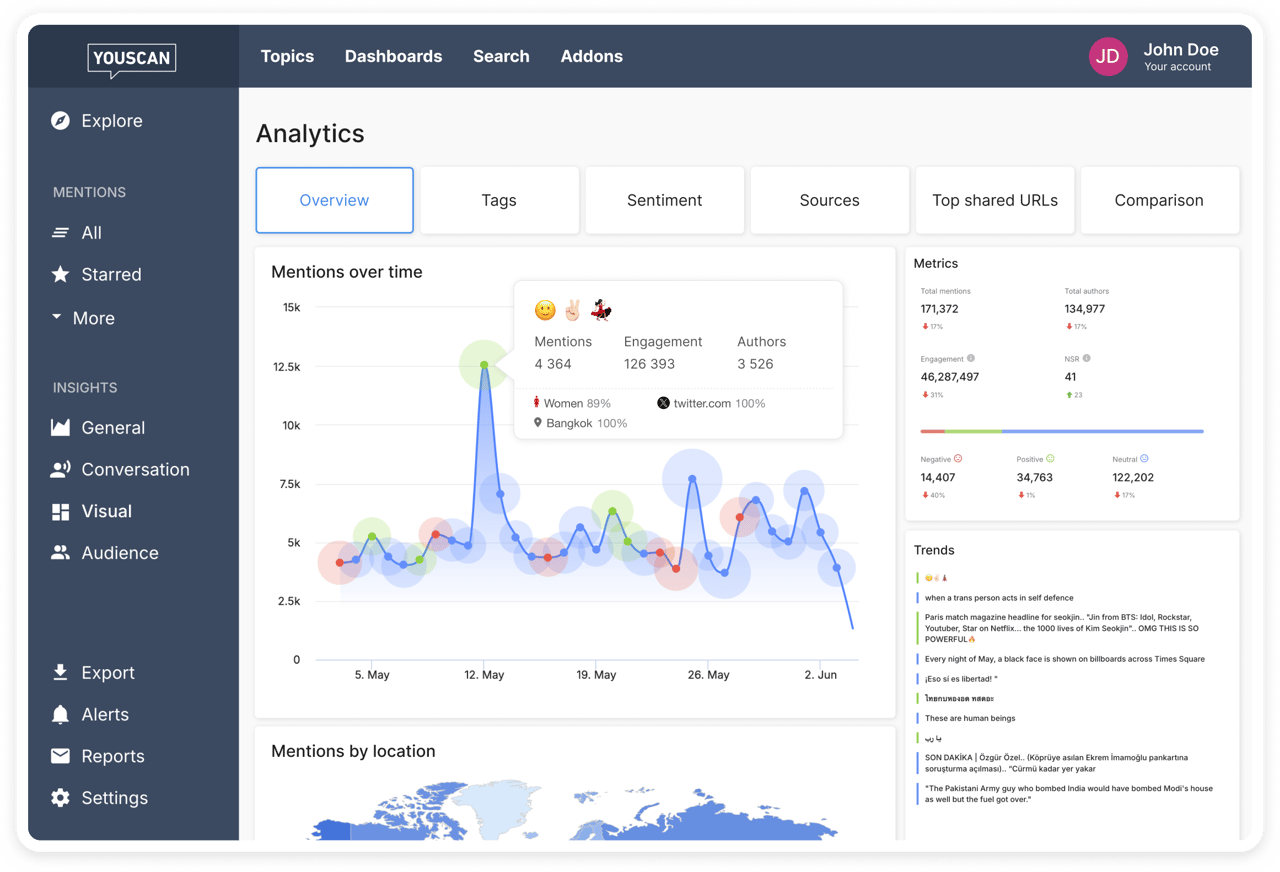
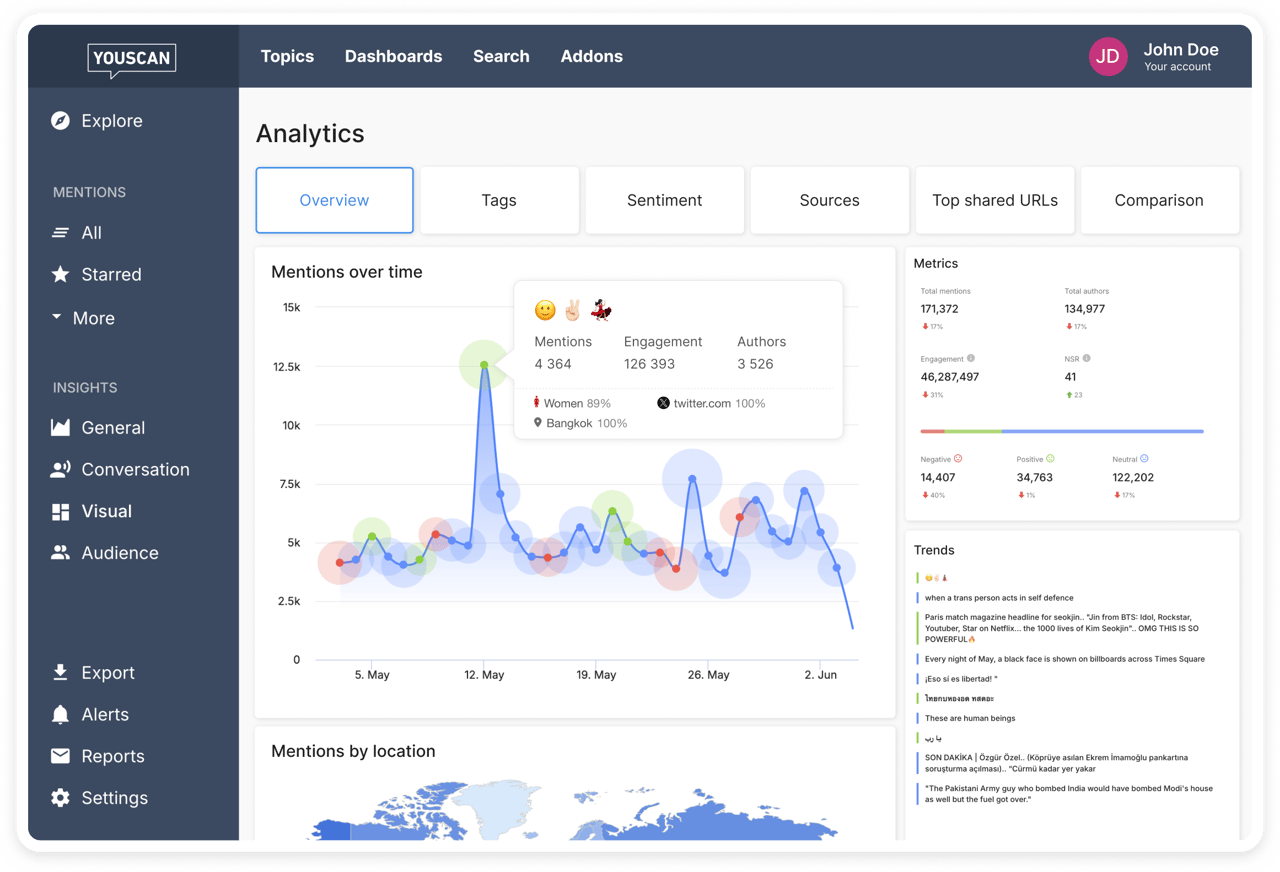
YouScan is a social listening and media monitoring platform that reads images, not just text. That sounds niche until you remember most people posting about your product never type your brand name. They photograph it. Text-only social media monitoring misses those mentions entirely.
Key features
Visual Insights: AI image recognition that detects logos, objects, scenes, and demographics inside user-generated photos and video.
Audience Insights: demographics, interests, and occupations of the people actually discussing you, which makes targeting less of a guess.
Insights Copilot: a conversational AI agent you can question directly instead of building a report every time.
Moltbook monitoring: YouScan is one of the first platforms to track conversations on Moltbook, the AI-agent-only network where bots discuss brands before those narratives reach human feeds.
Pros: 95% sentiment detection accuracy, multilingual sentiment analysis that most tools don’t offer, and customer support that reviewers consistently rate above the category. Used by Metro, Coca-Cola, and Publicis Groupe. The social listening dashboards are flexible enough to give each team its own view without turning into a mess.
What’s missing: traditional broadcast and print coverage is thinner than Meltwater’s. There are no publishing features, so you’ll still need something to schedule posts. Higher tiers are custom-quoted.
Pricing: from $499/month for Starter-3, billed annually, covering three topics with text search and sentiment analysis. Unlimited plans are custom-quoted, with Visual Insights, Audience Insights, custom dashboards, and API access as add-ons.
Best for: brands seeking competitor analysis, market research, and visual brand monitoring in one place, without an enterprise contract.
2. Sprout Social — social media management and listening under one roof
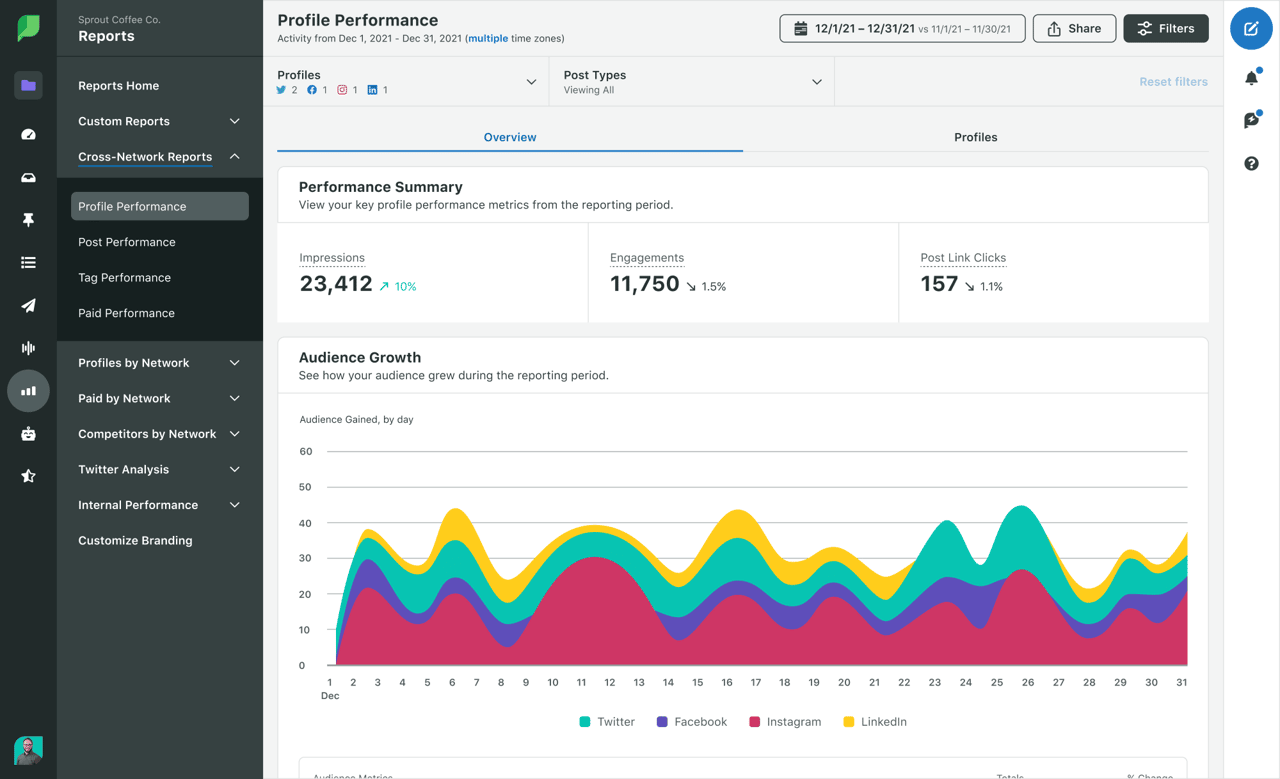
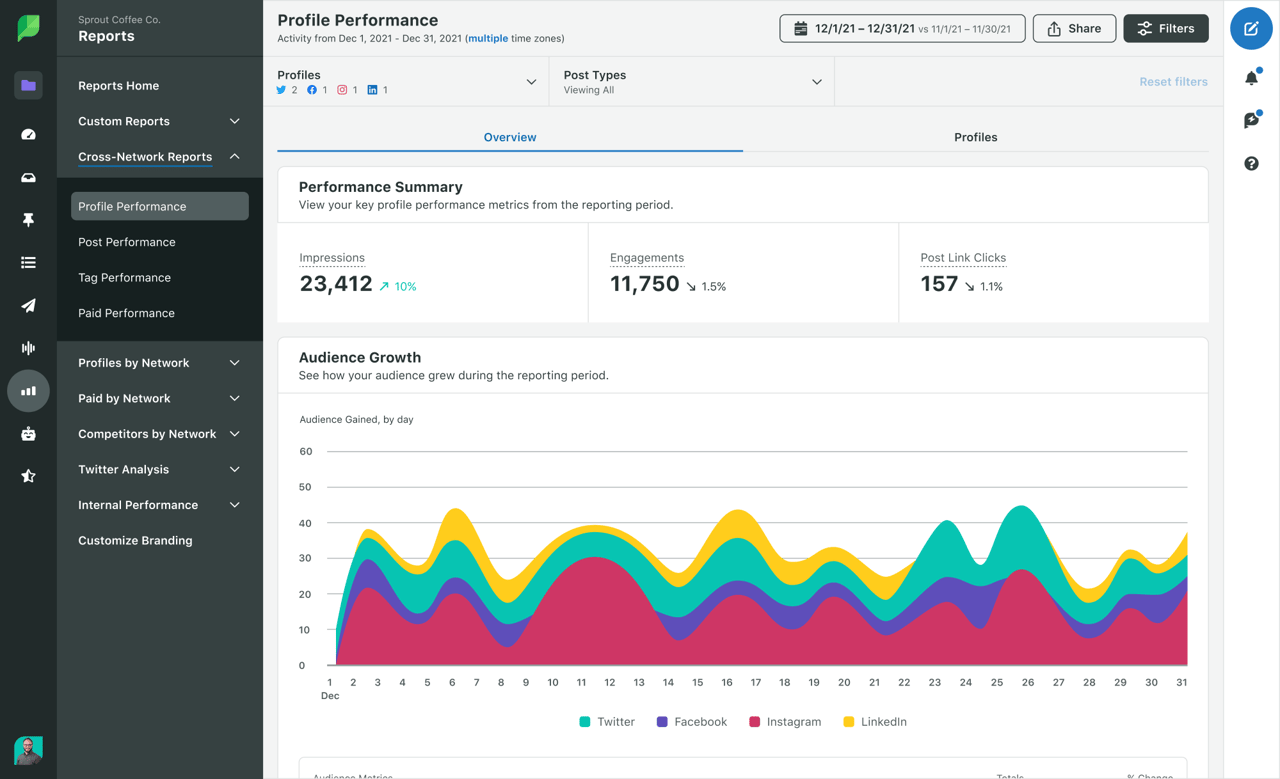
Sprout Social tops most lists of Brandwatch alternatives, and for good reason. It’s a unified platform that combines social listening with publishing, engagement, and reporting, so insights and action live in the same place. Where Brandwatch hands you a research dashboard, Sprout Social hands you a social media management platform you can act inside of.
Key features
Listening queries built with AI assistance, so you don’t need Boolean expertise
Smart Inbox and a publishing calendar you can use to schedule posts across multiple social media accounts
Premium Analytics with shareable links for stakeholder reporting
Add-ons for influencer marketing and employee advocacy
Sentiment and spike alerts that track sentiment shifts as they happen
Pros: easy to learn. Strong review management across Google, Yelp, and Tripadvisor. Everything sits on one codebase, so acquisitions don’t break your workflow, and reporting on social media performance is the best here.
What’s missing: listening is add-on priced on top of an already premium per-seat licence, and per-seat billing compounds fast. Five people on Professional runs about $1,495 a month before listening.
Pricing: per seat, billed annually. Essentials $79, Standard $199, Professional $299, Advanced $399, Enterprise custom. 30-day trial, no card needed. Social listening is a separate add-on at every tier.
Best for: marketing teams that want publishing and listening in one subscription and can absorb Sprout Social’s per-seat pricing.
3. Talkwalker — media monitoring beyond social
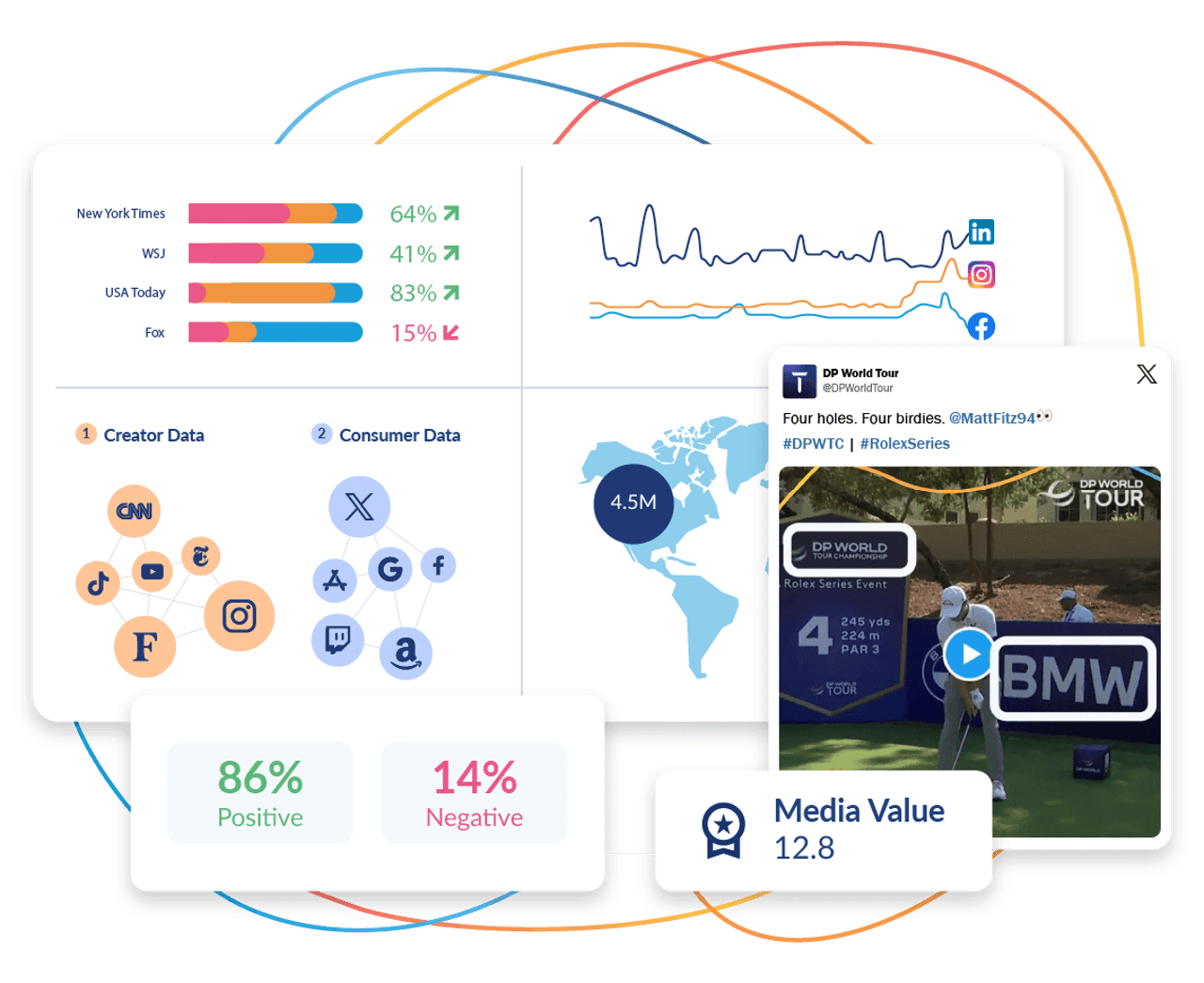
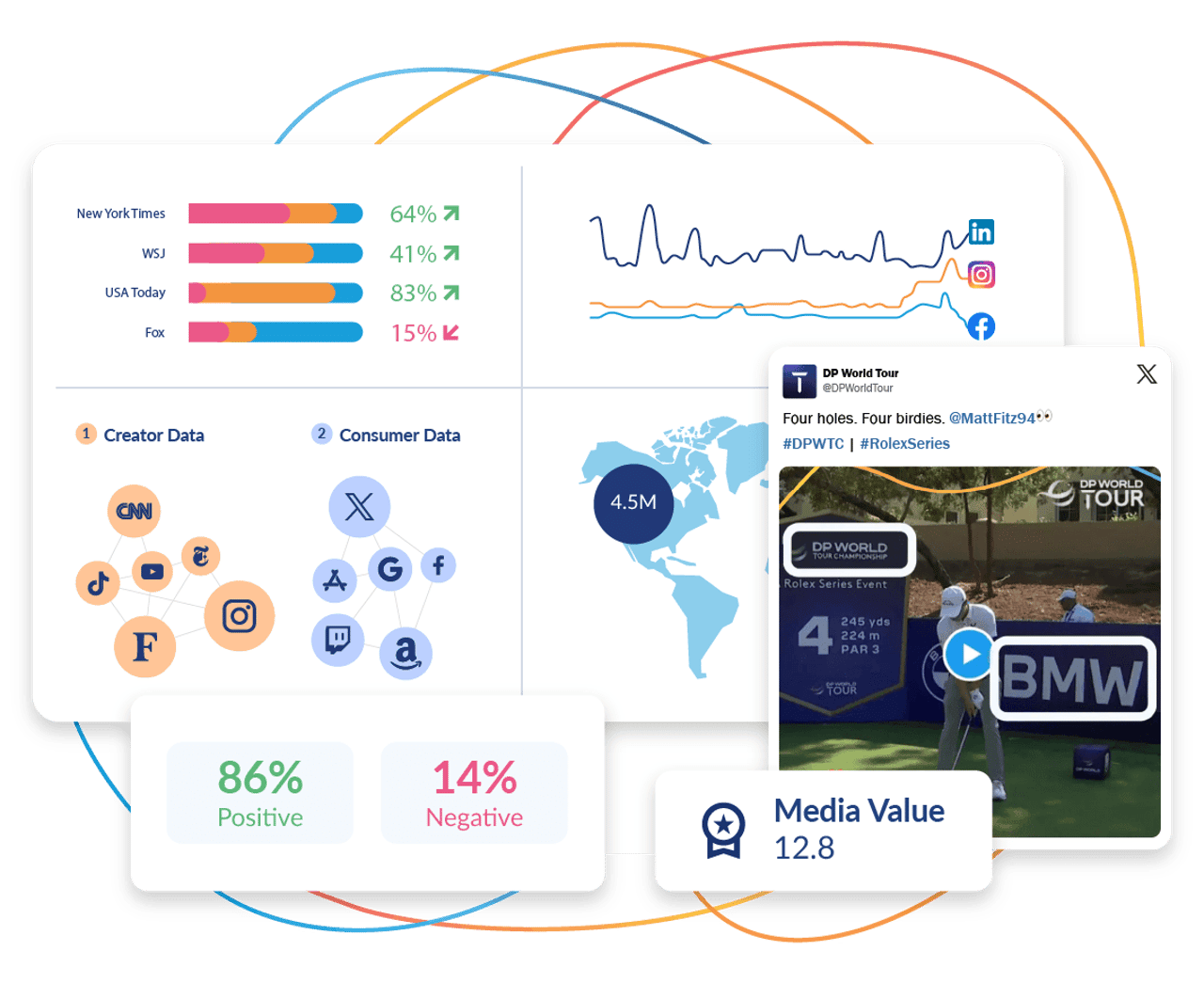
Talkwalker analyses text, images, video, and speech across news outlets, forums, blogs, and podcasts. If your remit covers earned media coverage as much as social, it’s the closest thing to a like-for-like swap. Hootsuite acquired it in 2024, it now trades as Talkwalker by Hootsuite, and a slimmed-down version powers Hootsuite’s own listening.
Key features
Social listening and sentiment analysis across multiple social media platforms
Media monitoring of news sites, online news, blogs, and podcasts in real time
Competitive analysis against industry benchmarks
Pre-built dashboards for common use cases
Pros: the widest content-type coverage of any Brandwatch alternatives here. Dashboards work out of the box, and the sentiment analysis holds up across languages.
What’s missing: users report the historical window on newer plans is short — around 30 days of online conversations, which is thin for trend work. We’ve covered the trade-offs in more detail in our guide to Talkwalker alternatives.
Pricing: not published, quote-only at every tier. Vendr procurement data puts annual contracts between roughly $13,000 and $100,000, median around $27,000. Seats are uncapped, so cost tracks data volume rather than team size.
Best for: PR and comms teams tracking traditional media alongside social.
4. Meltwater — earned media coverage and PR reporting
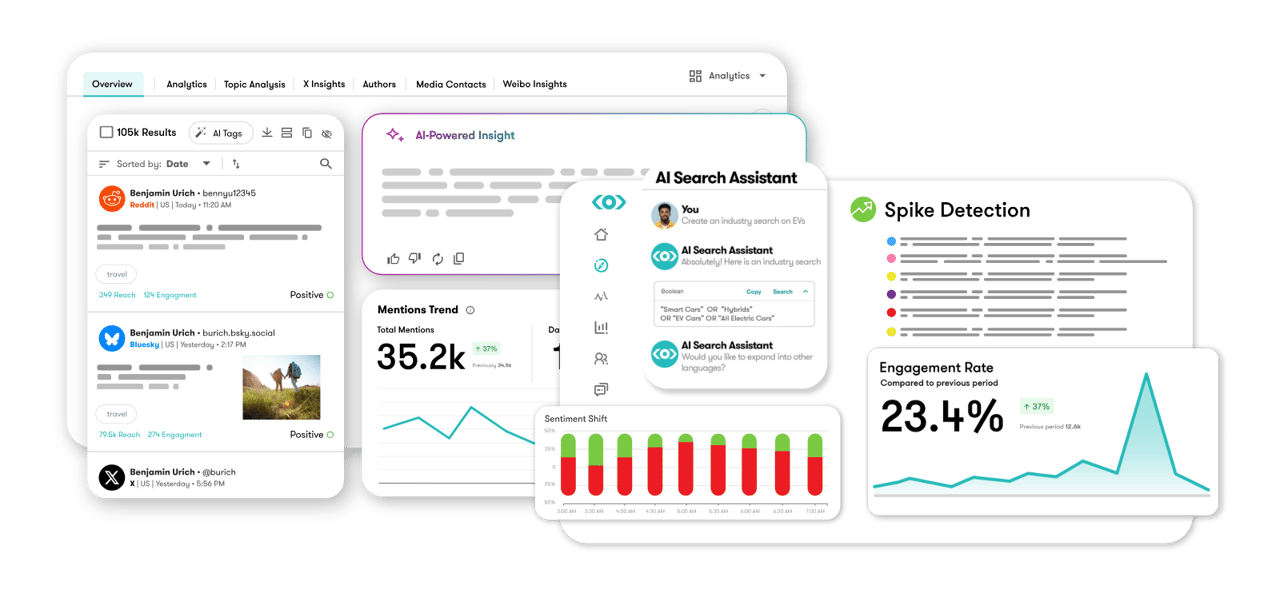
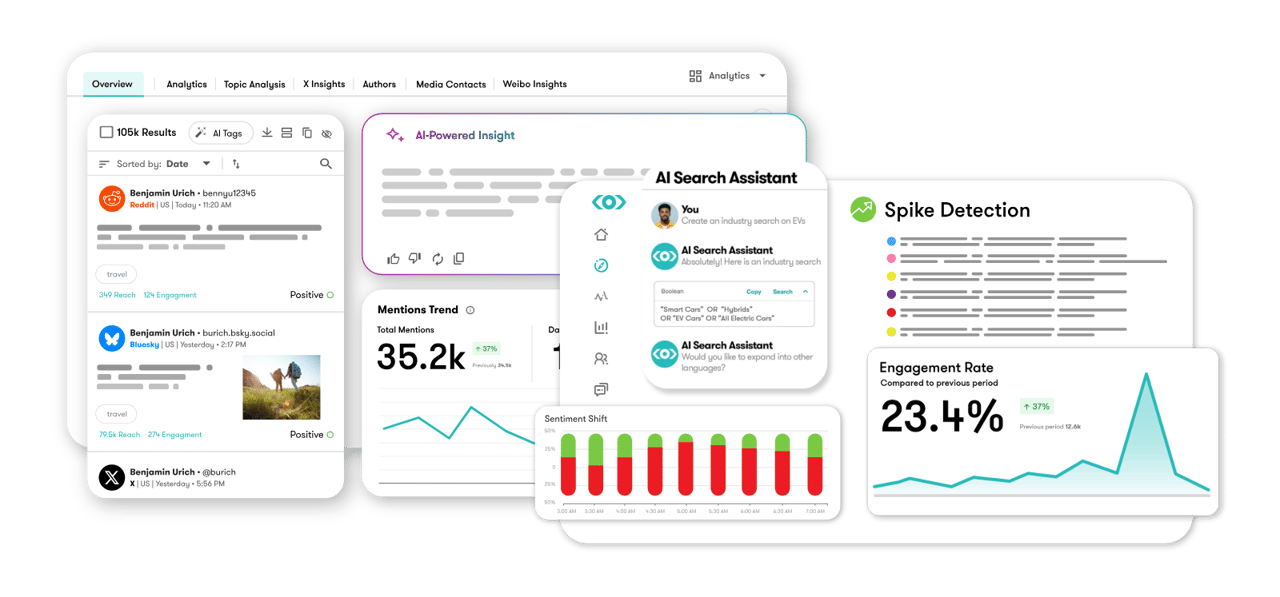
Meltwater leans harder into PR than anything else here. Its comprehensive suite pulls social media data from multiple social networks, ties it to news and print coverage, and adds a sales intelligence layer most competitors skip.
Key features
Social listening, sentiment analysis, and influencer discovery
Media monitoring and PR measurement across owned, earned, and paid
Social media publishing and scheduling across different social media platforms
Sales intelligence for spotting commercial opportunities
Pros: ISO 27001 certified, which matters when procurement is involved. Daily automated reports. Klear, acquired in 2022, handles influencer marketing as an add-on.
What’s missing: expensive, and the interface shows its age. Our breakdown of Meltwater competitors goes deeper.
Pricing: no public list, though Meltwater’s own blog gives indicative ranges: from about $10,000/year for Starter, $25,000 for Pro, and $130,000 for Enterprise. Vendr puts the median contract near $25,000. No free trial.
Best for: comms teams handling sensitive data and reporting up to executives.
5. Brand24 — affordable brand monitoring for smaller teams
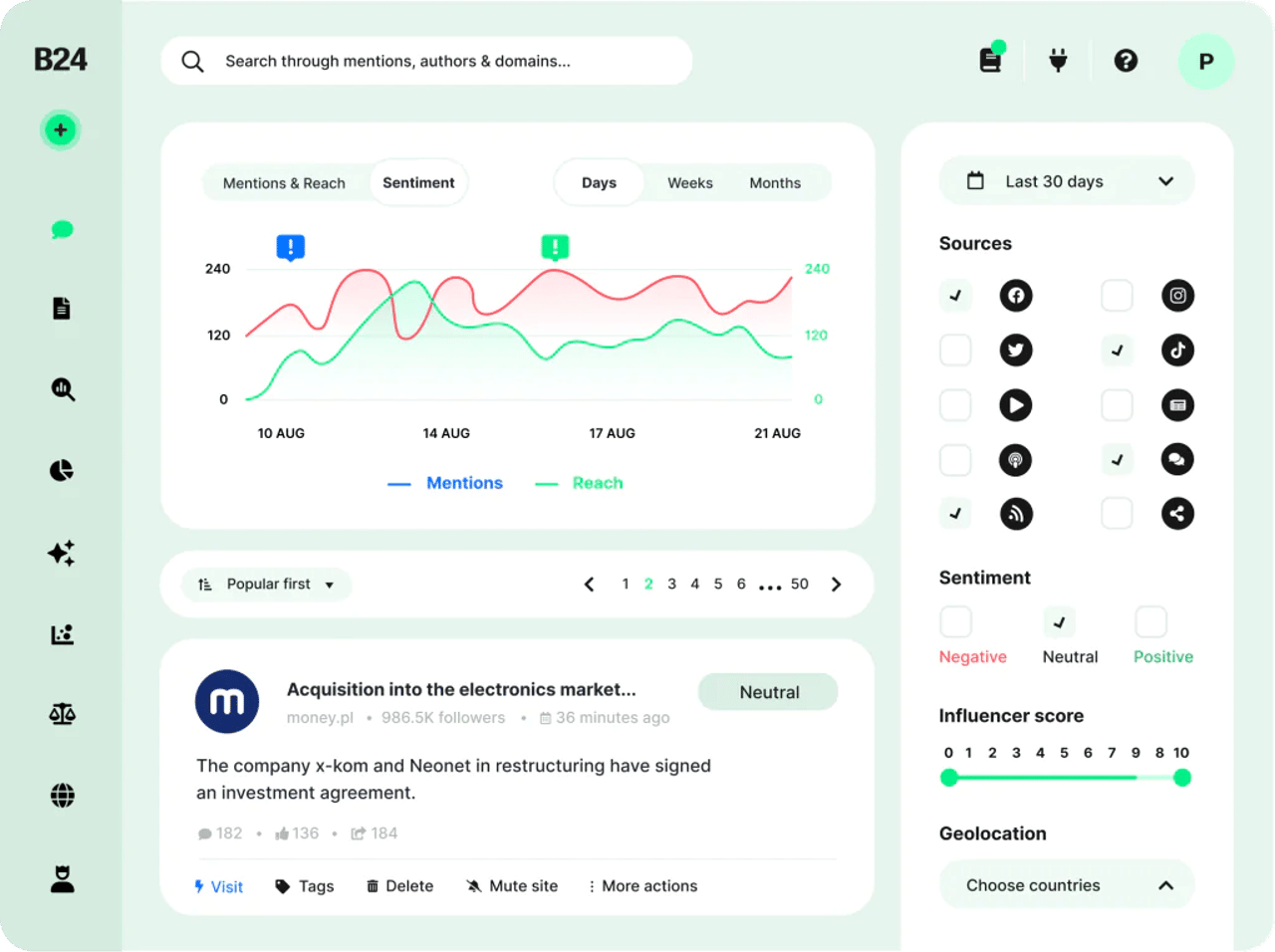
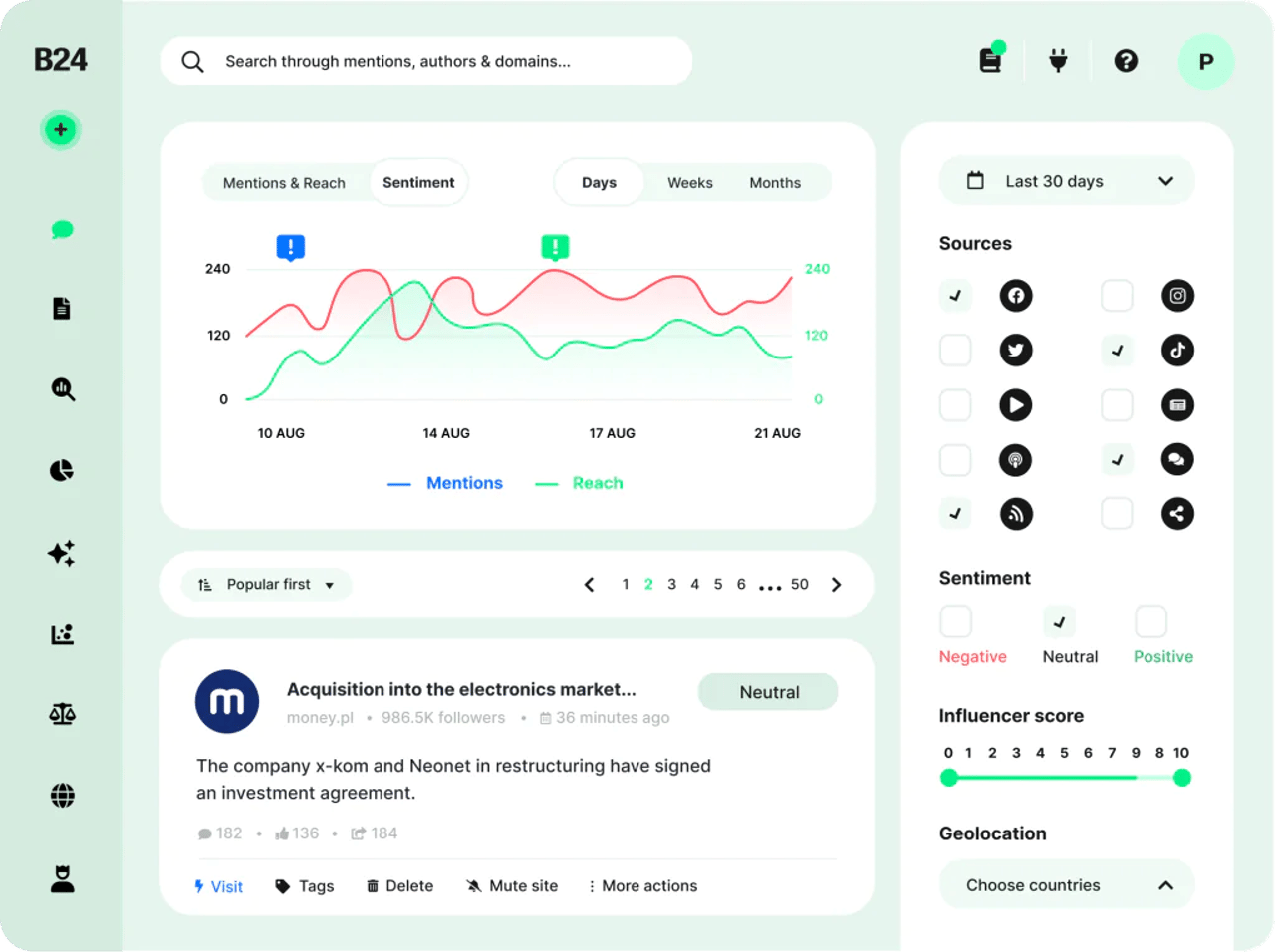
Brand24’s focus is keeping your brand healthy rather than running research projects. Its AI Brand Assistant will monitor brand mentions and diagnose your brand’s online presence, flagging problems while they’re still small. For a lean team, that’s most of the job.
Key features
Social listening and influencer discovery in one view
Media monitoring with reports and data visualisation
Real time alerts on spikes in social media conversations
Mobile app for on-call teams
Pros: 14-day trial, no credit card, plus a 30-day money-back guarantee. Covers a surprising amount of ground, and it’s good for proactive brand health tracking and early crisis management. Check out our comparison of YouScan vs Brand24.
What’s missing: audience demographics are shallow compared to enterprise tools, and there’s no image recognition. Identifying key influencers works, but the data behind it is thin. Prices have also climbed sharply, so it’s no longer the budget pick it was two years ago.
Pricing: billed annually, Individual $199/month, Team $299, Pro $399, Business $599, Enterprise from $1,499. Monthly billing runs about 25% higher. Seats stop being capped from Team up.
Best for: SaaS marketing teams, product teams, and PR agencies that need coverage without a research budget.
6. Mentionlytics — social listening tools on a startup budget
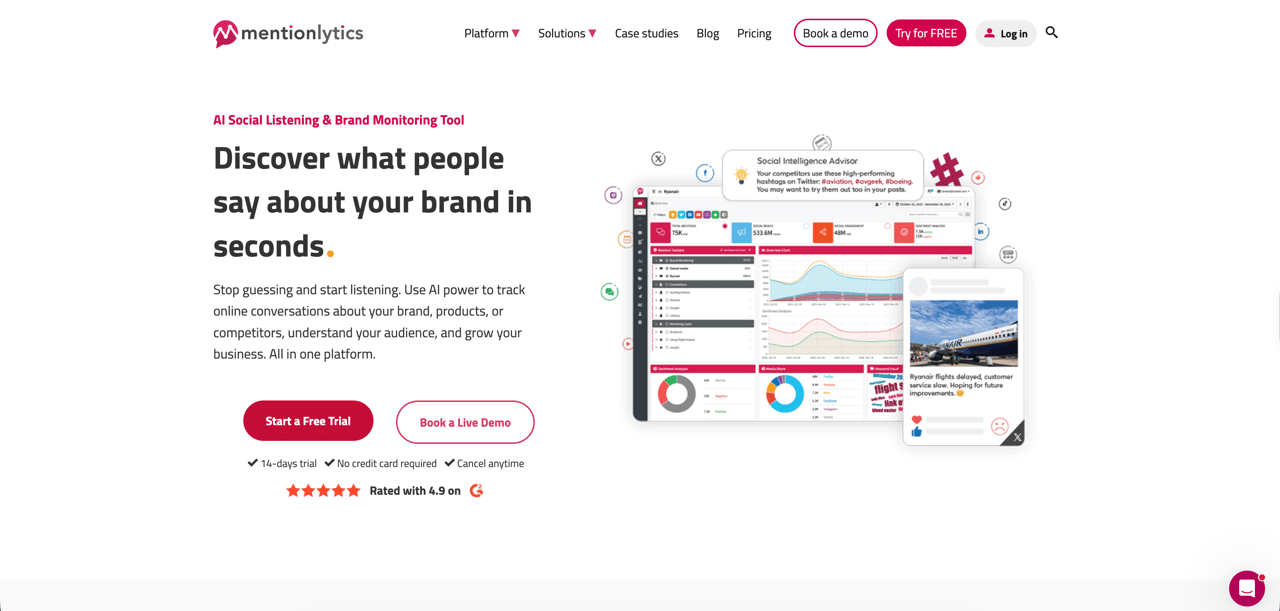
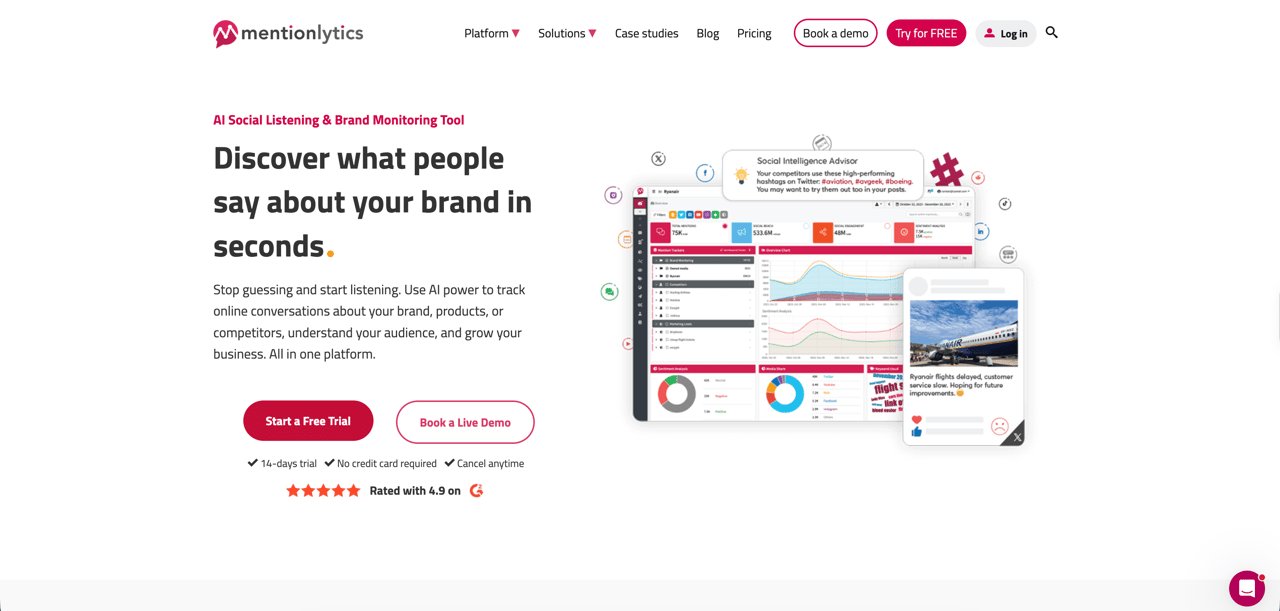
Mentionlytics tracks brand mentions across social media posts, review sites, and online news, then packages them into reports your social media managers can actually read. It also lets you schedule posts, which is unusual at this price.
Key features
Social listening, review monitoring, and social intelligence
Media monitoring across blogs, forums, and news sites
Report builder aimed at non-analysts, not data teams
Basic social media publishing so you can schedule posts without a second tool
Pros: transparent pricing, which is rarer than it should be, and now the cheapest genuine entry point on this list. Covers multiple channels well for the money, and the Business and Enterprise plan tiers make it workable for teams handling multiple brands.
What’s missing: sentiment accuracy drops in less common languages, and analytics depth is limited.
Pricing: $69 Basic, $169 Essential, $299 Advanced, $499 Pro, $749 Business, $999 Enterprise. Published openly, no quote required.
Best for: small businesses, NGOs, and agencies juggling multiple clients on tight retainers.
7. Sprinklr — enterprise social listening at scale
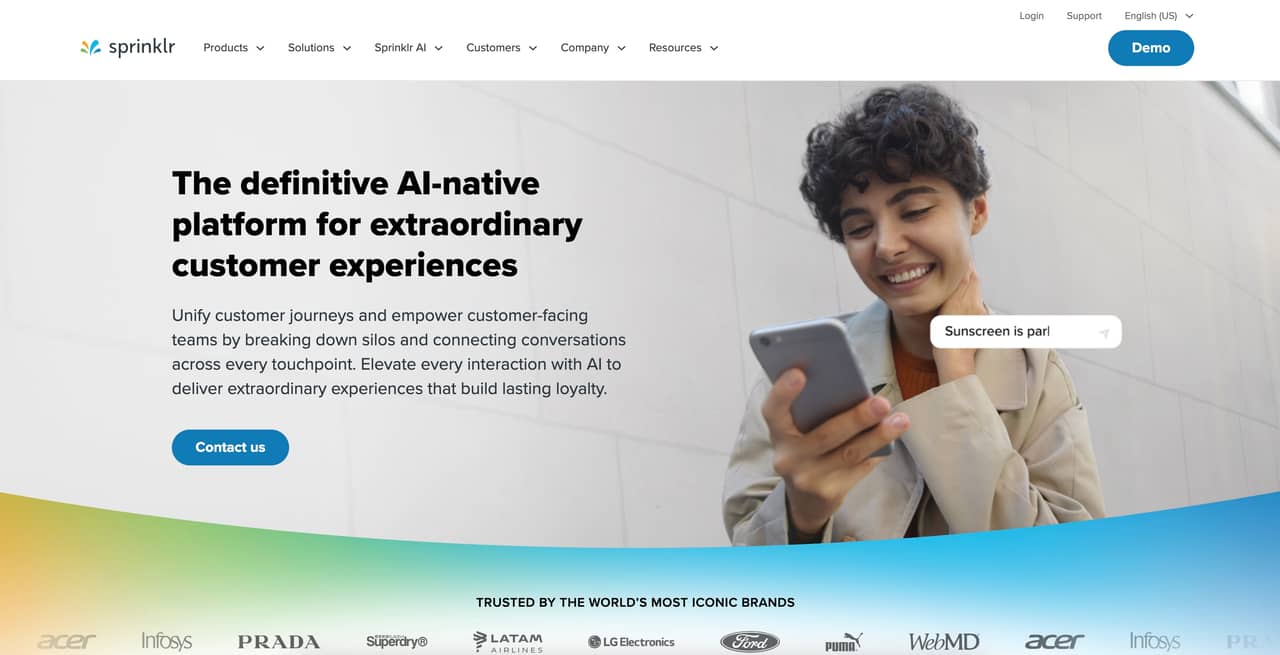
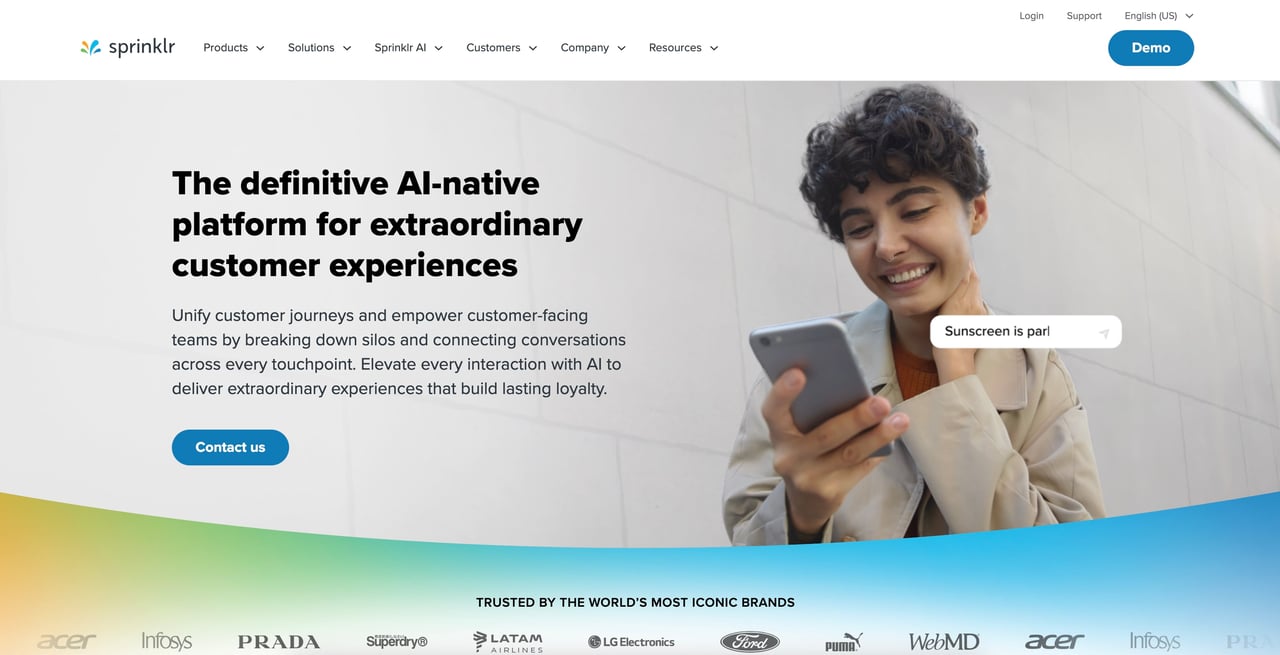
Sprinklr is the Brandwatch alternative you pick when you’re replacing Brandwatch with something equally large. It connects customer service to marketing, which is genuinely useful if those teams currently share nothing but a Slack channel. Be warned that it got harder to buy this year, not easier.
Key features
Social intelligence across multiple channels and 30+ digital touchpoints
Social publishing, engagement, and social media advertising
Marketing campaigns and social campaigns managed end-to-end
Customer service routing and case management, tied to customer engagement data
Pros: AI-powered analytics for sentiment, emotion detection, and trend spotting. Real-time alerts on negative spikes. Genuinely the widest channel coverage here.
What’s missing: a steep learning curve of its own, and Sprinklr retired its self-serve plans on 30 April 2026. There’s no way to try it without a sales process now, and the enterprise plan is quote-only.
Pricing: enterprise quote only since the sunset. The old self-serve tiers ran $199-$299 per seat; buyers now report annual contracts from around $50,000, frequently passing $100,000 once implementation and training are counted.
Best for: large enterprises where customer care and marketing need to work off the same data.
8. Statusbrew — social media scheduling with listening attached
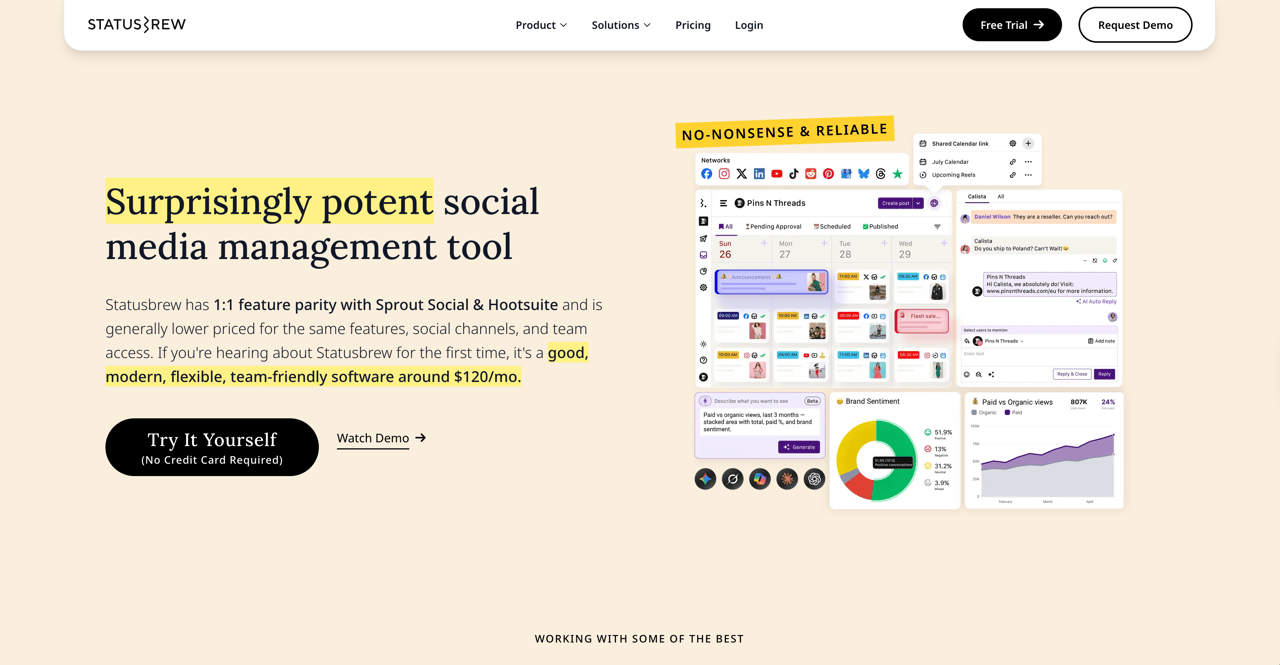
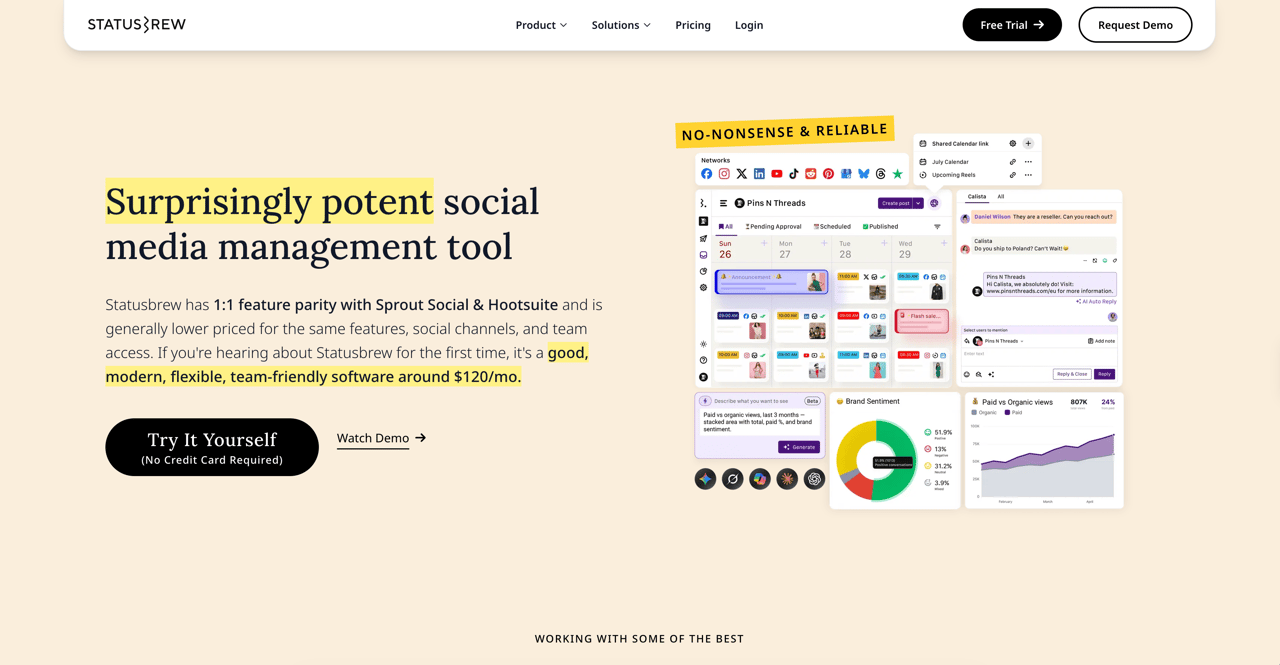
Statusbrew is a social media management platform first, a listening tool second. It combines social listening with publishing and reporting, and it’s built around execution rather than research: approvals, a unified inbox, automation rules that sort incoming social media posts before a human sees them.
Key features
Planner with approvals that lets you schedule posts across major social networks
Unified inbox for DMs, comments, ads, and reviews
250+ KPIs with label-based, client-ready reports
Social listening on the Premium tier, with AI sentiment and topic tagging
Shareable calendars, roles, SSO, and audit logs for client collaboration
Pros: plans bundle seats rather than charging per head, and Enterprise lifts the cap to unlimited users. There’s a 14-day trial with no card, and agency pricing starts around $49/month per client. Rules-based moderation kills a lot of manual work.
What’s missing: it isn’t a research platform, and listening is gated behind the Premium tier. If you need deep consumer intelligence across the open web, look elsewhere.
Pricing: billed yearly. Lite covers 1 user and 5 profiles; Standard is $129/month for 3 users and 10 profiles; Premium is $229/month for 6 users and 15 profiles. Listening, AI sentiment, approvals, and competitor benchmarking all sit on Premium. Enterprise is custom.
Best for: agencies and marketing teams who want a social media management tool for content planning and team collaboration, with listening as a bonus.
9. Mention — one plan, built around online conversations
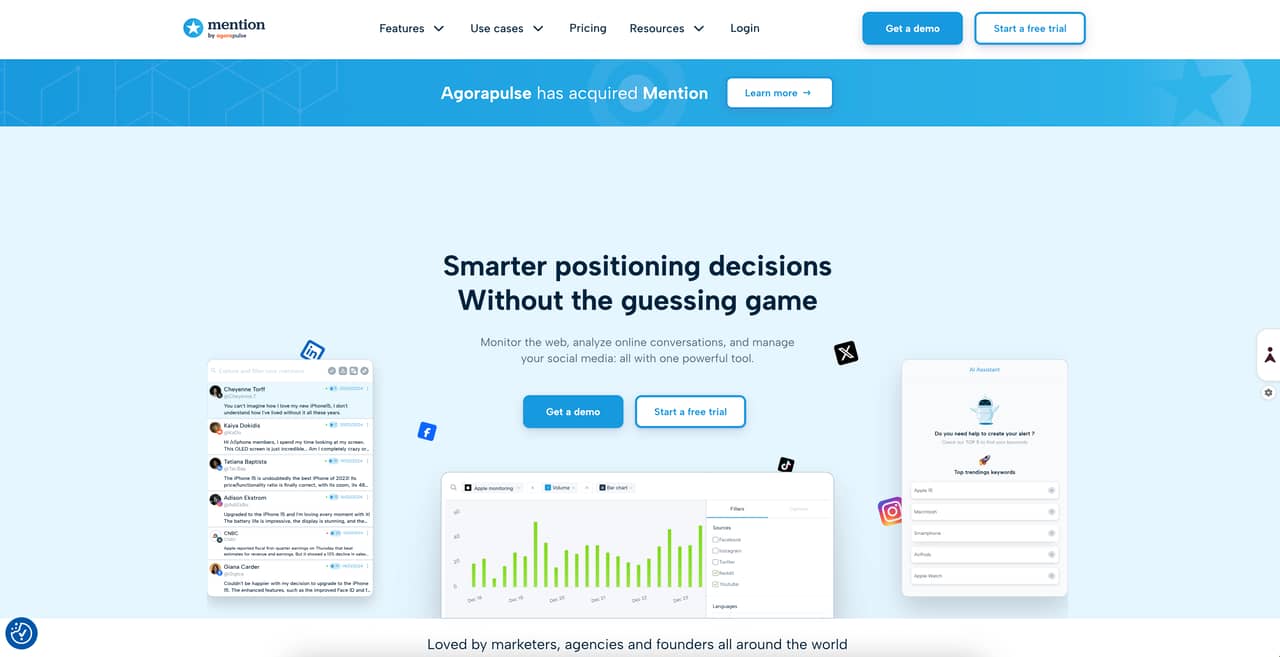
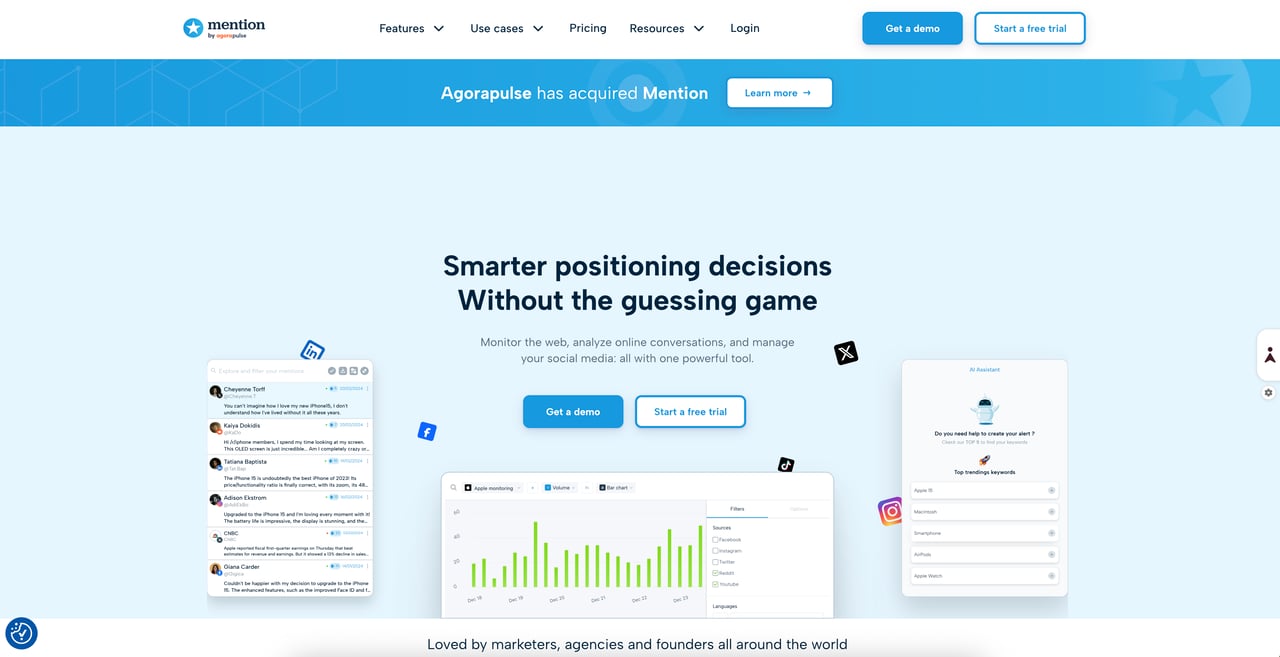
Mention used to be the cheap option. Not anymore. It retired the Solo, Pro, and Pro Plus tiers for new customers in July 2025 and pulled Publish and Respond entirely in January 2026, so it’s a listening-only product on a single plan now. It is no longer a social media management tool in any meaningful sense. Most lists of Brandwatch alternatives still quote the old $49 pricing. Ignore them. What you get is deep keyword tracking and advanced analytics across a billion-plus sources.
Key features
Real-time media monitoring across social media channels and the wider web
Social media listening and analytics with customisable dashboards
Boolean alerts, scheduled reporting, and AI alert summaries
Sentiment tracking that helps you monitor brand health day-to-day
Pros: seats aren’t capped, so the whole team logs in for one price. Alerts arrive on time, and source coverage is broad.
What’s missing: no publishing or engagement anymore, no visual analysis, and historical data plus API access are paid upgrades. Annual contract only.
Pricing: one plan, the Company Plan, from $599/month on an annual contract, including 5 alerts and 50,000 mentions a month. Extra quota is sold separately.
Best for: mid-sized teams that want broad listening shared across a lot of people, not small businesses shopping on price.
10. Keyhole — campaign analytics without an annual contract
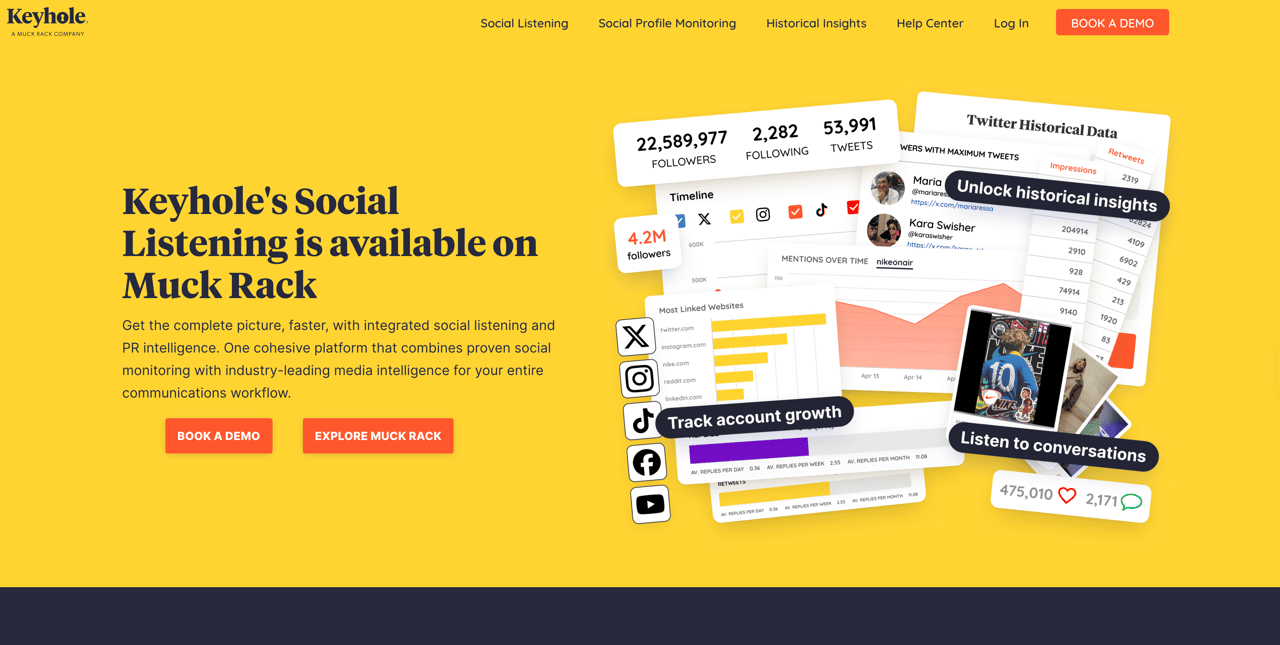
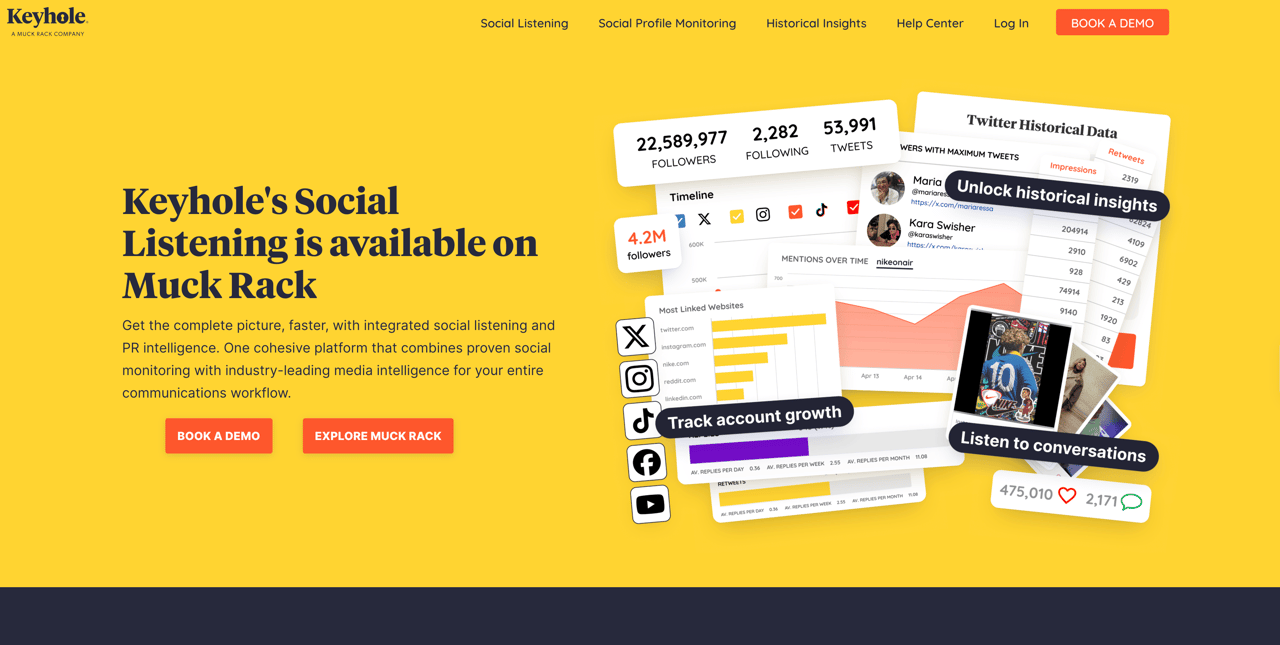
Keyhole identifies brand mentions across platforms and does hashtag and influencer analytics well. Muck Rack acquired it in 2024. Its API pulls social media performance data from all your social media channels into wherever you already report, which is why it closes out our Brandwatch alternatives list.
Key features
Influencer discovery and account monitoring
Hashtag analytics and marketing campaign tracking
Publishing features and scheduling for specific posts
Pros: clean interface, quick to stand up, and campaign-level reporting that’s genuinely strong for hashtag and creator work.
What’s missing: no multi-language support, LinkedIn is Enterprise-only, and the pay-per-campaign billing that used to make it flexible has gone.
Pricing: $179/month Professional (3 trackers), $539 Corporate (10 trackers), $999 Enterprise (unlimited trackers). 14-day trial.
Best for: agencies and brands running hashtag and influencer campaigns who want analytics depth over listening breadth.
Brandwatch alternatives compared
All figures are annual-billing rates, checked against each vendor’s own pricing page in July 2026.
Tool | Strongest at | From | Pricing model | Best for |
YouScan | Visual insights, audience insights, consumer intelligence | $499/mo | Published entry tier, custom above | Brands and agencies needing image analysis and deep audience data |
Sprout Social | Unified management + listening | $79/seat/mo | Published, per seat | Teams wanting publishing and listening together |
Talkwalker | Media monitoring, multi-format coverage | ~$27,000/yr median | Quote only | PR teams tracking traditional media |
Meltwater | Earned media, PR reporting, sales data | ~$10,000/yr | Quote only | Comms teams with sensitive data |
Brand24 | Brand monitoring with AI insights | $199/mo | Published | SMBs and product teams |
Mentionlytics | Transparent low-cost monitoring | $69/mo | Published | NGOs, small businesses, agencies |
Sprinklr | Enterprise scale, customer care | ~$50,000/yr | Quote only since April 2026 | Large enterprises unifying CX and marketing |
Statusbrew | Scheduling, approvals, unified inbox | $129/mo | Published | Agencies focused on social media management |
Mention | Broad listening, uncapped seats | $599/mo | Published, one plan only | Mid-sized teams sharing listening widely |
Keyhole | Campaign and hashtag analytics | $179/mo | Published | Hashtag and creator campaign work |
So which one should you actually pick?
“Best” depends entirely on what job you’re hiring the tool to do. The best Brandwatch alternatives for a three-person startup and a global CPG brand share almost nothing.
If you want research-grade audience and market insight, the thing Brandwatch is genuinely good at, your shortlist is YouScan, Talkwalker, and Sprinklr. All three surface actionable insights rather than raw volume. If your problem is that PR and social report separately, look at Meltwater. And if you mostly need to publish, respond, and occasionally check what people are saying, a social media management tool like Sprout Social or Statusbrew will serve you better than any listening-first platform.
And if you’re a small team that just needs to know when your name comes up, Mentionlytics and Statusbrew are the cheapest realistic entry points now. Worth saying plainly: this end of the market got more expensive. Mention scrapped its $49 tier, Brand24’s entry plan roughly doubled, and Sprinklr killed self-serve outright in April. Any comparison still quoting 2024 prices is selling you a fantasy.
One thing worth checking before you sign: where each tool actually collects data. The most valuable insights sit in places that never show up in a demo. Reddit threads, review sites, niche forums, and now AI-agent networks. Our guides to Reddit social listening, how to choose the right social listening tool, and the wider round-up of social listening tools cover the questions to ask.
Want to see what visual listening actually surfaces on your own brand? Book a demo, and we’ll set you up with a personalised account so you can look at your own data rather than a canned dashboard.
Frequently asked questions
What is the best alternative to Brandwatch?
It depends on the job. Of the Brandwatch alternatives above, YouScan is the strongest pick if you need image recognition and multi-language sentiment analysis. For teams that want listening bundled with publishing and engagement, Sprout Social is the more practical choice. For PR-heavy work, Meltwater and Talkwalker are the usual finalists.
Who are Brandwatch’s main competitors?
The tools buyers most often shortlist against Brandwatch are YouScan, Sprout Social, Talkwalker, Meltwater, Sprinklr, and Brand24. Which ones make your list depends on whether you’re buying a research platform or a social media management platform with listening attached.
Is Brandwatch worth the price?
For a large enterprise with dedicated analysts and deep research needs, usually yes. The historical archive and query depth are hard to match. For a five-person team that wants to track brand mentions and catch problems early, it’s a lot of money for capability you won’t use. Mentionlytics starts at $69 a month against Brandwatch’s $800 floor.
Is there a free Brandwatch alternative?
Not a serious one. Google Alerts tells you when your name appears somewhere, and several vendors offer trials: Brand24 and Statusbrew both run 14 days without a card, Sprout Social runs 30. Meltwater and Sprinklr offer none. But free tools don’t do sentiment or volume trends, and you’ll hit that ceiling within a week.