
Brand Management: The Guide to Building and Protecting Brands


Turns out that 62% of consumers say they’ll pay more for brands they trust. And 89% stick with brands that share their values. These aren’t feel-good stats for a conference slide—they’re the financial argument for taking brand management seriously.
And yet. So many companies still treat their brand like wallpaper. They’ll pour six figures into advertising campaigns, then let a summer intern freestyle on social media. They’ll map out a five-year product roadmap but never once run a proper brand analysis. We’ve seen it happen at startups and at companies with 3,000 employees. It’s weirdly common.
This guide is for the people who’d rather not wing it. Whether you’re a brand manager juggling multiple brands across global teams, or a marketing team lead trying to build a brand awareness strategy from scratch, we’ll cover what brand management actually involves, why it matters more than most people think, and how to do it without losing your mind.
What is brand management?
Brand management is the strategic process of creating, maintaining, and improving how people perceive your brand over time. That includes everything from your visual identity and brand messaging to customer experience and brand reputation monitoring.
Sounds neat and tidy, right? The reality is a lot messier. Brand management involves the tangible stuff—your logo, packaging, brand assets—and the intangible stuff that’s harder to pin down. The emotional connection someone feels when they see your name. The trust they place in your brand’s products. A well-managed brand doesn’t just look good. It feels right. And that feeling is worth a fortune.


Here’s what’s changed: traditional brand management was mostly one-way. You broadcast a message through advertising campaigns and hoped people would buy it. Now? Brand management work happens in real time.
Customers talk about you on social media whether you’re listening or not, and they’re talking to each other, not to you. That shift from monologue to messy, public conversation means brand management plays a bigger, faster, more uncomfortable role than it did even ten years ago.
One distinction worth making early: brand management is not the same as brand marketing. Marketing brand management is about campaigns and tactical execution—the stuff you launch. Brand management is the long-term, strategic process underneath all of it—your brand strategy, brand positioning, core values, and the principles that keep everything from going off the rails as your brand grows.
Why brand management is important
Brand equity: where the money lives
Strong brand management directly increases brand equity—the premium people will pay because of your name, not just your product. When your brand equity is high, you charge premium prices. When it’s low, you’re stuck in a price war with everyone else.
Apple is the obvious example, and there’s a reason everyone keeps using it. Apple became the world’s first trillion-dollar brand in 2024. A trillion. That didn’t happen because MacBooks are the only good laptops—it happened because the company’s brand communicates quality, taste, and status so clearly that consumers tend to pay a huge premium for the privilege.
Brand loyalty: cheaper to keep them
You know the stat: acquiring a new customer costs five to seven times more than keeping an existing one. So brand loyalty isn’t a soft metric—it’s an economic engine. Loyal customers spend more, complain less publicly, and they recommend you to friends without being asked.
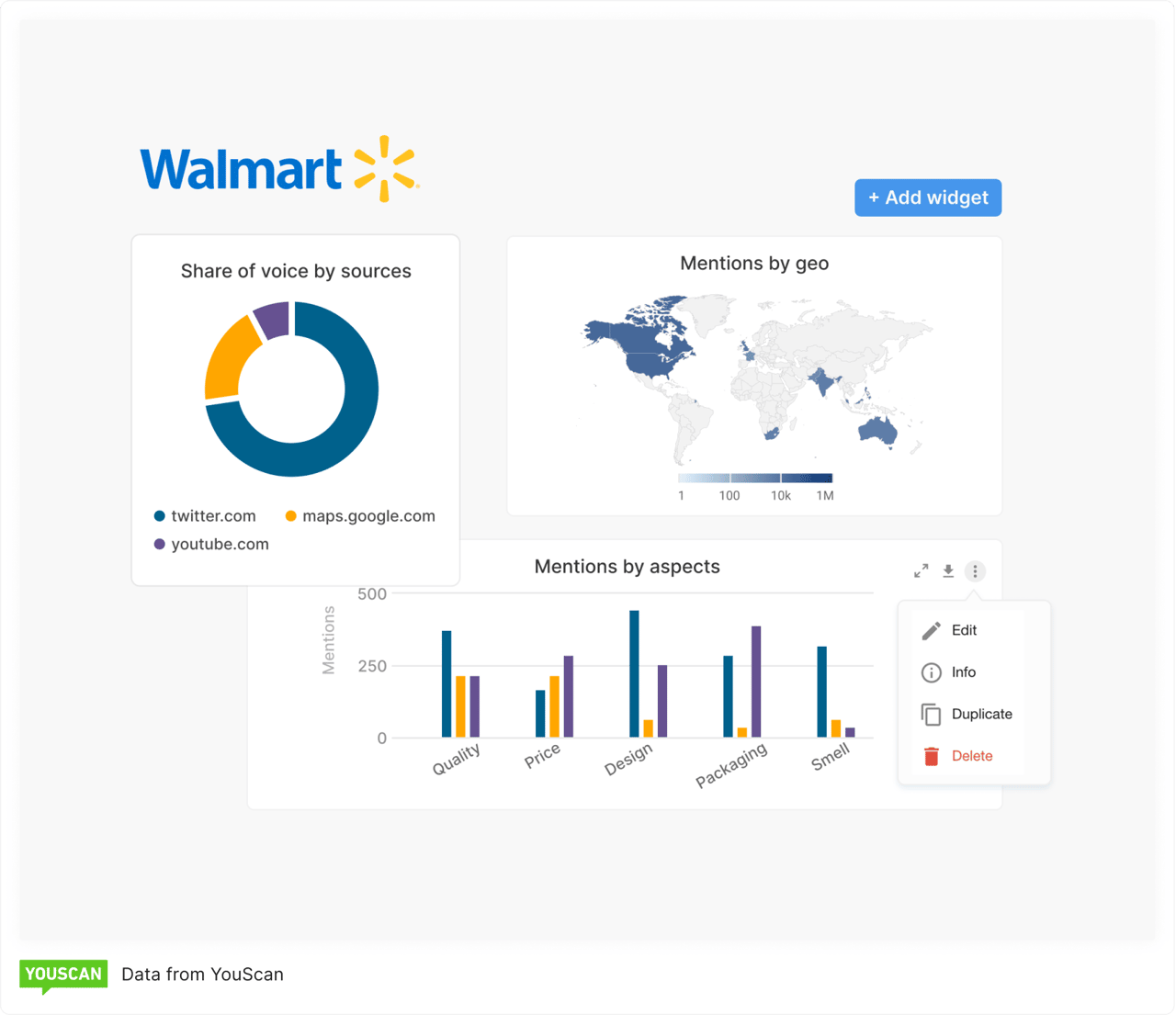
But loyalty is fragile. About half of consumers say they’d switch after just one bad experience. One. Which means your brand monitoring needs to be tight, because by the time a bad review trends on X, you’ve already lost some of those people.
Brand reputation: it takes years to build and one afternoon to torch
If you want a cautionary tale, look at United Airlines in 2017. A passenger got dragged off an overbooked flight, someone filmed it, and United’s stock dropped nearly $1 billion in market value in a single trading day. Then the CEO’s response used the word “re-accommodate,” which became a social media punchline and made the whole thing worse.
The lesson is uncomfortable but simple: social media amplifies positive brand associations and negative ones at the exact same speed. PR crisis management isn’t a marketing function—it’s a risk management function. And you need the plan before the crisis, not during it.
Core elements of brand management
Brand identity: more than a pretty logo
Your brand identity is how your brand looks, sounds, and feels. The brand’s visual identity—logo, colors, typography, imagery—paired with verbal identity: brand voice, tone, messaging, taglines.
Color alone increases brand recognition by up to 80%. But then think about how fast you recognize Coca-Cola’s red or Tiffany’s blue. Nobody has to tell you whose brand that is. Decades of disciplined identity work did that.
Brand positioning and strategy
Brand positioning is about how you want to be perceived relative to your competitors. What do you stand for? What makes you different? Can you say it in a sentence a normal person would understand?
Your positioning should include your mission, vision, and value proposition. But here’s where we get opinionated: if your positioning statement could be swapped with any competitor’s and nobody would notice, you don’t have positioning. You have filler. A regular competitor analysis will tell you pretty quickly whether your market position is actually distinct or just aspirational.


Brand consistency: the boring part that makes everything work
Maintaining brand consistency means the same experience everywhere someone interacts with your brand. Website, app, support call, packaging, social media—all of it. About 90% of consumers expect a consistent experience across channels. And companies that actually deliver it see revenue increases of 10–20%.


The hard part isn’t knowing this matters. The hard part is doing it at scale. More people create content, external partners join the mix, and global teams start interpreting your brand guidelines however they want. That’s where brand management software starts earning its budget.
Brand monitoring: what they say when you’re not in the room
You can’t manage what you can’t see. Brand monitoring means tracking brand mentions across social media, news, reviews, and forums. It means watching for sentiment shifts over time, not just reacting when something blows up.
And increasingly, it means visual listening too. People post photos of your product, your logo on a t-shirt, your packaging in the background of a selfie—and they never type your brand name. If you’re only monitoring text, you’re missing a big piece of how your brand actually lives in the world.
Effective brand management strategies
1. Define your mission and brand values (for real this time)
According to Edelman’s Brand Trust report, 64% of consumers make purchasing decisions based on a brand’s stance on social or political issues. That’s not a niche audience—that’s most of your customers deciding with their wallets.
The key to brands that last isn’t chasing trends—it’s understanding the “human truth inside a behaviour.” Patagonia’s truth is environmental stewardship. Nike’s is an athletic aspiration. If you can’t name yours in one sentence, that’s your first problem.
2. Build brand guidelines people will actually use
Clear brand guidelines are the backbone of brand consistency. But most companies create an 80-page PDF, distribute it once via email, and then nobody opens it again. I’ve watched this happen at three different companies. The brand book just sits there, beautifully designed and completely ignored.
Make your guidelines a living document. Cover your visual identity, brand voice, usage rules for brand assets, and channel-specific guidance. And make them genuinely accessible—to internal teams, agency partners, freelancers, everyone. The brand manager’s role here is part cop, part coach. You enforce the rules, but you also help people understand why the rules exist. People follow guidelines a lot more willingly when they get the reasoning.
3. Implement social listening
This is where things get interesting. Social listening tools let you track what people say about your brand in real time—across social media, news, blogs, and reviews. You can run sentiment analysis, catch emerging issues before they spiral, and gather competitive intelligence that would take a human analyst weeks to compile.
But text-only monitoring misses a ton. People share images of your products, stores, and packaging constantly—without ever typing your name. AI-powered platforms like YouScan go beyond text with Visual Insights, which detect your logo in images across social media. Insights Copilot lets you ask plain-language questions about your data and get instant answers. YouScan analyzes 500M+ data points daily with 95% sentiment accuracy—that’s a lot of ground covered for a brand manager trying to keep tabs on brand reputation across platforms and new markets.
Every interaction, in any form, is branding. Social media listening just makes sure you actually see those interactions instead of guessing what’s happening.
If you’re unfamiliar with social media listening and you don’t know how to navigate it, you can check out our social listening glossary for terms and definitions. We made everything easy, we promise.
4. Monitor and manage brand reputation
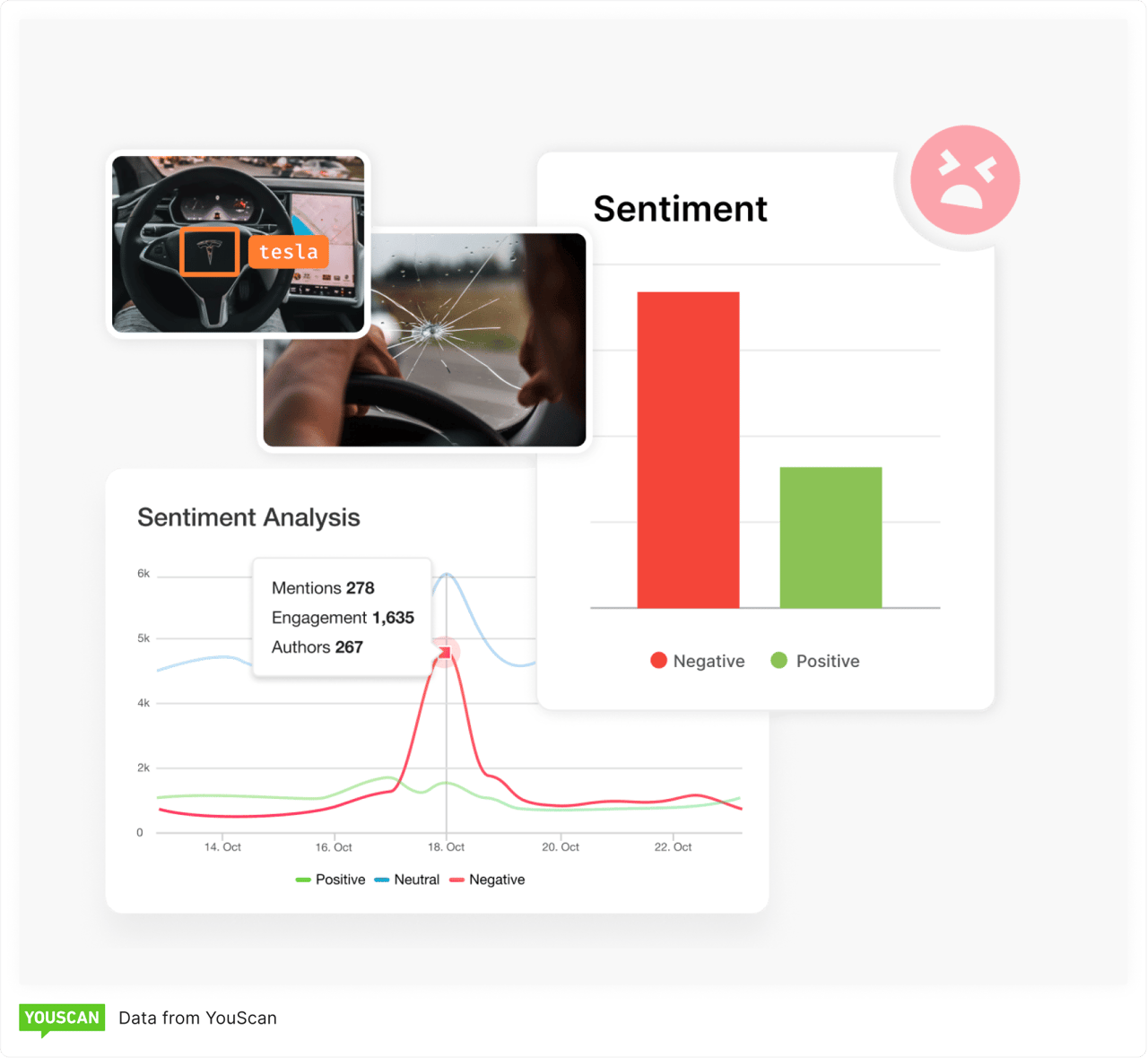
Responding quickly to negative feedback isn’t just good manners—it’s measurable. The bigger point: track sentiment trends over time, not just individual fires. Are your positive brand associations growing? Is brand trust stable? Is your consistent messaging actually landing? A solid brand health tracker answers these questions without you having to run a survey every quarter.
Aligning internal teams around your brand
This doesn’t get talked about enough. Brand management success depends on what happens inside your company just as much as what happens outside. If your marketing team tells one story and your sales team makes different promises, your brand is already cracked down the middle.
Aligning internal teams means everyone—product, support, HR, sales—understands your brand positioning, brand values, and how to communicate them. It means employee engagement programs that connect people to the mission. It means internal communications that reinforce the same story you’re telling the market. Without that, you’re just hoping nobody notices the contradictions.
Brand management examples that actually teach you something
Apple: brand consistency taken to an extreme


Apple’s brand strategy is almost annoyingly simple: minimalist design, premium positioning, and absolute consistency. Every store feels the same. The packaging reinforces the brand. Even the software echoes the hardware. They never compete on price—ever—and that’s a deliberate choice that builds a loyal customer base willing to camp outside for a phone that’s 5% better than last year’s.
Nike: leading with purpose


Nike’s approach centers on emotional storytelling. Their advertising campaigns focus on struggle and triumph, not shoe specifications. The Colin Kaepernick campaign in 2018 was polarizing and risky—and by every financial measure, wildly successful. The takeaway for brand managers: a strong brand stands for something, even when it costs you a few angry tweets.
Coca-Cola: emotional connection at global scale


Coca-Cola has roughly 94% global brand recognition. They earned it through decades of relentless visual consistency and a brand positioning rooted in happiness and sharing. The company invests about $4 billion a year in brand-related spending. That’s what maintaining positive associations across continents and generations actually costs.
As Jeff Bezos famously put it, a brand is like a reputation—you earn it by trying to do hard things well. Coca-Cola has been doing hard things well, at scale, for over a century.
Measuring brand management success
You can’t improve what you don’t measure. Here’s what to actually pay attention to:
Metric | What it measures | How to track |
Brand awareness | Recognition and recall | Surveys, search volume, social media reach |
Brand sentiment | Perception (positive/negative) | Social listening tools, NPS scores |
Share of voice | Visibility vs. competitors | Social monitoring, media tracking |
Brand loyalty | Repeat behavior and advocacy | NPS, retention rate, repeat purchases |
Establish baselines before you launch anything new. Track trends over time rather than obsessing over individual data points. And compare yourself to competitors—your brand awareness campaign numbers mean very little in a vacuum.
Social listening tools are especially good here because they give you continuous, real-time sentiment tracking. When market research updates quarterly, but social media moves every hour, you need marketing tools that keep pace.
Putting it all together
Effective brand management is a strategic process that never really ends. It’s the work of aligning internal teams, maintaining brand consistency, building positive associations, and monitoring how your brand actually lives out there—not just how you wish it did.
The brands that win long-term success treat this as a continuous discipline. They measure. They listen. They adapt. They invest in brand management software that gives them real visibility, not just vanity dashboards.
If you’re looking for a place to start, YouScan’s social listening platform gives you real-time brand monitoring, AI-powered sentiment analysis, and visual brand tracking—so you can see the full picture of how your brand shows up in the world. Because you can’t protect what you can’t see. See it in action.
FAQs
What is brand management?
Brand management is the ongoing process of shaping and maintaining how consumers perceive your brand. It covers brand identity, brand reputation, brand consistency, and brand equity. The goal is to create positive brand associations that drive customer loyalty and long-term success.
What are the four key elements of brand management?
Brand awareness (recognition and recall), brand equity (perceived value and positive associations), brand consistency (uniform experience at every touchpoint), and brand loyalty (repeat behavior, advocacy, and a loyal customer base).
Why is brand management important?
Strong brand management builds brand trust, enables premium pricing, creates competitive advantage in a crowded market, and protects brand reputation. Companies with well-managed brands see higher customer loyalty, lower acquisition costs, and better resilience during crises.
What tools are used for brand management?
Key marketing tools include social listening platforms like YouScan for monitoring mentions, sentiment, and visual brand presence. Digital asset management systems (like Frontify and Bynder) help organize brand assets and enforce brand guidelines. Reputation management tools round out the stack by tracking reviews and public perception.


.png)