How to Create and Improve Your Brand Awareness Strategy
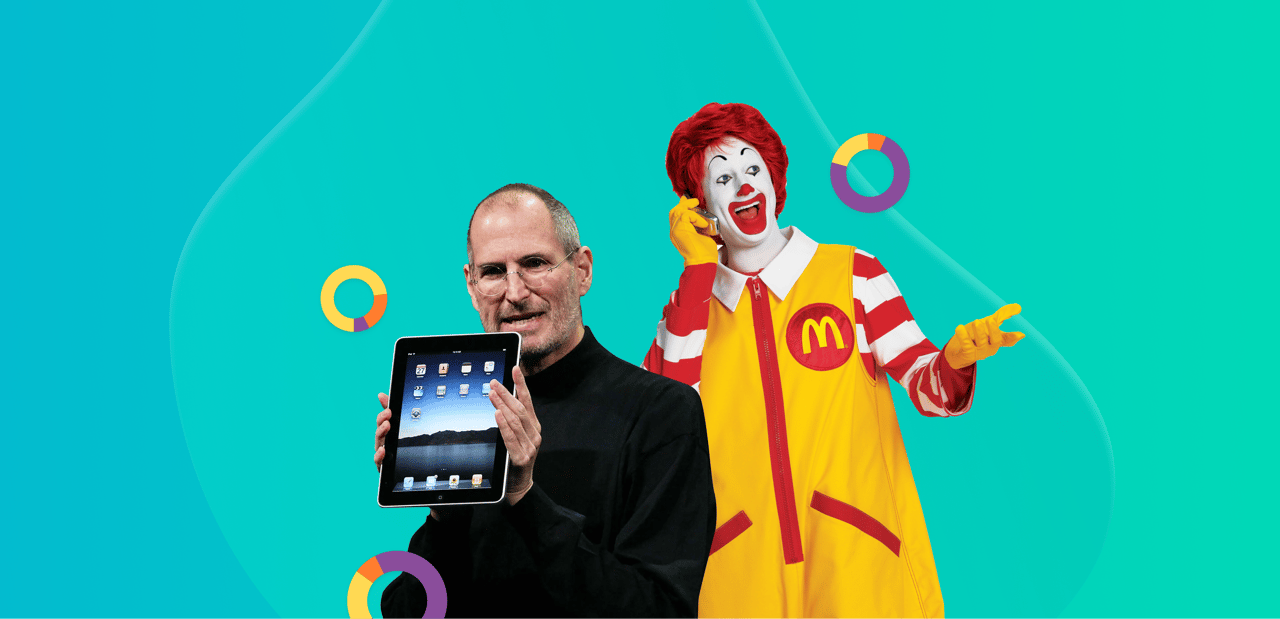

McDonald’s golden arches. Apple’s bitten logo. You don’t need someone to spell out the brand name — your brain does the work in under a second. That’s what strong brand awareness looks like, and it’s what makes a brand instantly recognizable even without context. These are brand names that live in consumers' minds rent-free, occupying space that competitors would pay millions to claim.
But here’s the thing, most brand awareness advice gets wrong: it starts with tactics. “Post more on social!” “Run a campaign!” “Get influencers!” All fine. None of it matters if you don’t know where you’re starting from. Most companies skip straight to building brand awareness without measuring brand awareness first — and that’s exactly the mistake that leads to wasted budgets and guesswork disguised as a brand strategy.
So this guide does it in the right order. We’ll start with how to actually measure your brand presence (because that’s where most teams get stuck), then get into the marketing strategies that increase brand awareness for real — not just vanity metrics. If you want to know how to measure brand awareness before throwing money at a problem, you’re in the right place.
What brand awareness actually means (and what brand recognition doesn’t cover)
Brand awareness refers to how well your target audience knows who you are. Not just whether they’ve seen your logo, but whether they could pick you out of a lineup, describe what you do, and explain why you’re different from the three competitors who also showed up in their search engine results.
Brand recognition is the lighter version — consumers recognize a certain brand from visual or audio cues. Someone sees your colors and thinks, “Oh, that’s Coca-Cola.” Brand recall goes further — that’s when someone’s asked “name a soda brand,” and your brand is what comes out first. Brand preference is even deeper. Brand positioning determines where you sit relative to competitors. And brand loyalty? That’s the endgame — when customer loyalty means people don’t even consider switching.
Why does any of this matter? Because people don’t evaluate every option from scratch every time they buy something. They have a mental shortlist. According to GWI, consumers hit an average of 5.8 different touchpoints before pulling the trigger on a purchase. If your brand isn’t on that shortlist, you’re invisible to potential customers before the decision process even starts. Growing brand awareness is how you get on it and make a lasting impression.
Measuring brand awareness: do this before anything else
This is the part almost everyone skips, and it drives me a little nuts. You can’t build a brand awareness strategy if you don’t know your baseline. Campaign performance means nothing without a “before” to compare against. Brand awareness isn’t one number — it’s a mix of signals, and you need to look at them together before launching a single brand awareness campaign.
Share of voice and brand mentions
The raw count of brand mentions tells you something, but not enough. What you really want is your share of voice — your
brand mentions as a percentage of all mentions in your category. That’s how you understand your actual market presence relative to competitors.
Take fast food. McDonald’s absolutely crushes everyone in raw mention volume. But when you compare Subway and KFC, the picture gets interesting: Subway captures a higher share of the actual conversation, while KFC drives better social media engagement rates. Same market, completely different stories depending on which metric you’re looking at. Consumer perceptions of each brand vary wildly despite them being in the same category.
A social media listening tool like YouScan lets you pull this data across various platforms — social media, news sites, forums, review sites — basically anywhere people talk. You get a real-time picture of your brand’s reach and whether it’s trending in the right direction.
Sentiment — because more mentions aren’t always better
A spike in mentions sounds great until you realize it’s because someone posted a viral TikTok about your product falling apart. Growing brand awareness and growing brand damage are very different things, even though they look identical on a volume chart.
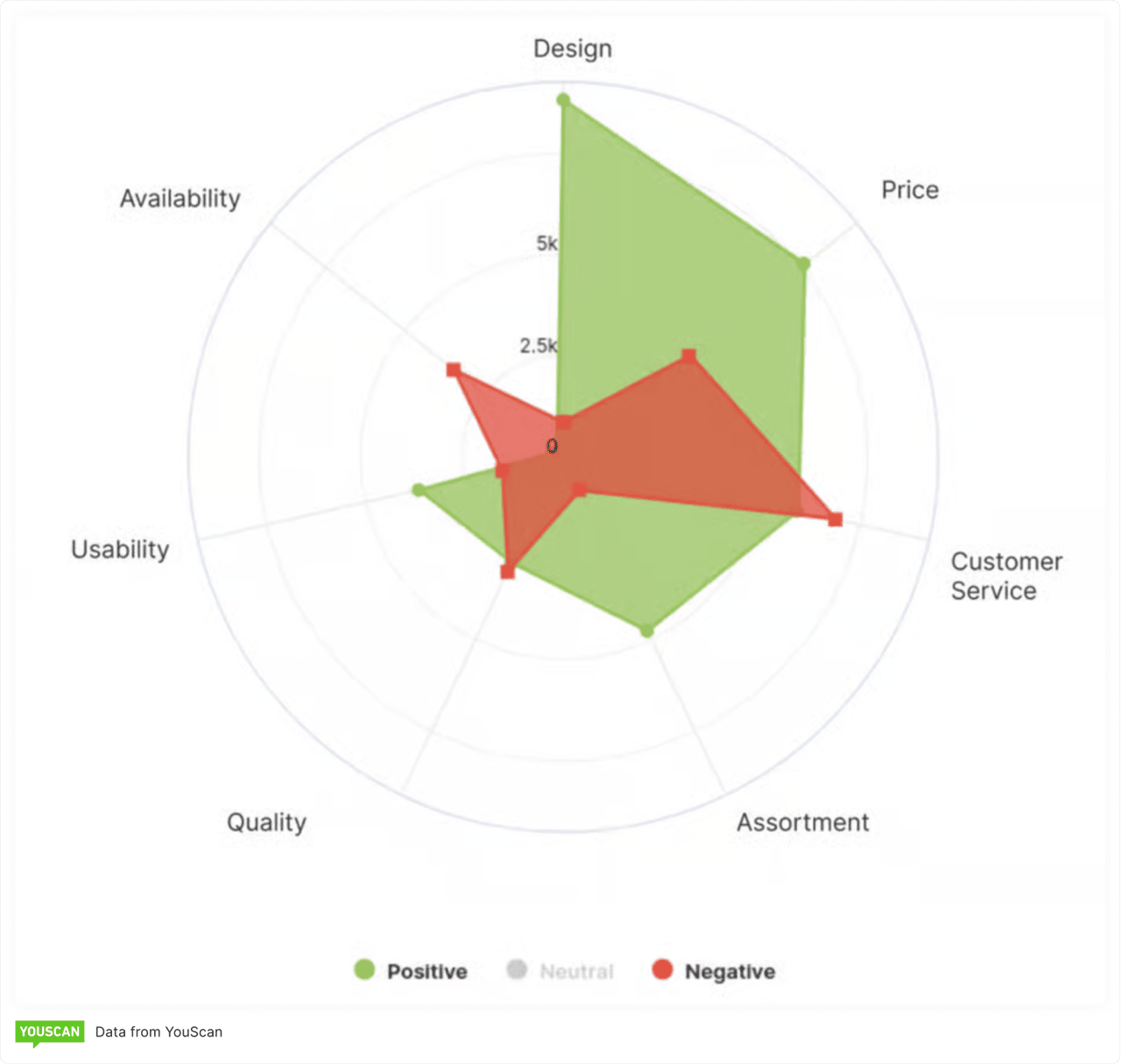
That’s why sentiment tracking plays a crucial role. YouScan delivers 95% sentiment accuracy, which is high enough to actually trust. But the real value is in the specifics: pair it with a brand health tracker, and you don’t just see that sentiment dipped on Tuesday — you see why, and from where. That kind of market research used to require expensive focus groups. Now, social listening does it in real time.
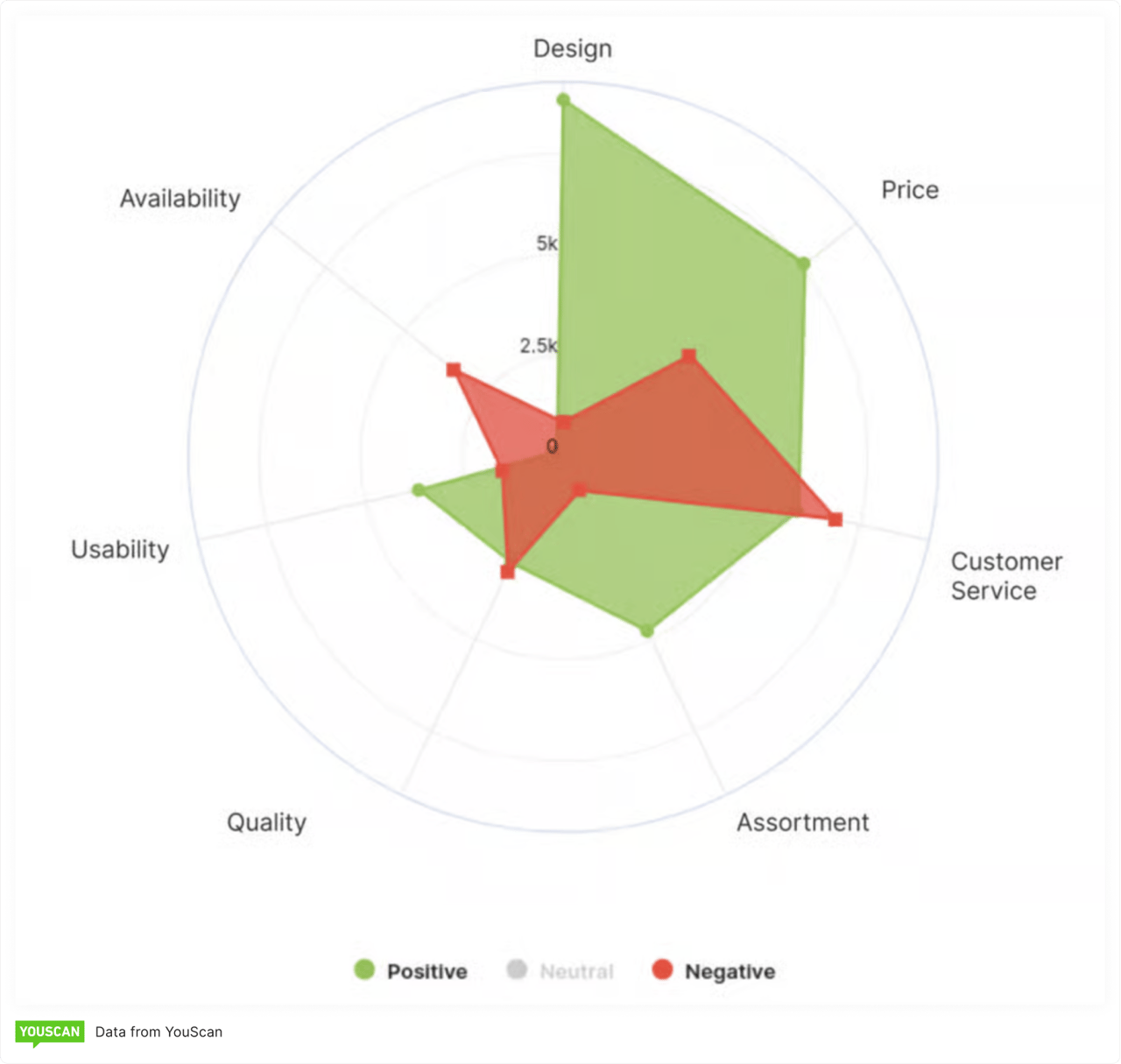
Quick example: Lenovo’s social listening data shows users consistently praise the brand’s pricing but raise doubts about product functionality. That’s not a brand messaging problem. It’s a product feedback loop disguised as a sentiment metric. The kind of thing you’d miss if you were only tracking mentions and ignoring how consumers actually feel about your unique features.
Source distribution
Where your brand shows up matters as much as how often. You might be all over TikTok but completely absent from industry publications. Or dominating news coverage but invisible on the social media platforms where your actual current customers spend time.
IKEA is a good example. Despite years of news coverage about wood sourcing controversies, the brand’s source distribution is overwhelmingly social media — Pinterest alone accounts for the vast majority of mentions. Running a brand analysis across sources helps you see where your brand’s values are actually landing and where you need more visibility.
Website traffic and search volume
Here’s one that’s underrated: direct website traffic. People typing your URL into their browser — not clicking a link, not coming from search engines, just going directly to you. That’s brand recall in action.
Pair it with branded search volume (how many people Google your brand name) and you’ve got a decent proxy for whether your brand visibility is converting into actual intent. If those numbers are flat while your ad spend is climbing, something’s off. The relationship between brand awareness efforts and website traffic isn’t always linear, but over time, a healthy brand awareness strategy should move both.
Effective brand awareness strategies that drive real results
Now for the part everyone skips ahead to. The right brand awareness strategy depends on your industry, your budget, how many brands crowd your space, and whether you’re new or trying to stay relevant. There’s no universal playbook. But these approaches keep showing up in the brands that get it right.
1. Big-budget brand awareness campaigns
Sometimes you just need to buy attention. If you’re entering a market where nobody knows you exist, large-scale brand awareness campaigns can compress months of organic work into weeks. Event sponsorship, streaming platform ads, broadcast spots, out-of-home placements — effective advertising at this scale trades cost for brand’s reach. It’s expensive, but for new audiences who’ve never heard of you, sometimes nothing else works.
My favorite example is Avocados From Mexico. In 2013, the nonprofit representing avocado importers ran a Super Bowl ad. $5 million for 30 seconds. Nobody thought of “avocados from Mexico” as a brand — avocados were just avocados. But the ad helped create brand awareness strong enough that they came back for Super Bowls in 2016, 2017, and 2023. You don’t repeat a $5 million bet four times unless it’s driving more sales.
The bigger point: creating brand awareness in a commoditized category is one of the hardest things in marketing. When the product itself is identical across sellers, the brand becomes the differentiator. And sometimes that requires a big, loud introduction to make the brand memorable in consumers’ minds.
2. Referral programs that build awareness and brand loyalty
Referral programs don’t get the attention they deserve. They’re not sexy. But they turn current customers into a distribution channel that brings in more customers, and that’s incredibly cost-efficient compared to effective advertising campaigns.
Tesla’s Loot Box Credits system is the classic example. Refer someone, get credits for software updates and accessories. What’s clever: it doesn’t just push car sales. It drives awareness of Tesla’s whole ecosystem — solar panels, Powerwall, accessories. Loyal customers become advocates for the entire portfolio. That’s brand advocacy in action — your happiest people doing brand work for you.
For B2B, referral programs usually look more like partner networks or customer advocacy programs, but the principle is identical. And the data backs it up: Nielsen’s Global Trust in Advertising study found that 92% of consumers trust recommendations from people they know over any other form of advertising. Paid ads can’t touch that kind of social proof. People trust personal brand recommendations more than any campaign you could build.
3. Social media strategy for brand awareness — with consistent messaging
Social media platforms are where brand awareness gets built and also where it falls apart overnight. Most advice says “post consistently.” That’s true but incomplete. Consistent posting of mediocre stuff just makes you consistently forgettable.
So what does it actually look like to leverage social media effectively for building brand awareness?
Your brand voice, visual elements, and visual identity need to be the same everywhere. If someone can’t tell your LinkedIn post and your TikTok came from the same brand, you have a consistency problem. Social media amplification only compounds when each channel reinforces the same core brand messaging and visual branding. Consistent messaging is exactly that thing that separates brands people remember from brands that blur together.
Influencer marketing campaigns — but pick the right size. A niche creator with 50K highly engaged followers will outperform a celebrity with 5 million disengaged ones. Micro-influencers with 10K–100K followers hit engagement rates around 5.7%, compared to 1.8% for macro-influencers. YouScan can surface creators already talking about topics relevant to your brand. You’d be surprised how much signal is there.
User-generated content is free social proof at scale. When real customers post about your brand unprompted, that kind of user generated content is more persuasive than any social media advertising campaign you could run. Build campaigns that make it easy: challenges, branded hashtags, review prompts. Then reshare what people create to reach new audiences.
Paid social media advertising targeted by interest and behavior. This is how you reach specific segments of your target audience who haven’t discovered you yet. You’re building brand preference before they even enter a buying cycle, improving the customer experience from the very first touchpoint.
4. Content marketing efforts that actually get shared
Here’s where I’ll be honest: most brand awareness content is bad. It’s keyword-stuffed, sounds like everyone else’s content, and nobody saves it. The brands that actually build awareness through content marketing efforts do something different. They publish things their audience forwards to colleagues. Original research. Contrarian takes with data. Tools and templates people bookmark.
For B2B, thought leadership content is probably the single highest-leverage brand awareness effort you can make. One genuinely good report that your industry cites is worth more than 50 social media posts nobody reads.
And here’s a trick most teams miss: pair your content with social listening dashboards to see which topics already generate conversation. Don’t guess what your potential customers want to read — look at what they’re already discussing. That’s market research you can do in ten minutes. If you’re new to social listening, the social listening glossary is worth bookmarking.
5. Brand identity, brand positioning, and the boring work that matters most
I know this isn’t the exciting one. But consistent messaging and visual branding across every touchpoint is what makes a brand memorable instead of vaguely familiar. It’s the foundation of every effective brand awareness strategy, and many brands still get it wrong.
Brand recall requires repetition. Repetition only works if the thing being repeated is the same thing. If your brand voice is sharp and direct on social media posts but switches to stiff corporate-speak in email, you’re splitting your own signal. Your audience encounters fragments of two different brands and remembers neither. Brand positioning gets undermined when your messaging isn’t aligned across channels.
Effective brand awareness strategies start here. Cohesive language, consistent visual identity, and brand’s values that show up the same way in a TikTok comment and a sales deck. When people can associate positive attributes with your brand because they keep encountering the same story, you’re doing it right. It’s not glamorous. It’s what makes everything else work.
Putting it together: your brand strategy for building brand awareness
If you’re building a brand awareness strategy from scratch (or realizing the one you have isn’t doing much), here’s the order I’d do it in. You can also cross promote this framework across teams — brand awareness isn’t just marketing’s job.
Measure first. Run a social listening baseline, check your branded search volume, survey a sample of your target audience. Don’t skip this. Every brand that comes to us saying “our awareness is low” gets asked “how do you know?” Half the time, they can’t answer.
Get specific about what “awareness” means for you. Is it recognition? Brand recall? Brand preference? These are different goals that need different marketing strategies. A personal brand has different needs than a Fortune 500.
Pick channels based on where your audience actually is. Not where your CEO likes to scroll. Not where it’s cheapest. Where your potential customers spend their time on various platforms.
Document your brand voice, visual identity, core values, and brand messaging. Actually write it down. In a place people can find. You’d be shocked how many brands have “guidelines” that nobody on the team has read.
Run your campaigns, then measure campaign performance. Share of voice, sentiment, website traffic, branded search volume. Compare before and after. Iterate based on what the numbers show, not what you hoped they’d show. Measuring brand awareness isn’t a one-time event — it’s the habit that separates brands that grow from brands that guess.
Final thoughts
Growing brand awareness isn’t a project with a finish line. It’s showing up, measuring, adjusting, repeating. The brands people recognize without thinking got there through years of doing this consistently — not through one great campaign.
And honestly, the measurement side matters more than most teams realize. If you’re not tracking share of voice, sentiment, and brand mentions, you’re making expensive decisions based on vibes. Social listening tools like YouScan show you the actual picture — what’s working, what’s not, and where to focus next. The brands that increase brand awareness consistently are the ones that treat measurement as a habit, not a quarterly checkbox.
If you want to see what this data looks like for your brand, YouScan’s free demo takes about 15 minutes. You’ll leave with a better picture of where you stand than most companies get from a month of guessing. It’s a good way to build awareness of your own blind spots.
FAQ
What is the difference between brand awareness and brand recognition?
Brand recognition is the narrower concept — whether consumers recognize your brand from a visual or audio cue. Brand awareness includes recognition but goes further: can someone recall your brand unprompted when thinking about a product category? Do they understand your brand’s values and brand positioning? It’s the difference between “I’ve seen that logo” and “I know what that company does and why I’d choose them.”
How long does it take to build brand awareness and brand preference?
It depends on what kind of awareness you’re after. A large brand awareness campaign targeting a broad audience can generate meaningful brand recall in weeks. Building deep brand preference and brand loyalty — the kind where customer loyalty means people don’t even consider alternatives — takes months to years of consistent brand awareness efforts. There’s no shortcut for that part.
What metrics should I track to measure brand awareness?
Share of voice (your mentions vs. competitors), sentiment trend, branded search volume, direct website traffic, social media engagement rates, and survey-based brand recall. None tells the full story by itself. Track them together, look for patterns, and don’t panic about any single data point.
Can small businesses create brand awareness without a big budget?
Yes, but the approach looks different. Referral programs, consistent social media posts, local community involvement, event sponsorship at a local level, and content marketing efforts can all build real brand awareness without massive spend. The key is focus. Small brands that try to be everywhere end up memorable nowhere. Pick a specific target audience and a specific market presence to own, then expand from there.