What is Brand Activation? Real-World Examples and How to Measure Success

Most brand activation articles start with a grand thesis about consumer attention spans. Skip that.
Here's what brand activation actually looks like: Wendy's uses real-time data to track when McDonald's ice cream machines break — then parks a Frosty truck outside. Spotify turns listening data into a December tradition that earns more coverage than most paid campaigns. LEGO builds ten fully drivable F1 cars out of bricks and drives them around the Miami Grand Prix circuit. None of those are ads. All of them are brand activations — and all of them worked in ways that display campaigns and boosted posts simply cannot.
This article covers what brand activation is and how it differs from the terms that get confused with it, the activation types worth knowing, five real-world brand activation examples, and how to measure whether any of it actually moved the needle.
What is brand activation?
At its core, brand activation is any campaign, event, or experience that prompts your target audience to actually do something — not just notice you exist, but engage, try, share, or buy.
The word that matters is activation. You're not broadcasting. You're creating a moment where the brand and your audience interact directly. That interaction might be tasting a free sample, scanning a QR code, joining a TikTok challenge, or walking into a pop-up shop — but in every case, the audience is participating rather than watching. That's what makes it stick.
Brand activation can take a lot of forms: experiential events, product sampling and free trials, in-store activations, social media challenges, AR campaigns, trade shows, or community campaigns that give consumers a role in creating brand content. The format matters less than the mechanic. Something has to actually happen.
Brand activation vs. brand awareness
You can run an excellent brand awareness campaign and have nothing to show for it except recognition. That's not an insult to awareness — it matters. But people knowing your name is just the starting line. Brand activation is what gets them to the next step: a meaningful interaction that creates memory, preference, or loyalty rather than just familiarity.
A lot of marketing budgets build awareness without any plan to convert it into action. Brand activation is that plan.
Brand activation vs. experiential marketing
The simplest way to think about this: experiential marketing is the strategic philosophy; brand activation is the specific campaign.
Experiential marketing is how you think about your brand's relationship with consumers over time — an ongoing marketing strategy. Brand activation is a specific, time-bound execution of that thinking, with a start date, an end date, and defined marketing objectives. Every successful brand activation borrows from experiential marketing principles. But not every experiential marketing initiative is an activation. Redesigning a store to feel more human is experiential marketing. The launch event you build around that redesign is a brand activation.
Why brand activation matters
Traditional advertising hasn't stopped working. But consumers have gotten much better at filtering it out, and for most categories, the gap between brands people are aware of and brands people actually choose isn't closing through more ads.
EventTrack research shows 74% of consumers say engaging with a branded event experience makes them more likely to buy the promoted product. McKinsey data shows Gen Z is 1.5 times more likely than the general population to visit an immersive brand experience — and four times more likely than older generations. This isn't a niche signal. It's the direction consumer behavior is moving.
The reason brand activation works where advertising struggles comes down to memory. A memorable experience links your brand to a feeling, and feelings drive purchase decisions more reliably than rational product messaging. Brand activations also generate press coverage and create buzz in ways that display ads rarely do — extending brand visibility well beyond what media spend alone can buy. The best ones build community, turning individual customers into people who feel like they belong to something. And that's where brand equity actually compounds.
There's also the trial dimension. Free samples, free trials, and interactive experiences remove the "I'm not sure" barrier faster than any ad. Nothing drives trial as efficiently as the product itself in the right context.
Types of brand activation
Experiential marketing events
The format most people picture first. A pop-up, a live installation, an event built entirely around the brand's values — these are sometimes the only place a brand can create the full sensory environment needed to genuinely shift perception. Experiential events generate engaging experiences that produce social sharing and press coverage simultaneously, and when they're done well, they create the kind of memorable experiences that actually rewrite how consumers think about a brand.
They're also expensive and logistically difficult. Worth it for a product launch or a rebrand. Probably overkill for a product refresh.
Product sampling and free trials
One of the oldest activation types and still underrated. Free samples lower the barrier to trial for physical products; free trials do the same for software and subscriptions. The mechanism is simple: the product sells itself if people actually use it.
What makes sampling into a real brand activation — rather than just a giveaway — is context. A free sample handed to you by someone who can explain the product, in a setting that reinforces the brand's values, is a completely different interaction from finding a coupon in your inbox. Done right, it doesn't just drive trial. A remarkable first experience can convert new customers into brand ambassadors who recommend the product without being asked.
In-store activations
Genuinely underused, which means there's room here. A well-designed in-store activation — a live demo, a QR code that bridges the physical moment to a digital experience, a display that earns attention rather than demanding it — creates meaningful interactions right when consumers are closest to a decision.
Especially practical for CPG brands launching new products or trying to re-engage customers with something they've stopped thinking about. Lower cost than experiential events and workable for brands running multiple brand activation campaigns across the year.
Digital brand activations
AR filters, social media challenges, interactive content, gamified experiences. Digital brand activations scale to audiences no physical event can reach, and they serve a dual purpose: they generate engagement during the campaign and create shareable assets that continue working after it ends.
The potential to go viral online is real — but only when the format genuinely matches the platform and the audience's behavior. A challenge that lands on TikTok doesn't translate directly to LinkedIn, and a data-driven guerrilla campaign that works on mobile doesn't work as a banner ad. The format and the channel have to be aligned from the brief, not retrofitted after the concept is locked.
Pop-up events and brand takeovers
Urgency plus exclusivity, wrapped in a temporary physical installation. A pop-up that exists for two weeks generates a different kind of attention than a permanent storefront — the time pressure is part of the proposition.
Pop-up events work especially well inside larger events (festivals, conferences, trade shows) or as standalone activations in high-footfall locations. Best paired with a product launch, a limited edition, or a seasonal moment where concentrated attention matters more than sustained presence.
Trade shows and event marketing
For B2B brands, this is often the primary activation type — and it's more competitive than most teams assume.
A booth at a trade show is technically a brand activation. The question is whether you're treating it like one. Static banners and brochures are a presence, not an activation. Interactive demos, live showcases, challenge experiences, and private consultation sessions are. The brands that actually get remembered at trade shows run the same quality of creative thinking as the best consumer brand activation campaigns. The format is B2B. The ambition should be the same.
How to plan a successful brand activation campaign
Start with what your audience actually cares about
This sounds obvious. It mostly isn't followed.
The best brand activation ideas come from genuine, current understanding of what your target audience is talking about and reacting to right now — not from a six-month-old persona document or a gut feeling about what feels on trend. YouScan gives you that view: trending topics in your category, sentiment shifts, and audience insights that show exactly how your audience is framing their priorities. That's the brief that produces effective brand activations. Without it, you're essentially guessing and calling it strategy.
A target audience analysis at this stage is also how you catch the mismatch early — where what you think your audience wants and what they actually care about aren't the same thing.
Get specific about your marketing objectives
What specific action do you want people to take? Not "build awareness" — that's a direction, not an objective. Are you launching something? Driving trial in a new segment? Re-engaging lapsed customers? Building community around an existing product?
The answer shapes every downstream decision: which activation type makes sense, how you measure the campaign, and what call to action you build in. Your marketing efforts from here should all trace back to a clear, specific answer to that question. If you can't articulate it, the campaign isn't ready.
Stay on brand. Seriously.
Most activation failures aren't creative failures. They're brand failures — a campaign that tried on a cultural moment or format that didn't belong to that brand, and consumers saw through it immediately.
One reason brand reputation monitoring matters as much during a campaign as after it: you need to know quickly if something is landing wrong. Pepsi's 2017 Kendall Jenner campaign is the canonical case — tried to tap into protest culture with a soda commercial, completely misread the moment, and was pulled within 24 hours. The damage lasted years.
The standard isn't "is this creative?" It's: could this campaign only come from your brand? If the answer isn't obviously yes, keep working.
Build shareability in from the start too — not as a post-launch hope. YouScan's social listening dashboards let you track the organic spread in real time: UGC volume, visual brand mentions, and sentiment as the activation unfolds, so you know which moments are actually resonating before the campaign window closes.
Brand activation examples
Spotify Wrapped
Every December, Wrapped generates more organic social media reach than most brands achieve with a full-year paid media budget. It routinely appears in social media campaign examples roundups as proof that you don't need a big production budget to create a brand moment — you need a mechanic that makes every user feel seen.
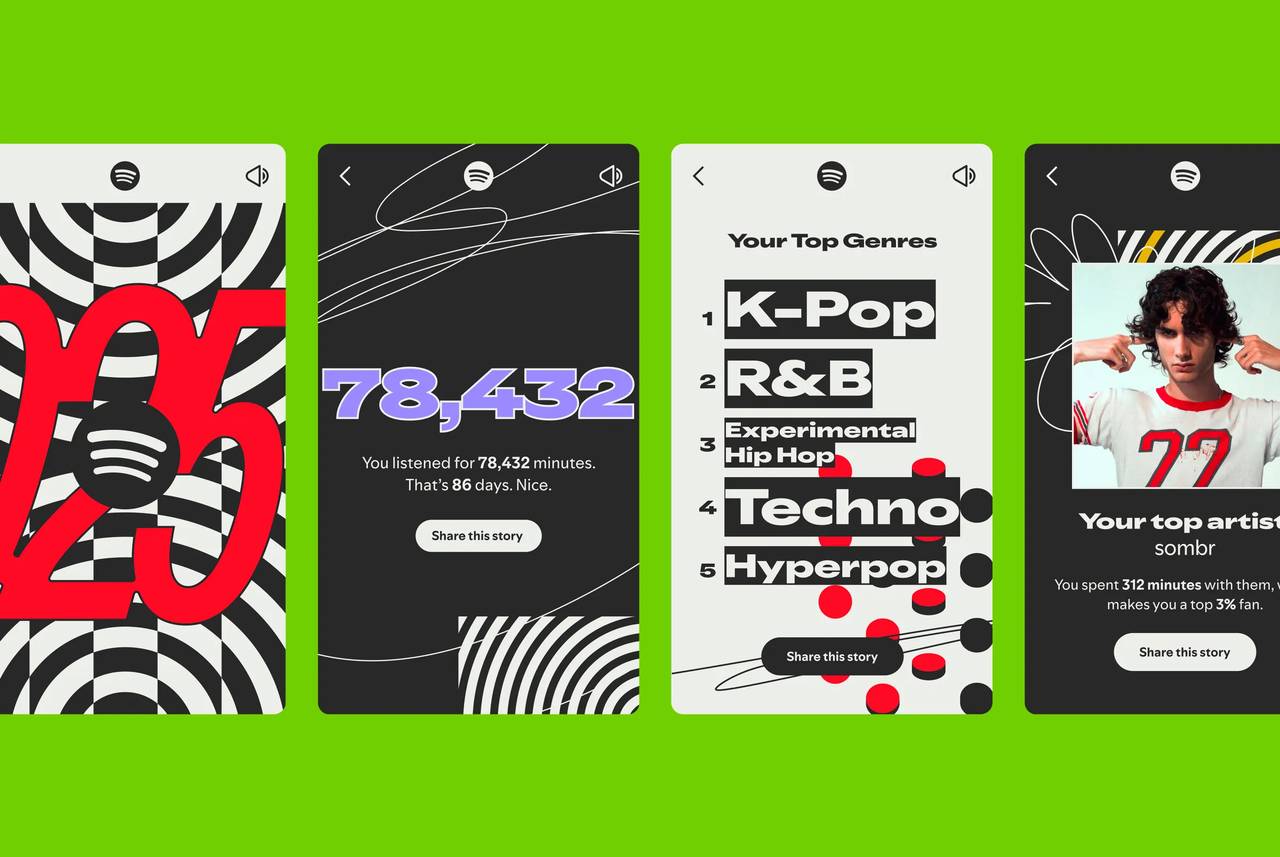
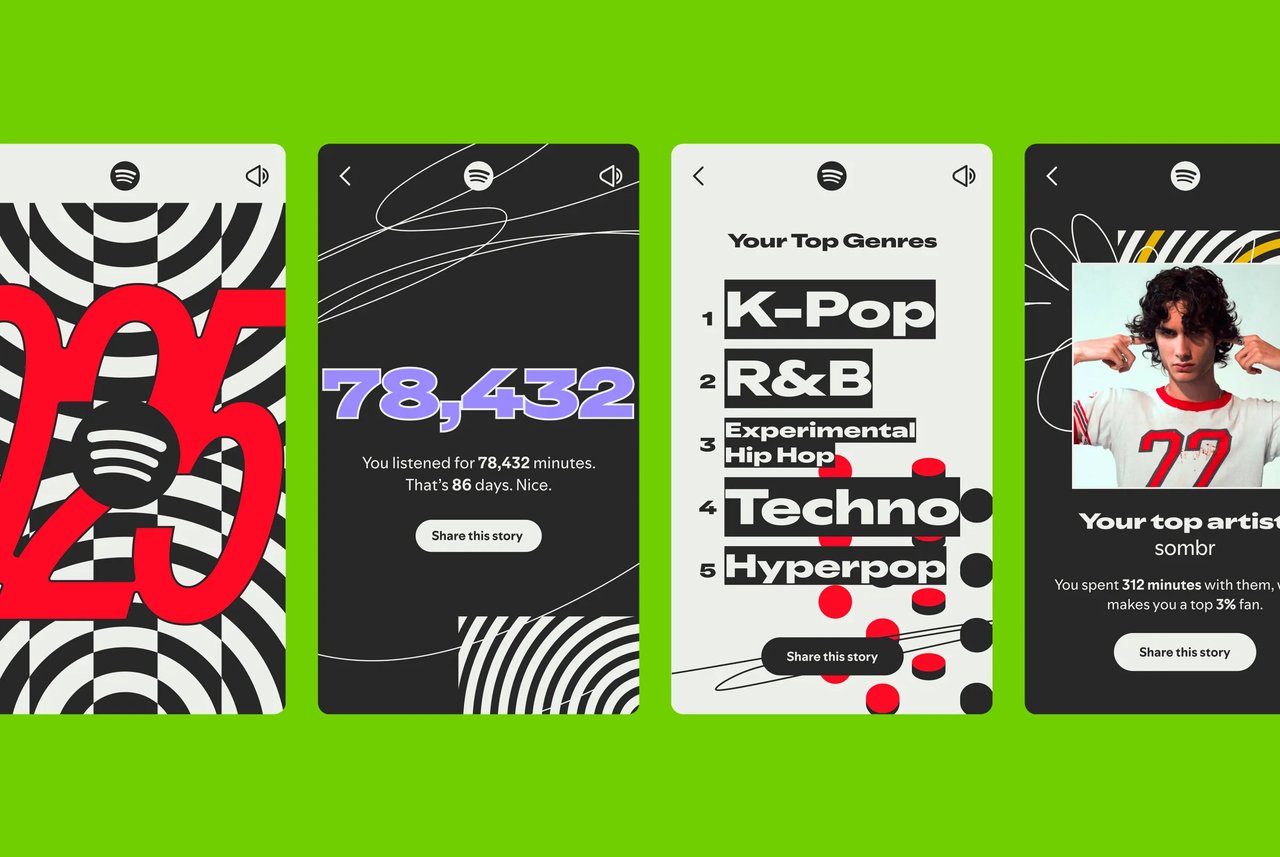
The logic is disarmingly simple: package each user's listening history into a personalized story designed to be shared. Every single user gets unique content they're personally motivated to post. It creates buzz, generates press coverage, builds brand loyalty — and it scales infinitely because the audience does the distribution. It turns customer data into a cultural moment, and it does it reliably, every year.
Wendy's Frosty Fix
Wendy's has an obvious competitor problem: McDonald's sells essentially the same meal. In 2025, they found a way to turn McDonald's operational failures into their own media strategy.
Using McBroken — a third-party site that tracks real-time outages of McDonald's soft-serve machines across the US — Wendy's deployed Frosty trucks to McDonald's locations the moment their machines went down. At the same time, they geo-targeted nearby consumers with mobile coupons. Every broken McDonald's ice cream machine became a Wendy's brand activation, in real time, for free.
The Adweek Experiential Awards results were specific: 1.17 billion earned media impressions, a 350% spike in brand mentions, 52.1 million Frostys sold, and 33% year-over-year growth. The campaign reportedly also pressured McDonald's into changing how their machines are serviced — an unusual outcome for a competitor's marketing spend.
What makes it worth studying isn't the production. There was almost none. The creative concept was the data layer — the mechanic of using a competitor's known weakness as a real-time trigger. That's a format only Wendy's could own, and it cost a fraction of what a traditional campaign would have.
LEGO's Miami Grand Prix drivers' parade
In May 2025, LEGO and Formula 1 took over the Miami Grand Prix drivers' parade in a way that made global headlines without buying a single second of traditional advertising. Instead of the usual truck convoy, all 20 F1 drivers completed a lap of the 5.4km circuit in fully drivable LEGO cars — one for each team, built to near 1:1 scale out of approximately 400,000 LEGO bricks apiece.
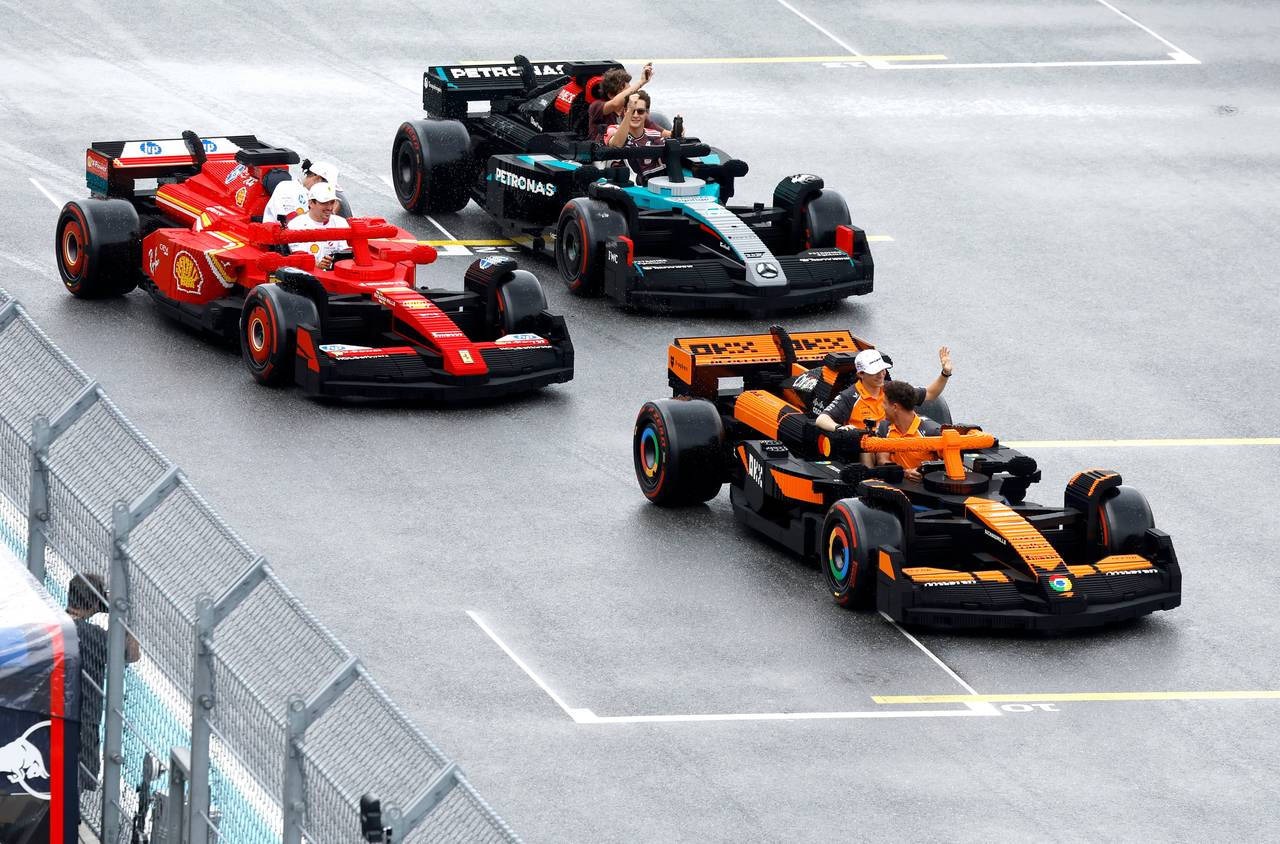
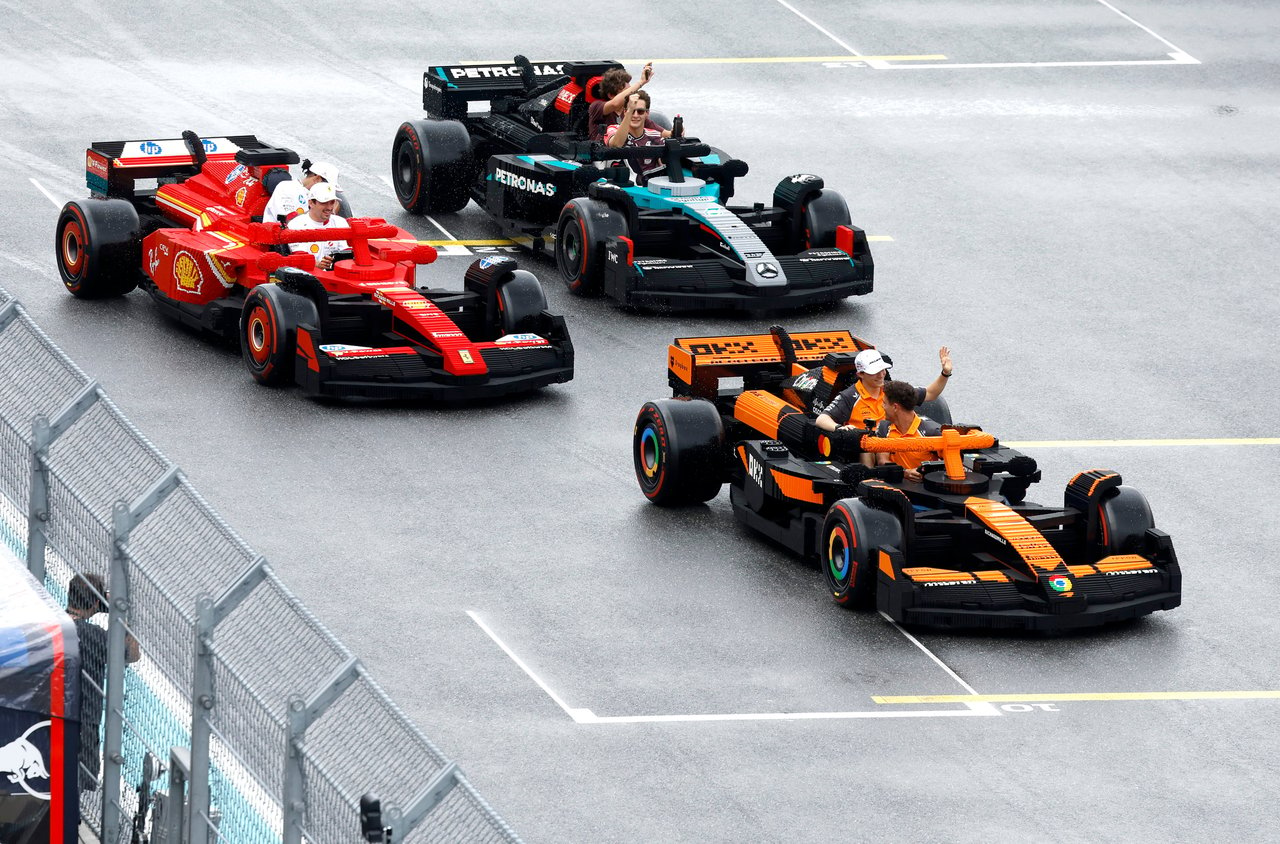
The builds took 26 specialists 22,000 combined hours to construct. They weigh 1,000kg each and can reach speeds of 20kph. Oscar Piastri, Lando Norris, Lewis Hamilton — the best drivers in the world, waving to fans from the cockpit of a LEGO car. It was, objectively, ridiculous. That's why it worked.
As a brand activation, this is a case study in understanding audience overlap. LEGO's fastest-growing segment is adults. F1's fastest-growing audience is women and families. Neither brand was poaching the other's customer — they were expanding into each other's territory by creating a moment neither could have owned alone. The cars then embarked on a global tour of future races, extending the activation beyond Miami.
H&M's immersive fitting rooms
The fitting room is the part of the shopping experience most brands have written off. H&M decided to make it the destination. Their immersive fitting rooms — initially in Barcelona's Paseo de Gràcia flagship, since expanded to New York, Berlin, and Seoul — replaced standard cubicles with octagonal infinity-mirror environments featuring floor-to-ceiling screens, color-changing LEDs, and curated music playlists shoppers can select by mood.
The Barcelona installation alone generated over 11 million TikTok views, with customers queuing specifically to experience the fitting room rather than to buy. That's not a by-product of the activation — it's the point. The fitting room became a content moment: people came in to try clothes, stayed to film, and left having posted user-generated content about H&M to an audience the brand didn't have to pay to reach. In 2025, content generated from these rooms was still circulating across TikTok and Instagram years after the first installation.
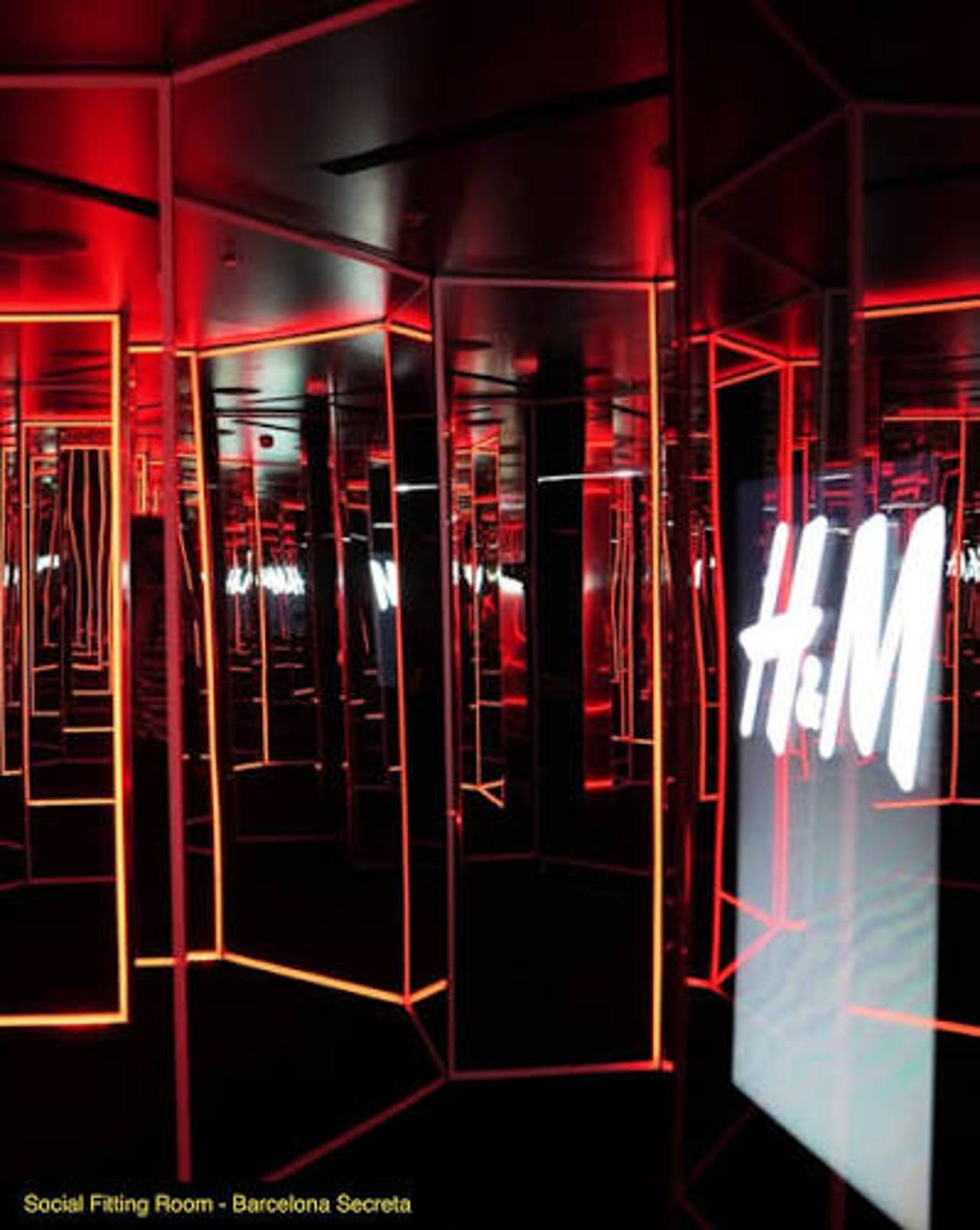
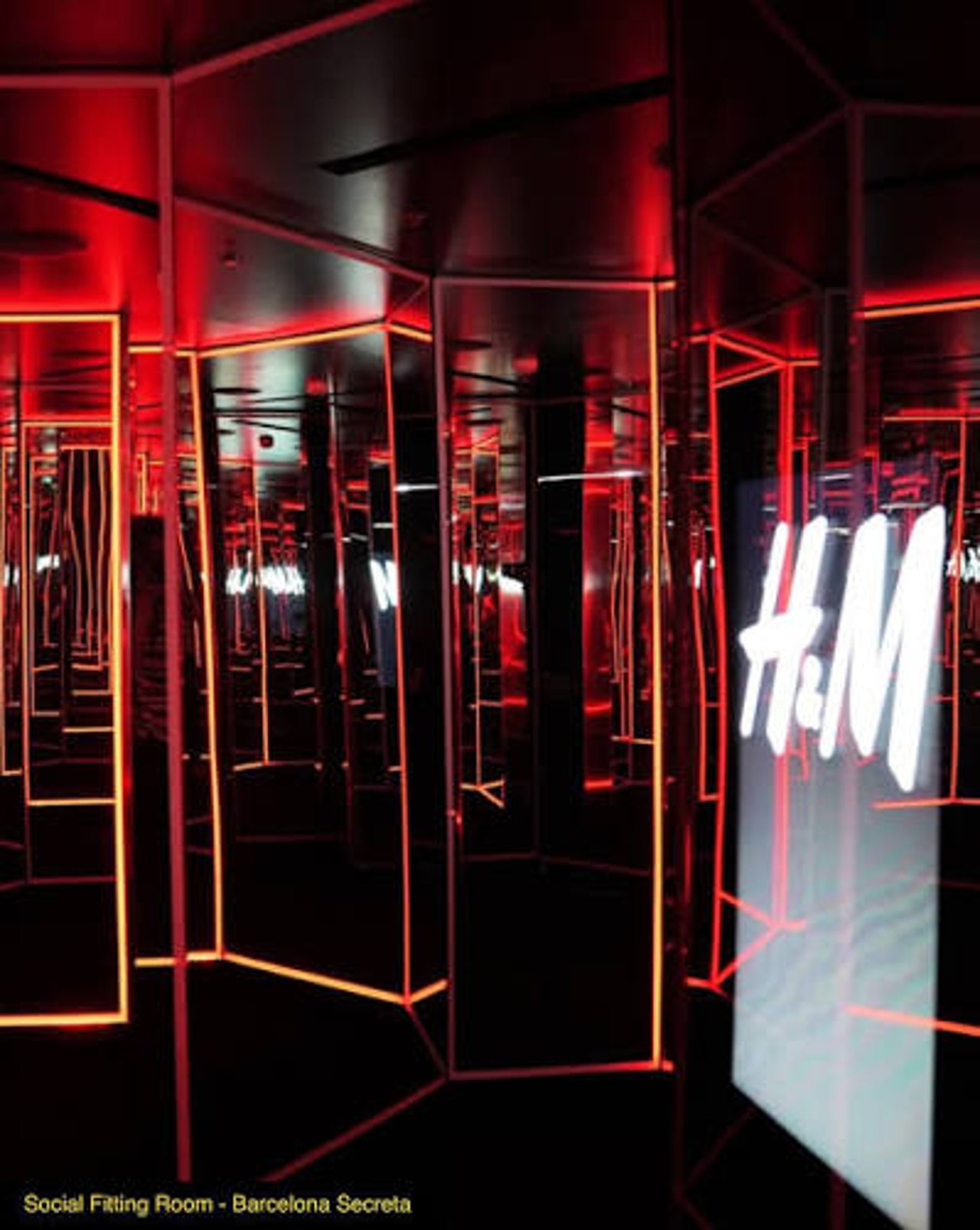
It's a useful model for in-store activation because it solves a real friction point — trying on clothes can be stressful — by replacing anxiety with fun. The shareable experience is a side effect of genuinely improving the interaction.
Adidas Originals' four-story shoebox, Shanghai
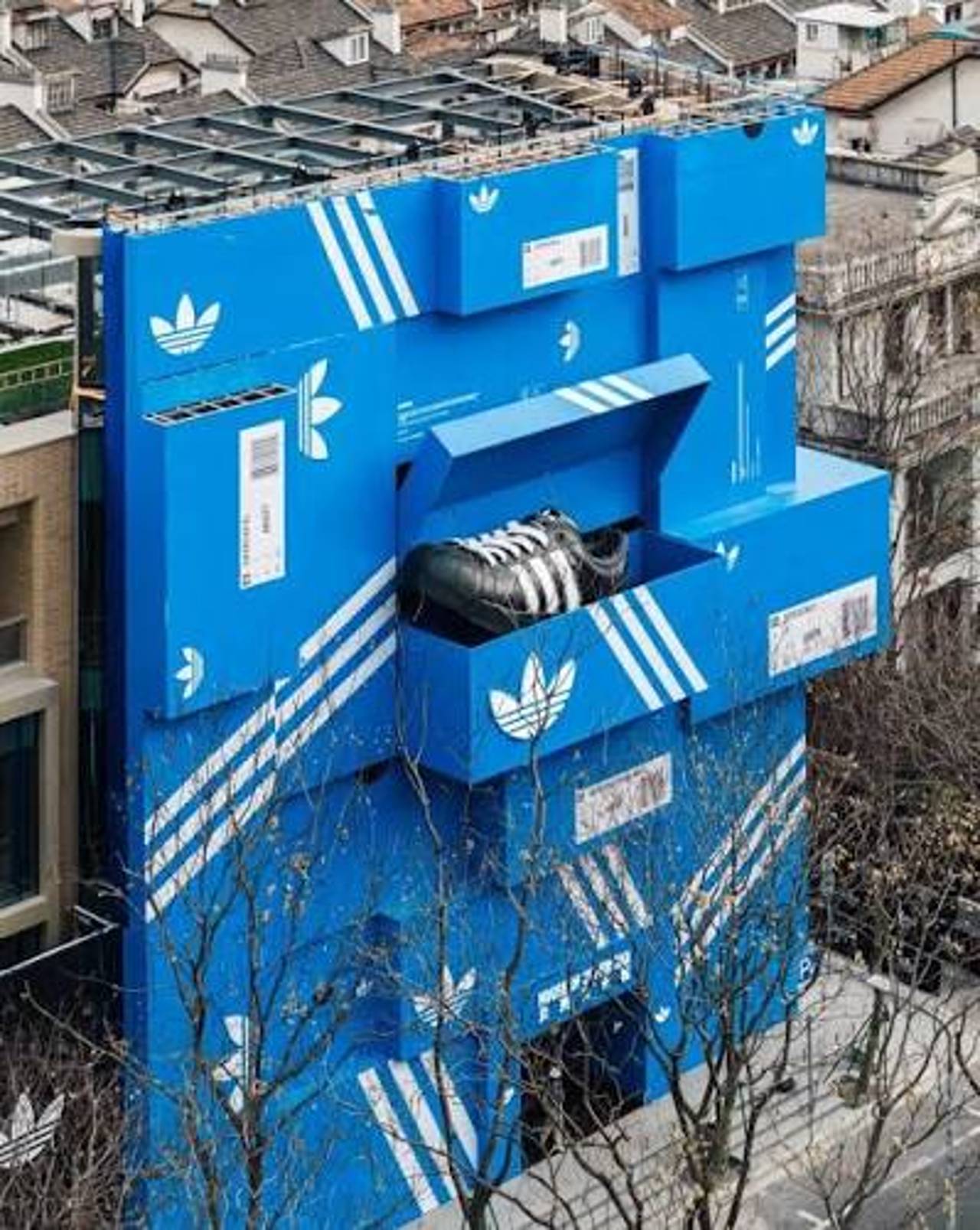
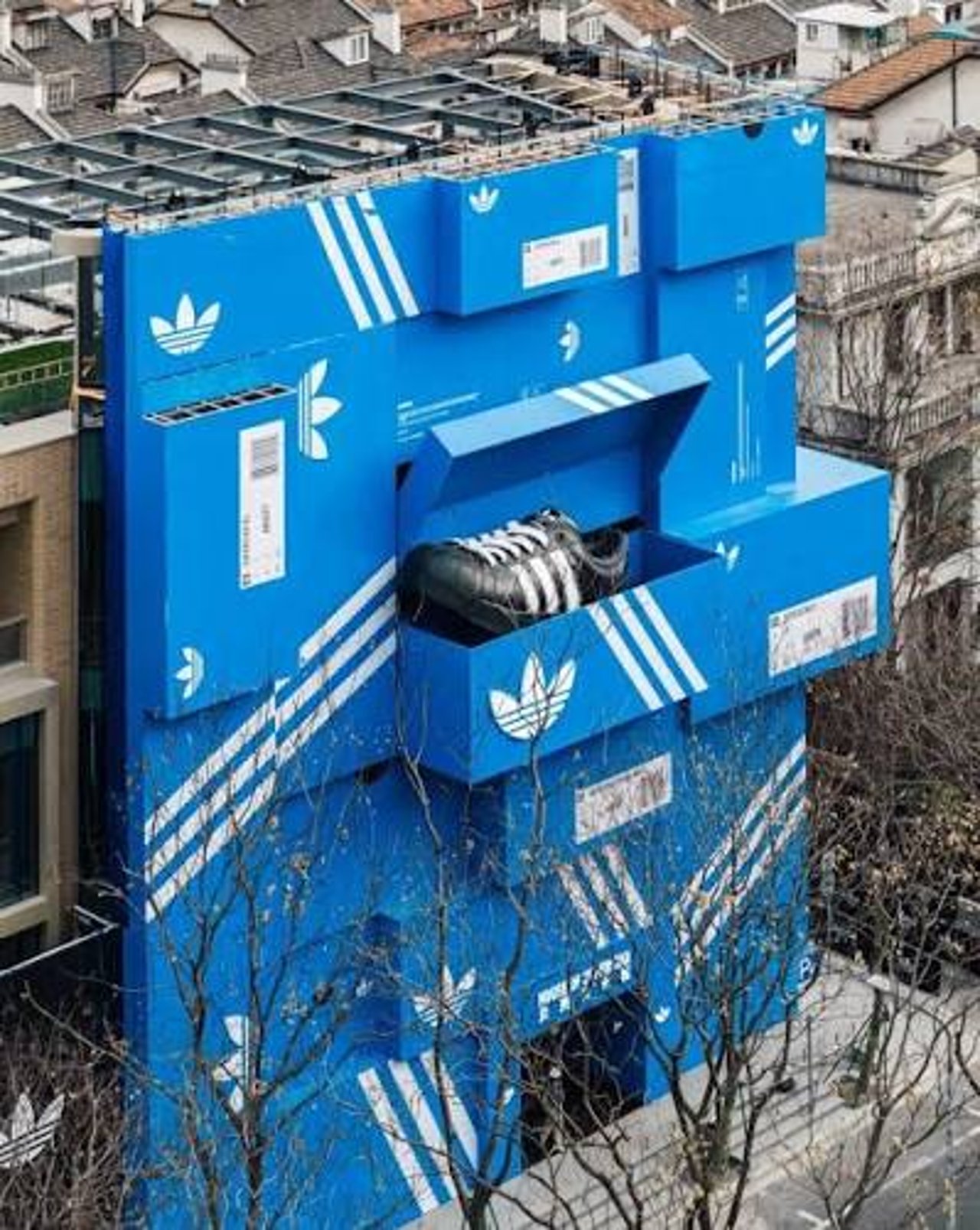
To launch the Adidas Originals Superstar campaign in China in March 2025, Adidas built a four-story structure on a Shanghai street covered entirely in oversized versions of their iconic blue shoeboxes. Inside was the "Superstar Archive" — a curated exhibition of every version of the trainer. Outside, a block party on "Shell Toe Street" drew fashion enthusiasts, skateboarders, and street dancers with live performances from brand ambassadors.
The exterior didn't need explaining. The shoebox is one of the most recognizable objects in sneaker culture. Scaling it to building height made the street a destination — people came to photograph it whether or not they were attending the event, turning the physical installation into a social media distribution mechanism. That's dual-purpose activation: the structure was both the venue and the content.
It's also a clean example of what brand activation can do in a market where the brand needs to re-establish cultural relevance. Adidas had been working to recover ground in China, and activations like this one — local in context, unmistakably Adidas in identity — were part of what drove their brand recovery there through 2025.
B2B brand activation
Same logic. Different formats.
B2B brand activation is still about moving target buyers from passive brand awareness to a meaningful interaction — it's just that the formats look like trade shows, roundtables, product demos, client events, and content-based activations rather than pop-up cafés and TikTok challenges.
The goal is identical: create memorable experiences more effective than a sales pitch. Running a brand analysis before planning your activation tells you where you sit in the category conversation — which competitors are already owning the moments you want to claim, and where there's space to show up differently. That's genuinely useful context before you commit budget to a trade show presence or a hosted event.
Real examples of effective brand activation campaigns in B2B: a cybersecurity company runs a live "hack the firewall" challenge at a tech conference, turning a booth visit into a shareable LinkedIn moment; a SaaS company hosts a private roundtable for 20 high-value accounts, building relationships that no outbound sequence could start; a professional services firm builds a real community event around an award ceremony instead of just buying logo placement.
The metrics shift — success looks like qualified conversations started, pipeline influenced, and accounts moved through consideration, not UGC volume. The structure of the brand activation campaign itself is identical.
What makes brand activation work — and what makes it fail
The best activations share a few traits. Real audience insight — not demographic facts but genuine understanding of what the target audience actually cares about right now. Consistency with the brand's values — every element should feel like it could only belong to your brand. And design that makes participation easy and sharing feel natural rather than engineered.
The failure modes are usually the same three things, and the Pepsi/Kendall Jenner example manages to demonstrate all of them at once: poor cultural insight, execution completely disconnected from the brand message, and optimization for impressions rather than meaningful interactions. It's the canonical case not because brands failed publicly before it, but because it failed so loudly on every dimension simultaneously.
Impressions without engagement don't build equity. A successful brand activation strategy designs for the meaningful interaction first — amplification follows from that.
Creative brand activations: brand activation ideas to get started
Sampling with a moment, not just a product. Free samples work. Free samples with context — a person, a story, a setting designed to reinforce the brand's values — work better. Build a moment around the handoff.
Social media challenge with a genuine hook. Has to be easy to participate in, genuinely interesting (not just branded), and clearly on brand. The brief, the platform, and the audience behavior all need to align — the campaigns that go sideways here are the ones that built the concept first and then looked for a channel to put it in.
In-store QR extension. A QR code at the right moment in an in-store activation can bridge the physical interaction to a digital experience — extending engagement beyond the aisle and giving you data on who engaged and what they did next. More interesting than it sounds when you design the destination properly.
Partner activation with the right fit. A well-chosen brand partnership shares cost and extends reach. The best ones also pull through influencer marketing campaigns to amplify beyond both brands' owned audiences. But forced co-branding creates confusion, not community — the partnership has to make intuitive sense to your audience.
Community co-creation. Give your existing audience a role in the campaign itself. It's the most cost-effective format here because the audience creates the content, and what they create is inherently authentic. The challenge is designing the right brief: too open and you get chaos, too prescriptive and it feels like a task. The sweet spot is a clear constraint with maximum creative freedom inside it.
How to measure brand activation success
Not same-day sales. Not raw reach. The right question is whether the activation created the engagement, emotion, or behavior you designed it to create.
Engagement — clicks, video completions, shares, time on page for digital activations; foot traffic, QR code scans, and event sign-ups for physical ones. Don't overcomplicate this one.
User-generated content volume — how many posts, videos, and stories tied to the activation appeared? UGC is one of the clearest signals that the experience was worth sharing. YouScan tracks UGC volume, visual brand mentions, and social reach in real time — including images where your brand appears without a direct tag, across social platforms and newer channels including Moltbook.
Brand mentions and sentiment — volume tells you how much conversation the activation generated; tone tells you whether that conversation is doing what you needed. YouScan's sentiment analysis tools break this down by aspect, so you know which specific elements landed and what to adjust in future campaigns.
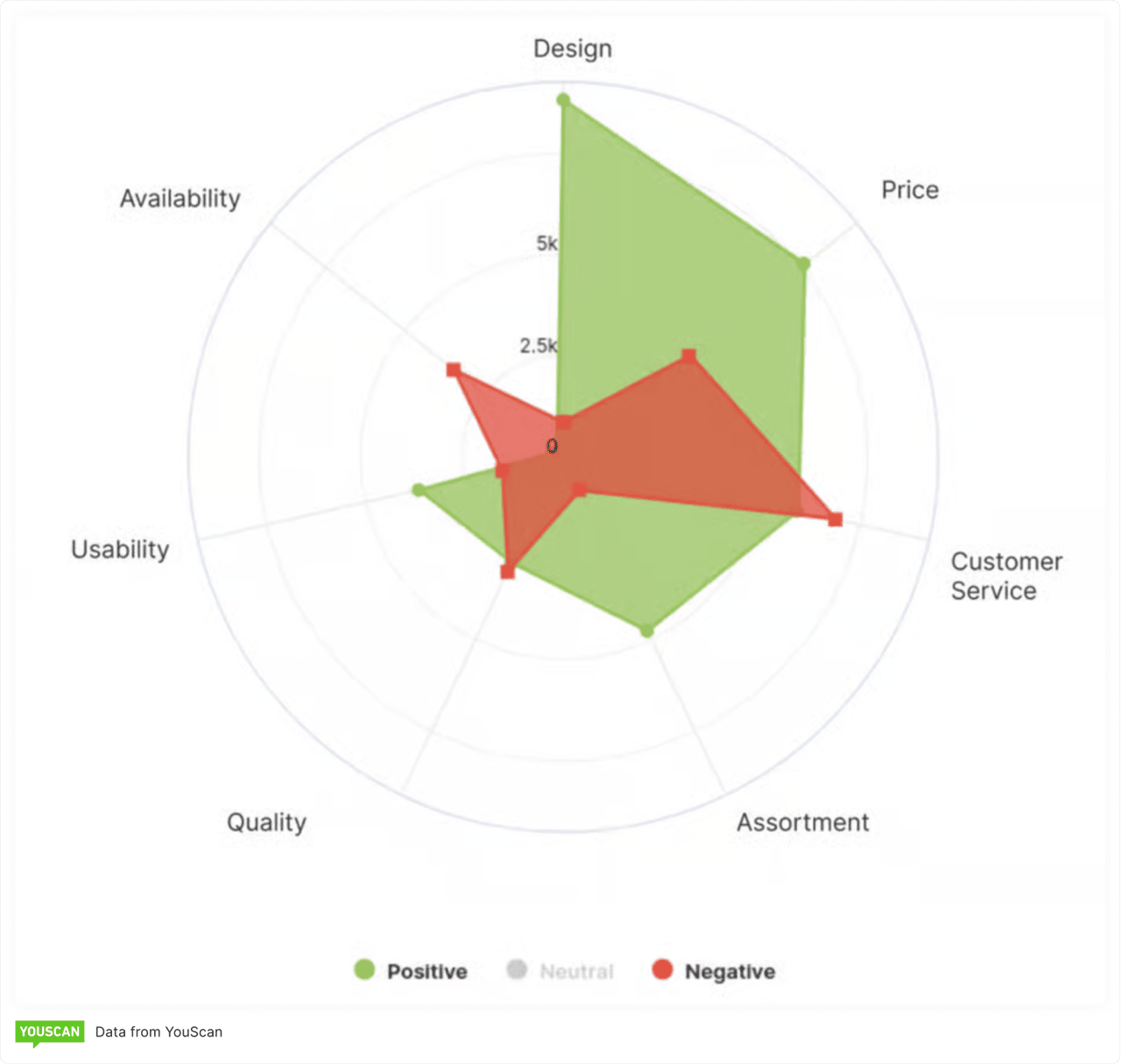
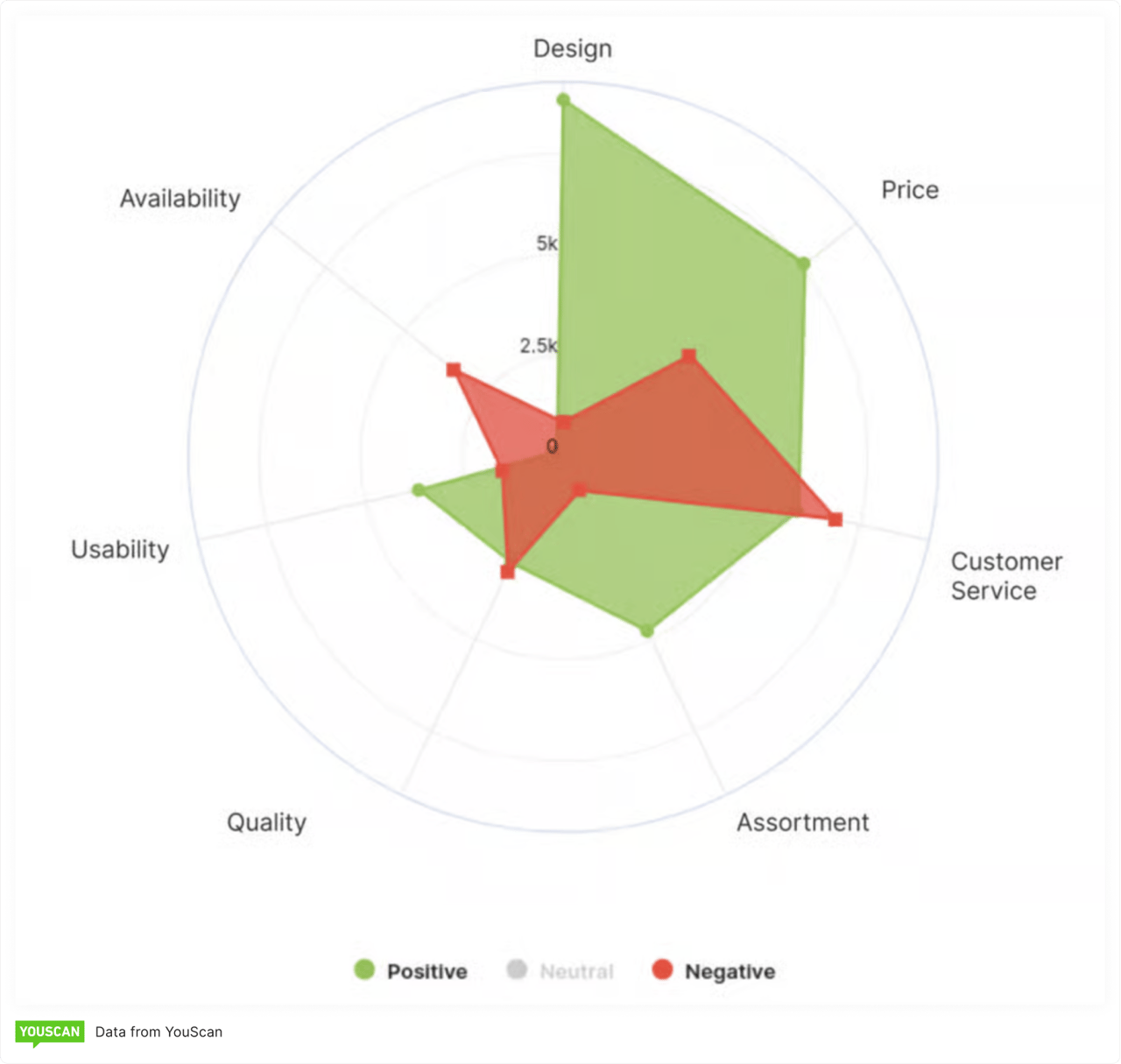
Share of voice — the metric most teams skip. How did your brand perform relative to competitors during the campaign window? Pair it with ongoing brand health tracking to see whether the activation actually moved long-term perception, not just campaign-week metrics.
Post-activation brand recall — the one that tells you whether anything actually changed: are people still referencing the experience weeks later? Unprompted, recurring mentions after the campaign window closes are the clearest measure that a campaign shifted perception. Social media monitoring tools catch those mentions as they surface, long after your dashboard stops looking.
For metric definitions and terminology, the YouScan social listening glossary is a useful reference.
Final thoughts
The brief that produces a genuinely effective brand activation starts with listening — not to internal stakeholders but to your audience. What are they actually talking about? What experiences would they genuinely want to have with your brand? What cultural moment are they in, and where does your brand belong in it, if at all?
Spotify Wrapped, Wendy's Frosty Fix, LEGO's Miami Grand Prix stunt — they all started from a real understanding of what their audiences cared about. That's what separates campaigns that create buzz from the ones that also change how people feel about the brand in future marketing strategies.
Get a YouScan demo to see what your audience is actually saying before your next campaign launches.
Frequently asked questions
What is brand activation?
Brand activation is a campaign, event, or experience designed to bring a brand to life and prompt direct engagement from its target audience. Unlike brand awareness efforts — which focus on visibility — brand activation focuses on creating a meaningful interaction: something the audience actively does, feels, or shares.
What's the difference between brand activation and experiential marketing?
Experiential marketing is the broader strategic approach to creating consumer experiences. Brand activation is a specific, time-bound campaign that applies those principles to achieve a defined objective. Experiential marketing is the ongoing strategy; brand activation is the individual campaign.
What are the most effective brand activations?
The most effective brand activations are audience-relevant, on brand, and designed for shareability. Spotify Wrapped, Wendy's "Frosty Fix," and LEGO's Miami Grand Prix drivers' parade are strong recent examples because they combined genuine audience insight with formats that only those specific brands could have pulled off.
How do you measure brand activation success?
Key metrics include social media engagement, UGC volume, brand mention sentiment, share of voice during the campaign window, and post-activation brand recall. The right mix depends on your marketing objectives and the activation type you're running.