What is Brand Safety? How to Get Ahead of the Risks (2027 Guide)

You can follow every rule and still wake up to a screenshot of your ad next to something awful. Or a creator’s old post resurfacing the week your campaign goes live. Or a comment thread under your own launch post that nobody would ever sign off on. That’s what brand safety is about: keeping brands away from content and conversations that hurt them.
Media pros feel it. In IAS’s 2026 Industry Pulse report, 69% of US media experts named ad adjacency a major challenge, and 82% said that as risks rise on social platforms, creator suitability matters as much as ad adjacency. Yet most guides explain brand safety to marketers as either an ad-placement job or a social media job. So brands end up with half a plan, and the other half shows up later as a crisis.
This guide covers both halves: a plain definition, brand safety vs brand suitability, the risks worth watching, a seven-step strategy, and an honest map of which brand safety solutions cover which layer.
What is brand safety?
Brand safety is the set of practices that protect a brand’s reputation by keeping its ads, content, and name away from harmful, misleading, or inappropriate material. It covers where your ads appear, what shows up around your content, who you partner with, and what people say about you online. Put simply, it’s the company your brand keeps.
It has two sides:
The advertising side: Keeping digital ads off unsafe pages, apps, videos, and fake news sites, mostly through platform settings and verification tools.
Social and reputation: Watching the conversation around your brand, from comment sections and creator posts to fake accounts using your logo.
In most companies, media buyers and agencies own the first side, while social and PR teams own the second. They rarely compare notes. That gap is where many brands get caught.
(New to the jargon? The social listening glossary covers the basics.)
Brand safety vs brand suitability
Brand safety is a shared floor: it avoids content that’s harmful for all brands, like graphic violence, hate speech, or illegal material. Brand suitability sits on top of that floor. Each brand decides what else is a poor fit for its brand values and audience. So content can pass a brand safety check and still fail brand suitability.
Brand safety | Brand suitability | |
Question it answers | Is this content harmful to any brand? | Does this content fit our brand? |
Who decides | Shared industry norms | Each brand, by its own values and audience |
Example | Graphic violence, hate speech, illegal content | Alcohol, politics, or gambling: fine for some brands, not others |
Approach | Blocklists and exclusion categories | Tiers, inclusion lists, context |
Here’s an example. A news story about a wine recall is perfectly safe. Would a kids’ juice brand want its ad there? Probably not, though craft beer brands might not mind at all.
For years, the ad industry and many brands leaned on shared definitions from GARM, the Global Alliance for Responsible Media. Then the World Federation of Advertisers announced on 9 August 2024 that it was discontinuing GARM. In a July 2026 settlement with X, the WFA said it won’t restart GARM or anything similar, which left a gap in the ad ecosystem. So today, brands set their own suitability tiers, using settings from platforms and vendors as a starting point.
Why brand safety matters for your brand’s reputation and brand loyalty
Brand safety matters because consumers judge brands by their surroundings. A harmful adjacency, a controversial partner, or an unchecked comment thread can negatively impact trust, waste ad spend, and send customers to a competitor. On social media, one screenshot can travel further than the campaign that caused it.
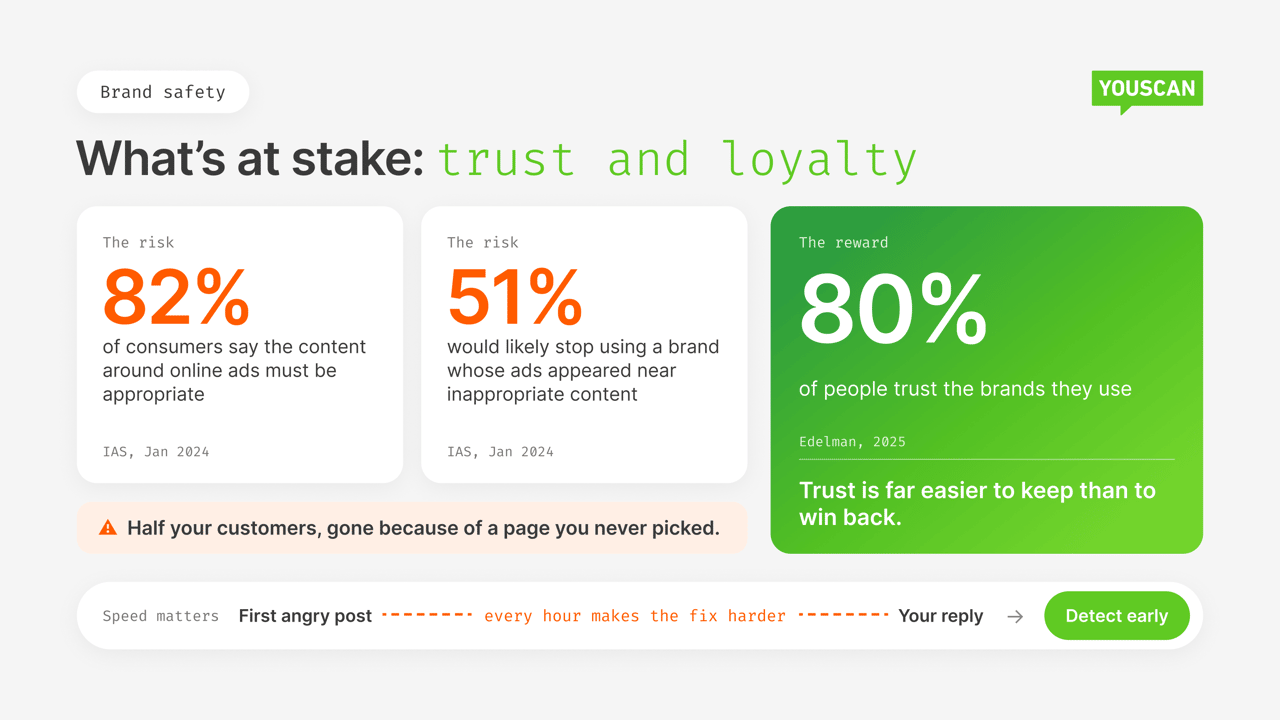
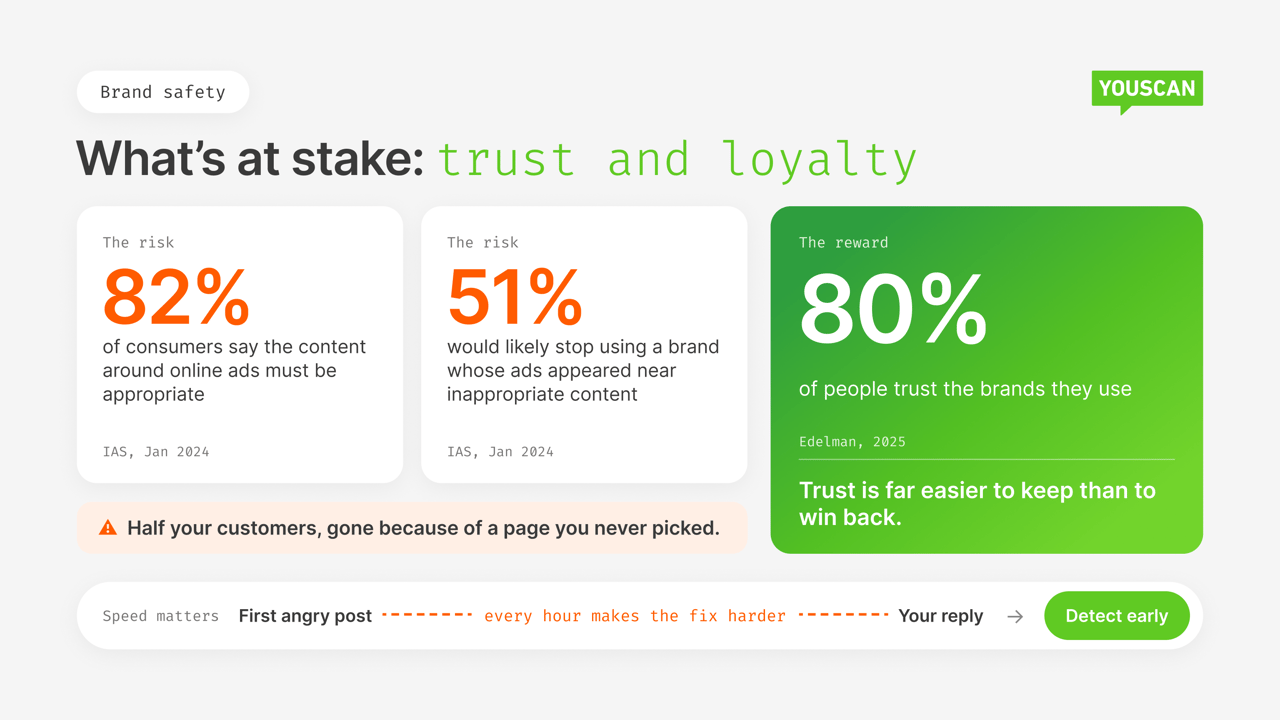
In IAS consumer research from January 2024, 82% of consumers said it matters that the content around online ads is appropriate. And 51% said they’d likely stop using a product from brands whose ads appeared near inappropriate content. Half your customers, gone because of a page you never picked.
There’s good news too. Edelman’s 2025 brand trust report found that 80% of people trust the brands they use. In a crowded market, that trust is what brand loyalty runs on, and it’s far easier to keep than to win back.
Then there’s the importance of speed. Every hour between the first angry post and your first reply makes the fix harder, which is why good PR crisis management starts with early detection.
Brand safety risks to watch across digital channels
Brand safety risks across digital channels come from five places: where your ads land, what people post around your brand, who you partner with, false content using your name, and your own posts. Most brands watch one or two closely. Trouble usually starts in the ones nobody owns.
Ad adjacency and made-for-advertising sites
Ad adjacency is what sits next to your ad. The worst case is harmful content. The common case is plain waste: ad placements on made-for-advertising (MFA) sites, low-quality pages from publishers who exist only to show as many ads as possible.
How common? In digital advertising, more than you’d hope. The ANA’s programmatic transparency study found MFA sites took 21% of impressions and 15% of spend in the campaigns it reviewed. And IAS’s 21st Media Quality Report (July 2026) says mobile web display accounts for 54.9% of brand suitability violations and 71.9% of MFA impressions.
Sometimes it gets much worse. In February 2025, an Adalytics report found ads from household-name brands on image-sharing sites flagged for hosting child sexual abuse material. Arielle Garcia of the Check My Ads Institute called it “a failure at every step of the ad-tech supply chain at the expense of advertisers, and in this case, of children.”
What helps: Platform inventory filters, an inclusion list of sites you trust, and third-party verification if you spend heavily on programmatic advertising.
Comments and user-generated content on social media
Your ads can be spotless while the risk sits right under your own post. Unmoderated threads, offensive content in replies, and user posts that show your product next to inappropriate content all count. You can’t control what people post, but you can see it early.
The classic example is from February 2019, when predators were found leaving comments on YouTube videos of children. Disney and Epic Games paused their ads, CNBC reported. Neither of those brands wrote a single comment. The damage came from the conversation around their ads.
What helps: Clear moderation rules for owned channels, plus tracking brand mentions in both text and images.
Creators and partners
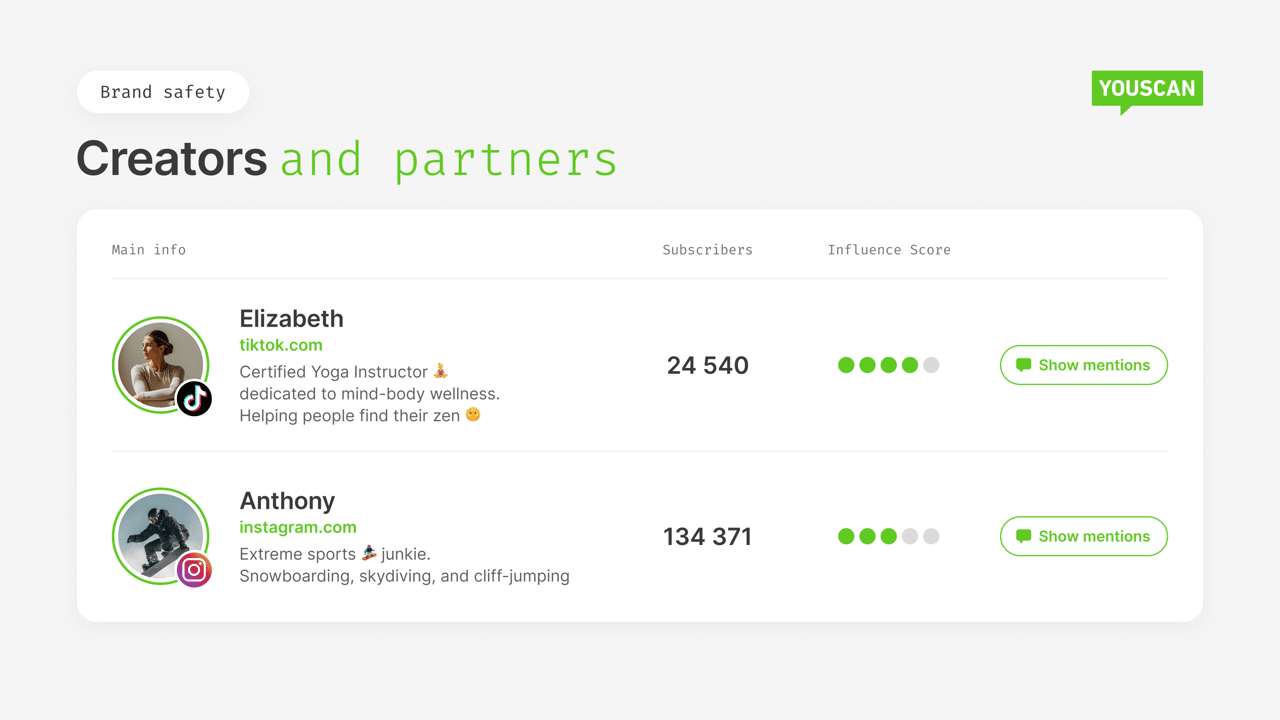
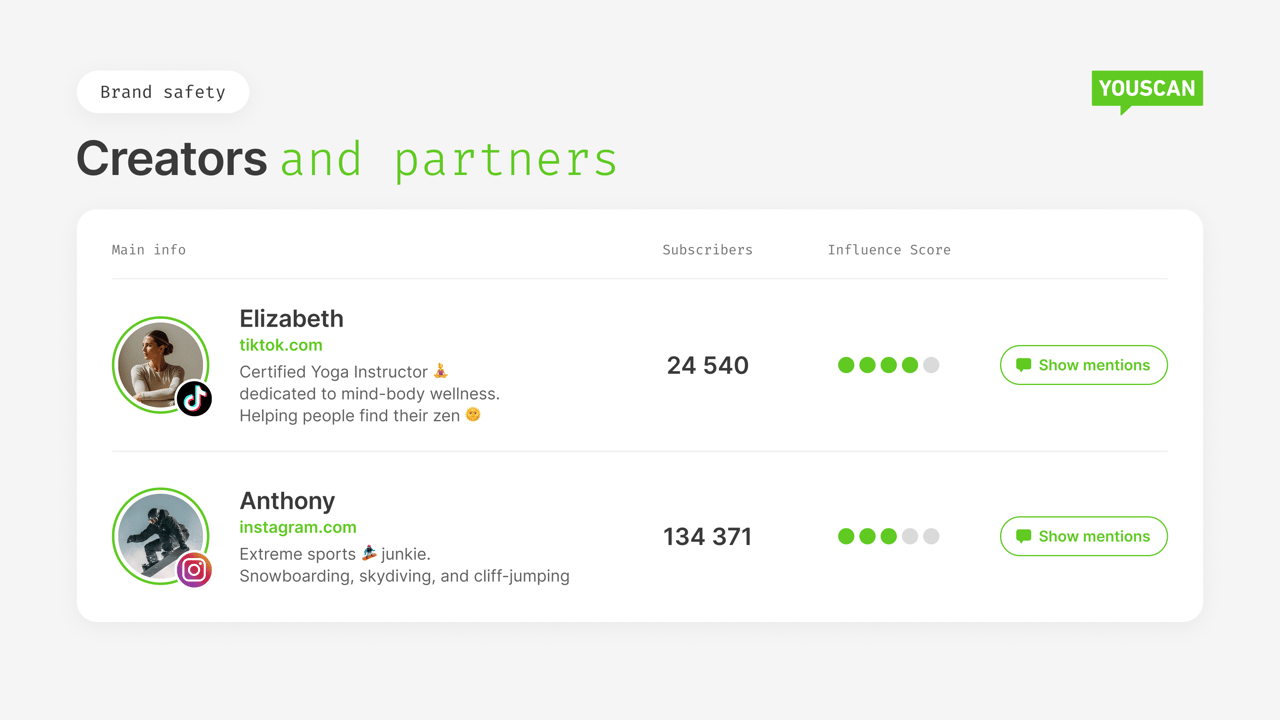
Creators bring brands reach and personality. They also bring their whole posting history, their audience, their future behavior, and sometimes deals with other brands you didn’t know about.
When Adidas ended its partnership with Ye on 25 October 2022 over comments it called “unacceptable, hateful and dangerous,” it expected to lose up to $246 million in profit that year, ABC7 reported. But smaller brands with smaller creators face the same risk, just with less press.
What helps: Vet before signing, recheck during the campaign, and write behavior clauses into every contract.
Misinformation, fake news, and impersonation
False claims about your product, fake accounts using your name, and AI-generated videos of your “spokesperson” all land here. So does your ad budget quietly funding fake news sites instead of real publishers.
NewsGuard has identified 3,749 AI content farm sites in 16 languages around the world (as of June 2026). Many earn their ad revenue through programmatic advertising, so top brands end up paying for fake news without knowing it.
Impersonation can even move the market. Here’s an example from 10 November 2022: a verified fake Eli Lilly account on Twitter told consumers that insulin was now free. Lilly’s stock fell more than 5% the next day, Semafor reported, though it’s unclear how much of that drop the tweet caused.
What helps: Monitor your brand name and logo across the web, and learn how platforms handle reports of fake accounts before you need it.
Your own content
Yes, you. Tone-deaf scheduled posts, jokes that go out during tragic news, and rebrands that go sideways are brand safety problems brands create themselves.
In August 2025, Cracker Barrel’s new minimalist logo drew such a backlash from customers that its shares fell more than 12% in one day. About a week later, the old logo was back, with a statement admitting “we could’ve done a better job sharing who we are,” CP24 reported.
What helps: Pause scheduled posts when big news breaks, and run sensitive launches past someone outside the project.
How to build a brand safety strategy
A brand safety strategy is a written plan that defines what’s off-limits for your brand, sets controls for ads and social channels, names who in your organization monitors and responds, and gets reviewed on a schedule. Effective brand safety measures cover both ads and conversation. The first three steps cost nothing but a few honest meetings.
1. Define your brand values and risk tolerance
It makes sense to start with what your brand stands for, then turn it into suitability tiers by topic. Three tiers work for most brands: never (hate speech, graphic violence), caution (politics, alcohol, tragedy news), and fine (everything else).
Be specific. “Nothing controversial” sounds like a policy, but it helps no one at 11 p.m. on a Saturday. “No ads next to mass shooting coverage, yes to general crime news” is something a media buyer can act on.
So where does your brand really stand on news? Tiers may differ by market, too: what’s fine in one market can be off-limits in another.
Then name an owner in your organization. Large brands sometimes train a brand safety officer through the Brand Safety Institute. Smaller companies just need one person who’s clearly responsible.
2. Write the guidelines (with regulatory compliance in mind)
Put your practices on paper: inclusion and exclusion lists, moderation rules, tone guidance, and creator contract clauses.
Cover the legal basics as well. In the US, the FTC’s Disclosures 101 for Social Media Influencers says creators must make their relationships with brands obvious. Your contracts should spell out the creator’s commitment to disclosure and what happens when a post skips the #ad.
3. Set ad controls
Before you place ads, turn on platform settings: inventory filters, block lists, and content-type exclusions on Meta, YouTube, TikTok, and X. Then add third-party verification services where budget allows, especially for open web publishers and connected TV buys where you can’t see all your ad placements.
Check your partners’ credentials, too. The Trustworthy Accountability Group runs a Brand Safety Certified program for the ad industry, and 207 companies earned TAG seals in 2025.
One tip we learned the hard way: review exclusion lists with your agencies before launch, not after.
4. Monitor conversations and images
Ad controls stop at your ads. They can’t tell you what customers say about you, so you need brand monitoring across social media, blogs, forums, reviews, and news. Track mentions and sentiment to protect your brand’s reputation, and set alerts for sudden spikes so you can identify potential crises early.
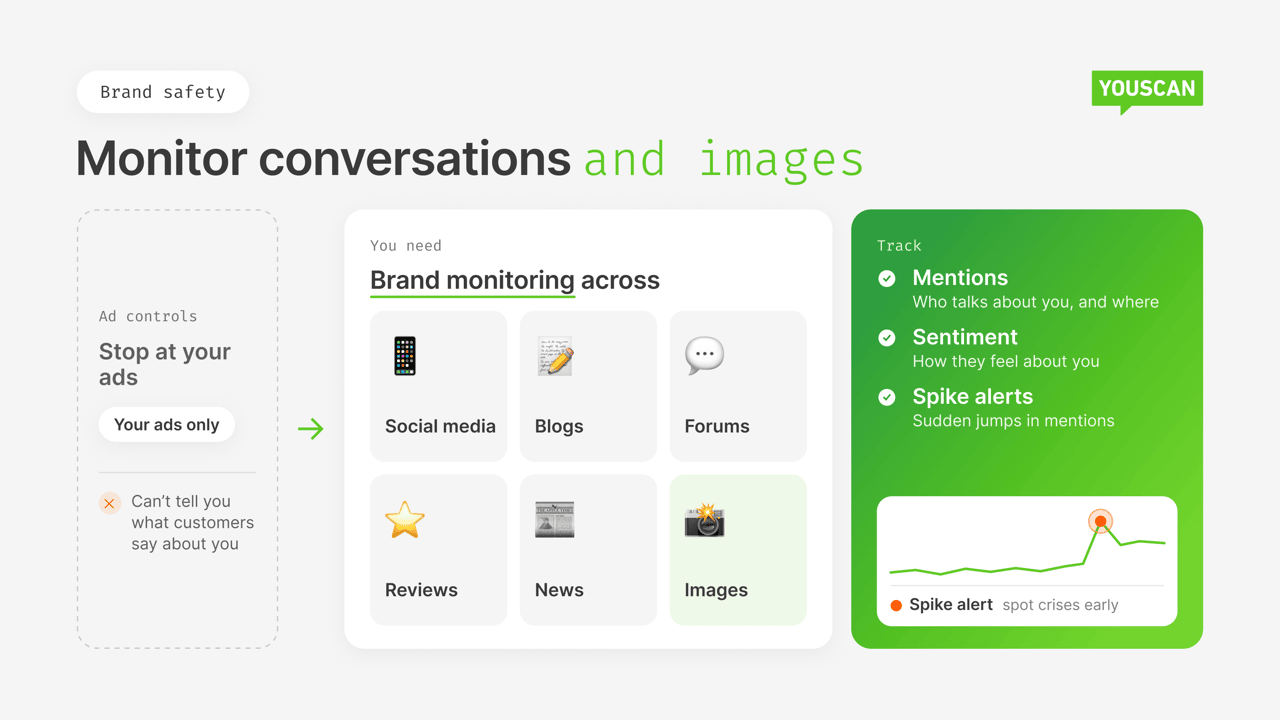
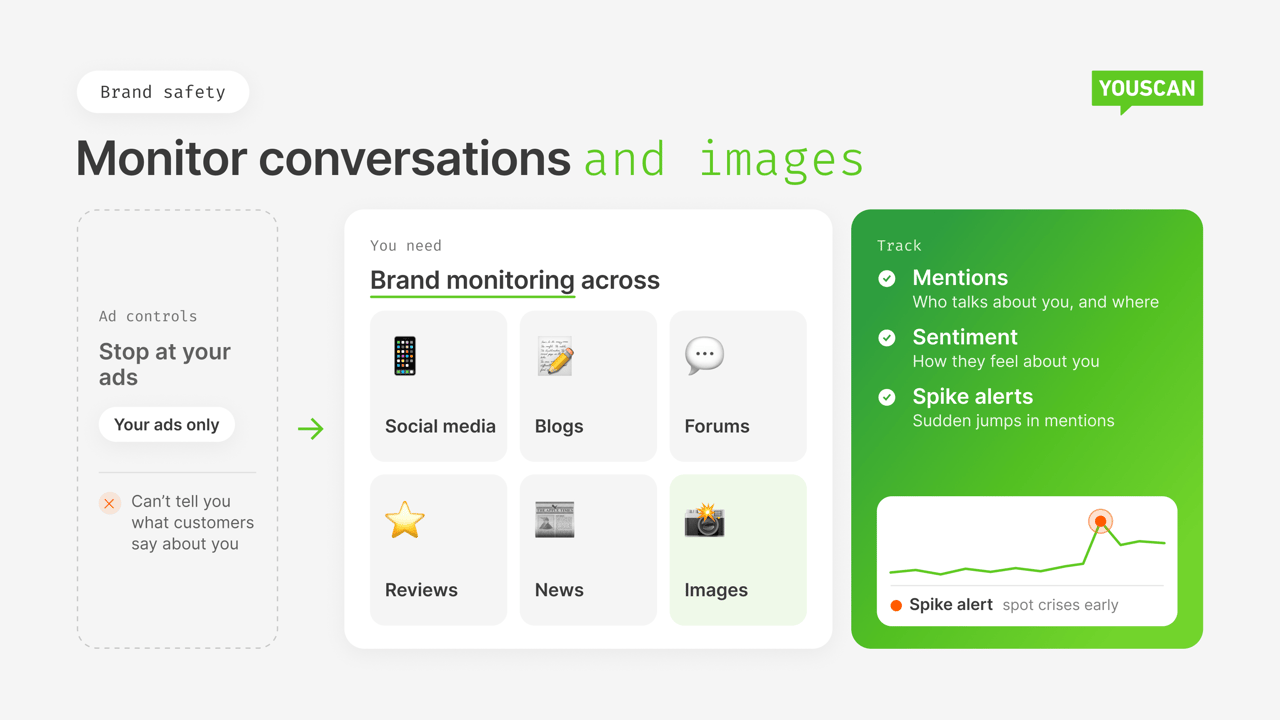
Images matter more than most marketers expect. A photo of your product in a meme carries your brand even when the caption never names it. That’s a job for logo recognition, not keyword search.
5. Vet creators and partners
Before you sign anyone, review their past content, their audience, and how well their values match yours. Try to identify old posts, odd follower spikes, and undisclosed deals with other brands. Smaller creators need the same checks, so if you find micro-influencers, build vetting into the search.
Then recheck during the campaign. A creator who looked like a safe bet in March can be trending for all the wrong reasons by June.
6. Prepare an escalation plan
Decide now who makes the call, who writes the response, and what triggers action. A 10% bump in negative mentions might just be customers sharing negative experiences with delivery. A 300% spike on a single post is a different story.
We’ve watched brands lose hours in a group chat debating who should approve a two-line holding statement. Write the chain of command down, keep pre-approved statements ready, and connect the plan to your organization’s wider crisis management process.
7. Review and update
Run a short review every quarter. Focus on incident data, near misses, blocked placements, and whether your tiers still fit. Then update and maintain the lists.
Brand safety standards drift as brands, audiences, and the industry change. Topics that felt risky last year might be fine now, and new formats (hello, AI-generated video) bring risks your guidelines don’t cover yet.
Brand safety solutions: what each tool layer does
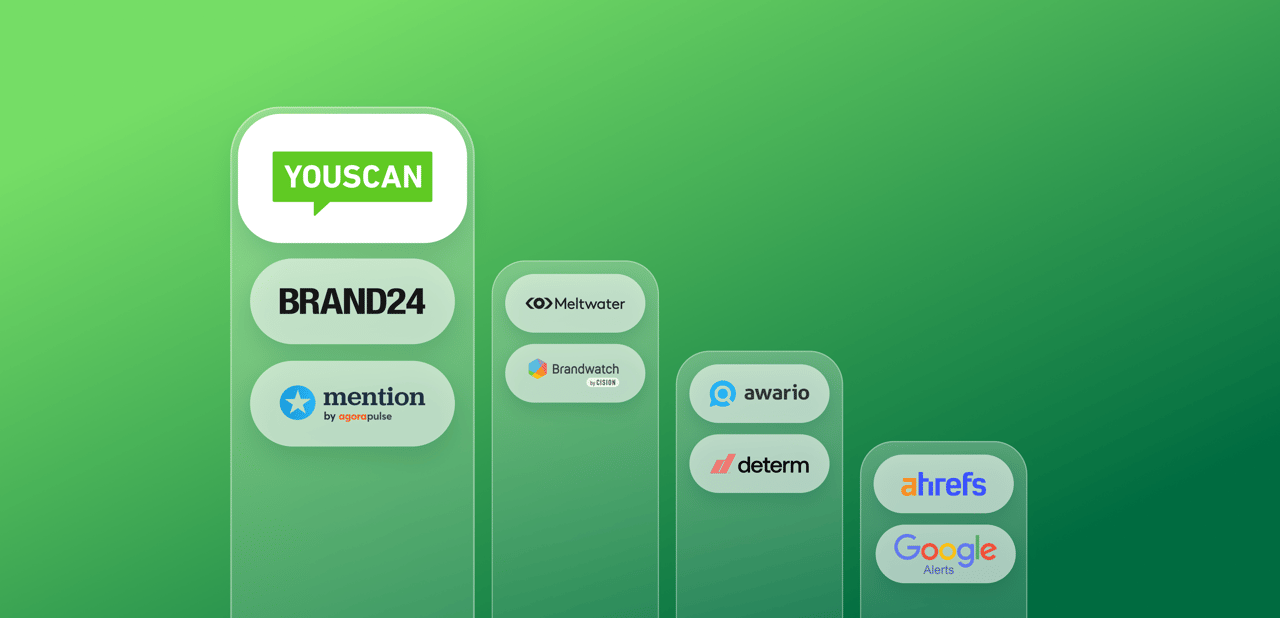
Brand safety solutions fall into five layers: platform controls, ad verification, social and video suitability vendors, creator vetting platforms, and social listening. Each layer covers a different part of the problem, and none covers all of it. Most brands need two or three, depending on digital advertising spend and how much risk lives in organic content. (For the last layer in depth, see these social listening tools.)
Social listening: YouScan
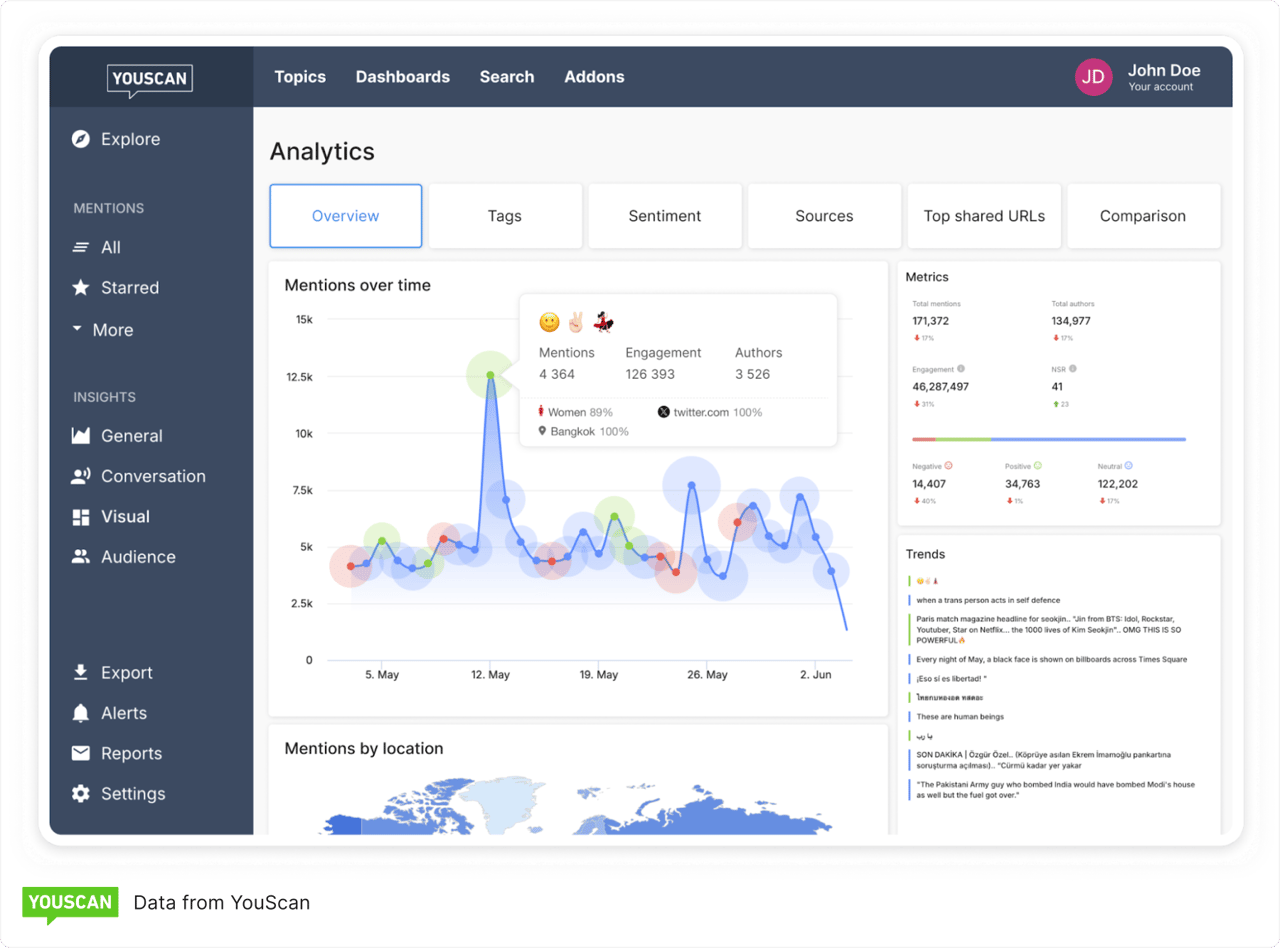
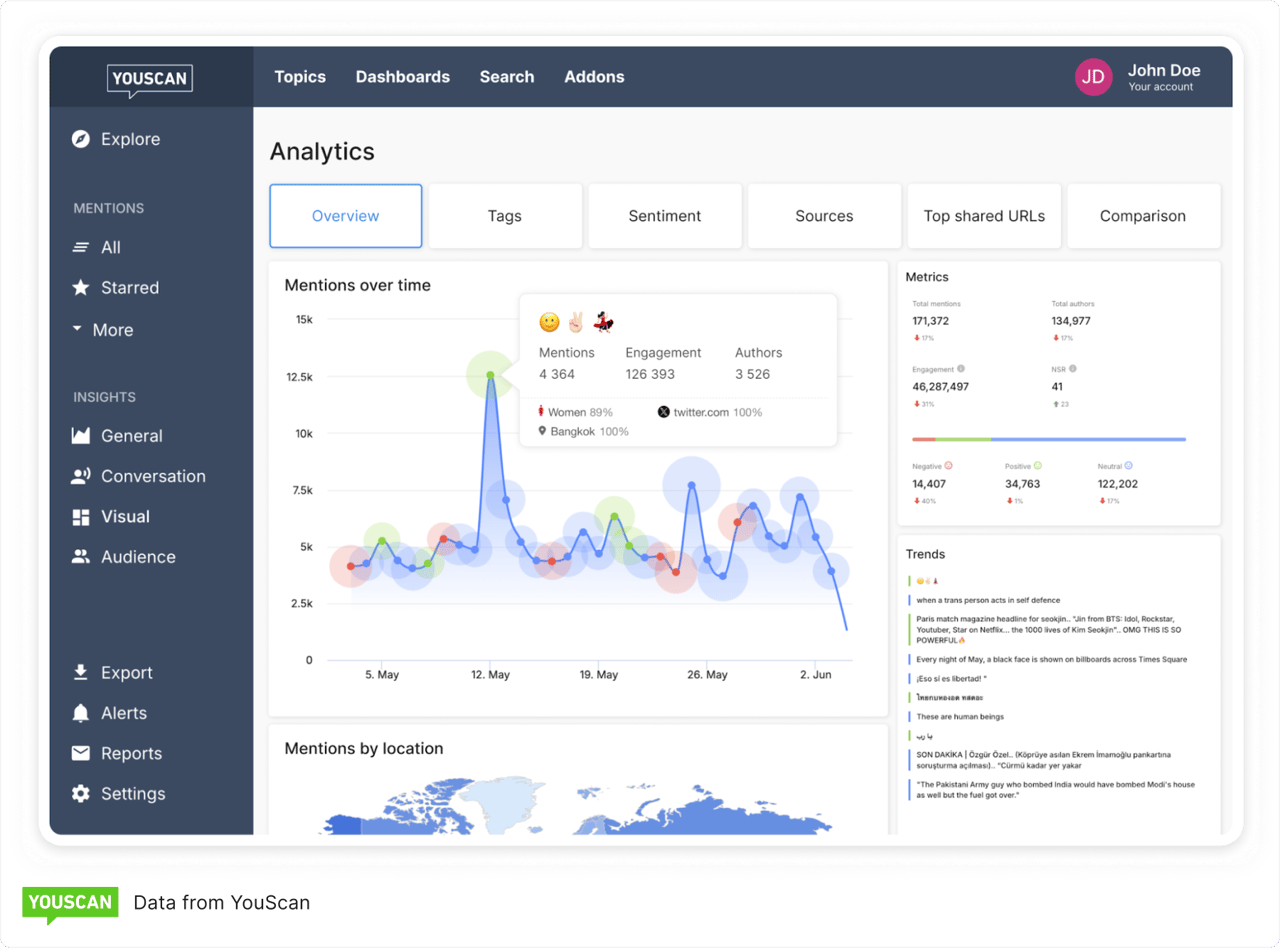
Overview: Built-in suitability controls that let brands and advertisers exclude content types, inventory tiers, and keywords on each network.
Key features:
Three-tier inventory filters, such as TikTok’s Expanded, Standard, and Limited, or Google’s Maximum, Moderate, and Limited for YouTube
Block lists for keywords, placements, and accounts
Content-type exclusions, like live streams
Trade-offs: Each platform sets its own rules, so settings aren’t comparable across platforms.
Pricing: Included with your ad account.
Best for: All brands that advertise, as the first line of control.
Ad verification: Integral Ad Science and DoubleVerify
Overview: Third-party technology that brands use to measure and block ad placements deemed unsafe or unsuitable across display, video, and connected TV, and to flag invalid traffic and ad fraud.
Key features:
Pre-bid avoidance, which filters out risky placements before you buy them
Post-bid data on where your ads actually ran
Fraud, invalid traffic, and viewability measurement
Trade-offs: Adds cost on top of media, coverage differs across platforms, and it doesn’t monitor social conversation. As the 2025 Adalytics report showed, no layer of the programmatic supply chain is foolproof.
Pricing: Quote-based.
Best for: Advertisers with big programmatic or video advertising budgets.
Social and video brand safety: Zefr and similar vendors
Overview: Vendors that help brands classify video and posts for suitability on social platforms like YouTube, TikTok, Meta, and Snap.
Key features:
Content-level classification of videos and posts
Suitability reporting and pre-bid activation
MRC accreditation for content-level brand safety and suitability reporting on YouTube, according to Zefr
Trade-offs: Coverage varies by vendor and network.
Pricing: Quote-based.
Best for: Brands with large social video ad budgets.
Creator vetting: CreatorIQ and similar platforms
Overview: Influencer platforms that let brands review creators’ content before and during partnerships. CreatorIQ’s SafeIQ add-on, for example, runs a one-time background check and then monitors active partners’ posts across text, audio, and visuals.
Key features:
Creator history scans before signing
Ongoing monitoring during and after campaigns
Flags sorted by severity
Trade-offs: Focused on creator programs, not the wider conversation about your brand.
Pricing: Quote-based.
Best for: Brands running large creator programs.
How to measure brand safety
Measure brand safety with a mix of ad and conversation metrics: how often ad placements land in unsuitable places, how fast your team detects and responds to an incident, and how sentiment among customers shifts afterward. Ad metrics tell marketers about placements. Conversation metrics tell them about reputation. Together, they help you make informed decisions about where to spend.
Track these by layer:
Ads: Unsuitable placement rate, MFA share, and invalid traffic from your verification reports.
Social: Negative-mention volume, sentiment trend, time to detect, and time to respond. Sentiment analysis tools and
social listening dashboards keep this data in one view.Creators: Compliance rate (disclosures included) and incidents across campaigns.
Brands that only track placements miss half the picture. “Buying massive scale is no longer enough; winning brands are optimizing for verified attention that drives business outcomes,” said Lidiane Jones, CEO of IAS. A clean placement report is nice. A clean report plus steady sentiment and a healthy share of voice is better.
Common brand safety mistakes
Most brand safety mistakes come from brands treating it as a one-time setup. They build a blocklist, vet a creator once, and assume they’re covered. These five show up again and again:
Relying on keyword blocklists alone. They over-block and miss context, which costs news publishers ad revenue and costs you reach. Mark Howard, Time’s COO, said its Taylor Swift Person of the Year story was flagged as “not brand safe” because it used the word “feminist.” Tennis coverage has been blocked for the word “shot.” Vanessa Lyons, CEO of ThinkNewsBrands, put it well: “Brand safety tools should do what they say on the tin: protect brands.”
Mixing up safety and suitability. One is a floor; the other is your call. Confuse them, and you get either reckless buys or a blocklist so long your ads never reach the right audience.
Ignoring organic conversation. On social, most risk starts in posts and comments from customers, not in your ads.
Skipping the escalation plan. Without one, the first hour of a crisis goes to arguing about who’s in charge.
Vetting creators once. Old posts matter, but so do the ones they publish next week.
How to keep your brand safe: the short version
Brand safety is two jobs: keeping control of where your ads appear and watching what’s said around your brand across digital channels. Ad tools handle the first. Listening, moderation, and creator vetting handle the second. The brands that get this right cover both and review them every quarter.
Starting from zero? This week, write your three suitability tiers and turn on platform filters. Next month, add monitoring and an escalation plan. Fancy tools can wait until you know where your risk sits.
To see what’s being said and shown around your brand right now, book a YouScan demo and try AI-powered monitoring, sentiment, and visual recognition on your own brand’s data.
Frequently asked questions (FAQs)
What is brand safety?
Brand safety is the set of practices that keep a brand’s ads, content, and name away from harmful, misleading, or inappropriate material, and protect its reputation online. It has two sides: advertising, which controls where ads appear, and social media, which covers what people say about the brand and who it partners with. Both aim to stop damaging associations before they spread.
What is the difference between brand safety and brand suitability?
Brand safety avoids content that’s harmful to any brand, such as graphic violence or hate speech. Brand suitability is narrower and set by each brand: content that’s safe in general but doesn’t fit a particular brand’s values or audience, such as alcohol or politics. Safety is a shared floor for all brands; suitability is a brand’s own choice about where it belongs.
Why is brand safety important?
Brand safety matters because audiences judge brands by the company they keep. An ad beside harmful content, an offensive creator partnership, or an unmoderated comment thread can damage trust with customers fast, and online posts spread quickly. A clear approach lowers reputational risk, protects ad spend, and gives brands a plan for responding when something goes wrong.
How do you ensure brand safety on social media?
Start with written guidelines and moderation rules, then vet creators and partners before launch. Use platform and third-party controls for ads, and monitor mentions, sentiment, and images so you identify problems early. Keep an escalation plan for incidents and review results regularly. Social listening helps brands because many risks appear in posts and comments, not in your own ads.