What Is Voice of the Customer (VoC)? Methods, Program Steps, and Tools


Voice of the customer (VoC) is happening whether you run a program or not. Customers fill in your customer surveys, but they also leave online reviews, vent in support chats, and post on TikTok at 1 a.m.
The average VoC program only hears people who agree to answer, and that group keeps shrinking. In Qualtrics’ 2026 consumer trends report, only 29% of consumers contacted a company directly after a bad customer experience, and 30% said nothing at all. “Companies are flying blind while customers vote with their wallets,” said Isabelle Zdatny of the Qualtrics XM Institute.
Those silent customers still have opinions. They share them with friends, in reviews, and on social media, or they simply buy less and leave.
So how do you hear the voice of the customer when most people stay quiet? This guide covers what VoC is, the main methods, a seven-step VoC program, how to measure it, and which tools do which job.
What is voice of the customer (VoC)?
Voice of the customer (VoC) is the practice of collecting and analyzing what customers say, write, and do to understand customer needs, customer expectations, and frustrations, then acting on it. It combines asked-for customer feedback, such as surveys, with unsolicited feedback, such as online reviews and social posts.
Think of voice of customer work as two microphones: one you hold out, and one already recording after you’ve left the room.
Most teams sort VoC data into three types:
Direct feedback: customers answer questions you ask, through customer satisfaction surveys, feedback forms, and customer interviews.
Indirect feedback: people talk without being asked, in reviews, forums, social media, and customer support interactions.
Behavioral data: customer behavior like product usage data and website clicks. Not every definition includes it, but it belongs in your program.
Each type answers a different question. Direct feedback tells you what customers think when you ask. Unsolicited comments tell you what they say among themselves. Behavioral data tells you what they actually did, which doesn’t always match the first two.
For definitions of the terms used here, see the social listening glossary.
Why voice of the customer matters for customer experience and customer loyalty
VoC matters because people judge you by the whole customer experience, not only the product, and customer feedback shows exactly where that experience breaks. Teams that listen fix problems earlier, protect customer loyalty, improve customer retention, and build stronger customer relationships with loyal customers.
In Forrester’s 2025 Global CX Index, 21% of brands declined and only 6% improved. “As customer loyalty declines, brands must focus on providing stronger customer experiences to reverse the trend,” said Pete Jacques, principal analyst at Forrester.
The cost of not listening is real. The same Qualtrics study found that 47% of bad experiences lead customers to spend less. Most of those customers never file a complaint, so the only trace they leave is in public posts, reviews, and falling revenue.
Where does a voice of customer program pay off?
Product: pick the next fix based on what paying customers complain about most.
For service delivery, you spot the step in the customer journey where customers experience friction and quit.
Marketing: borrow the exact phrases customers use. They’re usually better than ours, and better for customer engagement.
And for reputation, you catch customer concerns before they become a thread with 4,000 replies.
The result is a competitive advantage and better customer retention.
Voice of the customer methods: from customer interviews to customer conversations online
The main voice of the customer methods are customer surveys, customer interviews and focus groups, support tickets, online reviews, social listening, and behavior data. Surveys and interviews ask; reviews and social listening hear what people share unprompted. The best VoC strategies combine both.
Method | Type | What it tells you | Main limit |
Surveys (NPS, CSAT, CES) | Direct | Measured scores at set touchpoints | Only people who respond |
Interviews and focus groups | Direct | Deep context on customer needs | Small, slow, costly |
Support tickets and chat logs | Indirect | Recurring problems and questions | Skews toward problems |
Online reviews | Indirect | Verdicts in customers’ own words | Platform and star-rating bias |
Social listening | Indirect | Unprompted opinions and customer sentiment | Public posts only |
Website and product behavior | Behavioral | Real customer behavior | Shows what, not why |
When to use each method
Surveys work best when you need a number you can track over time, like satisfaction after a support call. Keep the question wording the same from quarter to quarter, or the trend line means nothing.
Interviews are for the “why” behind a decision. Twelve 30-minute conversations with recent buyers, or with people who canceled, will often explain more than a 2,000-person survey.
Help desk conversations show where customers get stuck. They lean negative, because people rarely contact support to say everything is fine, but that is exactly what makes them useful for finding broken steps.
Online reviews capture the verdict after purchase, in the words customers use with each other. Read the three-star reviews first. They tend to be the most specific.
Social listening covers everything people say in public without being asked: complaints, praise, comparisons with competitors, and requests. It is also the fastest of these methods. A problem can show up in social posts days before it reaches your support queue.
Behavior data, from product analytics or web analytics, shows what people do. If customers say a feature is great but almost nobody uses it, the behavior is the more honest signal.
In voice of customer research, surveys measure and listening explains. Survey responses tell you customer satisfaction dropped six points in March. Customer conversations on Reddit tell you why: the new packaging can’t be opened without scissors.
Good VoC strategies need both quantitative data and qualitative feedback. Focus groups, a market research classic, help you gather customer insights in depth, but eight people in a room won’t tell you what 80,000 say online.
Voice of the customer vs NPS and other customer feedback terms
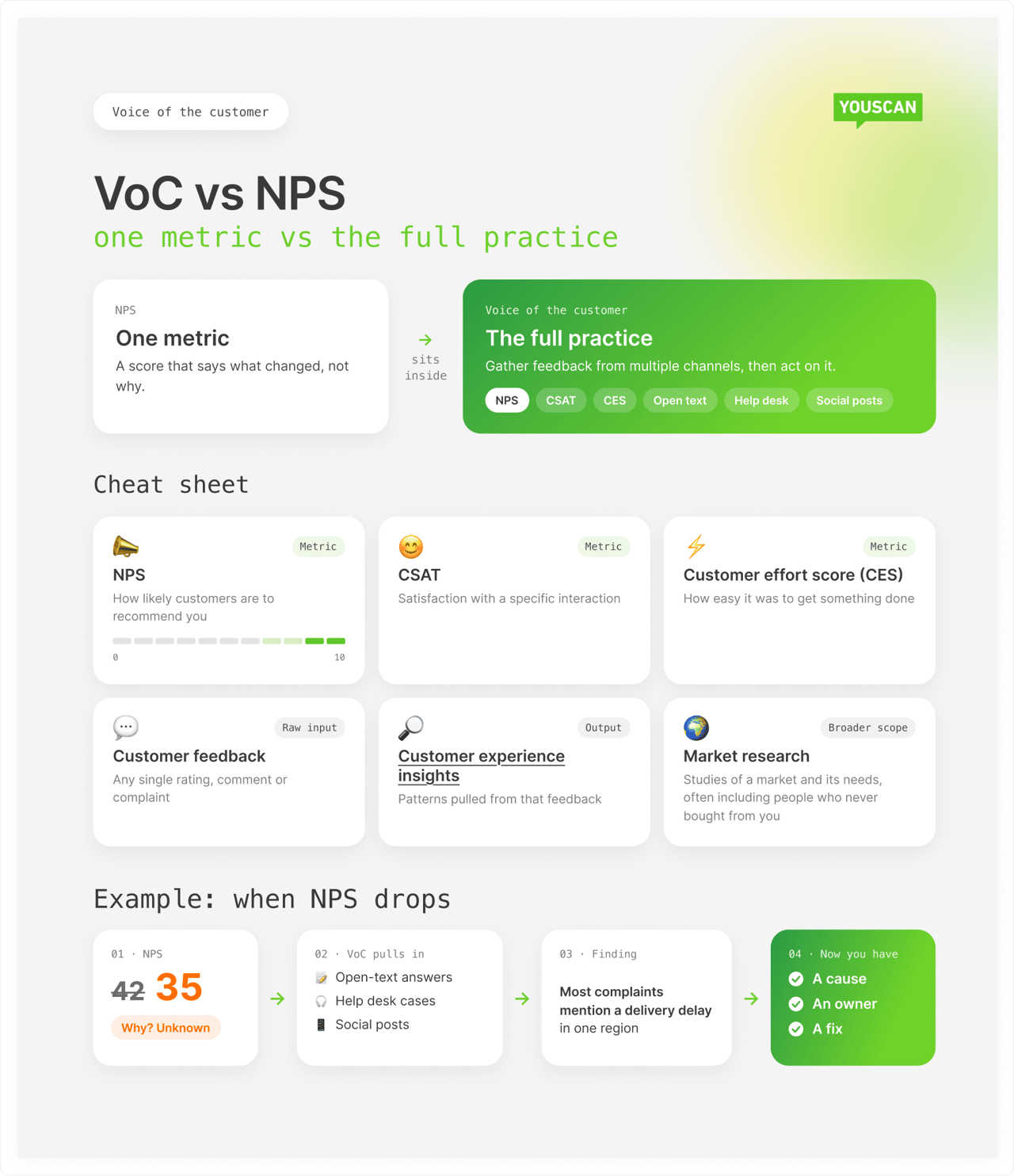
Net promoter score (NPS) is one metric inside a VoC program, not a replacement for it. Voice of the customer is the full practice of gathering feedback from multiple channels and acting on it. Related terms, like market research, overlap but differ in scope.
A quick cheat sheet:
NPS: how likely customers are to recommend you, scored 0 to 10.
CSAT: customer satisfaction with a specific interaction.
Customer effort score (CES): how easy it was to get something done.
Customer feedback: any single rating, comment, or complaint.
Customer experience insights: patterns pulled from that feedback. Our guide to customer experience insights goes deeper.
Market research: broader studies of a market and customer needs, often including people who’ve never bought from you.
A simple example shows the difference. Your NPS drops from 42 to 35. NPS alone can’t tell you why. Your VoC program pulls in the open-text answers, help desk cases from the same period, and social posts, and finds that most complaints mention a delivery delay in one region. Now you have a cause, an owner, and a fix.
How to build a voice of the customer program: a seven-step customer framework
To build a voice of the customer program, set one goal and an owner, map where customers already give feedback, test ideas on synthetic audiences, collect from direct and unsolicited sources, analyze feedback for themes, share VoC insights with teams who can act, then close the loop. Most programs fail at step six.
Almost every failed VoC program we’ve seen had no trouble with feedback collection. The problem came later: a deck full of customer insights got presented, everyone agreed, and nobody created a single ticket.
1. Set a goal and an owner
Pick one decision your VoC program should improve. Better customer retention among existing customers? The next product fix? “Understand customer needs better” is too vague to act on.
A good goal names a group of customers, a behavior, and a time frame. For example: “Find the top three reasons small-business customers cancel in their first 90 days, and fix one of them this quarter.”
Then name one owner, often from customer success or customer experience. The owner doesn’t do all the work. They make sure findings reach the right team and that someone follows up.
2. Map the customer journey and where feedback already lives
List every touchpoint in the customer journey, from first ad to renewal. Then note where customer signals already show up: support tickets, customer service interactions, app store reviews, sales calls, social media.
You’ll find gaps in feedback collection. You’ll also find feedback nobody reads, like 2,000 chat transcripts in your help desk. That’s VoC data you already have.
A simple spreadsheet works for this. Put journey stages in rows, sources in columns, and mark which sources you already collect, which you could add, and who owns each one.
3. Test ideas on synthetic audiences
In YouScan, you can try out Synthetic Audiences, AI-modeled consumer respondents built from real data (not LLM prompts), meaning online social conversations that are happening around your topic. You question them the way you would a focus group, and they answer the way the customer segments they model would likely answer. But it happens faster, before you spend a dime on research, surveys, or unsuccessful campaigns.
Do this after you’ve mapped your sources and before you survey real customers. Use synthetic audiences to:
Pre-test survey questions. Find confusing wording before a survey goes out to thousands of customers.
Narrow down concepts. Drop the weakest of ten message or product ideas, then test the rest with real people.
Explore sensitive topics. Ask the questions customers might not answer openly in an interview, like how couples split their finances.
US Bank used synthetic audiences from Supernatural AI to study what customers want from a banking relationship. When it checked the results against human respondents, the themes overlapped 90% to 95%. “We’re able to get to the answers we need way more quickly than we could through a typical human process only,” said Michael Lacorazza, US Bank’s CMO. Survey platforms are adding the option too: Qualtrics launched synthetic panels for US consumers in March 2026.
Keep the limits in mind. A synthetic audience only knows the data it was built from, so it can’t spot a complaint that started last week. Treat its answers as hypotheses, and confirm anything you plan to act on with real customer feedback in step 4.
4. Collect customer feedback from both sides
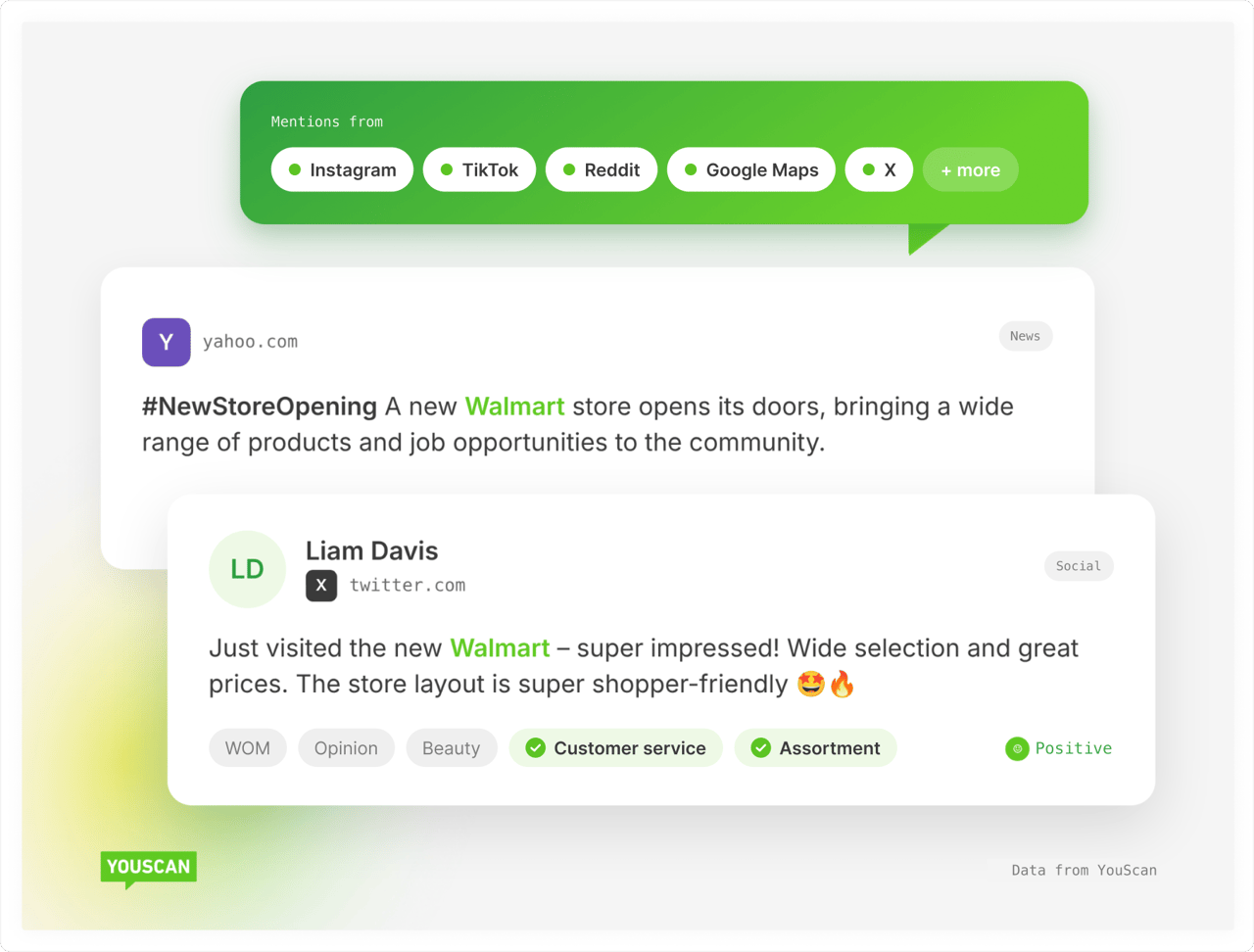
Run targeted surveys for existing customers at key moments: after onboarding, after a ticket closes, before renewal. Keep them short: fifteen-question surveys get abandoned around question six.
Two or three questions are usually enough: a score, an open “why” question, and, if needed, one question about the specific moment. The open question matters most, because that’s where the reasons are.
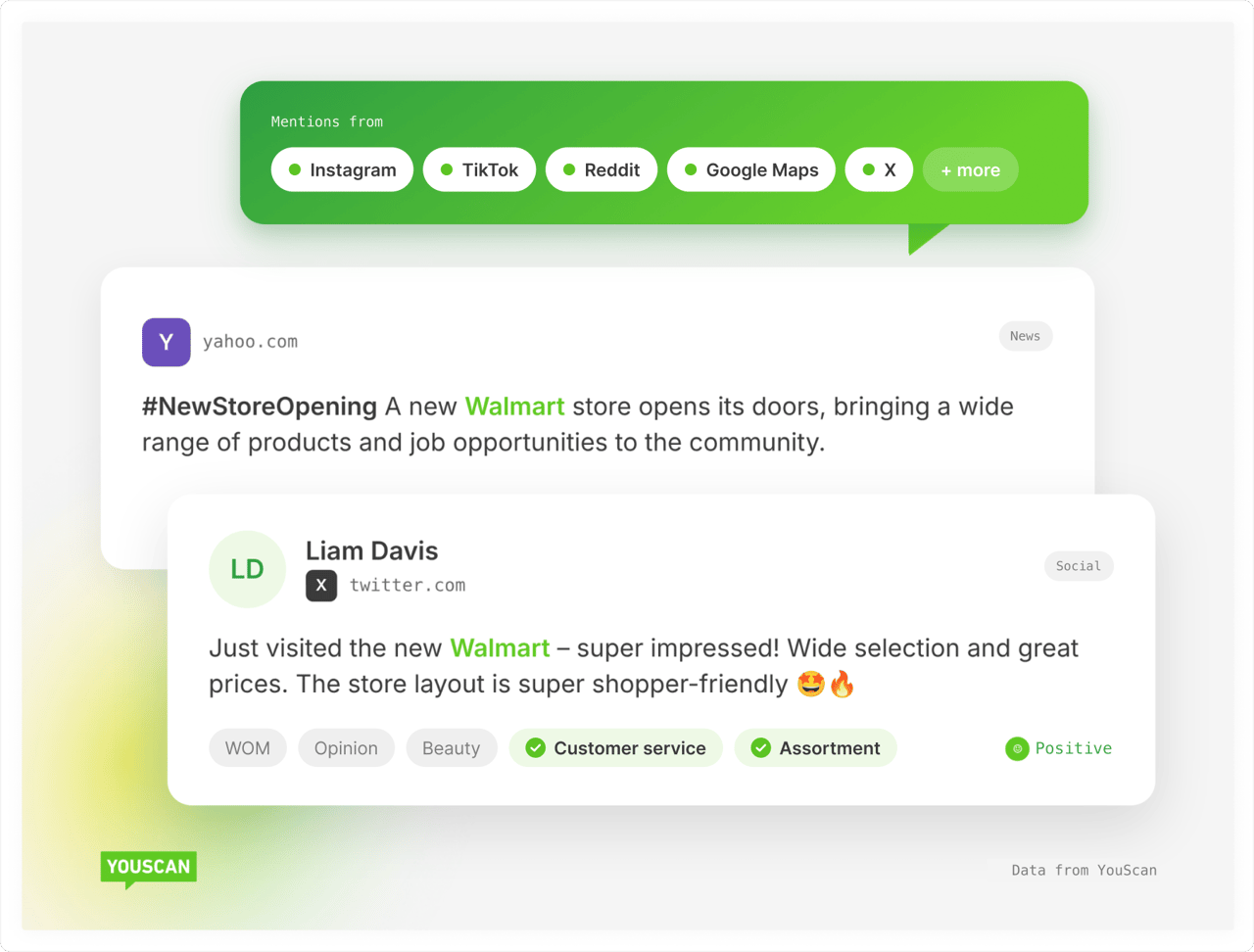
Collecting feedback through surveys alone gives you half the voice of customer picture. Add always-on sources of indirect feedback, like reviews, forums, and social media. Social listening tools capture customer feedback you’d never think to ask about, and they help you identify pain points early.
Set up listening for your brand name, product names, common misspellings, and your main competitors. Competitor mentions often show the customer pain points your own customers haven’t mentioned yet.
5. Analyze feedback for themes, not anecdotes
Group customer feedback by topic, track customer sentiment within each topic, and separate one-off complaints from recurring pain points. One angry email from a VP feels urgent. Forty quiet complaints about the same checkout bug are urgent.
Start with a short list of themes, like pricing, delivery, product quality, support, and onboarding. Add new themes only when enough feedback doesn’t fit the existing ones.
For each theme, track three things: how many mentions it gets, how negative they are, and whether the number is growing.
6. Share customer data with the teams who can act
Route actionable insights to the team that can fix them: product, support, marketing, or operations teams. Give every theme an owner and a deadline. A weekly one-pager or shared social listening dashboards beat a 40-slide quarterly deck nobody opens.
A useful one-pager has the top three themes, a short quote from a real customer for each, the trend since last week, and the name of the person working on it. Real quotes matter. A sentence in a customer’s own words gets more attention than a percentage.
Handle customer data with care. In Salesforce’s State of the AI Connected Customer report, 64% of customers said companies are reckless with customer data. Strip personal details before VoC insights travel around the company.
7. Close the loop and measure
Tell customers what changed, even with a short “you asked, we fixed it” note. Then track whether each theme shrinks, customer sentiment improves, and customer experience and business success metrics follow.
Closing the loop builds customer relationships. Customers who never see a response stop giving feedback.
There are two loops to close. The inner loop is one customer: someone complained, and someone replied. The outer loop is the fix itself: product or service changed, and you told customers about it in release notes, an email, or a social post.
How to measure a VoC program
Measure a VoC program by whether it changes things, not by how much feedback it collects. Track a small set of metrics that link feedback to action and business results.
Useful metrics include:
Theme volume and sentiment: are the biggest complaint themes shrinking after fixes?
Time to action: how many days pass between spotting a theme and assigning an owner?
Fix rate: what share of top themes led to a shipped change this quarter?
Survey scores: NPS, CSAT, or CES at the touchpoints you changed.
Business results: churn, repeat purchases, and support volume for the affected customer segments.
Review these monthly with the owners from step six. If the same theme stays at the top for three months, the problem is in the process, not in the data.
Turning raw feedback into insight: customer analysis that holds up
A solid VoC program turns thousands of comments into a handful of actionable insights and tracks how customers feel about each theme. Sentiment analysis, topic grouping, and feature-level analysis do the sorting. People decide what to do with the VoC insights.
“Sentiment is 62% positive” tells you little. “Customers love the taste but hate the lid” tells you what to fix. That’s aspect-level
brand sentiment analysis, and most sentiment analysis tools now support it.
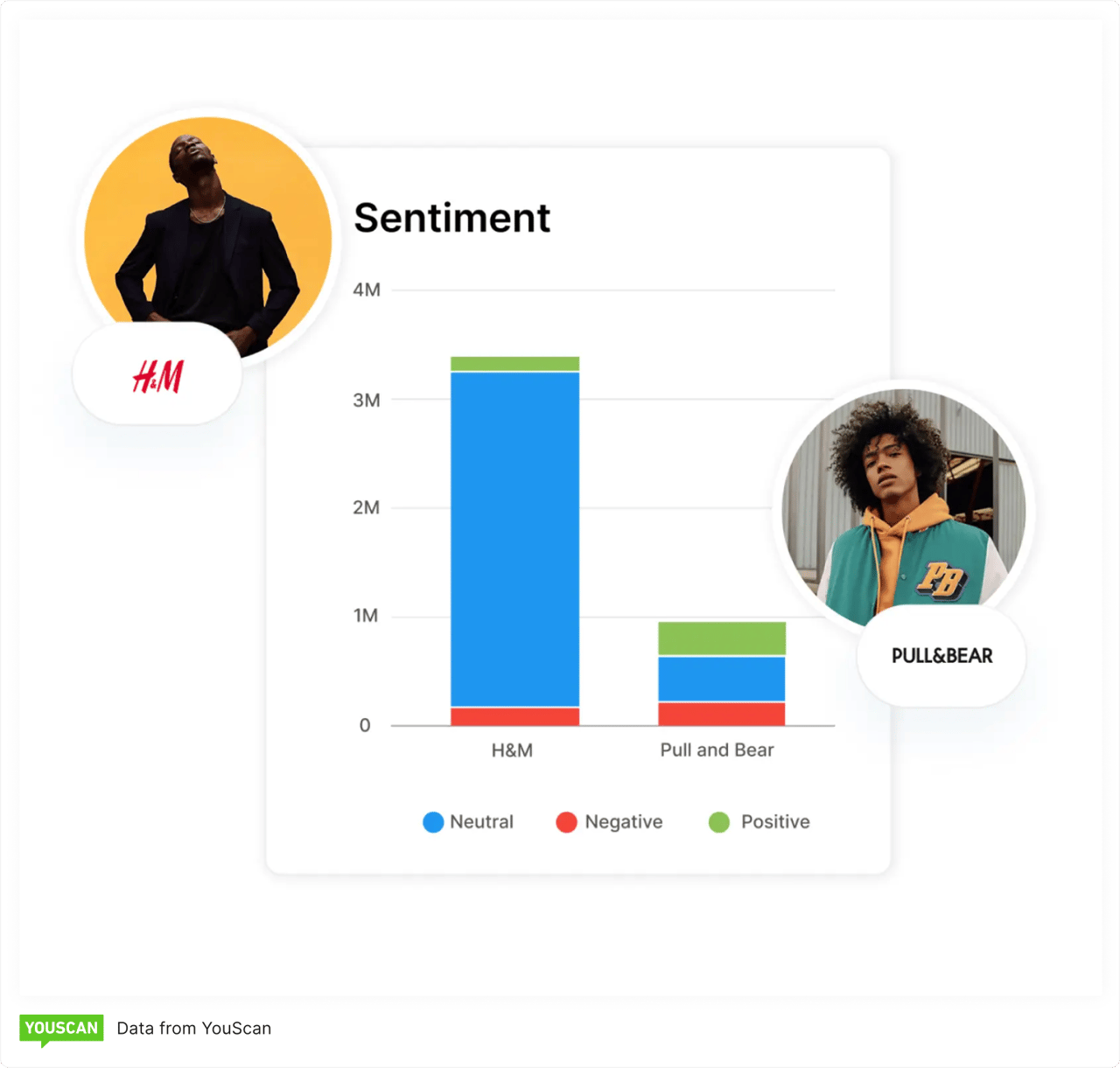
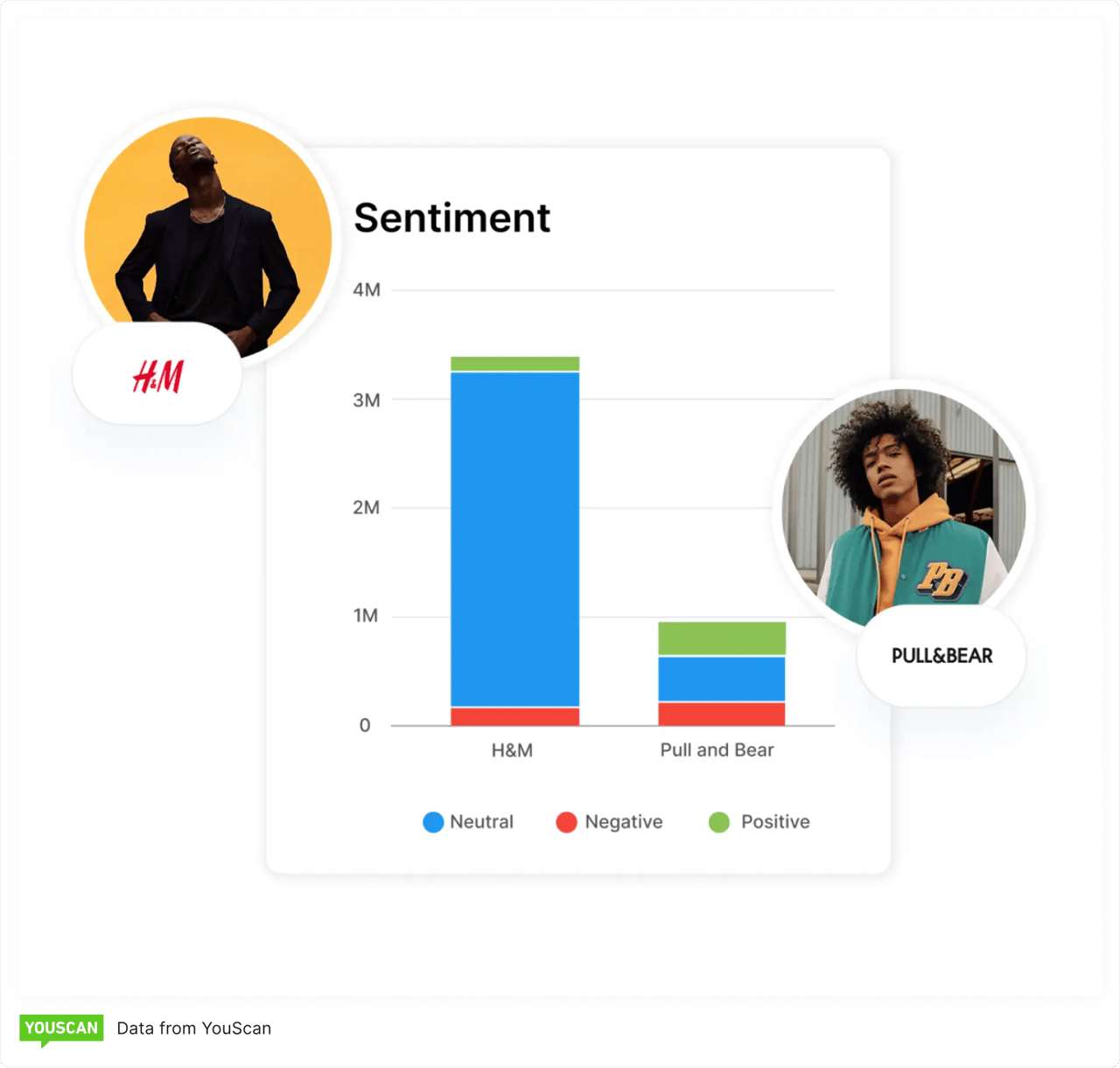
We used to export mentions into a spreadsheet and color-code them by hand. It took two days, and by Thursday the customer data was stale. Today, AI that analyzes customer feedback can analyze unstructured data like reviews and transcripts of customer interactions in minutes.
AI still needs a human check. Read a sample of the comments behind every theme before you present it. If the sample doesn’t match the label, fix the label before anyone builds a plan on it.
Watch for a few traps:
Sarcasm and slang. “Great, another update that broke my login” is not praise, and automated sentiment can miss that.
Duplicates. The same customer may post the same complaint in three places. Count it once.
Loud voices. Ten heavy posters aren’t your customer base, so check customer segments with target audience analysis.
Text-only blind spots. Photos of your product rarely name you, but image recognition catches them.
Voice of the customer tools: what each layer does
Voice of customer tools fall into four layers: social listening, survey platforms, feedback analytics, and CRM suites. Each covers one slice of the customer voice; none covers it all. Most VoC strategies pair two, usually a survey tool plus a listening platform.
Choose by the gap in your program, not by the longest feature list. If you already run surveys but can’t explain the scores, add listening. If feedback is spread across ten systems, add a feedback analytics layer. If you have no structured scores at all, start with surveys.
Social listening: YouScan
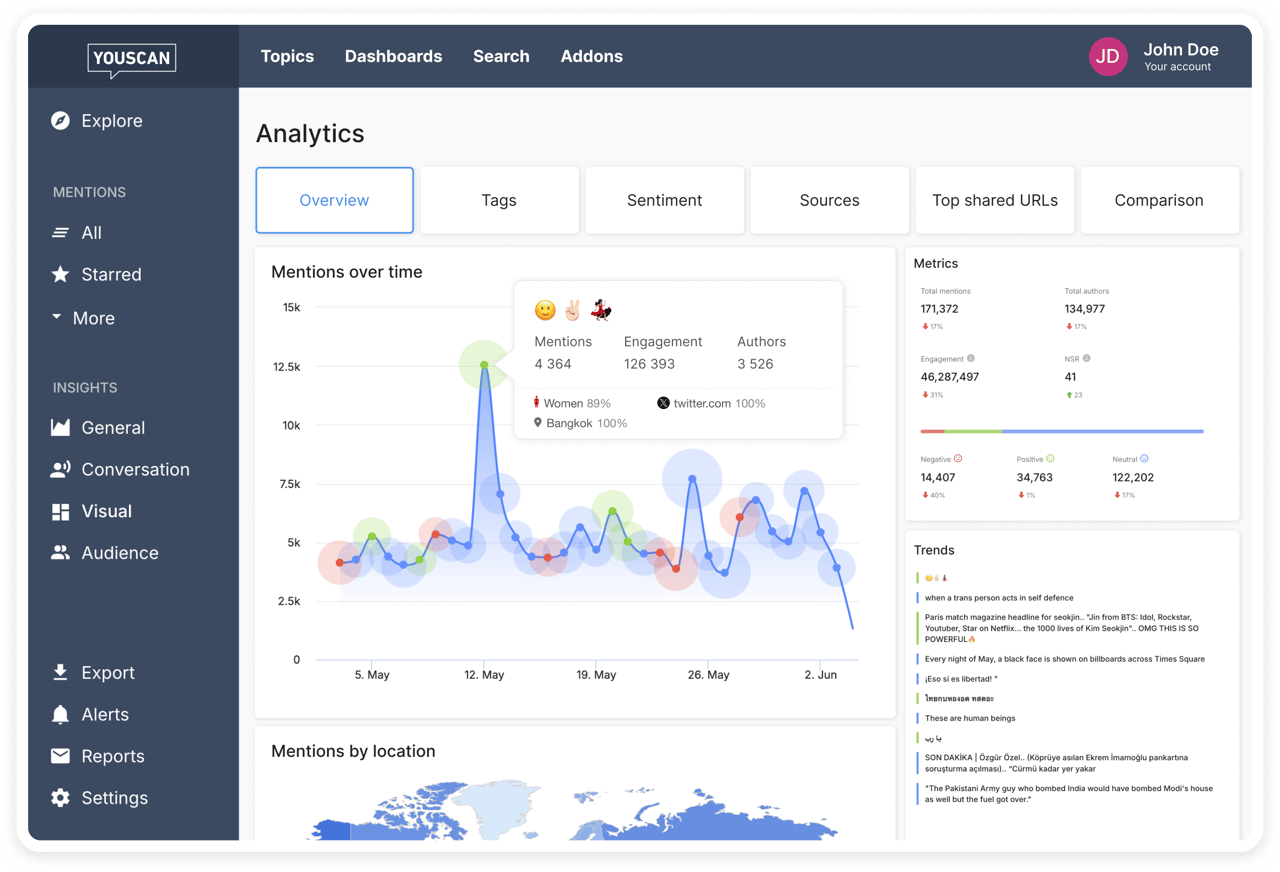
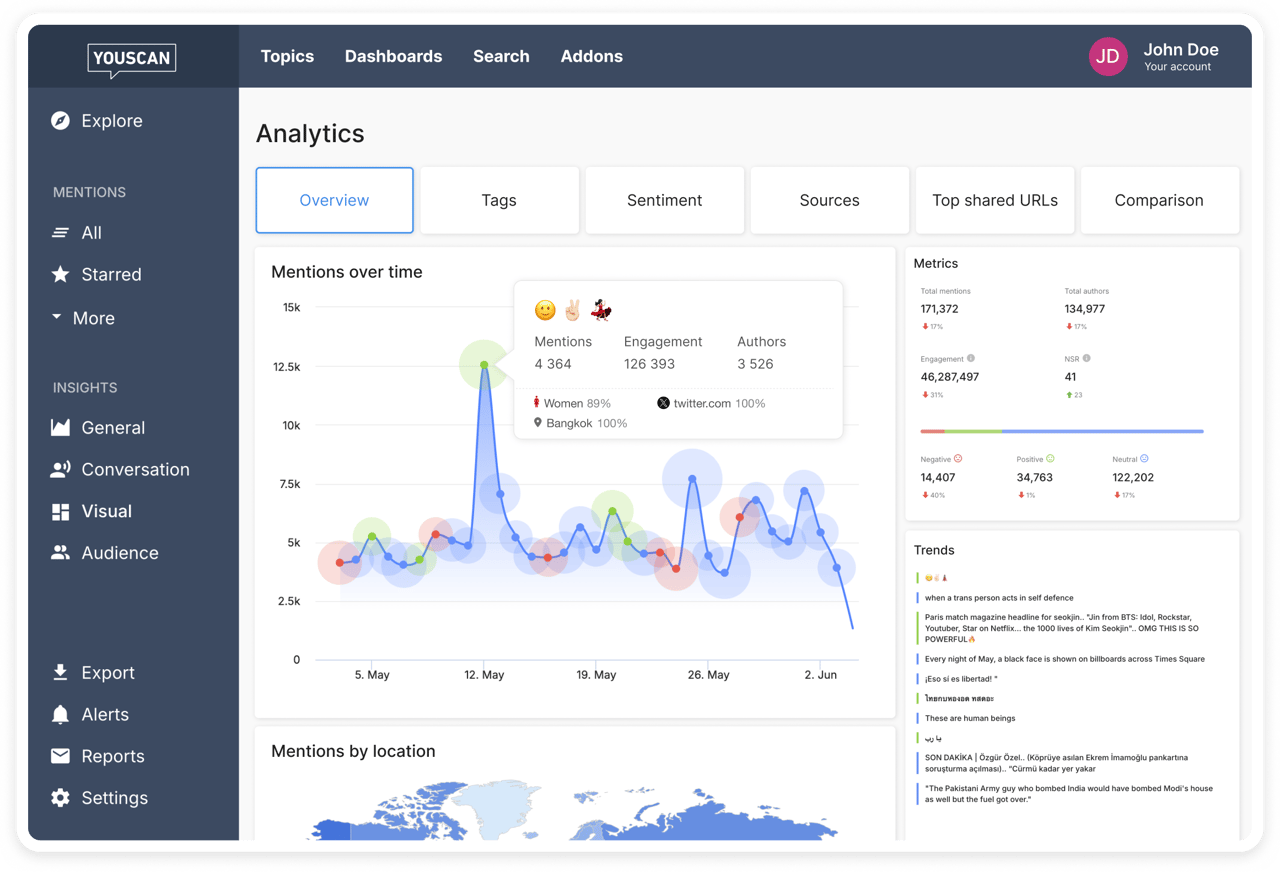
Overview: YouScan adds the feedback customers never send you directly to your VoC program. It collects public mentions from social networks, forums, blogs, review sites, and news, then sorts them so you can understand customer sentiment by topic, product, or market.
Key features:
Sentiment by topic and product feature, with mentions tagged automatically as complaints, questions, and other categories you can filter
Visual Insights, which spots your logo and packaging in customer photos and videos, including posts that never name the brand
Audience Insights, which adds demographics and interests to the people behind each comment, so you can compare what different groups say
Insights Copilot, an AI social listening agent you can ask questions like “What do customers complain about after delivery?” It can run the same question across your competitors and turn the answer into a shareable report
Pricing: The Starter plan is $499 per month, billed annually, for 3 topics, up to 15,000 mentions a month, and 10 Insights Copilot questions a month, with no limit on users. Image recognition and audience data are part of the Unlimited plans, which are priced on request.
Best for: Brand, CX, and customer insights teams that want the customer pain points and customer preferences people share in public, side by side with their survey data.
Survey and experience platforms: Qualtrics and SurveyMonkey
Overview: Tools to gather customer feedback directly. Qualtrics, a customer experience platform, collects responses across email, SMS, apps, websites, and chat. SurveyMonkey is the lighter way to collect customer feedback without a long setup.
Key features:
Survey logic plus NPS, CSAT, and customer effort score templates
Open-text analysis and dashboards
Distribution by email, link, and web or in-app surveys
Trade-offs: You only hear from people who respond.
Pricing: Qualtrics doesn’t publish prices; you request a quote, priced by planned usage. SurveyMonkey has a free Basic plan, and team plans start at $30 per user/month, billed annually, with a 3-user minimum.
Best for: Customer experience teams that need structured feedback they can track over time.
Feedback analytics: Enterpret
Overview: Enterpret analyzes customer feedback from support tickets, sales calls, app reviews, and communities, grouping it into themes linked to accounts and revenue.
Key features:
30+ connectors, including Zendesk, Intercom, and Gong
A theme taxonomy that updates as new topics appear
An AI agent for questions and weekly VoC reports
Trade-offs: It only analyzes feedback you already have, so check source coverage.
Pricing: Quote-based, depending on data volume and the number of integrations. User seats aren’t limited.
Best for: Product and customer success teams with feedback scattered across systems.
CRM and service suites: Salesforce
Overview: Salesforce Feedback Management feeds survey results into Service Cloud, next to cases and customer records.
Key features:
Post-chat surveys and AI summaries of customer interactions
AI survey generation and translation
Sentiment analytics and prebuilt dashboards
Trade-offs: Best if you already run Salesforce. Public conversation isn’t its strength.
Pricing: Feedback Management Starter is $13,500 per org/month, billed annually, with 100,000 survey responses. It’s an add-on to a Service Cloud edition. Extra survey response packs cost $300 per 1,000 responses.
Best for: Customer success and service teams already standardized on Salesforce.
Voice of the customer examples
The best voice of customer examples are small, fast, and specific. Neither started inside a formal VoC program.
Batiste answered a TikTok in days. On March 16, 2026, a TikTok creator asked for a dry shampoo collab with a reality TV star teased for greasy hair. Batiste replied the next day (“Sending this to my boss rn”) and launched a campaign with the star on March 26. “When anybody’s talking about anything category-related, it’s important to engage,” said Remy Klein of Church & Dwight, Batiste’s parent company.
The lesson for your program: the request was public, specific, and time-sensitive. A quarterly survey would never have caught it. Someone had to be watching the conversation, and someone had to be allowed to act on it the same week.
Dove put Reddit reviews on billboards. In February 2026, Dove built a campaign for its Intensive Repair hair mask from the
first 50 Reddit reviews of the product: good, bad, and neutral, unedited. “It’s a volume of a community of reliable people who give you their real thoughts,” said Emily Barfoot, head of Dove North America hair and skincare.
Customer engagement like that works because Dove trusted what loyal customers already said. It also only works if you know what those reviews say before you publish them, which is a listening job.
Common voice of the customer mistakes
Most mistakes happen when a VoC program treats feedback collection as the finish line. The most common ones:
Customer surveys only. You miss everyone who never answers, which is most people.
Surveying too often. Asking for a rating after every click teaches customers to ignore you. Pick the few moments that matter.
Collecting feedback without acting. VoC data with no owner leads to no changes.
Treating all feedback equally. Weigh themes by size, customer value, and impact on business success.
Siloed customer data. Support, product, and customer experience teams each hold part of the picture, and nobody sees all of it.
Never closing the loop. When customers see no response, they stop giving feedback, and your data gets thinner every quarter.
Start listening in both directions
A strong VoC program listens two ways: it asks customers directly, and it hears what they say when nobody’s asking. Then it acts, so you meet customer expectations, improve the customer experience, and build stronger customer relationships.
If you’re starting from zero, pick one goal, one short survey, and one listening source. Run them for a month, share what you find with one team, and fix one thing. Then add the next source.
To hear the unprompted half of your voice of customer data, book a YouScan demo to see sentiment, visual recognition, and audience data on your customers’ conversations.


Frequently asked questions (FAQs)
What is voice of the customer (VoC)?
Voice of the customer (VoC) is the practice of collecting and analyzing what customers say, write, and do to understand customer needs and frustrations, then acting on it. A VoC program draws on surveys and interviews, but also support tickets, reviews, and social posts, to build a better customer experience.
What are the main voice of the customer methods?
Common voice of the customer methods include customer surveys such as NPS and CSAT, customer interviews, support tickets, online reviews, social listening, and product behavior data. Surveys ask customers directly, while reviews and social listening capture what they share unprompted. A good VoC program combines both.
What is the difference between VoC and NPS?
Net Promoter Score (NPS) is one metric: how likely a customer is to recommend you. Voice of the customer is the wider program that collects feedback from many sources, including NPS, and explains why customers feel the way they do. NPS gives you the score; VoC explains it.
How do you build a voice of the customer program?
Set a goal and an owner, map where customers already give feedback, test early ideas on synthetic audiences, and collect from targeted surveys plus unsolicited sources like reviews and social media. Analyze customer data for themes and sentiment, share findings with teams who can act, then close the loop and measure what changed.