How to Build Brand Partnerships That Actually Work
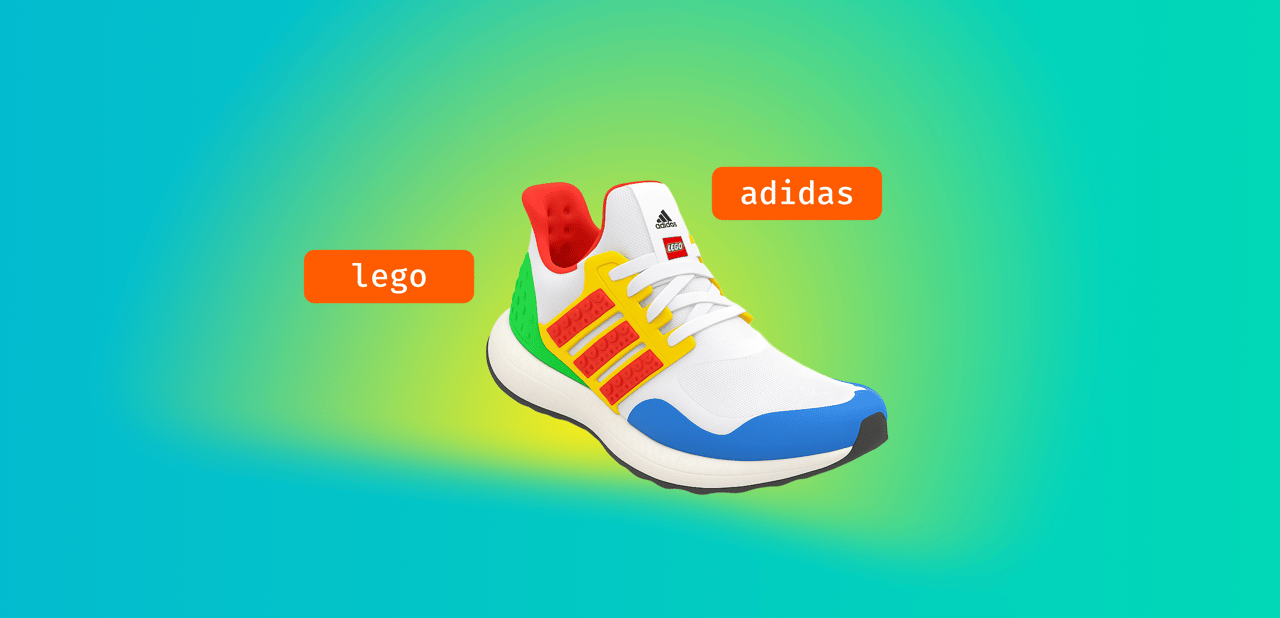

Two logos on a sneaker. A clog in the colour of a fast-food drink. Brand partnerships are everywhere, and most are forgettable.
The good ones aren’t luck. They come from knowing who your audience already trusts, then building something that makes sense to both sides – the gap between co-branding people screenshot and co-branding that gets a shrug. Here’s what separates the two, and how to find the right partners without gut feeling.
What are brand partnerships?
Brand partnerships are strategic collaborations between two or more brands to create a product, campaign, or experience neither could pull off alone. The point is mutual value: exposure, credibility, or revenue.
In practice, brand partnerships have moved past sticking two logos on a package. Today’s brand collaborations run on shared storytelling, overlapping values, and target audience analysis that goes past age brackets. When two or more companies pool their strengths, the companies involved trade assets, not artwork – and co-branding is only one shape that trade takes.
A few that landed:
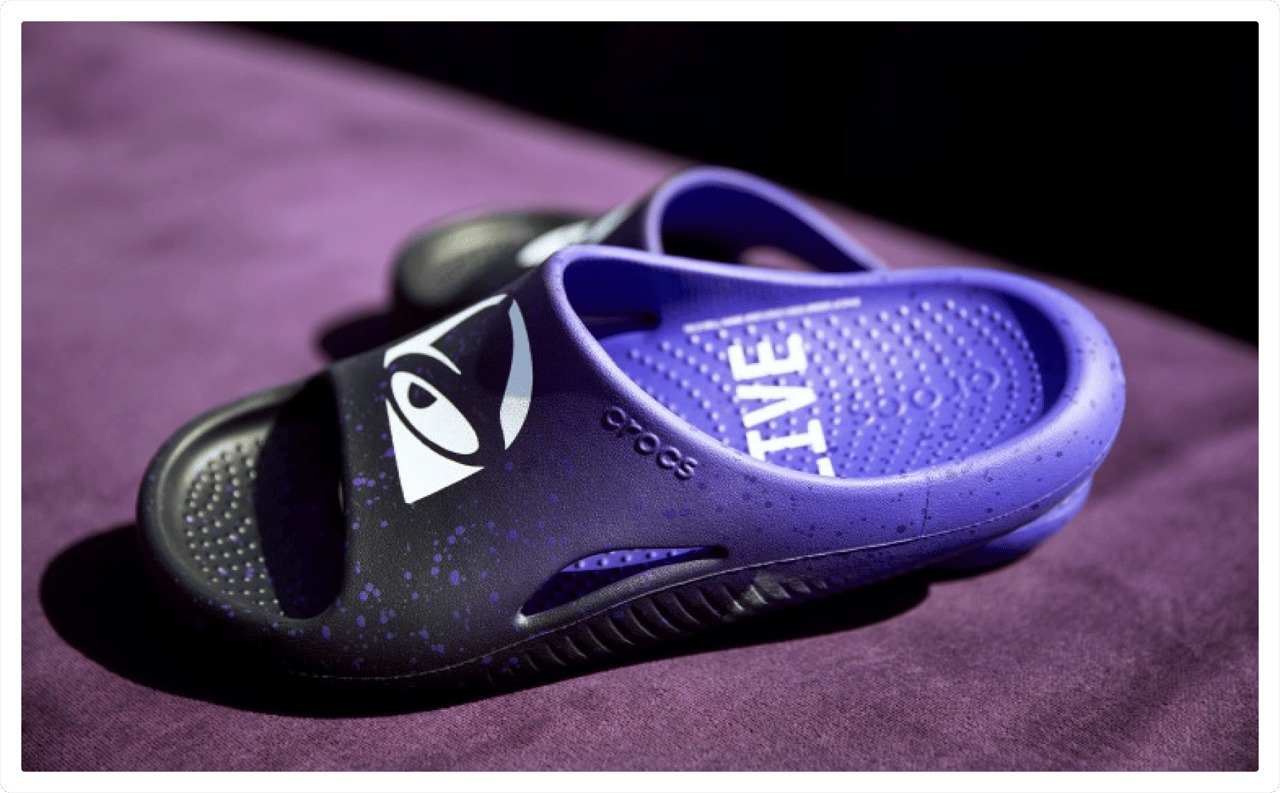
Crocs x Taco Bell – Baja Blast-coloured clogs aimed at Gen Z, and for a moment fast food became footwear.
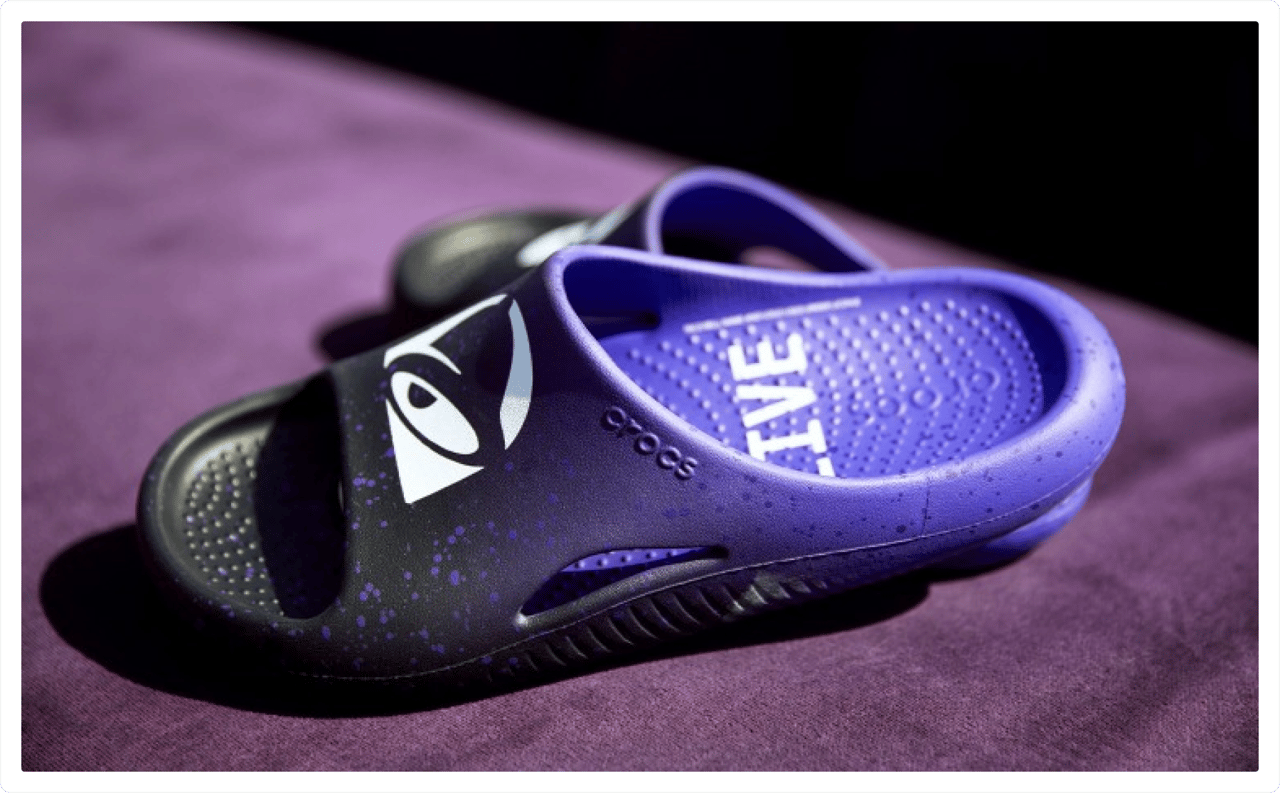
Source: Taco Bell
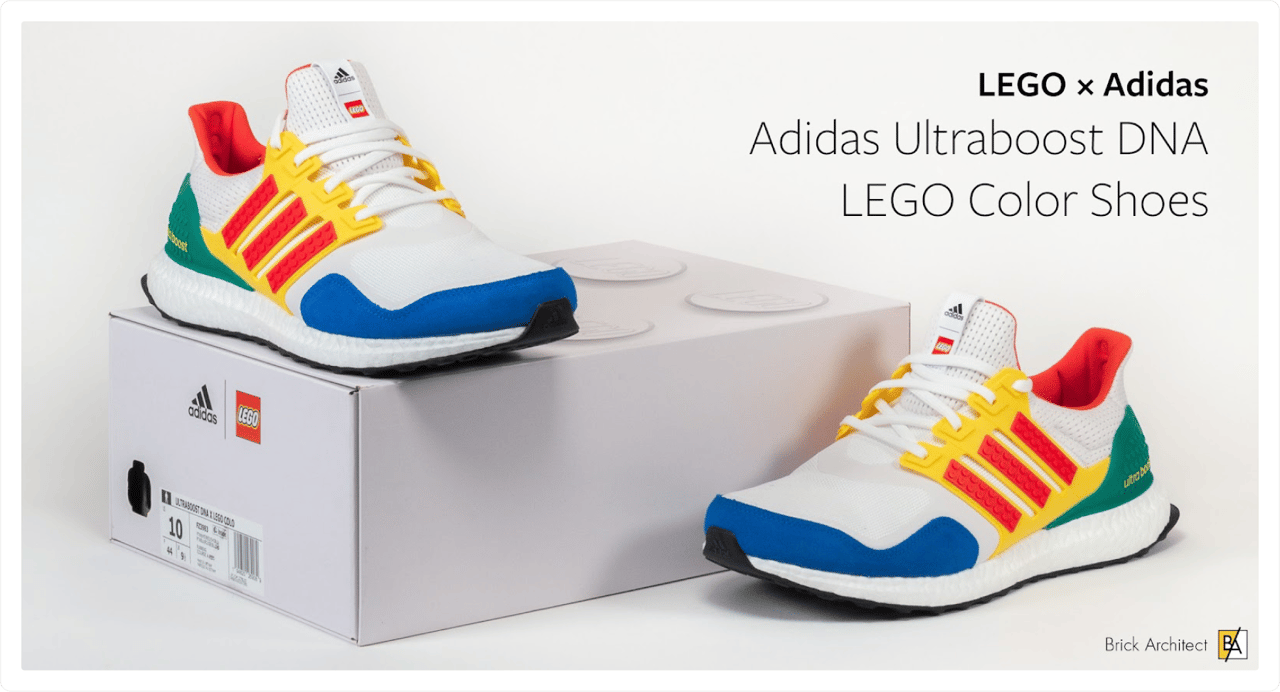
LEGO x Adidas – brick-styled shoeboxes and design nods that made performance wear playful.
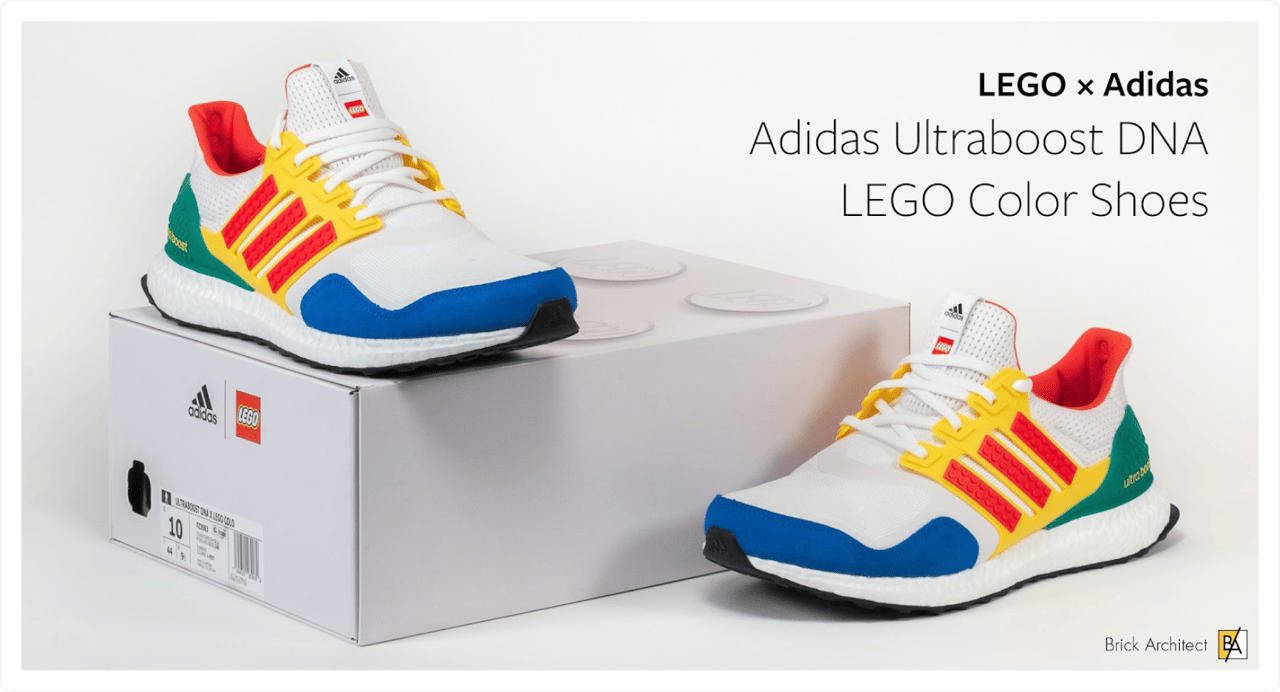
Source: Brick Architect
Balmain x Barbie – a fashion brand and a plastic icon, spanning digital drops and an actual runway.


Source: Vogue
Shoppers are, broadly, into this. A study of Spanish consumers by researchers at ISEM Fashion Business School and the University of Navarra found 64.5% had bought a co-branded product, and about 61% get excited when a new one drops. Only 7.3% would definitely pay more. Enthusiasm and willingness to pay are different things, and plenty of teams budget as though they aren’t.


Source: Allure
The benefits of brand partnerships
At their best, brand partnerships solve business problems, not content calendars. The benefits of brand partnerships fall into four groups, and these are the key benefits worth planning around.
New audiences, new markets, and wider audience reach
Partnering with a brand that speaks to a complementary audience puts you in front of people whose guard is down. A round of market research tells you whether your two audiences genuinely overlap or only look like it on a slide.
Supreme x Louis Vuitton is the standard reference. Streetwear got luxury validation, luxury got hypebeasts, and both reached new customers they’d have chased for years alone. Your partner’s audience is a route into new markets without paying to build awareness there, and complementary audiences shorten it. Audience reach compounds when the other brand’s audience already trusts the category.
Borrowed brand equity from a respected brand partner
The underrated one. When your partner brand is already a trusted brand, some of that credibility transfers to you.
Edelman’s 2026 research on brand growth spells out the mechanics. Richard Edelman reports that unpaid voices carry roughly five times the weight of paid brand messaging among insular consumers, and 46% say those voices decide whether they trust a brand. Advertising declares. Brand partnerships demonstrate.
Gucci x The North Face ran on that logic. Gucci borrowed outdoor credibility, North Face borrowed prestige, and both brands benefit from a brand image neither could claim alone. In co-branding like this, one partner brand buys enhanced credibility and the other buys relevance. Standing beside a respected brand buys enhanced credibility faster than any campaign, which is why a challenger gains the most from a respected brand nearby. Enhanced credibility is the hardest thing to fake: pick the wrong respected brand and the transfer runs backwards.


Lower marketing costs and customer acquisition costs
Two teams, one production budget. Resource sharing across talent, studio time, and channels reduces marketing costs per asset. Under pressure on customer acquisition costs, that shared bill is the business case for brand partnerships.
Crocs x Taco Bell leaned on organic buzz, not paid media, and their social media analytics tools lit up anyway. Unlike traditional advertising, you borrow an audience instead of renting one, and traditional advertising rarely hands you a partner’s mailing list. Direct advertising buys attention; partnership marketing buys an introduction, which is why partnership marketing survives when marketing budgets are flat and co-branded content still has to perform.


Revenue sharing and resource sharing keep branded content honest. Branded content briefed by two brands beats branded content briefed by one brand.
Cultural relevance and customer engagement
When brand partnerships surprise people, they talk. Nostalgia, absurdity, the "wait, really?" factor – that is what travels, and where customer engagement starts.
It is also where most brand partnerships quietly die. The research is blunt: two recognisable names guarantee nothing. Academics point to Lululemon x Disney as co-branding that left both audiences unmoved. Impactful campaigns come from tension between the brands, not logo size, and impactful campaigns rarely survive a committee.


Types of brand partnerships to consider
The right format depends on the job. Launching a product, telling a story, and reaching new markets you cannot enter alone are three different problems, and the types of brand partnerships that solve them look nothing alike. Treat the types of brand partnerships below as a market strategy decision, not a creative one.
Co-branding partnerships and co-branded products
The most visible of the types of brand partnerships: two brands, one product. Beats by Dre x Balmain, Oreo x Supreme, Apple Watch Nike+.
Co-branding works when each side brings something the other cannot manufacture – cultural cachet on one, distribution or engineering on the other. Limited runs create urgency, but in that Spanish study, design and quality mattered far more than exclusivity. Co-branding partnerships carry the most risk of any format, because co-branded products are the message. Get the co-branding right, and one brand lends the other permission to exist in a new aisle. Get it wrong, and shoppers see two prices stapled together. Co-branding partnerships also take the longest to ship, so treat co-branding as a roadmap item.
Co-branded initiatives work hardest when one brand solves a problem the other keeps hearing about – that is how co-branding wins new customers instead of borrowing them.
Co-marketing partnerships and content collaborations
Here the product stays put, and the message is shared. Spotify x Ancestry connected music to heritage; Nike x Apple fused wellness and tech long before that was standard.
These brand partnerships suit brands with overlapping values who want reach without a supply chain conversation. Content collaborations stay on-message while brand health tracking runs in the background, and collaborative campaigns scale better than one-off drops. Be clear which brand is promoting which product, in which channel – "the brand promoting it owns the follow-up" is worth writing down.
Distribution partnerships and affiliate partnerships
Less glamorous, often more profitable. One brand gets the other’s shelves, app, subscriber list, or shop floor. Deloitte’s 2026 consumer products outlook, a survey of 300 senior executives, found two-thirds of organisations plan to grow through partnerships – much of it distribution partnerships, not co-branded merch.
Affiliate partnerships tie payment to performance, the cheapest way to test whether two audiences convert. Revenue sharing forces an early conversation about what counts as a win, and affiliate partnerships suit business models too thin for guaranteed fees. A tech company with a big install base and a consumer brand with a small one both benefit.
Sponsorship partnerships, loyalty programs, and experiences
Pop-ups and live activations build emotional connection in a way a post can’t. Glossier’s café pop-up with Rhea’s is one example. Sponsorship partnerships work the same way at scale, trading budget for association, while loyalty programs do it year-round, putting a partner’s offer in front of people who already opted in. Emerging technologies keep opening new versions, and both brands benefit from an audience that already raised its hand.
Cause-based co-branding – Ben & Jerry’s x Colin Kaepernick, Allbirds x Adidas – only holds up when the cause already sits at the centre of both brands. Otherwise it reads as borrowed conviction.
Influencer partnerships and creator-led pairings
Sometimes the bridge between two brands is a person. Emma Chamberlain moves between coffee and couture; Charli D’Amelio did it for Dunkin’.
Kantar expects a net 61% of marketers to raise creator investment in 2026, while only 27% of creator content ties strongly back to the brand paying for it. Jeff Greenspoon, Kantar’s CEO for the Americas, frames it simply: advantage "will come from earning trust," not chasing tools. Without proper influencer discovery, influencer partnerships buy reach and hope. Treat influencer partnerships as relationships, not media buys.
What makes a successful brand partnership
Not all partnerships work, even between household names. Not all partnerships fail loudly either – most underperform quietly. A successful brand partnership shares a few traits, and successful collaboration is easier to reverse-engineer than it looks. Strip out the creative and most successful collaboration comes down to fit, goals, and honesty.
Audience alignment between complementary brands
Overlapping communities beat overlapping demographics. Two brands can share an age bracket and nothing else. Look at values, purchase behaviour, audience demographics, and which other brands your audience mentions unprompted – those other brands are the longlist.
Clear goals and measurable success
Decide what winning looks like before launch. Reach, sales, sign-ups, share of voice – pick two, not six, and tie them to business goals you’d defend in a board meeting. Track them with brand sentiment analysis, not vibes.
Build your social listening dashboards before launch, not the week after someone asks for a report. A partnership strategy without measurable success criteria is a calendar entry, and business goals only one side agreed to aren’t shared.
Cultural fit and mutual benefit
Red Bull x GoPro is the cleanest example: same adrenaline DNA, same target audience, no explanation needed. When brand partnerships need a paragraph of justification, that’s your answer.
Strategic brand partnerships rest on mutual benefits both sides can name out loud. Where mutual benefits are lopsided, the smaller party does the collaborative efforts while the larger one collects the coverage. Mutual growth is the test: a year on, are both brands’ identities stronger, or just one? Strategic partnerships that pass tend to renew, and a partnership enhances both parties or it isn’t one. Strategic brand partnerships rarely fail on creative.
Authenticity that survives contact with the internet
If co-branding feels like a cash grab, someone says so within the hour, and that screenshot outlives the campaign. Edelman’s conclusion is worth repeating: brands "don’t have the license to declare they are relevant and trustworthy." It has to be proven, and the brand partner you choose is one of the loudest proofs available.
Where brand collaborations go wrong
The failure modes are predictable enough to check in advance.
Brand dilution. When a brand collaborates outside the category its customers recognise, the halo works in reverse and brand reputation takes the hit. The literature offers comfort: "strong brands are less exposed to the negative effects of co-branding." Smaller brands have less margin, so brand reputation monitoring matters most for the junior partner.
Mismatched status. Big partner, small strategy. Sizes can differ, but consumers hesitate when the value exchange isn’t clear.
Co-branding fatigue. Audiences have seen a lot of co-branding. Brand partnerships that would have surprised people three years ago now need a reason to exist.
No amplification plan. An activation with no media, creator, or search strategy generates a recap deck and little else.
How to identify the right partners using data
Choosing a partner on aesthetics is a coin flip. This sequence isn’t.
Start with your own audience. Look in before you look out. Social listening tools show who’s talking about you and which brands appear beside yours.
Find overlapping communities. Do your followers also mention a beverage, skincare, or gaming brand? That’s your shortlist – the strongest co-branding already exists in the audience’s head before anyone signs.
Track what’s moving in your space. Trend analysis catches shifts early – a new aesthetic, a resurfacing meme, a cause gaining momentum – and shows which brands are attached. Moltbook monitoring covers an AI-only network where bots discuss brands, a novelty until it’s your brand being discussed.
Watch competitor co-branding. Ordinary competitor analysis, pointed at brand partnerships. What did rivals ship, how did it land, and which space has nobody claimed?
Pressure-test before you pitch. Run sentiment analysis tools across both brands’ recent campaigns, looking for controversies or audience fatigue. Ten minutes here saves a quarter.
If the vocabulary is new, the social listening glossary covers the terms.
Measuring the impact of your brand collaborations
Launching brand partnerships is half the job. What to watch:
Engagement volume and sentiment. High volume with negative sentiment is a warning, not a win.
Branded hashtag performance. Is anyone using it in a way that isn’t a repost?
Share of voice against competitors in launch week.
Audience growth, especially the new customer segments your partner brought.
Referral traffic, UGC, and earned media from your partner’s channels.
Social media monitoring tools handle this in real time, because the window for a course correction is hours, not weeks. Watching reactions land also gives you a head start on crisis management.
Final thoughts: brand partnerships are smarter when they’re data-led
The best brand partnerships aren’t accidents. They come from shared values, honest audience overlap, and a clear view of what each side gets. The academic verdict is that co-branding only pays off when two brand identities genuinely merge – not a logo swap with a press release.
Social listening is how you get that view: before you pitch, during launch, and after the noise settles. Get a demo of YouScan and start with the brands your audience already trusts.
FAQ
What is a brand partnership?
A brand partnership is a strategic collaboration between two or more brands on a shared product, campaign, or experience. Brand partnerships combine audiences, strengths, and messaging to create mutual value.
What are the best brand partnerships?
Frequently cited brand partnerships include Supreme x Louis Vuitton, LEGO x Adidas, and Crocs x Taco Bell. That co-branding worked because the brands aligned creatively and culturally, introduced each other to new audiences, and generated organic conversation, not paid impressions.
How do I find brand partnerships?
Start by analysing your own audience and the brands they already follow. Social listening reveals those overlaps and validates a potential brand partner against real data, not instinct.
What is a brand partnership job?
A brand partnership role covers identifying, negotiating, and managing brand partnerships. It blends strategy, marketing, and relationship management, and usually includes analysing performance and aligning two sets of stakeholders.