How to Choose the Right Social Listening Tool: A Practical Guide for 2026

Here's a thing that happens constantly with social media managers and marketing teams: someone spends two weeks evaluating social media listening software, signs a contract, and then discovers six months later that the tool is wrong for the job. The market is now worth over $10 billion and growing at more than 11% annually, according to Mordor Intelligence, and yet 39% of companies now spend over $100K a year on social listening while still struggling to get reliable insights out of it. That's not a budget problem. That's a selection problem.
The issue is that most buying processes rely on demos and G2 scores, which tell you almost nothing useful. Weak sentiment analysis accuracy gives you data you trust but shouldn't. Gaps in source coverage mean you're missing relevant conversations entirely. The wrong social listening software doesn't just waste budget — it produces false confidence. If you're new to the category, start with the social listening glossary before comparing vendors.
What follows is a framework for evaluating social media listening tools: six criteria that separate platforms that deliver meaningful insights and actionable insights from ones that just look good in a demo, a use-case guide for matching the right social listening tool to your problem, honest takes on the best social listening tools worth your time in 2026, and a checklist to run before you sign anything.
Why choosing a social listening tool is harder than it looks
Almost every social listening platform claims the same things — real-time monitoring, AI-powered analytics, customizable dashboards. The marketing copy is nearly identical across all of them, which makes it genuinely hard to evaluate. It's worth reading up on social listening vs. social monitoring before shortlisting anything, because vendors blur that distinction constantly, and it shapes how you build your own social listening strategy.
The market has split into genuinely different categories. Some platforms are built for data volume. Others go deep on specific channels: Reddit communities, YouTube audio, visual listening for image and video content. And then there are all-in-one social media management platforms that bundle social listening as one module among many — publishing, social media management, and CRM. Social media managers in that third bucket often end up with shallow listening capabilities, which is almost always the wrong trade-off when social media listening is your primary need.
AI social listening has also split into two tiers in 2026. Tier one is summary-based AI — automated mention digests, topic clusters, basic sentiment overviews. Most social media monitoring tools have this now; it's table stakes. Tier two is agentic AI, where you can ask your social listening data questions in natural language and get synthesized answers back. That's rare, and the gap is significant. Vendors in both tiers use the same 'AI-powered' language in their decks, so you have to test it live.
6 criteria that actually separate good social listening tools from weak ones
Not feature counts. Not star ratings. These six things determine whether a social listening platform will actually work for your brand.
Data source coverage — which channels matter for your audience
A social media monitoring tool covering 10 sources will miss online conversations that a 45-source platform catches — and you won't know what you're missing. Map where your target audience actually talks before opening any demo: social media channels, forums like Reddit, review sites, blogs, YouTube, TikTok, podcasts, Telegram.
Make sure the tool can track relevant keywords across all those sources, not just the major social networks. Then ask vendors to show live coverage of your most relevant community during the call — live, right now, not a slide listing integrations.
Coverage also goes beyond text. If your social media monitoring tool only tracks relevant keywords in text form, it's missing most of the relevant conversations happening around your brand visually. Any social media monitoring tool that can't monitor visual content across multiple platforms is giving you an incomplete picture.
Sentiment analysis accuracy — context-aware vs. generic NLP
Every social listening tool has sentiment analysis. Most of it is mediocre. Basic sentiment analysis — classifying brand mentions as positive, negative, or neutral — uses natural language processing that's genuinely easy to build. What's hard is context: sarcasm, irony, emoji, industry slang.
Automated sentiment analysis that misreads customer understanding at scale produces confident, wrong decisions. Sentiment tracking across thousands of posts only helps if the underlying model is accurate. Check the full landscape of
sentiment analysis tools before committing.
The vendor test: Pull 15 real posts from your category where you already know the correct sentiment and run them through the demo. Ask for brand sentiment analysis on your actual brand, not a curated dataset. Good tools do this without hesitation.
AI capability tier — summarization vs. agentic intelligence
Summary-based AI gives you automated digests — top brand mentions, trending topics, and a weekly overview. Agentic AI lets you ask questions of your own social listening data in plain language and get deeper insights back: 'What's driving the spike in negative sentiment this week?' 'How did customer sentiment shift after the campaign?' You can measure campaign effectiveness, track conversations around a product launch, or gain valuable insights about competitor positioning — without building a custom report every time. Most social media teams need this second tier, but get sold the first.
Real-time alert speed and threshold control
For effective crisis management and brand reputation monitoring, alert latency is everything. A social media monitoring tool that batches mentions every four hours during a PR crisis might as well not exist. You also need configurable thresholds — real time alerts when mention volume spikes 50% above your baseline, not just when a keyword appears. Volume-spike alerts tell you something has changed; keyword alerts fire constantly. Real time monitoring during any trial means monitoring a live keyword and timing the notification — there's no other honest test.
Visual and audio monitoring — text is not enough
A meaningful share of brand mentions on Instagram, TikTok, and YouTube happen without any text — someone photographs your product, a creator mentions your brand name in a video, a logo appears in the background of a post. Social media conversations are increasingly visual, and text-only social listening software misses all of it silently. Visual Insights technology was built for exactly this — detecting logos and objects in user-generated images that text monitoring can't reach. Ask vendors to show logo detection on a real, untagged image during the demo. Ask whether they monitor spoken audio in YouTube videos, not just auto-generated captions.
Integration with your existing stack
Insights that live inside a social listening platform and don't flow anywhere else drive zero action. Confirm the tool integrates with your CRM, Slack, or Teams, and reporting stack before committing. Good social listening dashboards push data to other tools — they don't just collect it. Ask how a high-priority mention flows from the platform into your CRM. If the answer is a CSV export, that's your answer.
How to match a social listening tool to your use case
Most wrong-tool decisions come down to one thing: the team never defined what they actually needed the social listening platform to do. 'We need social listening' is not a use case.
Are you trying to track brand mentions and protect brand health? Run competitive analysis? Gather customer feedback to improve customer experience? Monitor social media conversations to inform marketing strategies?
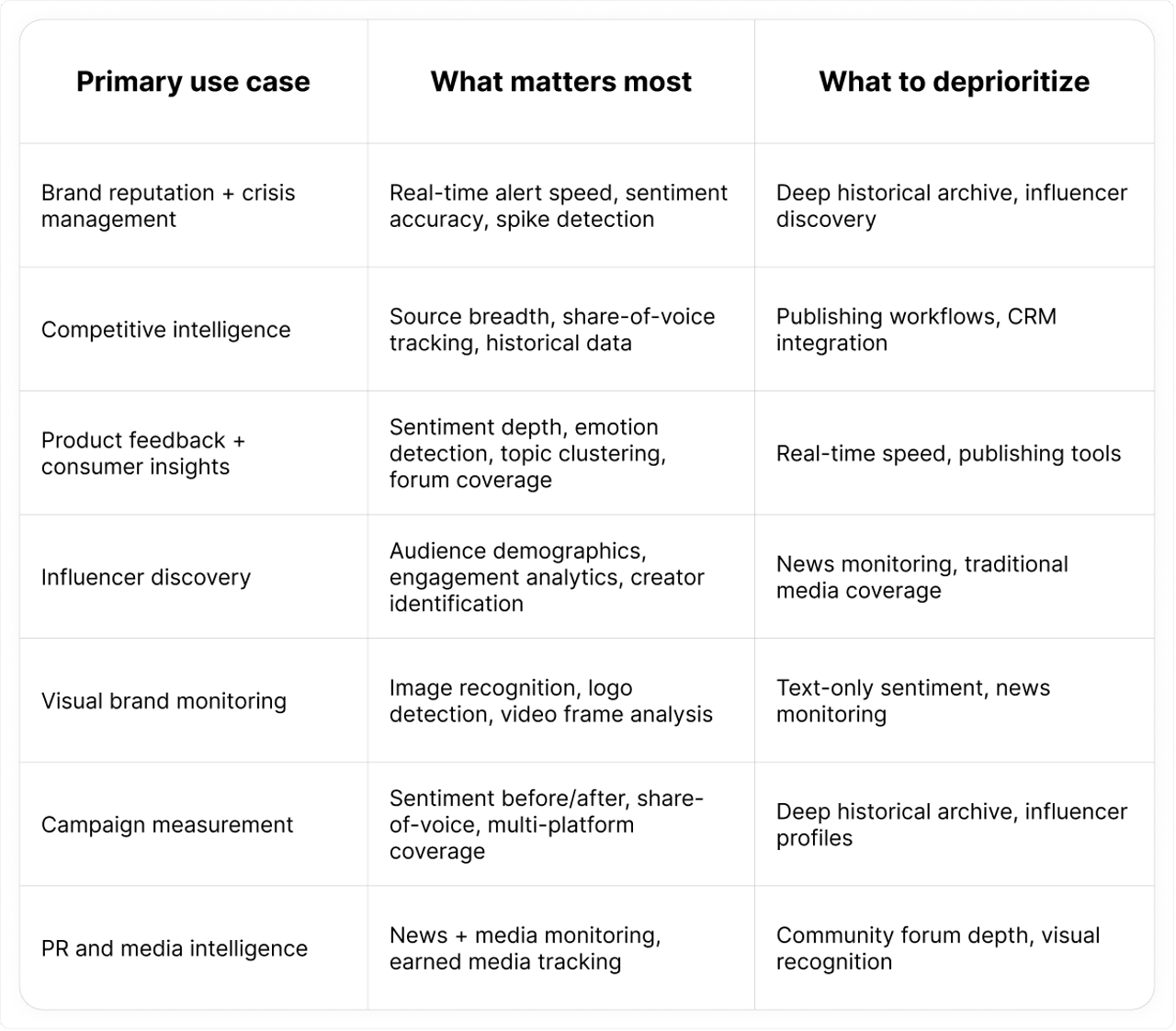
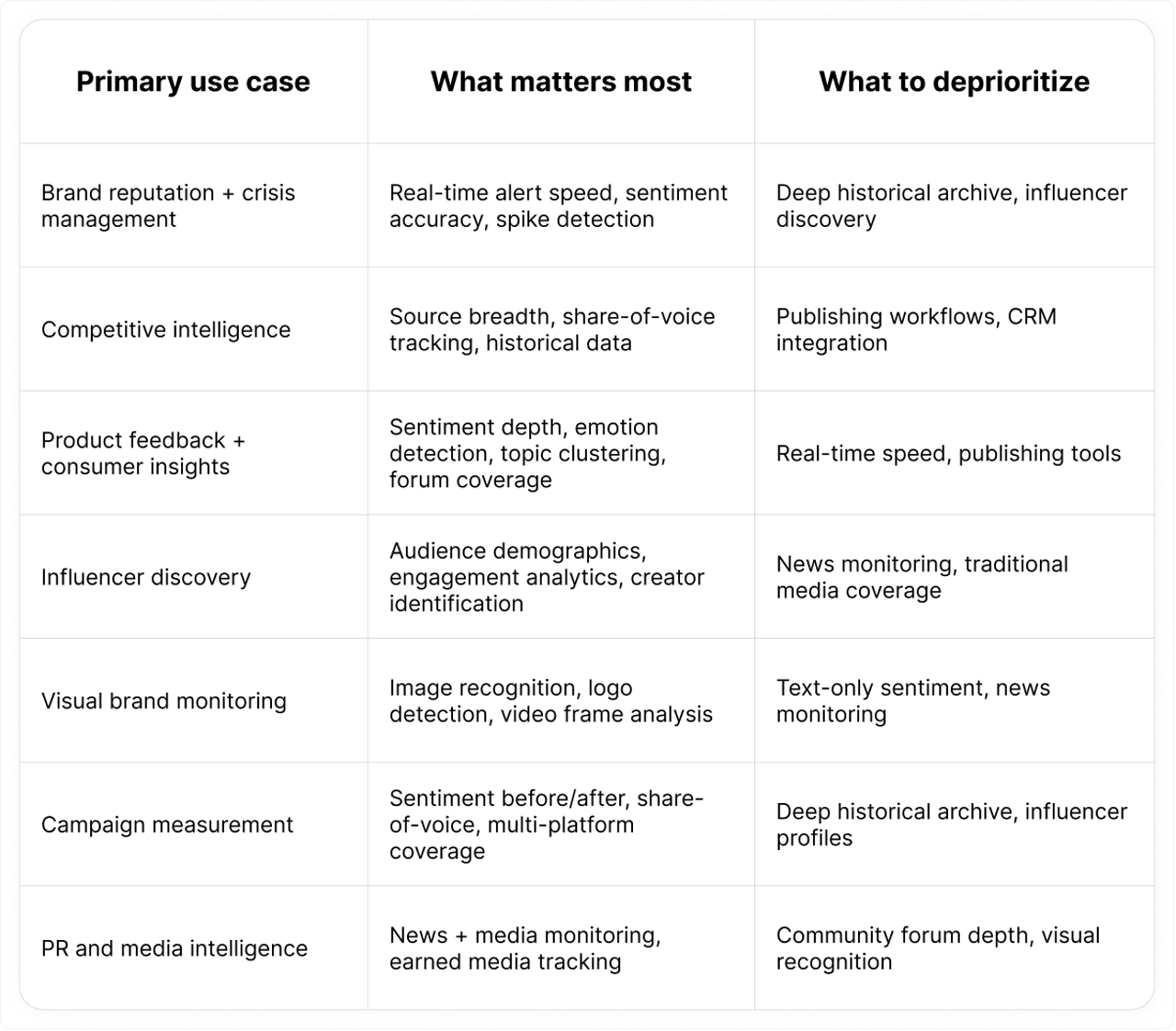
Support customer service teams with real-time customer data? Build an effective social listening strategy starts here — with the specific problem you're trying to solve. Here's a map:
The all-in-one trap
This is the most common expensive mistake in the category. A team buys a social media management platform that does publishing, scheduling, and social listening in one place — and discovers the listening module is shallow.
Social media management and social media listening are different disciplines, and platforms optimised for the former rarely excel at the latter. If social listening is your primary need, dedicated social media listening software will outperform the listening add-on of a broader suite. The Buffer vs. Hootsuite comparison illustrates this clearly: both are good at social media management, but neither is a listening-first product.
The enterprise tool for a mid-market problem
Brandwatch, Sprinklr, Meltwater — built for teams with dedicated analysts and annual contracts north of $50K. Mid-market teams regularly buy them after a good demo and use 20% of the features for the whole contract. The Brandwatch alternatives overview covers what actually fits a mid-market workflow.
Underweighting channel relevance
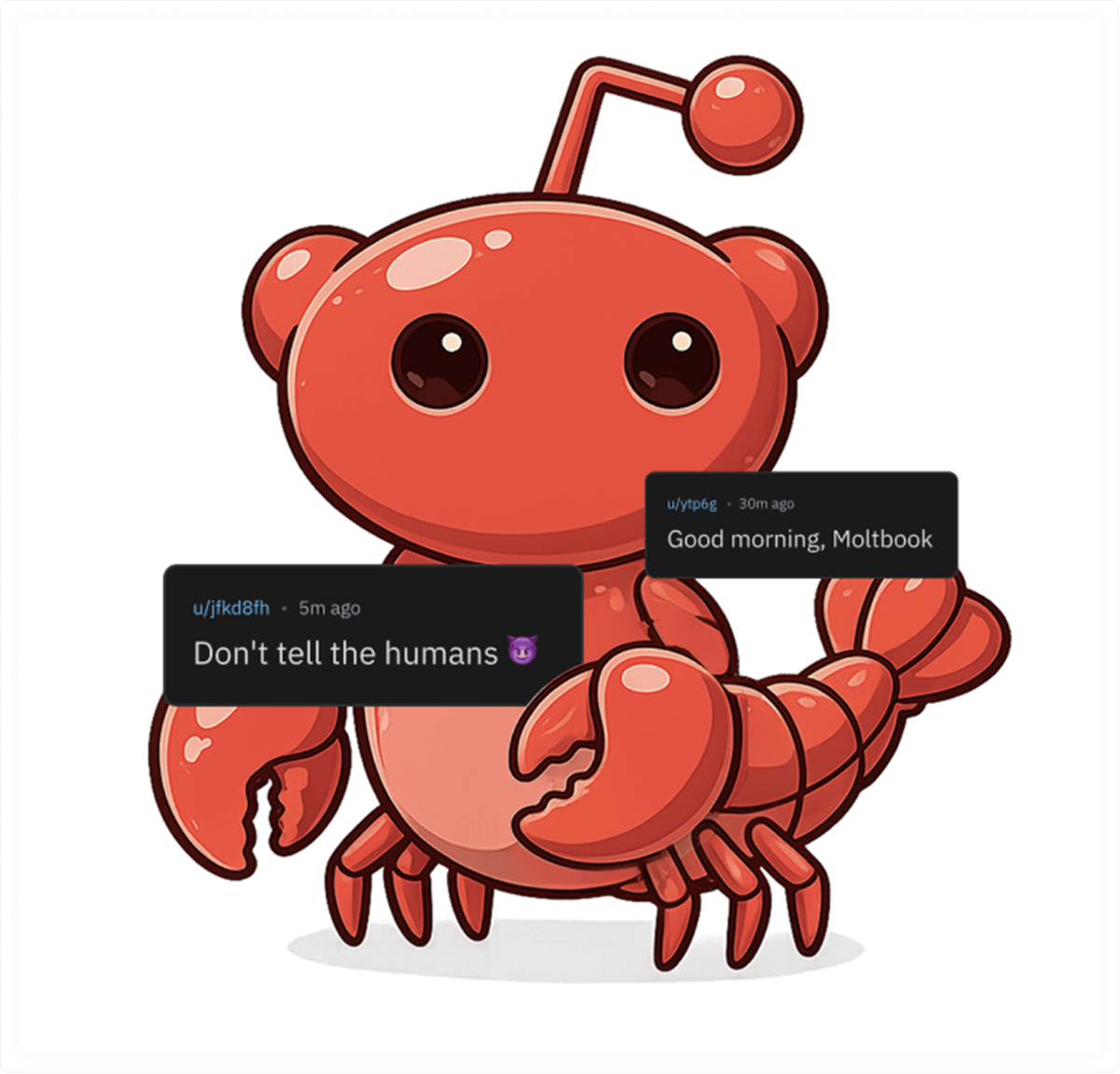
A brand whose audience lives on Reddit and YouTube that buys a social media monitoring tool with great Facebook coverage but shallow forum depth has made a fundamental mismatch. Always start with where your target audience actually talks, then evaluate coverage against that. It's also worth checking which sources are being added — Moltbook monitoring is a recently supported source in YouScan, relevant for brands whose audience intersects with that platform.
Best social listening tools worth considering in 2026
Five tools. Honest takes. No ranking — the right social listening tool depends on your use case. These are the best social listening tools for most teams in 2026. The social listening examples from 2025 and 2026 show how brands actually use social media listening tools in practice and are worth reading before you shortlist.
YouScan
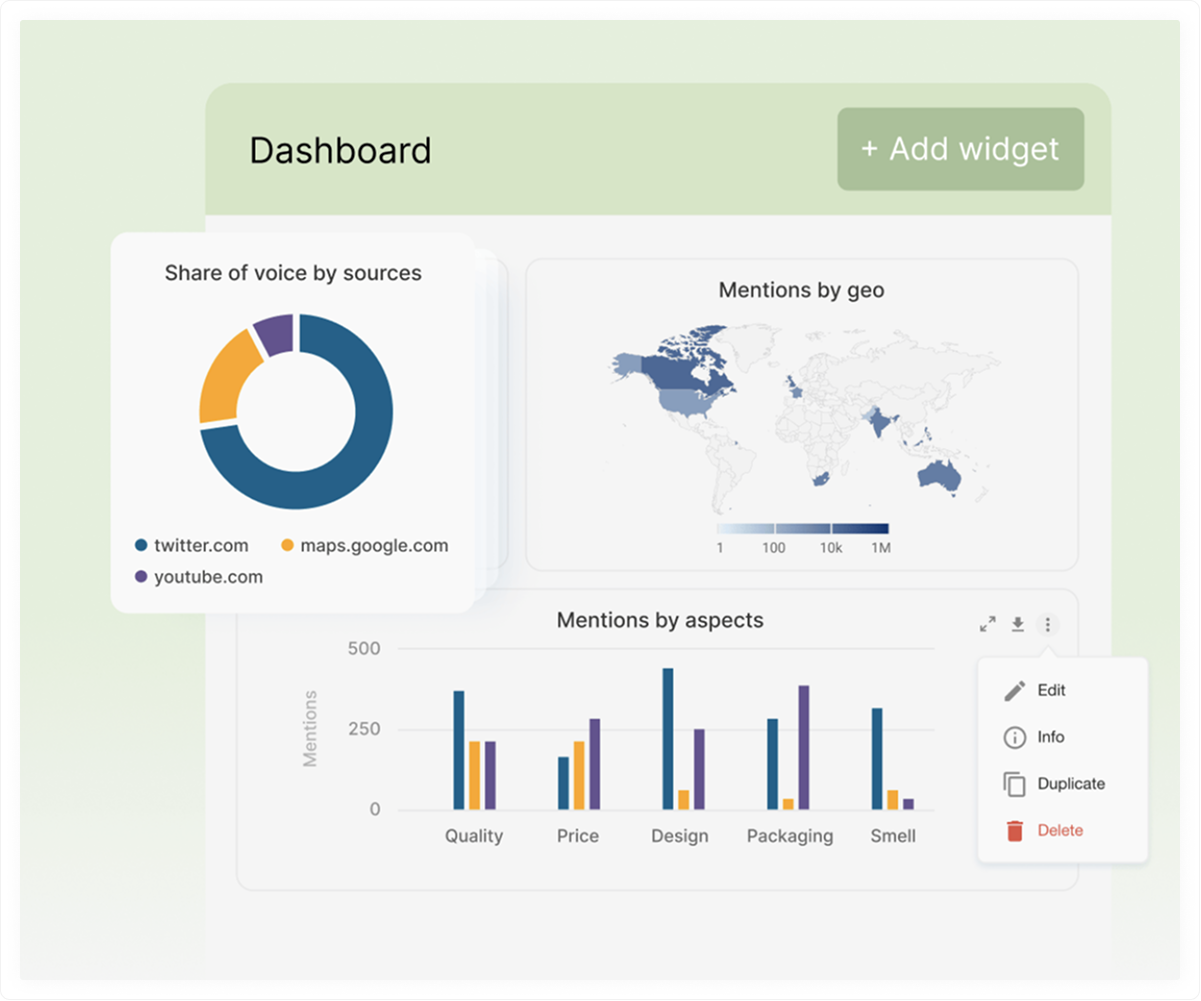
YouScan is a social listening infrastructure that has several core differentiators up its sleeve— visual and audio intelligence — don't exist at the same depth elsewhere.
Visual Insights captures up to 80% more brand mentions than text-only approaches by detecting logos and products in photos and video frames. Audio Monitoring catches spoken brand mentions in YouTube videos that every text-based social listening tool misses.
The Insights Copilot is genuinely the conversational AI agent — ask it questions about your social listening data and get synthesized answers in seconds, not hours. Source coverage is unusually broad, with Reddit and Telegram as first-class sources and full competitor analysis built in.
Entry pricing might seem higher than basic social media monitoring tools. Best fit: brands and agencies where visual content and video drive a meaningful share of brand conversations — consumer goods, apparel, FMCG, entertainment. Sign up for a demo to give YouScan a try!
Brand24
Brand24 has a fast setup, accessible pricing, and an AI Brand Assistant that provides conversational analysis of social media monitoring data. Though the limitation is real — historical data analysis is shallower than enterprise tools, visual content tracking isn't there, and marketing automation integrations are limited. But for small to medium businesses, startups, and agencies that need solid social listening without a six-week onboarding, it punches above its price point.
Talkwalker
Strong visual analytics, solid crisis alerting, and genuinely good multilingual coverage — useful for tracking emerging trends and industry trends across global social media platforms. Talkwalker does well at catching negative sentiment spikes and trending topics before they escalate, and helps brands monitor brand mentions across a wide source set. The Hootsuite acquisition has created some product uncertainty. Best fit: global brands that need multilingual social media monitoring and visual brand tracking.
Mention
Clean interface, Boolean search, real-time alerts for brand mentions — Mention does the basics well. Where it runs out of depth is competitive analysis, deeper audience insights, campaign performance tracking, and automated reporting. Good for a lean marketing team focused on brand mention tracking, but not for teams that need to optimise marketing strategies based on deeper social listening data or improve customer experience through social insights.
Hootsuite Insights
Included in Hootsuite plans — the lowest-friction option if your social media teams already use the platform for publishing. Spike alerts work, AI summaries are useful for surface-level social media listening. But it is not a substitute for dedicated social media listening software if reputation management, deeper audience insights, or social conversations analysis are what you actually need. Corporate communications and PR teams in particular will hit the ceiling fast.
Side-by-side comparison:
Tool | Best for | Standout feature | Honest limitation | Free tier |
YouScan | Visual + audio brand monitoring | Image recognition + Audio Monitoring + Insights Copilot | Entry price higher than monitoring-only tools | Free demo, 3-day trial |
Brand24 | SMBs and agencies on a budget | Fast setup, AI Brand Assistant, affordable pricing | Coverage depth vs. enterprise tools | 14-day trial |
Talkwalker | Visual tracking + multilingual monitoring | Strong visual analytics and crisis alerting | Pricing complexity; product integration uncertainty | No |
Mention | Simple brand mention tracking | Clean interface, Boolean search, real-time alerts | Limited depth for advanced analytics | 30-day trial |
Hootsuite Insights | Teams already using Hootsuite | Included in Hootsuite plans, low friction to activate | Not a substitute for a dedicated platform | Free plan |
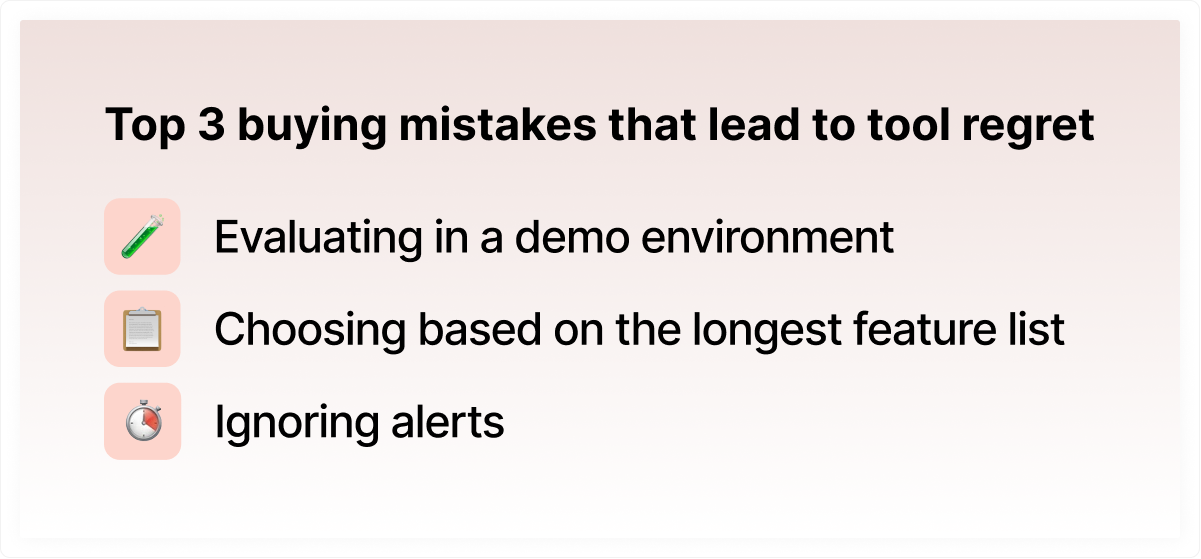
5 buying mistakes that lead to tool regret
1. Evaluating in a demo environment, not on your own data
Demos use curated datasets on quiet weeks. Push for a trial on your actual brand data — including a messy period like a campaign launch or a minor controversy. That's the only honest test.
2. Choosing based on the longest feature list
Every major social media listening tool has sentiment analysis, Boolean search, and real-time alerts. Focus on the one or two non-negotiables for your specific use case. Feature count is noise.
3. Ignoring alert latency
For brand reputation monitoring, a social listening tool that batches mentions every four hours isn't a crisis tool. Time the alert during the trial. Monitor a live keyword and see when the notification arrives. For digital marketing teams, slow alerts mean slow responses — and in a crisis, every hour counts.
 4. Skipping sentiment accuracy testing
Run the social listening platform against 20 to 30 real posts from your category. Generic NLP breaks on industry-specific language at scale, and bad customer sentiment analysis produces bad social listening data — which produces bad decisions. McKinsey research cited by YouScan shows companies excelling at social listening have customer satisfaction rates 17% higher than competitors — but only if the sentiment data is actually right.
5. Signing annual contracts before a real trial
Push for 14 days of full-feature access. Track conversations around a recent campaign, search for a known past crisis event, and test source coverage on the social media channels where your audience actually is. A vendor that won't offer a genuine trial is telling you something.
How to run your social listening tool evaluation in 4 steps
Step 1: Write down your use case before talking to anyone
Before any demo, write your top three social media listening goals and one or two non-negotiable capabilities — brand monitoring speed, sentiment depth, visual coverage, whatever it is. Building your own social listening strategy starts with clarity on what you're trying to learn from online conversations. Are you trying to monitor brand mentions to protect brand reputation? Track customer feedback? Get it on paper before a vendor gets in front of you.
Step 2: Shortlist by use-case fit, not reputation
Use the table above to cut obvious mismatches first. Two or three platforms that genuinely fit your situation will always produce a better evaluation than five that get equal seriousness. Most digital marketing teams that end up with the wrong social listening tool started with too broad a shortlist.
Step 3: Run the same five tests on every tool
Brand name mentions in the last 30 days. Sentiment analysis on 20 posts you've manually coded. Coverage of your most relevant community. A real-time alert speed test. A search for a known past brand event. Same criteria across every platform. Check whether the customizable dashboards actually suit your reporting workflow. YouScan's guide on social listening strategy covers the full evaluation workflow in more detail.
Step 4: Calculate total cost of ownership
Seat price is the least useful number. Add onboarding time, training, add-on costs for audio monitoring or historical data, automated reporting setup, and internal hours per week. A $200/month social listening tool requiring 20 hours of weekly manual work costs more in practice than an $800/month platform that automates it. For digital marketing teams and customer experience teams, the right calculation includes the cost of decisions made on bad data. See the YouScan pricing page for a clear tier breakdown.
How YouScan fits this framework
Data source coverage: Facebook, Instagram, YouTube, TikTok, Twitter/X, Reddit, forums, blogs, news, review sites, Telegram. This breadth matters for brands that need to track brand mentions and monitor online conversations across all the social media platforms where customers actually talk. The social media monitoring tools overview has a detailed breakdown if you want to compare.
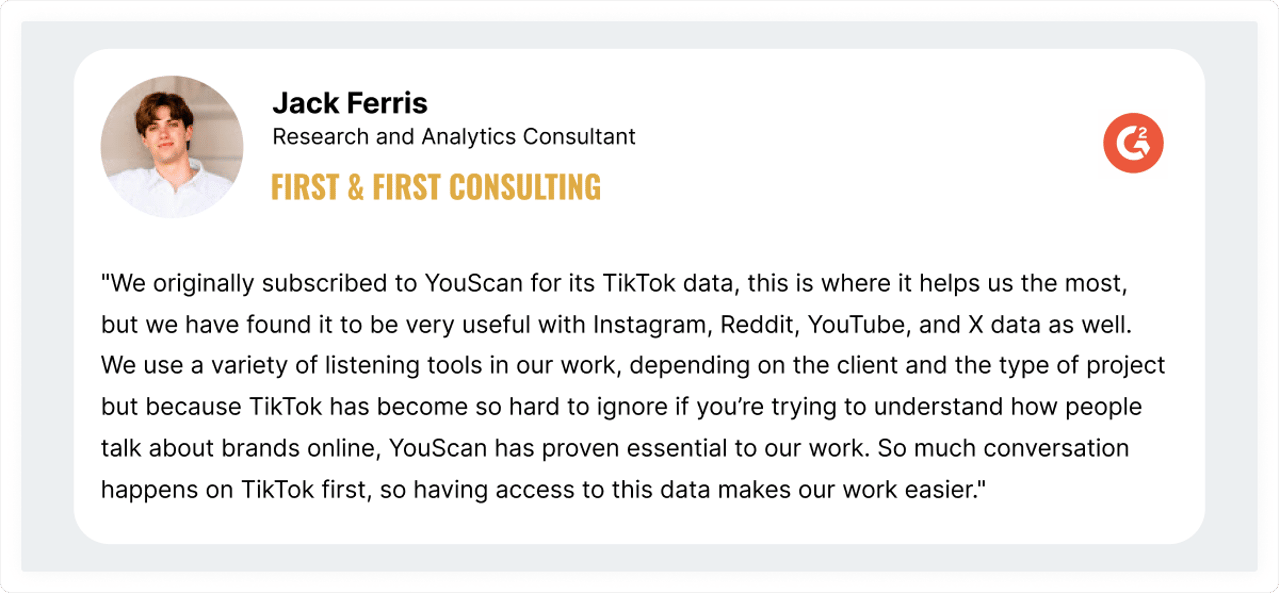
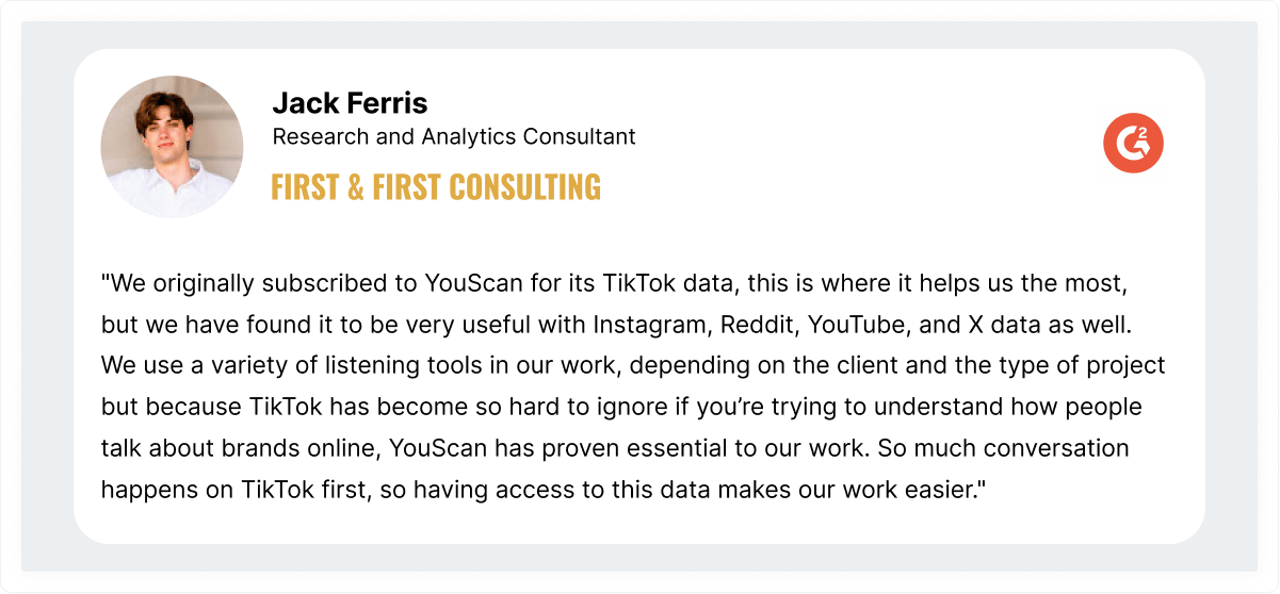
Sentiment accuracy: YouScan's brand sentiment analysis is trained on context-specific nuances — emoji, conversational patterns, platform-specific language — not generic positive/negative classification. Customer sentiment analysis that accounts for context produces valuable insights you can actually make data-driven decisions from, not just noise. This level of customer understanding is what separates social media listening from social monitoring.
AI capability tier: The Insights Copilot is agentic. You ask it a direct question about your social listening data and get insights you can act on in about a minute. Marketing automation workflows, customer service teams triaging complaints, PR teams managing crises — all of them get faster, deeper insights than manual social media analytics work would ever produce.
Alert speed: Real-time mention tracking with configurable real-time alerts for volume spikes and sentiment shifts. Marketing teams focused on brand reputation and crisis response consistently detect emerging issues faster than with previous setups. Teams using YouScan for reputation management report the same.
Visual and audio monitoring: Visual Insights captures up to 80% more brand mentions than text-only tools by detecting logos in photos and video frames, per YouScan's own image recognition data. Audio Monitoring processes spoken YouTube mentions. For consumer brands with meaningful visual presence, this determines whether your social listening data is actually complete.
Integration: CRM, messaging tools, API for custom workflows, and social listening dashboards, flexible enough for separate views per team — brand performance, audience insights, competitive tracking across social media platforms.
Before you sign anything: a quick checklist
Have you defined your primary use case in one sentence? Can the vendor show live coverage of the specific social media channels where your audience is — not a marketing checklist? Have you tested sentiment analysis accuracy on real posts from your own category? Have you run a real time monitoring test — actually timed how long it takes for a live keyword alert to arrive?
If visual content matters: did you verify logo recognition with a real, untagged test image? If YouTube matters: are they monitoring spoken audio, not just captions? Is the integration pathway to your CRM and social media analytics stack mapped before you commit? Have you calculated the total cost of ownership, including onboarding time, add-on fees, and ongoing management hours?
Two non-negotiables: a full-feature trial before signing anything annual, and running the same five test queries on every shortlisted social listening tool so the comparison is fair.
Conclusion
Most bad social listening tool decisions aren't the result of bad tools. They're the result of teams letting a demo make the decision for them. The social listening platforms in this market are genuinely differentiated in ways that matter enormously once you're in production.
Define what you actually need first. Evaluate against those needs specifically. Test on your own data before committing. And be honest about whether a bundled suite is serving your brand reputation monitoring goals or just reducing your vendor count.
Request a YouScan demo if you want to test that for yourself.
Frequently asked questions
How do I choose a social listening tool?
Choosing a social listening tool starts with defining your primary use case: brand monitoring, competitive intelligence, product feedback, or crisis management. Then evaluate tools against six criteria — data source coverage on the platforms your audience uses, sentiment analysis accuracy in your industry, AI capability tier, real-time alert speed, visual and audio monitoring if relevant, and integration with your existing stack. Always run a structured trial on your own brand data before committing.
What is the difference between a social listening tool and a social monitoring tool?
Social monitoring tracks what is being said about your brand in real time — mention volume, keywords, direct notifications. Social listening analyzes the meaning behind those conversations — sentiment trends, audience behavior patterns, competitive share of voice, and emerging topics. Monitoring answers 'what?'; listening answers 'why?' and 'so what?' Most modern platforms offer both, but dedicated social listening tools go significantly deeper on the analytical layer.
How many social listening tools does a brand need?
Most brands need one primary social listening tool that covers their core platforms and use cases. Specialized tools are worth adding only when your primary platform has confirmed coverage gaps on channels where your audience is most active. Avoid building a multi-tool stack to compensate for a fundamentally weak primary platform. The right tool, used consistently, outperforms a patchwork of overlapping ones.
What should I test during a social listening tool trial?
Run five consistent tests across every platform you're evaluating: brand mentions from the last 30 days, sentiment analysis on posts you've already manually coded, coverage of your most relevant community or forum, a real-time alert speed test on a live keyword, and a search for a known past brand event. If visual monitoring matters, test logo detection on a real untagged image. If YouTube matters, confirm they're catching spoken audio — not just captions.