7 Best Podcast Monitoring Tools to Track Brand Mentions in 2026

Here's a number worth sitting with. Edison Research's Infinite Dial 2026 found that 80% of Americans aged 12 and up have now listened to or watched a podcast, an all-time high, with monthly consumption at 58%.
That is a lot of people talking, at length, mostly unscripted. Almost none of it is text, the only format your monitoring stack reads.
A podcast monitoring tool exists to close that gap. It catches your brand name when someone says it out loud, then tracks what happens to that mention afterwards. Without one, a host can praise your product, a guest can swipe at your pricing, and a competitor can sponsor the show your customers love, while your dashboard stays quiet.
Here's the part that gets underrated: the second half of that sentence matters more than the first. Catching the mention is easy now. Working out whether it reached 800 listeners or 800,000 is where teams still guess, badly.
Below: what the category is, why it gets confused with podcast analytics, what to ask vendors, and the seven tools worth your shortlist.
What is podcast monitoring?
Podcast monitoring is the practice of tracking mentions of a brand, product, person, or topic across podcast episodes and the conversations they generate. A podcast monitoring tool detects when a show discusses your keywords through transcript search, episode metadata, or coverage of video podcasts and social discussion. It then analyzes reach, sentiment, and audience so brands can respond, measure PR impact, and spot opportunities.
The category sits inside media monitoring generally, but the source is what makes it awkward. Text tools read text. Podcasts are people talking.
Monitoring versus analytics: two different jobs
Podcast analytics tools tell podcasters how their own show performs. Monitoring tools tell brands what other people's shows are saying about them. That's the whole distinction, and it trips up almost everyone researching this.
Analytics platforms help podcasters understand their own numbers: downloads, listener retention, audience engagement, device type, and who reached them through smart speakers rather than a phone. Most creators use their hosting dashboard for it. If you want to track episode performance on a show you produce, that's podcast analytics, and this is the wrong article.
Monitoring runs the other direction, watching thousands of shows you don't control for your brand names, executives, and competitors. Independent podcasters care about podcast success on their own feed. Brands care about everyone else's.
The two layers worth tracking
In-episode: what hosts and guests say into the microphone.
The echo: video versions on YouTube, podcast clips, Reddit threads, reviews, press coverage.
Most teams need both. Almost no single platform does both well, and anyone claiming otherwise is selling something.
Why podcast media monitoring matters for brands
Spoken mentions carry unusual persuasive weight, stay invisible to text-only tools, and often generate more reach outside the show than inside it. For PR professionals and brand teams, that makes audio a measurable earned media channel and a real reputation risk at once. Industry conversation moves through these shows before it reaches anyone's clippings. Tracking it closes a blind spot that news and social tools were never built to cover.
Podcast mentions are trusted, long-form earned media
A host talking about your product for three minutes is not a passing tweet, and listeners can tell. Tone, hesitation, genuine enthusiasm: all of it comes through.
Acast's Podcast Pulse research found that 84% of listeners say a podcaster changed their mind about something they once believed. Credibility is the quality earned media reporting fails to capture, because it doesn't fit in a mention count. Brand perception gets shaped in those three minutes whether or not you measured them.
Audio mentions are invisible to text-only media monitoring
Standard keyword tracking scans text. A pointed criticism buried at minute 34 of a long interview never surfaces in a text feed unless something transcribes the audio or catches the discussion it sparks elsewhere.
So it reaches you secondhand, from a customer or a colleague, at the worst possible moment.
Podcasts break news now, they don't just recap it
Executive interviews, product post-mortems, and industry commentary increasingly land on long-form audio first. Researcher Tom Webster of Sounds Profitable calls podcast listening "found time not spent time", and that companionable quality is why hosts get unguarded answers a press briefing never would.
Put plainly: your CEO will say something on a podcast they'd never put in writing.
The echo is measurable, and it's usually the bigger number
This is the part worth underlining.
One popular show spawns a YouTube upload, a run of podcast clips, a Reddit thread, a week of quote posts. Infinite Dial 2026 figures put YouTube first for daily podcast consumption time, at 32%. A large share of listening is now watching, somewhere your social tools already reach.
Track the mention but not the spread and you'll under-report your own results. Plenty of teams log a single line item in a monthly report when the clip cut from that show had outperformed their entire paid campaign.
Competitor intelligence and industry trends
A podcast monitoring track record also shows which top podcasts discuss your competitors, who sponsors them, and where a guest slot is worth your CMO's afternoon.
Sit with a quarter of that podcast data, and you spot trends before the analysts write them down. Market trends surface in conversation between two hosts long before they reach an industry report.
How to choose the right podcast monitoring tool
Choosing well comes down to five questions: does it read transcripts or only metadata, which layer does it cover, how fast are its alerts, how deep is its analysis, and does the pricing model match how your company buys software. Answer those honestly, and the shortlist gets short.
Transcript search versus metadata search. This is the one that catches people out. Tools scanning only titles and descriptions will find you if a show is about your brand. They miss the offhand aside made 20 minutes in, which is where the overwhelming majority of podcast mentions actually live. Full-transcript search catches those. You'll see miss-rate percentages quoted here; the vendors publishing them sell transcript search, so treat them as directional.
Which layer it covers. Can it monitor podcasts themselves, the echo, or both? Be honest about where your risk sits. A B2B business discussed on three niche shows has a different problem from a consumer brand getting clipped weekly, and each needs its own way to monitor podcasts.
Alert speed. Real-time alerts matter for anything crisis-adjacent, and "real-time" means different things to different vendors. Make them define it in the demo, then ask how those real-time alerts get routed to whoever is actually awake.
Analysis depth. Sentiment analysis, audience demographics, share of voice. Raw alerts with no analysis create a second inbox nobody reads, rather than actionable insights anyone can take to a meeting.
Pricing model. Public tiers or a sales-quoted enterprise contract. Neither is better in the abstract, but one is far easier to get past procurement, and you know which.
Two more. Coverage breadth: something that can monitor thousands of shows plus the conversation around them beats a deeper index with no view of other platforms. And exportability, because important metrics trapped in a vendor UI never reach anyone's board deck.
For the wider framework, our guide on how to choose the right social listening tool goes deeper on queries and vendor questions. Teams comparing enterprise suites will want the Brandwatch alternatives and Meltwater competitors breakdowns, and the social listening glossary covers any unfamiliar terminology.
The 7 best podcast monitoring tools in 2026
These seven platforms cover different layers, so read the list as stack components rather than a ranking. It opens with the conversation layer, moves through transcript search and podcast media database products, and closes with broadcast-oriented media monitoring. Pricing is described by model, not quoted, because vendor figures move.
1. YouScan: best for monitoring the conversations podcasts create
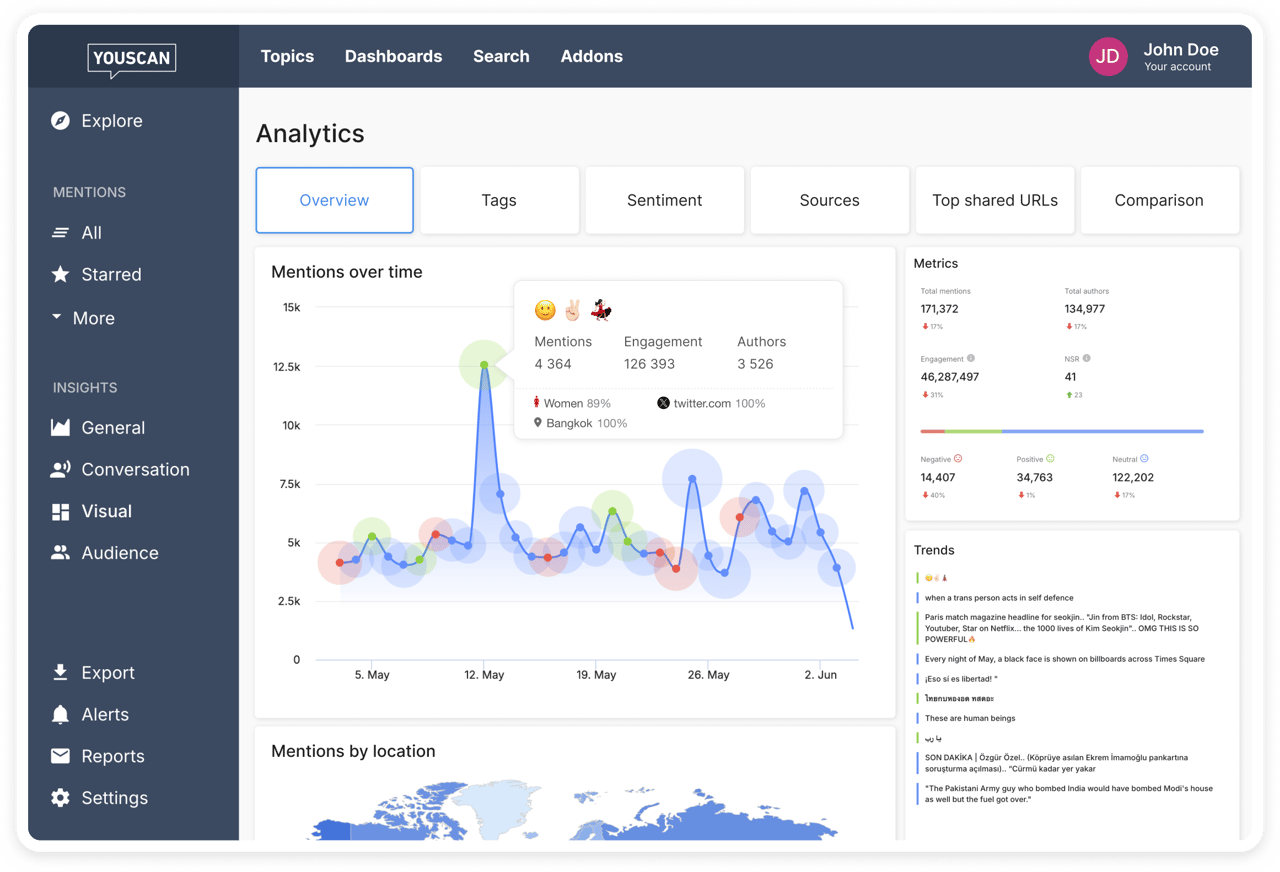
YouScan is an AI social listening platform covering social platforms (including YouTube), blogs, forums, review sites, and online news: where new podcast episodes published as video, get clipped, quoted, and argued about. Used by 600+ brands and agencies, including Campbell’s, Dentsu Creative, White Castle, and Samsung.
Layer covered: the echo. Video podcasts on YouTube plus the downstream conversation across social platforms, forums, reviews, and press. YouScan doesn't do audio transcript search, so audio-only shows need a transcript product alongside it. That pairing is the honest recommendation, not a workaround.
Key features:
Monitoring topics that track a show's name, host, guests, and themes across every covered source, so you monitor podcasts and their audiences at once
Visual Insights, an AI-powered image recognition layer that spots logos and scenes inside circulating podcast clips, which text-only tools cannot see at all
Audience Insights profiling the demographics, interests, and occupations of people discussing a show or your brand
Insights Copilot for questioning podcast data in plain language, plus an AI Query Assistant that writes the query for you
Where it goes further: analysis on the conversation layer runs deeper. Sentiment trained on social nuance, audience demographics, and visual detection are things a podcast database doesn't attempt. Output feeds shareable social listening dashboards, which matters when other teams want numbers without learning the platform. Coverage keeps widening too, with Moltbook monitoring added recently in English and Ukrainian.
Pricing: Starting at $499/month. Free demo is available.
2. Podscan: best for full-transcript podcast monitoring
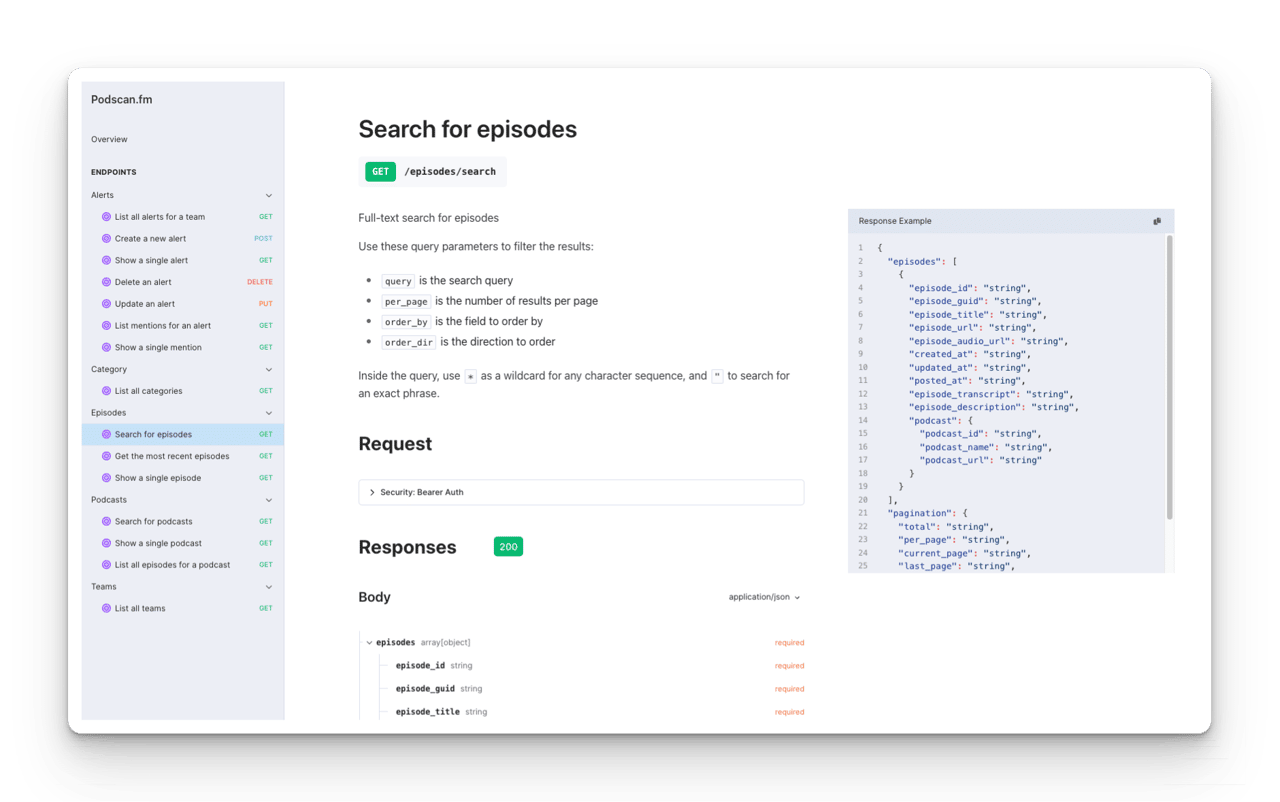
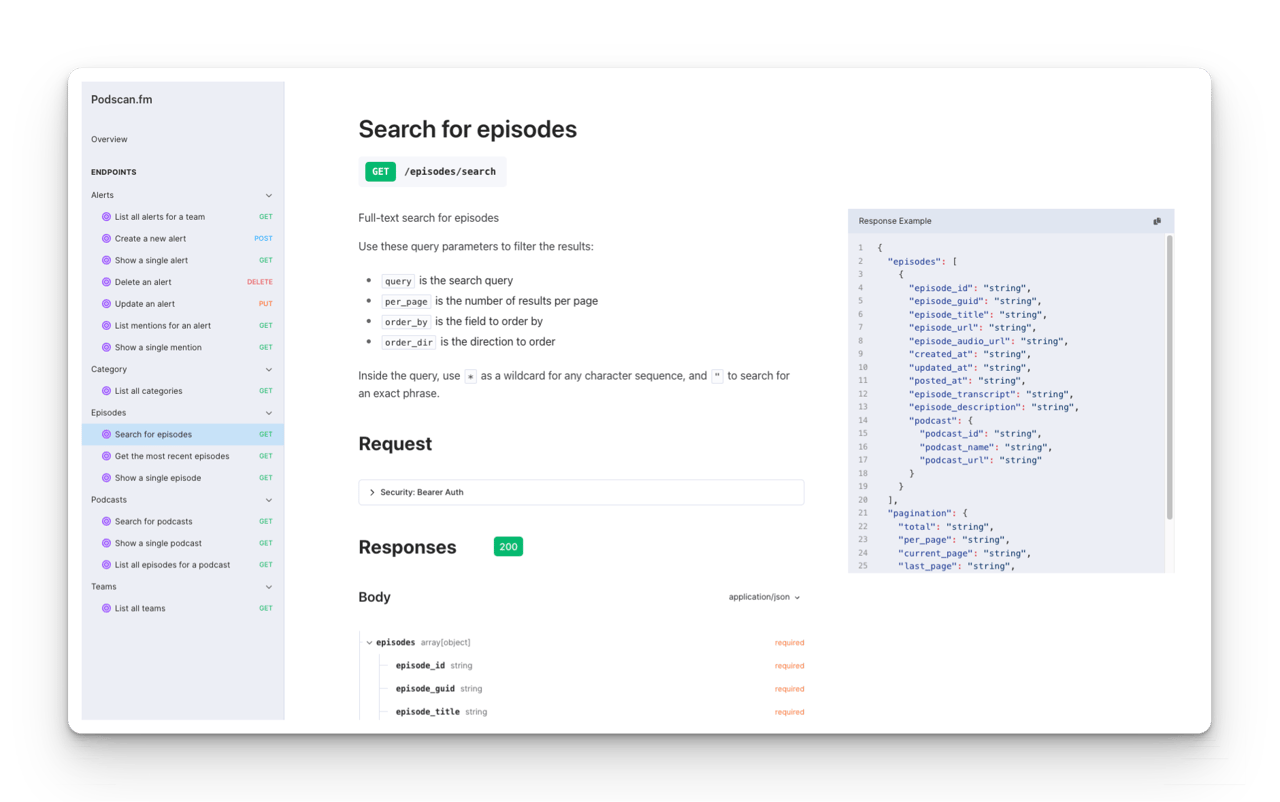
Podscan is a dedicated podcast intelligence product that transcribes and indexes new podcast episodes at scale, then searches those transcripts for your terms. Built for one job, and it does it.
Layer covered: in-episode.
Key features:
Full-transcript search across a large index of programmes
Alerts on new podcast mentions within minutes of publication
Sentiment scoring on each mention
Sponsorship and advertiser tracking
Where social listening complements it: Podscan surfaces the podcast mentions themselves, which is genuinely the hard part. Measuring how far it travelled afterwards is a different discipline.
Best suited for: comms teams and brands that need to catch every spoken mention across audio-only shows.
Pricing model: publicly listed tiers for different team sizes.
3. Podchaser Pro: best podcast media database with mention alerts
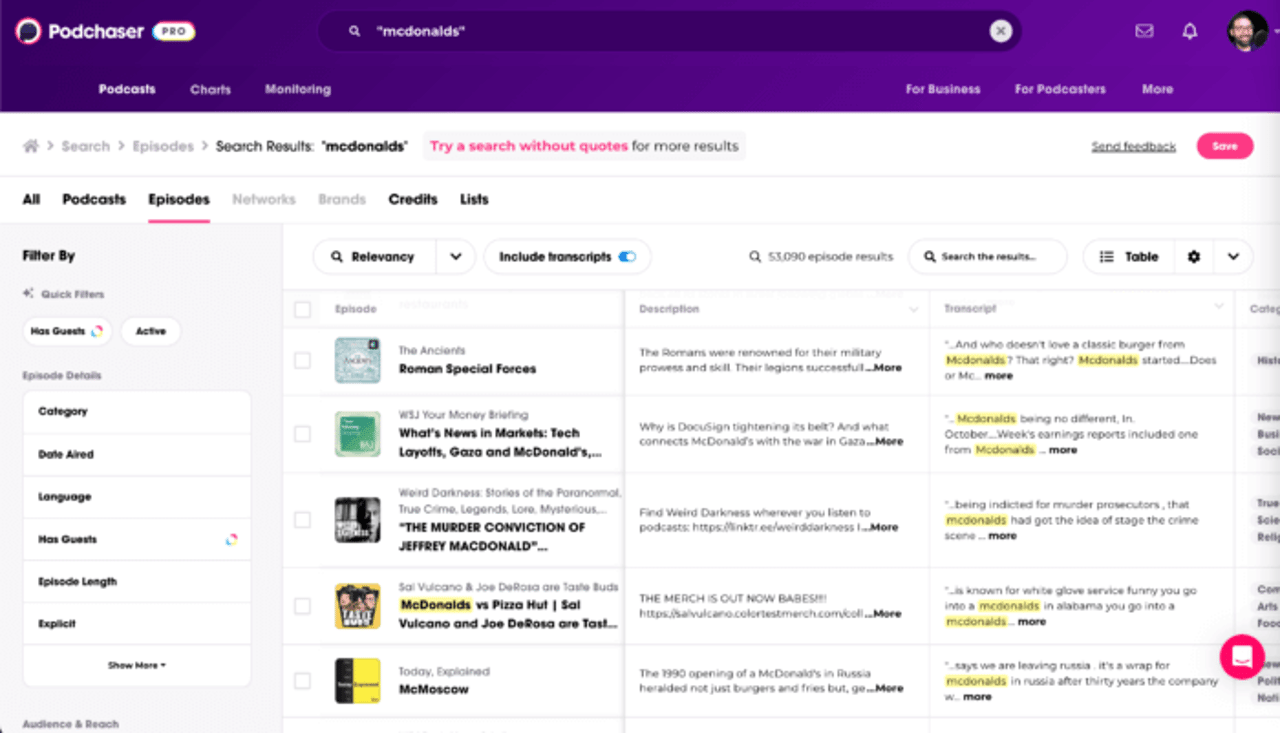
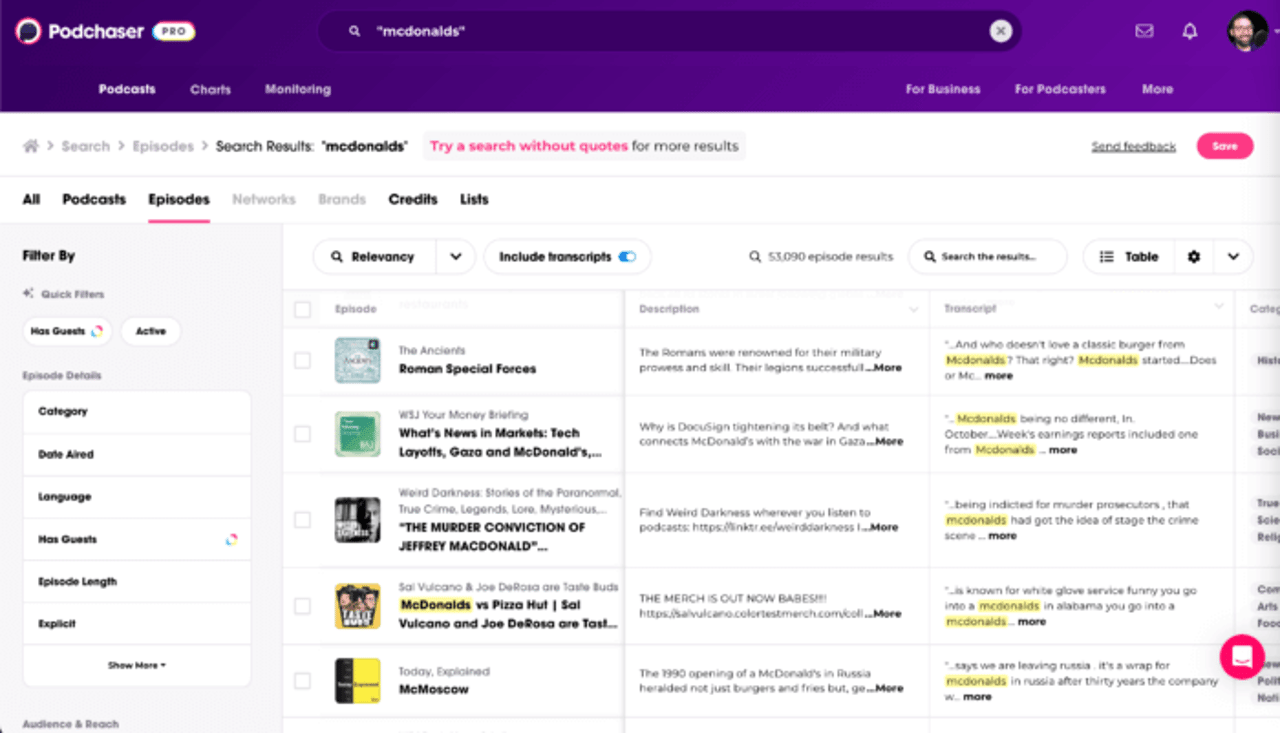
Often called the IMDb of podcasts, Podchaser Pro pairs a very large show database with monitoring features. If research and alerting happen in one session, one login beats two.
Layer covered: in-show plus research and outreach.
Key features:
A database of 5.5M+ shows with reach estimates
Listener demographics and listener preferences data
Contact details for hosts and podcast networks
Transcript-based alerts and sponsor tracking
Best suited for: media planners, comms teams, and advertisers researching top podcasts for sponsorships and guest placements while they track mentions of their brand across podcast networks.
4. Brand24: for podcast media monitoring inside a lean stack
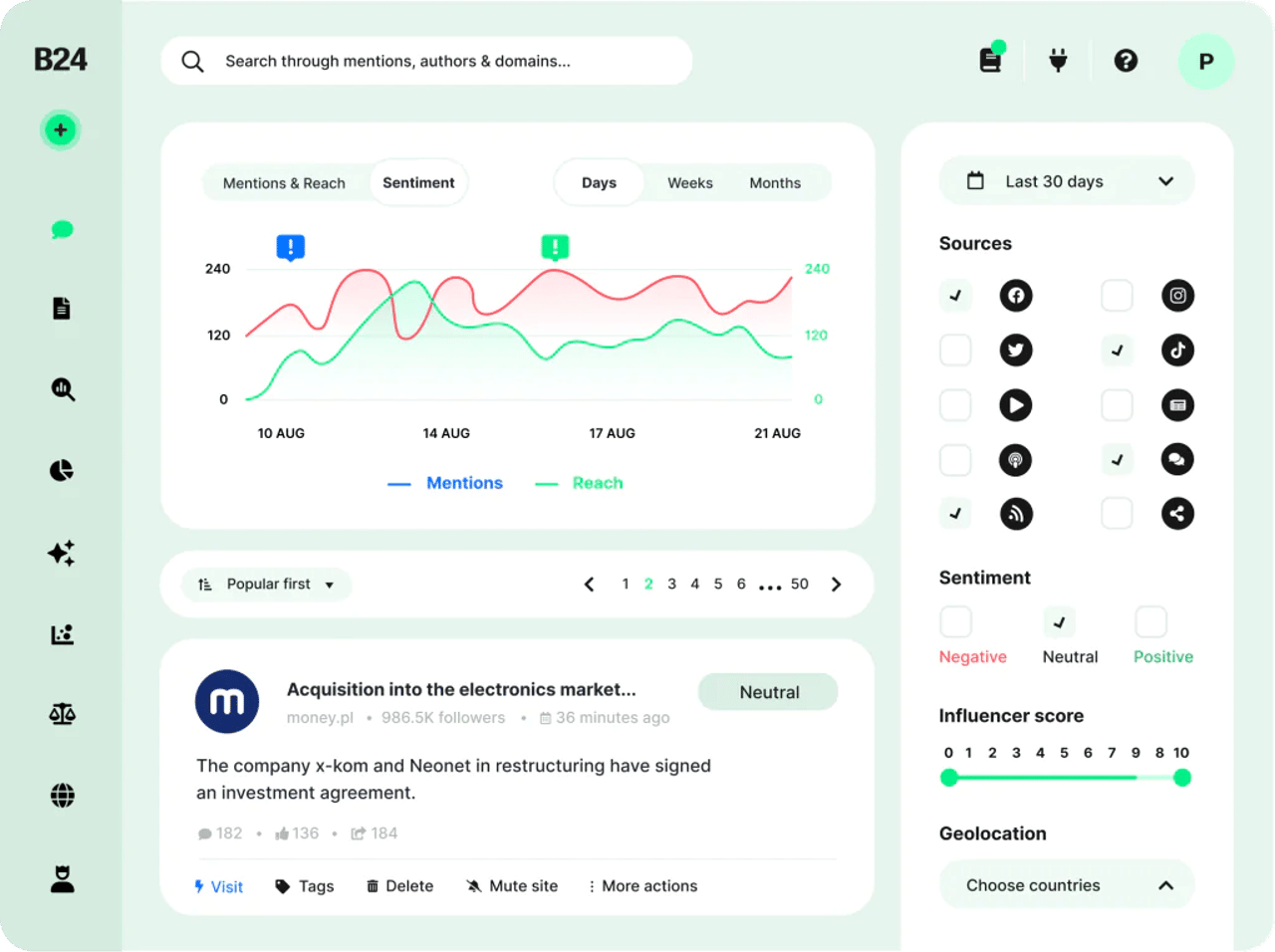
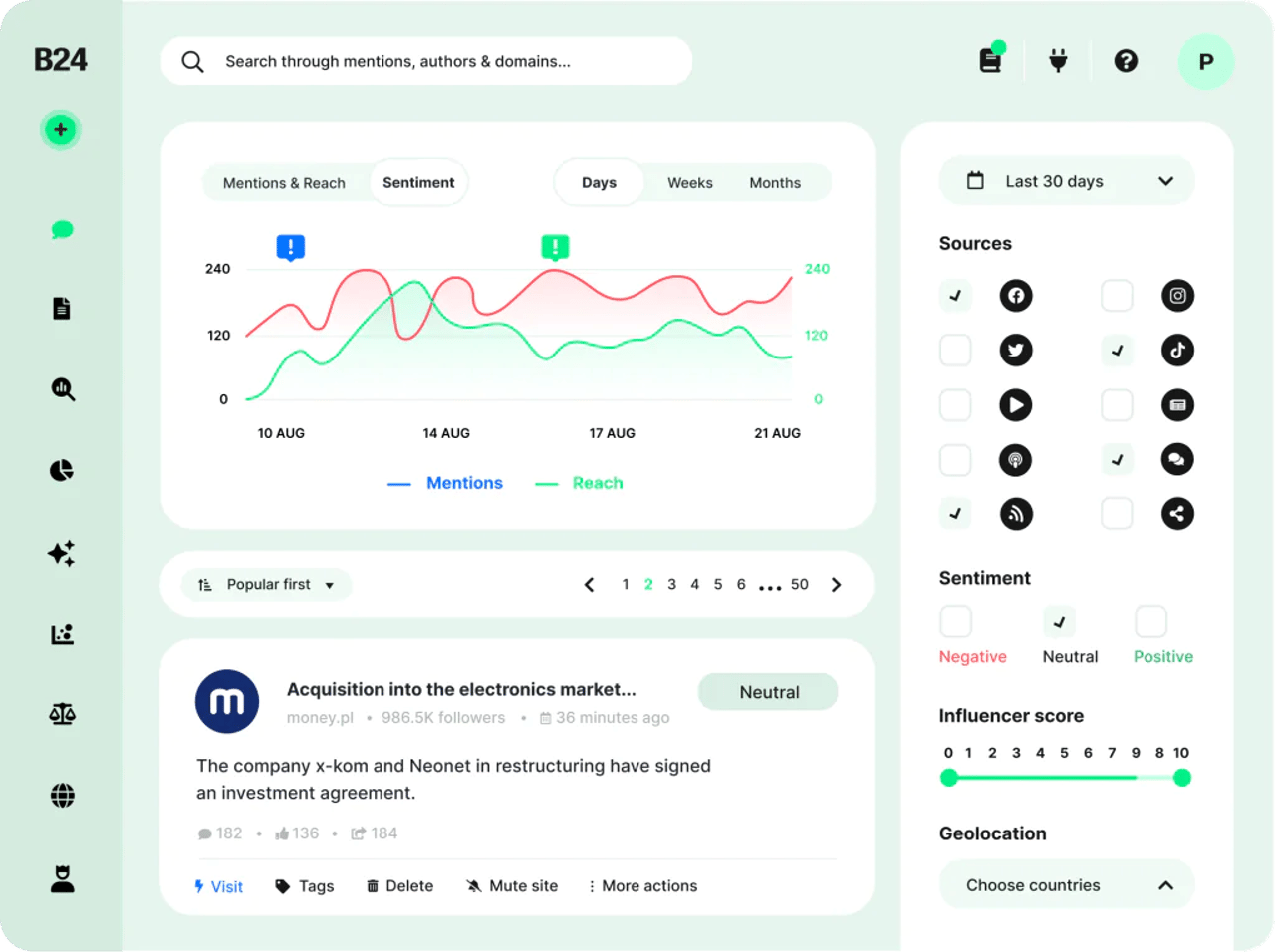
Brand24 collects podcast-related mentions from major audio platforms alongside its core social and web coverage, with AI-assisted reporting on top. For a two-person team, one accessible monitoring tool beats a second contract.
Layer covered: primarily the discussion around shows across other platforms, with some podcast-source tracking.
Key features:
Audio sources sitting alongside social, press, blogs, and forums, so podcast mentions land next to your other media mentions
AI-assisted report generation
Sentiment analysis and mention volume tracking
Real-time alerts on mention spikes
Best suited for: SMBs and lean teams that want podcast coverage without a separate line in the budget.
5. Meltwater: enterprise media intelligence with podcast coverage
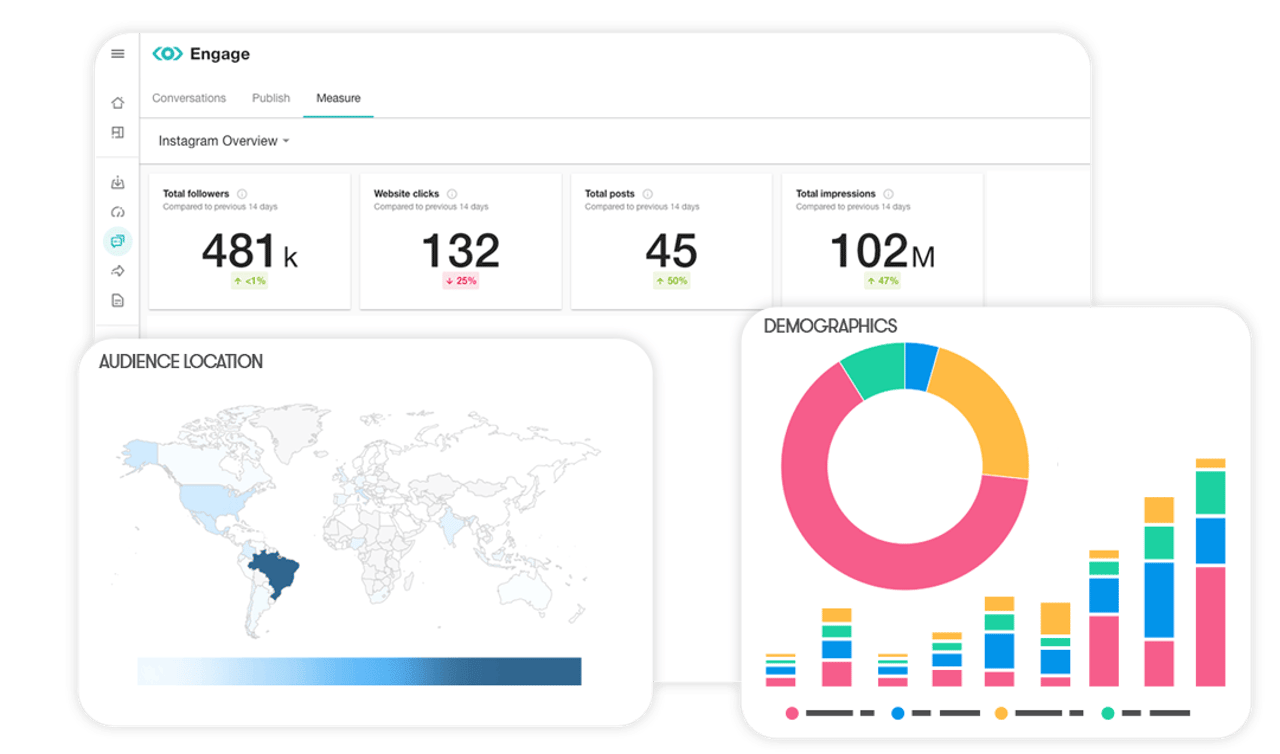
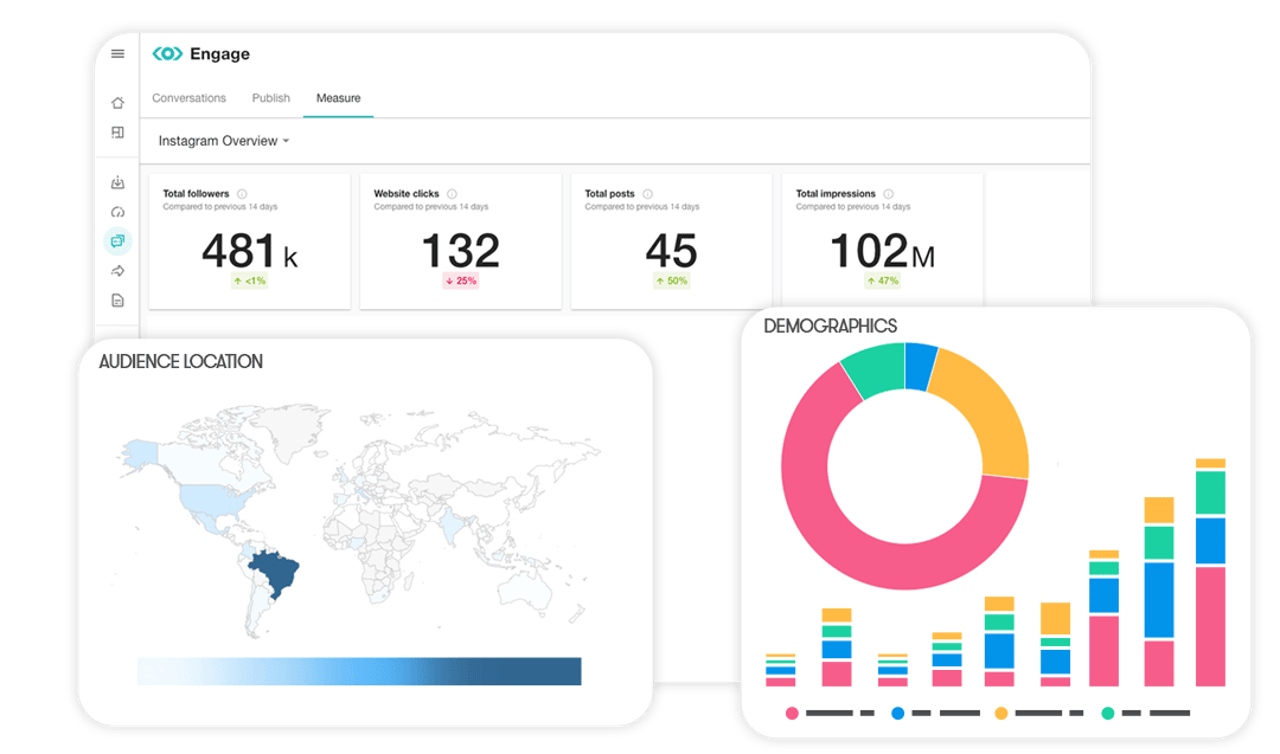
Meltwater is a broad media intelligence suite where audio sits next to news, social listening, and PR tooling. For comms teams reporting one media picture, having podcasts in the same place as everything else has real value.
Layer covered: in-episode as part of broad coverage, plus press.
Key features:
Podcast tracking alongside global press and broadcast
Media database and journalist outreach tools
Share of voice and campaign reporting
Enterprise analytics across earned media
One neutral note for your demo: in unified platforms, audio depth varies more than press or social depth. Ask about transcript coverage and indexed show counts specifically.
Best suited for: enterprise PR and communications teams.
6. Rephonic: best for podcast research and outreach
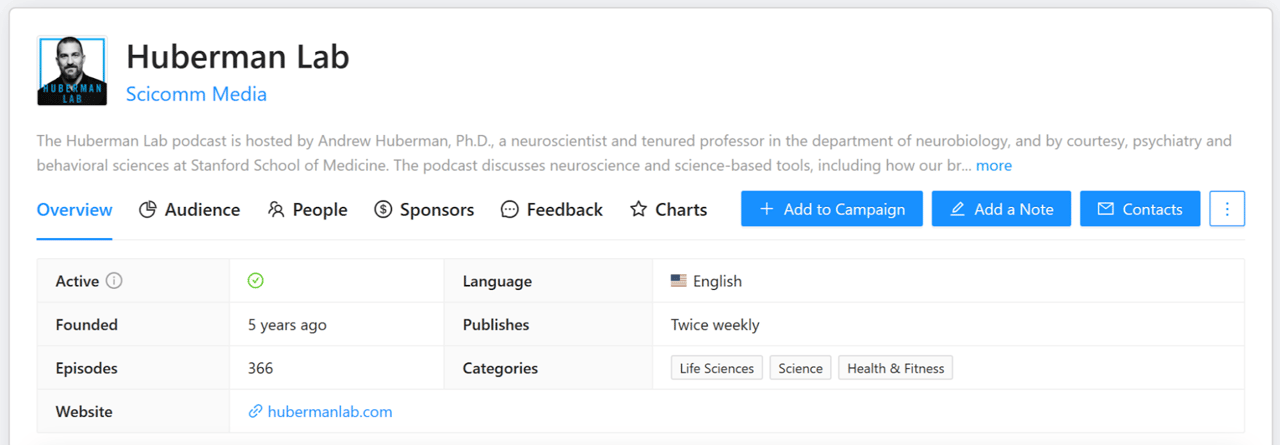
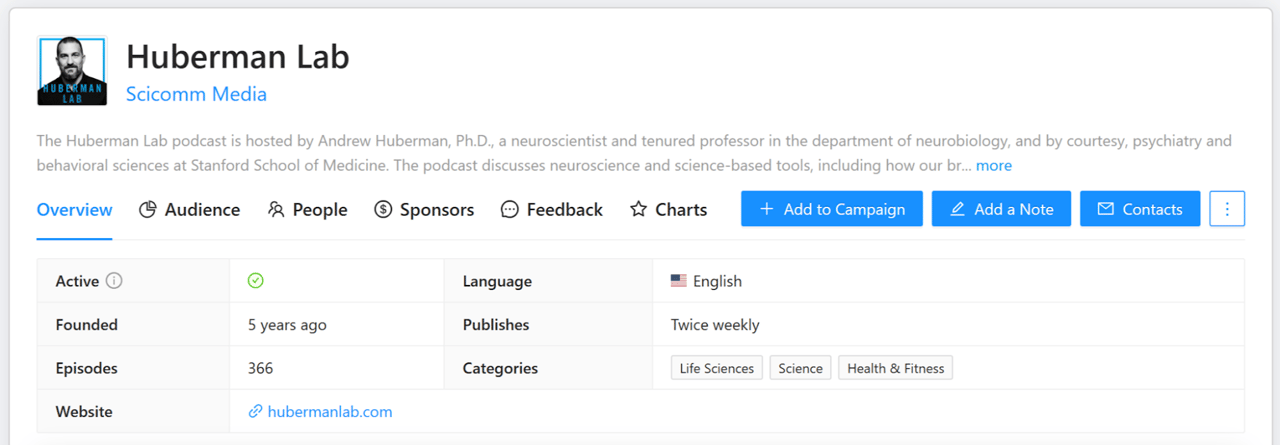
Rephonic is a research database built around the pitching workflow: which shows are worth appearing on, sponsoring, or studying. Less about alerting, more about deciding which shows reach the right listeners.
Layer covered: research and outreach rather than mention alerting.
Key features:
3M+ shows with audience size estimates
Listener demographics and podcast metrics that show who actually listens
Host and producer contact details
Charts data from Apple Podcasts and Spotify
Best suited for: PR agencies and marketers booking guest appearances and planning sponsorships, especially anyone trying to reach the right listeners rather than the biggest raw number.
7. Critical Mention (Onclusive): best for broadcast-plus-podcast PR monitoring
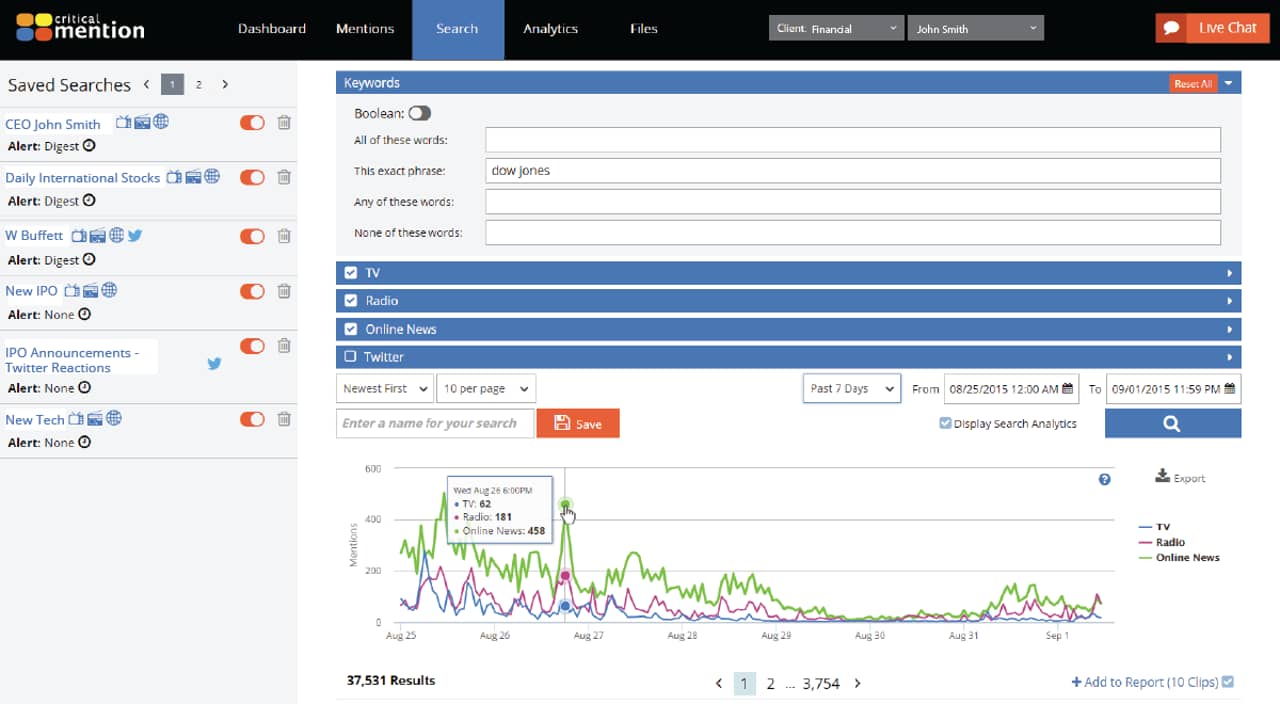
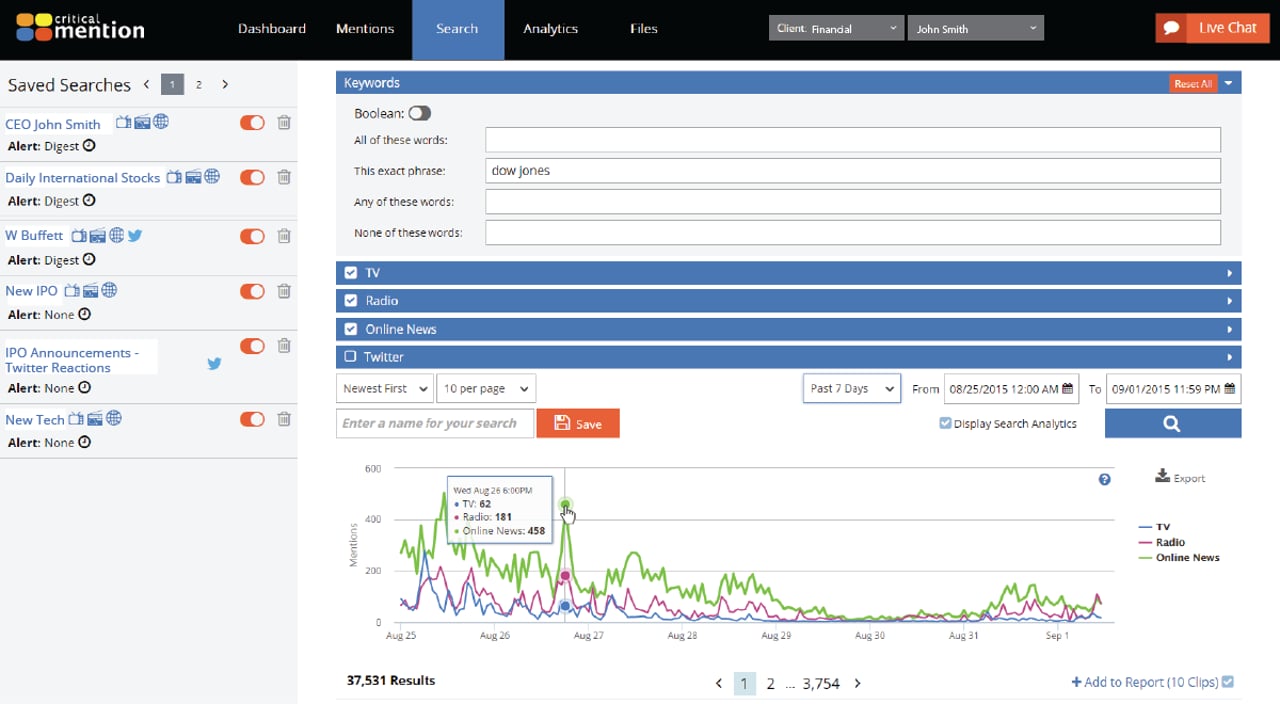
Critical Mention, now part of Onclusive, is a media monitoring service aimed at teams already tracking TV and radio. Audio slots in as another broadcast-adjacent source rather than a separate discipline.
Layer covered: in-show, within a traditional-media context.
Key features:
TV, radio, online news, and podcast tracking together
Exact-mention capture with clips, plus podcast insights on coverage
Media contact database
Reporting on earned media coverage
Best suited for: communications teams whose audio tracking belongs to a broadcast strategy.
Comparison table
Tool | Monitoring layer | Standout feature | Best suited for |
YouScan | Echo + video podcasts (YouTube, social, reviews, news) | Visual Insights + audience profiling | Brands measuring podcast-driven conversation |
Podscan | In-episode (transcripts) | Real-time transcript alerts | PR teams catching every spoken mention |
Podchaser Pro | In-episode + research | 5.5M+ show database | Media planners and advertisers |
Brand24 | Cross-platform mentions | AI-assisted reporting | SMBs and lean teams |
Meltwater | In-episode + news | Unified media intelligence | Enterprise comms teams |
Rephonic | Research / outreach | Audience + contact database | Guest booking and sponsorships |
Critical Mention | In-episode + broadcast | TV/radio/podcast in one | Broadcast-first PR teams |
Check every layer and feature claim on the vendor's site before buying, and get pricing from their pricing page rather than any comparison article. This one included.
How to build a workflow that gives you the complete picture
A working setup has five steps: define your terms, set in-episode alerts, track the echo, analyze what comes back, report it. Step three is where most stacks fall apart, because alerting is what vendors sell hardest, and measuring the spread is what nobody asks about in a demo.
Define what to track. Brand names, executives, products, campaign terms, competitors, including misspellings and phonetic variants. Transcripts and social posts both mangle brand names creatively.
Set up in-episode alerts in a transcript-capable product for audio-only shows, tuned to minute-level speed for anything crisis-relevant. The rest can run daily; nobody needs a 6 am ping about a friendly mention.
Track the echo with a social listening topic covering the show's name, host, and episode topics across YouTube, social platforms, forums, and reviews. In YouScan, the AI Query Assistant builds that query from plain language, so nobody hand-writes Boolean operators to find relevant mentions.
Analyze, don't just collect. Score sentiment, measure share of voice, profile the audience around each show, and how those podcast mentions performed. A pile of relevant mentions with no analysis is a to-do list, not valuable insights, and it won't support data-driven decisions when someone senior asks.
Act and report. Reply where it helps, chase the guest and sponsorship openings, the data surfaces, and report reach and sentiment monthly. That's how audio stops being the channel nobody can put a number on and starts informing PR strategy like every other source.
Revisit the query set quarterly. Your PR strategy shifts, competitors rebrand, and the shows that matter to your target audience change faster than most media monitoring needs get reviewed.
The bottom line
A spoken mention lives in two places: the episode and the conversation it creates. Only covering both gives the complete picture. Transcript search for the words, social listening for the spread. Build that podcast monitoring track record over two quarters, and the value stops being arguable.
Cover one layer, and you'll misjudge what audio does to your brand reputation, in both directions. Plenty of teams get more value here than their reporting shows, which is its own problem come budget season.
Work out which layer your gap is in, then fill the other on purpose. Teams that stay ahead adjust strategies based on what they hear, rather than waiting for a text alert that was never coming.
If catching the right things in podcasts is your gap, book a YouScan demo and see what podcast-driven conversations about your business look like across YouTube, social platforms, and reviews.
FAQ
What is podcast monitoring?
Podcast monitoring is the practice of tracking mentions of a brand, product, person, or topic across podcast episodes and the conversations they generate online. Dedicated tools detect these mentions through transcript search, episode metadata, or coverage of video podcasts and social discussion, and analyze their reach, sentiment, and audience so brands can respond quickly, measure PR impact, and find sponsorship or guest opportunities.
How do I track brand mentions in podcasts?
Use two layers. First, set up alerts in a transcript-capable tool to catch mentions spoken inside audio episodes. Second, create a social listening topic tracking the show's name, host, and your brand across YouTube, social platforms, forums, and reviews to capture video podcasts and the discussion each episode generates. Together, the two layers show both the mention and its real-world spread.
What is the difference between podcast monitoring and podcast analytics?
Monitoring tracks what shows say about a brand: mentions, sentiment, and the conversations they spark. It's used by brands, PR professionals, and agencies. Podcast analytics tools track how a podcaster's own show performs: downloads, unique listeners, retention, and demographics. They're used by creators and networks. One looks outward at other people's shows; the other looks inward at your own.
Can social listening tools monitor podcasts?
Partially, and coverage varies by tool. Social listening platforms are strong at tracking video podcasts published on YouTube and the echo of that content: clips, social discussion, reviews, and press coverage, which often exceeds the original episode's reach. Catching mentions spoken inside audio-only episodes requires transcript search, which dedicated products specialize in. Many teams combine both for complete coverage.