Buffer vs Hootsuite: Which Tool Is Best for Social Listening in 2026?

Every social media manager hits this fork eventually. You need something to schedule posts across multiple social media platforms, and you also need to know what people are actually saying about your brand. Buffer and Hootsuite are the two names that surface first, and they're nowhere near equally good at the second job.
The short answer? Hootsuite does social listening. Buffer doesn't. Not "does it worse" — doesn't have it. Hootsuite's own comparison page marks social listening as a flat no for Buffer, and Buffer's own comparison agrees.
So that settles it. Except it doesn't. Hootsuite and Buffer have both shipped serious changes in 2026, and most Buffer vs Hootsuite comparisons are still answering a 2024 question. Hootsuite's listening isn't the product those articles describe, and the version bundled into the entry tier isn't the version you saw in the demo. Here's what's actually true right now.
What changed in 2026, and why most Hootsuite vs Buffer comparisons are stale


If you've read a Hootsuite vs Buffer piece in the last year, it probably told you Hootsuite Listening runs on Talkwalker and sits somewhere inside the main dashboard. Both halves of that are out of date. Any Hootsuite vs Buffer comparison written before this year is describing a product that no longer goes by that name.
Hootsuite has reorganised into five named products: Perch for publishing, Nest for the inbox, Parliament for employee advocacy, Wisdom for AI, and Lumen for listening. Hootsuite Listening is now Lumen, and it ships in two flavours that no feature table will show you.
Lumen Lite is the in-app version. Mentions, competitors, sentiment, reviews, and trend analysis, all viewable without leaving Hootsuite. Full Lumen is the enterprise-grade product: 150 million websites, 30+ social media channels, 239 countries, 24+ months of historical data, custom dashboards, and AI detection of brand mentions in images, video, and audio.
That gap matters more than any checkbox. When a sales deck shows you two years of sentiment analysis, you're looking at full Lumen. When you buy the $99 seat, you're getting Lite.
Buffer has been busy too. Its analytics were rebuilt as Insights in 2026, with a Takeaways feature that reads your social media performance and tells you what to do next. You can export as markdown straight into an AI model. Smart. Still not social listening.
Buffer and Hootsuite: what each one is actually built for
Buffer, and the free plan that keeps everyone around
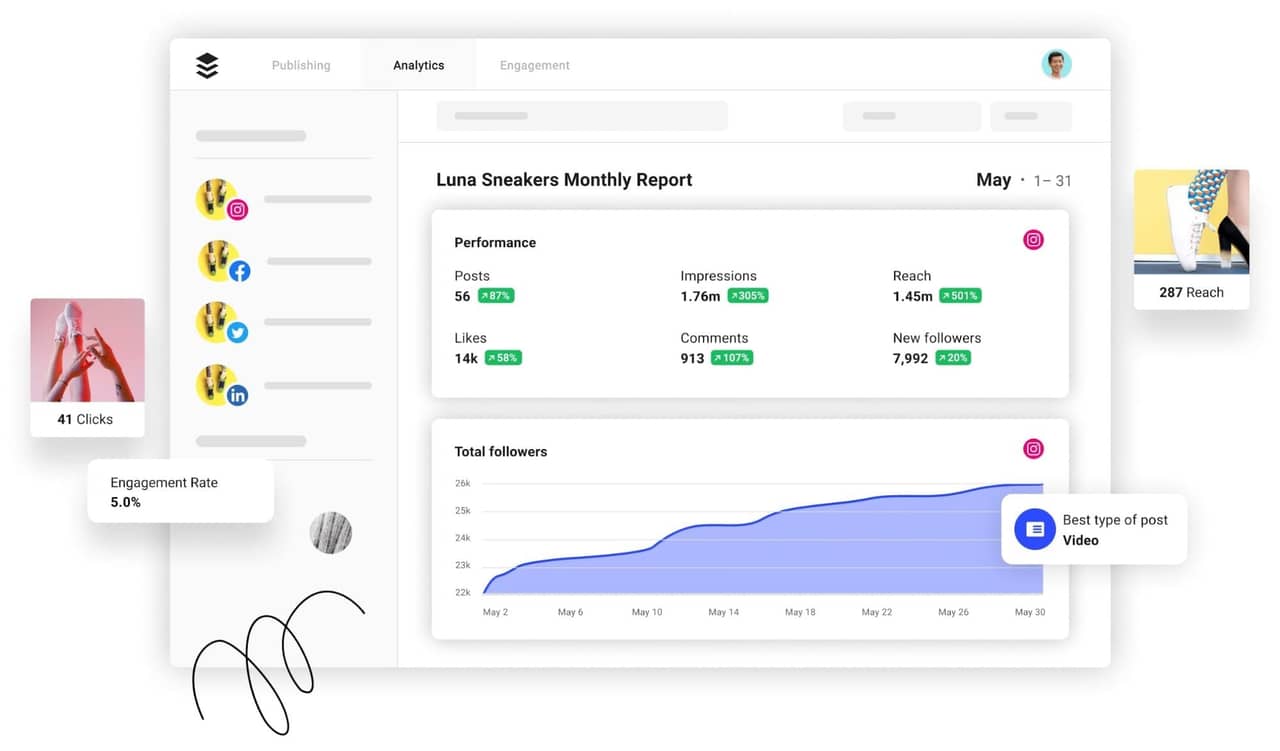
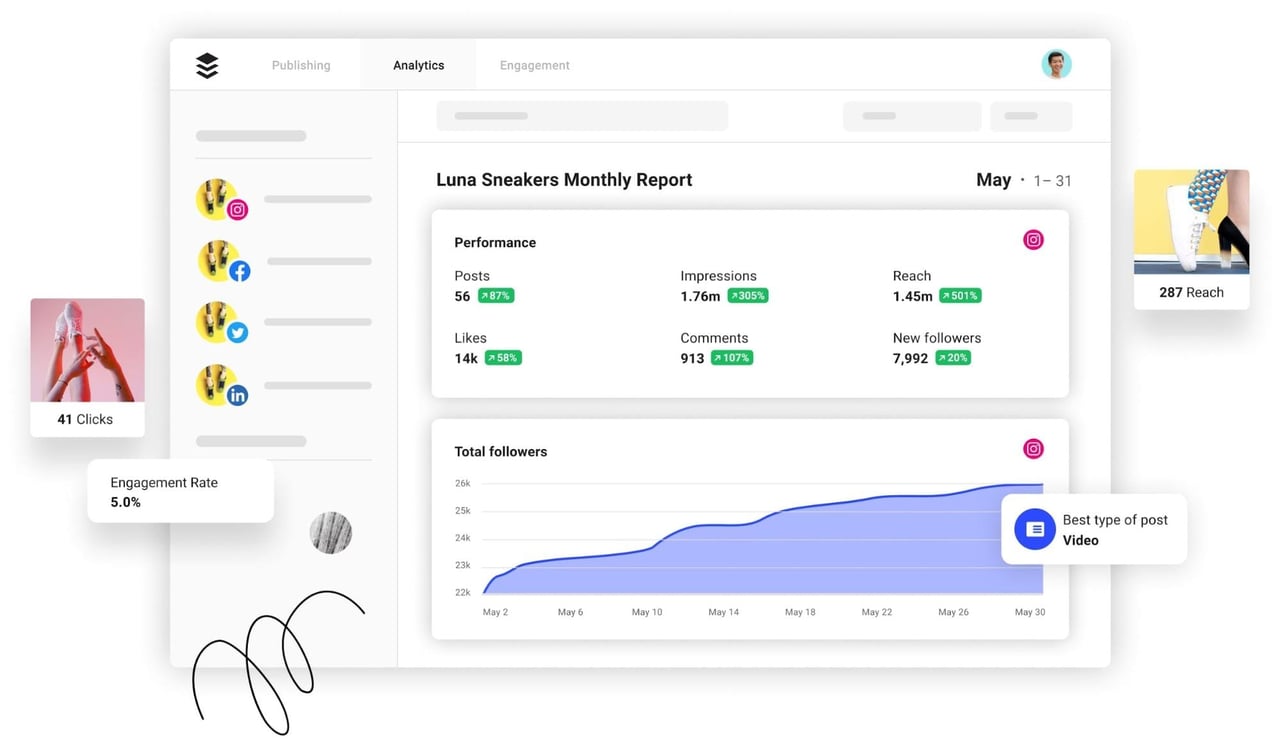
Buffer is a social media management tool for people who want to publish consistently without thinking about the tool. Clean interface, fast onboarding, very little to learn. Plenty of social media managers keep it around even after moving to something bigger.
Buffer's free plan is why so many creators and small businesses never leave. Three social channels, 10 queued social media posts per channel, the AI Assistant, and basic analytics, with no expiry date. Most competitors give you 14 days. Buffer gives you a free plan that just keeps working.
Where Buffer focuses its energy:
Straightforward scheduling across Instagram, Facebook, LinkedIn, X, TikTok, YouTube, Threads, Pinterest, Bluesky, Mastodon, and Google Business Profile
Content planning through Create Space, a real library for social media content creation ideas rather than a folder of drafts
A visual content calendar with channel-specific week and month views
Team collaboration with three access levels per channel, and you can add unlimited users on the Team plan
Insights, its rebuilt analytics tool, available even on the free plan
Two platforms Hootsuite can't touch: Mastodon and Google Business Profile. If either is part of your social presence, that's the whole conversation. And at $6 per channel on the Essentials plan, it's an affordable solution for anyone running a handful of accounts.
Hootsuite, and the suite that grew around the dashboard
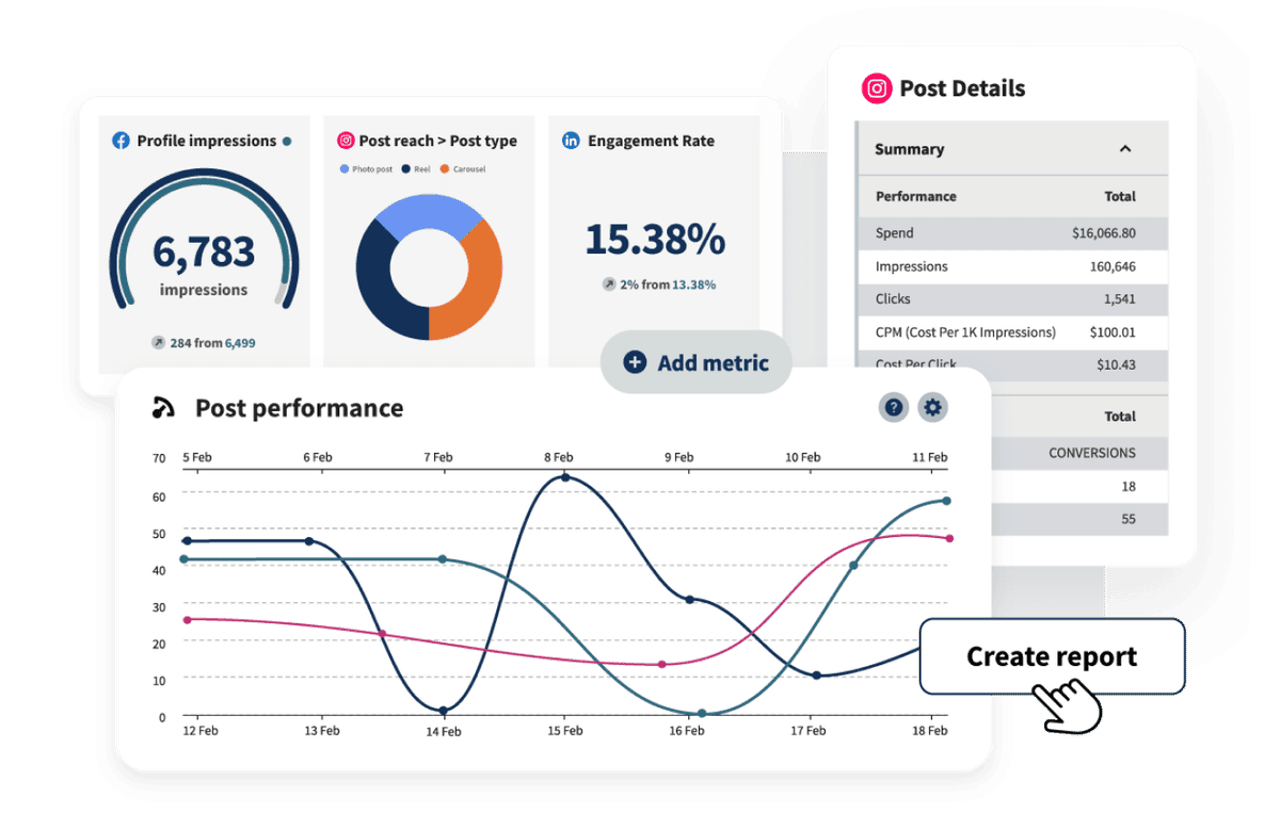
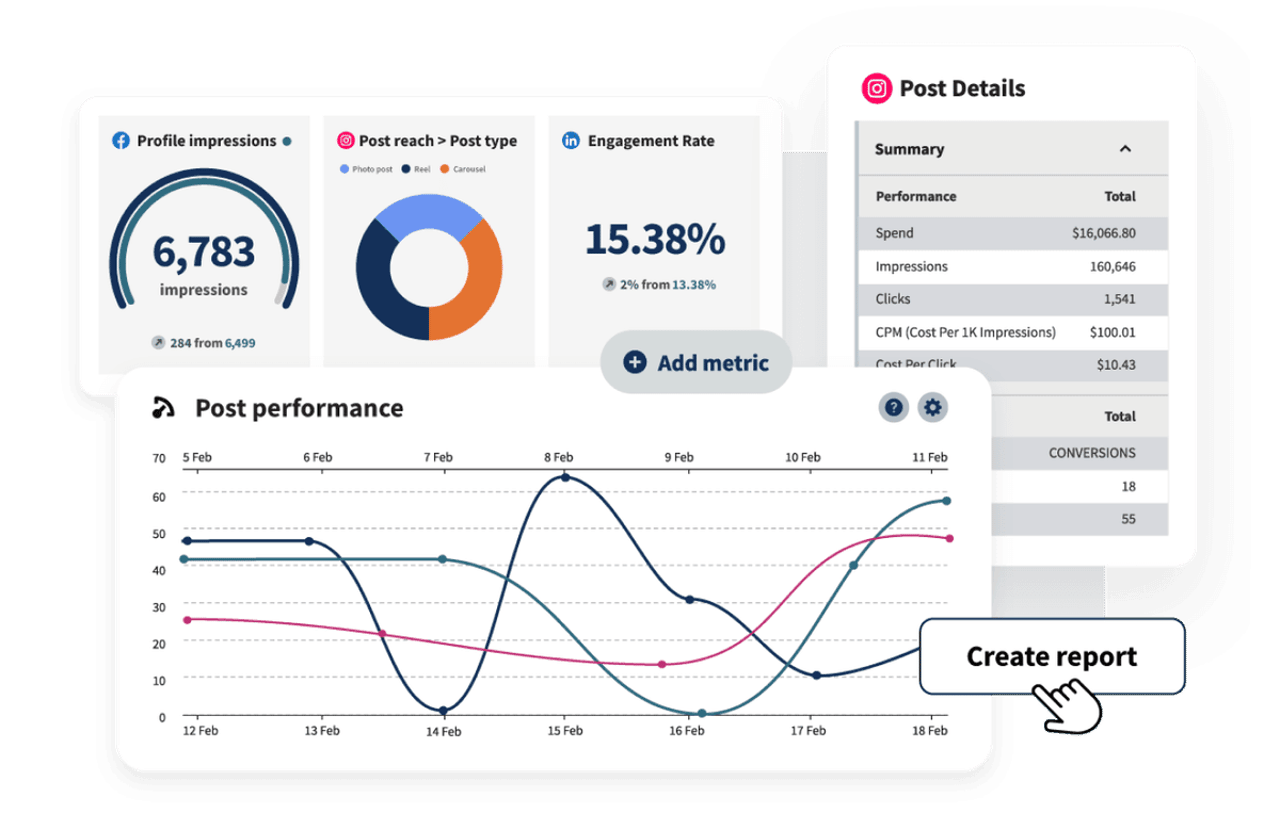
Hootsuite is a social media management tool primarily focused on the social media marketing team that needs governance, reporting, and paid plus organic posts in one place. It's heavier. You'll spend a fortnight learning it.
Key features you're paying for:
Bulk scheduling of up to 350 posts, on Advanced and Enterprise plans only
A unified inbox (Nest) pulling DMs, comments, mentions, and reviews from every network into one queue with routing and assignment
Ad campaigns managed beside organic content on Facebook, Instagram, LinkedIn, and X
100+ integrations, roughly ten times Buffer's library, including Google Analytics and Salesforce
Lumen, the only real social listening in this comparison
Competitive benchmarking against five rivals on Standard, twenty on Advanced
Worth flagging: Buffer doesn't do paid ads publishing at all. If you report on paid and organic posts together, Buffer can't give you that view. Hootsuite also handles multiple accounts under one organisation more gracefully once you're past a dozen social media accounts.
Social listening: where Buffer and Hootsuite stop being comparable
This is the part generic comparisons skip, so let's be specific about the key features people mean when they say social listening (and how social listening vs social monitoring differ). If any of these terms are new, our social listening glossary is a faster read than this section.
Audience insights and social sentiment
Buffer gives you audience data for the social media accounts you manage. Follower growth, engagement, top demographics, best-performing content types. Genuinely useful, genuinely limited. It tells you how your published content performed. It can't tell you what your target audience said about you somewhere you weren't posting.
Lumen tracks relevant conversations you didn't start, then applies sentiment analysis to them. Different question, different tool. The audience insights you get from listening are about the people talking, not the people clicking.
Brand health and crisis speed
Buffer has nothing here. No sentiment analysis, no alerts, no mention tracking. If a thread about your product starts climbing on Reddit at 2am, Buffer will not know.
Hootsuite will, through Lumen's real-time alerts on sentiment shifts and mention spikes. That's the strongest argument for Hootsuite over Buffer for anyone doing brand health tracking or crisis management with a small team and no analyst.
Competitor benchmarking, industry trends and market research
Buffer tracks your accounts. That's it. Any competitor analysis means exporting numbers and building your own spreadsheet.
Hootsuite splits this into two. Competitive benchmarking in social media analytics compares your accounts against rivals you nominate. Lumen goes wider, into share of voice, positioning, industry trends, and market research across news, blogs, forums and review sites. Standard caps you at five competitors, which rarely covers a category.
Visual listening, the gap nobody puts in a table
Here's the thing about brand conversation: an enormous share of it never mentions your name. Someone photographs your product on a café table, tags nothing, and writes nothing. Text-based monitoring counts that as silence.
Lumen does detect brand mentions in images and video, a real step up from where Hootsuite was two years ago. But detection and analysis aren't the same thing. Logo recognition, object and scene detection, and visual insights that tell you who's holding your product and in what context are a different discipline, and one that most social media tools treat as an afterthought.
Not sure how much of this you need? Our guide on how to choose the right social listening tool walks through what to ask a vendor before the demo starts.
Publishing: content calendar, bulk scheduling, and how you schedule posts
Both social media tools let you schedule posts to various social media platforms from one composer, tweak per channel, and queue in advance. You can manage content for multiple social media accounts side by side and schedule posts weeks ahead. The differences are small, but they bite.
Buffer's visual content calendar shows channel-specific posts in both week and month views, so the content calendar actually reflects where things are going. Hootsuite's gives you detail in week view, but the month view only shows post status, not which of your social media channels each post is going to. If you handle multiple clients, that's a daily irritation.
Bulk scheduling favours Hootsuite on paper: 350 posts per upload against Buffer's 100 per CSV. In practice, Buffer lets you upload as many files as you like, and Hootsuite locks the feature behind Advanced. Read that limit as a pricing decision, not a technical one.
Hootsuite also won't let you pick thumbnails for Reels or TikToks, or crosspost to Pinterest. Small things. They're also the exact small things that send social media managers back to the native apps.
AI tools: content creation with Buffer's AI assistant vs Hootsuite's Wisdom
Both bundle AI tools into the composer, and they've taken opposite bets.
Buffer's AI Assistant is on every plan, including free, with no cap. Brainstorm post ideas, repurpose, rewrite, as often as you want. Hootsuite's OwlyWriter is on paid plans with token limits, so you ration it. For pure content creation volume, Buffer wins.
Wisdom is the more interesting piece. It runs across every Hootsuite product, answers questions in plain language with citations, and reads Lumen's data. Ask why sentiment dropped last week, and it'll dig through the mentions for you. There's also a Lumen MCP, so you can pull listening data into ChatGPT or Claude directly. Few tools in this category offer that yet.
Buffer's AI assistant is better at writing a caption. Hootsuite's is better at explaining a number.
Engagement features, approval workflows, and team permissions
Buffer's Community tab handles comments and replies with AI-suggested responses and saved replies, plus a comment score per channel. It covers social media engagement well for a small team that just needs to keep audience engagement ticking over.
Hootsuite's inbox behaves like a support desk. Assignment, routing, tagging, conversation history, CRM-style contact notes. Automated routing rules sit on Enterprise plans.
In team management, the pricing structure decides everything. Buffer gives you approval workflows and unlimited users on the Team plan, with three permission settings per channel. Hootsuite has deeper approval workflows and far more granular permission settings, but every seat costs you again. A five-person social media team on Standard runs about $5,940 a year before anyone touches an advanced feature.
Pricing: what Buffer and Hootsuite cost in 2026
The pricing structure is the real dividing line. Buffer charges per channel. Hootsuite charges per user, no matter how many social media accounts you connect.
Buffer:
Free: $0, three social channels, 10 queued social posts each
Essentials: $5 per channel per month billed annually, $6 monthly
Team: $10 per channel per month annually, $12 monthly, unlimited users
Hootsuite:
Standard: $99 per user per month, 10 social accounts
Professional: $199 per user per month, unlimited social accounts
Advanced: $399 per user per month, approvals and routing
Enterprise: custom, and where advanced listening lives
Two users on two channels: $24 a month on Buffer, $198 on Hootsuite. That higher price point buys real capability. Be honest about whether you'll use it. Both offer a 14-day trial, and Hootsuite's needs no card.
Hootsuite and Buffer side by side
Feature | Buffer | Hootsuite | YouScan |
Social listening | No | Lumen Lite in-app, full Lumen on Enterprise | Core product, all plans |
Sentiment analysis | No | Yes, via Lumen | Context-trained, aspect-level, multilingual |
Visual/image analysis | No | Brand detection in image, video, audio | Logo, object and scene recognition plus visual sentiment |
Audience insights | Owned accounts only | Demographics plus conversation data | Demographics, interests, occupations across the open web |
Competitor benchmarking | No | 5 competitors on Standard, 20 on Advanced | Share of voice and brand comparison |
Scheduling | Yes | Yes | No |
Paid ads | No | Yes | No |
Free plan | Yes, 3 channels | No | No |
Entry price | $0 | $99/user/month | $499/month |
What small businesses and small teams should actually pick
Pick Buffer if publishing is the job. You're a creator, a solopreneur, or one of the many small businesses where one person owns the entire social media presence. You want straightforward scheduling, a decent content calendar, and a bill that doesn't scale with headcount. Start on the free plan and upgrade when you need more social channels.
Pick Hootsuite if you need a social media management tool for a team with paid and organic in the same reporting line, you need approval workflows and audit trails, and you want basic listening without buying a second platform. Budget for the seats.
Pick neither if listening is the actual priority. Hootsuite and Buffer are both strong social media management products, so that's not a swipe at either of them. It's what both companies say about themselves: Buffer doesn't claim to do it, and Hootsuite puts the serious version behind a custom quote.
A social listening alternative when neither one fits: YouScan
Buffer and Hootsuite are social media management solutions with listening attached at different depths. If your problem is understanding a market rather than filling a queue, you're shopping in the wrong category. Our roundup of Hootsuite alternatives covers the broader field, and the guide to social listening tools breaks down what separates them.
YouScan is built the other way around. It doesn't schedule anything. What it does is track conversations across social media platforms, forums, review sites, blogs, and news, run brand sentiment analysis trained on emoji, slang, and sarcasm rather than generic positive/negative scoring, and analyse images and video for logos, objects, and scenes.
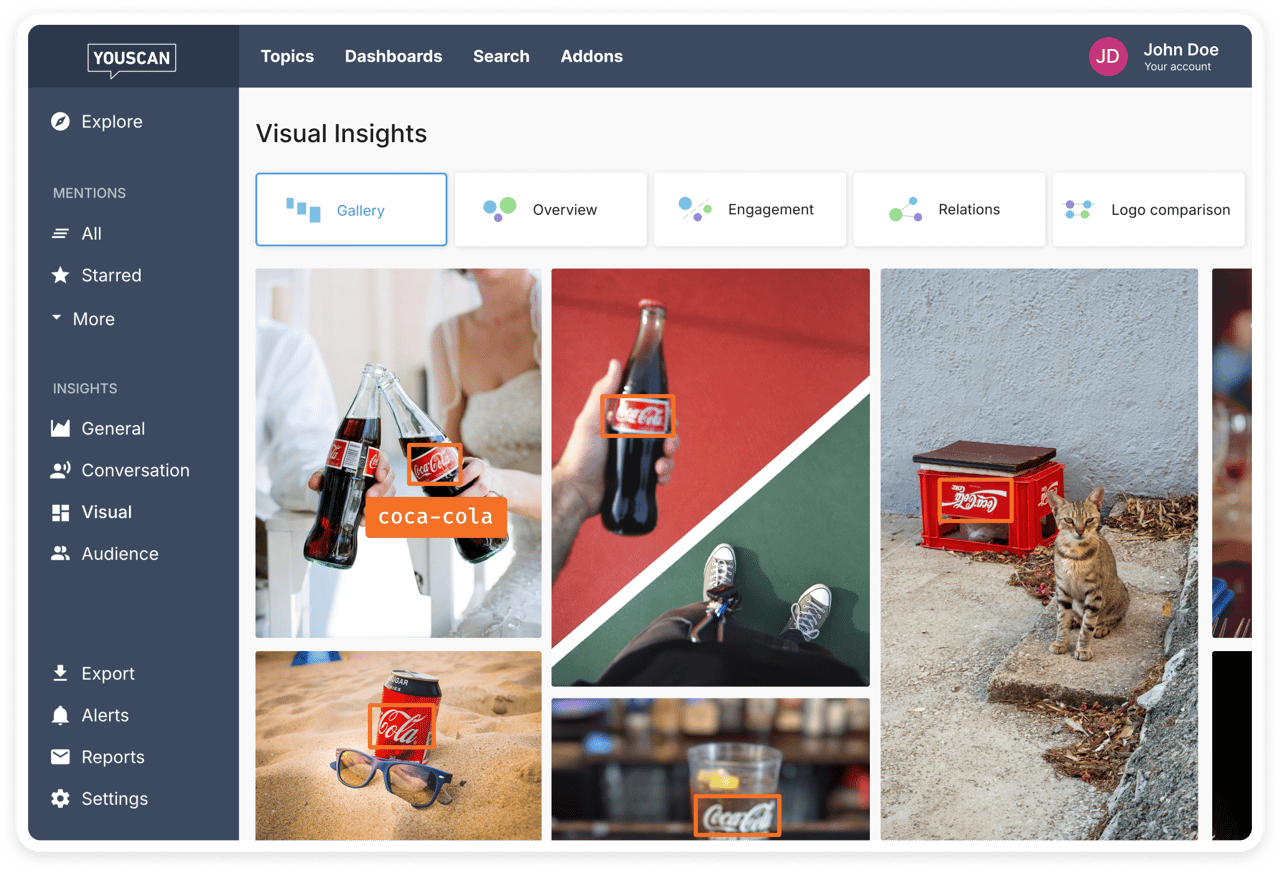
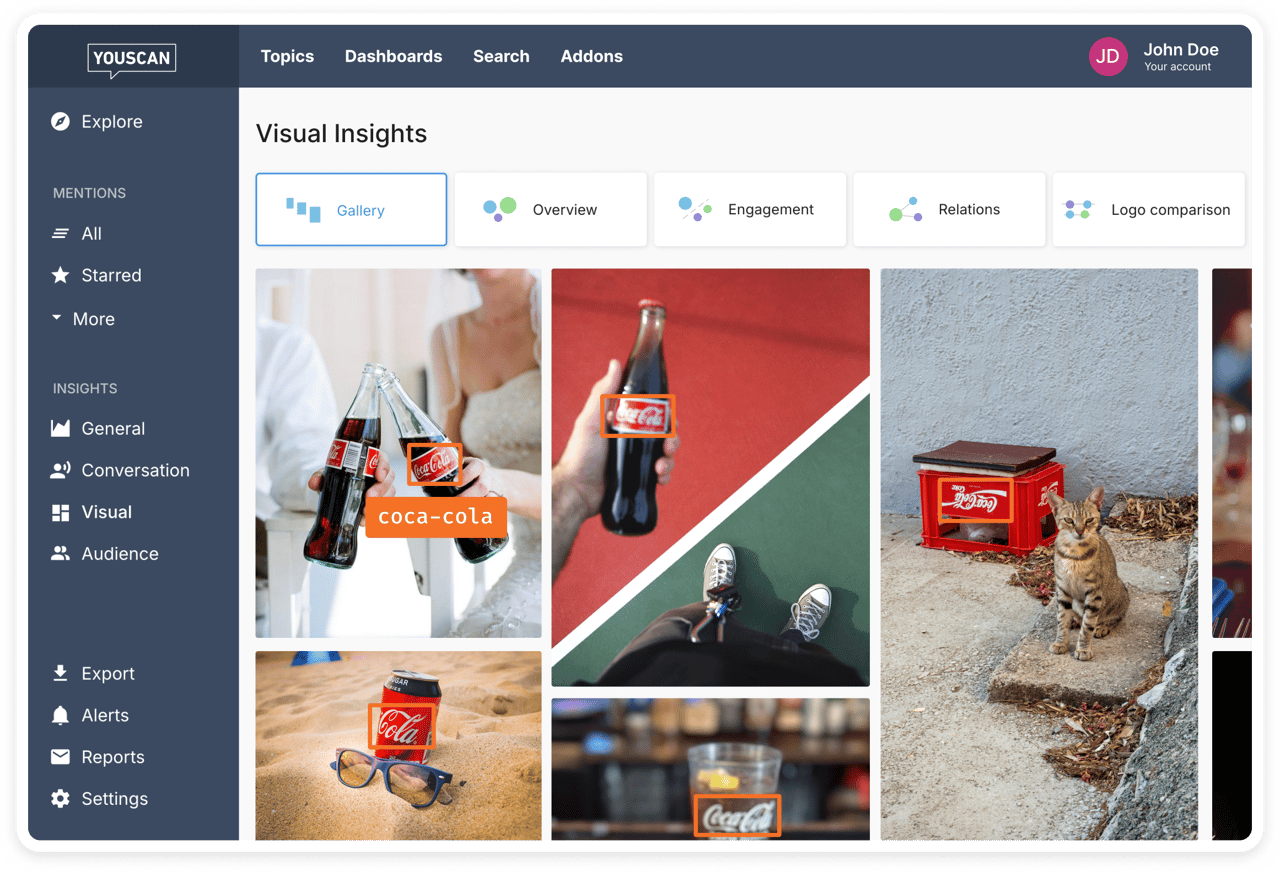
Insights Copilot answers questions about your data in plain language, the way Wisdom does for Hootsuite, but against a deeper source set with AI-powered sentiment analysis underneath. And YouScan now covers Moltbook monitoring.
Want to see what listening output looks like before you talk to anyone? The social listening dashboards library is public. Or
request a demo and bring your own brand name to it.


FAQs
What is the difference between Buffer and Hootsuite?
Buffer is a social media scheduling tool priced per channel, built for creators and small teams, with a permanent free plan and no listening. Hootsuite is a per-seat suite covering publishing, a unified inbox, paid ads, employee advocacy and social listening through Lumen.
Which is better, Buffer or Hootsuite?
Depends entirely on the job. For publishing on a budget across multiple networks, Buffer wins on price and usability, especially for small businesses and small teams. For brand monitoring, competitive benchmarking, ad campaigns and multi-team approval workflows, Hootsuite wins. Neither is the strongest option if social listening is your primary requirement.
Does Buffer have social listening?
No. Buffer's Community feature handles comments and mentions on your own connected accounts, but it doesn't monitor brand conversations across the wider web and it has no sentiment analysis. Both companies confirm this on their own comparison pages.
What is the best Buffer and Hootsuite alternative for social listening?
Look for coverage breadth, sentiment accuracy in your languages, and visual analysis. YouScan covers all three, with logo and object recognition in images, aspect-level sentiment analysis, and an AI agent that answers questions about your mention data. A dedicated listening platform will generally outperform the listening module bolted into a scheduling suite.