Corporate Social Responsibility Examples That Actually Move the Needle


Most corporate social responsibility pages are dire. Stock photos of people in hard hats. A 2050 net-zero pledge buried under three layers of nav. Quotes from a Chief Sustainability Officer who clearly didn’t write them.
The good ones aren’t like that. They tell you what the company is doing, what it costs, and what’s hard about it. So that’s what this is — a tour of corporate social responsibility examples that hold up to a second look, plus a few cautionary tales for the brands tempted to take a shortcut.
So what does corporate social responsibility actually mean
Quick definition, then we move on. Corporate social responsibility is when for-profit companies bake social and environmental initiatives into how they operate, rather than bolting them on for the press release.
Most CSR work falls into a handful of buckets — environmental sustainability stuff (carbon emissions, renewable energy, sustainable materials), philanthropy (donations, grant recipients, partnerships with nonprofit organizations), ethical practices in the supply chain (fair wages, workers rights, ethical sourcing), and worker well-being initiatives. The strong programs cover more than one. Patagonia isn’t only sustainable — it funds environmental issues advocacy and backs local nonprofits too. Lego’s working toward carbon-neutral operations and rebuilding its business models around sustainable materials and renewable energy initiatives. Pick a lane, sure, but don’t only have one.
Why does any of this matter to a business? Two reasons, and the second one is the one that pays the bills. 62% of consumers expect brands to commit to positively impacting society — fine, that’s the surface stat. The deeper one:
millennials and Gen Z will spend more when a company’s strategy lines up with their personal values. And inside the company itself, CSR efforts pull on employee retention, employee engagement, and brand reputation — three things every CFO eventually pretends to care about. Deloitte’s global societal impact survey puts it at 93% of executives now seeing their companies as stewards of society. Whether you buy that number or roll your eyes at it, the direction is real.
CSR focuses where profit-making and improving society overlap. Find the overlap. The rest is theatre.
Six corporate social responsibility examples worth copying
Lego’s commitment to a carbon neutral future
Lego joined the WWF Climate Savers programme back in 2014 and hasn’t really let up since. The big public commitment now: all core products and packaging from sustainable materials by 2032, single use plastic packaging out, plant-based alternatives in. There’s real money behind it — offshore wind investments, renewable energy initiatives running across production sites. The sustainable supply chain audits push environmental standards down to raw-material partners, and that’s where it actually gets interesting, because that’s the only place a toy company really has leverage on carbon.
There’s also a community engagement side that most people don’t see. The LEGO Foundation funds early childhood learning in local communities all over the world, with grant recipients ranging from refugee education programs to play-based learning research. Tackling global warming and improving society from two different angles, basically.
The smart bit: Lego didn’t pivot the brand. They didn’t suddenly become “the green toy company.” They kept making toys kids begged for, and the CSR program runs alongside that. That’s how you integrate CSR work that actually survives the next recession.
Patagonia: the prime example of going all in
Patagonia is the one everyone cites, and honestly, it’s earned. Visit their site, and you get told to repair your gear before you’re even shown how to buy more. They’ve pledged 1% of sales to environmental causes since 1985 — Yvon Chouinard called it an Earth tax — and on Black Friday, they donated the entire $10 million they took in that day to grassroots environmental groups. They expected $2 million. They got five times that. They gave it all away anyway.
Then there was the Facebook thing. They pulled all paid ads off the platform over how it was handling misinformation around climate change and democracy, and they didn’t tiptoe around the announcement. Plenty of brands say they care about the company’s values until those values cost real ad spend. Patagonia ate the cost.
.png)
.png)
The supply chain side gets less press but is arguably more impressive — Fair Trade-certified factories, recycled materials almost everywhere, transparent reporting on carbon footprint and carbon impact. If you’re studying these companies, this is also a good case to put under a brand monitoring lens, because the customer response to bold positions like Patagonia’s is itself a master class.
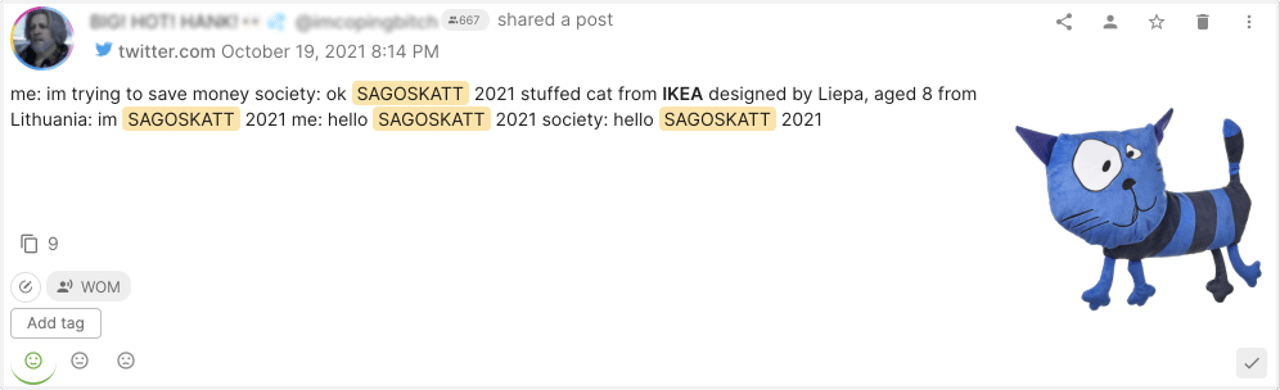
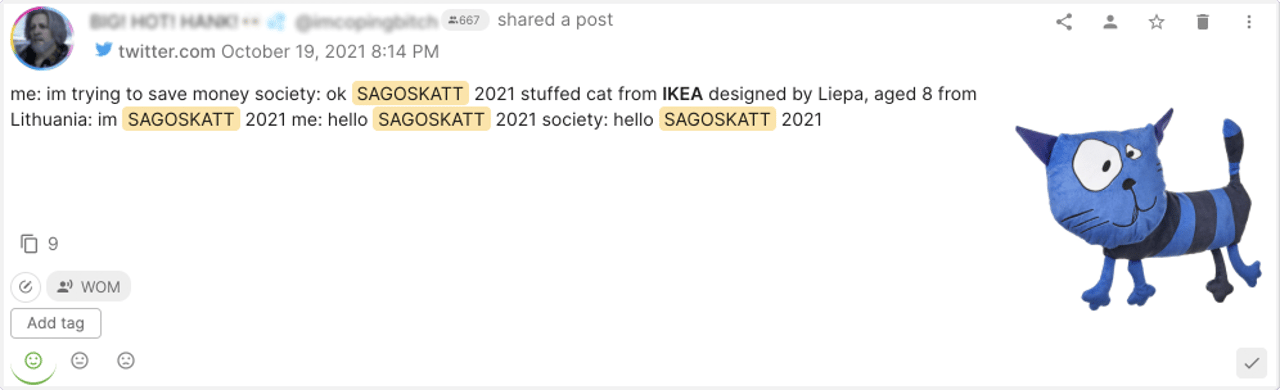
Ikea and the SAGOSKATT collection
This one’s clever. Every year, Ikea runs a children’s drawing contest. Five drawings get picked, get turned into actual stuffed toys, and 100% of the purchase price goes to Save the Children. Tiny investment from Ikea, real money for nonprofit organizations, and the customers get something genuinely sweet to give their kids. Community engagement, employee engagement, and brand reputation all benefit from one neat little initiative.
Beyond the toys, Ikea’s been pouring money into renewable energy — solar panels on stores, big wind farm investments, climate-positive goal by 2030. They also run workers' rights and fair wages programs across their supply chain. None of these are headline-grabbers in the way Patagonia’s stunts are. They’re just consistent. Sometimes that’s the point.
Nike’s recycled materials push
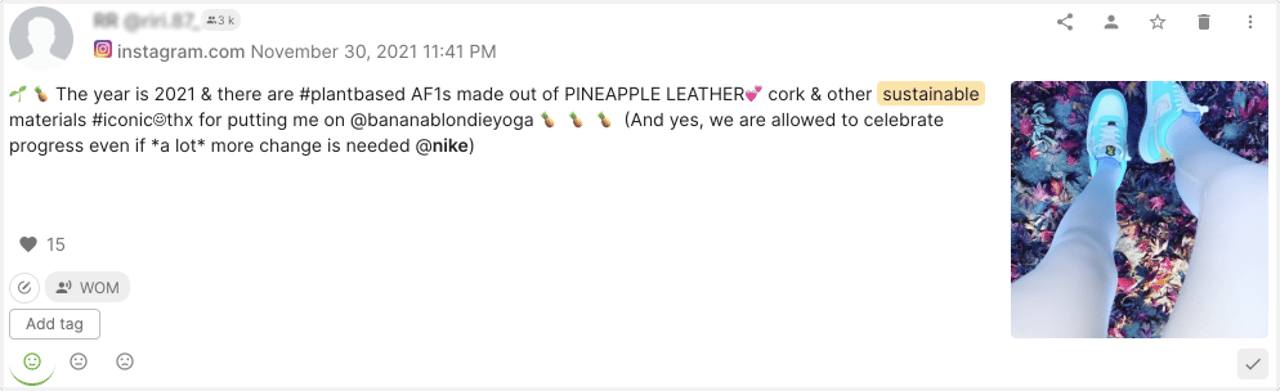
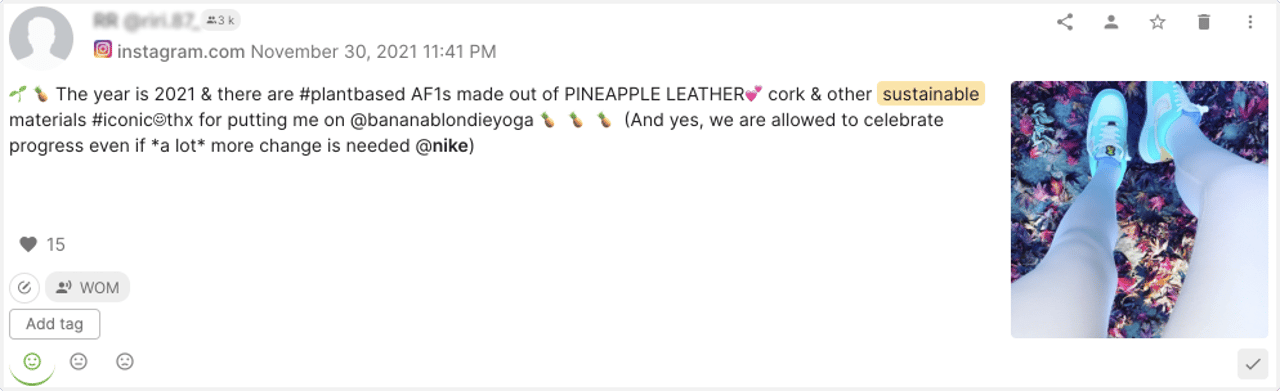
Nike’s Flyknit uppers contain six to seven recycled plastic bottles each. Add Flyleather, recycled polyester, sustainable cotton — the carbon footprint per shoe drops. Not to zero. But measurably. The strategy reduces carbon emissions, cuts material costs over time, and gives Nike a story for socially responsible buyers without forcing them to give up performance, which matters when you’re selling to athletes.
The Community Impact Fund is a quieter piece — it supports local nonprofits and community projects focused on getting kids active. Nike also matches employees’ volunteer hours and donations, so volunteer work doesn’t just live in HR slide decks. Tying employees' time to community service is the bit that turns a corporate program into something staff actually want to be part of.
The template’s clean: change your inputs first, market it second.
TOMS and the one-for-one model
TOMS is the prime example of mission-as-product-strategy. Every pair of shoes sold meant a pair given — over 60 million shoes by now. They expanded the model into eyewear, coffee that paid for clean water access, and bags that supported safe birth services. The strict one-for-one has been refined since, but the original logic still gets cited everywhere because it works: tie a real, countable outcome to every transaction.
The lesson for any other socially responsible companies thinking about a similar structure — pick a metric, pick a number, and don’t bury it. Vague “we give back” pages age into nothing.
HBO Max’s “Scene in Black”
Different category of CSR, this one. HBO Max launched Scene in Black to give Black storytellers a real platform inside the streaming service. The hashtag racked up around 200,000 social engagements in the first few months, but more importantly, it kept producing content. It wasn’t a campaign that ran and then died.
The thing that separates it from the dozens of similar-sounding launches that flopped is that it had editorial budget and creator support behind it, not just a logo treatment. That’s the line between a CSR initiative and a hashtag with a press release attached.


The quieter CSR initiatives that actually do the work
The headline cases get the attention. Most CSR work doesn’t.
Take employee volunteering programs. Xerox’s Community Involvement Program has funded over 18,000 employee-led community projects, which is a frankly absurd number that nobody talks about. Salesforce’s 1-1-1 model — gives employees time off for volunteer hours and community service — has been quietly imitated for years. Companies running mentorship programs in local communities or partnering with local nonprofits to extend their reach are doing more, dollar for dollar, than most flashy campaigns. None of this costs Super Bowl money. It builds something Super Bowl money can’t.
Mental health and employee well-being have moved from “perk” to “expectation” so fast that companies still treating them as bonuses look out of step. Microsoft, Unilever, Bumble — they’ve all put money into mental health programs that boost engagement and improve employee retention, full stop. Burnout-driven turnover costs money. Worker well-being initiative spending pays itself back. That’s the unglamorous truth.
Then there’s sustainable farming and ethical sourcing, which is where most carbon impact and most workers' rights issues actually live. Ben & Jerry’s sources from suppliers committed to farmer equity and fair wages. Starbucks runs C.A.F.E. Practices for coffee growers. Unilever’s Sustainable Living Plan reaches into the tea-leaf supply chain audits. The supply chain is where the leverage is. It’s where the unglamorous wins are.
Renewable energy and green spaces are bigger-picture stuff. Companies are installing solar panels onsite, signing power purchase agreements for renewable energy, and funding urban green spaces and air quality projects. Google has matched 100% of its annual electricity use with renewable energy purchases for years now. Salesforce, Apple, Microsoft — same playbook. None of this is symbolic. These commitments shift demand curves for the entire utility sector. That’s policy-level CSR pretending to be corporate housekeeping.
And quietly, the diversity and inclusion stuff — diverse hiring, pay-equity audits, supplier-diversity programs — changes who gets economic opportunity. The companies treating this as part of their core CSR program, not bolted on as a separate “DEI” track, are seeing better employee retention and stronger brand reputation among younger workers. Are the companies treating it as a separate track? Mostly cutting it the moment things get tight.
The pattern across all of this: pick the lane that fits your business, commit a budget line, and measure outcomes. CSR initiatives without a budget line are press releases.
How to integrate CSR without it feeling like a stunt
Pick something connected to what you actually do. A logistics company should be tearing into the carbon emissions of its fleet, not running a coding bootcamp. The closer your CSR focuses sit to the operational reality of your sustainable practices, the more the impact compounds.
Set numbers. Then publish them. Carbon neutral by when? How many volunteer hours? What percent of single-use plastic packaging is gone? How many grant recipients? Vague goals are how greenwashing happens — usually accidentally, but it doesn’t matter, because the result is the same.
Encourage employees to actually be part of it. Programs nobody inside the building cares about don’t survive a budget cut. The CSR programs that last are the ones where staff get a say — choosing the grant recipients, picking the matching gift causes, bringing in their own personal values. That’s how a corporate initiative starts feeling personal.
And here’s the one that gets ignored most: build CSR into your business models, not alongside them. Patagonia’s repair program isn’t a side hustle. It’s part of how the brand actually sells gear. Lego’s sustainable materials work isn’t a marketing line — it’s procurement. The companies winning at CSR aren’t running two strategies in parallel. They’re running one.
Last thing — tell the story through what customers are saying, not press releases. This is where social listening earns its keep. YouScan’s social listening dashboards let you watch how people are actually discussing your CSR efforts, what’s landing, what’s being read as performative, and where the cynicism’s pooling. If you’re not measuring sentiment around your social and environmental initiatives, you genuinely don’t know whether they’re working.
Greenwashing: where good CSR goes to die
The flip side. Plenty of corporations announce socially responsible initiatives, take the PR win, and then change exactly nothing. That’s greenwashing, and consumers are getting much better at spotting it. The Changing Markets Foundation’s
Synthetics Anonymous report flagged 96% of H&M’s sustainability claims as misleading or unsubstantiated — the worst score in the study. And the kicker: H&M’s “Conscious Collection” had 72% synthetic fibres against 61% in their regular fast-fashion line. The “conscious” line was the less sustainable one. ASOS and M&S landed on the same list, 89% and 88% of their claims flagged respectively.
Then there’s the cultural greenwashing equivalent — Pepsi’s 2017 Kendall Jenner ad. Trying to ride Black Lives Matter momentum badly. The backlash was severe enough that Pepsi pulled the spot inside 24 hours and apologized. Reading the room is its own discipline, and Pepsi failed it spectacularly. Worth studying as a reputation crisis case — proper brand sentiment analysis on the campaign concept would have caught the building backlash before the spot ever shipped.
If your CSR program can’t survive a journalist comparing your claims to your actual supply chain audit, it isn’t a CSR program. It’s a liability waiting for a slow news week.
Tracking how your CSR efforts actually land
Here’s the operational point most articles skip. You can launch the best CSR program in your category and still lose the narrative, because sentiment shifts faster than CSR pledges age. A commitment that played beautifully on launch day can become a punchline if you miss a deadline two years later. A solid online reputation management approach catches that drift early enough to do something about it.
This is the case for social media listening, in plain terms. Tools like YouScan pull conversations from across social platforms, forums, review sites — including newer ones via Moltbook monitoring — so you can see how your sustainable practices, community engagement, and corporate social responsibility program are actually being discussed. If the terminology’s unfamiliar, the social listening glossary is a decent place to start, and the comparison of social listening tools lays out what to look for if you’re shopping around.
What you’ll catch: greenwashing accusations before they hit a journalist’s inbox. Which examples of corporate social efforts resonate with which audiences? The gap between what you announced and what people actually remember is usually wider than the boardroom thinks.
That feedback loop matters more than the launch. CSR is judged in years, not quarters, and the brands that keep winning are the ones tracking sentiment closely enough to course-correct mid-flight. The brands that lose are the ones that launched, looked away, and assumed everything was still landing.
YouScan can help. Try it out for free.


FAQs
What are the main types of corporate social responsibility?
The four common categories are environmental (carbon footprint, renewable energy, sustainable materials), philanthropic (donations, grants, partnerships with nonprofit organizations), ethical (fair wages, workers rights, ethical sourcing across the supply chain), and economic or governance-focused (transparency, responsible investing). Most strong CSR programs touch at least two. Some companies also break out diversity and employee well being as a separate fifth category.
Why is corporate social responsibility important for business?
Beyond the obvious — improving society and reducing environmental impact — CSR drives brand reputation, customer loyalty, and employee retention. Research from Deloitte shows 93% of business leaders see companies as stewards of society, and consumer studies consistently show buyers will pay more for socially responsible companies. CSR efforts also reduce regulatory and reputational risk, which is increasingly material as climate disclosure rules tighten globally.
How do small companies do CSR without a Patagonia-sized budget?
Start with what’s local and lean. Partner with local nonprofits. Run employee volunteering programs that cost employees time, not company cash. Switch one input — packaging, energy supplier, a single supplier in your sustainable supply chain. Document it honestly. Small, real CSR initiatives beat big, vague ones every time. A bakery sourcing from local farms or a SaaS company giving staff paid volunteer hours is doing real CSR — no global summit required.
What’s the difference between CSR and ESG?
CSR is the broader, often voluntary set of practices a company adopts to operate ethically. ESG (environmental, social, governance) is the measurement framework investors use to evaluate those practices, with specific metrics and disclosures. CSR is what you do; ESG is how the market scores it. Most large companies now run both — CSR programs internally, ESG reporting externally — and the two should tell the same story.