Best Cision Alternatives in 2026: 8 Tools Compared by What They're Actually Built For

Here's how buying Cision usually goes. You hop on a call, then another one. You get a custom quote and an annual contract. According to deal data from Vendr, a site that tracks real software purchases, the typical buyer pays about $12,625 a year, and that's before a single mention gets tracked. A year later, your boss asks: "What is this tool actually doing for the team?"
That question is why so many PR teams start exploring alternatives. Cision does a lot: a media database (think of it as a giant phone book of reporters), press release distribution through PR Newswire, media monitoring, and analytics. Most teams use one or two of those things but pay for all of them.
Here's the problem with most Cision alternatives roundups: they act like every tool does the same job. But a tool for pitching reporters and a tool for tracking what people say about you are two different things. So this guide sorts the top Cision alternatives by what they're actually built for: 8 Cision alternatives, honest pros and cons, and a simple table to help you pick.
Why PR teams look beyond Cision
Most PR professionals don't leave Cision because it's terrible. They leave because the platform's results stop matching its price. G2 reviews of CisionOne show where it hurts most, and that's usually where the search for Cision alternatives starts.
What G2 reviewers complain about most
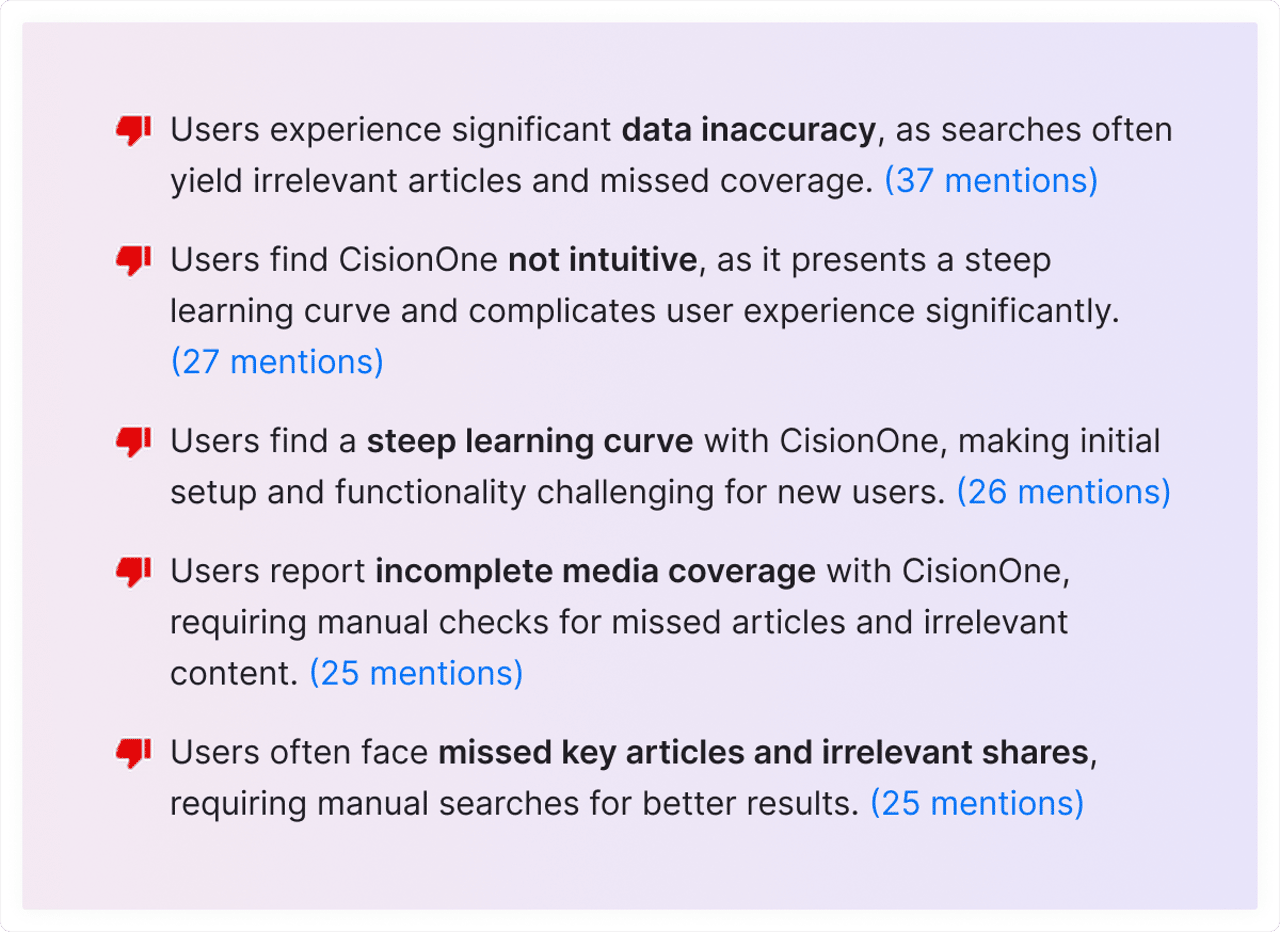
G2 sorts review complaints into themes and counts the mentions. As of September 2026, the top five fall into two buckets.
Messy or missing results: data inaccuracy is the most common complaint. Reviewers say searches pull in irrelevant articles and miss real coverage. Incomplete media coverage and missed key articles (25 mentions) tell the same story: people double-check by hand, the exact job they paid the platform to do.
Hard to learn: 27 mentions say CisionOne isn't intuitive, and 26 point to a steep learning curve, especially during setup. If new teammates need weeks to learn a new platform, that's a hidden cost too.
Cision pricing starts with a sales call
There's no price list. You book a demo and wait for a quote, usually tied to annual contracts. The same Vendr data shows deals ranging from around $3,150 to over $30,000. Add more users, extra features, or press release sending, and scaling higher gets expensive fast.
That high cost hurts more when money is tight. Gartner's 2025 survey found marketing budgets stuck at 7.7% of company revenue, with 59% of marketing leaders short on money for their plans. "While marketing budgets have stabilized, marketing spending has stalled at a level that falls short for many CMOs," said Ewan McIntyre, Chief of Research at Gartner. So when your boss looks for things to cut, a pricey tool you half use is first in line.
Paying for everything to use one thing
This one matters more than most people think. Many comms teams only need media intelligence (monitoring and analytics). Others only need a media database to pitch reporters. Cision sells one big package, so you pay for both.
What to look for in the best alternative to Cision
The best alternative to Cision depends on your main job. There are three: reaching out to journalists (a contact database plus press release distribution), tracking what the media and the public say about you, or getting everything from one big vendor. No single platform does all three equally well. Most Cision alternatives are good at one thing, and that's fine. Pick your job first, then compare price, sources covered, AI capabilities, and how easy each one is to learn.
Media database or monitoring? Pick the job first
"PR software" covers two different kinds of work. The first is reaching out: building a media list, pitching journalists, and sending press releases. The second is listening: catching media mentions, measuring your earned media (free coverage from news and people talking about you), and spotting trouble before it lands in the C-suite's inbox.
A media database is only as good as its contact list, so ask how often it's checked. A listening platform is only as good as the places it watches, so ask what it covers besides online news. (New to these terms? The social listening glossary explains them in plain English.)
That second question matters more every year. In the Reuters Institute's Digital News Report 2025, lead author Nic Newman writes that "an accelerating shift towards consumption via social media and video platforms is supercharging a fragmented alternative media." Put simply, 54% of Americans now get news from social and video apps, more than from TV (50%) or news sites (48%), for the first time ever.
People also trust their own circles more than big institutions. "Insularity has emerged as the next crisis of trust," said Richard Edelman about the 2026 Edelman Trust Barometer. It found 7 in 10 people won't trust someone with different values or news sources. What does that mean for you? A lot of brand reputation monitoring now has to happen in comment sections, blogs, TikTok videos, and small online communities. That's why Reddit social listening should be on your list.
AI capabilities that do real work
Nearly all Cision alternatives now call themselves AI-powered. So ask what the AI actually does. Good AI capabilities include sentiment analysis (is this post positive or negative, even if it's sarcastic?), image recognition that spots your logo in a photo with no text, and summaries that explain why mentions jumped.
An easy demo test: ask a real question about your own brand. Does the platform answer it, or do you have to download a spreadsheet? Then check the boring stuff. Transparent pricing means you can plan your budget without three sales calls. User limits matter once many users need access to the same account. And if your team can't use it alone by week two, it's just an expensive login nobody opens.
8 best Cision alternatives in 2026
The 8 best Cision alternatives in 2026 are YouScan, Meltwater, Muck Rack, Prowly, Determ, Prezly, Brandwatch, and Mynewsdesk. They fall into three groups: listening and media intelligence tools (YouScan, Determ, Brandwatch), outreach and distribution tools (Muck Rack, Prowly, Prezly, Mynewsdesk), and one do-it-all option for big companies (Meltwater). For each, you'll get key features, price, downsides, and who it's best for.
A quick note on prices: most Cision alternatives here list a starting price (checked September 2026). Quote-only prices come from outside estimates, so treat them as rough numbers.
1. YouScan: AI-powered media intelligence platform for social and news
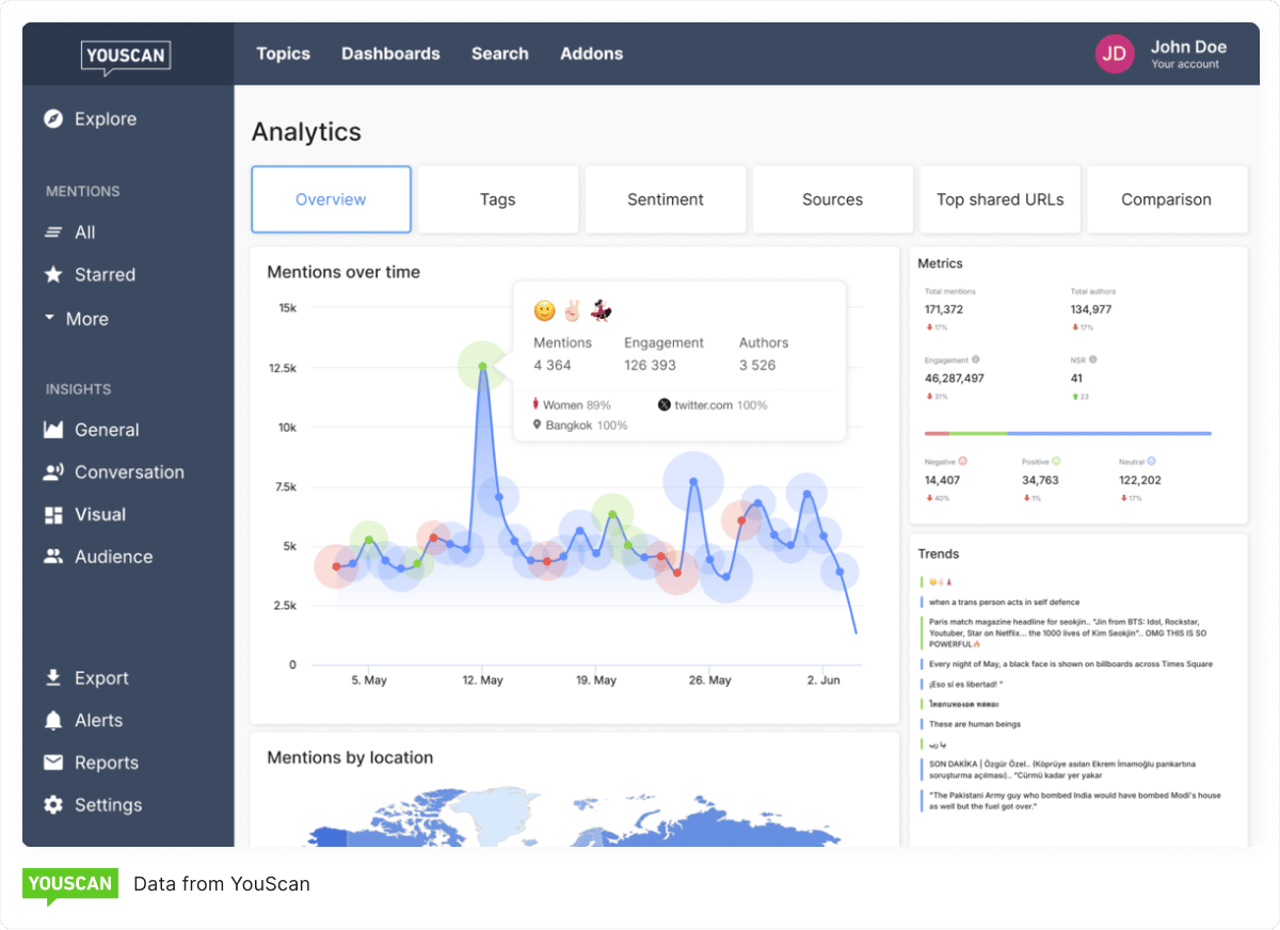
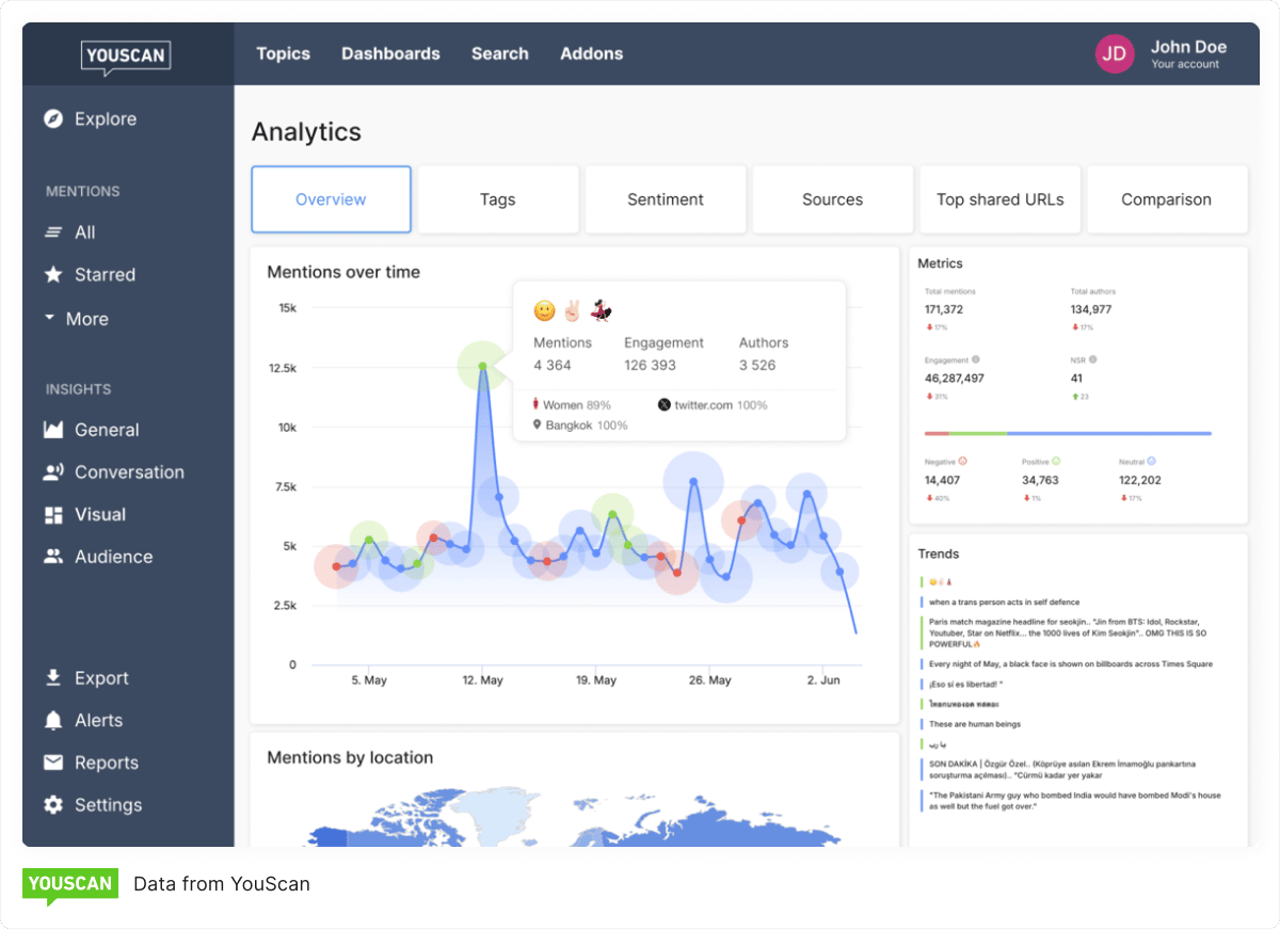
YouScan is a social listening platform that tracks what people say about your brand across social media, blogs, forums, review sites, and online news. What makes it stand out is context: who's talking, how they feel, and what shows up in the photos and videos they post.
Features:
Sentiment analysis that YouScan says is 95% accurate, plus automatic sorting of complaints, praise, and comparisons
Visual Insights, which finds your logo and products in photos and videos, even when nobody types your name
Audience Insights, which shows who's talking (age, interests, jobs), plus influencer identification
Insights Copilot, an AI agent for social listening you can ask questions in plain English; the new Insights Copilot (4.0) compares you with several competitors at once, sets filters for you, and turns answers into a client-ready report
Real-time alerts, unlimited users, and 350+ integrations, including Slack and Teams
Pricing: YouScan shows its pricing openly. The Starter plan is $499/month, billed yearly, for 3 topics and up to 15,000 mentions a month. Unlimited plans, which include Visual and Audience Insights, have custom pricing.
Downsides: YouScan isn't a media database, and it doesn't send press releases for you. If pitching journalists is your main job, you'll need one of the outreach tools below too. The Starter plan also limits Copilot to 10 questions a month.
Best for: marketing and research teams that mainly need to track mentions, read sentiment, and handle reputation management (including a crisis) without a huge enterprise tool.
2. Meltwater: comprehensive media monitoring for large enterprises
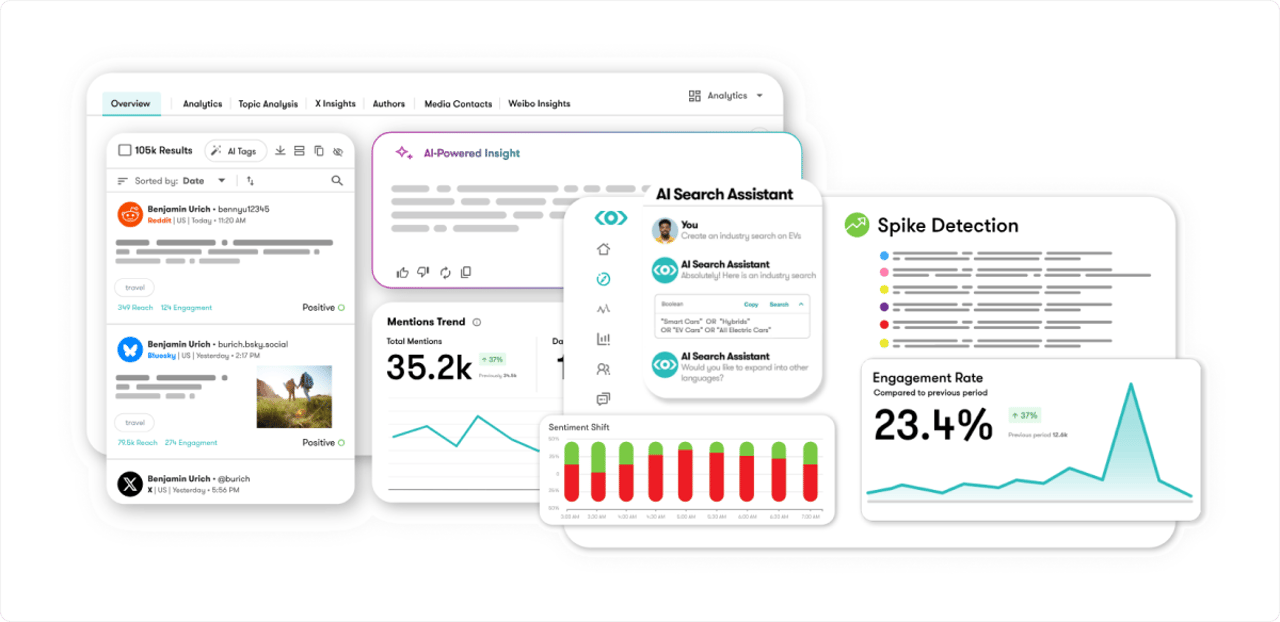
Of all the alternatives here, Meltwater is the most like Cision in size. It covers online news, social, podcasts, TV, radio, and print, and lets you post to social channels too. For a deeper look, see the Meltwater competitors guide and Meltwater vs Sprinklr.
Features:
News from around the world, plus TV, radio, and print
A media database and outreach tools
Social listening and posting on a single platform
Logo and image recognition, plus extra sales tools you can add
Pricing: quote only, with annual contracts. Other sources estimate about $6,000 to $25,000+ per year, depending on what you add.
Downsides: high cost, a busy interface, and a long-term contract. Smaller teams may end up paying for stuff they don't use (again).
Best for: large enterprises that want comprehensive media monitoring across every channel from one company, and have the budget for it.
3. Muck Rack: journalist database and outreach
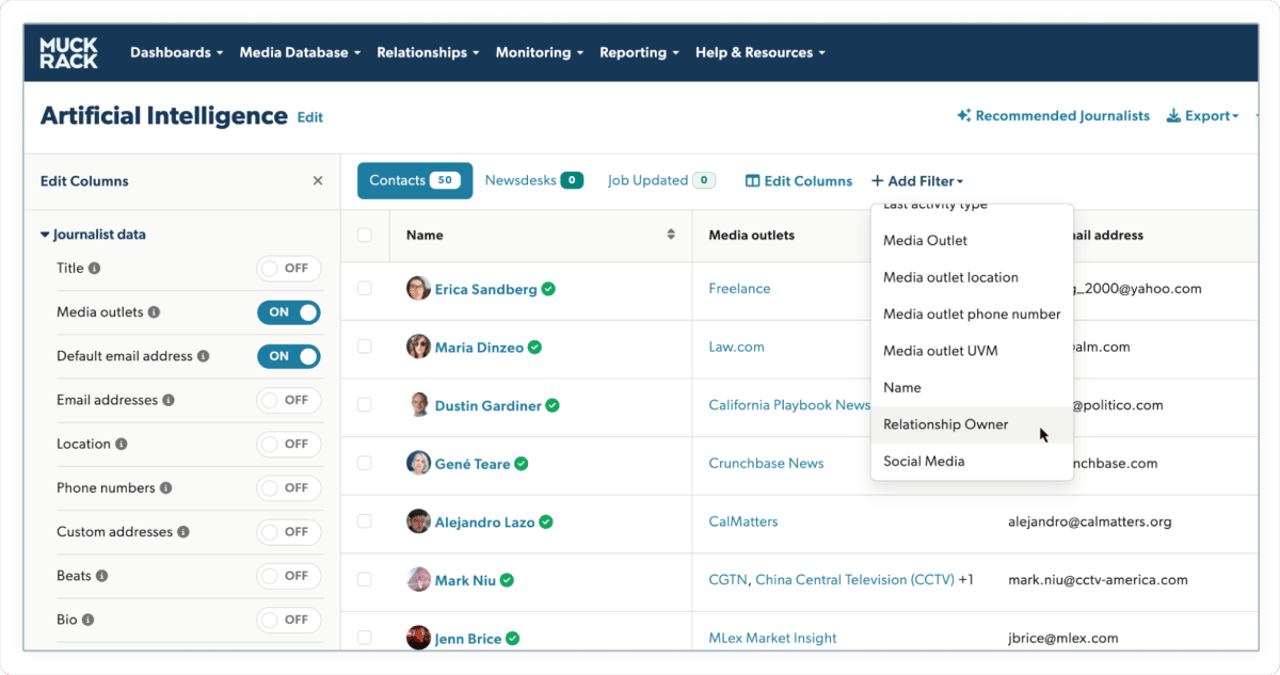
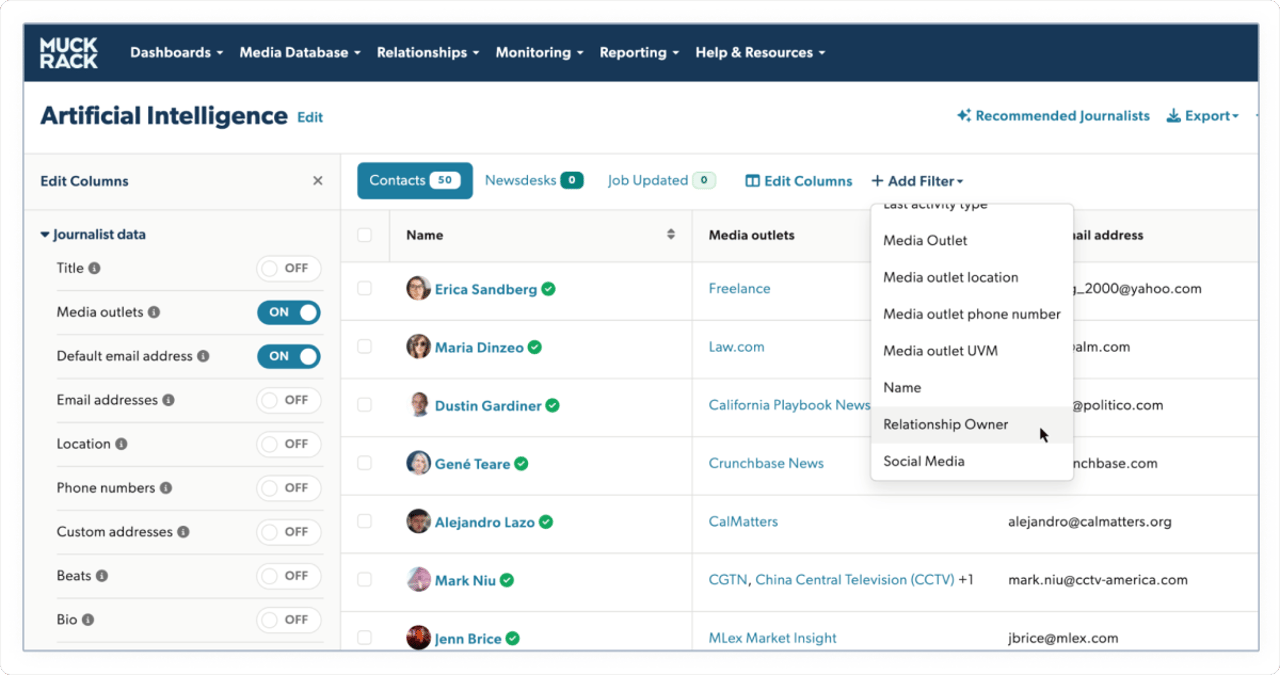
Muck Rack is a PR platform built for media relations (a fancy way of saying "working with reporters"). Its database pulls from reporters' recent articles, so contacts stay fresh, and its integrated workflows let you find journalists, pitch them, and track results in one place. Many PR professionals see Muck Rack as the closest match to Cision's outreach side.
Features:
A searchable journalist database with each reporter's recent articles and topics
Media list building, pitch tracking, and a media relations CRM (a contact tracker for reporters)
Media monitoring and coverage reports
Shared workspaces for agencies and in-house PR teams
Pricing: quote only, usually with annual contracts. Deal data from other sources puts the typical price at about $13,000 per year, and bigger teams pay much more.
Downsides: the high cost at the start is tough for small agencies, and tracking is weaker than the database.
Best for: PR teams whose main job is finding the right reporters and pitching them.
4. Prowly (now Semrush AI PR Toolkit): outreach on a budget
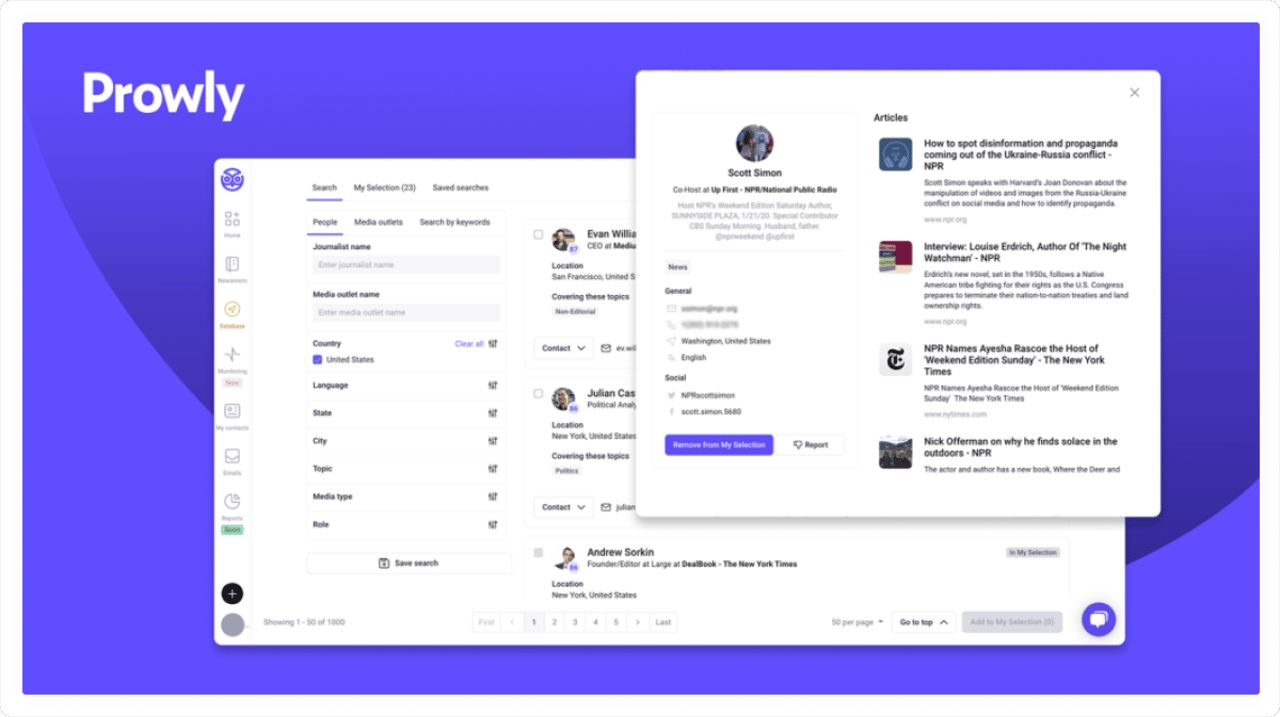
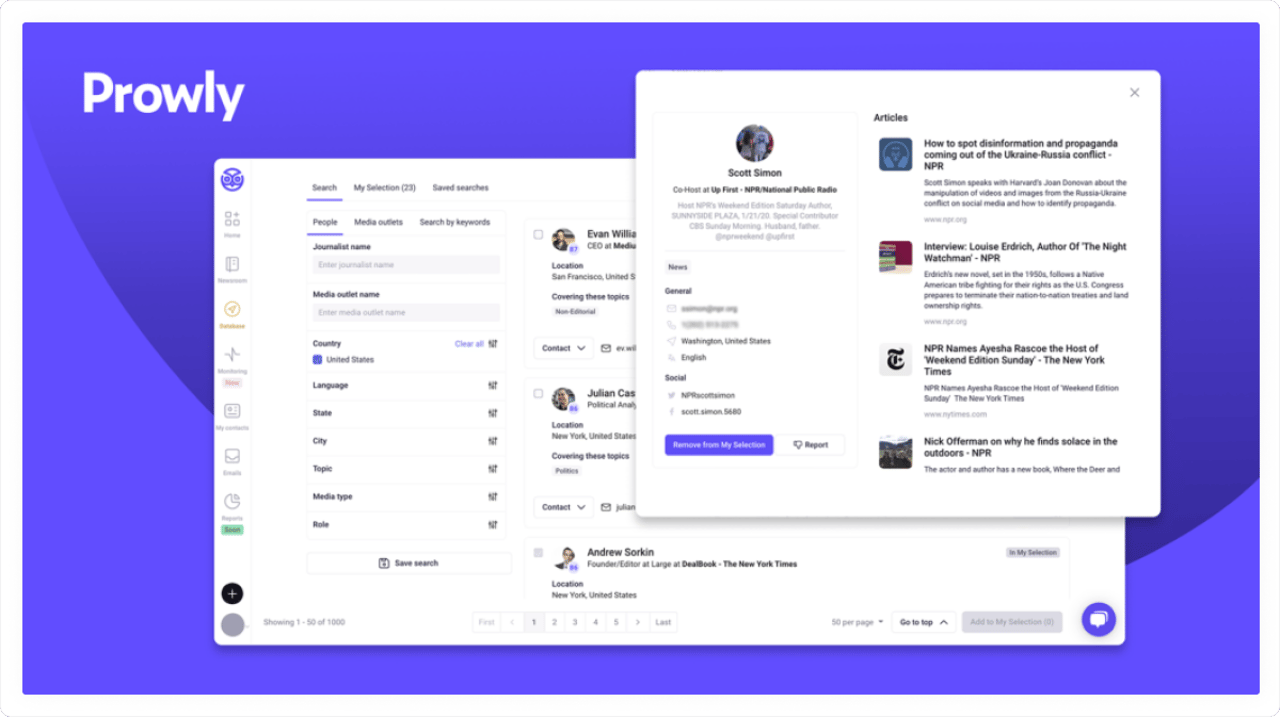
Prowly became popular as an affordable PR tool for small and mid-market teams, and Semrush now sells it as the AI PR Toolkit. It gives you a media database, email pitching, and coverage tracking. A cool extra: it shows which news sites AI chatbots like ChatGPT tend to quote.
Features:
A media database and email pitching with follow-ups
Coverage tracking with built-in analytics (on Pro and up)
Competitor tracking and share of voice (how much of the conversation is about you vs. your rivals) on the Business plan
Weekly updates on which outlets AI chatbots cite
Pricing: listed publicly. Base is $149/month, Pro is $279/month, and Business is $499/month. There's a 7-day free trial.
Downsides: listening is lighter than in dedicated media intelligence tools. The move to Semrush also changed some older plans, so check what's included before you switch.
Best for: small and mid-sized teams that care more about media outreach than deep listening, and want a clear price.
5. Determ: monitoring with transparent pricing
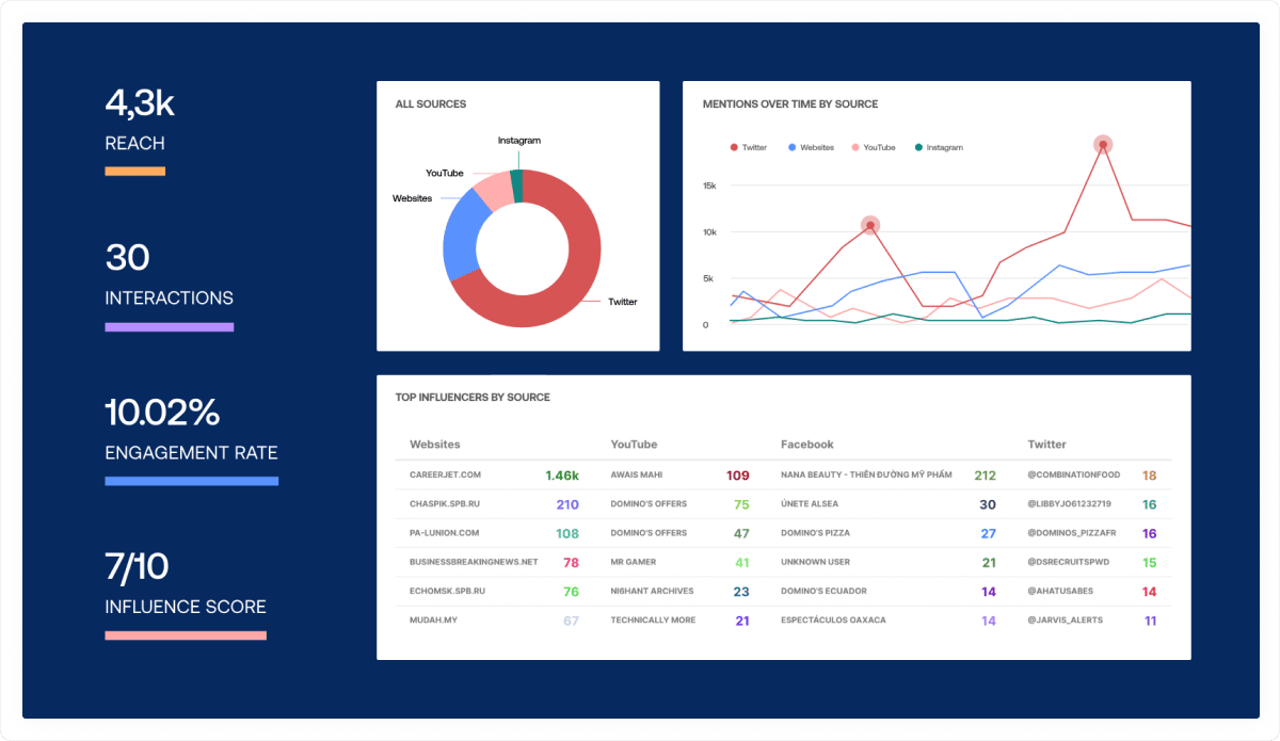
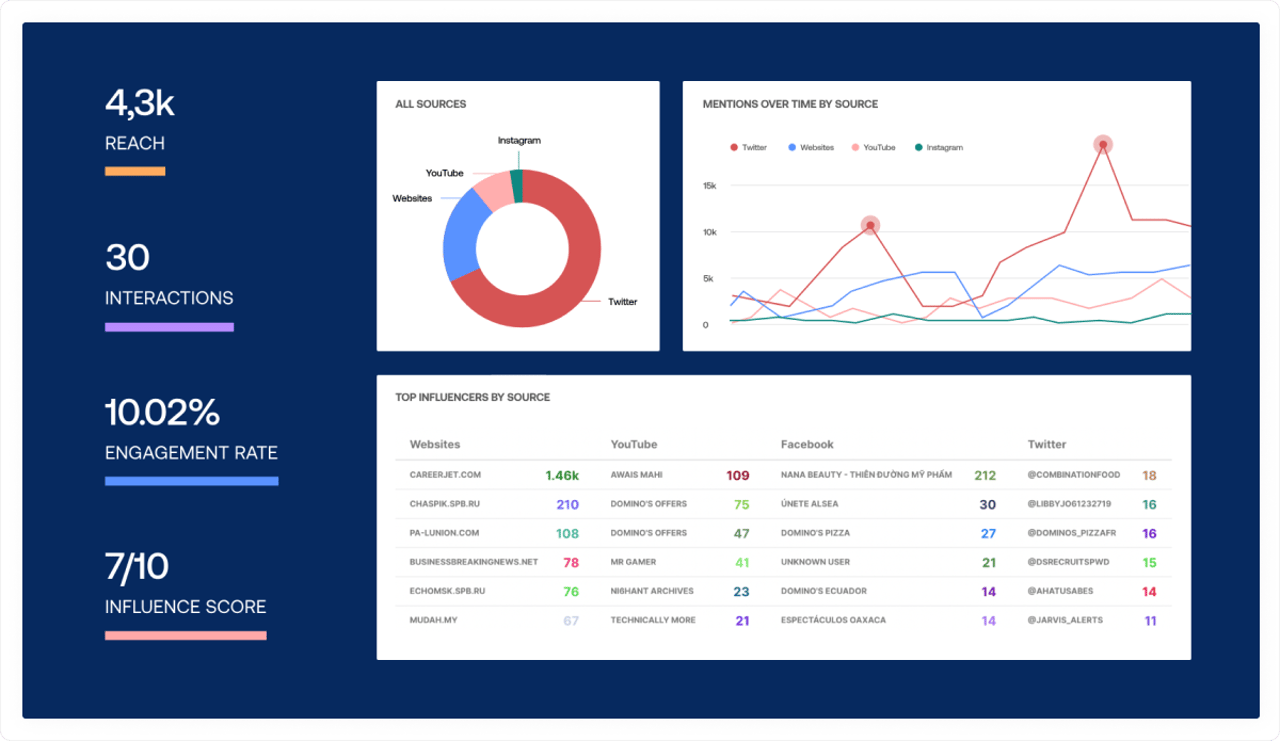
Determ is a media monitoring tool for reputation management, measuring your coverage, and warning you when mentions suddenly spike. It shows prices upfront, which is rare among PR tools.
Features:
Real-time alerts when mentions suddenly go up
AI summaries of your coverage
PR reports you can customize and download
Unlimited users and keywords on every plan
Pricing: listed publicly. Focus is €99/month (1 topic, 1,000 mentions), Expand is €299/month, and Command is €499/month (10 topics, 10,000 mentions). Custom pricing covers bigger needs. The 5-day free trial stretches to 14 days after a demo.
Downsides: there's no database of journalists and no way to send press releases. The cheapest plan's 1,000-mention limit fills up fast if your brand is well known.
Best for: smaller teams that want tracking and reports without a big enterprise contract.
6. Prezly: newsroom and media CRM
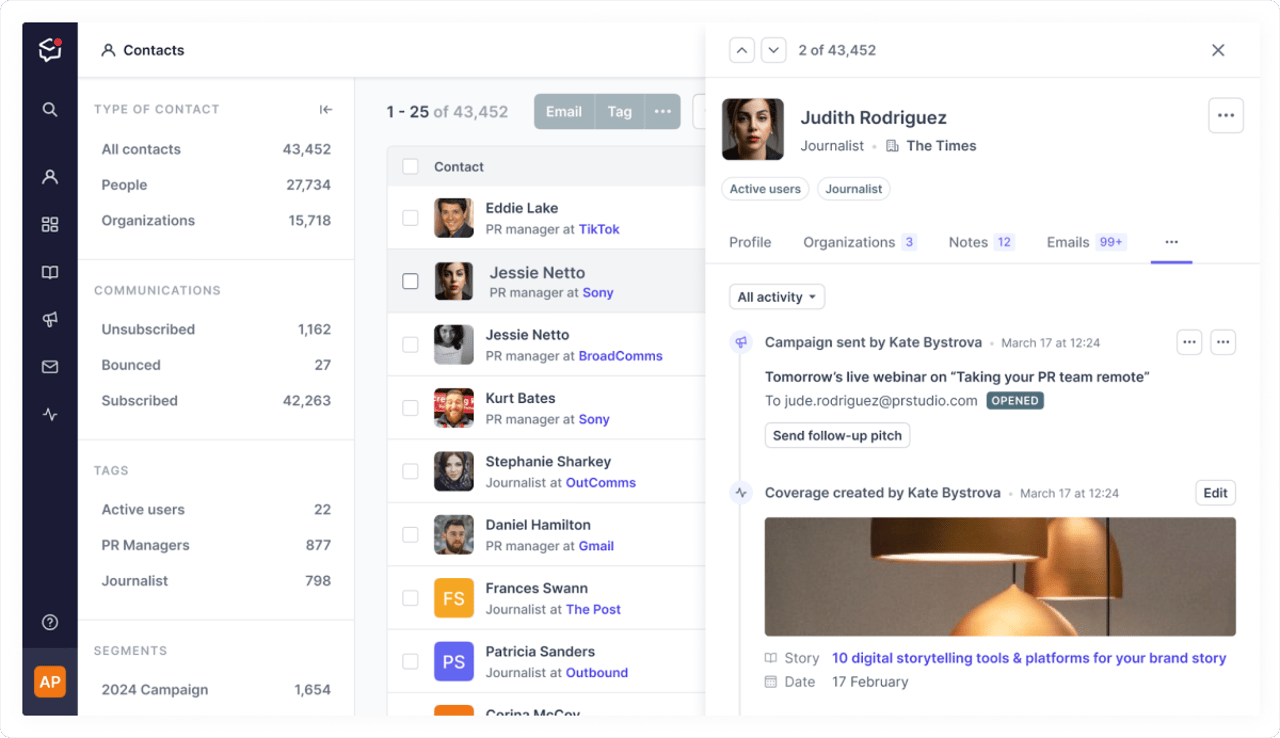
Prezly takes a different approach. It's a PR platform where you build your own contact list instead of renting access to a big database. You publish press releases to a branded newsroom (a news page on your own website) and pitch reporters from the same place.
Features:
Contact management for journalists and other people you work with
Nice-looking newsroom pages that journalists find easy to use
Email campaigns that show who opened and clicked
Story analytics on every plan
Pricing: listed publicly. Plans start at €100/month, billed yearly (1 user, 5,000 contacts). Standard is €250/month (2 users, 10,000 contacts). Enterprise is custom. There's a 14-day free trial.
Downsides: it doesn't track media coverage, and you bring your own contacts. The cheaper plans also allow very few users.
Best for: teams that want to build long-term relationships with journalists and have a polished newsroom.
7. Brandwatch: consumer intelligence (owned by Cision)
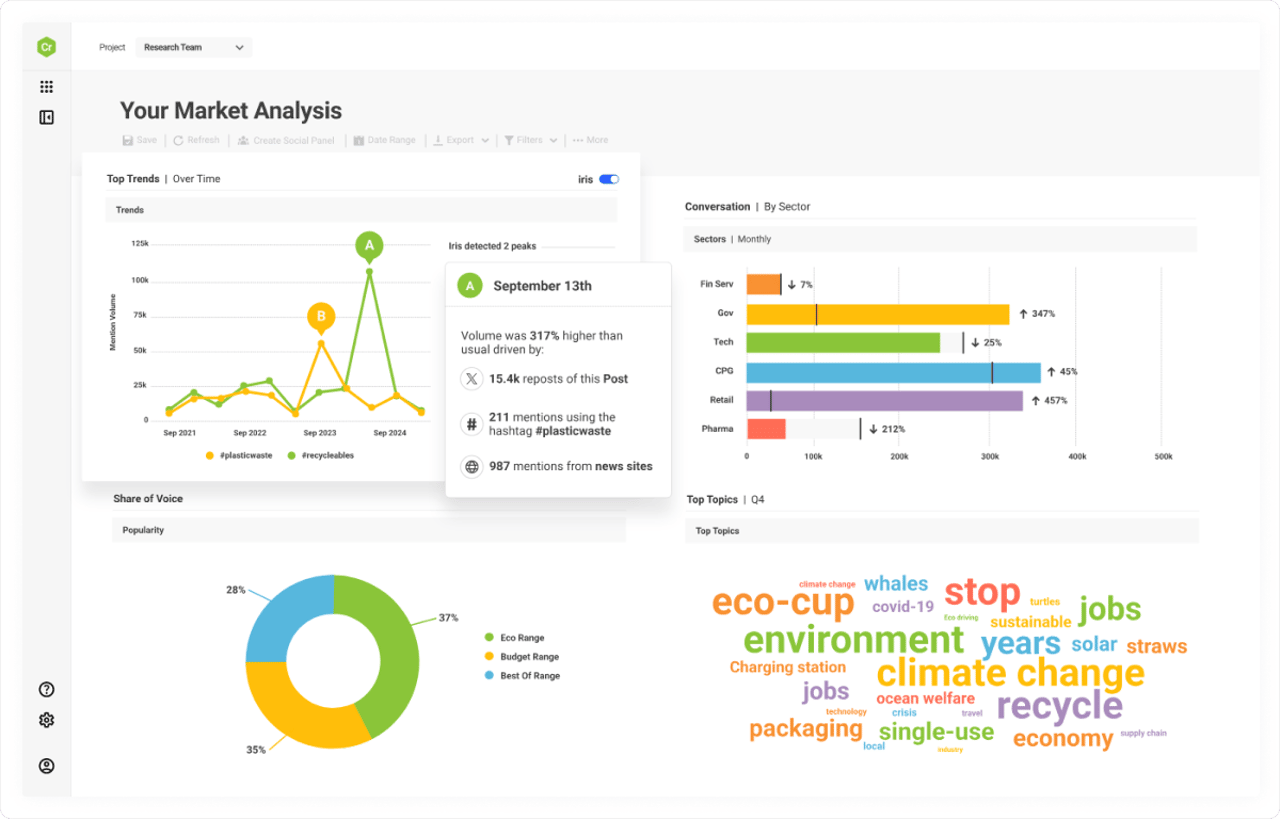
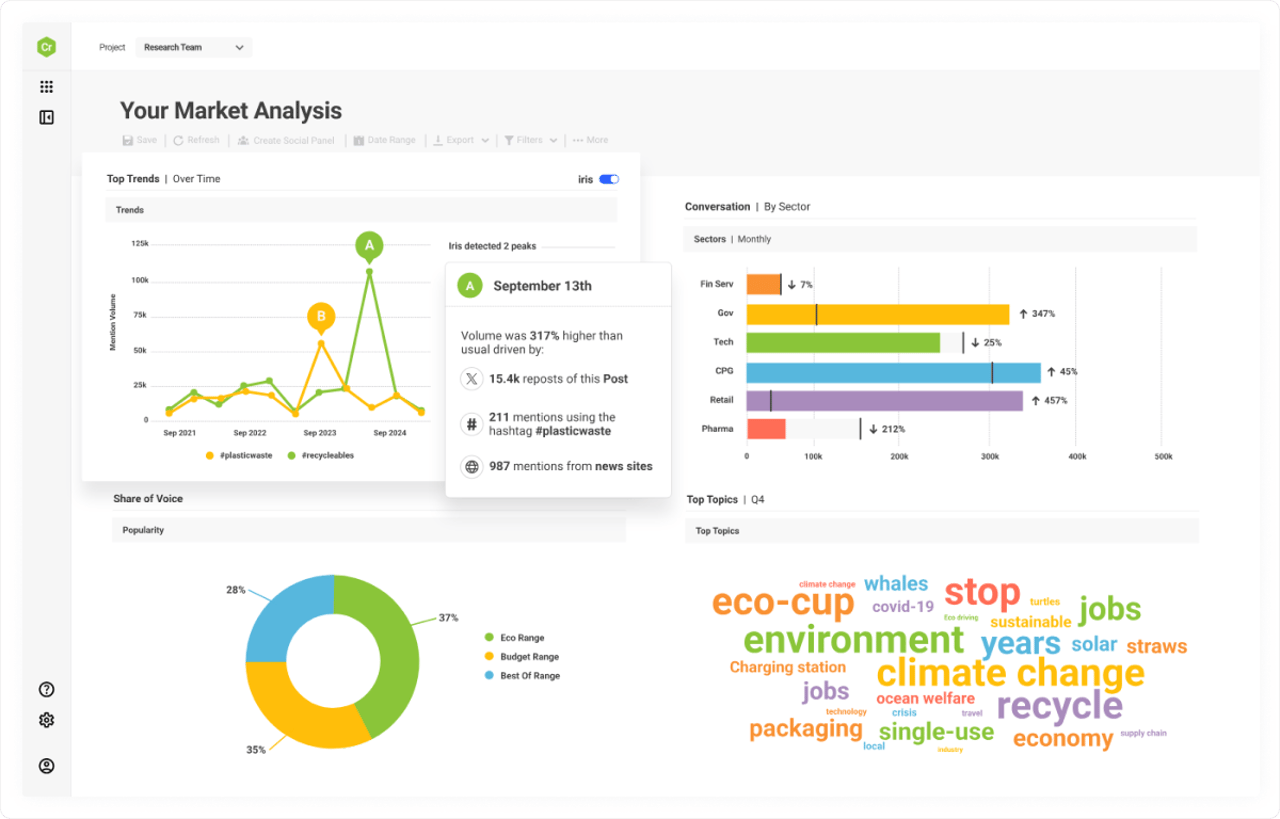
Brandwatch is a consumer intelligence platform with deep social data. Most comparison articles skip this: Cision bought Brandwatch in 2021 for $450 million. It has its own look and pricing but the same parent company, so it's an odd pick among alternatives if Cision itself is the problem.
The Brandwatch alternatives list and YouScan vs Brandwatch comparison go deeper.
Features:
Years of past social data
Image recognition and visual reports
Detailed breakdowns of different audience groups
Advanced analytics for research teams
Pricing: quote only, with annual contracts. Other sources estimate it starts around $800+/month and goes up with usage.
Downsides: enterprise pricing, a long setup for simple PR tracking, and it usually needs a trained analyst.
Best for: big research teams that need deep customer insights and don't mind staying with the Cision family.
8. Mynewsdesk: newsroom plus distribution
Mynewsdesk is a cheaper PR platform with a newsroom, press release distribution, and media monitoring. It's popular in Europe, and you buy only the parts you need.
Features:
A branded newsroom you can add to your website
Press releases, sending them out, and matching with the right journalists (PR Distribution plan)
Online and social tracking, plus TV, radio, and podcasts on the Media Monitoring plan
Email reports and real-time alerts
Pricing: the starter plan is listed from €220/month, paid monthly with no annual lock-in (4 press releases a year, 1 brand tracked). The PR Distribution and Media Monitoring plans are custom. There's a 10-day free trial.
Downsides: the starter plan covers only a few press releases, analytics are basic next to a dedicated media intelligence platform, and the full journalist database costs extra.
Best for: teams on a budget that want a newsroom and news distribution without a long contract.
Agility PR Solutions, Critical Mention, and other names on your shortlist
Two more names show up in most lists of Cision competitors. They didn't make the top 8 Cision alternatives above, but either could be the right fit for a specific need.
Agility PR Solutions, owned by data company Innodata, is a PR platform with a media database, media monitoring, social tracking, and press release sending, priced by quote. It's a solid choice if you want much of what Cision offers at a mid-market size. Test the contacts in your industry before you sign.
Critical Mention, now part of Onclusive, is known for tracking TV and radio, often within minutes of airing. If that's what you're missing most, book a demo. If not, you'd pay for something you won't use.
Is there a free alternative to Cision?
No free alternative can do everything Cision does. A mix of free tools like Google Alerts, searching social apps yourself, and a spreadsheet of reporters can catch basic media mentions for a solo founder or a tiny team. But it falls apart once you need sentiment, past data, TV coverage, or reports your leadership trusts. Free trials are a smarter way to test paid tools without spending anything.
Many teams try the free alternative route first, and it works for a while. Then Google Alerts misses a big story, and the spreadsheet gets out of date. A crisis hits on a Saturday, and nobody knows because nothing sent an alert. (The guide to PR crisis management explains what to do in that first hour, and the list of social media monitoring tools covers the paid options.)
How to get real answers from free trials
Most Cision alternatives offer free trials or demos: Determ gives you 5 days, Prowly 7, Mynewsdesk 10, and Prezly 14. That's not long, so plan your test first:
Add your real brand, two competitors, and one tricky keyword (like a brand name that's also an everyday word). A quick
competitor analysis makes a great stress test.Compare results with a week of news you already know about. Missed stories tell you more than any sales pitch, and most tools look great in a demo.
Ask a teammate who wasn't on the sales call to build a report alone. If they can't do it, your team won't either, and it isn't the right fit.
Get the price in writing for your real team size, plus the next plan up.
For a longer checklist, see the guide on how to choose the right social listening tool.
Which Cision alternative fits your team?
The right Cision alternative depends on your main job: Muck Rack or Prowly for pitching reporters and journalist databases, Meltwater for one big vendor, YouScan or Determ for tracking mentions and crises, Brandwatch for deep customer research, and Mynewsdesk or Prezly for a newsroom on a smaller budget. Here's how the top Cision alternatives compare.
Your main need | Look at | Pricing | Watch out for |
Pitching journalists and building a media list | Muck Rack, Prowly | Quote only (Muck Rack); from $149/mo (Prowly) | Lighter tracking |
One vendor for PR, social, TV, and radio | Meltwater | Quote only, annual contract | Cost and complexity |
Tracking mentions, sentiment, and crises | YouScan, Determ | From $499/mo (YouScan); from €99/mo (Determ) | No journalist database |
Deep customer and social research | Brandwatch | Quote only | Owned by Cision |
Newsroom and sending news on a budget | Mynewsdesk, Prezly | From €220/mo (Mynewsdesk); from €100/mo (Prezly) | Basic analytics |
TV and radio coverage | Critical Mention | Quote only | Narrow focus |
Lots of modern PR teams end up with two tools: one for reaching out, one for listening. That's often cheaper than one big enterprise contract. It's a trade-off worth pricing out before you lock in your PR strategy for another year. (And if social posting matters more to you than PR, the Sprout Social alternatives guide covers that.)
So, what's the best alternative for you?
There's no single best alternative to Cision, just the right PR software for the work your team actually does. If your PR efforts are mostly media outreach and press releases, Muck Rack or Prowly will feel familiar fast. If you want one company for every channel, Meltwater is the closest match among the top Cision alternatives on this list.
But if your real job is hearing what people say about your brand and catching problems early, a focused listening platform is the right fit. You get more for your money than with a big suite built for sending press releases. That's the whole case for
social listening for PR, and among all the Cision alternatives here, it's where YouScan fits.
Want to see how it stacks up against your current setup? Book a YouScan demo and compare what AI-powered media and social monitoring shows you with what you pay today.


FAQs
What are the best Cision alternatives?
The best alternative to Cision depends on what your team needs. Muck Rack and Prowly are best for pitching reporters and journalist databases. Meltwater is the closest match for big companies that want PR, social, TV, and radio in one platform. YouScan and Determ are best for tracking mentions, sentiment, and crises without an enterprise contract. Brandwatch is great for deep customer research, but Cision owns it.
How much does Cision cost?
Cision doesn't show its prices, so you need a sales call for a quote. Outside deal data says the typical buyer pays about $12,625 per year, with contracts from around $3,150 to over $30,000. Your price depends on users, features, and extras like PR Newswire distribution. Get the price in writing, including renewal.
Is Meltwater a good alternative to Cision?
Meltwater is one of the closest alternatives to Cision in size. It covers online news, social, TV, radio, and print on a single platform. It's a good pick for large companies that want one vendor for every channel. But it's quote-only and costs about the same as Cision, so it's better for replacing Cision than saving money.
What is the cheapest Cision alternative?
Among tools that show their prices, Determ (from €99/month) and Prezly (from €100/month, billed yearly) are the cheapest to start. Prowly, now the Semrush AI PR Toolkit, comes next at $149/month. Most offer free trials, so test before you buy. The cheapest choice still depends on your job: Determ tracks your coverage, while Prezly and Prowly help you reach out to reporters.