Best Brand Monitoring Tools in 2026 Organized by What You Actually Need

Most "brand monitoring tools" roundups are social listening rankings wearing a fake mustache. They're useful. But they skip about half of what watching your brand actually involves.
Your brand presence doesn't only live on social media. It shows up in a one-star review at 11 p.m., in a blog post that mentions you without linking, in a news story, and more and more in the answers AI search engines give when someone asks "what's the best X?" If you only track brand mentions on Instagram and X, you're guarding one window of a house with ten.
The numbers back this up. When Pew Research Center tracked real Google searches, people who saw an AI summary clicked a regular result in just 8% of visits, compared with 15% when no summary appeared. And a Gartner survey found that 60% of UK consumers trust big brands, down from 70% in 2021. People click less, trust less, and form opinions from whatever the web says about you.
This guide starts by clearing up brand monitoring vs. social listening. Then it sorts the best brand monitoring tools into five categories based on the job you need done. That way, you don't pay enterprise prices for a problem free tools can solve. (Or the reverse, which is worse and much more common.)
Brand monitoring vs. social listening: what's the difference?
Brand monitoring is the practice of tracking every online mention of your brand across social media, news sites, blogs, forums, review sites, and backlinks. Social listening is the deeper analysis layer on top of that: sentiment, context, and the conversation behind the mentions, usually applied to social media platforms (some people call it social media listening). Brand monitoring tells you people are talking. Social listening tells you what they mean.
Here's the simplest way to think about it. Brand monitoring is your smoke detector. Social listening is the person who walks into the kitchen and figures out whether it's burnt toast or an actual fire.
The guide to social listening vs. social monitoring goes deeper, and the social listening glossary helps when a vendor starts throwing jargon at you. For a platform-by-platform comparison of social listening tools, check the separate guide. This article is about the wider job of online brand monitoring.
Why is brand monitoring important in 2026?
Brand monitoring is important because most of what shapes your brand reputation happens on pages you don't own. Customers read reviews before they buy, AI assistants summarize what the web says about you, and one viral post can shift brand perception overnight. Without online brand monitoring, you're usually the last to find out. That makes it a core part of brand management now.
The 2026 Edelman Trust Barometer special report on brands explains why brand mentions matter so much: "what others who are not paid by the brand say about it matters far more than what the brand says about itself." Your ads are the opening statement. Everyone else's posts, reviews, and articles are the jury that decides brand perception.
Reviews quietly run your reputation management
Plenty of brands still treat reviews as a customer service chore. That's a mistake, and an expensive one.
BrightLocal's 2026 consumer review survey found that 97% of consumers read reviews for local businesses and 89% expect businesses to respond. CEO Myles Anderson put it simply: "Reviews are stable, sticky, and more important than ever." If your setup ignores review sites and review platforms, you're skipping the place where your brand reputation gets decided, plus some of your most honest customer feedback. The guides to brand reputation monitoring and online reputation management cover what to do next.
AI search engines are reading your social mentions
This is the part most brand monitoring guides haven't caught up with yet.
That Pew finding matters here: people get the answer and leave. And that answer is built from what Reddit threads, reviews, and articles say about you.
Rand Fishkin, co-founder of SparkToro, makes the link clear: if you want to control how your brand appears in AI tools, "you better start by monitoring how people are talking about your brand on the internet." He admits people still describe SparkToro with features it dropped years ago. Your brand probably has an outdated story floating around, too. Better to find it before a chatbot repeats it to your next customer.
That's why brand visibility now means more than ranking on Google. It's about what gets said about your brand online, everywhere the machines are reading.
What to look for in brand monitoring tools
The right brand monitoring software depends on four things: coverage (which channels it watches), depth (whether it counts mentions or understands them), speed (real-time alerts or a daily digest), and budget. Get clear on those first, and your shortlist of brand monitoring tools almost writes itself.
Coverage: which social media channels and sites does it watch?
When monitoring brand mentions, start with where your customers actually talk. Skincare brands live on TikTok and Instagram. A B2B software company lives on LinkedIn, Reddit, and G2. Restaurants live on Google reviews.
Some brand monitoring tools only cover social platforms. Others add news sites, blogs, forums, podcasts, and reviews, and a few track backlinks. Match the coverage to the social media channels and sites your audience uses, not to the longest feature list.
Depth: does it count mentions or understand them?
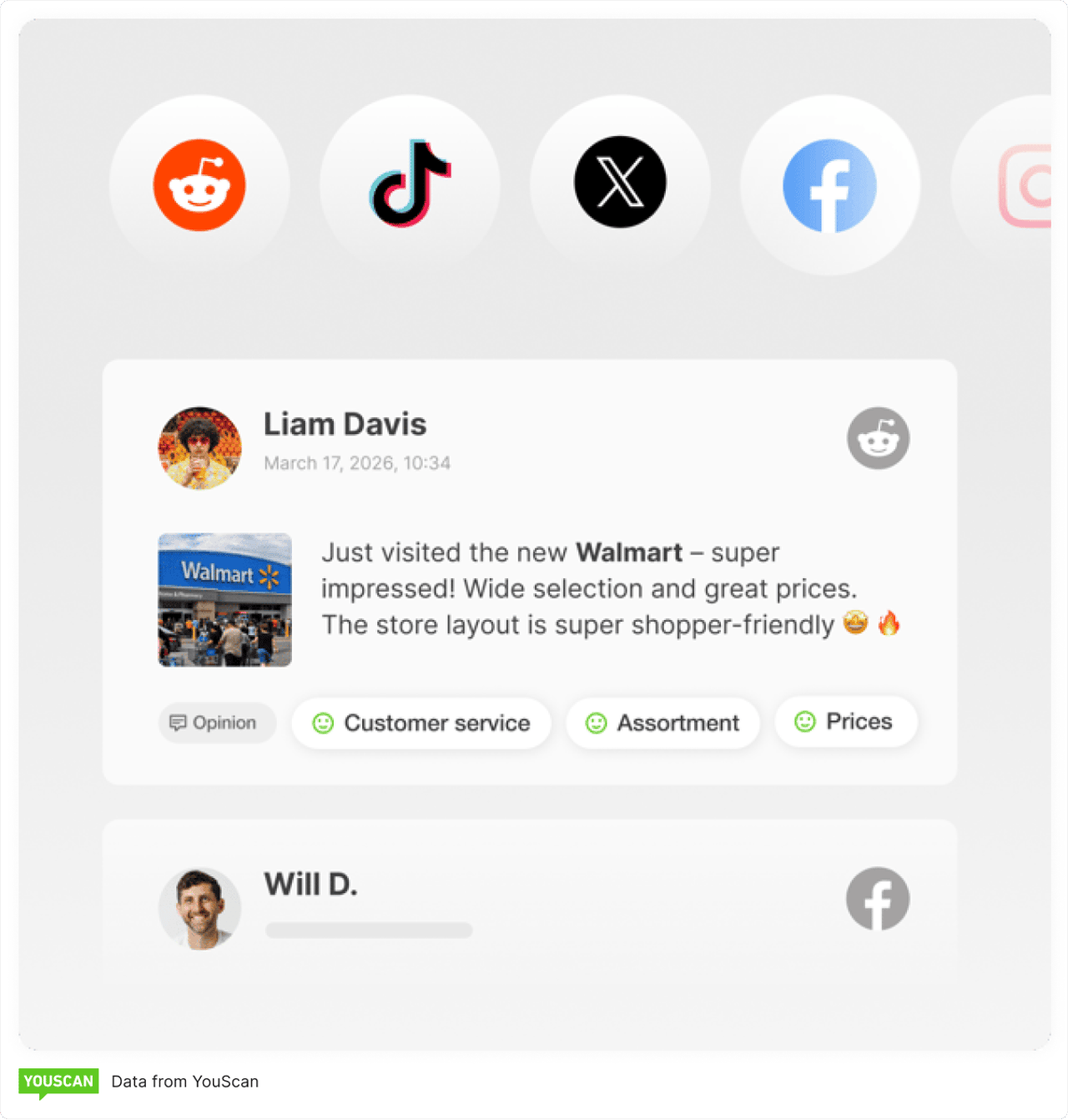
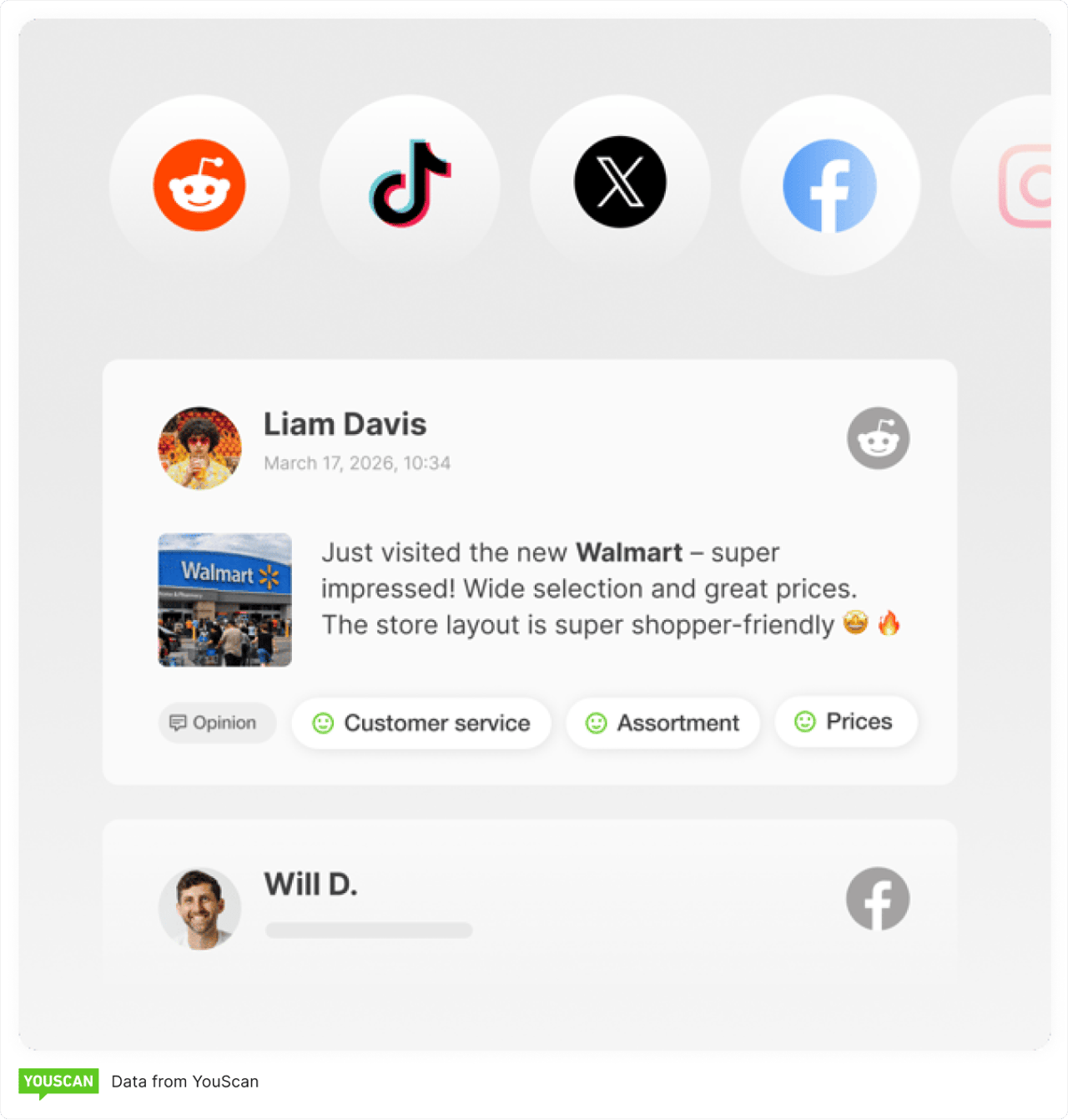
Basic monitoring gives you mention volume: how many brand mentions you got. But a spike could be a viral compliment or a product recall. Numbers alone won't tell you which.
That's where sentiment analysis comes in. Better brand monitoring tools analyze sentiment by topic, so you see that people love your product but hate your delivery times. That's the difference between data and actionable insights.
Some monitoring tools also read images, which matters because plenty of brand mentions are photos where your logo appears and nobody types your name. The explainer on logo recognition shows how much text-only tools miss.
Speed and budget: the two things that change everything
If you're in a crisis-prone category (food, airlines, finance), real-time alerts are non-negotiable. For a small B2B brand running a few marketing campaigns a year, a daily email is usually fine. Paying for second-by-second real-time tracking you'll never act on is like buying a race car to drive to the corner shop.
Budget-wise, you're choosing between free tools, SMB paid tools in the $30 to $300 a month range, and enterprise suites that start in the five figures a year. Most teams should start with a basic plan one tier lower than the sales rep suggests.
Best brand monitoring tools in 2026, by category
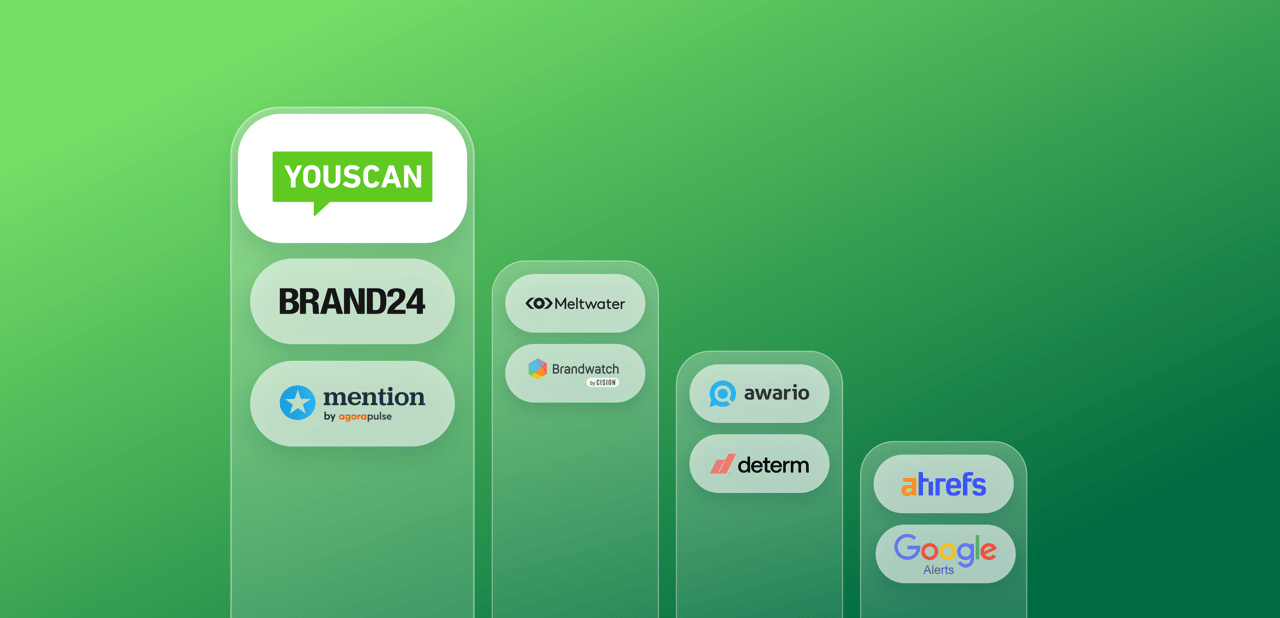
The best brand monitoring tools fall into five groups: all-in-one social and web monitoring, enterprise media intelligence, budget-friendly monitoring, SEO and backlink monitoring, and free starting points. Pick the category that matches your main job, then compare the brand monitoring tools inside it. Prices are as of September 2026.
All-in-one social and web monitoring
These brand monitoring tools cover web and social media in one place and add real analysis on top. They suit most marketing teams that want to track brand mentions and understand them without juggling three logins.
YouScan
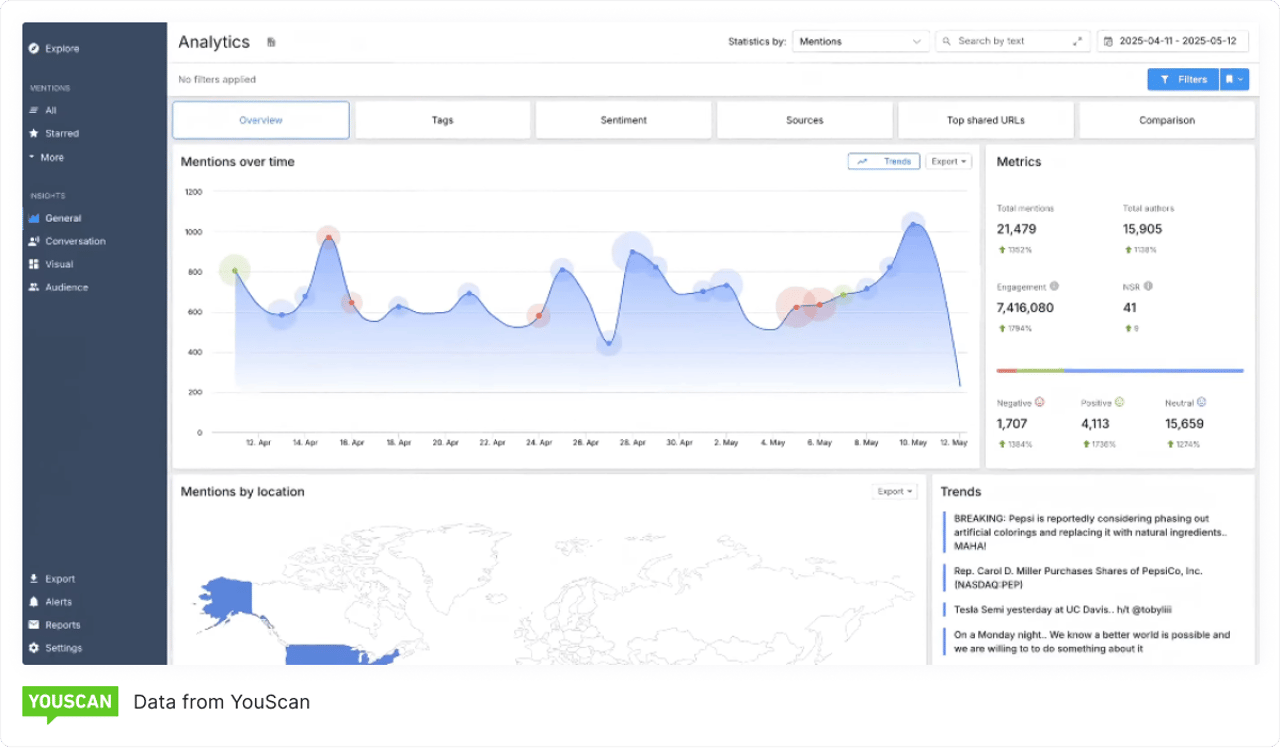
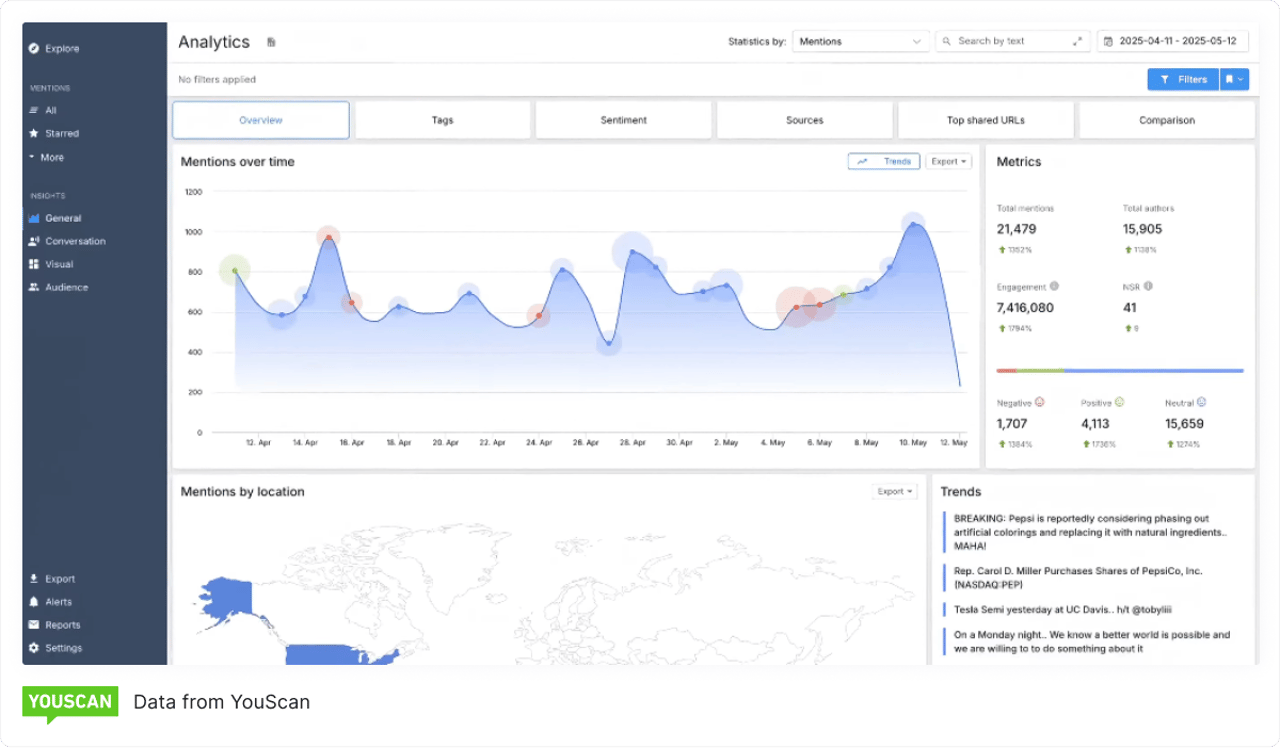
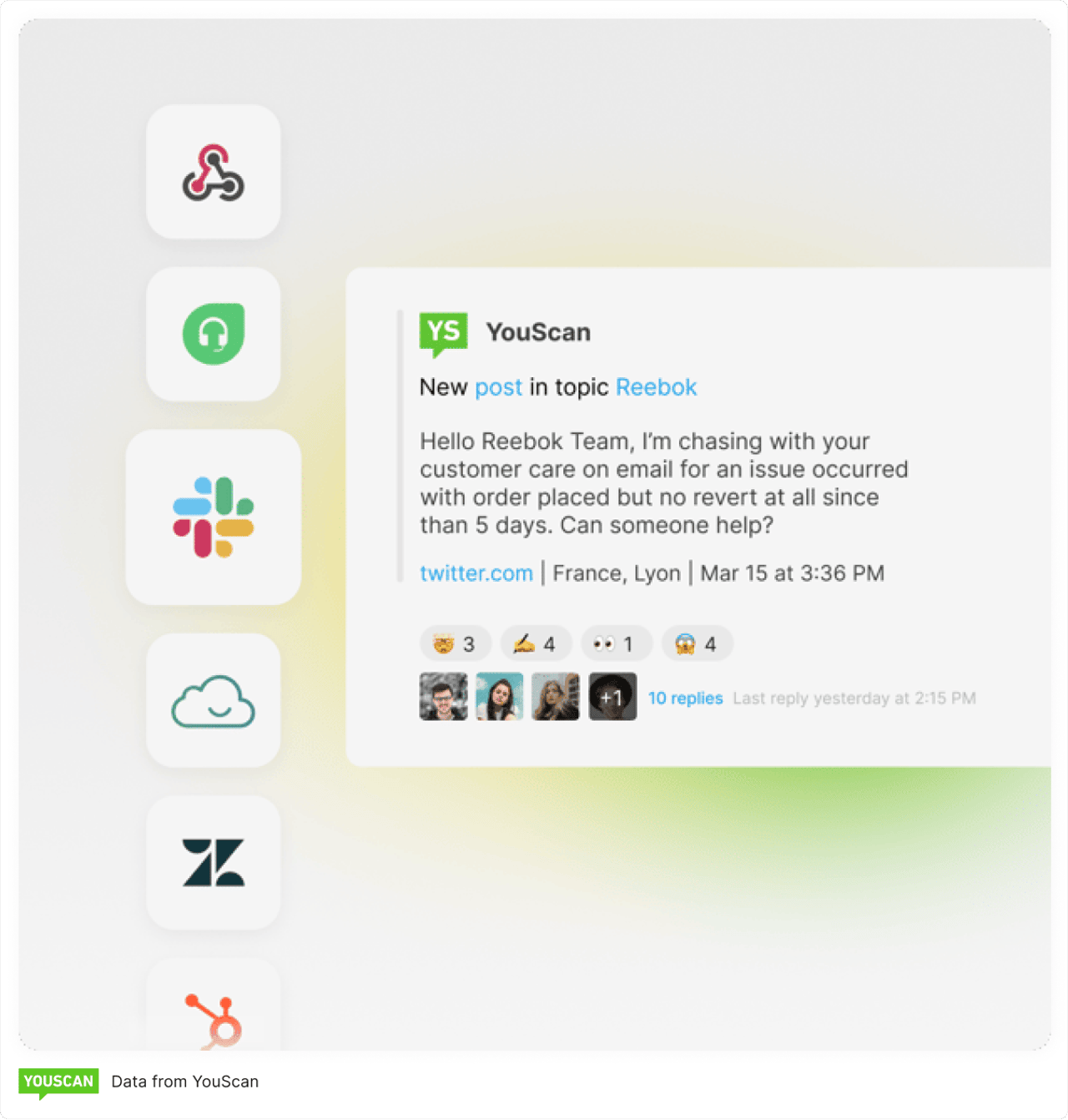
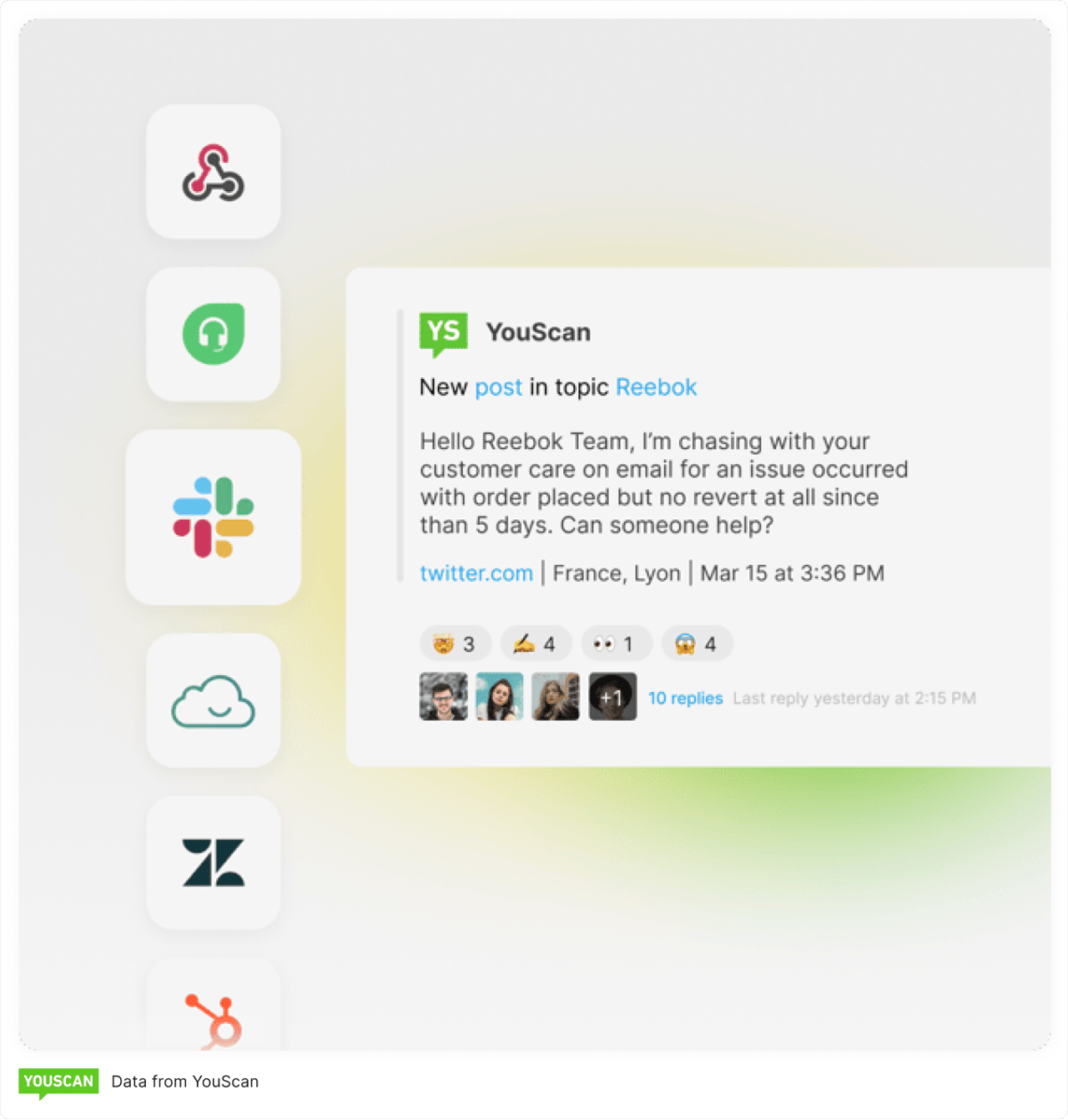
Most monitoring tools read text. YouScan also reads pictures. It's an AI-powered social listening and brand monitoring platform covering social media, blogs, forums, review sites, and online news, and its Visual Insights feature spots your logo in photos and videos even when nobody tags you. That's a whole layer of brand mentions most other tools miss.
Say packaging complaints jump overnight. You ask Insights Copilot, an AI agent for social listening, "Why did packaging complaints spike last week?" and get the answer in plain English. The new Insights Copilot 4.0 release also runs competitor analysis across your whole category in one pass, sets the filters itself, and turns the chat into a shareable report with actionable insights.
Sentiment gets the same detail. Aspect-based sentiment analysis tells you people love the taste but hate the price, instead of handing you one vague score (this guide to brand sentiment analysis explains how). Audience Insights, custom social listening dashboards, and Slack, Teams, or WhatsApp alerts round it out, with no per-user fees.
What it costs: $499/month on the Starter 3 plan, billed annually, for 3 topics, 15,000 mentions a month, unlimited users, and 10 Copilot questions. Unlimited plans with Visual and Audience Insights are custom-quoted. Instead of a free trial, you get a guided demo (YouScan pricing has the details).
Who it suits: Brands whose products get photographed a lot (food, beauty, fashion, retail) and that track brand health, not just mention counts.
Brand24
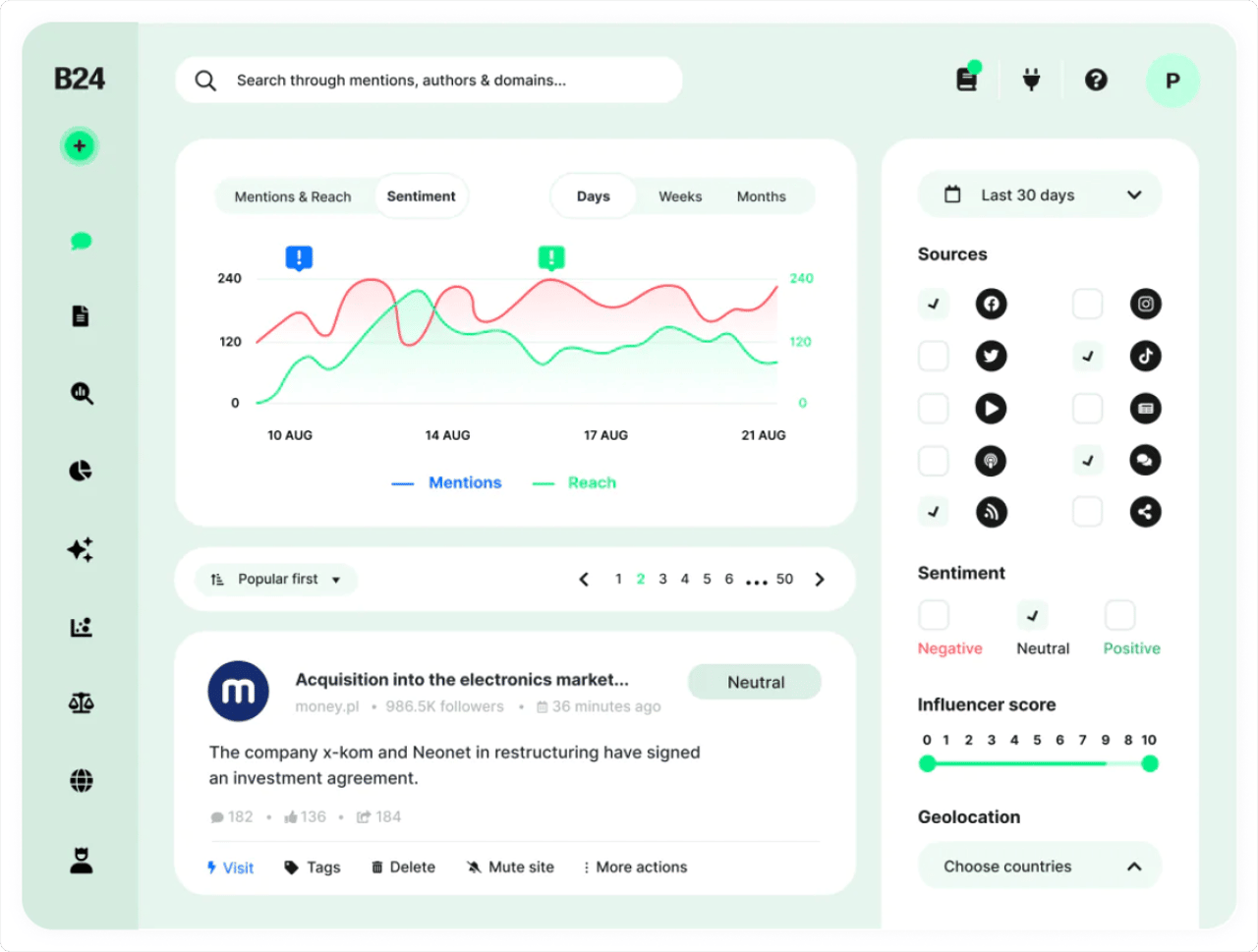
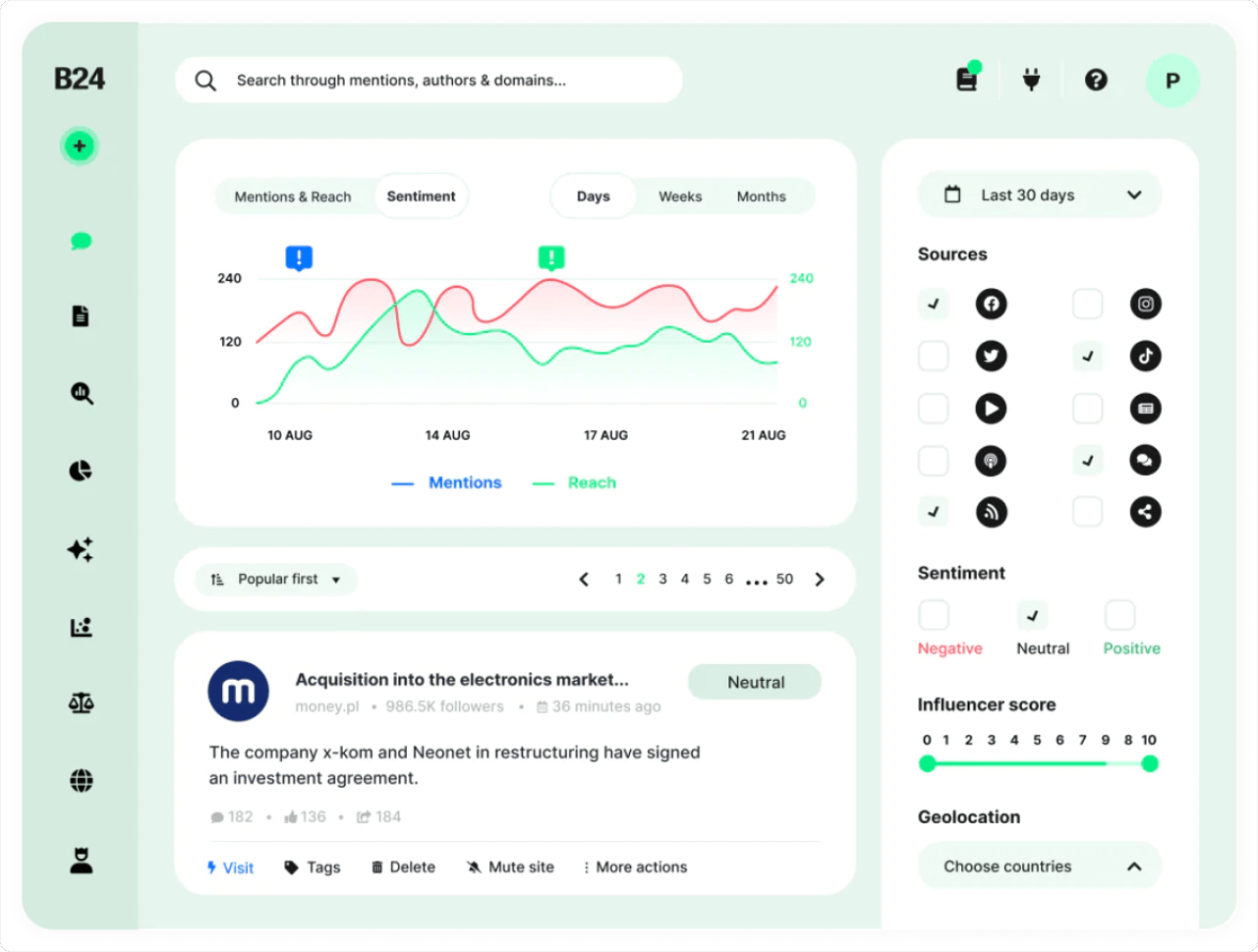
Brand24 is a popular brand monitoring tool for small and mid-sized teams. It watches 25 million+ sources across web and social media, including news, blogs, podcasts, and review platforms. You can start to track mentions within minutes of signing up.
Key features:
Sentiment analysis on every plan
"Storm Alerts" that warn you when mention volume suddenly jumps
An AI Brand Assistant (Pro plan and above) that answers questions about your brand mentions
Pricing: The Individual plan is $199/month billed annually ($249 month-to-month) for 3 keywords and 2,000 mentions. There's a 14-day free trial, no card required.
Best for: Small to mid-sized teams that want AI-driven brand monitoring tools without enterprise pricing. (For a head-to-head, see YouScan vs Brand24.)
Mention
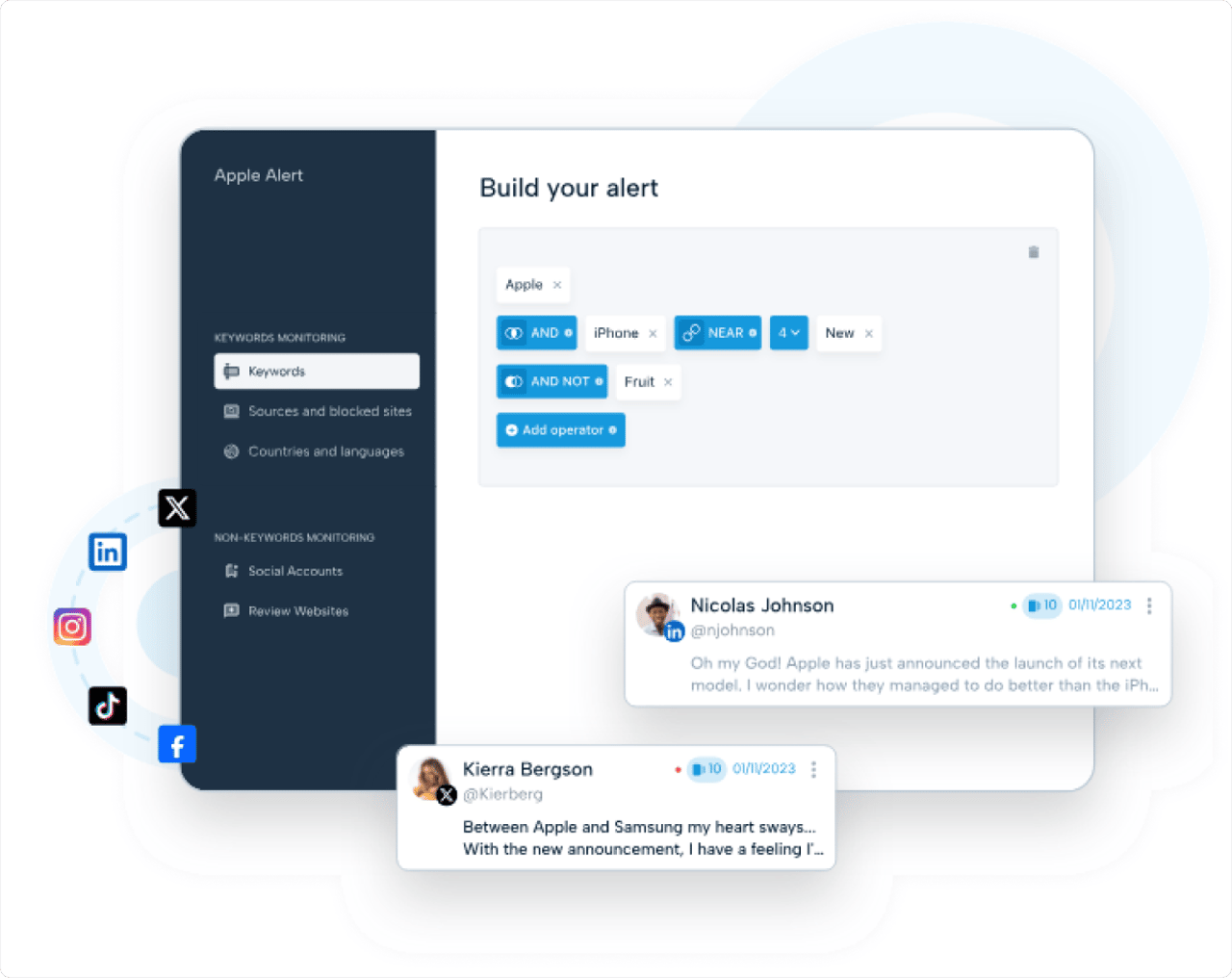
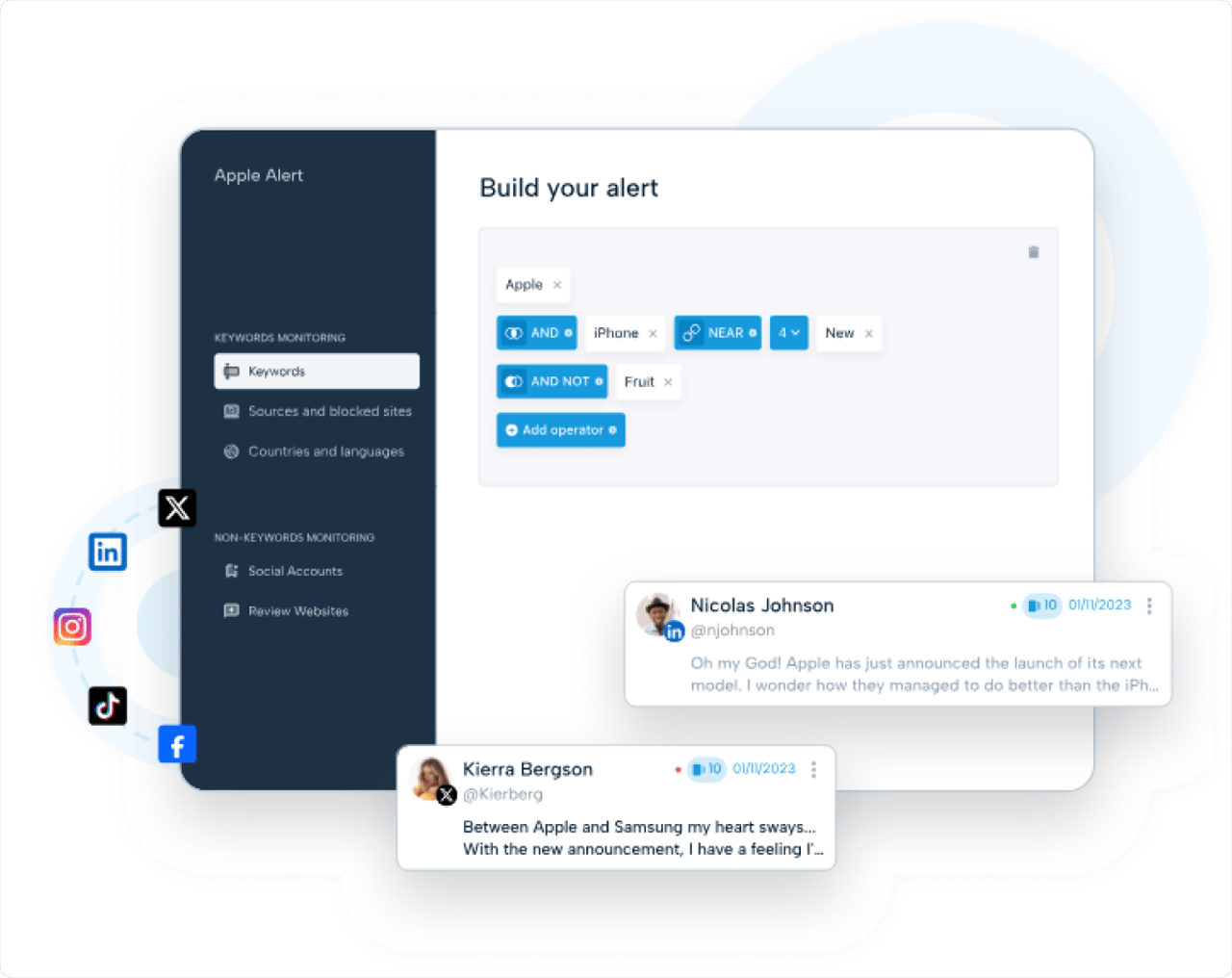
Mention has shifted toward bigger teams lately. It now sells a single Company plan built around social media monitoring, reporting, and collaboration for teams that track brand mentions at scale.
Key features:
Covers social platforms like Facebook, Instagram, X, Reddit, TikTok, Pinterest, and YouTube, plus news, blogs, and forums
Tracks 75+ review sites, handy if customer feedback lives outside social
Share of voice and Boolean search for competitor monitoring
Pricing: The Company plan starts at $599/month on an annual contract, with 5 alerts and 50,000 mentions a month. (The figure is in Mention's help center, not on its pricing page.)
Best for: Larger teams that want heavier reporting and review tracking in one brand monitoring tool.
Enterprise media monitoring and intelligence
These brand monitoring tools are the heavyweights. They pull in print, TV, radio, and podcasts alongside social media coverage, with enterprise contracts to match. If you're a two-person team, feel free to skip ahead. No hard feelings.
Meltwater
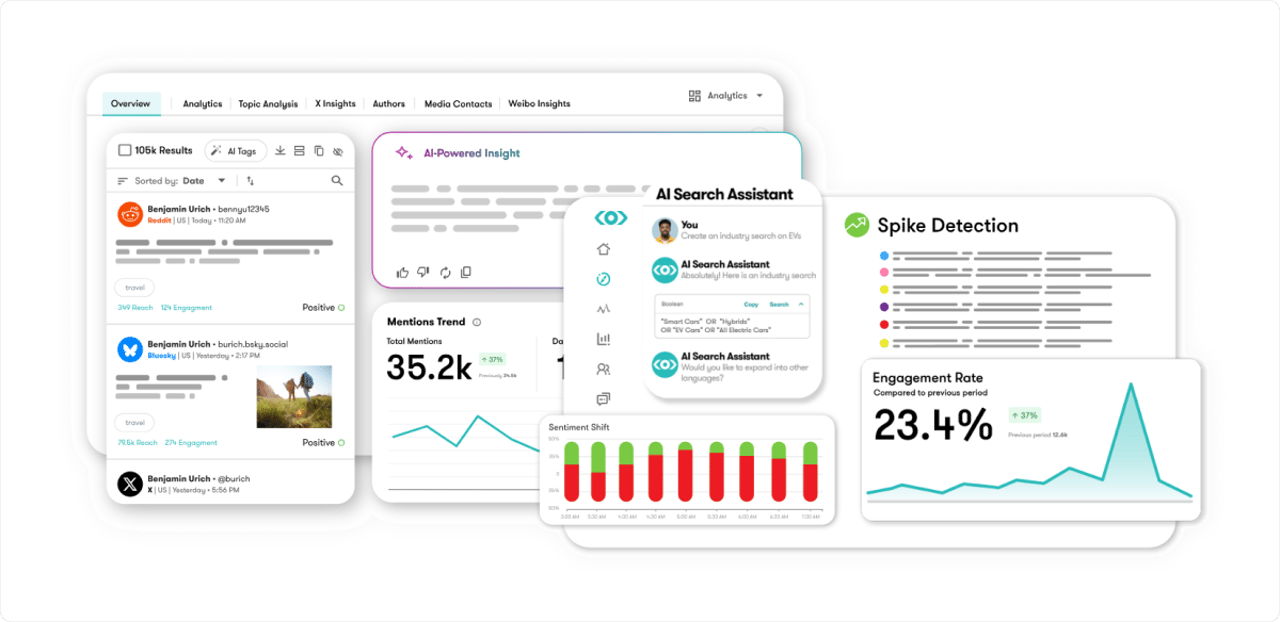
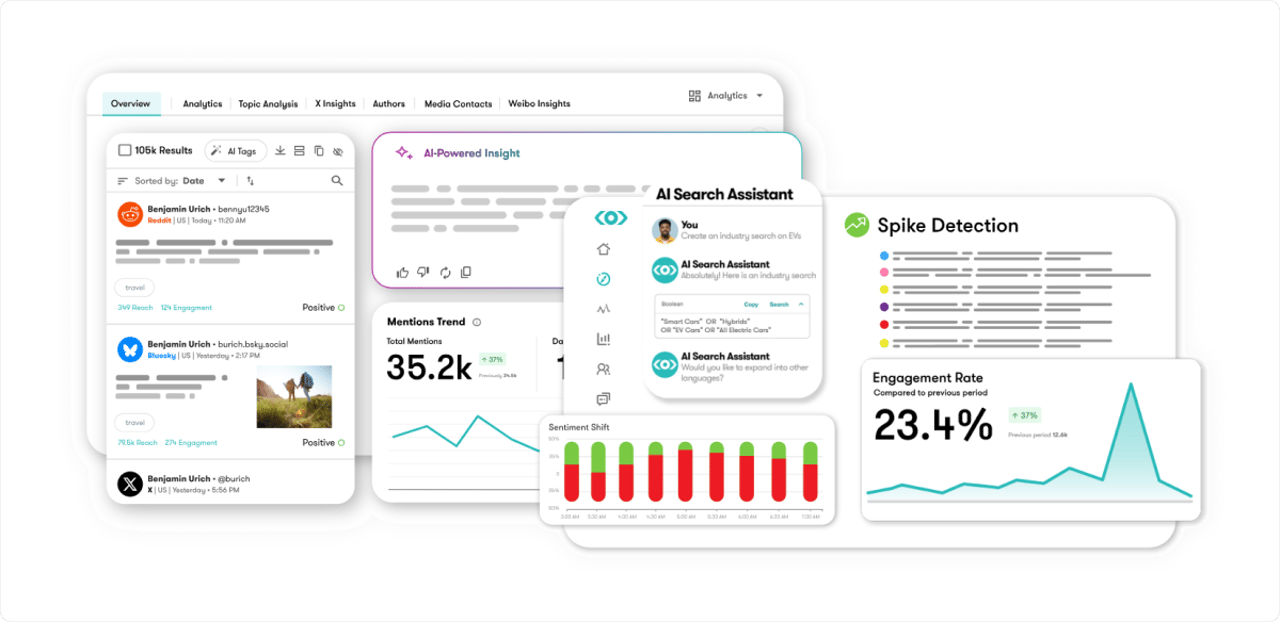
Meltwater started as a media monitoring company for PR teams and still leans that way. Think of it as a newsroom-sized Google Alerts with social bolted on.
Key features:
400,000+ traditional media sources plus online news, podcasts, TV, and radio
Coverage in 240+ languages for global brands
Real-time alerts for press coverage and spikes in brand mentions
AI search and review monitoring in the same platform
Pricing: Quote-only. Meltwater's own pricing guide lists Starter from $10,000 a year, Pro from $25,000, and Enterprise from $130,000.
Best for: PR and comms teams that need social and traditional media monitoring in one place.
Brandwatch
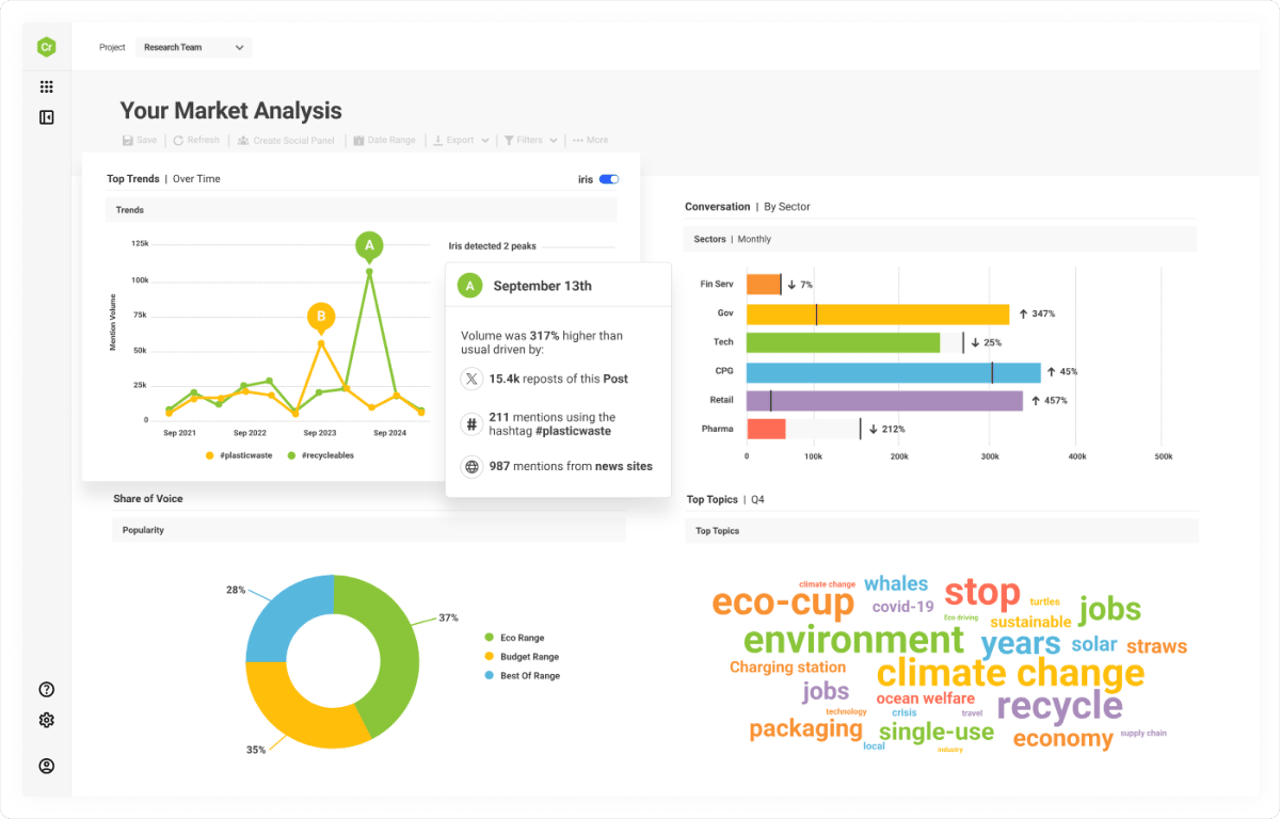
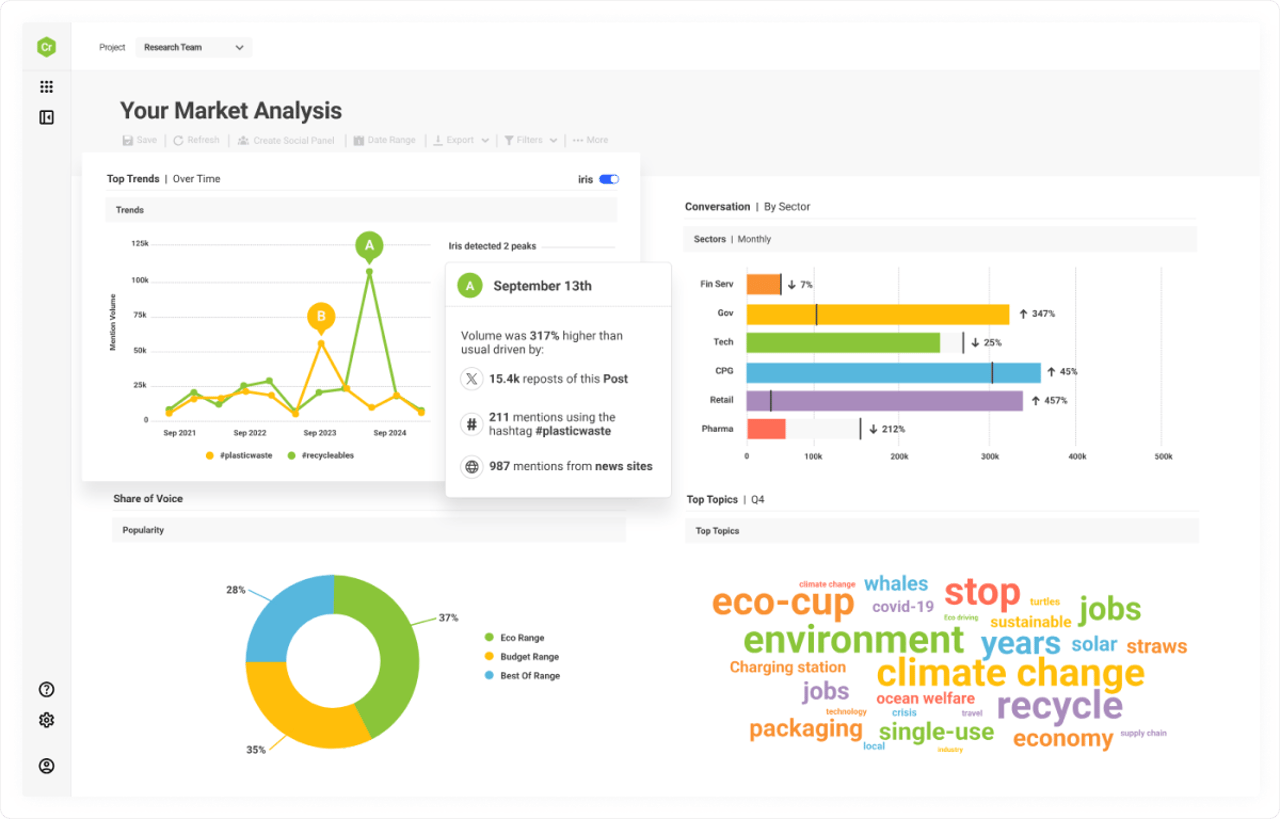
Brandwatch is built for research teams who monitor conversations at scale and like to dig. Its archive goes back to 2010 (about 1.7 trillion conversations), which makes it strong for long-term brand tracking and industry trends.
Key features:
Deep historical data for comparing this year's launch with the last five
An AI assistant that summarizes brand mentions and conversations
Image and logo detection
Advanced audience segmentation
Pricing: Quote-only. Brandwatch doesn't publish prices or offer a free trial; you book a demo to get a number.
Best for: Enterprise insight teams with a dedicated analyst and the budget to match. (If that's not you, look at these
Brandwatch alternatives.)
Budget-friendly monitoring
Not every team needs a Ferrari. These monitoring tools cover the core job on the main social media platforms (track mentions, flag sentiment, send reports) at a price a small business can live with.
Awario
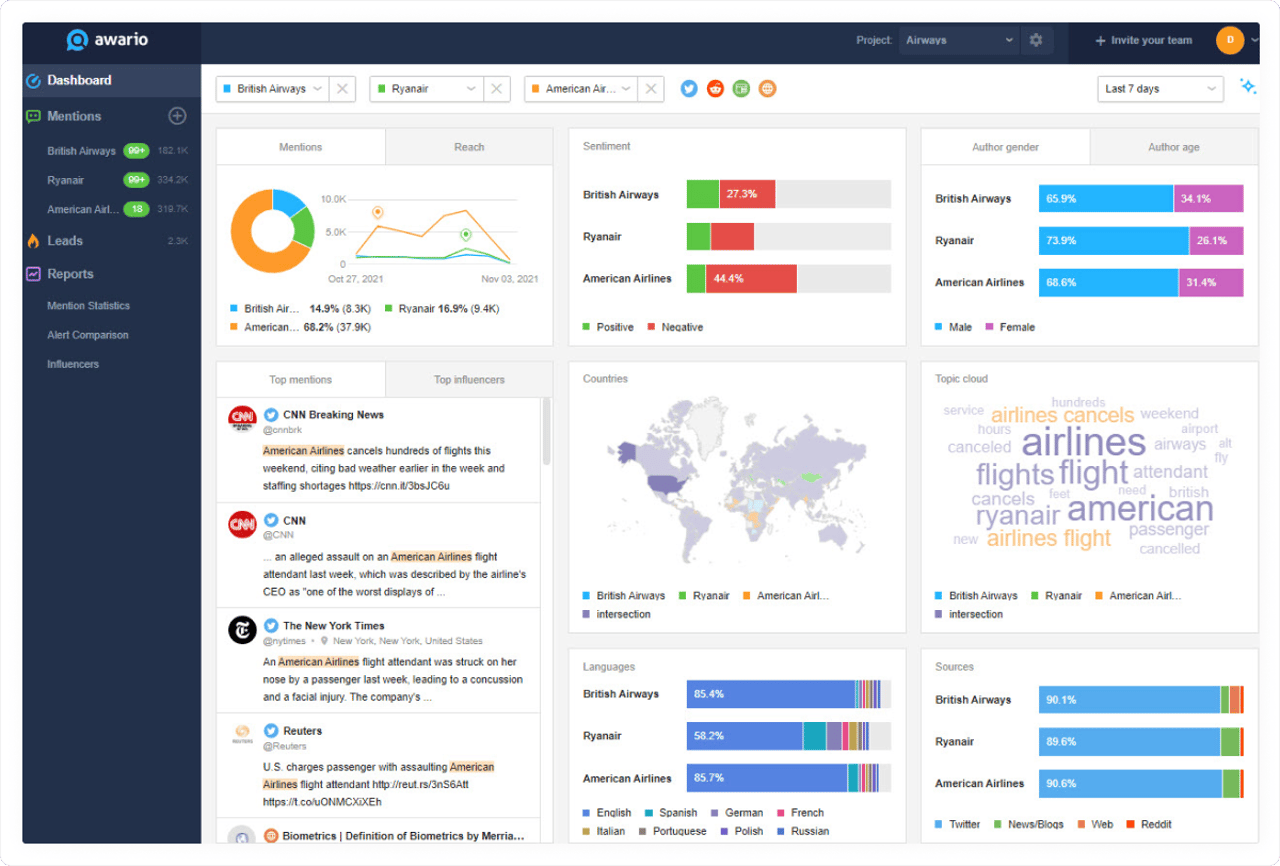
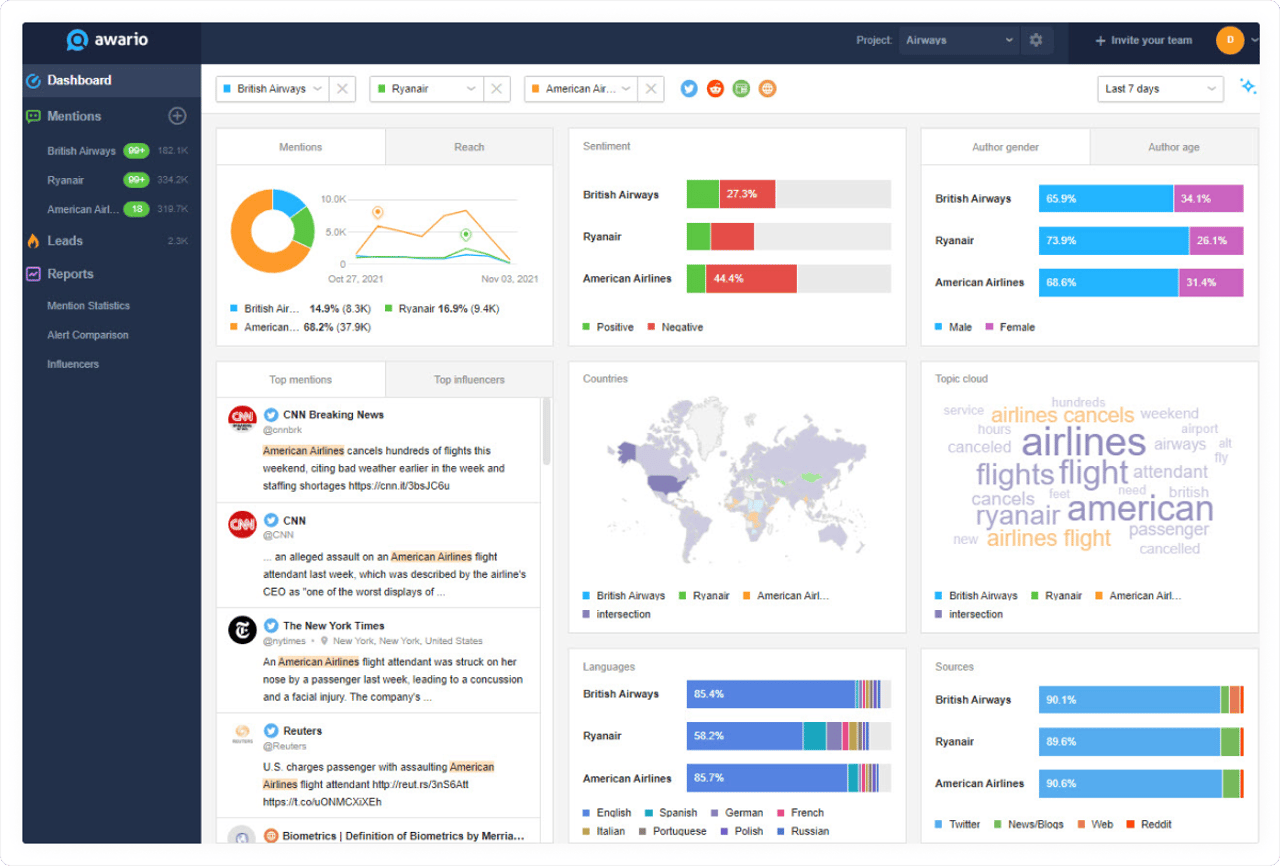
Awario gives you a lot of brand tracking for the money. You get unlimited keywords inside each topic, so you can track mentions of your brand name, common misspellings, and your CEO without paying per keyword.
Key features:
Boolean search for precise queries (and fewer junk results)
Sentiment analysis and mention charts
Side-by-side comparisons for quick competitive analysis
White-label PDF reports and API access on higher tiers
Pricing: Starter is $49/month (29/month billed annually) for 3 topics and 30,000 mentions. Pro is $149/month ($89 annually). A free trial is available.
Best for: Teams that want core brand monitoring tools without Brand24- or Mention-level pricing.
Determ
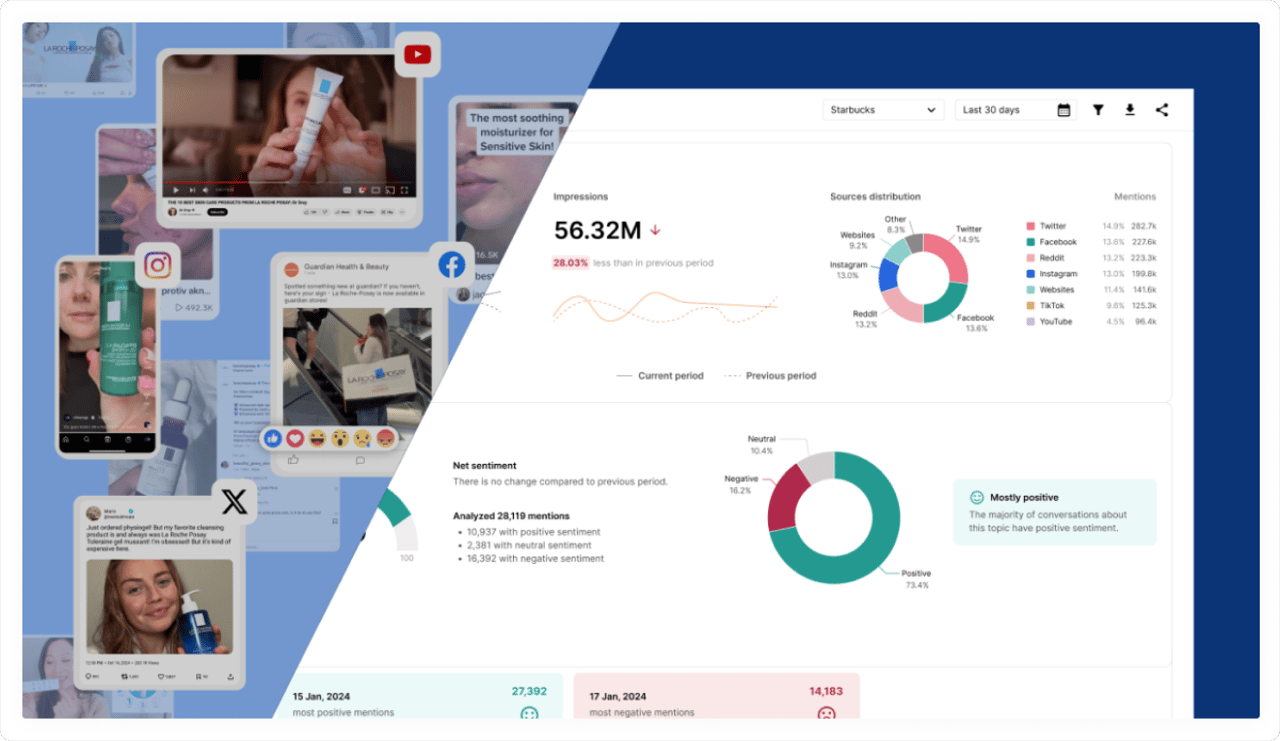
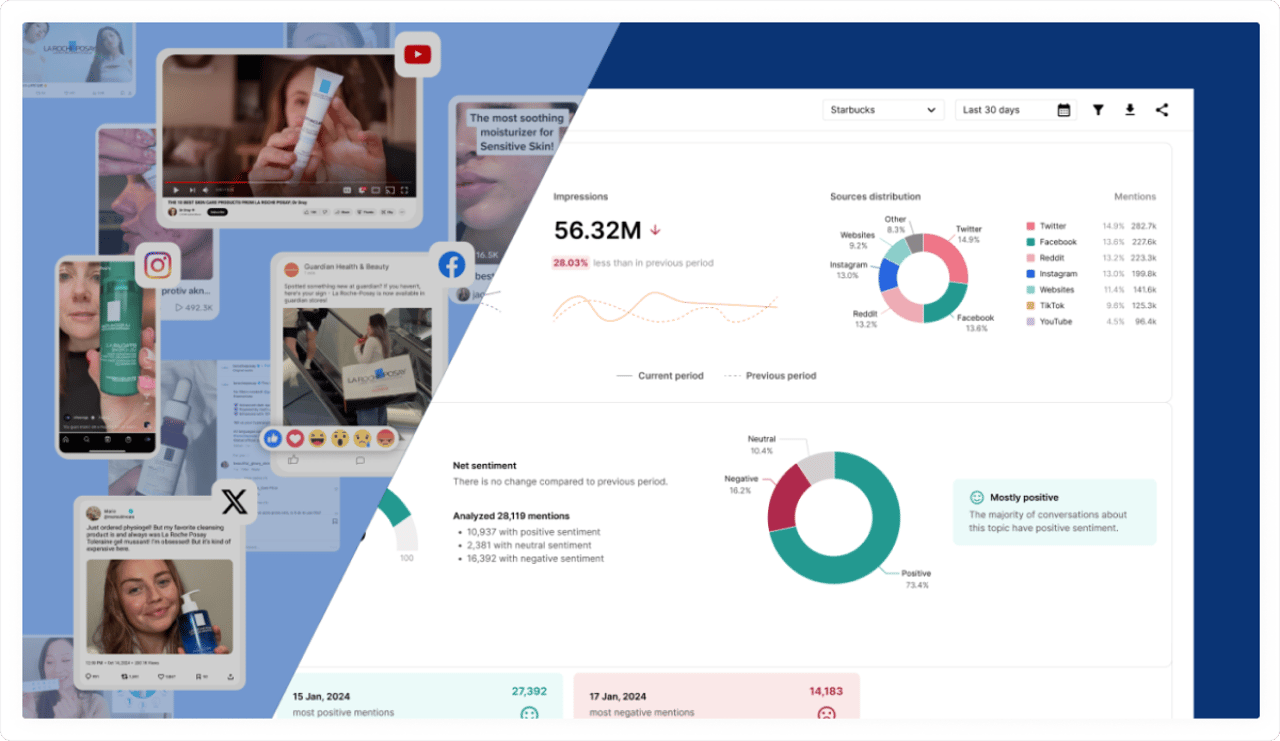
Determ (formerly Mediatoolkit) is one of the media monitoring tools with refreshingly transparent pricing. Every plan includes unlimited users and keywords, which is rare at this price.
Key features:
Real-time alerts and updates on all plans, not just the pricey ones
AI sentiment analysis and automatic summaries
Spike alerts when brand mentions jump, plus exportable PR reports
Pricing: Focus is €99/month (1 topic, 1,000 mentions), Expand is €299/month, and Command is €499/month. There's a 5-day free trial, and annual billing gets two months free.
Best for: PR-leaning teams that want transparent pricing and strong reports without an enterprise contract.
SEO and backlink monitoring
Here's the category most lists forget. Lots of brand mentions never touch a social feed: a "best tools" article, a supplier's blog, a forum thread on page one of Google. You'll only find brand mentions like these with an SEO tool.
Ahrefs
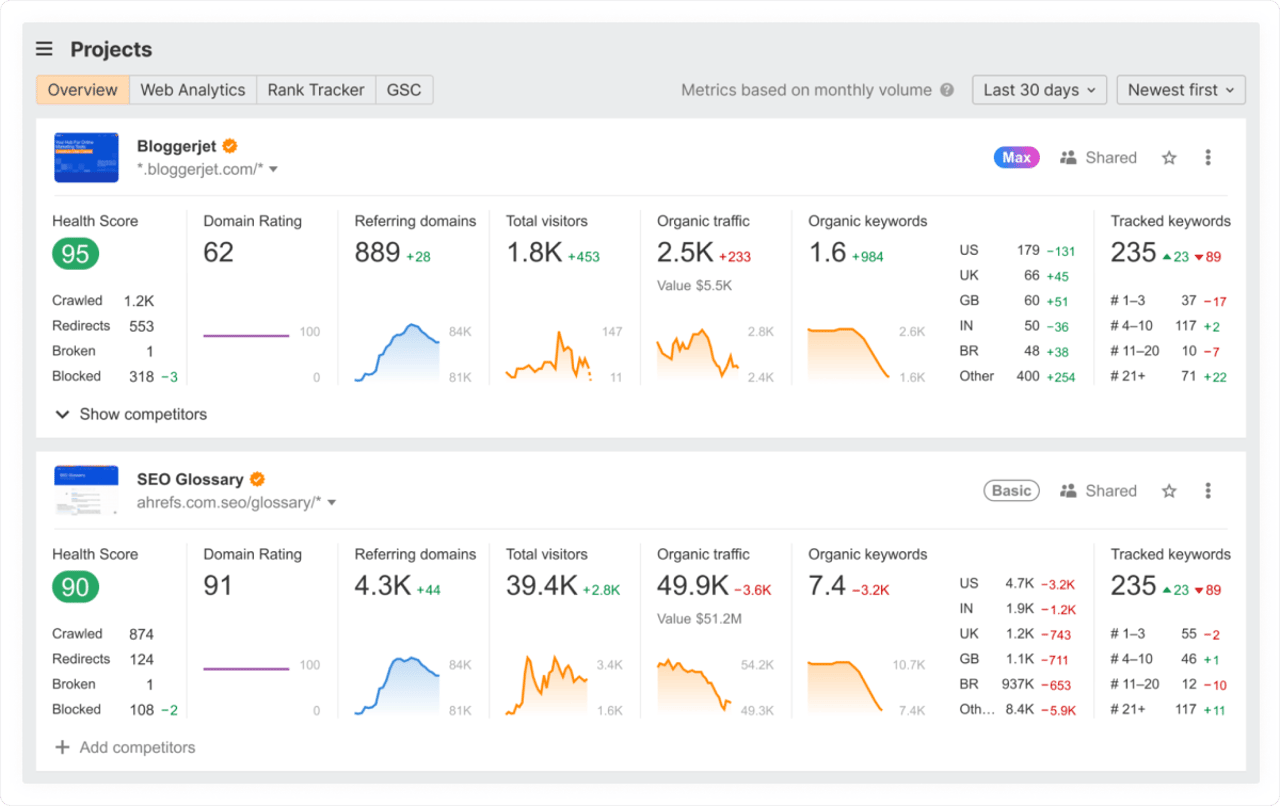
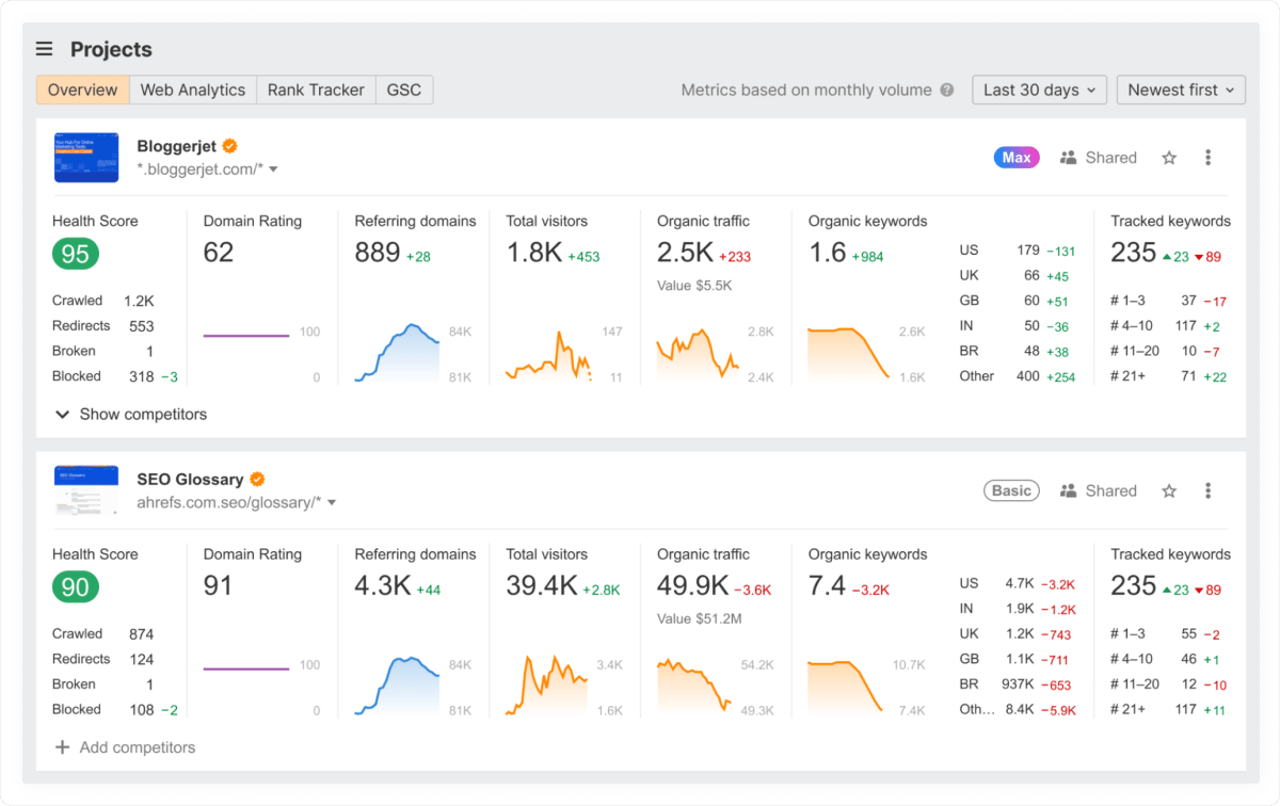
Ahrefs is an SEO platform, not classic brand monitoring software, but it's great at catching web mentions of your brand, with or without a link. Unlinked mentions are low-hanging fruit: the writer already likes you, so asking for a link is an easy win.
Key features:
Ahrefs Alerts flags new web mentions, new and lost backlinks, and new keyword rankings
Site Explorer shows who links to you and your competitors, handy for competitor benchmarking
The Brand Radar add-on tracks how often your brand appears in AI Overviews, ChatGPT, Perplexity, and Gemini
Pricing: Paid plans start at $29/month (Starter) and $129/month (Lite). Brand Radar AI costs extra, from $199/month. No free trial, but the free plan (Ahrefs Free) gives limited access to Site Explorer and Site Audit.
Best for: Teams that want to track brand visibility in search, links, and AI answers, not just social platforms.
Free tools for monitoring brand mentions
If you're not sure you need paid tools yet, start here. Just know what you're giving up.
Google Alerts
Google Alerts is the original free way to find brand mentions. You type in your brand name, and Google emails you when it indexes a new page that matches.
Key features:
Choose "as-it-happens," once a day, or once a week
Filter by source (news, blogs, web, video, discussions), language, and region
No brand monitoring app to install; any Google account works
Pricing: Free.
Best for: Solo founders or small teams that need basic monitoring and want to test whether they need dedicated brand monitoring tools at all.
Here's the catch. Say you run a small coffee roastery with Google Alerts set up to track mentions of your name. One Friday, someone posts a TikTok about a moldy bag of your beans, and it hits 400,000 views.
Google Alerts stays silent, because it doesn't watch social media posts. You find out Monday, from an angry email. It's a decent smoke detector for the web, but it has no idea TikTok exists.
Quick comparison
Tool | Category | Starting price | Best for |
YouScan | All-in-one social and web | $499/month (billed annually) | Visual mentions and sentiment depth |
Brand24 | All-in-one social and web | $199/month (billed annually) | SMBs wanting AI-driven monitoring |
Mention | All-in-one social and web | $599/month (annual contract) | Larger teams, reporting, review sites |
Meltwater | Enterprise media intelligence | Quote-only (from $10K/year) | PR teams tracking press and social |
Brandwatch | Enterprise media intelligence | Quote-only | Research teams needing historical data |
Awario | Budget-friendly | $29/month (billed annually) | Core monitoring on a small budget |
Determ | Budget-friendly | €99/month | PR teams wanting transparent pricing |
Ahrefs | SEO and backlink | $29/month | Web mentions, links, AI visibility |
Google Alerts | Free | Free | Testing the waters |
Which category fits your brand?
The right category depends on the job you need done most. Choose all-in-one tools for social and web conversation, enterprise suites for press and deep research, budget tools for core monitoring, SEO tools for links and AI visibility, and Google Alerts as a free first step. Most teams end up combining two brand monitoring tools.
If you care most about campaign performance and social media marketing
You want to know if people are talking about your marketing campaigns, what they're saying, and whether brand sentiment and brand perception are moving the right way. Brand24 or Awario handle tracking social mentions well on a smaller budget. If your campaigns are visual (fashion, food, beauty, events), YouScan is the stronger pick for measuring campaign performance, because it catches photos where your product appears without a caption.
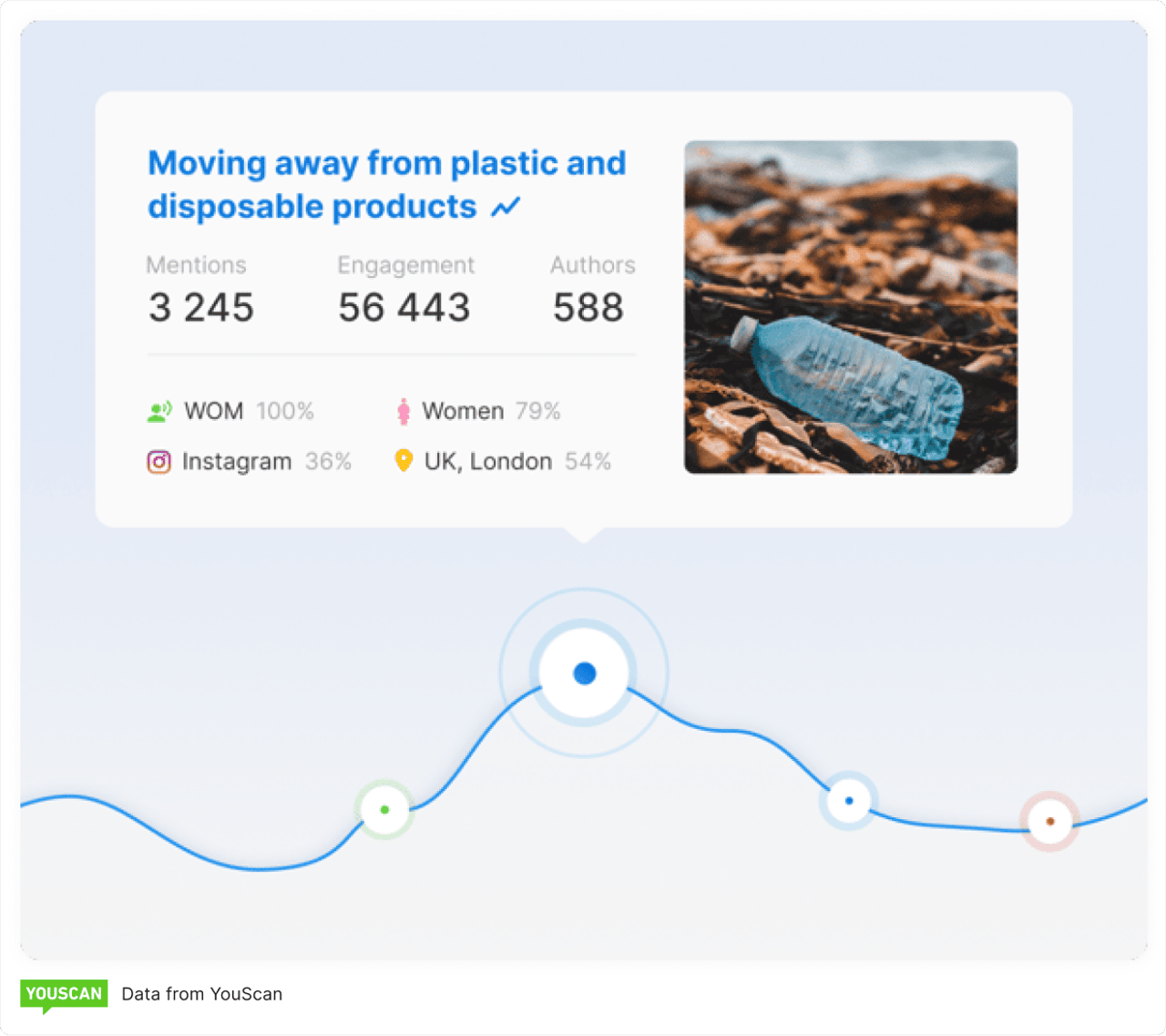
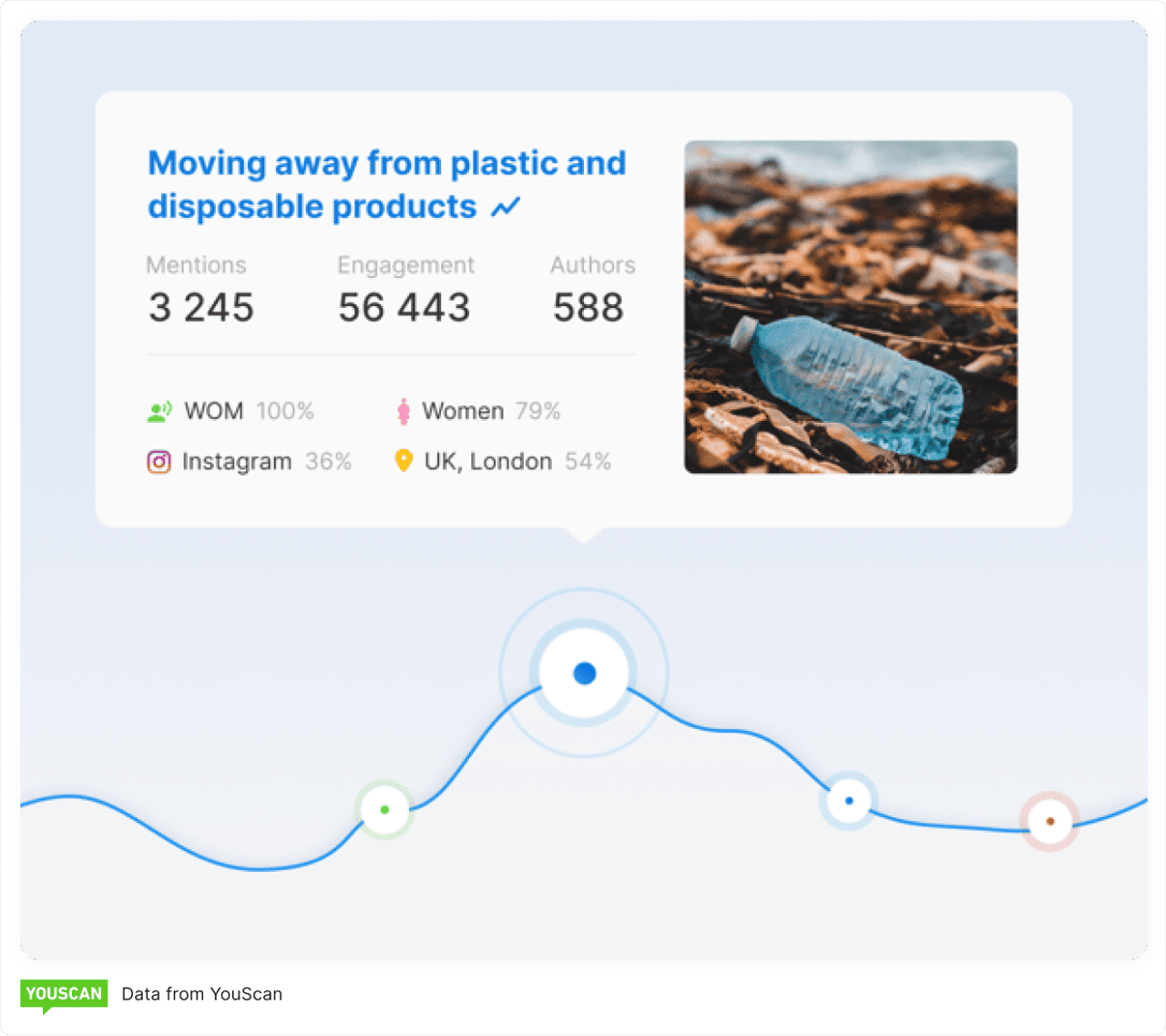
One thing to watch: a social media management tool you use to schedule posts isn't the same as monitoring. A typical social media management platform only tracks mentions of your own brand accounts: tags, replies, comments. Social media management software misses people talking about you without tagging you, who are usually the more honest crowd. Social media management and social media monitoring work best side by side, and this roundup of social media monitoring tools covers the overlap.
If you need market research and competitor benchmarking
Here you need depth and history for competitive analysis. Brandwatch shines if you have an analyst and years of historical data to explore. YouScan's Insights Copilot works well for faster competitor benchmarking: ask one question about your whole category, analyze sentiment across brands, and get a report back with competitor insights, your competitors' brand mentions, and share of voice. The pages on competitor analysis and market research show how teams set this up.
For everything else
PR and press coverage: Meltwater at enterprise scale, Determ if you want transparent pricing
Brand reputation and crises: look for crisis management features like spike alerts, then read up on PR crisis management before you need it
Long-term brand tracking and brand health: any all-in-one tool with trend reports and customer feedback tagging;
brand health tracking shows what to measureSearch, backlinks, and AI answers: Ahrefs
Just testing the waters: Google Alerts, then upgrade to a reliable brand monitoring tool when it starts missing things (it will)
The bottom line: pick the job, then the tool
Brand monitoring is a bigger job than any single social listening ranking covers. Your brand presence spans social feeds, review sites, news, backlinks, and AI answers, and no single brand monitoring tool excels at all of it.
So don't start with "what's the best brand monitoring tool?" Start with "what do you most need to watch?" Choose the category first, then the tool inside it. You'll avoid paying for enterprise depth you'll never use, and you'll stop missing the mentions that matter.
If sentiment depth and visual recognition sound like your gap, book a YouScan demo and see how it fits into your brand monitoring efforts.
FAQs
What is a brand monitoring tool?
A brand monitoring tool tracks online mentions of a brand, product, or company across channels like social media, news sites, blogs, forums, review sites, and sometimes backlinks. It typically shows mention volume, sentiment, and reports, so your team can understand how people talk about the brand and respond quickly to problems or opportunities as they come up.
What is the difference between brand monitoring and social listening?
Brand monitoring is the broader practice of tracking any online mention of a brand across every channel, including social media, the web, news, reviews, and backlinks. Social listening is a deeper analysis layer applied to social conversations, focused on sentiment, context, and the meaning behind mentions rather than just counting them. Social listening is a specialized part of brand monitoring.
What is the best free brand monitoring tool?
Google Alerts is the most widely used free brand monitoring tool. It sends you an email whenever Google indexes new content that matches your chosen keyword. It doesn't cover social media conversations, sentiment analysis, or reporting, so it works best as a starting point or a supplement to dedicated brand monitoring tools rather than a full replacement.
How much should a brand monitoring tool cost?
Brand monitoring tool pricing spans a wide range. Free options like Google Alerts cost nothing, while budget tools such as Awario and Brand24 run roughly $30 to $250 a month. Mid-market platforms like YouScan and Mention sit around $500 to $600 a month. Enterprise suites like Meltwater and Brandwatch require a custom quote, and Meltwater's own guide starts at $10,000 a year.