What Is Social Media Analytics? Everything Marketing Teams Should Know
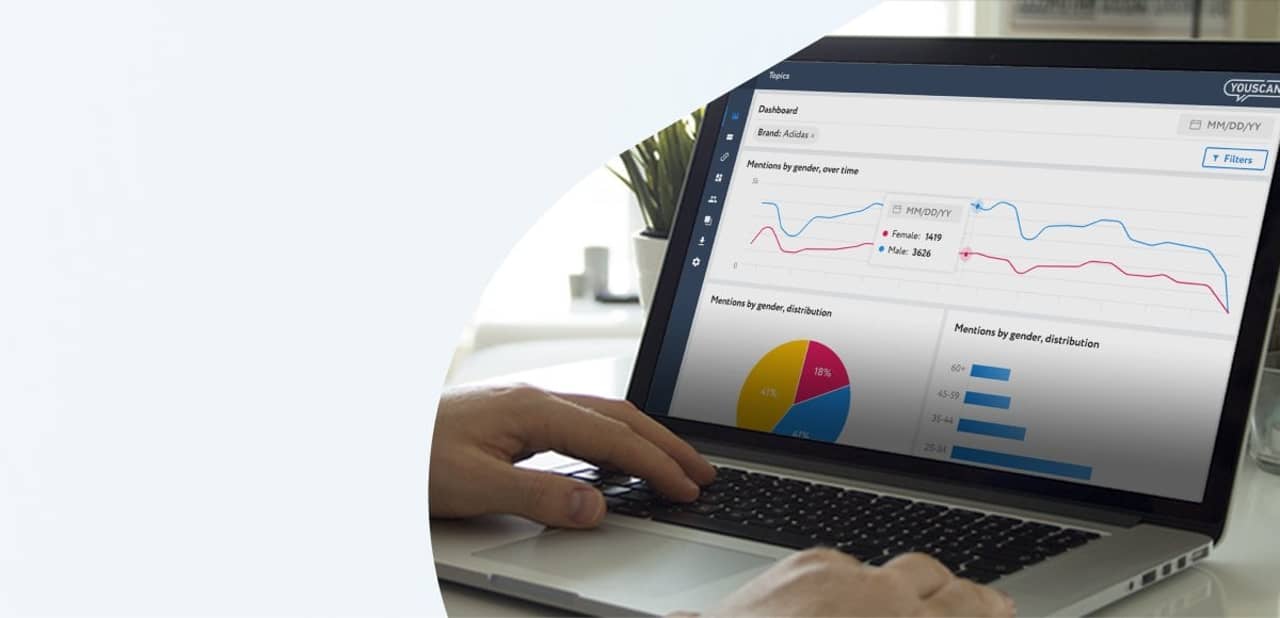

Most teams don't have a data problem. They have a nobody-opens-the-dashboard problem.
Every platform hands you numbers for free. Reach, impressions, saves, follows, watch time. The reports pile up, someone screenshots a chart for Monday, and the whole thing gets ignored until the next planning cycle. That's not social media analysis. That's admin.
So let's answer the actual question. What is social media analytics, which metrics deserve your attention, and how do you build the habit of using them? The short answer? Social media analytics is the difference between reporting what happened and knowing what to do next. Social media analytics tools have become cheap and good. The habit of using them hasn't caught up.
What is social media analytics?
Social media analytics is the practice of collecting, measuring, and interpreting social media data so you can judge what's working and make better decisions. Good social media analytics tools do the collecting for you, which leaves your team free to do the interpreting. It covers your own social media posts, the conversations happening about your brand, and your paid social media campaigns.
Analysts usually sort social media analytics into four questions:
Descriptive: what happened? (Engagement dropped 14% in June.)
Diagnostic: why did it happen? (You posted six times instead of eighteen.)
Predictive: what happens next? (Predictive analytics says engagement recovers when cadence does.)
Prescriptive: what should we do? (Rebuild the content strategy before the launch.)
Plenty of marketing teams never get past the first question. And that's exactly where social media analytics stop being useful and turn into a chore.
Social media analytics vs. social listening
These two get muddled constantly, so here's the clean split.
Social media analytics measures what you own: your social media accounts, your organic social media marketing, your ads.
Social listening covers everything you don't own. Brand mentions, complaints, memes, reviews, and arguments in a comment section that will never appear in native platform analytics.
You need both. Most social media analytics tools handle the first job well and the second one barely at all. Owned social media performance tells you whether your content lands. Unowned conversation tells you what your target audience actually thinks. If the terminology gets fuzzy, our social listening glossary sorts it out.
Why is social media analytics important right now?
Because budgets aren't moving, and someone is going to ask you to prove your worth.
Gartner's 2026 CMO Spend Survey found marketing budgets sitting flat at 7.8% of company revenue, with 56% of CMOs saying they don't have the money to deliver their strategy. An earlier Gartner survey put budget and resource constraints at the top of the challenge list for 63% of marketing leaders. Flat budgets mean every line item gets questioned, including your social media marketing.
Meanwhile, the audience keeps growing. DataReportal counts 5.79 billion social media users worldwide as of April 2026, close to 70% of the planet. More people, more social media platforms, more noise, same headcount.
That's the value social media analytics hold for a team under pressure: evidence instead of vibes. Four things social media analytics help with specifically.
You learn what your target audience responds to. Audience analytics show you audience demographics, active hours, and audience behavior. What works on TikTok rarely works on LinkedIn, and audience behavior shifts by season.
You spend better. Paid social analytics tell you which creative earns its budget, so you can kill weak marketing campaigns mid-flight instead of letting them run.
You catch problems early. Brand sentiment turning negative is a signal you want on day one, not after a journalist calls.
You can defend the work. Social media ROI numbers travel further in a budget meeting than a screenshot of a viral post.
Where social media analytics help most, though, is in the ordinary weeks rather than in crises. Here's the uncomfortable part: social media analytics matter most when things go wrong, and that's exactly when most teams discover their social media tracking doesn't reach far enough.
Who actually needs social media analytics?
Different teams pull different things out of the same social media data.
Social media managers want post-level performance metrics and fast feedback on what to publish next.
Brand and PR teams want brand sentiment, share of voice, and an alert before a bad day becomes a bad week.
Digital marketing and growth teams want traffic, conversions, and social media ROI they can put in a deck.
Product and insight teams want unprompted feedback: what people praise, what they return, what they wish existed.
Agencies want social media reporting a client can read without a follow-up call.
What makes social media analytics important isn't the dashboard. It's that five teams can pull five different answers out of one data set.
One set of social media data analytics, five different questions. Which is why most arguments about "the right key metrics" turn out to be arguments about whose job the report serves. Nobody needs every number. They need the six that answer their question, which is the argument for social media analytics tools that let each team build its own view.
The seven types of social media analytics
Social media analytics is an umbrella term, and most social media analytics tools only cover part of it. Underneath it sit several distinct jobs, and confusing them is why so many reports feel busy but say nothing.
Performance analytics
The basics: engagement rate, reach, impressions, follower growth, watch time. Performance analytics answer "Is this content any good?" at both post level and account level. Read performance metrics over rolling periods rather than single social media posts. One viral video tells you almost nothing, and follower growth without engagement usually means you bought an audience that doesn't care.
Audience analytics
Who's actually out there? Audience analytics covers age, location, language, interests, and when people are online. Useful for content strategy, essential for targeting. It's also where plenty of marketing teams find out that their assumed target audience and their real target audience aren't the same people.
Competitive analysis
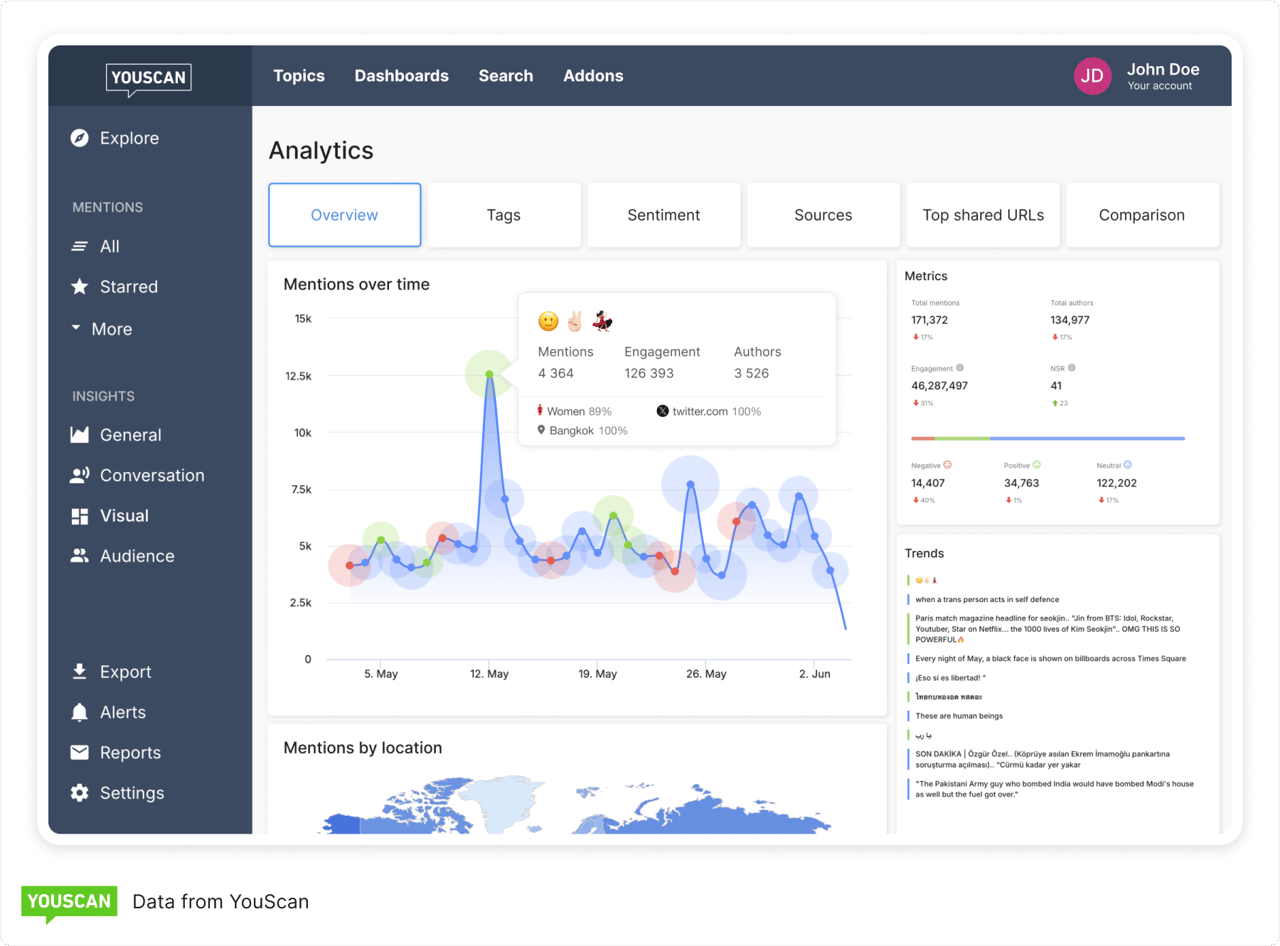
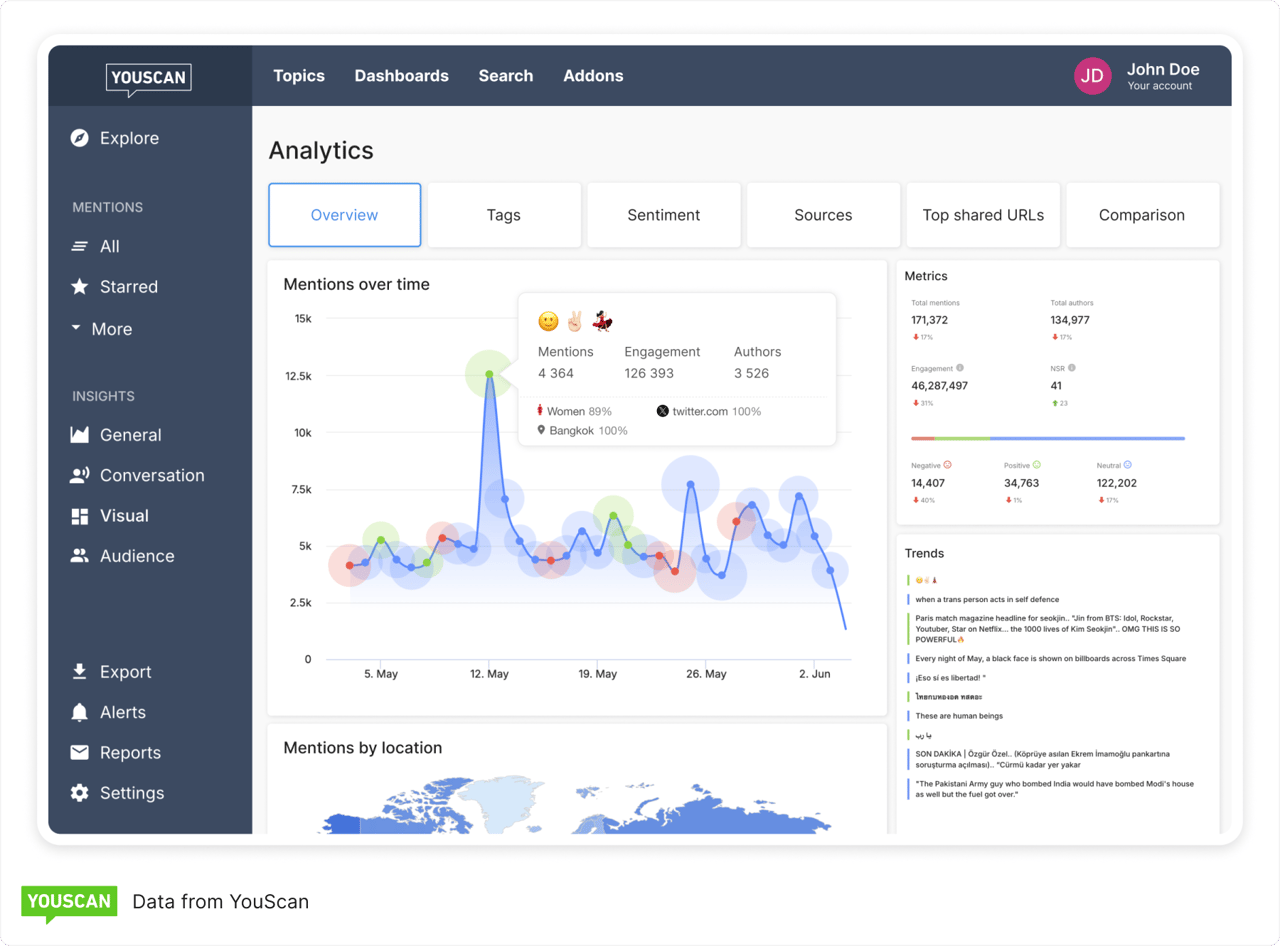
Your engagement rate means little without context. Competitive analysis compares share of voice, posting cadence, and sentiment against rivals in your category. Knowing you grew 4% is fine. Knowing you grew 4% while a competitor grew 19% is actionable, which is why we built competitor analysis into the platform rather than leaving it as an export.
Sentiment analysis and social listening
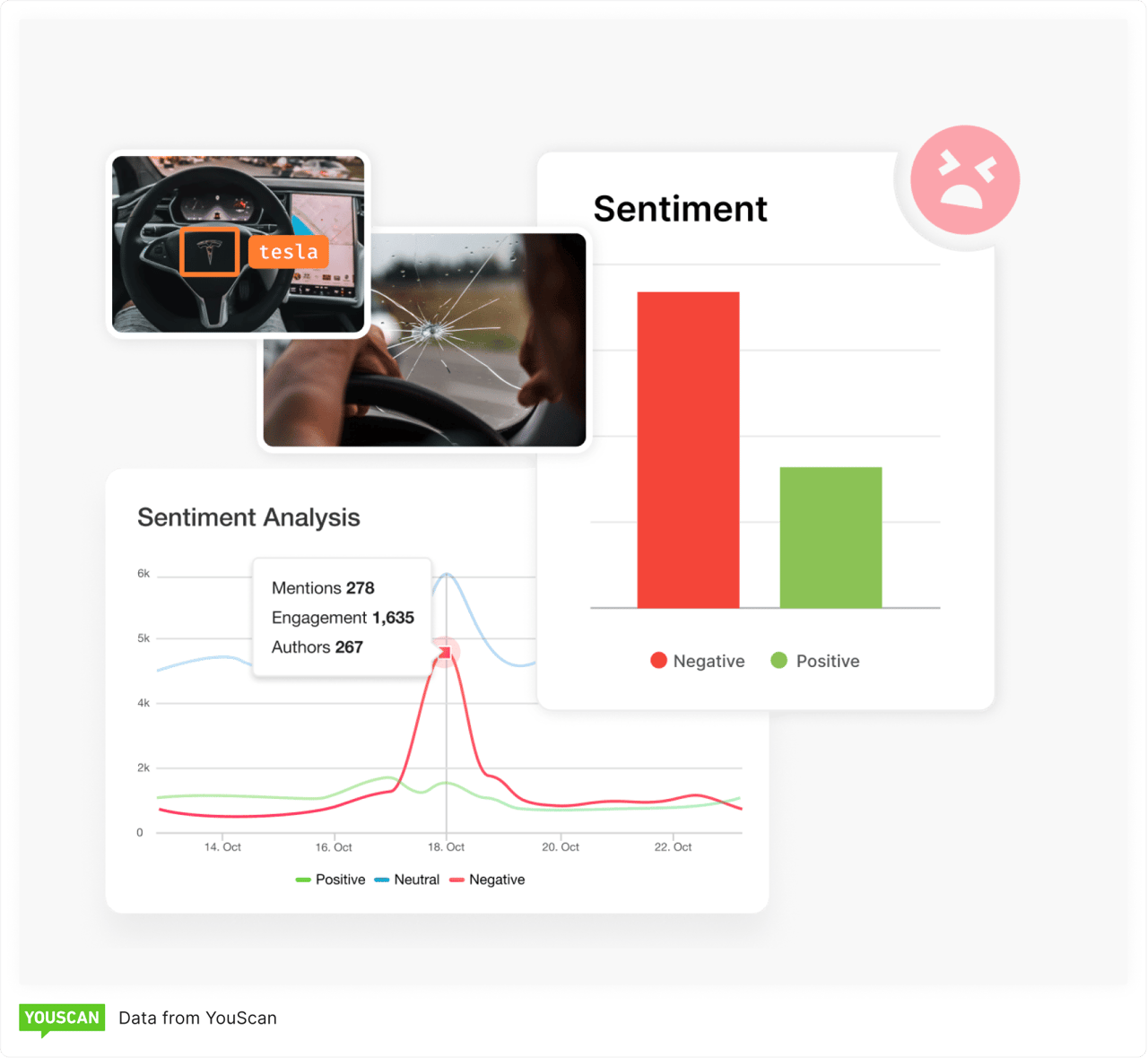
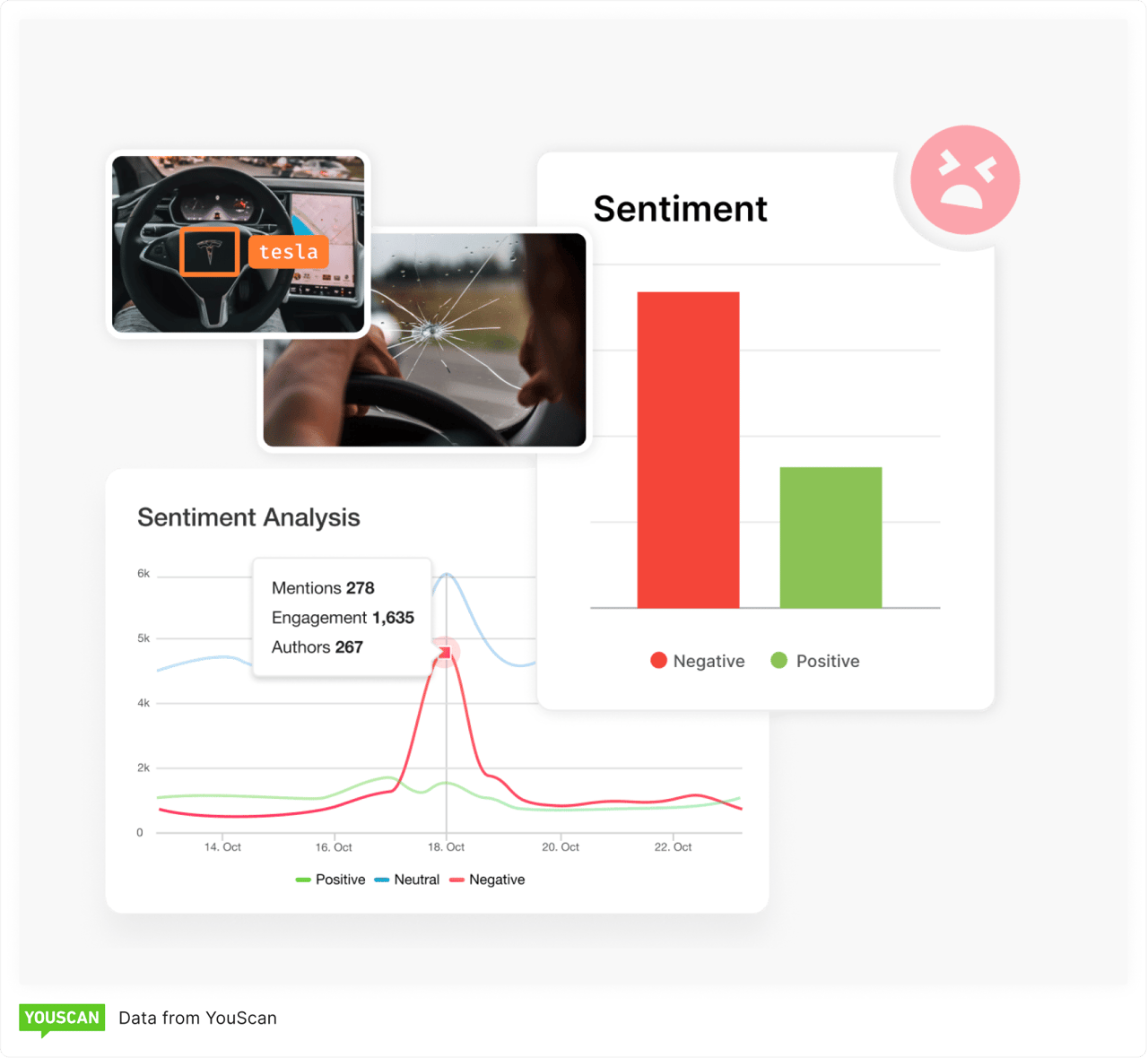
Volume without emotion is half a picture. Social media sentiment analysis uses natural language processing to classify mentions as positive, negative, or neutral, and the better systems read sarcasm, slang, and mixed feeling inside a single post.
Going further, aspect-based sentiment analysis splits brand sentiment by product feature, so "great screen, terrible battery" doesn't get flattened into "neutral." Natural language processing has improved enough that this counts as table stakes now, not a luxury, though plenty of social media analytics tools still flatten everything into three buckets. We compared the market in our roundup of sentiment analysis tools.
Paid social analytics
Cost per click, CPM, ROAS, conversion rate. The trick with paid social analytics is reading paid and organic side by side. When an organic post outperforms, put budget behind it. When social media campaigns underdeliver, move the money. Teams that separate the two reports usually make both worse.
Influencer analytics
Reach is the vanity number. Influencer analytics measures engagement quality, conversions, and cost per result. Managing influencer partnerships without that social data means renewing contracts on gut feel, which gets expensive fast.
Predictive analytics
Newer, and genuinely useful once your social media analytics have enough historical performance data behind them. Predictive models forecast which topics are rising and when your audience is likely to respond. They're only as good as the historical data feeding them, so don't expect much in month one.
Key social media metrics worth tracking
Tracking everything is the same as tracking nothing. Pick three to five key metrics per goal and let the rest sit in the tool. Your key performance indicators should map to business outcomes, not to whichever chart looks healthiest this month.
Business goal | Key social media metrics | Why it earns a slot |
Awareness | Reach, impressions, follower growth, share of voice | Shows whether more of the right people see you |
Engagement | Engagement rate, comments, shares, saves | Tells you if content is worth interacting with |
Conversion | Click-through rate, conversion rate, cost per conversion | Connects social media efforts to revenue |
Brand health | Brand mentions, sentiment trend, share of voice | Flags reputation trouble early |
Support | Response time, sentiment score, CSAT | Measures whether customers get help |
Engagement metrics
Engagement metrics measure interaction: engagement rate, saves, shares, comments, and replies. Shares and saves usually beat likes as a quality signal, because they cost the user something. Our guide to measuring social media engagement breaks down the formulas.
But engagement metrics lie when you read them alone. Ten thousand angry comments are a high engagement rate and a bad week.
Traffic and conversion metrics
This is where social media performance meets the business. Click-through rate, sessions from social, sign-ups, revenue attributed. Tag every link with UTM parameters, otherwise, your conversion numbers collapse into "direct traffic" and you'll never win an argument with finance again.
What social media analytics looks like in practice
Theory is cheap. Here's a scenario that plays out in a real marketing team every quarter.
A skincare brand runs social media campaigns across four social media channels. Engagement rate on Instagram falls 30% in three weeks. Native analytics say reach dropped. True, but not an answer.
So the social media manager opens the social media analytics dashboard and starts asking better questions. Performance metrics by format show carousels holding steady while video collapses. Audience analytics show a slice of the target audience shifted to evening viewing once the school term started. Audience demographics haven't moved. Brand sentiment is flat, so this isn't a reputation problem.
Then social listening supplies the missing piece: a competitor launched a rival product and took 12% more share of voice in the same window. None of that was visible in the native dashboards.
The fix isn't posting more. It's shifting publishing times, rebalancing the content strategy toward carousels, and putting paid budget behind the two videos that survived. That's social media analysis doing its job. Four sources of social media data, one decision, no guesswork. Marketing strategies built on that kind of evidence survive contact with a budget review.
It's also why social media analytics help most when they're boring and routine. That team caught the drop in week three because somebody was looking. Plenty of brands find out in the quarterly review, by which point the social media ROI conversation has already gone badly.
Social media analytics tools: three layers that do different jobs
No single product does all of this well. Most functional stacks combine three kinds of social media analytics tools.
Native analytics tools
Every channel ships its own dashboard. Meta Business Suite, TikTok Analytics, LinkedIn page analytics, YouTube Studio. Native analytics are free, accurate at the post level, and painful at scale. Every one of the big social media platforms defines engagement slightly differently, so comparing them side by side is manual work.
The catch with native analytics tools: no cross-platform view, short data retention, and zero visibility into anything that doesn't tag your handle. Fine for one channel. Rough once you run six social media channels across three brands, which is where dedicated social media analytics tools start paying for themselves.
Google Analytics
Google Analytics picks up where the social media platforms stop, tracking what visitors do after the click. Referral traffic, on-site behavior, conversions. Pair Google Analytics with disciplined UTM tagging and you can trace revenue back to a specific campaign. It's free, it's not optional, and it remains the fastest way to prove social media marketing drives more than applause.
Worth saying plainly: Google Analytics is web analytics, not social media analytics. It sees the click, never the conversation. Treat it as one of your social media analytics tools, not the whole toolkit.
Social listening and third-party analytics tools
This is the layer most teams underbuy. Social media management tools and social media management software handle publishing and owned reporting across multiple platforms. Social listening platforms handle everything else, and the two categories solve different problems.
YouScan sits in the second group. It tracks social media mentions across social networks, news, blogs, forums, and review sites, reads images and video for logos even when nobody types your name, and rolls the results into social listening dashboards you can slice by team. If you're comparing third-party tools, our breakdown of social media monitoring tools and our list of Meltwater competitors are decent starting points. Between them, these three groups of social media analytics tools cover owned performance, paid performance, and the conversation you don't own.
How to build a social media analytics strategy
A tool doesn't produce insight. A habit does. Six steps, and none of them are technical.
1. Set goals that ladder up to business outcomes. "Grow engagement" isn't a goal. "Raise Instagram engagement rate 15% before the Q4 launch" is a goal your social media marketing strategy can be measured against. Your social media strategy should name the number it is chasing.
2. Pick key metrics per goal. Three to five. Write them down. Defend the list when someone asks for another column.
3. Choose social analytics tools deliberately. Native for post detail, Google Analytics for downstream traffic and conversion numbers, a listening platform for unowned conversation. Most teams end up running two or three social media analytics tools rather than one.
4. Set a reporting cadence. Daily glances at your busiest social media channels, a weekly review, a monthly deep read. Social media managers who check constantly but never review properly end up reacting to noise.
5. Analyze and act. Look for sustained movement, not single spikes. Form a theory, test it, then measure performance again against the same baseline. Marketing strategies that never get tested are just opinions with a calendar.
6. Report in the language leadership uses. Lead with revenue and pipeline. Put platform numbers in the appendix. Social media reporting that opens with impressions gets skimmed, and a social media strategy nobody reports on quietly stops existing.
Run this for two quarters, and you'll have historical performance data worth something, plus a set of data-driven insights you can actually defend. Run it for a week, and you'll have a spreadsheet. Periodic social media audits help too, if only to delete the metrics nobody has looked at since March.
The blind spot in most social media analytics setups
Here's where the standard advice runs out.
Almost every social media analytics strategy assumes the conversation happens somewhere you can see it. It doesn't. For digital marketing teams, the gap between a social media strategy and what the dashboard covers is where the expensive surprises live. Untagged complaints, image-only posts, niche forums, semi-private communities. Reddit social listening alone surfaces threads that never touch a native dashboard.
And the sources keep multiplying. In March 2026, we added Moltbook monitoring, which tracks an AI-only social network where bots discuss brands, products, and security tactics. Sounds niche. It isn't. Those conversations get screenshotted and reposted onto X and LinkedIn, where they shape real perception. We watched Moltbook grow from its first mention to 500,000+ conversations while sentiment shifted around a security incident.
The lesson isn't "monitor bots." It's that social media analytics coverage decays unless somebody keeps checking what it misses. That's the case for AI social listening, and more broadly for treating social media intelligence as a research function rather than a reporting one.
Three other failure points worth naming:
Data silos. Six dashboards, no shared definition of "engagement." Standardize definitions first, reports second.
Attribution gaps. No UTMs, no conversion tracking, no case to make when budgets tighten.
Analytics literacy. If one person is the only one who can read the numbers, your marketing efforts stall the week they go on leave. Tie social media marketing efforts to a number somebody outside the team cares about, or those marketing efforts get filed under "brand" and cut first.
Fix those three, and your social media data analytics get sharper without a single new subscription.
Start with the conversation you're not seeing
If your reporting only covers your own social media accounts, you're measuring the part of the picture you already control. The interesting material, what people say when they don't tag you, what they photograph, what they complain about at 2am, sits outside it.
Social media analytics tools can only report on the data you point them at. Want to see how your brand looks from the other angle? Request a free YouScan demo, and we'll walk you through it.
FAQ
What is social media analytics in simple terms?
Social media analytics is the practice of collecting and interpreting data from social media platforms to understand how your content performs and what people say about your brand, then using that to decide what to do next.
What are the 4 types of social media analytics?
Descriptive (what happened), diagnostic (why it happened), predictive (what's coming), and prescriptive (what to do about it). Most teams stop at the first.
Which social media metrics should I track?
It depends on the goal. Common picks: engagement rate, reach, click-through rate, conversion rate, share of voice, and sentiment score. Three to five per goal is plenty.
Is Google Analytics enough on its own?
No. It shows what happens after someone lands on your site, but nothing about brand conversations, sentiment, or competitor share of voice. It's one layer of your social media analytics stack, not the whole thing.