Scaling a Complex Beauty Taxonomy Across 27M Mentions & 6 Categories: YouScan × SAMY

What is SAMY?
SAMY is a leading social-first agency with offices across the world. It helps global brands thrive in their online communications through creativity, technology, and research. Its services span research and strategy, creative and innovation, social and influencer marketing, media and commerce, and technology and CX.
A beauty taxonomy designed for a year of conversations
For one large-scale analysis, SAMY needed to put a complex analytical framework into practice. It covered a full year of conversations and multiple analytical dimensions, including:
Products
Ingredients
Brands
The SAMY team had already developed the taxonomy and tagging queries needed to identify each element. The challenge was finding a way to apply that structure consistently at scale, then combine the results with other data sources to analyze everything as one integrated dataset.
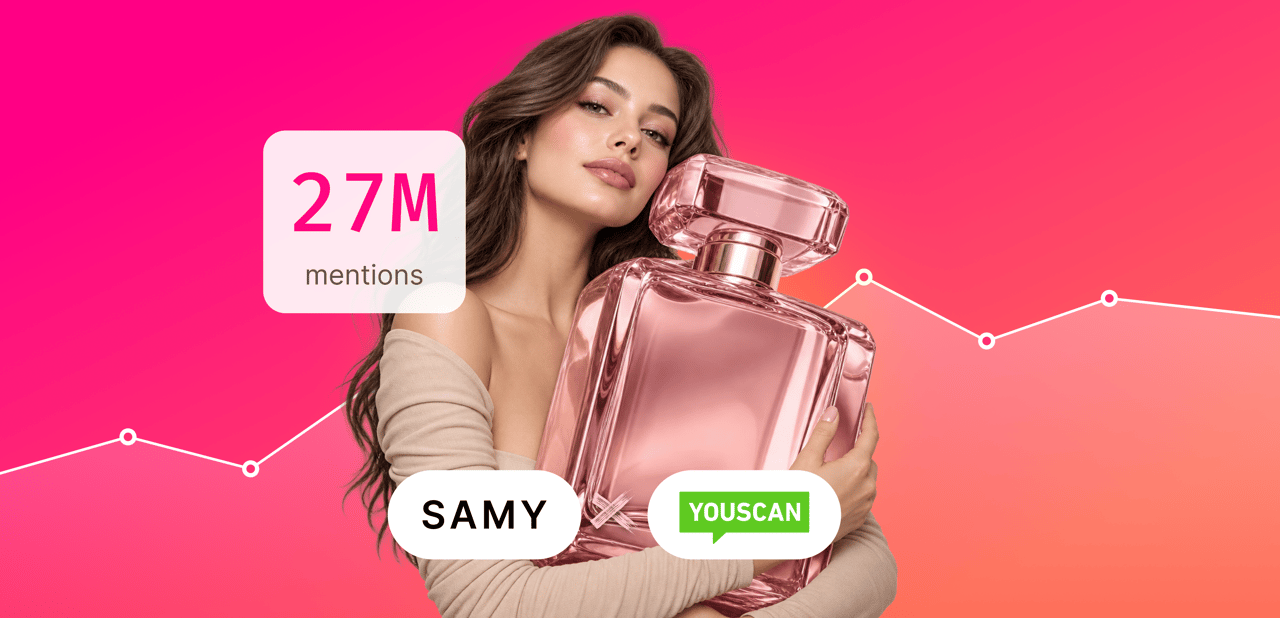
The scale of the project was substantial. With YouScan, SAMY structured around 27 million online mentions, including 12 million TikTok mentions and additional 15 million mentions across other sources.
So the challenge wasn’t to decide what to analyze. SAMY needed to find a way to implement a detailed taxonomy without creating hundreds of manual rules or a maintenance-heavy workflow.
How to scale the taxonomy in the beauty industry?
SAMY has already tested a manual approach, but it took the team approximately 5 days. One of the clearest efficiencies was avoiding the manual creation of approximately 800 individual rules to structure and manage the taxonomy.
And this wasn't simply a matter of saving a few days of repetitive work. The manual approach would have required senior and manager-level team members to spend a significant amount of their time maintaining a highly operational tagging setup.
The team searched for a way to preserve the complexity of the framework without making the implementation itself complex.
How YouScan supported the process
One of the features that became particularly relevant during the project was YouScan's categories and subcategories functionality. Our Customer Success team helped SAMY apply them across the relevant datasets and helped them scale a setup that would otherwise have required significant manual effort.
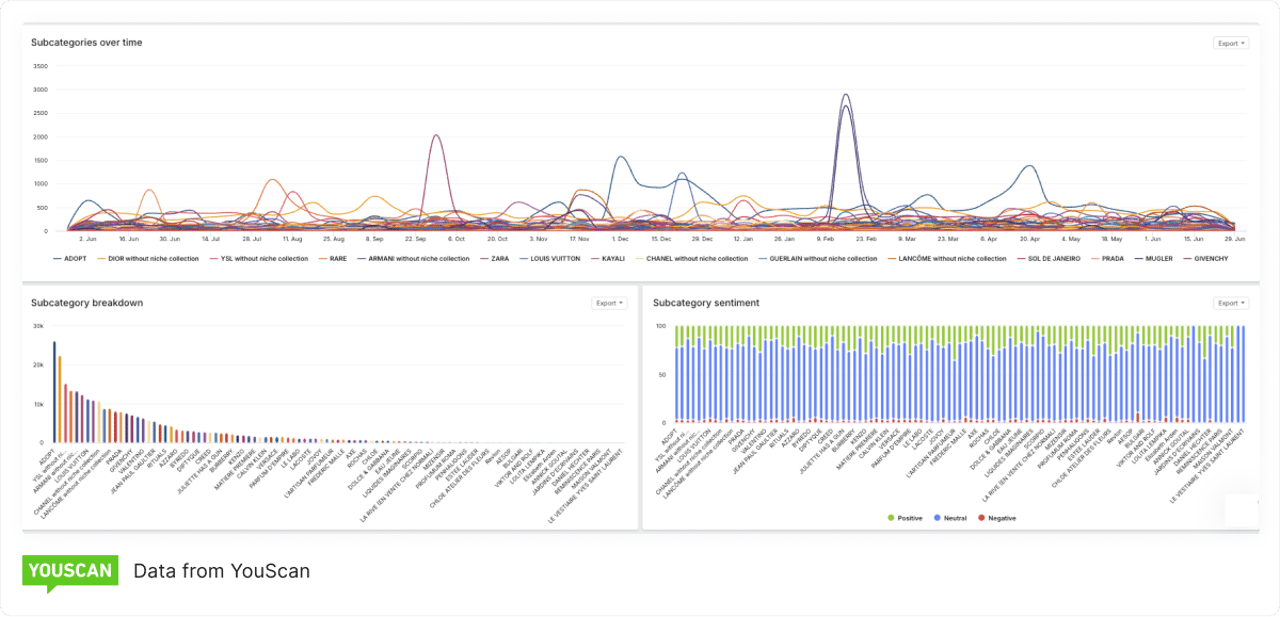
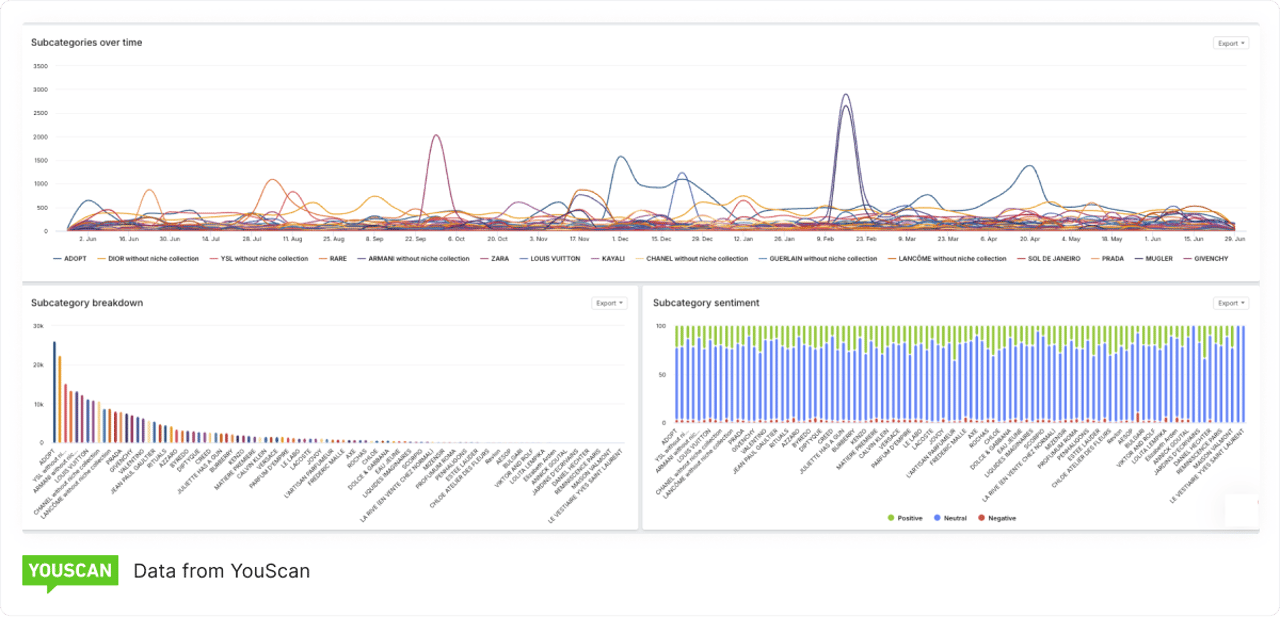
Combined with YouScan’s team’s ongoing, hands-on support throughout the process, this meant SAMY could move from a complex tagging structure to a scalable and usable data setup much more efficiently.
Besides, SAMY used the YouScan API to extract the resulting data in a consistent format across the analytical parameters required for the project.
This included:
the full year of conversation;
week-on-week views;
individual categories and subcategories;
the different analytical breakdowns defined in the taxonomy.
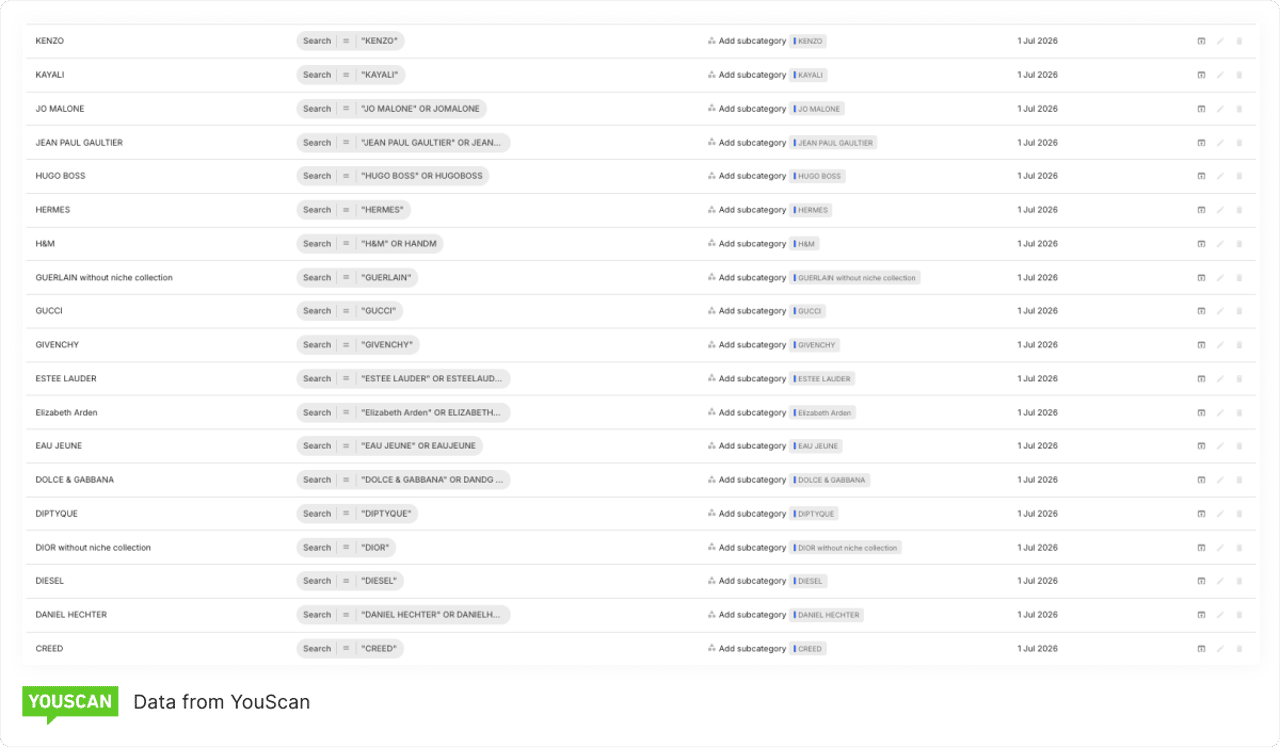
The API made it possible to take this structured YouScan data and combine it with other sources rather than treating social data as a standalone analysis.
“The ability to build categories and subcategories has allowed us to analyse both cross-topic conversations and individual beauty categories in a much more structured way. Being able to extract the data via API has also made it possible to integrate YouScan data with other datasets and build a broader view of the category." – Laura Puyalto, Associate Director of Research & Insights, SAMY
The result: Integrated categories view
The result was a structured YouScan dataset that could be integrated with other sources, allowing SAMY to build a consistent cross-source understanding of six beauty categories over the past year.
For a project of this scale and complexity, the combination of continuous technological innovation, flexible data extraction, and proactive Customer Success support was instrumental in making the workflow both feasible and scalable.
“One of the things we value most about working with YouScan is how closely the team listens to our needs and works directly with their product teams to explore how those requirements can be made possible.” – Laura Puyalto, Associate Director of Research & Insights, SAMY
How consumer insights teams can apply the same approach
SAMY’s workflow is useful beyond this particular analysis. If you’re a consumer insights professional and need to analyze a large volume of conversations across multiple products & brands, this is what can be lifesaving.
1. Start with the questions, mentions will follow
Before setting up topics or tags, define what the analysis needs to explain. Try finding the gist in these questions — they might become the foundation of your taxonomy:
Which products consumers talk about most
Which ingredients or product characteristics come up in those conversations
How conversations differ between brands and categories
2. Build a taxonomy that reflects how the category is really analyzed
Instead of creating a long list of keywords, organize the taxonomy into logical dimensions, for example:
Brand → Model → Vehicle type → Capacity → Engine type → Features → Colour → Usage occasion
Mind that the exact structure will depend on the research-specific question, but the principle is the same: define the analytical dimensions before collecting and interpreting the data.
You might find this particularly useful when working across several categories. A shared structure makes it possible to compare them without rebuilding the analysis from scratch every time.
3. Use categories and subcategories to scale the framework
Once the taxonomy is defined, convert it into a structure that can be applied consistently to large volumes of conversations.
This is where a platform like YouScan can replace hectic manual rules with a more manageable category and subcategory structure.
For consumer insights teams, this can be especially handy when the same framework needs to be revised over time. New products or brands, consumer concerns, etc. can be added to the existing structure without altering the entire analytical setup.
4. Design the data output alongside the taxonomy
Suppose your data will eventually be combined with market research, surveys, sales data, search trends, or other sources. You have to decide which dimensions need to be extracted and in what format.
This approach turns social listening into a unique workflow with broader consumer intelligence.