Audience Analysis: How to Actually Understand the People You’re Selling To
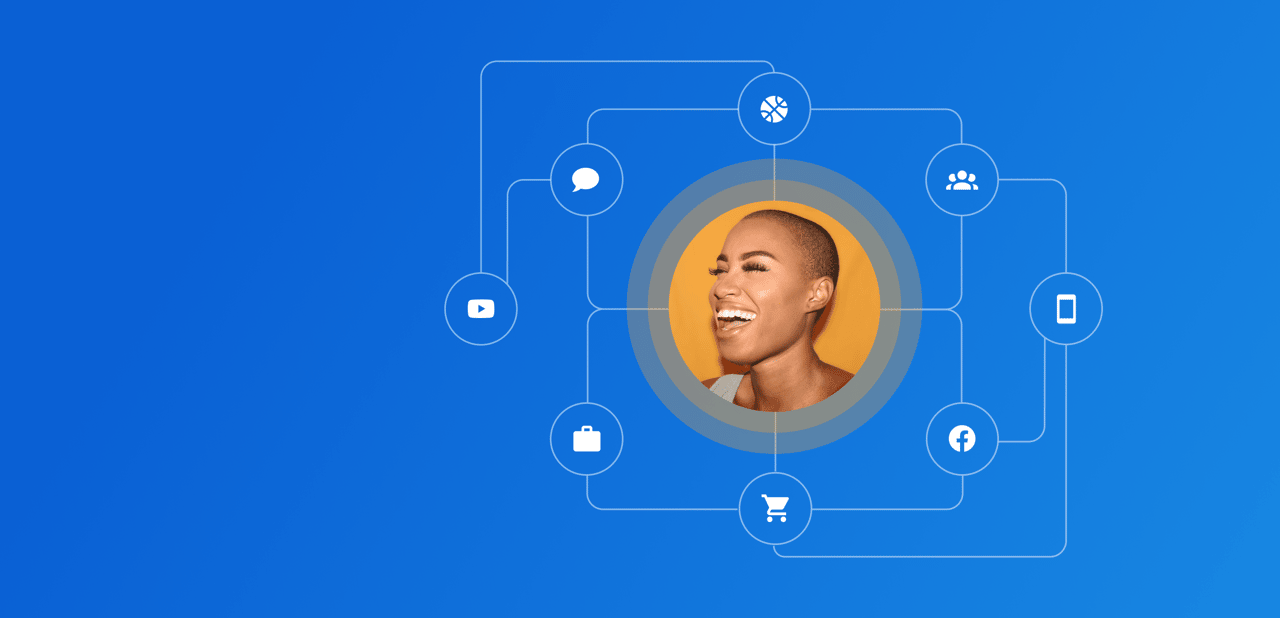

Here's a thing that happens at maybe a dozen brands. The buyer persona goes up on the wall — name, stock photo, fake quote in italics. Everyone nods. Then the campaign ships and the people actually buying look almost nothing like the person on the wall.
That's the gap proper audience analysis is meant to close. Most of the time, it doesn't, because most "audience analysis" is a slide deck someone made in Q2 that nobody opened in Q3.
So this is a practical walk-through: what audience analysis is, the types worth knowing, how to run one without spending a quarter of your budget, and where social listening fits. If you hit a term you want defined, the social listening glossary has most of them.
What is audience analysis, really?
Strip away the textbook framing, and audience analysis is just this: gathering audience information from enough angles that you stop making assumptions about who your customers are. Demographic data, psychographic information, behavioral signals — pulled together so you can make decisions about messaging and channels without crossing your fingers.
It's not about producing a tidy persona document. It's about answering specific, slightly uncomfortable questions. Who actually buys from you? Who almost buys and bails? Which audience segments are growing and which are quietly dying? What audience expectations are you missing? A good target audience analysis goes past the demographic surface and digs into how those people think, what they trust, and what they avoid.
The best audience profiles use both quantitative and qualitative research. Surveys still matter. Focus groups still matter. But so does what people post on social media platforms when nobody's pointing a survey at them — that's often where the more useful audience information lives. People lie in surveys. They don't lie to their own Twitter feed.
This isn't a one-time exercise. Audience preferences shift, cultural influences change, and the audience you analyzed two years ago is not the audience buying from you today.
Why audience analysis matters more than you think
A successful marketing campaign starts with one assumption most marketing teams say they believe and then quietly ignore: not everyone is your customer. Trying to talk to everyone is the most expensive way to talk to nobody. Building marketing strategies on real audience-based data — not vibes — is what protects both ad spend and customer experience.
Where audience-based decisions pay back: ad spend, messaging, and audience expectations
Done properly, audience analysis pays for itself fast across your marketing efforts.
Smarter ad spend. Knowing which audience segments convert means media buying gets cheaper. You stop bleeding budget on people who were never going to buy.
Messages that don't sound like marketing. When you understand your audience's values, attitudes, and shared interests, the copy gets better. It sounds like you, not like a brand. That's how you boost engagement when creating campaigns.
Better product decisions. Customer behavior data feeds the roadmap. Features people care about ship faster.
Higher audience engagement and customer engagement. Personalized beats generic. Done well, it can also increase conversions among potential customers who'd otherwise scroll past.
McKinsey found that personalization drives 5 to 15 percent revenue lift and improves marketing ROI by 10 to 30 percent — and you don't get personalization at that scale without understanding the people on the other end. The brands outperforming on engagement aren't the ones with the biggest budgets. They're the ones who did the homework.
The main types of audience analysis
A few different types of audience analysis answer different questions. Most teams use some mix of three or four. Here's what each one's actually good for.
Demographic analysis (a.k.a. demographic audience analysis): mapping your audience members
The basics. Demographic analysis focuses on the statistical data describing audience members — age range, gender, marital status, education level, socioeconomic status, geographic location, occupation. The first layer of any effective audience analysis. Demographic information is verifiable and easy to collect.
Also kind of overrated when used alone. Two people with identical demographic data can have completely different purchasing habits and consumer preferences. Demographics tell you the box someone fits in. They don't tell you why they buy. You still need them — you can't sell luxury skincare without knowing if your buyers are 25 or 55 — but if you stop here, you've barely started.
Psychographic analysis
This is where things get interesting. Psychographic analysis stops asking who and starts asking why. What does this group value? What attitudes and personality traits show up over and over? What does your target audience aspire to be?
Psychographic information includes values, beliefs, lifestyle, interests, and personality traits. It explains why people stay loyal to sports teams or political parties or brands long after the rational case has worn off — and it's how you gather information that actually predicts behavior. Harder to measure than demographics. Way more useful when you get it right. Look at running shoes — Nike and Hoka sell to roughly the same demographic. What values do their audiences hold? Wildly different. That's a powerful tool when you use it well.
Behavioral analysis: tracking customer behavior in the wild
Behavioral analysis examines what your audience actually does — not what they say they do, those are different things. Purchasing habits, content consumption, which advertising channels they respond to, how often they buy, churn, or come back. This is where customer behavior data starts paying off.
Third-party data and your own first-party signals start working together here. And it's where social listening earns its place — what people post and share is behavior happening in public, at scale. Tracking it well means knowing how to measure social media engagement properly, so the numbers you act on reflect what your audience cares about — not just what an algorithm boosted.
Situational analysis
Situational analysis is the one most people forget. It's about context — where the audience is when they see your message, what else is going on, what device they're on. Geographic data factors in here, too. A laundry detergent ad lands differently at 7 am Monday than it does at 11 am Saturday.
How to collect data and run an audience analysis without spending a fortune
You don't need a huge research budget. You need a clear question and the right inputs.
Step 1: Pick a real question
"Help with audience research" is a vibe, not a brief. "Why is your 35-44 segment converting at half the rate of 25-34?" — that's something you can answer. Pick the decision the analysis needs to feed and work backward.
Step 2: Pull from more than one source
No single source gives you the whole picture. Strong audience analysis pulls from at least three: first-party data from your own platforms (CRM, analytics, customer surveys), social media listening for unsolicited audience opinions, and third party data or panel research for harder-to-reach segments. Mix quantitative with qualitative. Statistical data tells you the what. Focus groups tell you the why — and a single in-person focus group typically runs $10,000–$30,000, so save them for questions that deserve that price tag.
Step 3: Audience segmentation, not generalisation
The goal isn't one big audience profile. It's several smaller groups with shared interests, behaviors, or needs. Audience segmentation is where insight turns into action. A good segment is specific enough to write different ads for, but big enough to matter commercially. "Women 25-44" isn't a segment, it's a category. "Working moms who follow eco-conscious lifestyle accounts and buy premium home goods" — that's a segment.
Step 4: Chase the surprises
The most valuable findings contradict your assumptions. If your audience analysis confirms what the founder already believed, you didn't dig hard enough.
Step 5: Turn it into something
Hand the actionable insights to whoever's making decisions, tie every insight to a recommendation, and make sure those recommendations target the relevant audiences and not just the easy ones.
How social listening sharpens audience analysis and customer engagement
Traditional research is slow and expensive. Surveys take weeks, focus groups take months, and by the time the deck's ready, the audience has moved on. Social listening flips that — you're collecting audience data in real time, from people who don't know they're being studied. What you see is honest. No survey-bias polish.
A few things social listening is genuinely good for:
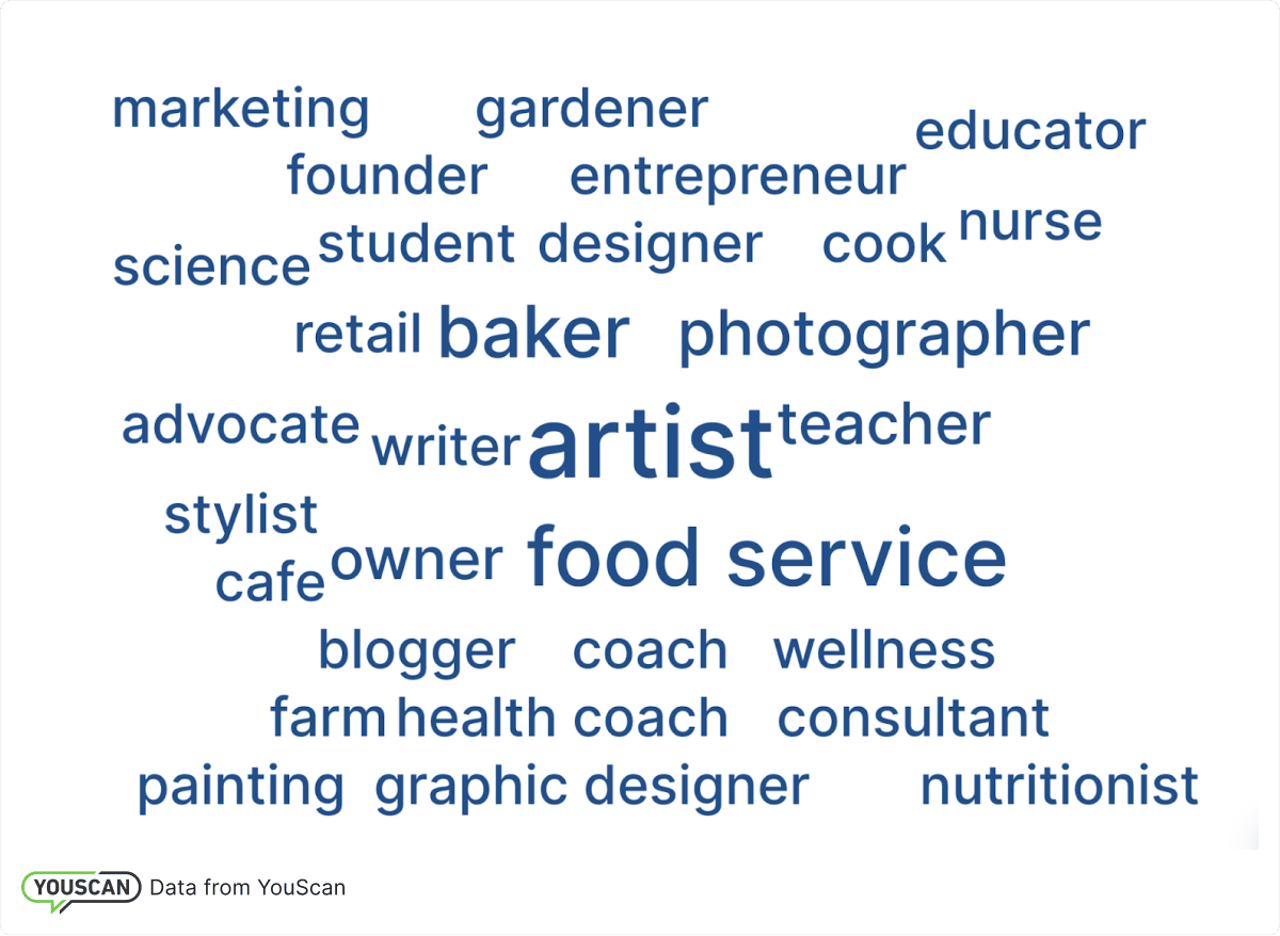
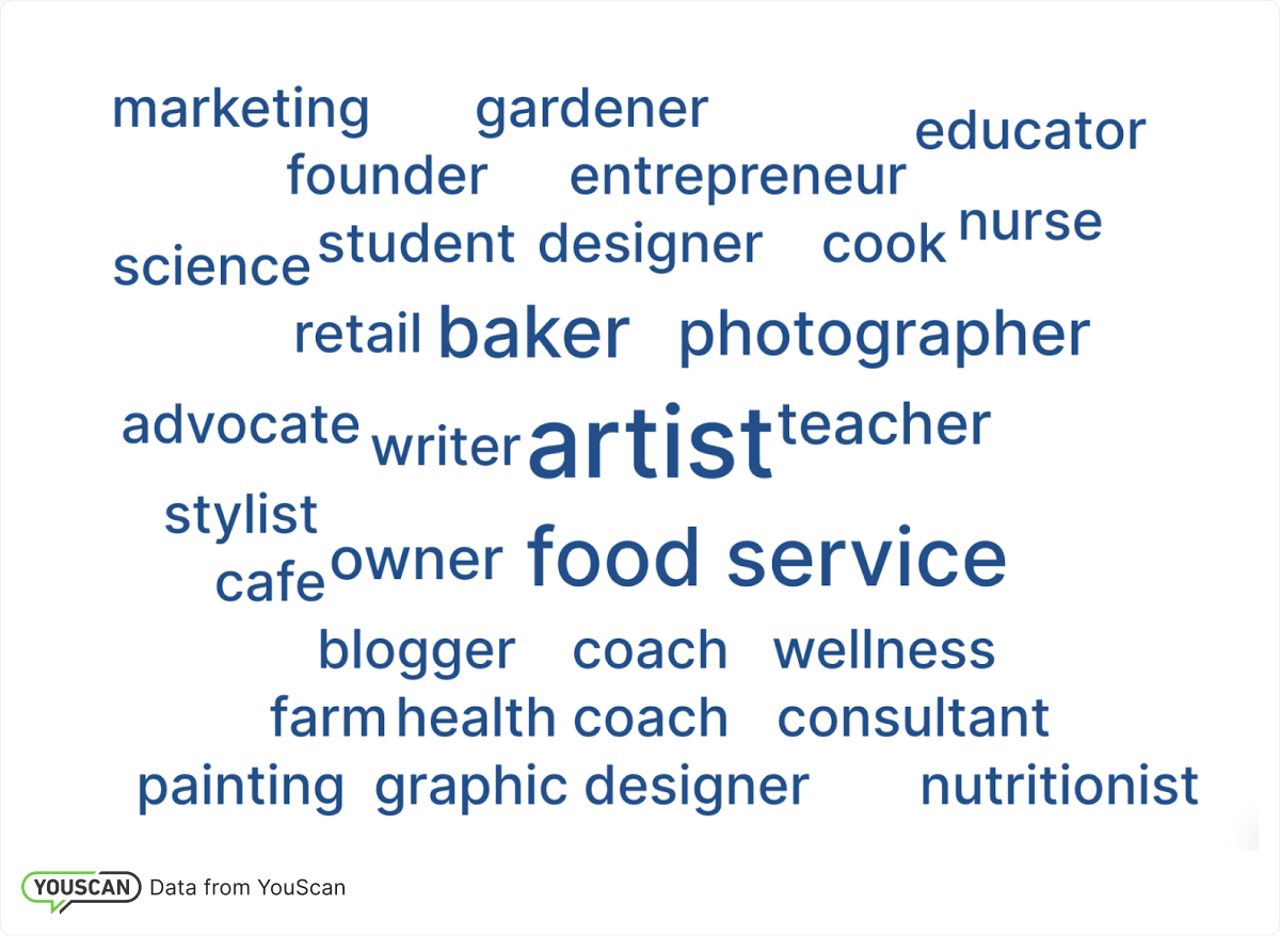
Audience information you can't get elsewhere. People share their occupations, frustrations, and brand opinions on social media platforms freely. No survey will pull that cleanly.
Speed. When a campaign ships, you see how it landed the same afternoon. If something's off, you fix it before the budget burns.
Cost. A subscription to one of the better social listening tools is a fraction of what one commissioned study costs.
YouScan does this basically on autopilot. Set up a query, and the platform pulls audience insights — demographics, occupations, interests, top influencers, sentiment — across whatever conversation you're tracking. The social listening dashboards make it easy to compare audience segments side by side, and Social Audience lets you build queries around author bios and occupations — useful when you want to listen to, say, female makeup artists in the UK rather than the entire beauty conversation. For brands tracking review sites and forums, YouScan recently added Moltbook monitoring, useful in travel, hospitality, or consumer goods.
Audience profiles in the wild: some real examples
A few examples from real brand audiences, analyzed using YouScan's audience data:
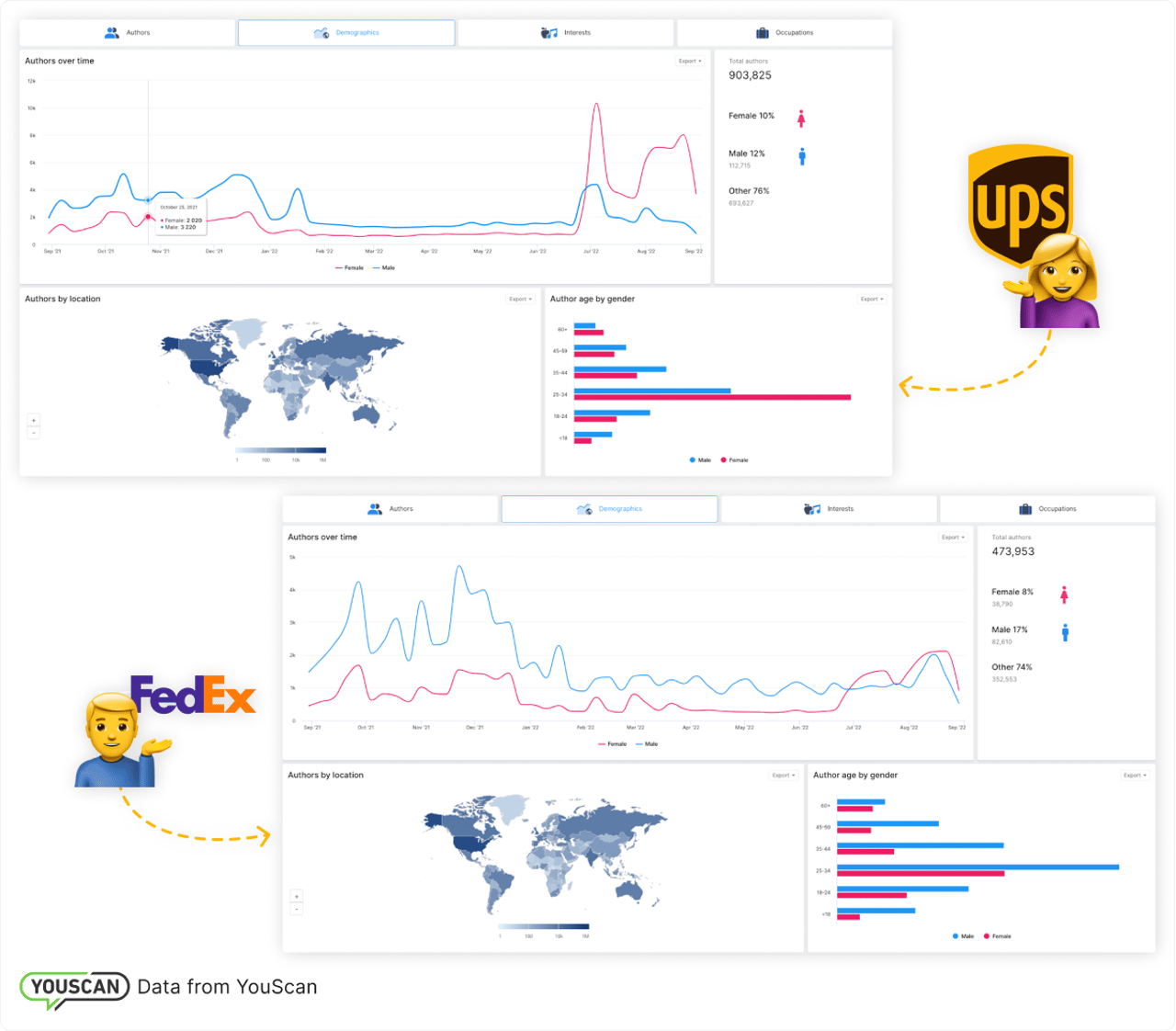
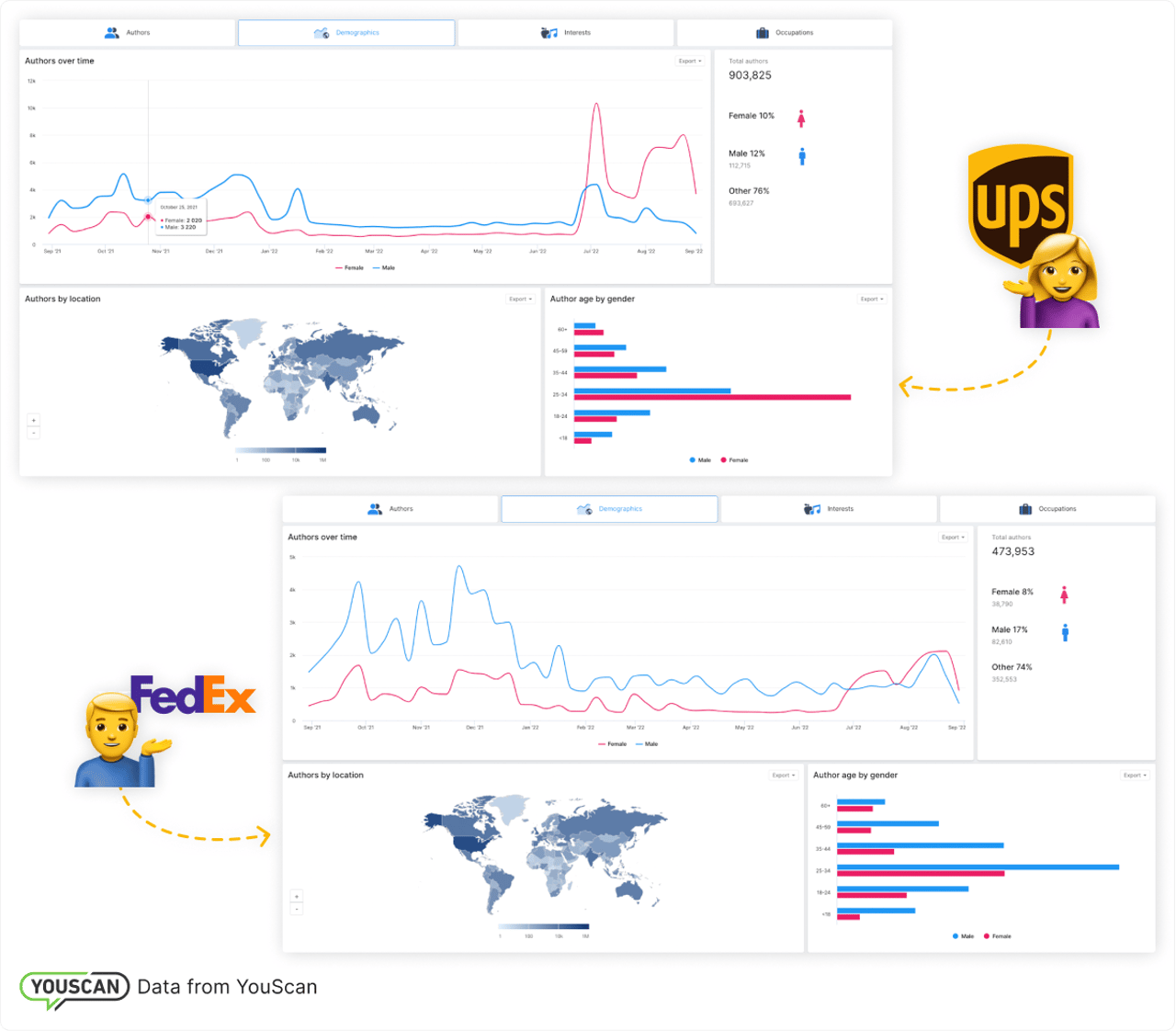
FedEx vs. UPS. Two delivery companies that look identical from the outside. Demographic audience analysis says otherwise — FedEx skews male and spans a wider age range, UPS is concentrated in 25-34 and skews female. Same category, two genuinely different audiences.
IKEA's audience interests. You'd assume IKEA's audience cares mostly about design and decor. The data says no — family, parenting, and food and drink come up more often. Useful when you're choosing between a back-to-school activation and a design week stunt.
Reebok's influencer mix. Brands often assume the highest-follower influencer is the highest-impact one. Not always. Reebok's data showed Kristen Titus — one of the brand's key influencers — had massive TikTok reach, but her Instagram posts pulled stronger engagement. Same person, two channels, two different ROI stories. The kind of signal that helps you
find brand ambassadors who actually move the needle.
Audience information mistakes that show up all the time
A few patterns to watch for:
Treating demographic data as the whole picture. It isn't. It's the floor.
Dismissing smaller groups. Sometimes the segment that looks small today is the one growing fastest.
Confusing assumption with insight. "The customer is X" is a hypothesis until the data backs it up.
Treating audience analysis as a one-off. Audiences shift. Run it again every quarter.
Failing to identify barriers. A real analysis tells you what's stopping people from buying.
Skipping sentiment. Knowing who your audience is matters less if you don't know how they feel. Layering in brand sentiment analysis keeps the picture honest.
Audience analysis vs. market research
These get used interchangeably and shouldn't be. Market research is the wide-angle lens — competitors, category trends, sizing. Audience analysis is the zoom — the specific people inside your potential audience. There's also brand analysis, which sits between the two and looks at how your brand is being perceived. All three matter. Skip any of them, and you've got a blind spot.
So where does this leave you?
Effective audience analysis is a stack — demographic data, psychographic information, behavioral analysis, and situational context. Together, they take you to a deeper level of understanding than any single method on its own. The brands getting clear insights out of this treat it as a continuous loop — they refresh their audience data before every product launch and bake those findings into the next round of marketing campaigns. That's what ultimately drives growth.
Try a free demo and pull a real audience report on your brand in under an hour.


FAQs
What is audience analysis in simple terms?
Audience analysis is the process of figuring out who your customers actually are — not who you assume they are — so you can make better decisions about messaging, channels, and product. It pulls together demographic data, psychographic information, and behavioral signals into one working picture of your target audience.
What are the main types of audience analysis?
The four most useful types are demographic analysis (age, gender, location, occupation), psychographic analysis (values, attitudes, interests), behavioral analysis (what people actually do — purchasing habits, content consumption, churn), and situational analysis (the context around when and where people see your message). Most teams use a mix of three or four, depending on the question they're trying to answer.
How do you actually do an audience analysis?
Five steps. Pick a specific decision the analysis needs to inform. Pull data from at least three sources — first-party analytics, social listening, and panel or third-party data. Segment into smaller groups with shared interests rather than one big audience profile. Look hard for findings that contradict your assumptions, not the ones that confirm them. Then turn the actionable insights into recommendations that whoever owns the campaign can use.
Why is audience analysis important for marketing?
Because most ad spend gets wasted on people who were never going to buy. Proper audience analysis tells you which audience segments actually convert, what messages resonate with them, and where to find more potential customers like them. Done well, it pays for itself across smarter media buying, better creative, and tighter product decisions.