10 Best Agorapulse Alternatives to Consider in 2026


Agorapulse is a good product. Let's get that out of the way first, because most "alternatives" posts open by pretending the tool everyone uses is secretly terrible. It isn't. As social media management tools go it's tidy — clean social inbox, reports that don't embarrass you in a client meeting, and a user-friendly interface a new social media manager can work out in an afternoon.
Then the team grows, and the invoice gets weird.
Agorapulse charges per seat. G2's pricing breakdown puts Standard at $79 per user per month billed annually, Professional at $119, and Advanced at $149 — and every tier below Custom caps you at 10 social media accounts. So three people means paying three times over for the same 10 profiles. Five people on Advanced is roughly $745 a month.
That's the moment people start pricing up Agorapulse alternatives.
Money isn't the only reason, though it's the loudest. Some teams hit a wall on social listening capabilities. Others want the deep analytics that only appear on higher-tier plans. Agencies get tired of an inbox organized by profile instead of by conversation.
Here's what this guide covers:
10 Agorapulse alternatives, from cheap schedulers to full social media management platforms
What each social media tool does better, and where it quietly gives something up
Pricing, key features, and who each one is actually for
Why teams start shopping for Agorapulse alternatives
Four complaints come up over and over — in G2 reviews, in Reddit threads, in every competitor roundup on page one.
Per-seat pricing punishes growth. A three-person team on Standard is already $237 a month. If you add a coordinator for every two new accounts, the math stops working fast. Social media management tools with flexible pricing — bundles, per-workspace, per-channel — often cost half as much for growing teams past four or five seats.
The inbox is profile-based, not unified. Agorapulse handles day-to-day management of comments and DMs perfectly well. But you're switching between profiles rather than working one queue, and teams doing serious community management across multiple platforms feel that friction every day.
Social listening is shallow. It monitors a handful of social media networks plus news and blogs. That's monitoring, not research. If you need in-depth social listening — image recognition, emotion detection, forum and review coverage, historical data — that's a dedicated platform, not a bolt-on module. (New to the terminology? The social listening glossary is a decent place to start.)
And the genuinely useful features sit up the ladder. Approval workflows, bulk scheduling, content library, shared calendars, competitor tracking, custom reports — all Professional or Advanced. Marketing agencies needing those advanced features on day one land on a $149 seat whether they like it or not.
None of that makes Agorapulse a bad social media management platform. It just means a lot of teams outgrow it, usually around the same headcount.
Best Agorapulse alternatives at a glance
Tool | Best for | Standout strength | Starting price |
YouScan | Brands that need real consumer insight | AI-powered visual and text social listening | $499/mo |
Sprout Social | Enterprise businesses and large teams | Advanced analytics plus social listening in one platform | $79/seat/mo (Essentials) |
Hootsuite | Broad channel coverage | Publishing plus Talkwalker-powered listening | ~$99/user/mo |
Zoho Social | Small businesses on a budget | Basic social media management at a fraction of the cost | ~$15/mo |
Sendible | Agencies handling multiple brands | White-label client reporting | ~$25–29/mo |
SocialPilot | Agencies watching every dollar | Bulk scheduling up to 500 social posts | ~$30/mo |
SocialBee | Solo marketers and small teams | AI-powered content creation and recycling | ~$29/mo |
Statusbrew | High-volume inbox management | 60+ inbox automation rules | ~$179/mo (5 users) |
Later | Visual content and Instagram-first brands | Drag-and-drop calendar and media library | ~$25/mo |
Planable | Teams with lots of stakeholders | Multi-level approval workflows | Free plan, then ~$39/workspace |
Below, each of these Agorapulse alternatives gets a closer look. List prices are current at the time of writing and move constantly, so check the vendor's page before you budget anything.
1. YouScan: in-depth social listening and visual insights
Starting here, because this is the one entry on the list most teams don't need — and a handful desperately do.
If your actual problem isn't scheduling social posts but understanding what people say about you, no social media management tool is going to fix it. That's a different category, and it's worth ruling in or out before you spend a week comparing publishing features.
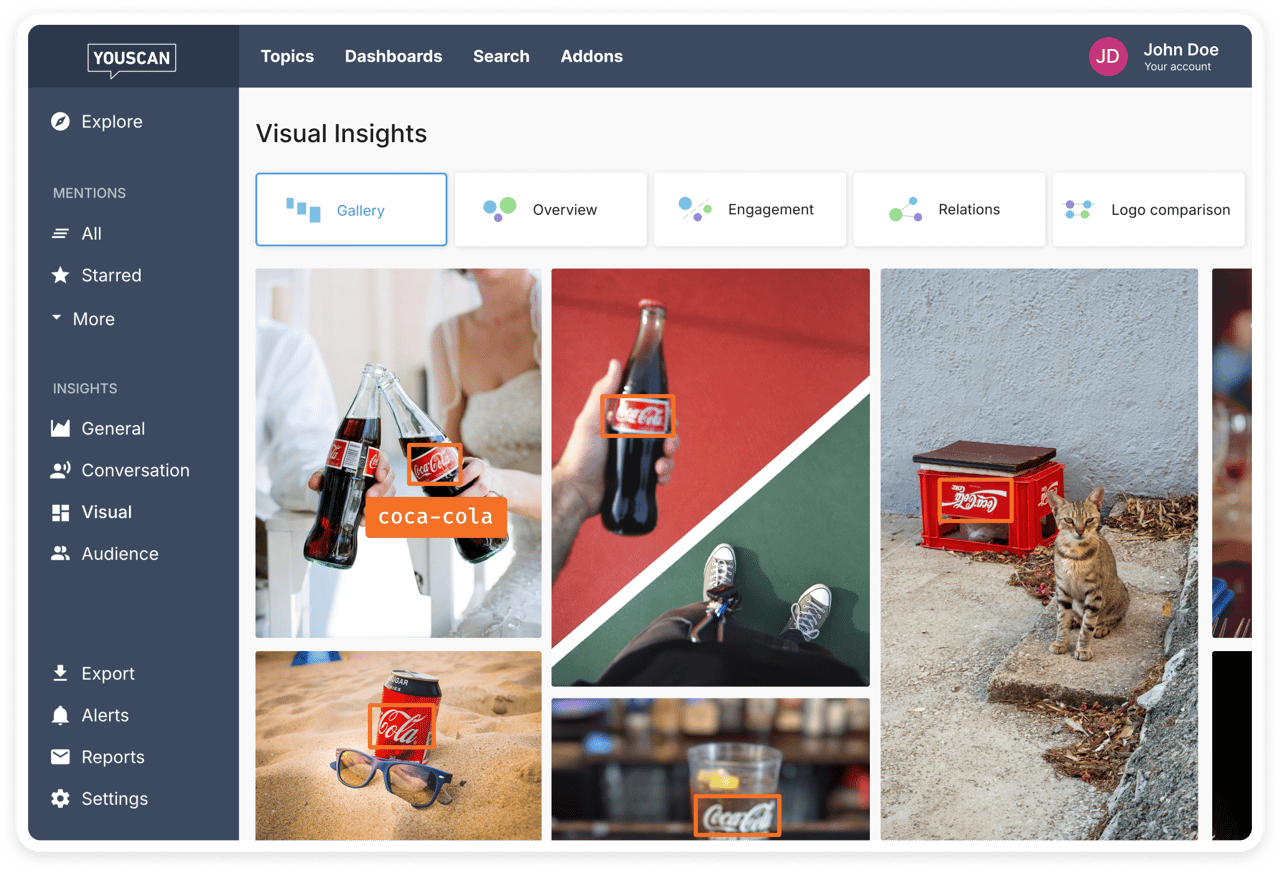
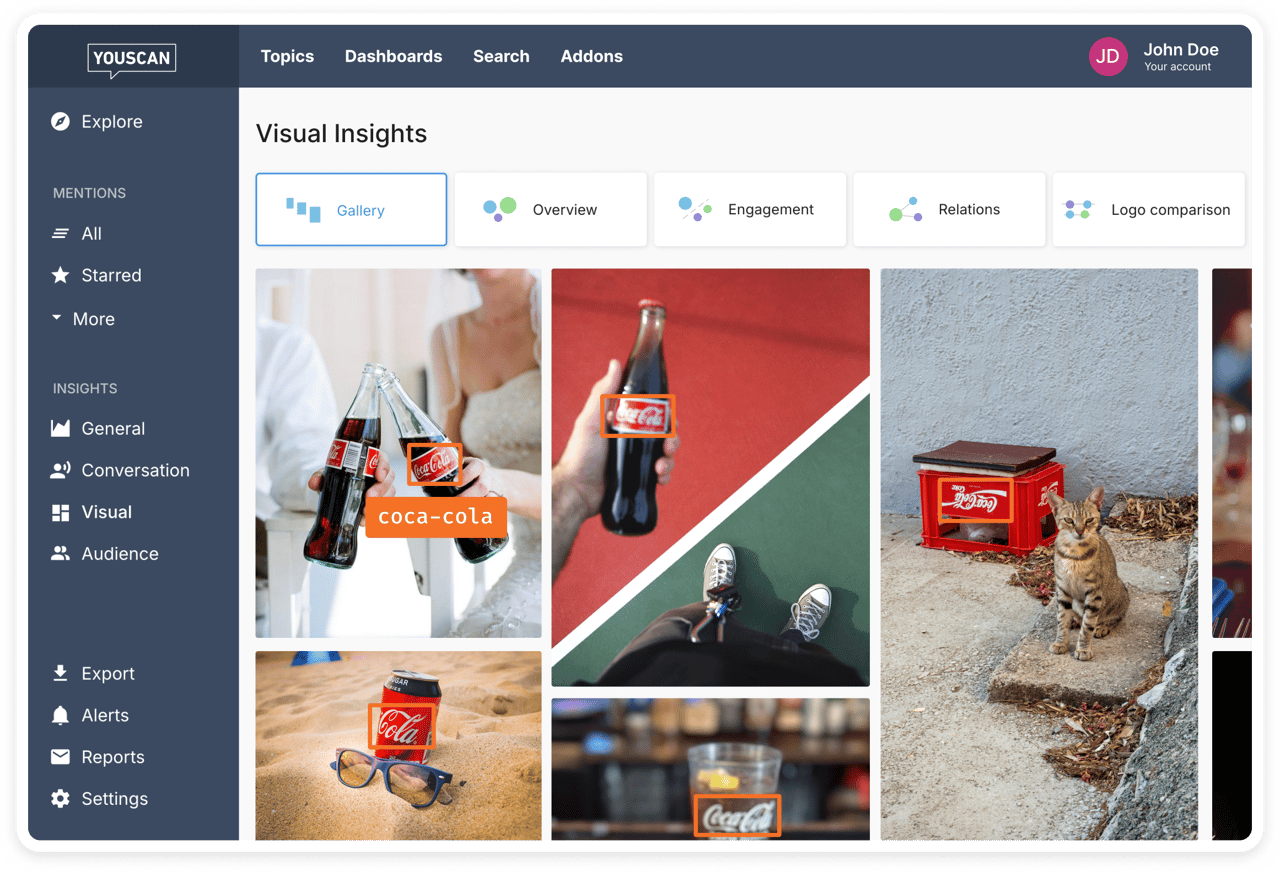
YouScan reads text and images. Its AI social listening picks up slang, emoji, and sarcasm rather than sorting everything into positive or negative, and visual insights catch logo appearances in photos where your brand is never typed out at all — which, for consumer brands, is most of them. Coverage keeps widening too: Moltbook monitoring went live recently.
Key features
Visual listening. Detects logos and products inside visual content, not just text mentions.
Insights Copilot. Ask questions of your social media data in plain language, and get summaries back.
Influencer discovery. Finds and ranks creators already talking about your category.
Custom social listening dashboards. Build the view each stakeholder needs; share it without exporting a PDF.
Crisis management. Alerts on unusual spikes before they turn into a Monday morning.
Pricing: Starter 3 is $499/month billed annually — 3 topics, up to 15,000 monthly mentions, unlimited users. Unlimited plans are custom-priced and add Visual Insights, Audience Insights, and the rest of the best social media analytics tools feature set, with scalable teamwork options.
2. Sprout Social: advanced analytics and deep social listening
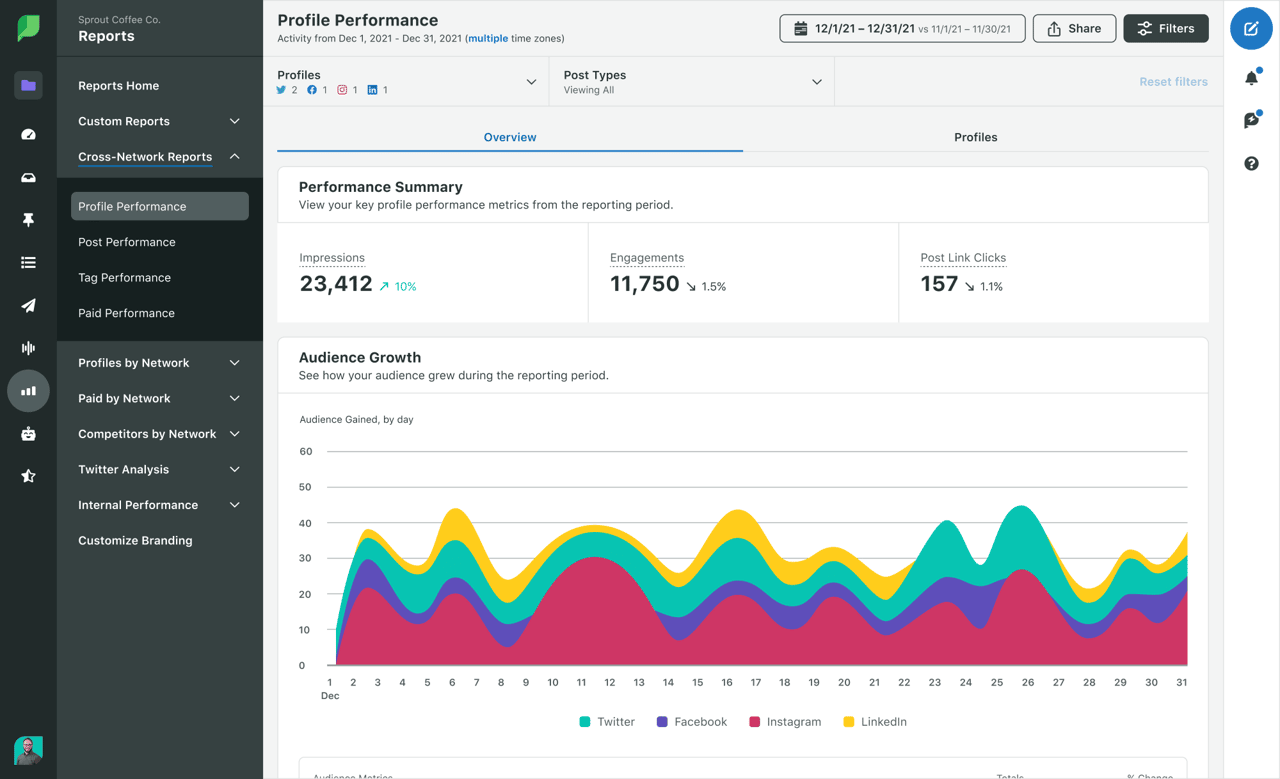
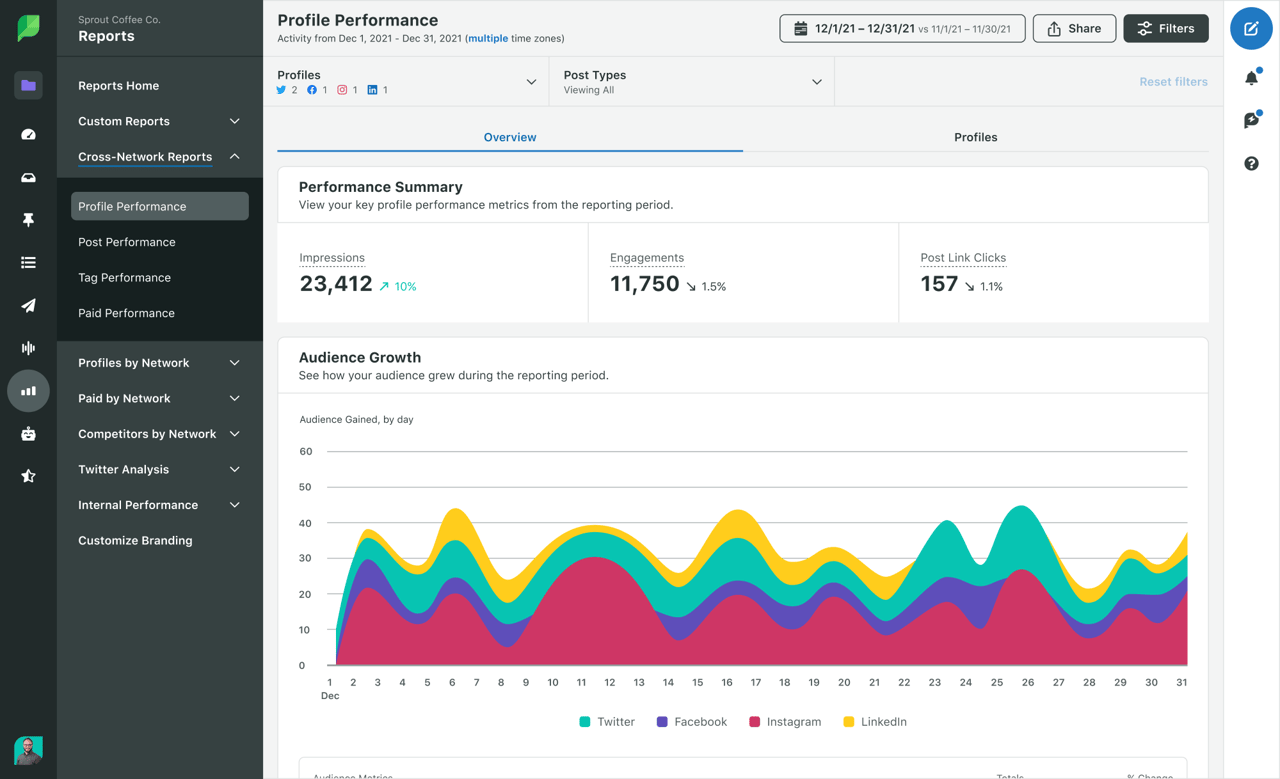
For everyone whose problem really is publishing: Sprout Social is the social media management platform most teams benchmark Agorapulse against, and the obvious upmarket swap. Where Agorapulse stops at solid reporting, Sprout Social keeps going: competitor reports, message tagging, optimal send times, and a listening product that sorts millions of data points into key trends you can actually act on.
The Smart Inbox is the real argument for switching. It's a genuinely unified inbox — every message, every profile, one stream — which fixes the exact thing people complain about most. Team collaboration runs deeper too, with task assignment and approval workflows sitting in the same view instead of a separate module.
The catch is obvious, and it's the same catch as Agorapulse, only bigger. Sprout Social bills per seat too, which makes it a strange recommendation for growing teams running from exactly that problem.
Key features
Smart Inbox. One queue for comments, DMs, and reviews across multiple platforms, with AI-assisted sorting.
Advanced analytics. Sprout Social tracks 150+ metrics, with presentation-ready reports and an Analytics API on upper tiers.
Social listening. Query-based coverage of X, Reddit, YouTube, blogs, and forums — sold as an add-on, not bundled.
Approval workflows. Multi-step review and team collaboration features for regulated or agency work.
Integrations. 40+ connections including Salesforce, HubSpot, Canva, and Google Analytics.
Pricing: Sprout Social's pricing includes Essentials at $79 per seat per month billed annually, then Standard $199, Professional $299, Advanced $399, Enterprise custom. A five-person team on Professional is about $1,495 a month. That is not a typo.
So: Sprout Social beats Agorapulse at almost everything and is priced accordingly. If the per-seat model is what drove you here in the first place, this probably isn't your answer — our roundup of Sprout Social alternatives covers the cheaper end.
3. Hootsuite: broad coverage for large marketing teams
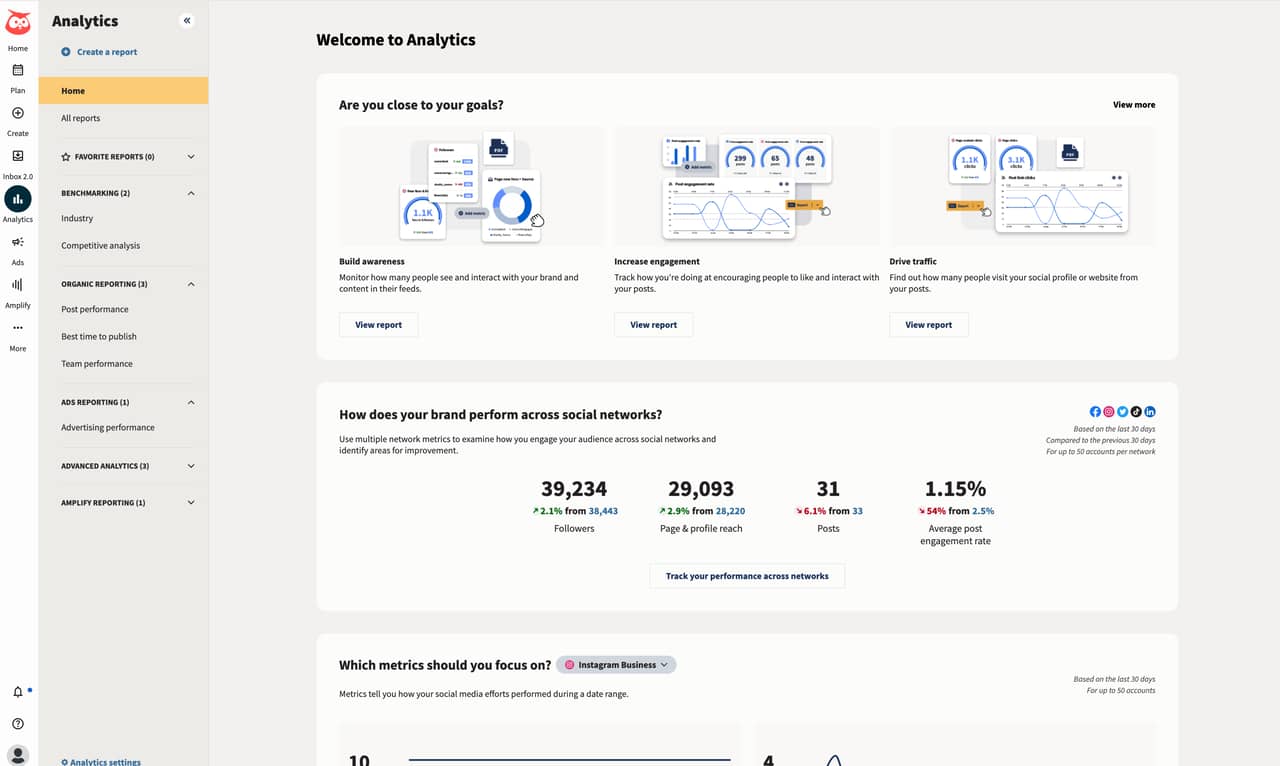
Hootsuite has been in the social media management space since 2008 and it shows, in both directions.
The good part: channel coverage nobody matches, 150+ integrations, Google Business Profile and review sites included, and listening powered by Talkwalker since the 2024 acquisition — considerably more depth than Agorapulse offers, though the built-in version is trimmed down from the standalone product. If you liked the sound of that, our Talkwalker alternatives piece explains what got left out.
Bulk scheduling through CSV uploads handles big evergreen campaigns without complaint, too.
The less good part: the column-based dashboard feels its age, new users need weeks to get comfortable with it, many users never fully do, and social media budgets escalate through add-ons. Entry plans sit around $99 per user per month, but content library, custom analytics and permissions push most teams toward an enterprise quote. Plenty of people end up looking at Hootsuite alternatives within a year for exactly that reason.
Its sentiment analysis is fine — competent, text-only, no visual layer. If that matters to you, compare it against a few dedicated sentiment analysis tools before committing.
Worth it if you're running dozens of social media accounts and need one dashboard. Overkill for anyone else.
4. Zoho Social: basic social media management for small businesses
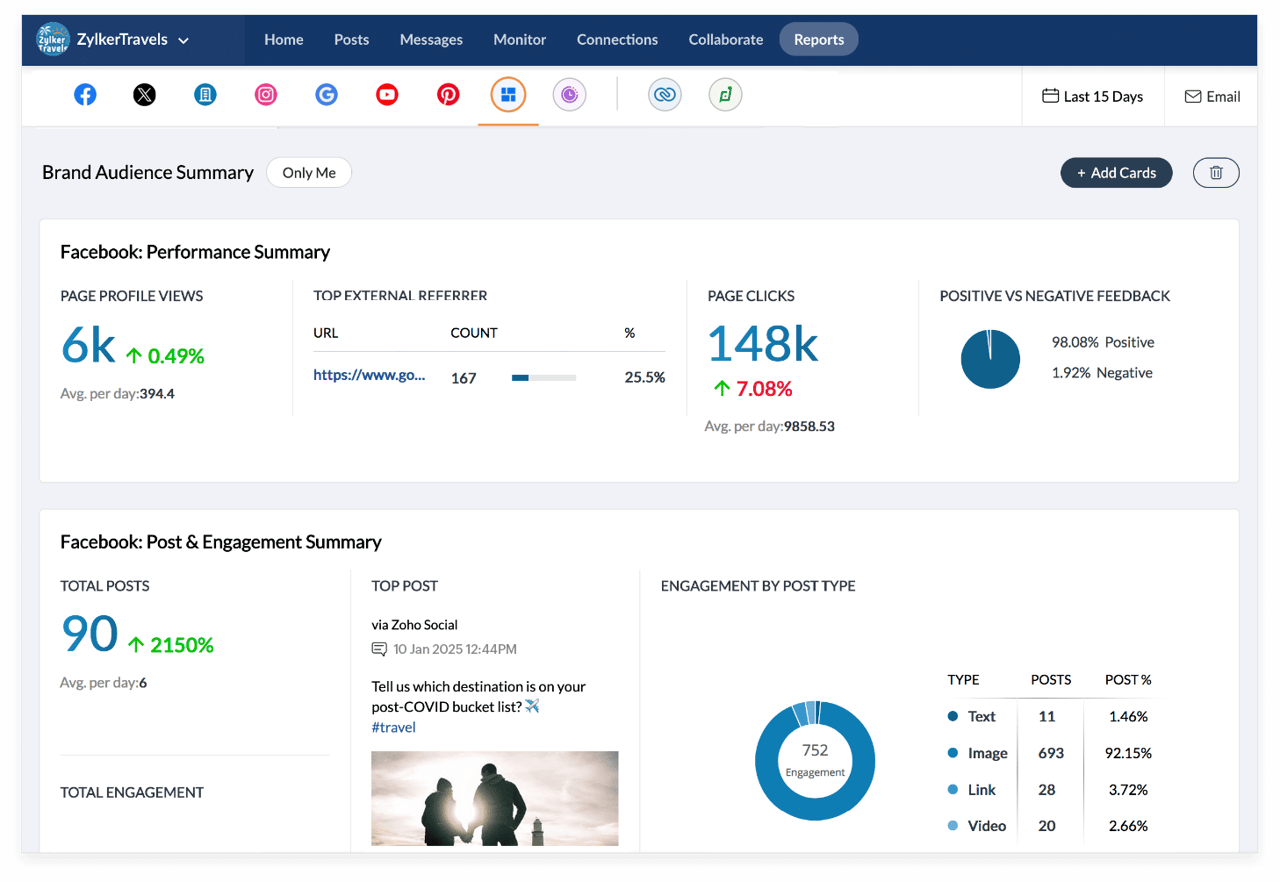
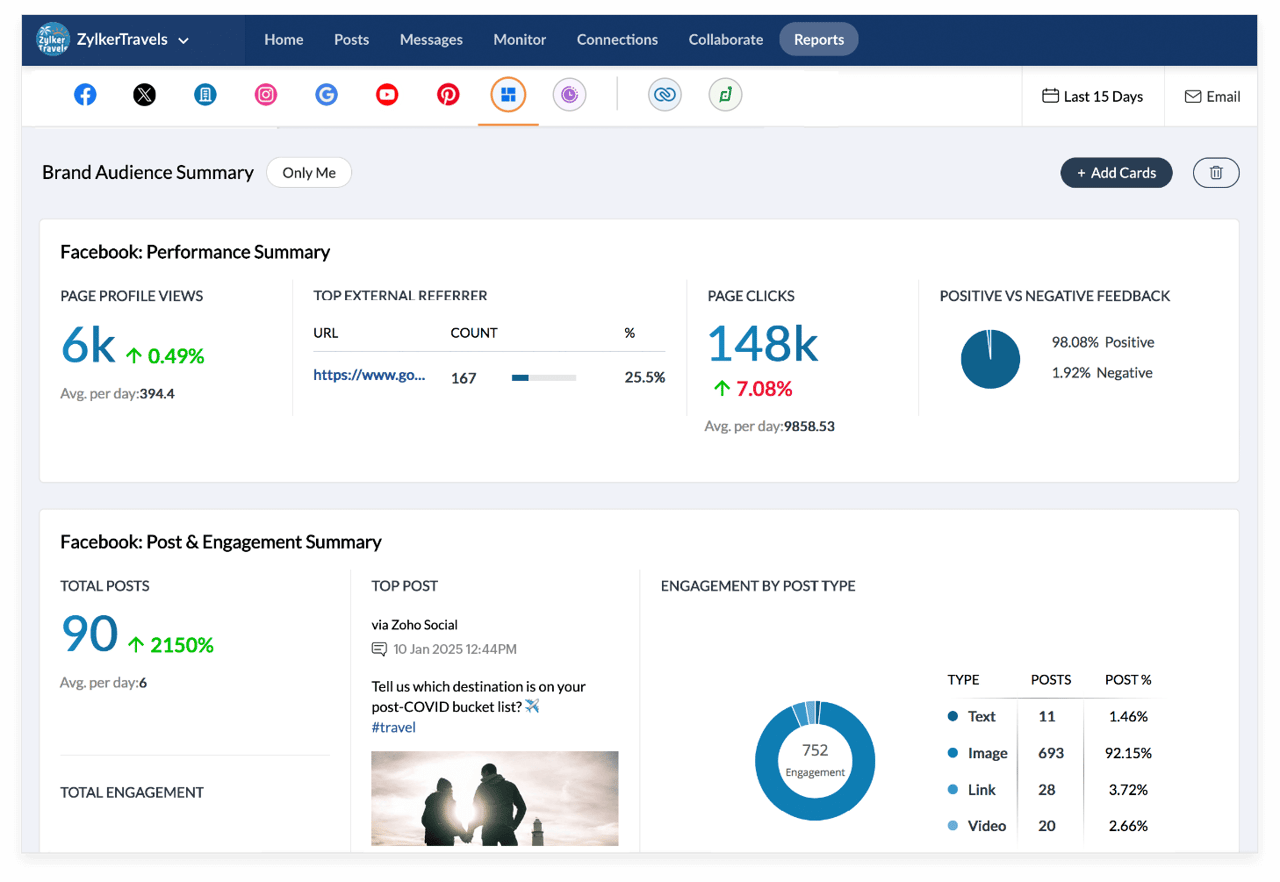
Zoho Social is the value pick, and it isn't close. Roughly $15 a month gets small businesses scheduling, monitoring, and reporting — basic social media management, done properly, for less than a team lunch. There's a free plan for individuals. Agency tiers run to about $338/month.
The ceiling is the catch. Reports cover audience demographics, reach, and audience engagement, but you won't get the in-depth analytics or competitor benchmarking Agorapulse builds in. Zoho Social also splits monitoring and replying across separate tabs, which is a small thing that becomes an annoying thing at volume.
What you get for $15
Share browser extension. One-click content curation from anywhere on the web.
Custom video thumbnails. Pick a frame or upload your own for YouTube, TikTok, Facebook, and more.
Zoho CRM integration. Ties social conversations to customer records — the main reason to pick Zoho Social at all.
Clean user interface. One of the more user-friendly options here, which shortens onboarding for non-specialists.
If you're already inside the Zoho ecosystem, Zoho Social is a no-brainer. If you're not, the CRM link is worth less, and the analytics gap starts to matter.
5. Sendible: built for agencies with multiple clients
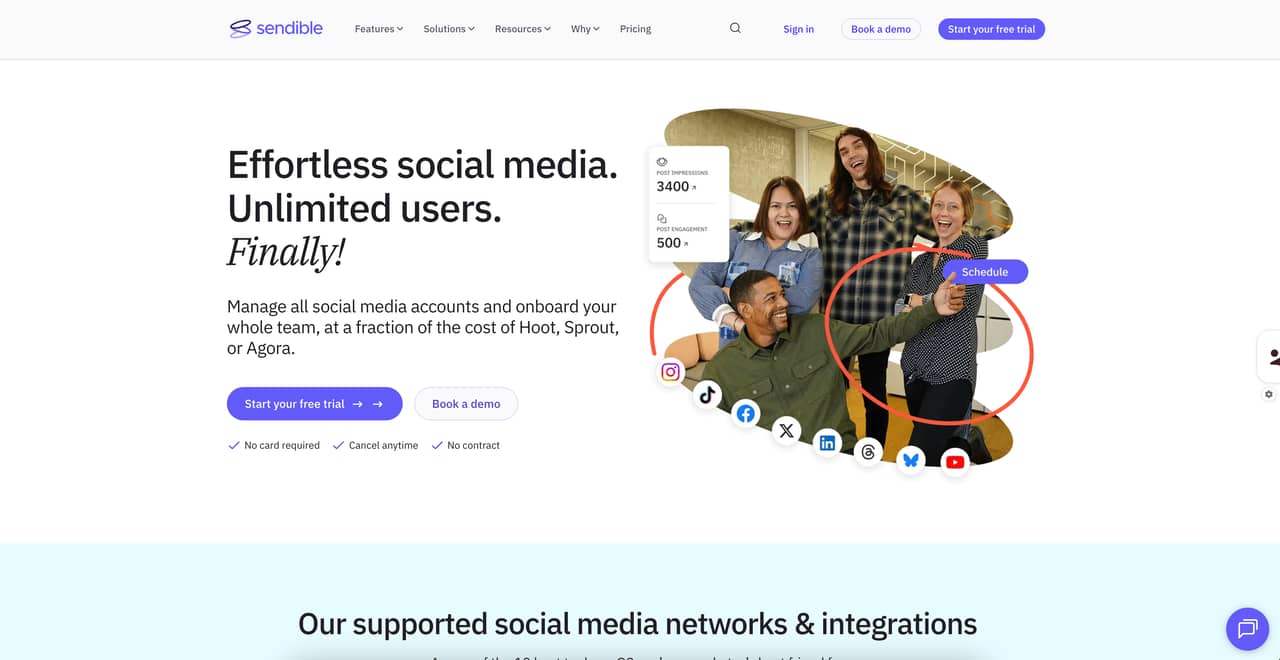
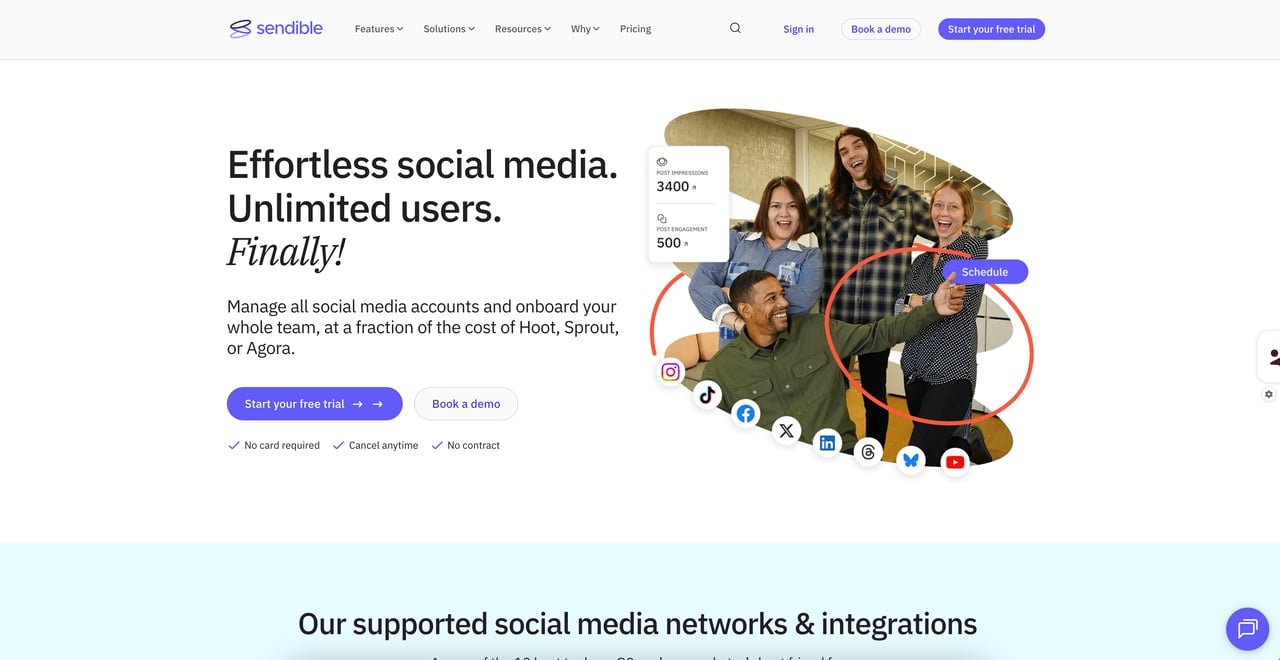
Sendible was designed around one question: how do you manage multiple clients without ten browser tabs open? Each client gets a workspace, a calendar, and a white-labeled dashboard of their own.
Reporting is where it earns the retainer. Branded reports go out on your domain with your logo — which sounds cosmetic until a client forwards one to their board. Client workspaces keep teams managing multiple brands from tripping over each other, the Priority Inbox filters noise, and a content library plus RSS feeds keeps evergreen social media posts flowing.
The trade-off: analytics stay fairly basic next to Agorapulse's competitor benchmarking, and the good reporting features live on plans from roughly $199/month. Entry pricing is around $25–29/month per G2's side-by-side comparison, so the gap between "cheap" and "actually useful for agencies" is wide.
Best fit: marketing agencies and freelancers with external clients who expect something polished.
6. SocialPilot: bulk scheduling for multiple social media accounts
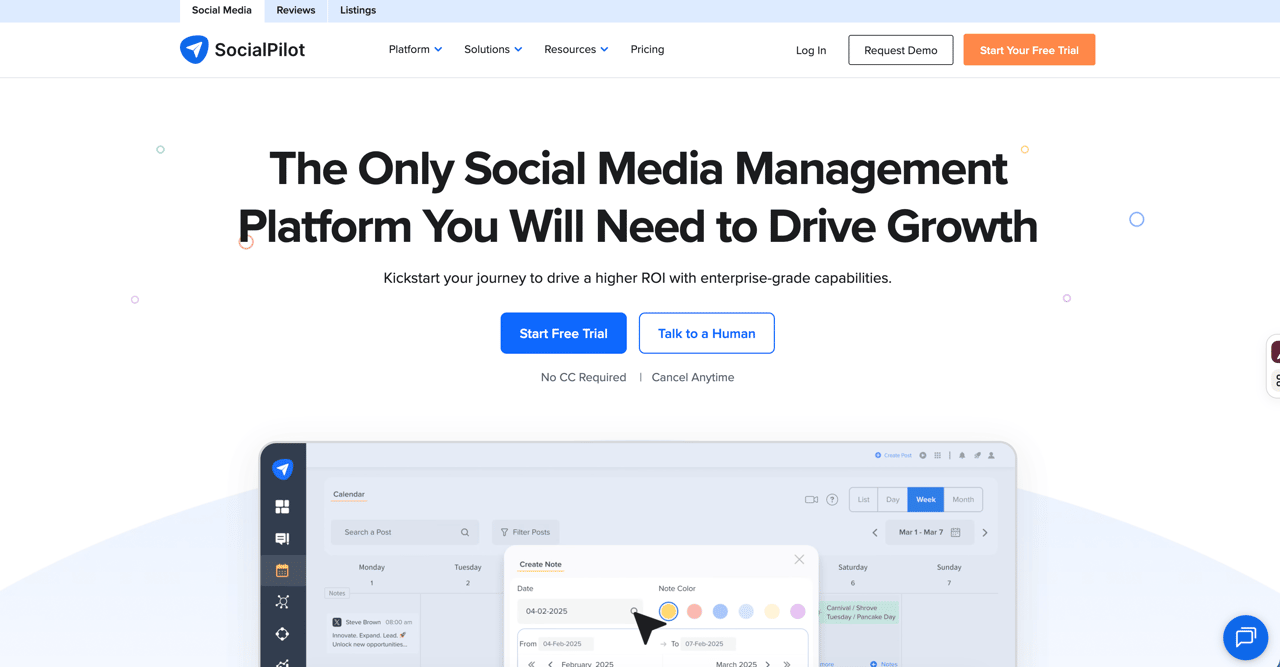
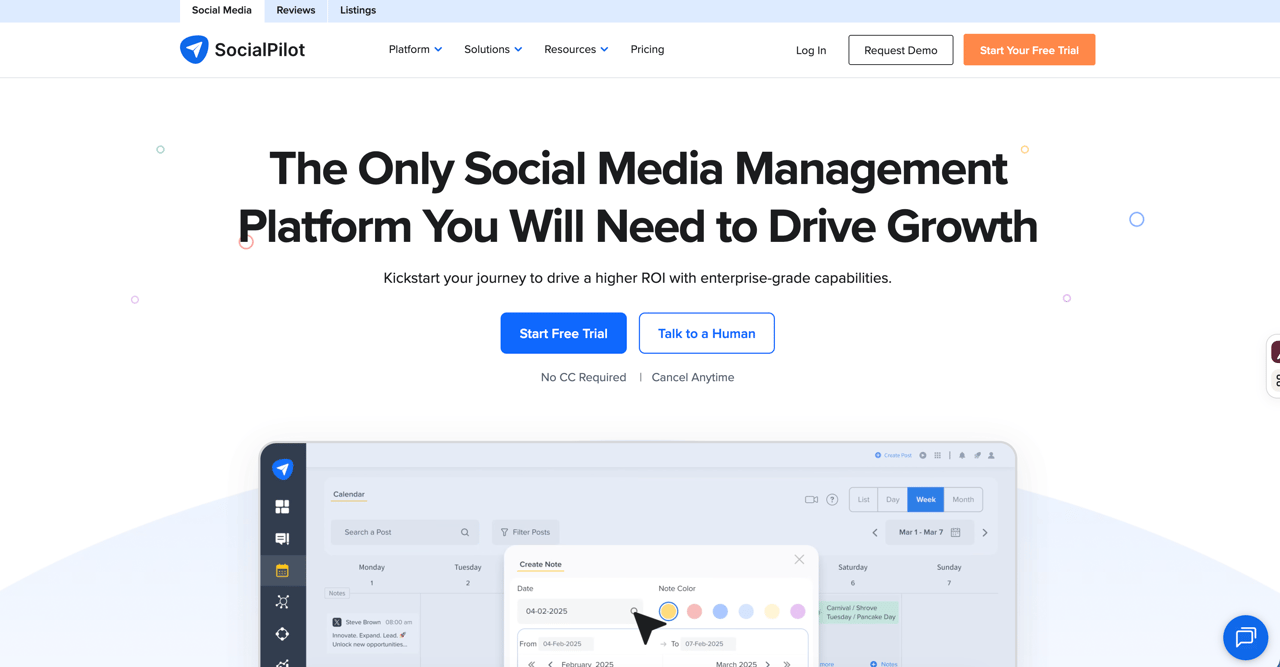
This is what you pick when the job is publishing at volume, and the budget is tight.
Bulk scheduling handles 500 posts at once, double what Agorapulse allows. Approval-on-the-go lets external clients sign off from a phone without an account, killing four emails per review cycle. White-label reporting tools show up mid-tier rather than at the enterprise level. RSS feeds and content curation keep the queue full. Google Business Profile support is there for multi-location brands.
If bulk scheduling is most of the job, this is the scheduling tool to beat. Social listening is the obvious gap, though. There isn't any, at all. Pair it with something else or accept you're flying blind on mentions.
Pricing: from about $30/month for 7 social media accounts up to roughly $200/month for 50 accounts with unlimited users. For boutique agencies that need throughput and flexible pricing more than they need deep analytics, it's the best value on this list.
7. SocialBee: AI-powered content creation and curation
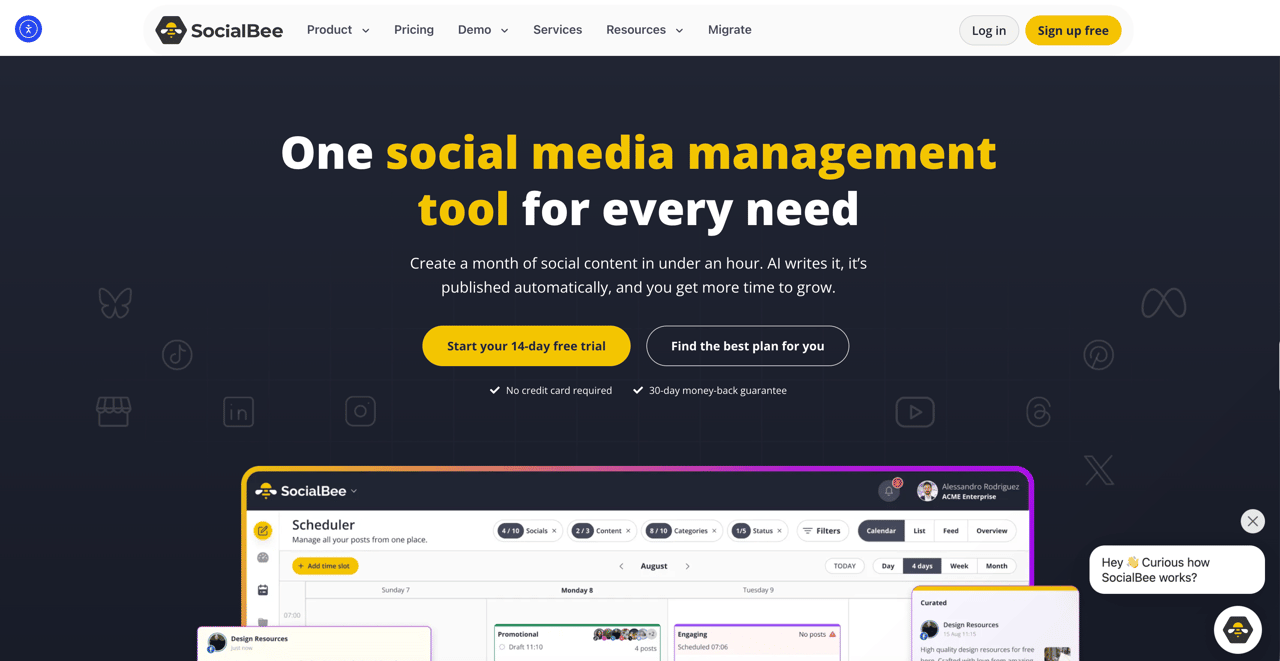
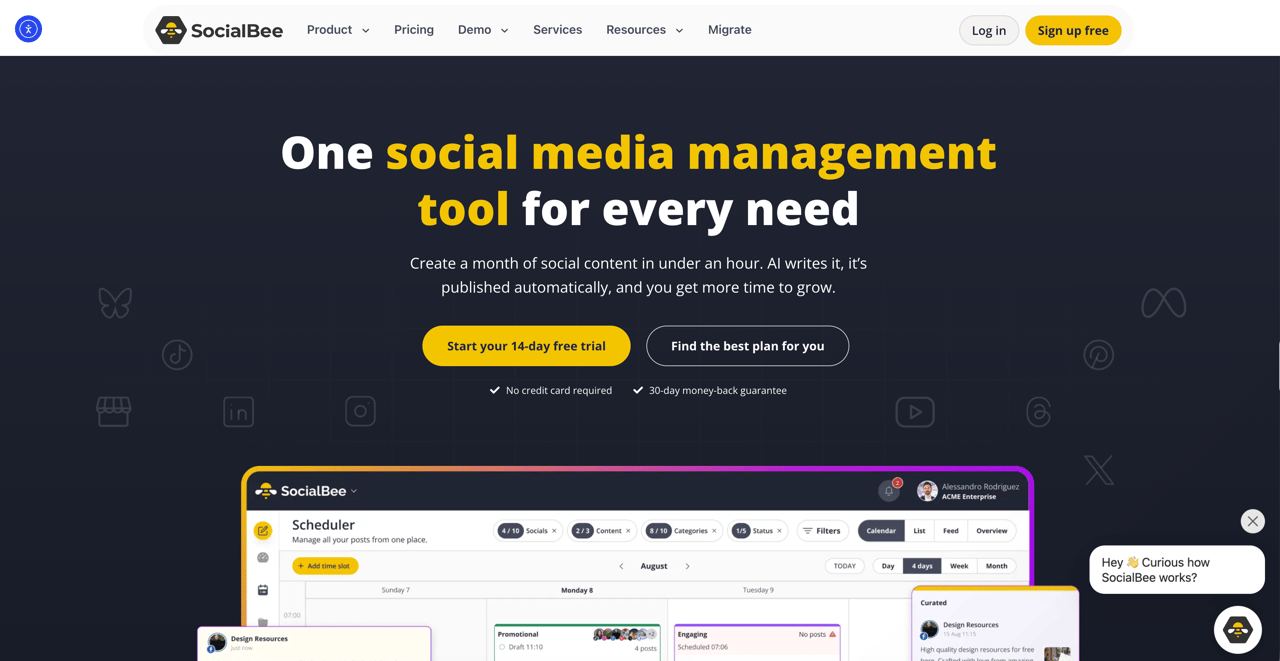
SocialBee sits near the top of most Agorapulse alternatives roundups, and its angle is content rather than management.
Categories are the whole idea. Sort posts into buckets — tips, promos, curated links — and this social media management tool cycles through them, so the feed stays balanced without rebuilding a calendar every month. Its AI Copilot goes past caption writing into content creation strategy: give it your goals and audience, and it proposes an entire posting plan. For a one-person social media team, useful.
Two honest weaknesses. Reports can't be customized, and there's no Google Analytics integration — a real step down from Agorapulse's reporting tools. From about $29/month for one user and five profiles.
Good for solo marketers and small businesses who want a hand with content creation rather than another dashboard — most social media management tools assume you've already written the posts. Not good for anyone whose boss asks hard questions about attribution.
8. Statusbrew: inbox management and automation at volume
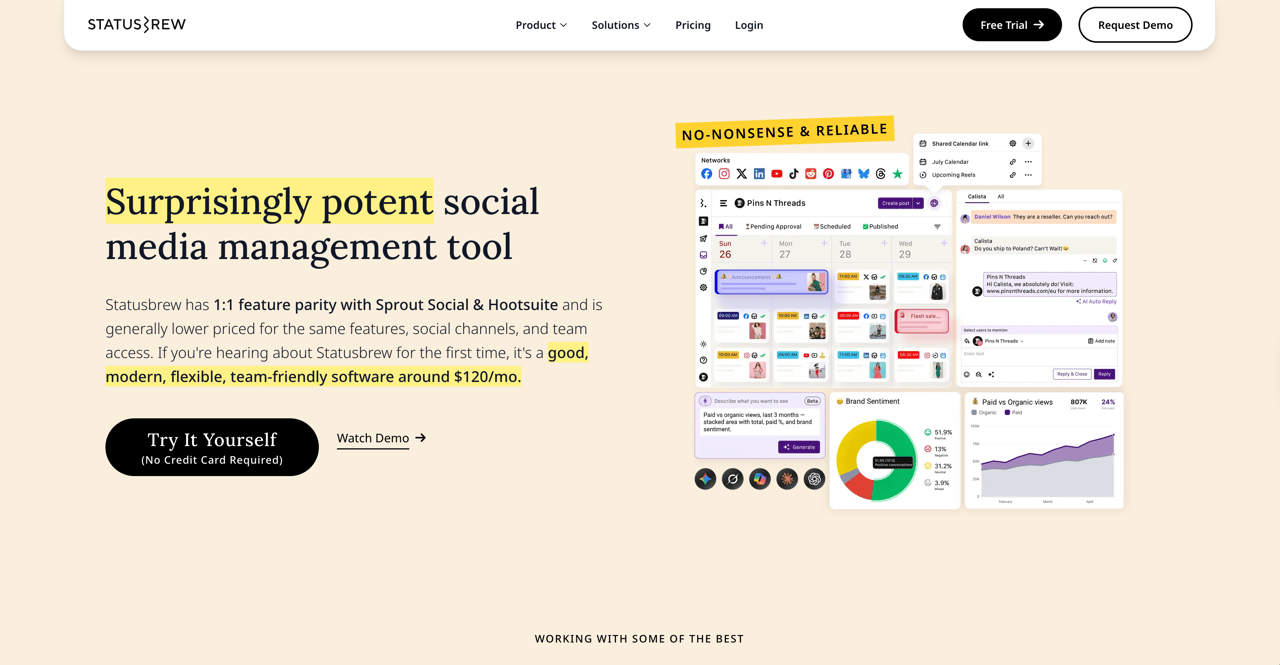
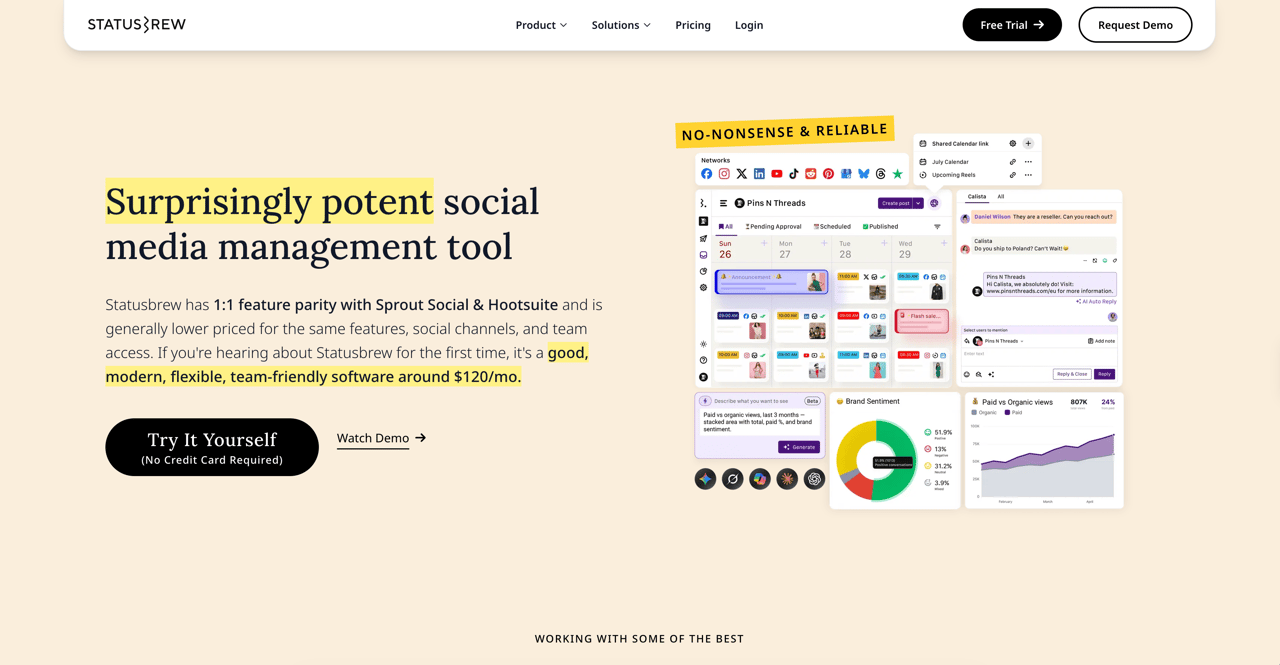
Statusbrew goes straight at Agorapulse's structural weakness. Its unified inbox pulls comments, DMs, reviews, and ad replies into one stream, then lets you slice it by sentiment, tag, network, or UTM.
Then the automation, which is the actual selling point. Statusbrew's own breakdown lists 60+ rules for auto-tagging, assignment, spam hiding, and instant replies, plus 230+ metrics behind custom dashboards. For a team drowning in ad comments that's a significant advantage over moderating by hand.
Key features
Unified inbox with team queues. Route conversations to the right person automatically.
60+ automation rules. Hide negative ad comments, auto-assign, auto-reply.
230+ metrics. Detailed analytics with scheduled delivery and shareable links.
Team productivity reporting. Response times, workload, peak activity by person.
Bundle pricing. No per-seat charge — around $179/month for 5 users and 10 social media profiles, with a 14-day free trial.
Agencies and enterprise businesses running high-volume community management get more advanced features here than Agorapulse gives them, without per-user billing. The publishing side is less polished. Pick your problem.
9. Later: a drag-and-drop calendar for visual content

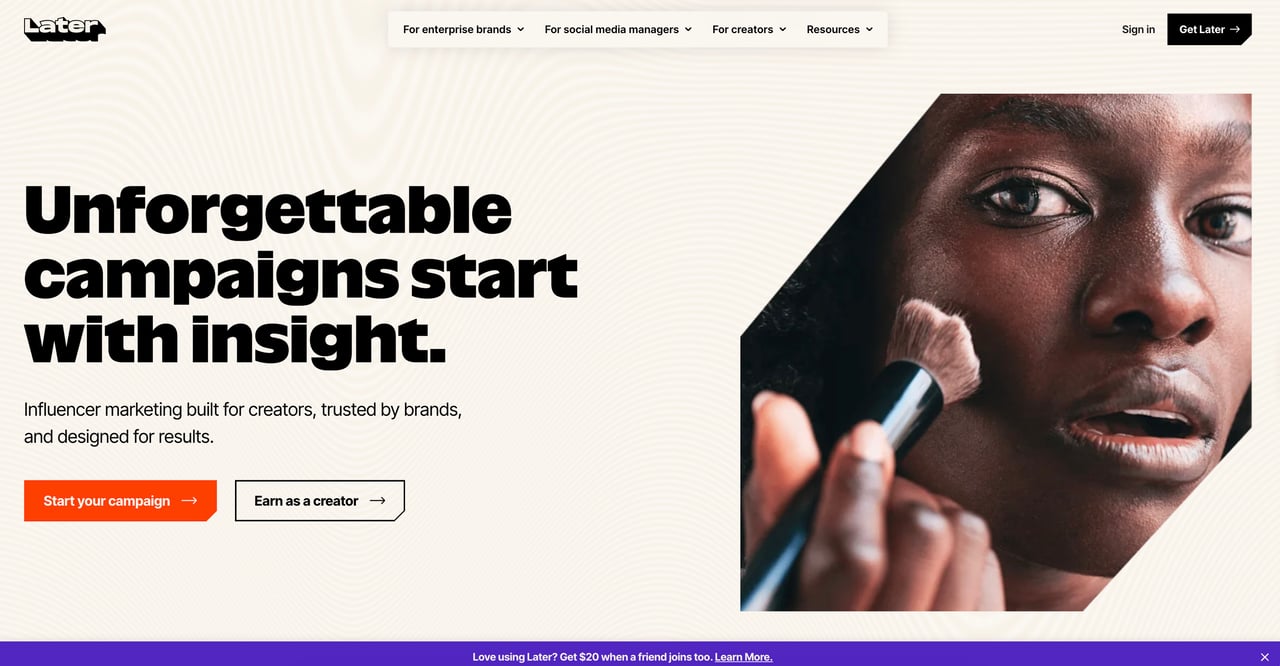
Later is one of the cheapest Agorapulse alternatives on this list, and it built its reputation on Instagram. That still shows. The drag-and-drop calendar and grid preview make planning a feed genuinely pleasant, the media library keeps visual content where the team can find it, and hashtag suggestions and first-comment scheduling are built in.
It is not trying to be an enterprise platform and doesn't pretend to be. Scheduling posts and planning a grid is the whole product. The inbox covers Instagram and TikTok comments only, there's no DM support, and social media reporting stops at basic analytics — post performance, audience engagement, follower growth, no competitor tracking.
From about $25/month for one social set of nine profiles, roughly half of Agorapulse's entry tier for more accounts. Creators and visual-first brands will love it. Agencies will outgrow it in a quarter.
10. Planable: multi-level approval workflows for marketing teams
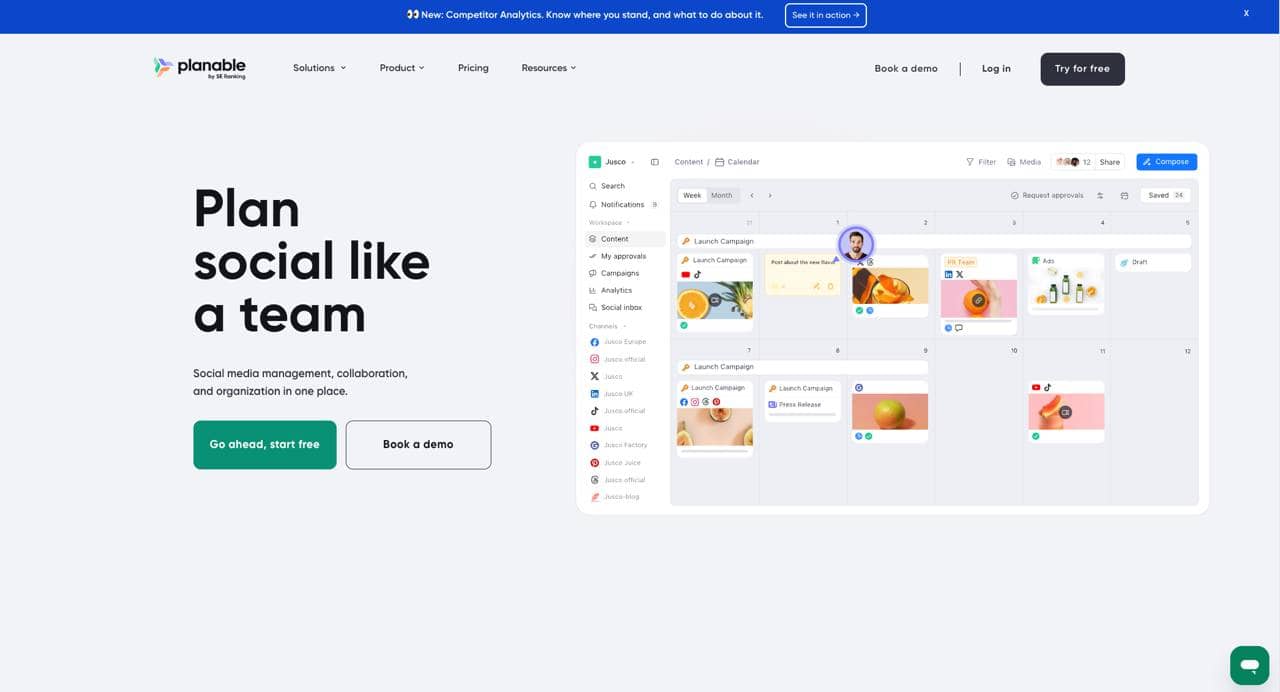
If your bottleneck isn't publishing but sign-off, Planable is worth twenty minutes of your time. Posts render exactly as they'll appear live, stakeholders comment directly on them, and multi-level approval workflows mean legal reviews after the brand team without a single email thread.
Every paid plan includes unlimited users. Against Agorapulse's per-seat model, that's a sharp contrast, and it's the reason agencies with a dozen reviewers keep landing here.
Multi-level approval workflows. Route content through as many reviewers as you need.
Feed-accurate previews. What the client sees is what is published.
Workspace-per-brand structure. Clean separation for teams managing multiple brands.
Free plan with limited posts; paid plans from roughly $39 per workspace per month.
It's a one-trick pony. It's a very good trick. But there's no social inbox and no listening, so it sits alongside another tool rather than replacing one.
Still need proper listening?
Sprinklr and Brandwatch aim at enterprise research budgets — our Brandwatch alternatives piece covers what mid-market teams actually end up using instead. Brand24 (from $119/month) and Mentionlytics (from $58/month) sit at the accessible end, and Sprout Social's add-on covers the middle if you're already paying for it. And if most of your conversation happens on forums, Reddit social listening is worth reading before you shortlist anything. The wider roundup of social listening tools goes deeper into all of it.
How to choose between the best Agorapulse alternatives
By the third browser tab, every feature list looks identical. Four questions cut through it.
Reporting features: what does your boss actually ask for?
If the monthly ask is "how did we do," basic analytics are fine and you can stop reading. If it's "why did engagement drop in March," you need more advanced analytics — competitor benchmarking, custom date ranges, an analytics feature set that exports cleanly. Sprout Social and Statusbrew are built for that kind of deep analytics. Later and Planable aren't, and don't pretend to be — which is more honest than most.
Social inbox: one queue or many?
Count your inbound social media messages per week. Under a few hundred, most social media management tools cope. Above that, a unified inbox with automation stops being a luxury.
One thing people forget to ask: are ad comments included? Several platforms quietly leave them out, and if you run paid social that's where half your inbound lives.
Social listening capabilities: monitoring or research?
Monitoring tells you mentions spiked. Research tells you why — and the difference between the two is worth understanding properly before you buy, which is what social listening vs social monitoring gets into. Most social media management platforms do the first well enough. If you need the second — emotion, imagery, audience demographics, category-level key trends across millions of data points — budget for a dedicated tool. How to choose the right social listening tool walks through the evaluation criteria, and brand sentiment analysis is a reasonable place to see what good looks like.
Pricing model, not just the sticker price
Per-seat looks cheap at one user and painful at six. Per-workspace and bundle pricing flip that entirely.
Model your cost at the team size you expect in a year, not the one you have today. Then check what the bill does when you add an eleventh profile — that's usually where the surprise lives.
And test how fast the customer support team replies during a migration. Moving a year of scheduled content is exactly where a good social media tool separates itself from a cheap one.
So which one should you actually pick?
None of these Agorapulse alternatives wins outright. Social media management tools get bought to fix a specific bottleneck, so start with yours.
Sprout Social if you want depth and can pay for the seats. Zoho Social or SocialPilot if price leads — Zoho Social especially for small businesses with no dedicated social hire. Sendible or Planable if clients and approvals shape your week. Statusbrew if the inbox is what's breaking. YouScan if what you actually need is to understand the conversation rather than schedule into it.
Shortlist three. Run the free trials with real social media content and a real week of messages, not a Tuesday afternoon poking at demo data. And ask each vendor about migration support before you sign.
See what social listening actually looks like
Nine of the ten tools above will schedule your posts. Two of them will tell you why the numbers moved.
If it's the second problem keeping you up — a spike you can't explain, a competitor eating your share of voice, a product complaint you only heard about three weeks late — book a demo with YouScan. You'll get a walkthrough of your own brand's conversations rather than a tidy sample dataset, including Visual Insights and the Insights Copilot agent.
FAQs
Does Agorapulse still have a free plan?
Agorapulse used to offer a limited free plan, but it's no longer shown on the pricing page. Every plan comes with a 30-day trial instead. If a permanent free plan is non-negotiable, Zoho Social, Buffer and Planable each offer one.
What's the cheapest Agorapulse alternative?
Zoho Social at roughly $15/month is the cheapest full social media management platform, with Later (~$25), Sendible (~$25–29), SocialBee (~$29) and SocialPilot (~$30) close behind. All undercut Agorapulse's $79 per user, though none matches its inbox depth at entry level.
Which Agorapulse alternative is best for agencies?
Among the Agorapulse alternatives here: Sendible if client-facing branded reports matter most, SocialPilot if social media budgets are tight, Statusbrew if you're managing a heavy inbox, and Sprout Social if you need advanced analytics across multiple brands. Sprout Social and Sendible both handle white-label reporting well. Agencies that manage multiple clients should weigh per-seat against bundle pricing before anything else.
Can a social listening tool replace Agorapulse?
Only partly. Listening platforms like YouScan cover monitoring, sentiment analysis and consumer research far better than any scheduler, but they don't publish content or run a social inbox. Most brands that need both pair a listening tool with a lightweight social media management tool — and often spend less than they did on a single all-in-one seat.