What Is Brand Recognition? Definition, Tips & Examples

Most brands don't have a recognition problem. They have a consistency problem that looks like one. Consumers can't identify you because you don't look like yourself half the time.
But let's start from the beginning.
Brand recognition is the ability of consumers to identify a specific brand based on its visual or auditory cues, without needing to see the company name. A memorable logo, a distinctive color palette, packaging design, a jingle — any of it can trigger instant recognition. If someone sees your mark and knows it's you, that's brand recognition working.
What is brand recognition in practice? Nike built a swoosh so recognizable it doesn't need the word Nike anywhere near it. McDonald's spent decades making those golden arches globally understood — a symbol as identifiable in Tokyo as in New York. That's the standard most brands are trying to reach.
Most are nowhere near it. Which is fine — but you need to know where you're starting from.
At its best, brand recognition refers to an almost automatic, sub-second response. You don't consciously decide you recognize something — it just happens. At the lower end, a consumer might take a moment to place where they've seen your visual identity before. But the brand exists in their memory. And that matters more than most marketers realize.
What is brand recognition, and how is it different from everything else?
Three terms get used interchangeably in marketing meetings, and none of them mean the same thing.
Brand awareness is the widest category. It measures how many people know your brand exists at all — whether they've heard of you, encountered your content, seen an ad. High brand awareness levels just means a lot of people have heard the name. Nothing more.
Brand recognition is tighter. It's specifically about identification from visual or auditory cues — your logo, brand colors, distinctive packaging. A consumer doesn't have to like you, use you, or even be in your target market to recognize you. They just need to have encountered your visual identity enough times that they can place it when they see it again. Consumer awareness of your brand is the beginning of the journey — recognition is the step that makes it useful.
Brand recall is the top of the ladder. That's when a consumer names you without any prompt. Ask someone, "name a social media listening tool," and YouScan comes up — no cues, no list. That's unaided brand recall. Ask them to identify YouScan from a list? Aided brand recall. They're different things, and they require different strategies.
Think of it as a spectrum: awareness → recognition → recall. Each step demands more from the consumer. And none of them happen without the foundation below.
Brand identity: what you're actually building recognition of
You can't build brand recognition without something coherent to build recognition of.
That's brand identity — the full system of visual and verbal signals that tell consumers who you are and what your brand represents. Not just a logo. The whole thing.
Your visual identity includes your logo, brand colors, typography, brand visuals, and packaging. These visual elements need to be consistent across every touchpoint. Not approximately consistent. Consistent. Brand logos used in 15 different variations across channels are effectively no logo at all. Inconsistency doesn't just fail to build brand recognition — it actively erodes it. Visual recognition depends entirely on repetition, and repetition requires the same inputs every time.
Your verbal identity is brand messaging, tone of voice, tagline, and brand story. A brand story that resonates creates a lasting impression. Emotional connection is one of the most durable drivers of brand recognition there is — maybe the most durable. Consumers remember how a brand made them feel long after they've forgotten the specific ad.
Here's what most brands miss: recognition is built by consistent exposure over time. Every time a consumer encounters an inconsistent version of your visual identity or brand messaging, you're subtracting from what you've built. A thorough brand analysis will often surface exactly where that inconsistency lives — before it shows up in your metrics.
Established brands spend real money maintaining this. Successful brands understand that brand equity is directly tied to identity consistency, and it doesn't happen by accident. Established brands don't leave visual consistency to chance.
Why is brand recognition important?
Short answer: because consumers take shortcuts, and familiar brands are one of them.
When someone's standing in an aisle or scrolling through results, they don't evaluate every option from scratch. They recognize what they know and default to it. That's not irrationality — that's time efficiency. Familiar brands reduce cognitive load. They feel safe in a way that unknown brands simply don't.
Brand recognition is important for reasons that compound.
It builds brand loyalty. Recognition followed by a positive experience, repeated, is the entire mechanism behind customer loyalty. Consumers recognize your brand, recall a good interaction, and default back to you. Without recognition, that cycle never starts.
It grows brand equity. Strong brand recognition is a key component of how brand equity accumulates — it creates the positive associations that make consumers willing to pay a premium. See how the metrics work in YouScan's guide to measuring brand equity.
It makes all your marketing campaigns more efficient. High brand recognition means the brand already exists in consumers' minds. Marketing and advertising efforts can focus on deepening the relationship instead of introducing who you are. That efficiency compounds directly into brand visibility — in search, in social, and in AI-generated answers where recognized brands in a category get surfaced over unknowns.
It protects market share. High brand recognition makes you harder to displace. When consumers recognize your brand and trust it, they don't switch easily. That's durable, earned protection — and it has real commercial value.
According to the Kantar BrandZ Most Valuable Global Brands 2024 report, the world's top 100 most valuable brands were collectively worth $8.3 trillion — up from about $5 trillion just four years earlier. That brand value doesn't accumulate in a vacuum. Successful brand recognition is what drives it. Not a soft metric.
How to build brand recognition
No single tactic does this. It's the accumulation of consistent choices across every channel, over time. That said, some choices matter more than others.
Consistent brand visuals — actually non-negotiable
The single most reliable driver of brand recognition is a consistent visual identity applied consistently. Not approximately consistently. Consistently.
Your brand logos look identical across every channel. Brand colors don't vary. Design elements don't get improvised by whoever made the last social post. When consumers see the same visual elements repeatedly across contexts, recognition builds through consistent exposure. When those elements shift around, it doesn't.
A key component of this is treating your brand style guide as infrastructure, not a suggestion. Create it. Enforce it. Audit brand visuals quarterly. That's how you make your brand instantly recognizable over time, rather than vaguely familiar.
Most brands know this. Most brands still fail at it in execution.
Brand story and consistent messaging
Consumers don't remember facts about brands. They remember feelings — impressions, associations, a general sense of what a brand stands for. Brand story is the mechanism for building those feelings deliberately.
Consistent messaging reinforces that story at every touchpoint. Whether someone reads your blog, sees a social ad, or talks to your customer service team, they should encounter the same brand. Same values, same character, same emotional connection. When that consistency holds, it converts recognition into loyal customers over time.
Don't write messaging for your brand. Write messaging as your brand. That distinction matters more than most teams realize.
Build brand awareness with campaigns
Recognizable brands got there through reach. Brand awareness campaigns — paid social, content marketing, PR, events — put your visual identity in front of people who haven't encountered it yet and create the first moments of recognition that future marketing campaigns build on.
The best campaigns are designed to spread. Research from Binghamton University confirms that Spotify Wrapped generates over 2 billion social media impressions in a single year — almost entirely through users sharing their own results. The brand doesn't push it out. The audience does. That's the mechanic worth borrowing: build brand awareness campaigns around user participation, and shareability does the distribution work.
Strategic brand collaborations work on a similar logic. Two brands with distinct visual identities creating something together means both audiences get exposed to both. Market research consistently shows that consumers' trust extends to brands their trusted brands associate with. Recognition can transfer.
Boost brand recall with influencer marketing
A well-matched influencer partnership does more to boost brand recall than a hundred paid impressions from a source the audience doesn't trust. That's not a reach play — it's a recognition and recall play. The creator brings your visual identity and brand story to their audience through a voice people already trust.
A solid influencer collaboration strategy built on genuine alignment — where the creator actually fits the brand's values and target audience — drives the kind of lasting impression that boosts brand recall over time. High-follower accounts with no real alignment generate impressions. They don't improve brand recognition in any meaningful way.
The right social listening tools take the guesswork out of creator discovery. With YouScan, you can find creators already organically talking about your brand or category, track what your competitors are doing in this space, and build a brand-based media strategy from real data rather than assumptions.


Brand recognition strategies: what actually works
Most advice on this topic is either too vague ("be consistent!") or too tactical ("post three times a week"). Here's what the actual strategy looks like.
Track your brand online, continuously. Tracking brand mentions and share of voice across social media platforms gives you a real-time read on whether recognition is actually building — and surfaces the gaps campaigns can close. YouScan's social listening dashboards pull this data from social media, news, blogs, and reviews in one view. Promote brand recognition actively, but measure it just as actively.
Watch share of voice, not just your own numbers. Your brand might be growing in mentions while losing relative ground to competitors. Share of voice tells you whether your brand recognition efforts are working in context. If it's flat or falling, adjust your brand strategy regardless of what your absolute volume shows.
Build brand presence before you invest in conversion campaigns. There's a sequencing mistake brands make constantly: spending on performance marketing before consumers are familiar with the brand. Top-of-mind awareness has to come first. Consistent visibility in the channels your target market uses — showing up regularly with a recognizable look and message — is what makes performance campaigns efficient later. Without the recognition layer, you're paying more per conversion than you need to, every time.
How to measure brand recognition
No single metric tells the whole story. You need a combination, and the right combination depends on what you're trying to understand.
Surveys and focus groups
Surveys give you structured, comparable data. Aided brand recall surveys show consumers a list of brands and ask which they know. Unaided surveys ask them to name brands in your category without any prompts at all. Focus groups let you probe what specific associations people hold — not just whether consumers recognize your brand, but what consumer behavior follows from that recognition.
These are valuable. They're also expensive and slow to run frequently. A brand health tracker gives you a continuous signal layer between those periodic survey check-ins — so you're not flying blind for six months at a time.
Branded search volume and market research
When consumers search for your brand name directly, they already know you exist. That branded traffic is one of the clearest live signals of recognition — and of consumer behavior change over time. Track it in SEMrush or Google Search Console alongside broader market research. Compare it against competitors.
Research suggests that brands with high brand recognition consistently outperform on branded search as a share of total category search. Rising branded search with flat or declining paid spend is evidence that strong brand awareness is compounding organically. If it stays flat despite heavy campaigns, you have an effectiveness problem, not a reach problem.
Social listening, brand equity and share of voice
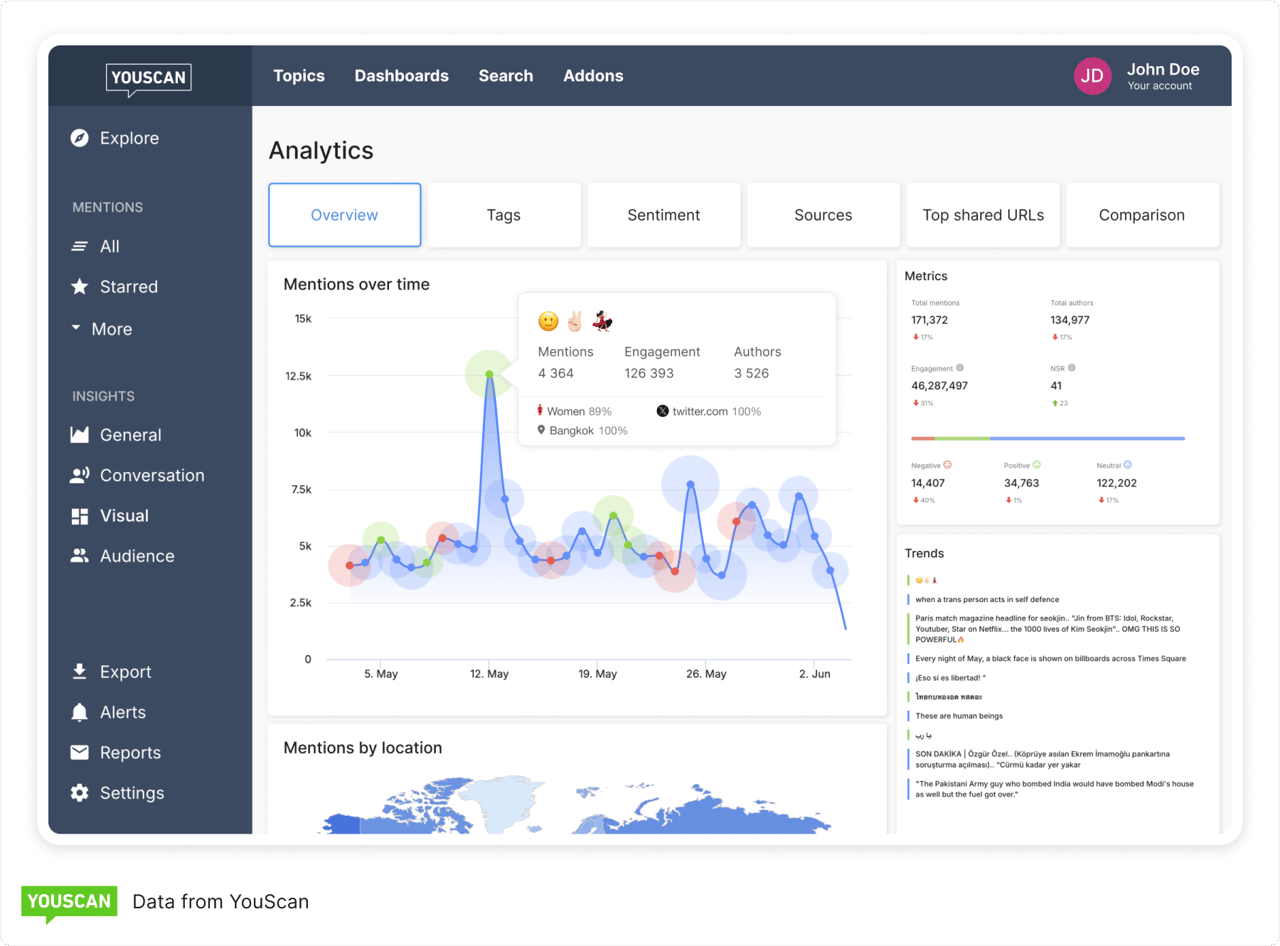
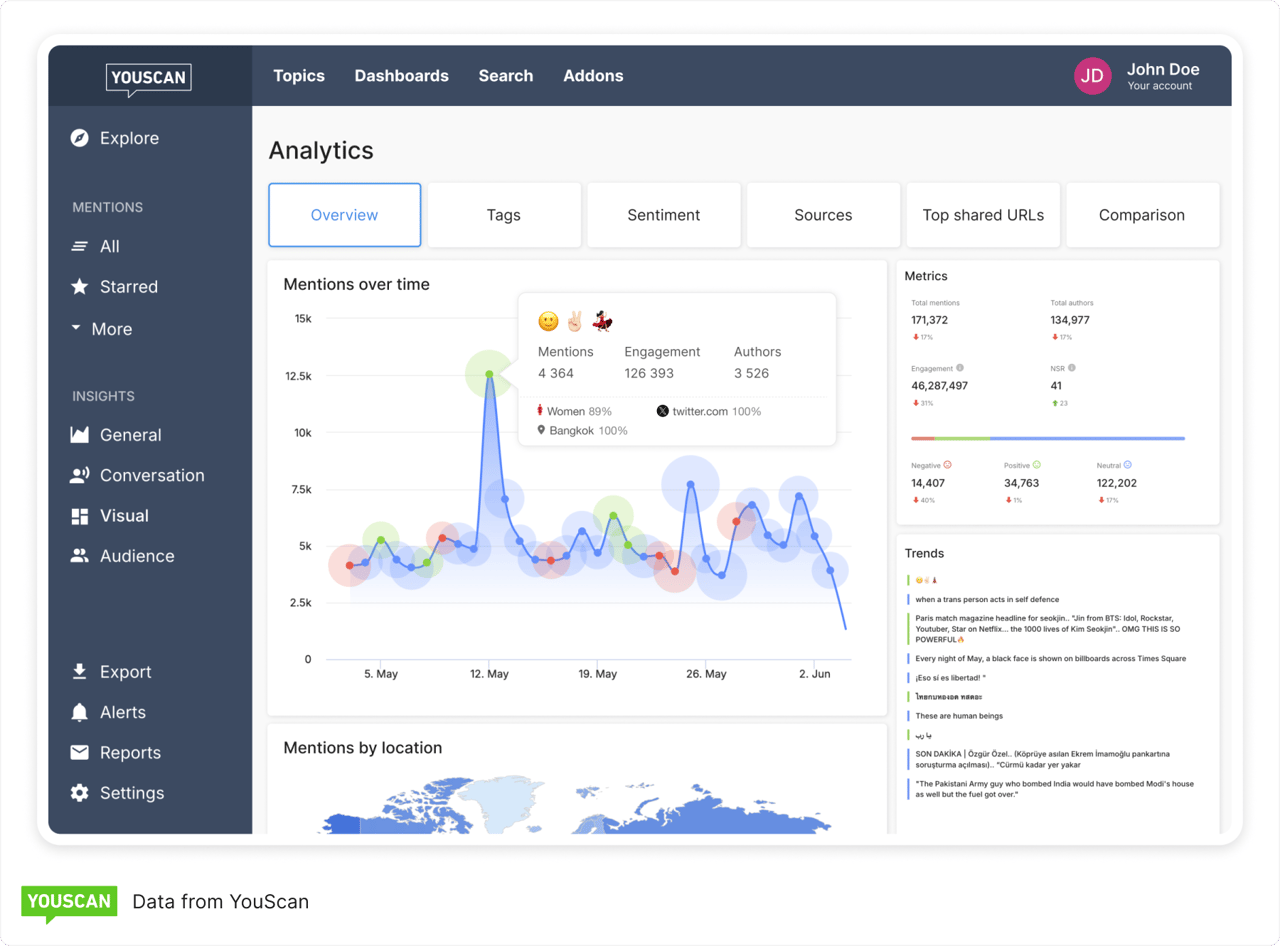
Social listening is the most scalable method for measuring brand recognition continuously. Mention volume, sentiment trends, share of voice — you get it all without a survey cycle.
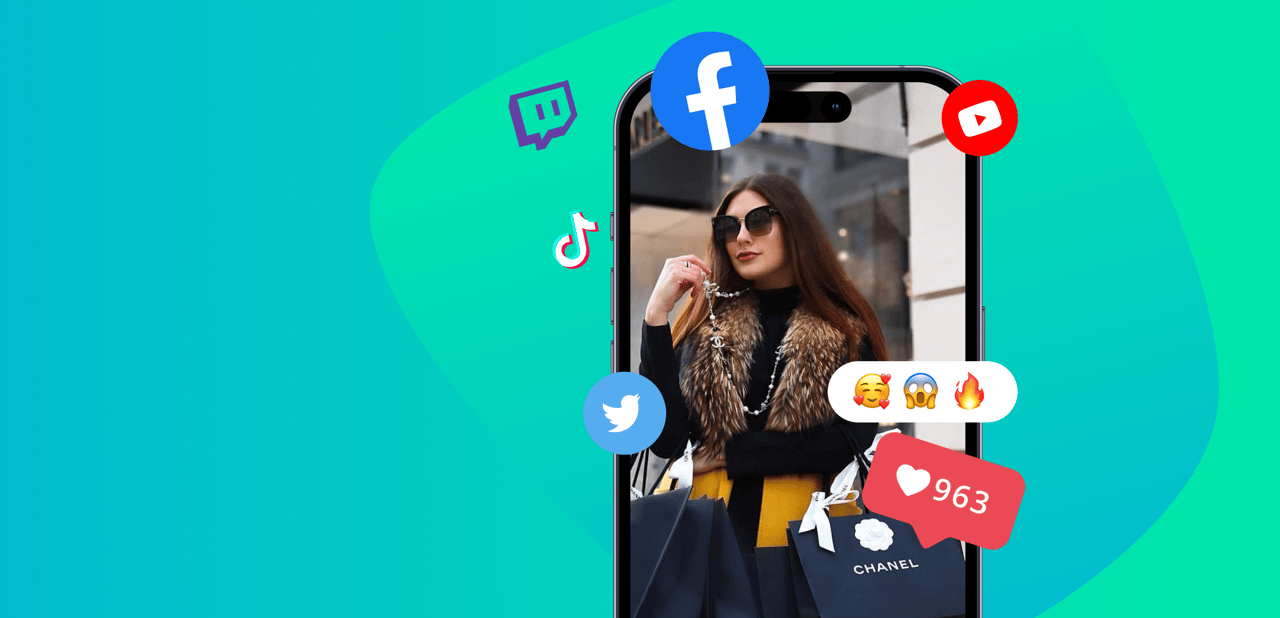
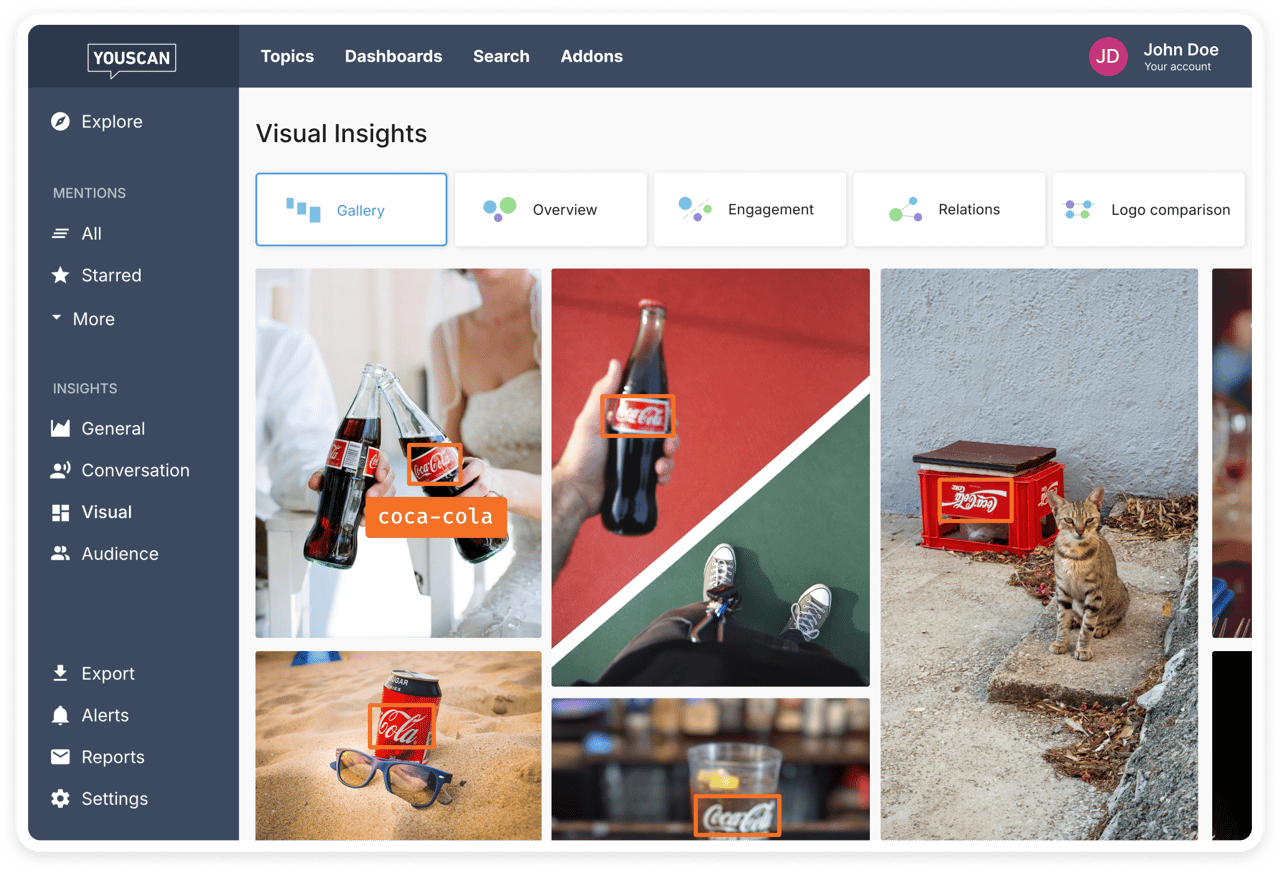
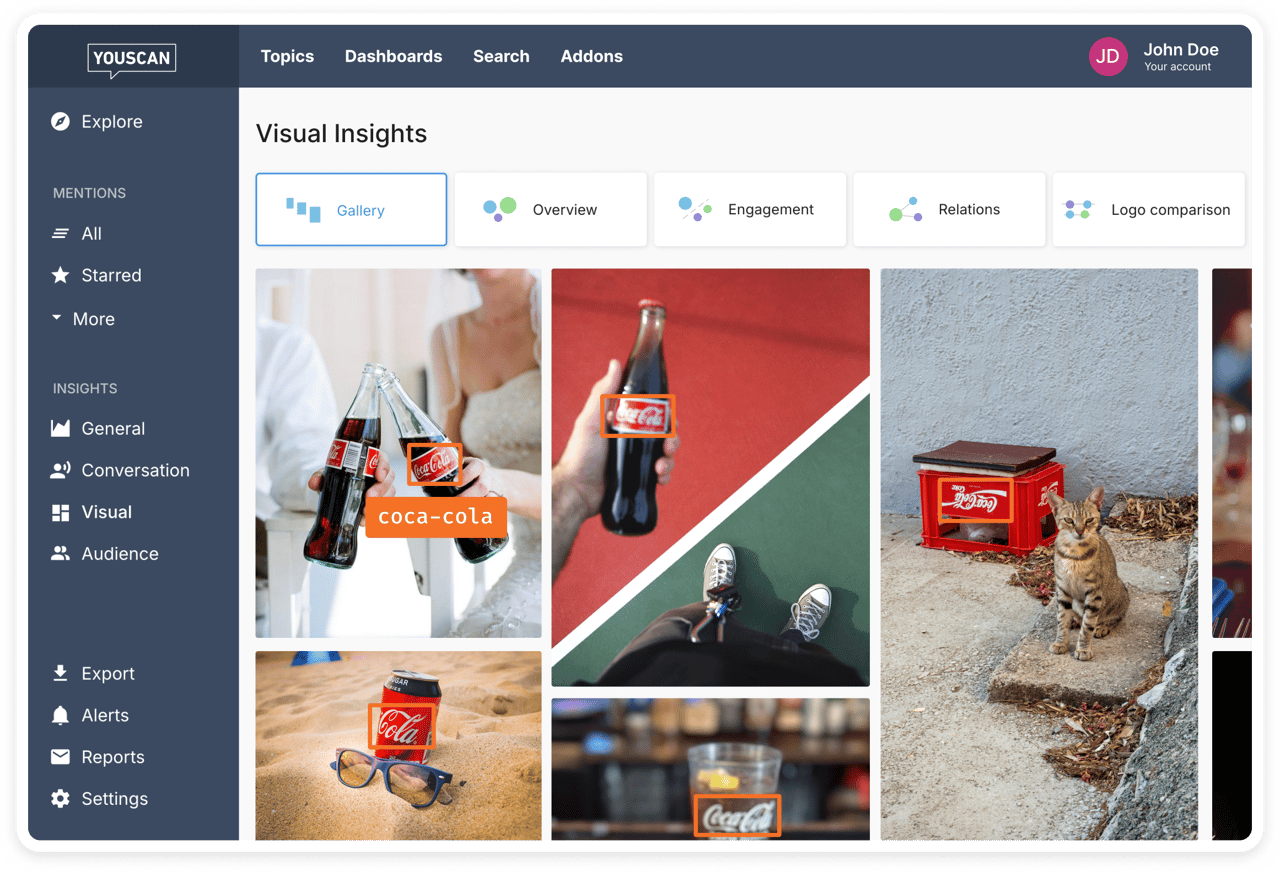
But most social listening tools have a significant blind spot: they only track text. Someone posts a photo of your product at an event, your brand logo clearly visible, without tagging you or typing your name. Traditional tools miss it entirely. That's a whole layer of brand recognition in the wild, invisible to anyone relying solely on text-based monitoring. It's also usually where the most authentic consumer behavior happens.
YouScan's audience insights layer shows the demographics and interests behind those conversations — valuable insights into whether your brand recognition is actually building with the right target market or just making noise elsewhere.
The visual insights feature detects brand logos in images where your brand name appears nowhere in text. For any brand with strong visual recognition, this changes your measurement entirely — you're capturing reach data that text-only tools simply can't see.
YouScan also supports Moltbook monitoring in English and Ukrainian, extending social coverage to platforms most monitoring tools don't track at all.
New to the terminology? The social listening glossary is a practical starting point.
Brand equity and brand recognition aren't the same metric, but they move together. Track recognition consistently and the brand equity payoff shows up — higher conversions, better pricing power, lower acquisition costs. Improve brand recognition steadily, and you'll see it in the financials eventually.
FAQs
What's the difference between brand recognition and brand awareness?
Brand awareness is broader — it covers how familiar consumers are with your brand overall. Brand recognition is specifically about identification: can someone see your logo, brand colors, or hear your jingle and know it's you without seeing the company name? Recognition is a subset of awareness, and it's usually harder to earn.
Why is brand recognition important for business success?
Because it shortcuts decision-making. Consumers facing multiple options default to what they recognize and trust. Brand recognition creates that familiarity, which drives consumer purchasing decisions, supports brand loyalty, and builds brand equity over time. It shows up in pricing power, customer acquisition costs, and long-term market share.
What are the most effective brand recognition strategies?
Consistent visual identity, a clear brand story reinforced through consistent messaging, brand awareness campaigns designed for shareability, and influencer partnerships based on genuine alignment rather than reach. Plus ongoing social listening to track whether your brand recognition efforts are actually moving — because strategies you can't measure are strategies you can't improve.
How do you measure brand recognition effectively?
Use a combination: surveys (aided and unaided brand recall), branded search volume tracking, direct traffic analysis, and social listening for share of voice and sentiment. For brands with strong visual identity, tools like YouScan add logo tracking in images where your brand isn't mentioned by name — giving you recognition data that text-only tools miss entirely.