What Is a Personal Brand: Core Elements and How to Build & Track One


Someone searched your name last week. A recruiter, a prospective client, maybe a person you met at a conference who forgot which company you work for. Whatever they found—a stale LinkedIn headline, a five-year-old post, three pages of a completely different person with your name—that was your personal brand doing its job without you.
So, what is a personal brand? Most guides answer that by jumping straight to tactics: post more, be authentic, pick a niche. Fine advice, except it assumes you already know what the thing is. It also blurs two separate ideas together: the perception people hold of you, and the work you do to shape it.
This guide separates them. We’ll answer what is a personal brand in plain terms, distinguish a personal brand from personal branding and from a corporate brand, break down the elements that make one work, walk through a build framework, and cover the part almost nobody does: how to check what yours actually looks like right now. That last piece looks a lot more like brand monitoring than career advice.
What is a personal brand?
A personal brand is the perception other people hold of you based on your skills, values, personality, and track record. It exists whether or not you have shaped it deliberately. Your posts, your work, your conversations, and your digital footprint all feed it. A logo or a tagline is not a personal brand. The brand is the consistent perception that forms in other people’s heads over time.
That last part trips people up. You don’t launch a personal brand the way a company launches a product. You already have one. It may just be vague, outdated, or assembled from whatever a search engine decided to rank first.
And what other people find tends to outrank what you say about yourself. In Emplifi’s 2026 Digital Authenticity report, a survey of 1,650 US and UK consumers, 66% trusted search results and 63% trusted user-generated reviews—both ahead of brand-controlled channels. Your perception gets assembled from sources you don’t own, which is why it needs measuring rather than guessing. The social listening glossary keeps the terms straight.
Personal brand vs. personal branding
A personal brand is the perception itself: a noun, and one that exists by default. Personal branding is the deliberate, ongoing process of shaping that perception: a verb, a practice.
Most pages covering this topic use the two words interchangeably, which is where a lot of the confusion starts. Keep them apart and everything downstream gets simpler. Your personal brand is the output. Personal branding, sometimes called professional branding, is the input: the writing, speaking, posting, and showing up that moves the output somewhere you chose. Harvard Business School Online frames it the same way: an intentional, strategic exercise in defining and communicating your own value.
Personal brand vs. corporate brand
A corporate brand represents a company, its products, and its mission. A personal brand is built around one individual’s background, voice, and track record, and it can sit alongside a company or exist entirely independent of one.
The two often reinforce each other. A founder’s audience follows the founder, tries the product, and the company’s brand presence grows on the back of a person. That’s the version everyone hopes for.
The messier version: they diverge, and they get tangled. Rand Fishkin, who co-founded Moz and now runs SparkToro, has
talked openly about what happened when he left the company his name was fused to, including roughly $60,000 in legal fees untangling the separation. A founder can be well-liked while the company struggles. A company can do fine while its founder quietly stops showing up. The line between personal and professional gets thin, but they stay related assets rather than the same one.
Why personal branding is important
Personal branding is important because perception decides who gets contacted, hired, referred, and believed, usually before any conversation happens. This isn’t a game reserved for social media influencers: it works on consultants, staff engineers, and finance directors in exactly the same way. Here’s what a deliberate personal brand actually buys you.
It builds trust faster than a company account can. Individuals create trust more quickly than logos do, and people extend credibility accordingly. In the 2025 Edelman-LinkedIn B2B Thought Leadership Impact Report, 79% of “hidden buyers” (the finance, legal, and procurement people who never take your sales call) said they were more likely to back a proposal from a vendor publishing strong thought leadership.
It opens doors a resume doesn’t. Speaking slots, podcast invitations, consulting work, and job opportunities that never get posted anywhere. New opportunities reach the people whose work is legible from outside. A recognizable name prospects for you while you sleep, which is either great or mildly unsettling depending on your temperament.
It gives you control of the narrative. Without deliberate personal branding, the gap fills itself with assumptions, an outdated bio, and whatever happens to rank. Not everyone gets an equal say in what surfaces first, but you get more of one than you probably think.
It separates you from people with identical credentials. A specific point of view is what colleagues repeat to each other when you’re not in the room. Generic competence rarely gets repeated at all, and professional success has an annoying habit of following whoever gets mentioned.
The core elements of a strong personal brand
A strong personal brand rests on six things. Skip one, and it usually shows.
Clarity: a defensible point of view on what you do, who it’s for, and the unique value your take carries against the other forty people in your corner of the internet.
Consistency: the same tone, focus, and visual identity everywhere someone might find you, including social media platforms, personal websites, conference stages, and your email signature. Brand consistency is tedious to maintain and glaringly obvious when it’s absent.
Authenticity: real experience and real opinions, not a persona that collapses the second someone asks a follow-up question. Your authentic self is easier to sustain than a character, and it survives scrutiny better.
Value: insight your target audience can actually use. Self-promotion has a place; a feed that’s nothing but self-promotion trains people to scroll past.
Visual identity: recognizable colors, framing, and imagery, so your content is identifiable before anyone reads the name attached to it.
Engagement: replying, disagreeing in good faith, turning up in other people’s comments. Broadcasting builds reach. Interaction builds trust, and it drags in new perspectives you’d never have reached alone.
Core values sit underneath all six as guiding principles. They’re what keeps your decisions consistent when a topic gets uncomfortable or a paid opportunity conflicts with something you’ve publicly claimed to stand for.
A blunt note on the third one, because the advice industry oversells it. Authenticity is the price of entry, not an edge. Ipsos and Viral Nation found in July 2026 that 72% of consumers weigh authenticity before following a creator—yet measured authenticity scores across 18 creators clustered between 6.2 and 7.5 out of 10. Nearly everyone clears that bar. Clarity and value are what actually separate you.
Real examples of personal brands done well
Two examples, both deliberately unglamorous, because celebrity isn’t a prerequisite.
April Dunford is a positioning consultant who writes, speaks, and podcasts about exactly one subject: B2B product positioning. No lifestyle content, no adjacent hot takes. She published Obviously Awesome in 2019, released an expanded second edition in early 2026, and runs a newsletter with more than 38,000 subscribers. Her personal brand built its authority through narrowness rather than reach. When a software company has a positioning problem, hers is the name that surfaces.


Rand Fishkin is the other pattern: a founder whose brand and company are deliberately intertwined. He’s published research, videos, and blog posts under his own name for more than two decades, and much of his reputation rests on being blunt about things the industry would rather not discuss. When he launches something, a meaningful share of the traffic arrives as branded search for his name.


Neither of them is a public figure in the celebrity sense. Both are widely recognized within a specific community, which is the version most people actually need.
A reality check on scale. CreatorIQ’s State of Creators 2026, a survey of 5,095 creators, found 67% earn under $10,000 a year from content, with follower counts predicting income better than engagement does. Chief Customer Officer Jen Cho put it plainly: “The economics of the industry still disproportionately reward scale.” Reach and standing are separate measurements. The second is slower to build and worth more, which drives serious social media branding work at the company level.
How to build a personal brand: a step-by-step framework
Personal branding is a strategic process, not a weekend project. Six steps, roughly in order.
Define your target audience and core values. Decide who you want to reach and what you want to be known for before you create anything. A brand aimed at everyone lands with nobody. Write your unique value proposition as one sentence; if you can’t, you aren’t ready for step two.
Pick a consistent identity and commit to it. Settle on a tone, three or four recurring topics, and a visual identity, then apply them everywhere: your social media presence, personal websites, speaker bio, podcast intro. Consistent perception is built by repetition, and repetition feels dull long before it starts working.
Publish on a steady cadence. Consistency beats volume every time. Two considered posts a week for a year does more for your professional presence than forty posts in March followed by silence until October.
Share real experience, not recycled advice. Specific stories from your professional journey, including the ones where you got it wrong, demonstrate expertise instead of asserting it, and they do more to build trust than any carefully worded value proposition. Anyone can write “be authentic.” Almost nobody writes about the client project that went sideways and what it cost them.
Engage rather than broadcast. Reply to comments. Answer questions in public. Turn up in other people’s threads without redirecting the conversation to yourself. This is the least scalable step and the one that compounds most reliably. It’s also how you spot the people worth building a relationship with, which is a close cousin of how to find brand ambassadors on the corporate side.
Audit what’s actually being said about you. Search your name on a schedule and track mentions and sentiment over time. Effective personal branding is a continuous process, and the feedback loop is the step most people quietly skip. More on that next.
One note on self-awareness: your read on your current personal brand and everyone else’s read on it are rarely the same. That gap is normal. Closing it is most of the work, and you don’t have to document your entire life to do it.
How to know what your personal brand actually looks like right now
You can’t manage a perception you’ve never measured. Start with a manual audit to establish what your current personal brand looks like today, then set up something ongoing, because a single snapshot goes stale within weeks.
Search your name across platforms, not just Google. Check LinkedIn, X, TikTok, YouTube, Reddit, and whatever industry forum your online audience actually reads. Note what surfaces first and whether you’d be comfortable with a hiring manager seeing it.
Track sentiment, not just volume. More mentions isn’t automatically good news. Whether the conversation is positive, neutral, or drifting negative is the number that matters, and it’s the one manual searching will never give you reliably.
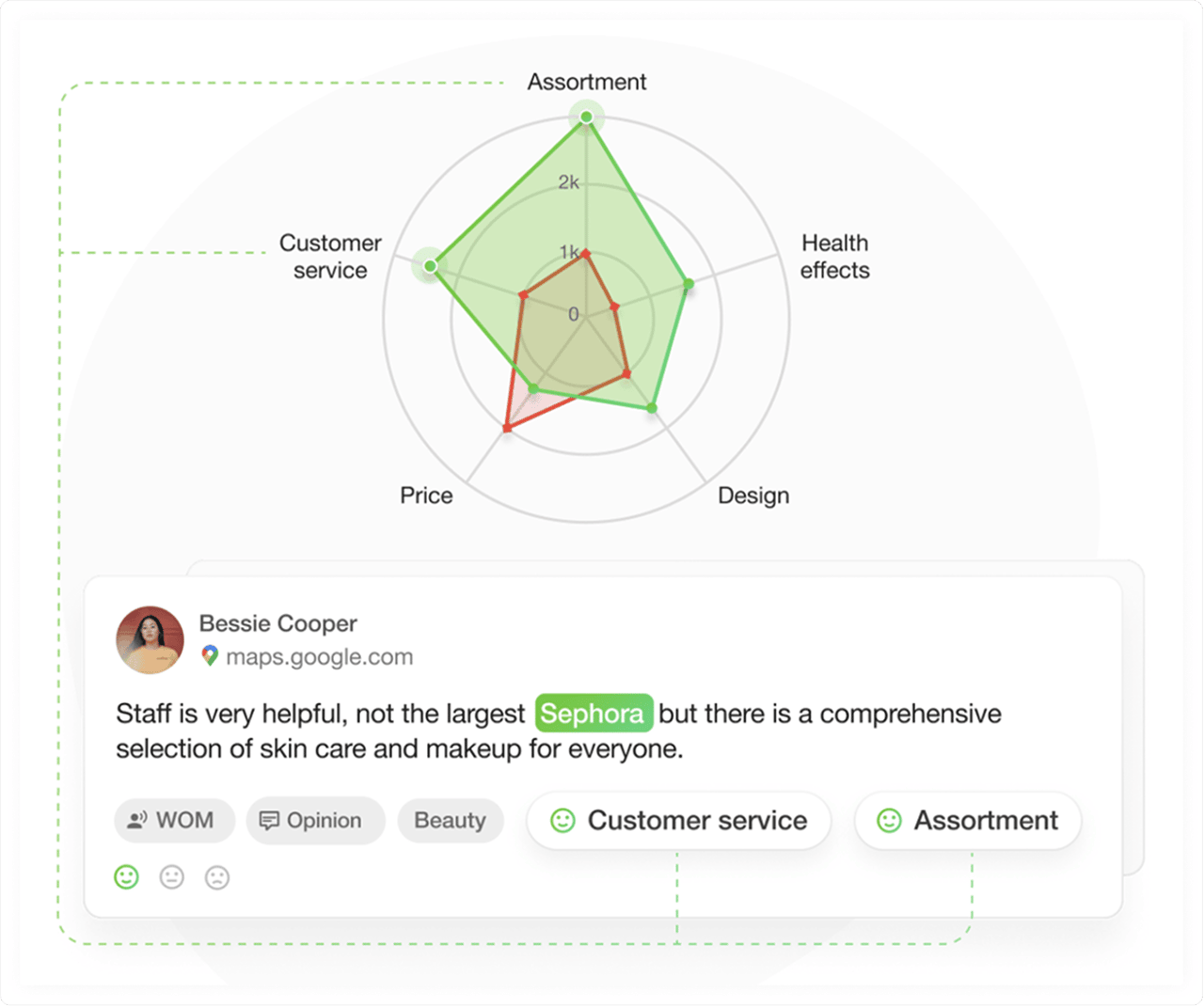
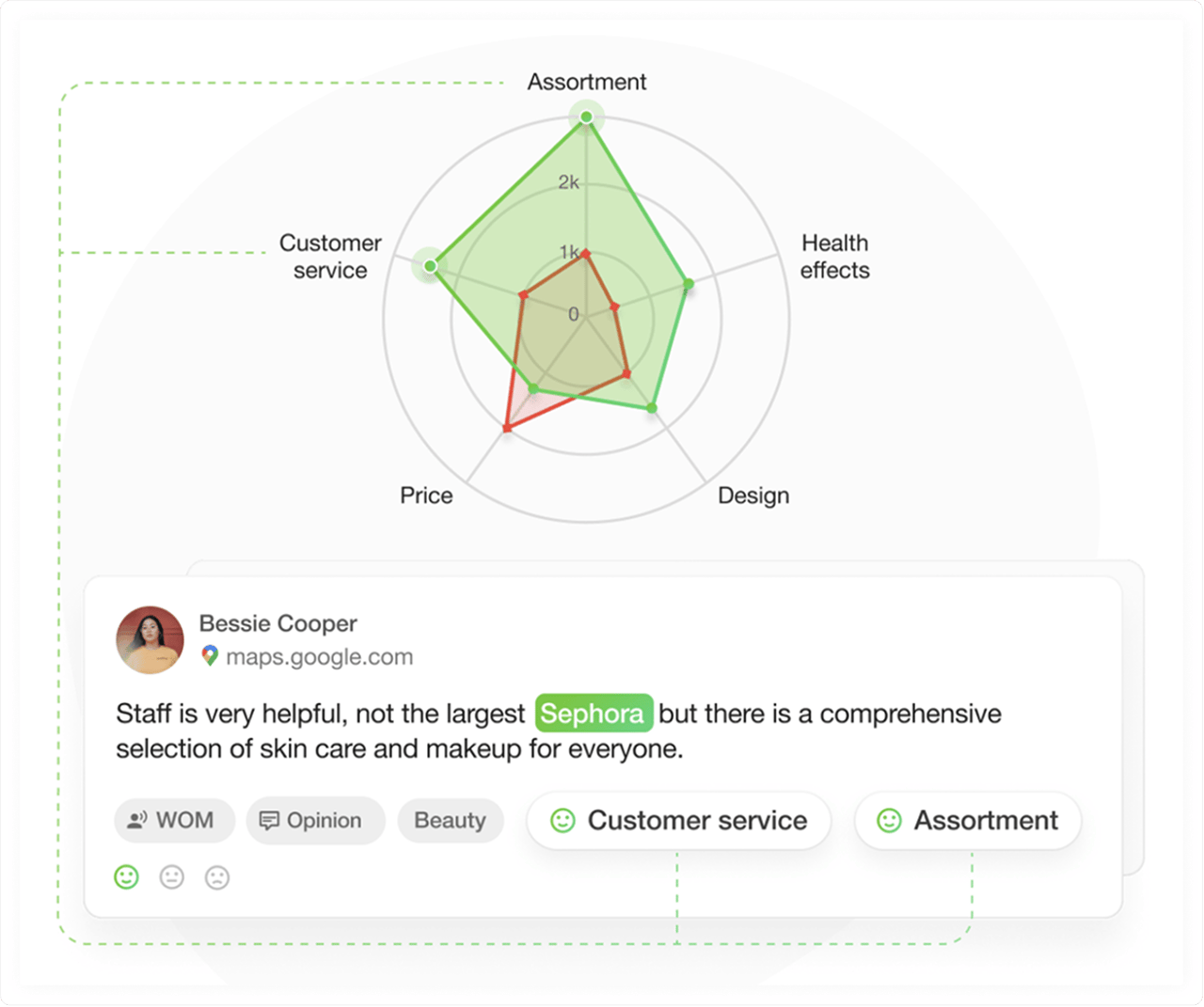
Check the sources you forget about. Review sites, podcast transcripts, images and video where your name is spoken but never typed. AI-only spaces count now, too.
Set up monitoring instead of occasional check-ins. Direction matters far more than any single snapshot, and only tracking over time will show it to you.
How to check your personal brand online with YouScan
That’s the manual version. Here’s what it looks like running in the background.
Brand health tracking works on a name as readily as on a logo: mention volume, the sentiment split, and which way both are moving week over week. Automatic alerts push the mentions that matter, a glowing review or an urgent complaint, into Slack or MS Teams in real time, so a negative thread reaches you while it’s still just a thread.
Social listening dashboards hold mentions, sentiment, and audience data in one view, which turns scattered anecdotes into valuable insights. Insights Copilot answers plain questions about that data, so you can ask “what’s driving the sentiment around my name this month?” instead of building a report. Moltbook monitoring, added in 2026, covers the AI-only spaces where bots discuss people and brands.
Want to dive deeper? Brand reputation monitoring covers the workflow companies use, and these reputation crisis examples are mostly stories about noticing too late.
Final thoughts
You already have a personal brand. The only open question is whether it reflects what you meant or whatever happened to pile up in your absence.
Personal branding rewards patience far more than it rewards volume. A definition and a framework get you moving. Measurement tells you whether your personal branding efforts are landing the way you intended, and it’s the piece that turns this from a vibe into something you can adjust. Track the perception, not just the output. If reputation sits closer to the center of your work, online reputation management and what is PR in social media go deeper on the company side.
Book a YouScan demo to see what your name currently generates across social media, review sites, forums, and the news, and which way sentiment is heading.
FAQ
What is a personal brand?
A personal brand is the perception other people hold of you based on your skills, values, personality, and track record. It exists whether or not you’ve shaped it deliberately, forming from everything you publish, how you communicate, and what appears when someone searches your name. It goes well beyond a logo or tagline, because it’s assembled from your actual behavior and output over time.
What is the difference between a personal brand and personal branding?
A personal brand is the perception itself: what people already think of you. Personal branding is the deliberate, ongoing practice of shaping that perception through the content you publish, how you communicate, and how you show up online and offline. Put simply, the brand is a noun and the branding is the work that builds and maintains it.
Why is personal branding important?
Personal branding matters because it decides whether people trust you, remember you, and pick you over someone with similar credentials. A deliberate personal brand creates access to opportunities, collaborations, and career moves that a resume alone won’t produce. It also hands you control of your own narrative rather than leaving it to whoever describes you first.
How do I find out what my personal brand actually is right now?
Search your name on the platforms your audience genuinely uses, not only Google, and note what appears first, what tone the conversation carries, and how consistent you look across each one. For an ongoing read rather than a one-time snapshot, set up monitoring for your name and track mention volume and sentiment over time, so shifts in perception reach you as they happen instead of afterward.