Social Media Crisis Management: How to Get Away with a Scandal?


Here's something nobody tells you about social media crisis management: by the time you realize you need a plan, it's already too late to make one. The tweet has gone viral. Your CMO is calling you on a Saturday. And your brand's reputation? Unraveling in the replies of a post you haven't even seen yet.
According to Crisp's Crisis Impact Report, two-thirds of consumers won't shop with a company that responds poorly to a crisis - but nearly 90% will stick around if you handle it well. That gap is everything. This guide covers how to build a crisis management plan, assemble a crisis response team, spot early warning signs, and protect your brand's reputation when it counts.
What is social media crisis management?
Social media crisis management is how you identify, respond to, and recover from events that threaten your brand across social media platforms - from the initial response through long-term brand reputation monitoring.
But not every negative comment is a crisis. Someone complaining about shipping on your Instagram? That's customer service. A trending boycott hashtag because your CEO said something reckless? That's a full-blown crisis. The difference is scale, velocity, and stakes. Brand crises spread internationally in minutes. The Edelman Trust Barometer says 81% of consumers need to trust a brand to do the right thing, and that trust evaporates fast when a crisis is mishandled.
Quick distinction: crisis communication is the messaging - what you say and where. Crisis management is the whole system. If any of the terminology is fuzzy, YouScan's social listening glossary is a handy reference.
Why do you need a crisis management plan before a crisis hits?
"Have a plan before you need it" sounds obvious. Most brands still don't. Then a crisis hits, and nobody knows who approves the statement, whether legal needs to sign off, or if the social media manager should respond or go dark - all debated in real time while negative sentiment piles up across every social media account.
A crisis management plan answers those questions in advance. Brands that have studied reputation crisis examples are consistently better prepared. Building one before a crisis arises also stress-tests your internal communication channels - can your social media manager reach your legal team at 10 p.m. on a Friday?
Think of your evergreen crisis communications plan as insurance. Boring insurance you hope stays in the drawer. But when you need it, it's the difference between coordination and chaos.
How to spot early warning signs of a social media crisis
Track mentions and sentiment in real time
Social listening tools let you monitor social media for spikes in brand mentions, shifts in sentiment analysis, and clusters of negative feedback. If your mention volume suddenly jumps 10x and the tone is hostile, that's an early warning sign you can't ignore.
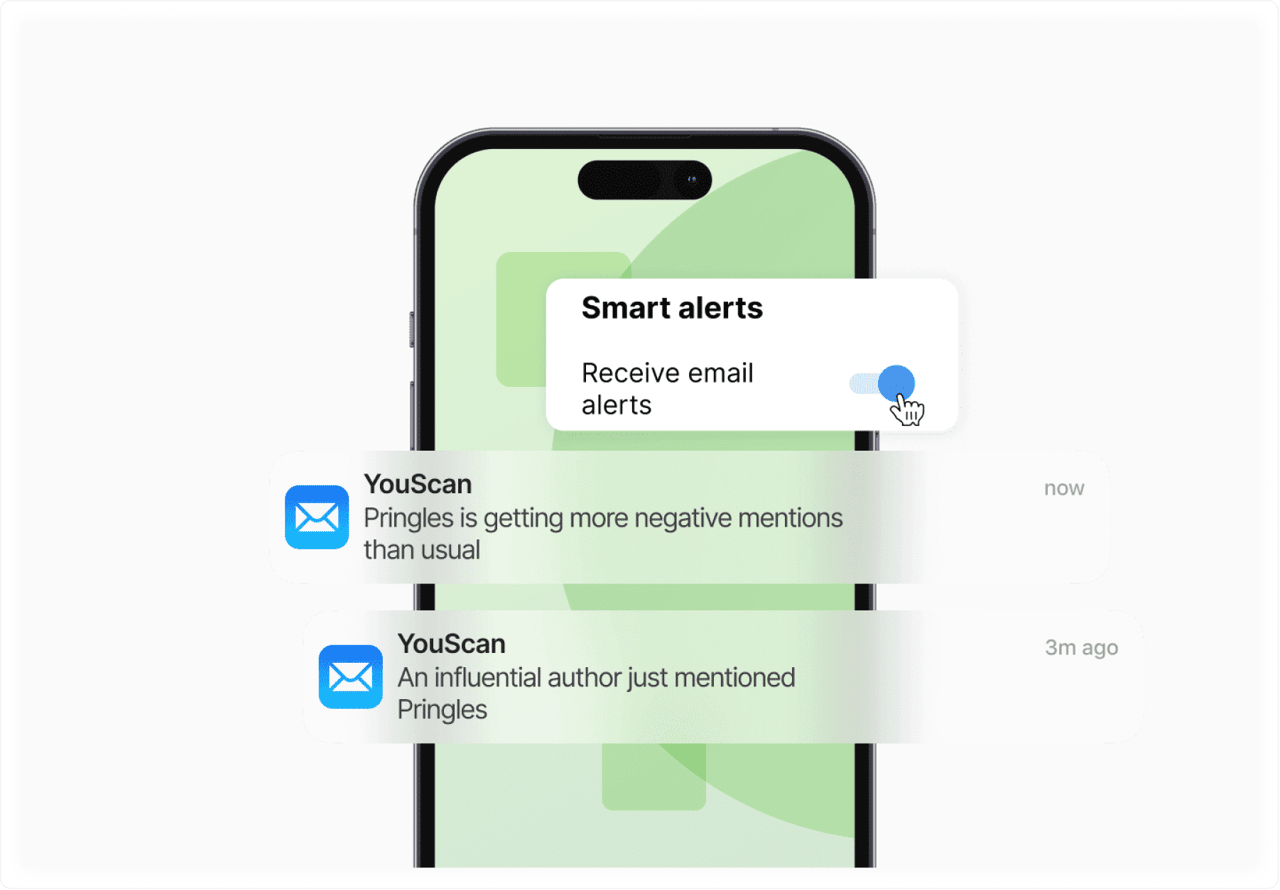
YouScan pushes real-time alerts to Slack the moment something spikes, so your crisis response team can assess things before journalists start calling. The platform's crisis management features are built for exactly this. And if you're unclear on the difference between social listening and social monitoring - monitoring tells you what people said, listening tells you what it means. In a crisis, that distinction matters.
Watch for negative interaction patterns
Not every crisis starts with a bang. Some start with a slow drip: more negative comments this week, an uptick in direct messages about the same complaint, audience feedback looping back to one issue. Patterns turn into a business crisis if nobody's paying attention.
Social media monitoring tools help you cast a wider net, and YouScan's Moltbook monitoring extends coverage to sources most tools miss entirely.
Building your crisis response team
When a crisis hits, the worst thing is a room full of people going "so... who's handling this?" You need a crisis response team assembled before anything goes wrong.
Key roles every team member should know
At minimum: a team lead (usually a senior marketing manager or head of comms), a social media manager running outbound communications across your social media accounts, a legal representative to vet public statements, a customer service team lead handling direct messages, and a public relations contact if things spill into mainstream media. Every team member needs documented responsibilities and clear escalation paths. When things move fast, ambiguity kills you.
Internal communication during a crisis
Your internal team needs alignment before external messaging goes out. If your social media response says one thing and support tells customers another, you've created a second crisis. Set up a dedicated Slack channel for crisis coordination - not your general marketing channel. Make sure the organization's leadership is looped in early; surprising the CEO with a spokesperson request at hour three is a bad look.
A step-by-step crisis response plan
Step 1: Pause scheduled posts and assess
Pause scheduled posts. All of them. Across every social media account. Nothing is more tone deaf than a cheerful promo going live while your brand is trending for the wrong reasons.
Step 2: Gather facts and align your team
Before you say anything publicly, figure out what happened. Talk to your legal team, customer service team, whoever has firsthand knowledge. A rushed initial response based on half the story almost always makes things worse. Get your crisis response team aligned on facts, messaging, and who owns which social platforms.
Step 3: Craft and publish your initial response
Your initial response sets the tone. Respond quickly but don't sacrifice accuracy. Acknowledge the issue, show empathy, skip the corporate-speak. If you don't have answers yet, say so - "We're aware and investigating" beats silence every time.
Step 4: Respond to individual comments and messages
Don't just post a statement and disappear. Monitor social media posts, reply to negative comments where appropriate, and move sensitive issues to direct messages. Not every negative comment needs a reply - but directly affected customers asking real questions deserve a timely answer.
Step 5: Evaluate and adjust your response strategy
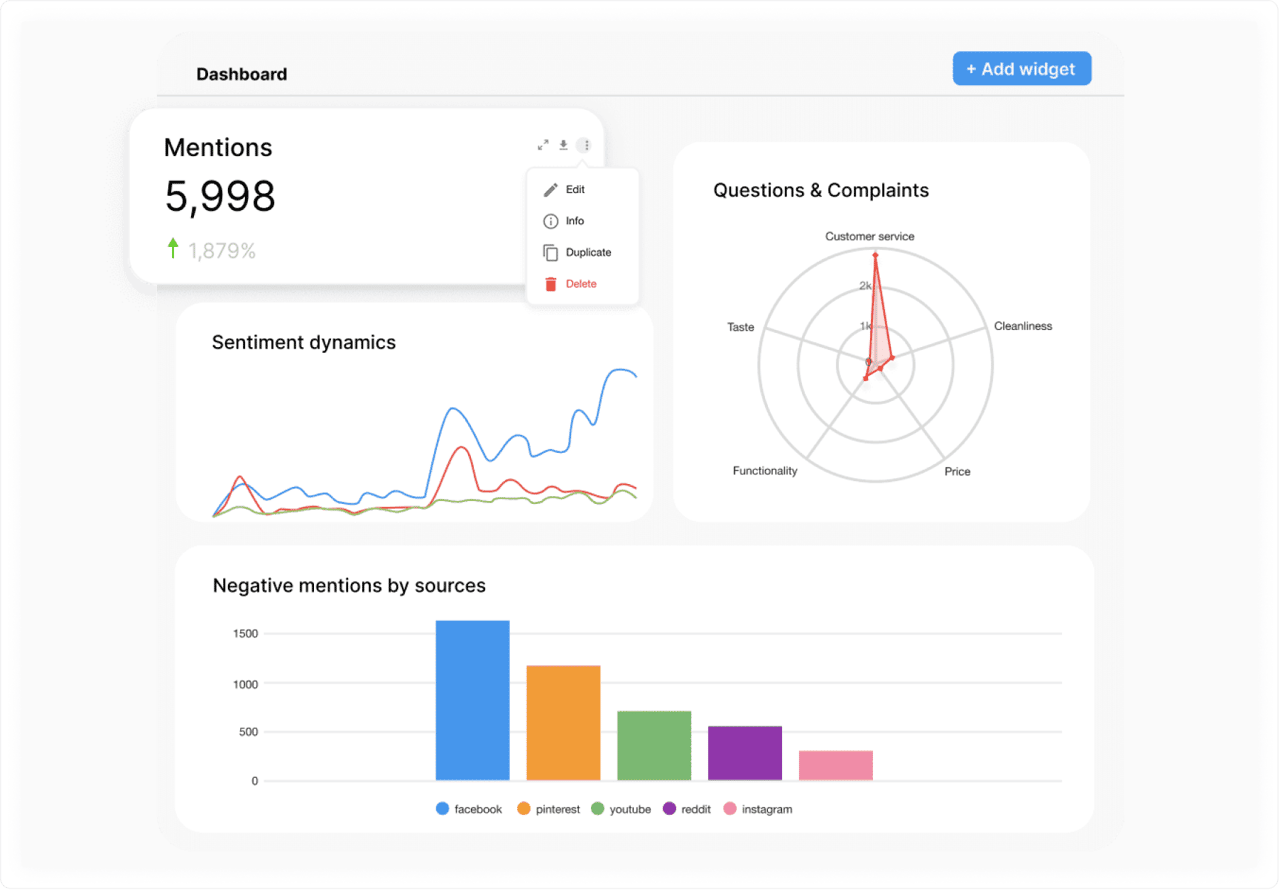
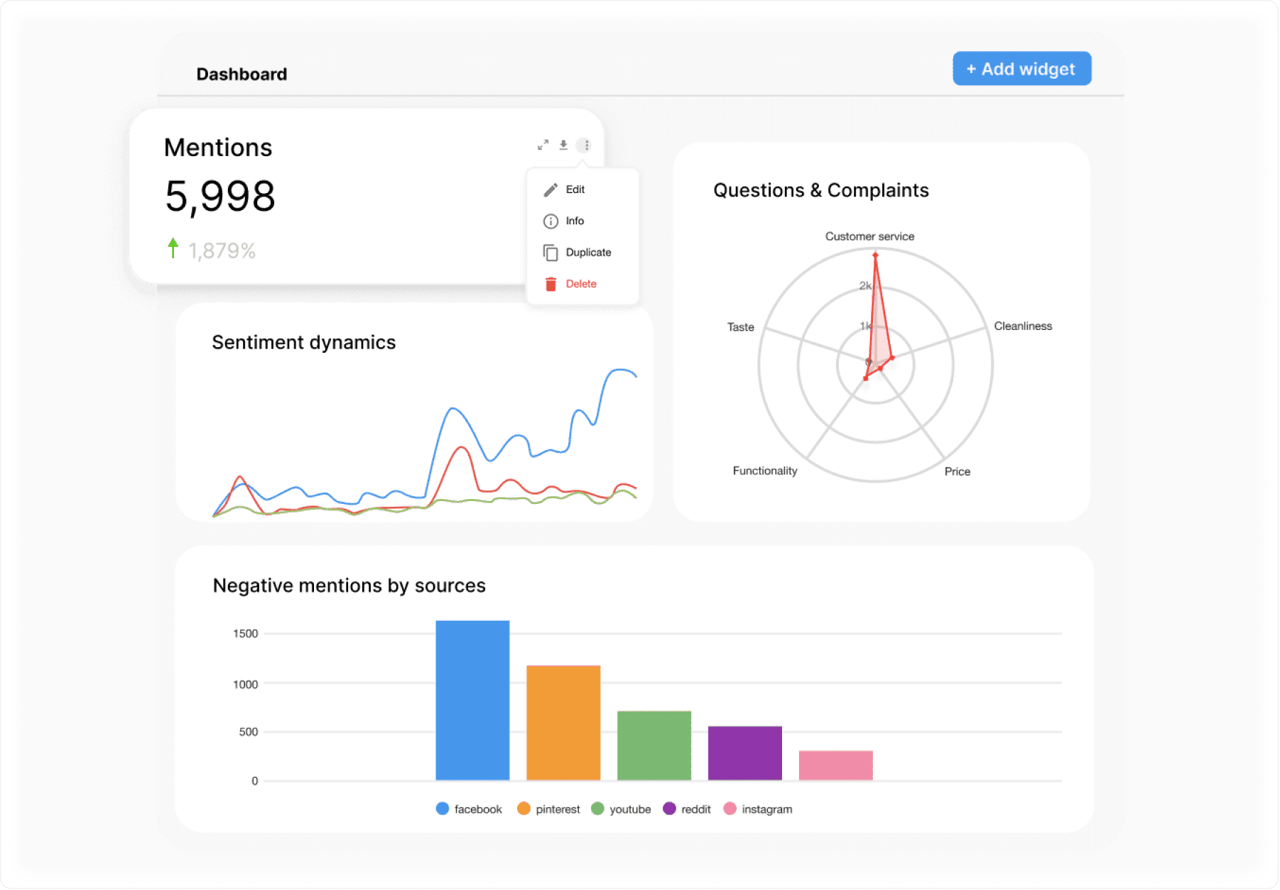
Keep watching key metrics: mention volume, sentiment recovery compared to baseline, and media pickup. YouScan's social listening dashboards centralize this into one view. Tracking sentiment recovery compared to pre-crisis levels is one of the clearest signals you've got. For the full framework, brand sentiment analysis goes deeper.
Social media crisis communication: what to say and what to avoid
Do: respond with empathy and accountability
Nobody expects perfection. They expect honesty. If your brand screwed up, say so. Transparency goes further than a polished statement that went through four rounds of legal review and says nothing.
Don't: give tone deaf responses or go silent
International Women's Day posts from companies with documented gender pay gaps. Earth Day pledges from brands facing environmental lawsuits. The disconnect fuels backlash worse than the original crisis. Going silent is just as risky - people fill the vacuum with speculation. A guide to PR crisis management can help you pre-build templates.
Involve your legal team early
Your legal representative should see anything public-facing before it goes live. But don't let legal become a bottleneck. Pre-approved templates for common scenarios - have them ready. A crisis communication plan with pre-vetted language saves real time when every minute counts.
Real-world social media crisis management examples
FedEx: when silence isn't an option
In late 2021, a FedEx driver was caught dumping hundreds of packages into an Alabama ravine. Just... throwing them away.
The Washington Post covered it. CNN covered it. The spike in brand mentions was enormous. Staying quiet wasn't an option - when a media crisis jumps to mainstream news, your social media response alone won't cut it. You need a coordinated, multi-channel crisis response.
KFC UK: turning a crisis into an opportunity
In February 2018, KFC ran out of chicken in the UK. A chicken restaurant. Without chicken. As CNN reported, roughly 800 out of 900 locations closed. Instead of a forgettable corporate apology, they ran a full-page ad rearranging their logo to read "FCK." According to YouGov BrandIndex data, positive attention rose from 7% to 29%, reaching over a billion people in three months. That's what happens when a crisis management team gets to be human.
How to restore your brand's reputation after a crisis
Surviving the crisis is step one. The weeks after determine whether damage sticks. A solid brand analysis post-crisis shows you where you stand.
Leverage brand ambassadors and loyal customers
Red Bull, Harley-Davidson, and Xbox - they all run ambassador programs built on exclusive access and community. When a crisis hits, advocates defend them organically. You don't need a massive budget. Find loyal users through social listening, thank them, and offer a promo code. Track it through social media engagement metrics.
Use audience feedback to guide recovery
After things calm down, listen. What are people still upset about? Use social listening tools to spot negative sentiment trends and figure out what moves the needle on sentiment recovery. Running a social media audit after a crisis recalibrates your whole approach. Real reputation recovery isn't a single apology post - it's sustained, visible change.
How AI tools and social listening power crisis management
Managing a social media crisis manually across multiple social platforms doesn't scale. AI-powered social listening platforms chew through thousands of social media posts in real time, and the right sentiment analysis tools measure emotional impact as it unfolds.
YouScan uses visual insights and AI-driven analysis to monitor social media at scale - from text mentions to logo detection in images. When a crisis arises, your crisis response team acts on data instead of guessing. Want to see it in action? Try
YouScan's free demo.


Frequently asked questions about social media crisis management
What is the first thing to do when a social media crisis hits?
Pause every scheduled post across all your social media accounts. Then pull your crisis response team together, get facts, and assess the scale before crafting an initial response. Saying the wrong thing fast is worse than a brief, deliberate pause.
How do you create a crisis communication plan for social media?
Identify likely scenarios, assign roles within your crisis response team, draft pre-approved response templates, nail down internal communication protocols, and escalation paths. Include your legal team and public relations contacts. Review it at least twice a year so it doesn't go stale.
What's the difference between a negative comment and a social media crisis?
A negative comment is one person being unhappy - that's normal. A social media crisis is when negative sentiment spreads rapidly, attracts attention from social media users or media, and threatens your brand's reputation. Ignoring patterns of negative interaction is how complaints become a full-blown crisis.
How long does it take to recover from a social media crisis?
Depends on severity and response quality. Minor incidents blow over in days; major brand crises take months. Track sentiment recovery compared to your pre-crisis baseline through social listening tools - if numbers are trending back, you're on track.