Consumer Behaviour in Marketing: What Actually Drives Buying Decisions

Here's something that'll sound obvious but apparently still needs saying: the people buying your stuff are not the same people they were two years ago. Consumer behaviour in marketing — the study of how and why people make purchasing decisions — keeps moving, and most marketing strategies are playing catch-up.
Understanding consumer behavior isn't some nice-to-have checkbox. It's the thing that separates the brands growing right now from the ones burning through budget, wondering what went wrong. Are the companies doing well? They're not guessing. They're watching what their customers actually do — the buying habits, the complaints, the weird product uses nobody predicted — and building around that.
This piece covers the types of consumer behavior, what factors influence buying decisions, and how to collect consumer behavior insights that are actually useful. We'll also look at how tools like social media listening make all of this way faster than the old-school focus-group-and-pray approach.
What is consumer behaviour in marketing?
Consumer behaviour in marketing is basically everything that happens in someone's head (and wallet) between "hmm, I might need that" and "okay, I bought it." It pulls from consumer psychology, economics, sociology — a bunch of fields that study why humans do irrational things with money.
And they do. Two people with identical disposable income and demographics will have wildly different buying habits. One is a loyal customer who's bought the same brand of running shoes for a decade. The other switches every six months because she saw something on TikTok. Consumer perceptions, consumer attitudes, brand loyalty — all of this is shaped by stuff that doesn't show up on a spreadsheet. That's what makes understanding consumer buying behavior both frustrating and essential for marketing professionals.
Types of consumer buying behavior
There are four types of consumer behavior that come up in basically every textbook and every top-ranking article about this topic. And for good reason — they're a genuinely useful framework for thinking about your marketing campaigns.
Complex buying behavior
This one kicks in when the purchase is big, expensive, or unfamiliar. Cars. Houses. Enterprise software nobody wants to explain to the CFO. People do extensive research, see significant differences between brands, and take their sweet time deciding. If your marketing efforts aren't present during that research phase — detailed comparisons, real case studies, actual data — a competitor who is present will eat your lunch.
Dissonance-reducing buying behavior
Dissonance-reducing buying behavior is the anxious cousin of complex buying. The stakes are still high, but the buyer can't really tell the difference between options. Think washing machines. Most people couldn't name three meaningful distinctions between brands. So they buy one, then immediately worry they chose wrong. Your marketing messages here should calm nerves: solid warranties, good pricing strategies, and follow-up emails that say "you made a great call" without being obnoxious about it.
Habitual buying behavior
Habitual buying behavior is autopilot. Same toothpaste, same coffee, same paper towels. Nobody's comparing brands — they're just grabbing what they always grab. Breaking into this pattern is hard. You basically need disruption: a price promotion, a redesign, or a social media campaign example that makes someone reconsider a category they haven't thought about in years. Once you're the habit, though, customer retention becomes about not screwing up.
Variety-seeking buying behavior
Variety-seeking buying behavior isn't about dissatisfaction. It's boredom. The consumer likes the same brand fine — they just want to try something new. Snacks, drinks, shampoo. For market leaders: keep showing up everywhere. For challengers? This is your best shot. New flavors, limited editions, influencer partnerships — give people a reason to grab yours instead. Get new customers in the door, then figure out how to keep them.
Factors influencing consumer behavior
Okay, so those are the types. But what actually pushes someone toward one behavior or another? A mess of overlapping internal factors and external factors, basically.
Psychological factors
Psychological factors are the internal factors that make consumer behavior so annoyingly unpredictable. Motivation, perception, beliefs, consumer attitudes — it's all in the mix. Two shoppers see the same organic skincare ad. One thinks "overpriced garbage." The other thinks, "Finally, a brand that gets it." Completely different consumer opinions, same product. Brands that shape consumer perceptions through honesty and social proof tend to win here. The polished-ad-with-nothing-behind-it approach is dying.
Social factors
We're herd animals. Social factors — family, friends, social media campaigns, cultural pressure — heavily influence consumer behavior. And social media has turbocharged this. One viral post can redirect buying decisions for thousands of people before your marketing team has had their morning coffee. DataReportal puts the global social media user identities at over 5.6 billion now. That's a lot of influence flying around. Understanding how customers interact with these platforms gives you a real-time read on consumer preferences.
Personal and demographic factors
Personal factors — age, occupation, lifestyle, disposable income, and other personal factors — obviously shape what someone buys. But demographic factors alone are lazy targeting. A 35-year-old accountant who surfs on weekends and a 35-year-old accountant who collects rare coins have almost nothing in common as consumers. Effective marketing strategies use detailed market segmentation. Tools that surface audience insights — real demographics, interests, occupations — help you understand your actual target market instead of a fictional one.
Cultural and external factors
Cultural factors are the deep stuff — values, traditions, subcultures. They shape how consumers behave in ways no survey will ever capture. Then there are external factors: economic conditions, market trends, and tech shifts. The pandemic showed everyone how fast these can rewrite the rules. Brand loyalty fell off a cliff. Social media became the main brand touchpoint. Monitoring social listening trends is one way to separate the temporary blips from the lasting shifts.
And this is where collecting data through social listening actually earns its keep. When you monitor how different groups talk about your brand on social media, you get consumer behavior insights that focus groups and surveys miss entirely.
How understanding consumer behavior helps create effective marketing strategies
So what do you actually do with all this? Consumer behavior analysis moves you past gut-feel marketing into something sharper. You stop targeting broad demographic factors and start building around real buying habits and motivations. That's what turns targeted marketing campaigns into conversions — and helps you create effective marketing strategies instead of just loud ones.
Every customer behavior type tells you what message to use. Complex buyers want proof. Habitual buyers need a nudge. Variety seekers want novelty. When your marketing campaigns match the pattern, effective marketing happens. The valuable insights feed directly into copy, creative, and timing.
Bottom line? Understanding consumer behavior helps brands maximize sales and build customer loyalty that sticks. Customer satisfaction doesn't happen by accident — it's the result of knowing what consumers need and delivering. Loyal customers come back, tell their friends, and boost sales over time. That's how you increase sales for real.
How to identify consumer behavior and collect consumer behavior insights
Social media listening and monitoring
People are way more honest on social media than in any survey. They share consumer opinions, tag brands, complain publicly, recommend alternatives — and they're not performing for a moderator. Social listening tools track all of this in real time. (If you're unclear on the difference between listening and monitoring, this breakdown of social listening vs social monitoring is worth five minutes.)
YouScan takes this further than most. It uses AI social listening with image recognition software to catch social media mentions that are visual — someone posts a photo of your product without ever tagging you. YouScan's
visual insights capture those invisible mentions and tell you how consumers perceive your brand in the wild.
Real example: KFC used social listening during and after lockdowns and found consumer concerns shifted from shelf-life (2020, when everyone was ordering delivery) to restaurant locations (2021, when dining reopened). That's a sentiment analysis insight no quarterly report would've surfaced. If you're just getting started, YouScan's
social listening glossary covers the jargon, and their social listening dashboards pull everything into one view.
Focus groups and observational research
Focus groups still work. You sit people down, ask open-ended questions about their buying decisions, and hear things that quantitative data can't give you. Surveys are fine for scale and collecting data across large segments — but let's be honest, people lie on surveys. Not maliciously. They just report what they think they should do. Pairing surveys with observational research and social listening gives you a picture that's closer to the truth.
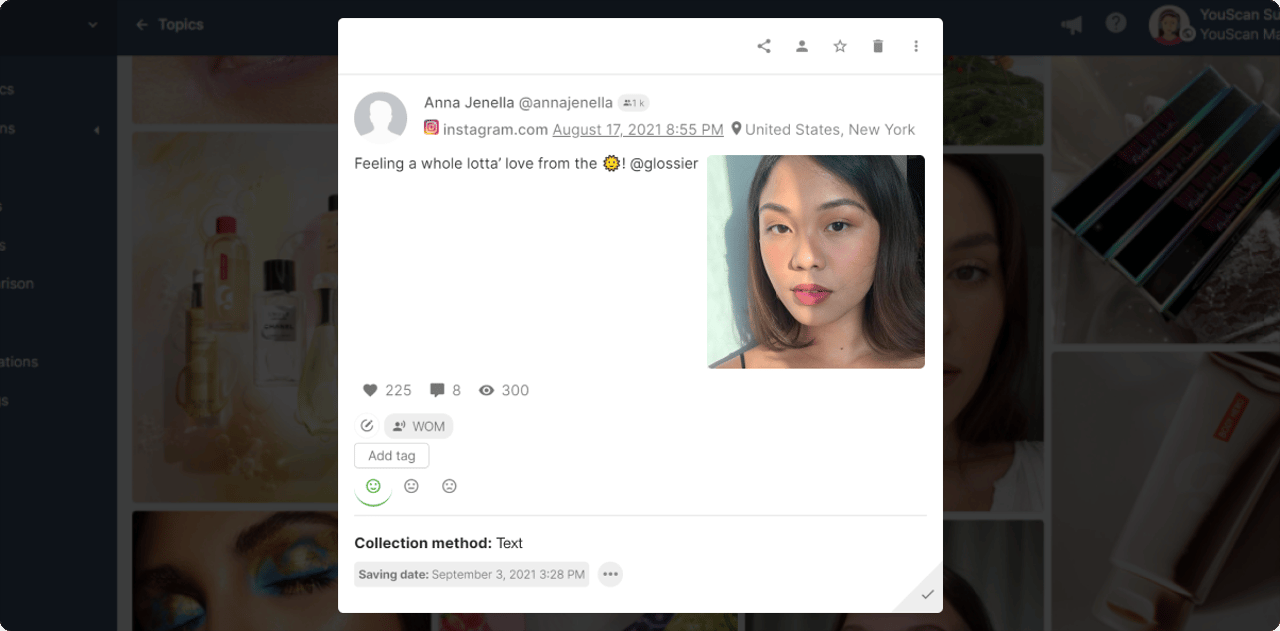
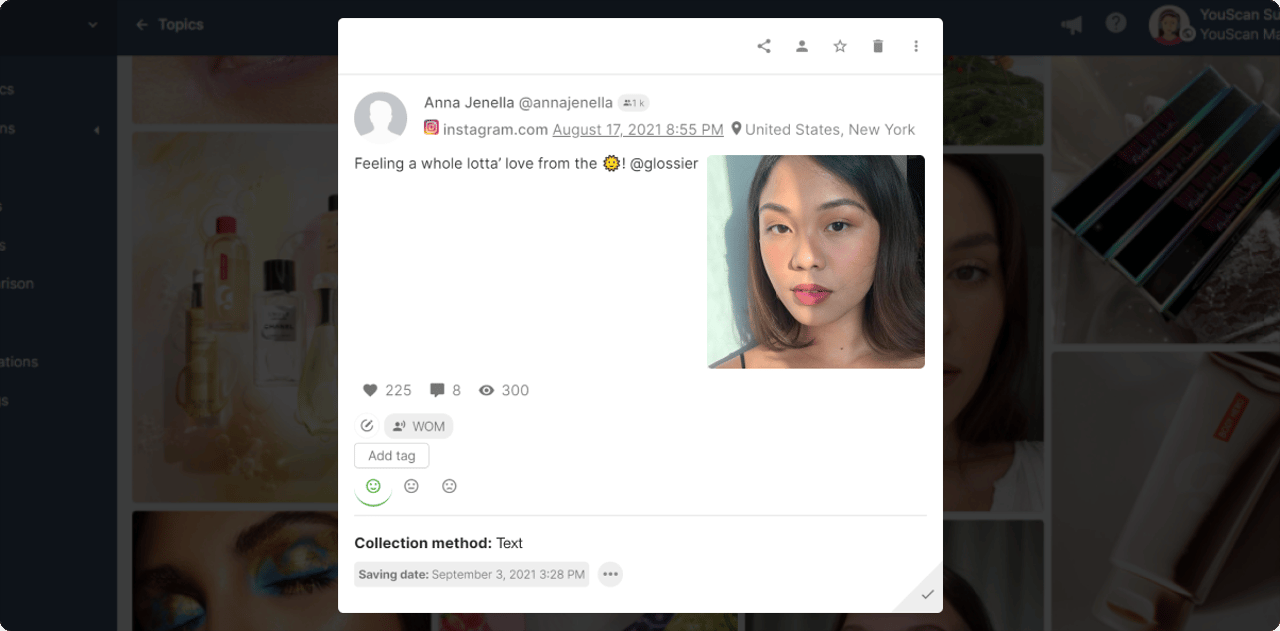
User-generated content is basically free observational research. Glossier built a whole marketing strategy around what their audience posted organically — products and services showing up in real life, unscripted. That's gold. More brands should be paying attention to social listening examples like this.
Research competition and market trends
You can't study customer behavior without looking sideways. Research competition — what are they doing and how are consumers responding? YouScan makes competitive analysis straightforward: track competitor mentions alongside yours and spot where new customers are up for grabs. Their competitor research case studies show this in action. And for spotting what's coming, trend analysis tools help you move before everyone else does.
YouScan also recently added Moltbook monitoring, extending coverage to another platform where people discuss brands.
How to influence consumer behavior with targeted marketing campaigns
Segment your target audience based on behavior
Market segmentation based on behavior — not just demographics — is where most teams still have room to improve. Group people by purchase frequency, brand loyalty patterns, and how they engage with your content. Then run targeted marketing campaigns with marketing messages that actually match each group's decision-making style and brand identity expectations. It's more work upfront, but the ROI difference is massive.
Choose relevant influencers and adapt your brand identity
Influencer marketing has a credibility problem — too many brands pick the biggest name and hope for the best. Niche creators almost always deliver more because their audiences actually trust them. YouScan's influencer collaboration tools find people already organically talking about your category. That way, consumers perceive the partnership as real, not manufactured.
Consumer preferences shift. Brands that stay relevant check in regularly on how they're perceived and adjust. YouScan's Insights Copilot lets you ask questions about your social data conversationally and get answers fast — no analyst required.
Bottom line
Consumer behaviour in marketing isn't a one-and-done exercise. Consumer behavior changes constantly — pushed by psychological factors, social factors, cultural factors, personal factors, and whatever the world throws at people next. The brands that keep growing are the ones treating understanding consumer behavior as a daily habit, not a quarterly report.
They use focus groups, extensive research, social listening, and behavioral data to stay close to their audience. If you want to see what that looks like in practice — request YouScan's free demo and start tracking consumer behavior insights in real time.
FAQ
What is consumer behaviour in marketing?
Consumer behaviour in marketing is the study of how and why people make purchasing decisions. It covers everything from the moment someone recognizes a need to the point they buy — and what happens after. It pulls from psychology, economics, and sociology to help brands understand what actually drives buying habits, not just what people say drives them.
What are the four types of consumer buying behavior?
The four types are complex buying behavior (high-involvement, big purchases), dissonance-reducing buying behavior (high-stakes but few noticeable differences between options), habitual buying behavior (autopilot purchases with zero thought), and variety-seeking buying behavior (switching brands out of curiosity, not dissatisfaction). Each one requires a different marketing approach.
What factors influence consumer behavior?
A mix of psychological factors (motivation, perception, attitudes), social factors (family, peers, social media), personal factors (age, lifestyle, income), and cultural factors (values, traditions, subcultures). External forces like economic conditions and market trends also play a role. No single factor works in isolation — they all overlap and shift constantly.
How can brands track consumer behavior insights?
Social listening is one of the fastest ways — it captures real-time consumer opinions, sentiment, and brand mentions across social media. Pair that with focus groups, surveys, purchase data, and observational research like user-generated content analysis, and you get a picture that's far closer to reality than any single method alone.