What Is Social Media Listening? Definition, Benefits & How to Do It
.png)

Social media listening is the process of tracking and analyzing online conversations about your brand, competitors, and industry to understand sentiment, trends, and opportunities — helping you make data-driven decisions and act quickly.
Think of it like having a superpower that lets you hear what millions of people are saying about your brand, even when they're not talking directly to you. You're not just collecting brand mentions — you're uncovering the "why" behind customer behavior and gaining actionable insights from relevant conversations happening across social media platforms.
Here's what makes social listening valuable:
Spot crises early before they blow up and damage your reputation management efforts
Understand customer sentiment through sentiment analysis and what drives public opinion
Find product innovation ideas hidden in customer feedback and everyday conversations
Track competitor strategies through competitive analysis and identify gaps in the market
Improve marketing campaigns with real-time audience insights and customer engagement data
Let's see what else there is to know about.
Why social listening matters for brands
In 2026, customer opinions spread faster than ever. One viral post can make or break your brand reputation overnight.
An effective social listening strategy gives you the tools to stay ahead. You're not reacting after the damage is done — you're understanding your target audience deeply enough to anticipate their needs and pain points.
Benefits across your organization
Social listening isn't just for your marketing team. The valuable insights you gather through analyzing social data flow into every part of your business.
Marketing teams use listening data to create marketing campaigns that actually resonate with their target audience. You'll know which messages land and which fall flat before you spend your budget.
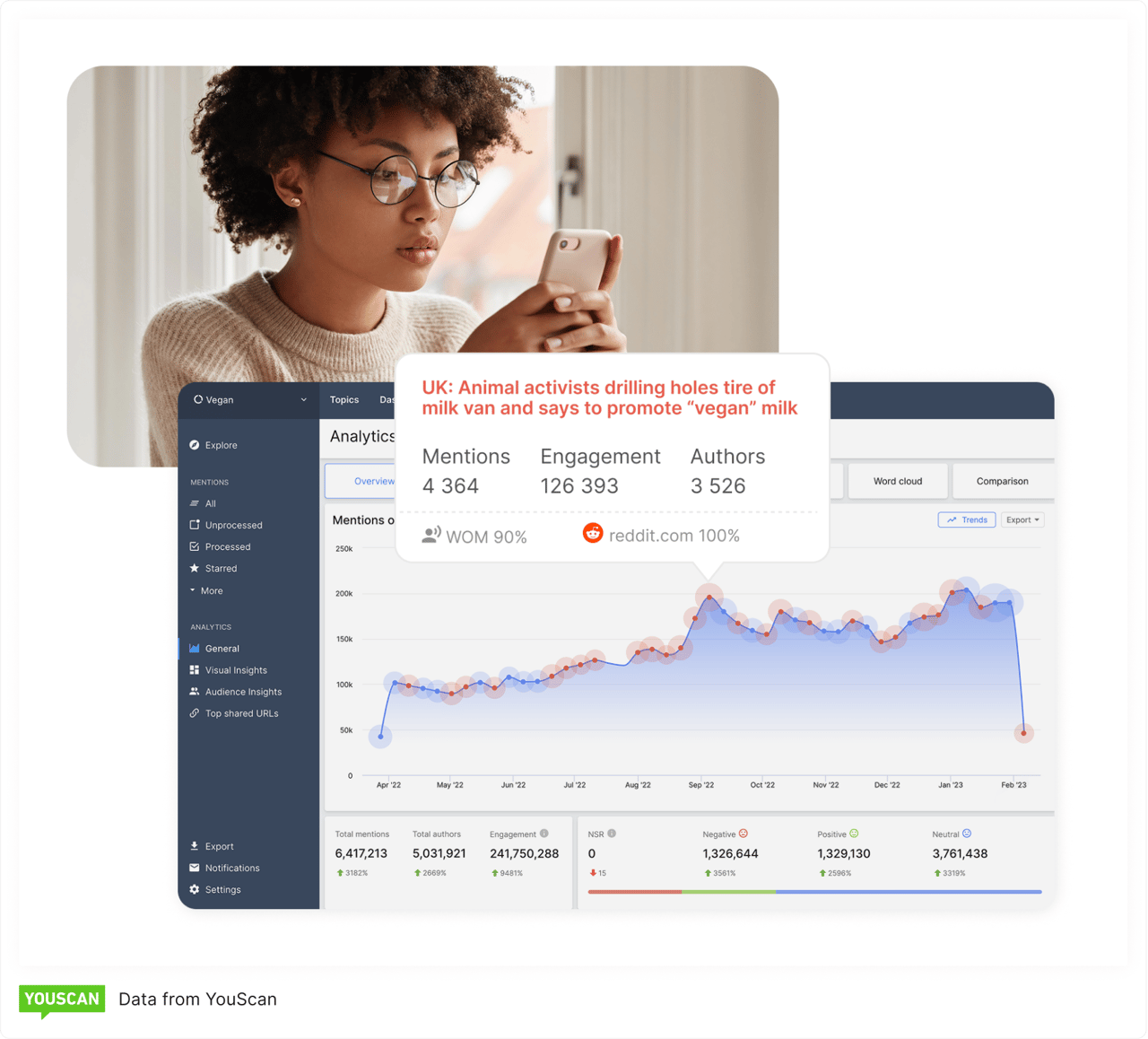
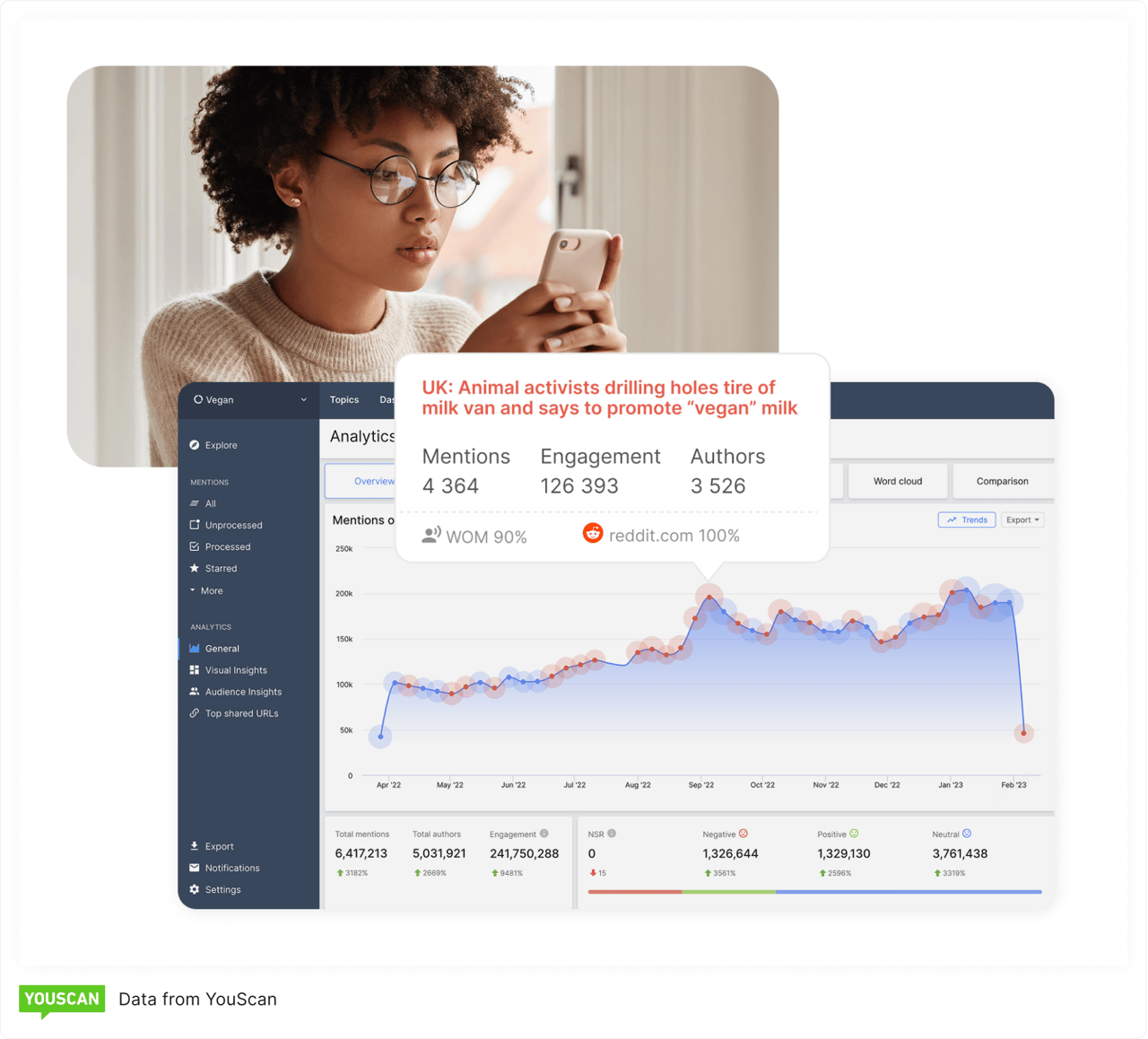
PR professionals detect potential reputation issues early through crisis management monitoring. According to recent research, brands with mature listening setups detect brewing issues and respond 4.3 times faster than peers relying only on traditional social monitoring.
Customer experience teams identify customer pain points in real time by analyzing online conversations. A McKinsey study found that companies excelling at social listening experience customer satisfaction rates that are 17% higher than competitors.
Product teams discover what features customers actually want by tracking customer feedback and feature requests. You're not guessing anymore — you're building based on what people are already asking for.
Market researchers track industry trends and emerging consumer behaviors across major social platforms. The consumer insights you need are already out there—social listening helps brands find them.
The financial impact
The numbers tell a compelling story. Companies that actively monitor social media conversations for trends experience a 10% increase in revenue growth and stronger business growth compared to those that don't.
Social listening can improve campaign ROI by up to 25% by enabling data-driven targeting and content creation. When you know exactly what your audience cares about through deeper insights, every marketing dollar works harder.
YouScan and similar social listening tools help brands dig deeper into these insights, using visual analysis and AI to spot patterns human analysts might miss.
Social listening vs. social media monitoring
People often confuse these terms, but they serve different purposes in your social media management approach. Understanding the distinction between social listening and monitoring helps you use both effectively.
Social Media Monitoring | Social Listening |
Focuses on immediate, reactive responses | Focuses on long-term, proactive brand strategy |
Tracks direct mentions and tags | Discovers broader social conversations and themes |
Answers "What are people saying about us right now?" | Answers "Why are people saying this, and what does it mean?" |
Manages customer service and support | Informs business decisions and marketing strategy |
Micro-level: individual messages | Macro-level: patterns and industry trends |
Think of monitoring as putting out fires. Someone tweets a complaint, and you respond. That's important work for maintaining your social media presence.
Listening is building a sprinkler system. You're analyzing why fires start in certain places through sentiment analysis and preventing them before they happen.
How they work together
Your monitoring tool catches a customer complaint about slow shipping through direct mentions. Your listening tool reveals that hundreds of people are discussing shipping delays across social platforms — even when they're not tagging your brand or social media accounts.
What to listen for (and where)
Social listening works best when you know exactly what to track. Here's how to build a comprehensive listening strategy and gain actionable insights.
Your brand and campaigns
Start with the obvious: your brand name, product names, and official hashtags. But don't stop there.
Track common misspellings and variations of your brand mentions. If you're "TechCo," people might write "Tech Co," "TekCo," or "that tech company." Each variation represents social conversations you might miss.
Monitor campaign-specific keywords and hashtags related to your marketing campaigns. When you launch a new product or campaign, create dedicated queries to measure its reception in real time and track customer engagement.
Your competitors
Understanding your competitive share of voice through competitive analysis reveals where you stand in your market. Track competitor brand mentions, product launches, and campaign hashtags.
Pay attention to what people love about competitors — and what frustrates them. Those frustrations are your opportunities to reach potential customers.
Industry trends and culture
The best social listening strategies look beyond brand-specific keywords. Monitor broader industry trends, emerging trends, and cultural conversations that shape public opinion.
Follow relevant communities, forums, and industry events. Track trending memes and hashtags in your space. These social conversations shape how people think about your category.
Keywords and entities
Build queries around specific product features, use cases, and customer pain points. If you sell project management software, track terms like "project chaos," "team collaboration problems," and "deadline management."
Include industry-relevant keywords that help you understand market shifts and emerging needs. Your target audience talks about their problems long before they start searching for solutions.
Beyond text: visual and audio content
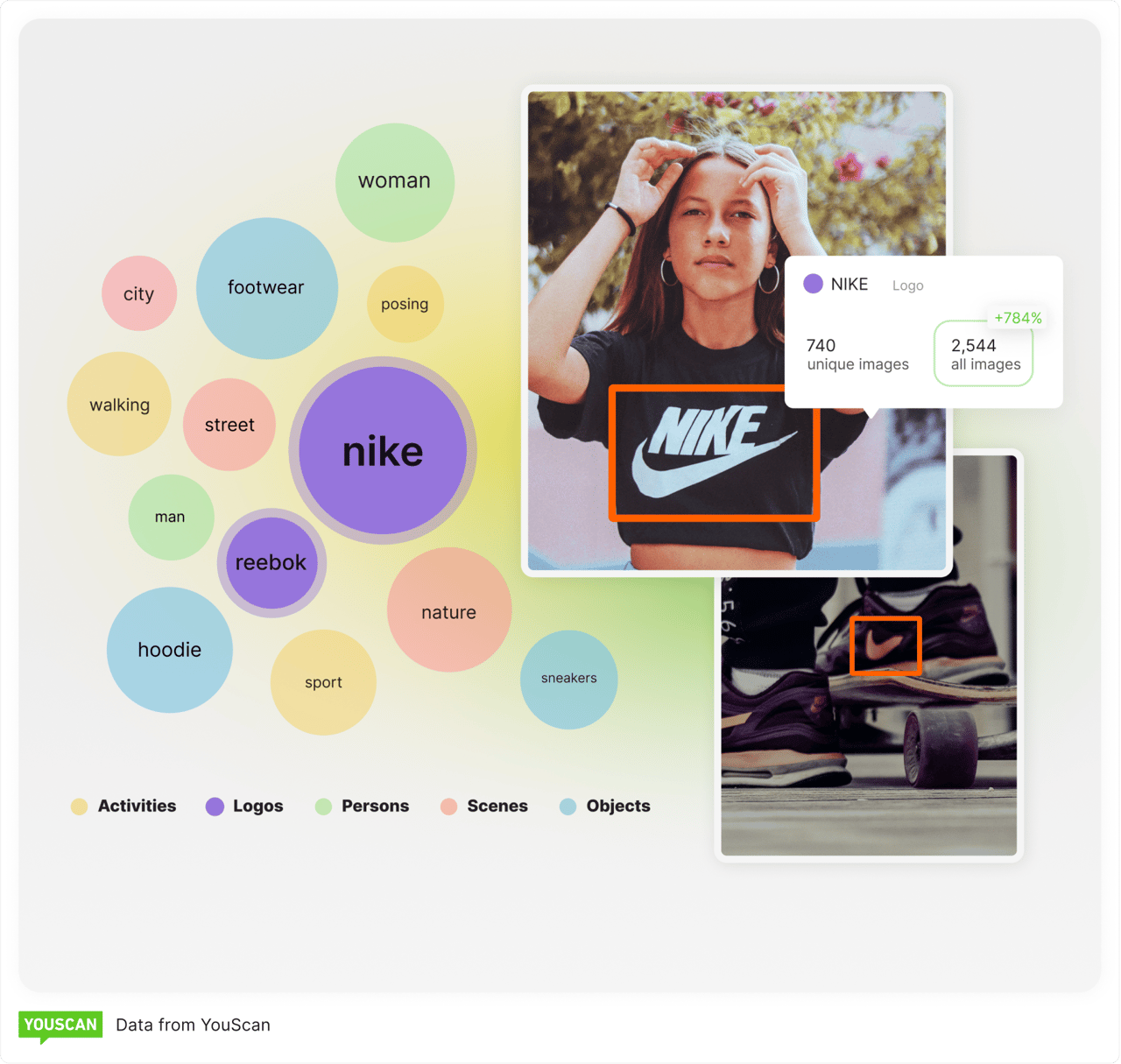
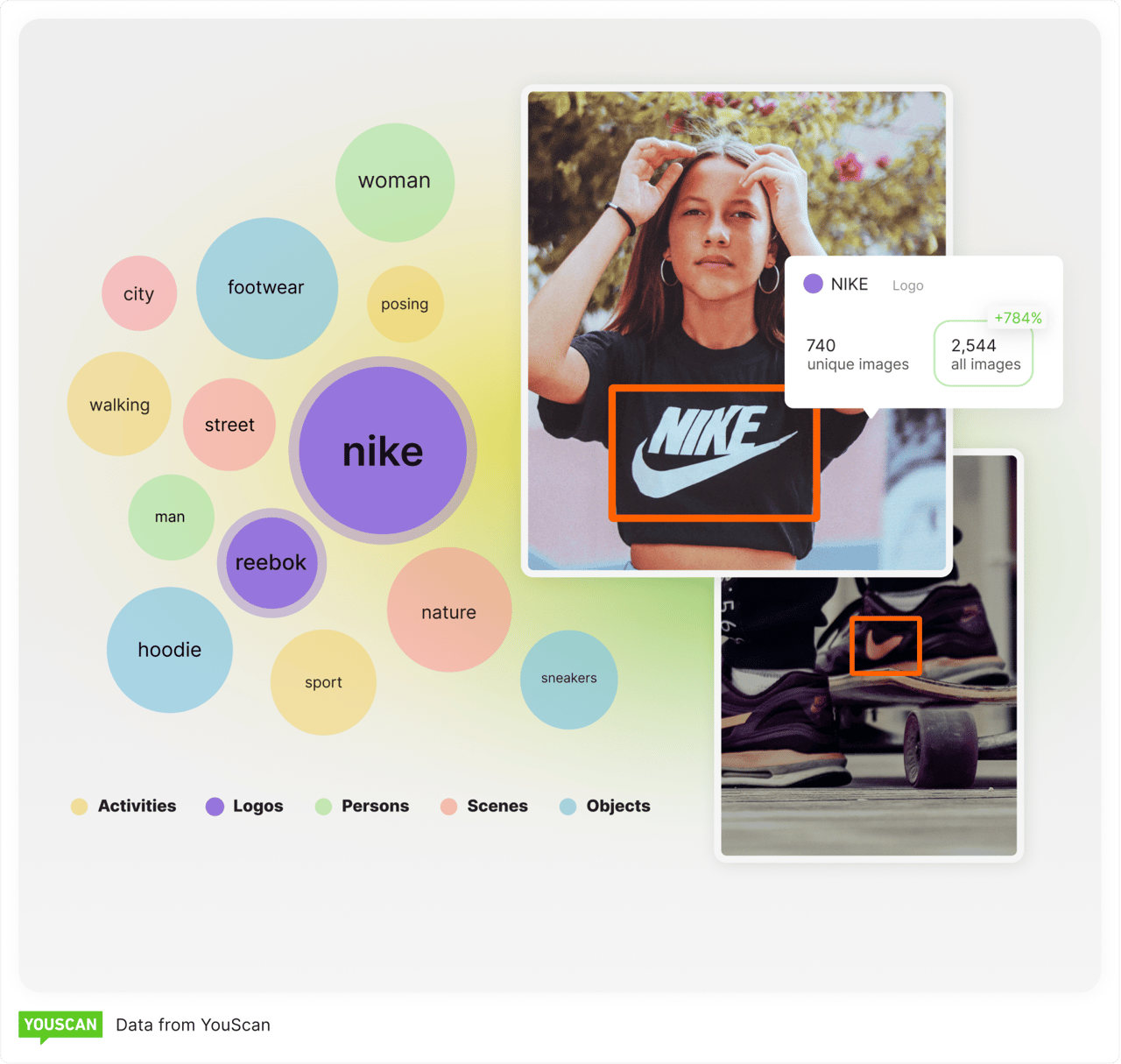
Here's where most brands miss out on relevant insights. Over 80% of social media posts contain images or videos, and around 88% of logos that appear in images don't include any brand mention in the text.
Advanced social listening tools like YouScan use image recognition to detect your logo, products, and even branded objects in photos and videos. This captures brand mentions that text-based media listening completely misses.
You should also monitor review sites, forums like Reddit, podcasts, and video platforms for relevant conversations.
How to do social media listening (step-by-step)
Ready to start listening? Here's your practical roadmap.
1. Set clear business growth goals and KPIs
Before you dive into social listening tools and data collection, decide what you want to achieve. Are you tracking reputation management? Looking for customer feedback? Monitoring marketing performance?
Your goals shape everything else in your listening strategy. If you're focused on crisis management, you need real-time alerts. If you're doing market research, you'll want broader historical listening data.
Define specific metrics: sentiment score targets, share of voice benchmarks, crisis response time goals, or customer engagement rate improvements.
2. Choose the right social listening tool
Not all social listening tools are created equal. Look for these key features:
Data coverage: Does it track all the social media platforms and social media sites your target audience uses? Can it monitor forums, review sites, and news outlets?
Sentiment accuracy: How well does it understand context, sarcasm, and nuanced language through natural language processing?
Visual analysis capabilities: Can it detect your logo and products in images and videos? This is huge — you could be missing up to 80% of brand mentions without it.
AI-powered insights: Modern listening tools like YouScan offer AI agents that answer questions like "Why did sentiment drop last week?" instead of forcing you to dig through dashboards for relevant insights.
Integration options: Does it connect with your existing CRM, marketing automation, and analytics tools for seamless data collection?
3. Build smart search queries
Your queries determine what data you see. Here's how to build effective ones using Boolean operators and relevant keywords:
Basic brand monitoring:
("YourBrand" OR "Your Brand" OR #yourbrand) NOT ("job" OR "career" OR "hiring")
Product feedback:
("product name" OR #productname) AND ("review" OR "experience" OR "thoughts" OR "opinion")
Competitor analysis:
("CompetitorName" OR #competitorname) AND ("switch" OR "alternative" OR "vs" OR "compared to")
Crisis detection:
("YourBrand" OR "Your Brand") AND ("problem" OR "issue" OR "broken" OR "frustrated" OR "angry")
Start broad with key topics, then refine based on what you're seeing in social media conversations. If you're getting too much noise, add more exclusions. If you're missing relevant conversations, expand your keyword list to capture more online conversations.
4. Analyze results and data collection systematically
Raw data isn't insight. You need to turn those brand mentions into actionable insights through analyzing social data.
Segment by topic: Group mentions into key topics. Are people talking about customer service? Product features? Pricing? Competitor comparisons?
Track sentiment over time: Look for patterns and sentiment shifts. A gradual sentiment decline might signal a growing problem. A spike could indicate a viral moment (positive or negative sentiment).
Analyze demographic data: Who's talking? Where are they located? What other interests do they have that indicate audience interest? This helps you refine your target audience understanding.
Review image data: If your listening tool offers visual listening, explore how customers use your products in real contexts. You'll discover use cases you never imagined.
5. Turn insights into action
Create a workflow for routing consumer insights to the right teams. Customer complaints go to support. Product ideas go to development. Crisis signals go to PR for crisis response.
Schedule regular reviews with stakeholders across departments. Don't let insights sit in a dashboard — make them part of your decision-making process to inform your brand strategy.
Test and iterate based on what you learn from analyzing online conversations. Run A/B tests informed by social conversations. Adjust messaging when sentiment analysis reveals confusion or negative sentiment.
Measure impact by tracking how insights influence outcomes and contribute to business growth. Did acting on listening data improve marketing performance? Reduce response times? Increase customer satisfaction and customer expectations?
Advanced: Visual listening and AI-powered insights
Social media has become increasingly visual across social platforms. If you're only tracking text through traditional social monitoring, you're missing the full picture of your social media presence.
The power of visual listening
Visual listening uses image recognition technology to detect your brand, logo, products, and even branded objects in photos and videos — even when there's no text mention.
This technology increases the accuracy of brand mention tracking significantly.
AI-powered conversational insights
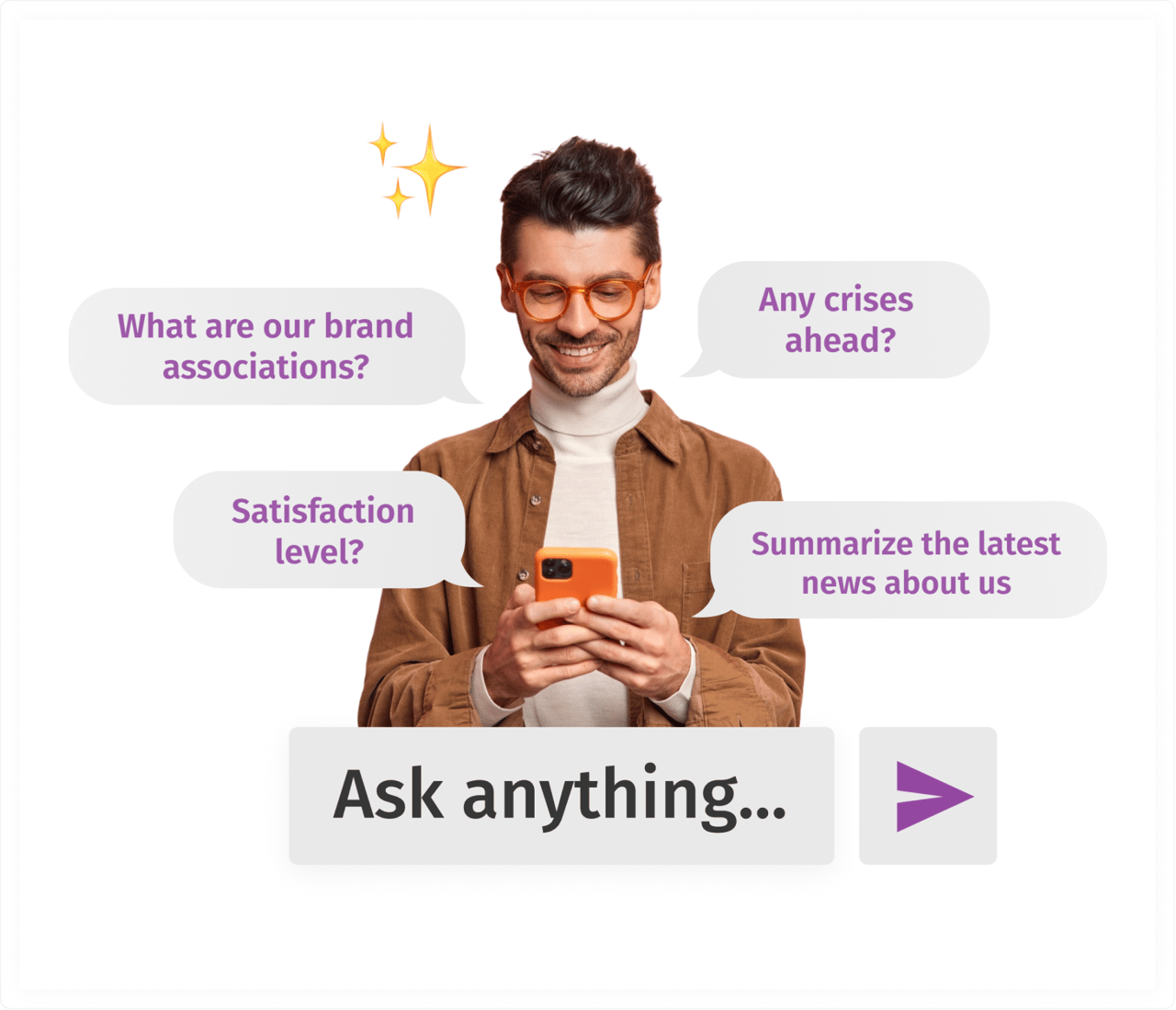
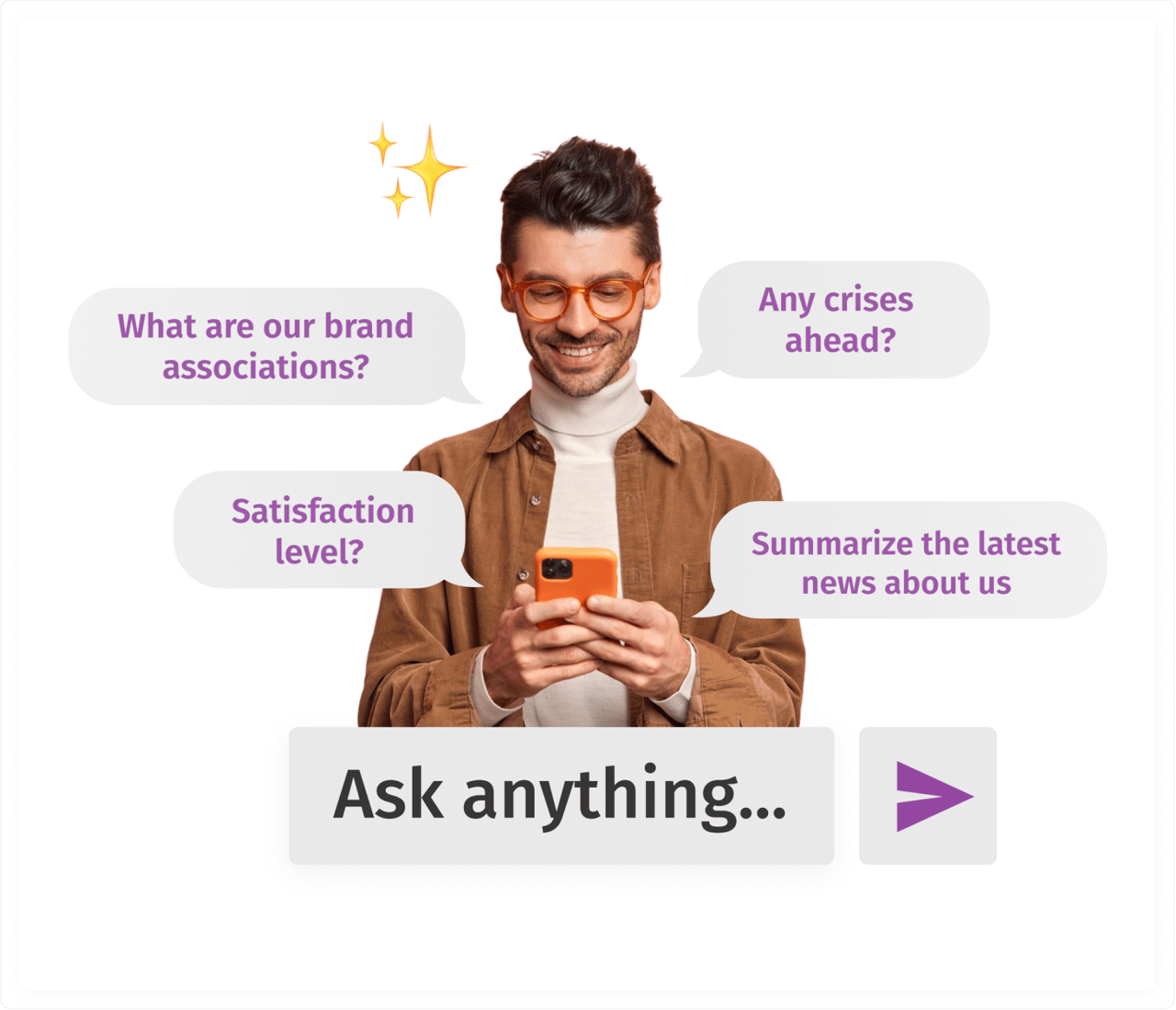
The latest social listening tools incorporate AI assistants that act like a data analyst on your team. Instead of building complex queries and filters, you simply ask questions to gain deeper insights.
"Why did sentiment drop last week?" "Which product features get the most complaints?" "What are people saying about our competitor's new launch?"
These AI-powered insights save hours of manual analysis and help you spot patterns that might otherwise stay hidden. Natural language processing now understands context, sarcasm, and nuanced sentiment better than ever before.
YouScan's Insights Copilot, for example, lets you explore your social data conversationally, uncovering industry insights that would take hours to find manually.
Metrics that matter in social listening strategy
You can't improve what you don't measure. Here are the key metrics to track.
Core metrics
Sentiment score measures the overall tone of social conversations about your brand through sentiment analysis. Are mentions positive, negative, or neutral? Track how this changes over time and in response to specific events.
Share of voice shows how your brand compares to competitors in terms of conversation volume and public opinion. If competitors dominate the conversation, you have work to do.
Mention volume tracks how often people discuss your brand across social media sites. Sudden spikes might indicate a viral moment, campaign success, or brewing crisis.
Engagement rate measures how people interact with brand-related content and indicates customer engagement levels. High engagement suggests your message resonates.
Topic trends reveal what aspects of your brand or industry generate the most discussion around key topics. This guides content creation and product development.
Response time matters for customer service and crisis management. How quickly do you address customer concerns raised on social platforms?
Advanced customer insights metrics
Emotion detection goes deeper than positive or negative. Are people excited? Frustrated? Confused? Angry? Understanding specific emotions provides a richer context.
Conversation velocity tracks how quickly discussions spread. This early warning system helps you spot potential viral moments or crises.
Influencer impact measures which voices drive the most engagement around your brand. Identifying key influencers helps you build strategic partnerships.
Brand reputation index combines multiple factors — sentiment, share of voice, engagement, and crisis frequency — into a single health score.
Measuring progress
Set baseline metrics when you start your social listening program and listening efforts. Then track changes month over month and quarter over quarter.
Look for correlations between listening insights and business outcomes. Did sentiment improvement correlate with sales growth? Did faster crisis response reduce negative media coverage and maintain a positive brand image?
Real-world examples and use cases
Theory is nice, but let's look at how brands actually use social listening to win.
Example 1: McDonald's Grimace Shake viral campaign
In June 2023, McDonald's launched a limited-edition purple "Grimace Shake" to celebrate their classic mascot's birthday. What started as a nostalgic product release quickly became a viral TikTok trend through their social listening strategy.
Through monitoring social conversations, McDonald's tracked how customers organically created content around the shake, turning it into an internet phenomenon. The brand didn't just watch — they engaged with the trend, amplifying user-generated content and riding the wave of organic buzz.


Result: McDonald's proudly linked its strong Q2 2023 earnings to the Grimace campaign's success. By actively listening beyond their owned channels, they accurately tracked campaign performance through real customer conversations and achieved measurable financial impact.
Example 2: Fitbit's movement reminder feature
Fitbit monitored social conversations about workout tracking and fitness goals by analyzing social data. They discovered a recurring theme in community discussions: users wanted reminders to get up and move throughout the day, especially during long work sessions.
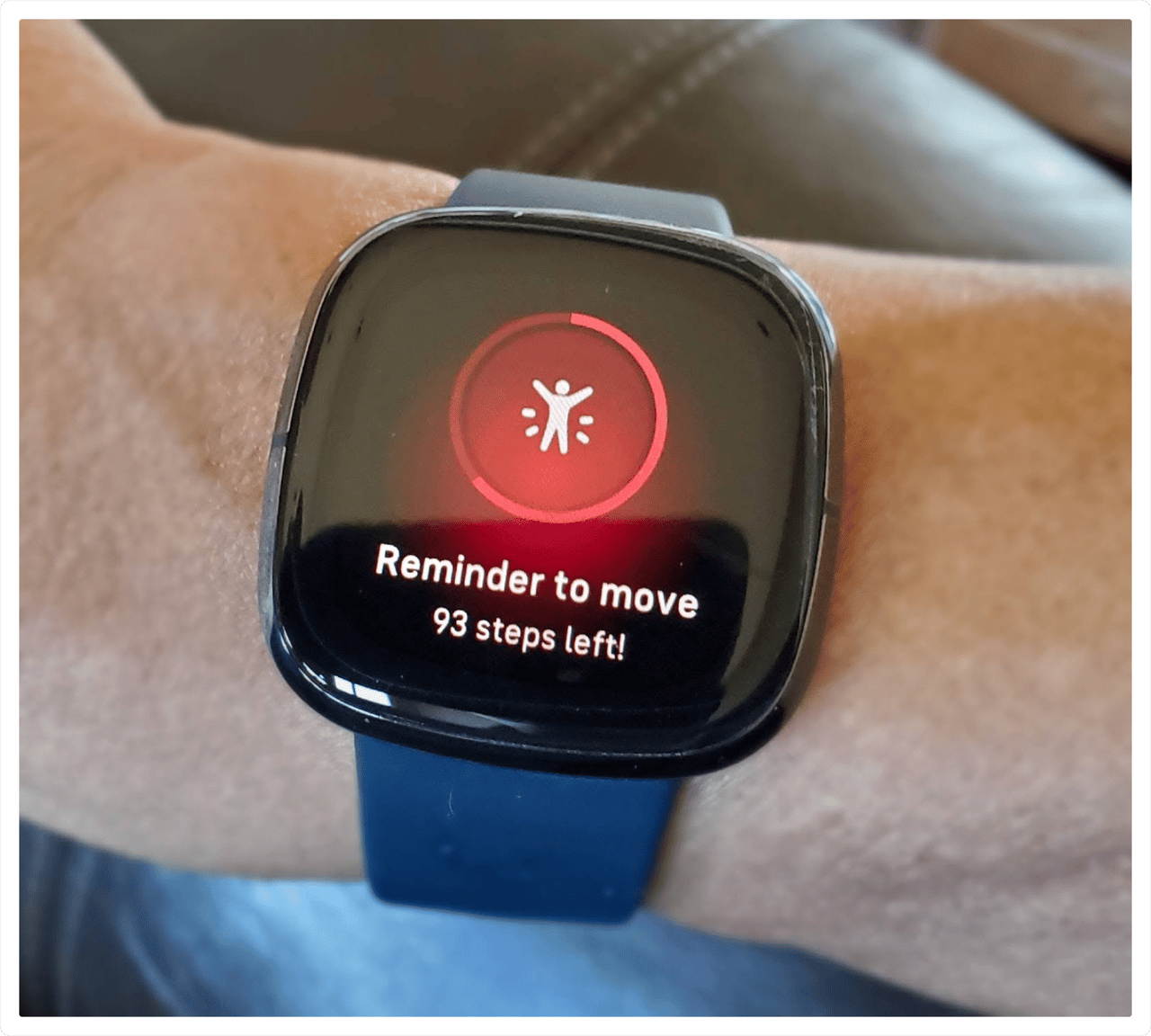
Through both text analysis and customer feedback across forums and social platforms, they identified this wasn't just a nice-to-have — it was a genuine pain point affecting user satisfaction and health goals.
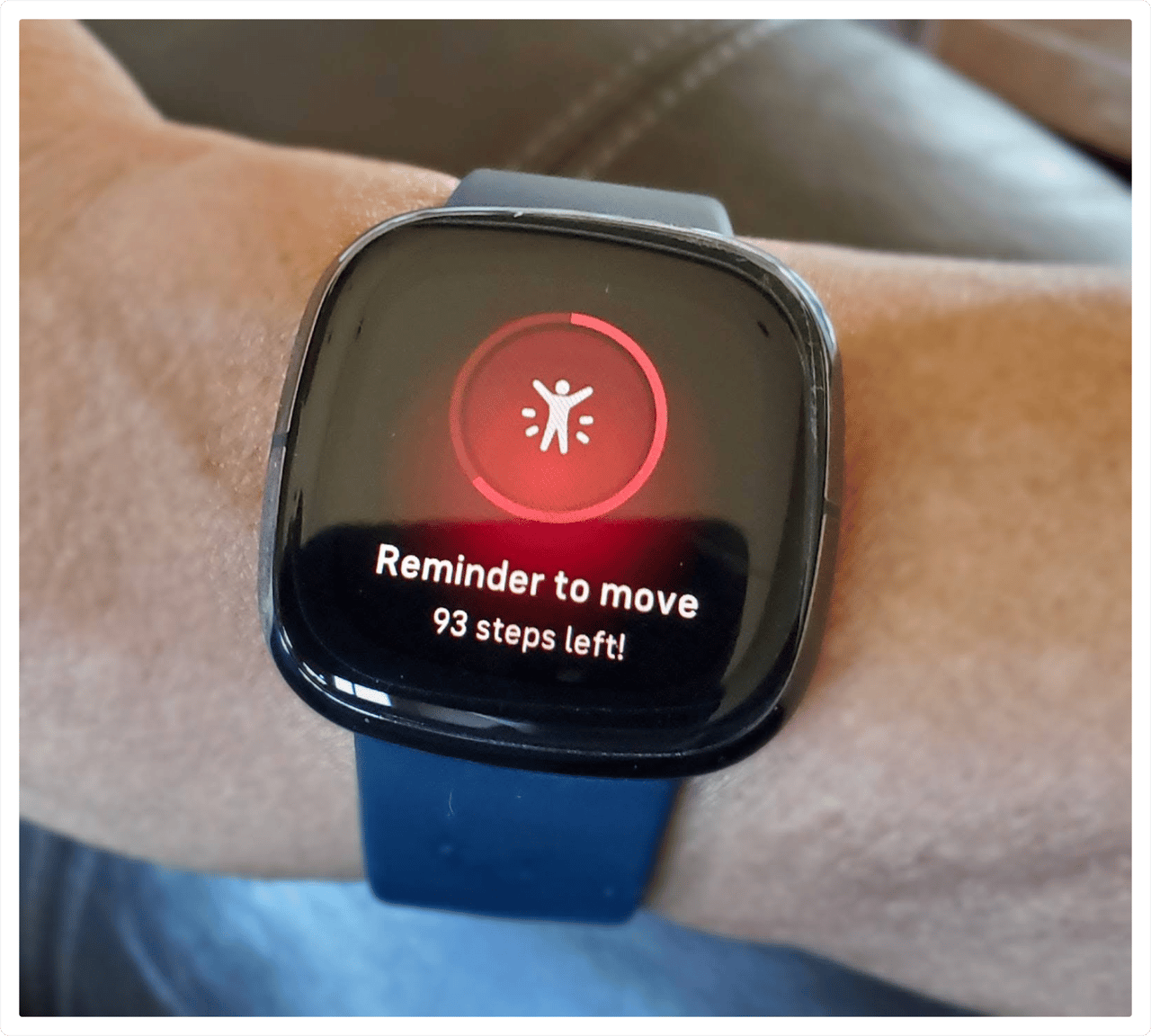
Result: Fitbit added the buzzing movement reminder feature to newer models. The feature became one of their most appreciated additions, directly addressing a need spotted through actively listening to their community rather than relying on formal surveys or focus groups.
Example 3: Ben & Jerry's seasonal discovery
Ben & Jerry's, known for creating flavors and campaigns based on customer conversations, used social listening for competitive analysis, not just of rivals, but of their own performance assumptions.
The ice cream brand analyzed their ad engagement and social listening data beyond what they assumed was their peak season (summer). Through monitoring social media conversations and ad click-through patterns, they made a surprising discovery.
Result: Ben & Jerry's found that more consumers were actually clicking on their social ads during the winter season and increasing spend on ice cream products during colder months. This insight completely contradicted their traditional seasonal marketing assumptions, allowing them to redistribute marketing budget and capture sales they would have otherwise missed.


Getting started checklist: quick summary
Ready to launch your social listening program? Here's your quick-start guide:
✓ Define your goals — Know what you want to achieve (reputation management, competitive analysis, customer insights, crisis management, market research)
✓ Select a listening tool — Evaluate social listening tools based on data coverage, sentiment accuracy, visual capabilities, and AI features. Consider YouScan for advanced visual listening and AI-powered insights
✓ Create smart queries — Build Boolean searches covering your brand, products, competitors, and industry relevant keywords. Include misspellings and variations to capture all brand mentions
✓ Review dashboards regularly — Schedule daily checks for crisis monitoring, weekly reviews for trend analysis, and monthly deep dives for strategic insights from listening data
✓ Translate insights into actions — Establish workflows to route actionable insights to the right teams and ensure findings drive decision-making for your brand strategy
✓ Measure and refine — Track key metrics, correlate listening insights with business outcomes and marketing performance, and continuously improve your queries and processes
Conclusion: From listening efforts to understanding — and action
Social listening isn't just about hearing brand mentions. Understanding what social media listening is means recognizing it's about truly understanding your target audience at scale through relevant insights and using those insights to make better business decisions.
Visual data and AI analysis have changed the game entirely for media listening. You're no longer limited to text-based mentions or manual analysis through traditional social monitoring. Modern social listening tools capture the full spectrum of social media conversations — from text mentions and sentiment analysis to visual brand presence and AI-powered pattern recognition.
Ready to move from basic monitoring to true social intelligence? Explore YouScan's visual listening and AI capabilities to discover what your audience is really saying about your brand — in words and in images.
FAQs
What is meant by social media listening?
Social media listening is the process of monitoring and analyzing online conversations across social media platforms, forums, blogs, and review sites to understand what people are saying about your brand, competitors, and industry. It goes beyond simply tracking direct mentions to uncover broader trends, sentiment analysis, and relevant insights that inform business strategy and marketing campaigns.
What is an example of social listening?
A practical example of social listening: a coffee brand monitors social conversations and discovers through visual listening that customers frequently post photos of their coffee alongside specific pastries from other brands. Using this customer insight, the coffee brand partners with that pastry company to create a co-branded promotion, increasing sales for both businesses based on real customer behavior patterns found through analyzing social data.
What is the difference between social media listening vs social media monitoring?
Social media monitoring is reactive and focuses on immediate responses to direct mentions for customer service purposes and social media management. Social listening is proactive and strategic, analyzing broader conversation patterns and sentiment analysis to inform long-term business decisions and marketing strategy. You need both social listening and monitoring: monitoring handles day-to-day customer engagement, while listening shapes your overall brand strategy.
What is visual social listening?
Visual social listening uses AI-powered image recognition technology to detect your brand, logo, products, and branded objects in photos and videos across social media platforms — even when there's no text mention of your brand in the post. This technology can capture up to 80% more brand mentions than text-only listening, providing deeper insights into how customers actually use and experience your products in real contexts through analyzing visual content in social media conversations.