Horror’s Getting Cozy and Moving Beyond the Traditional Spooky Season

A little while ago, we shared a post on LinkedIn talking about how the conversation around Halloween movies this year was steeped in nostalgia. What we didn’t get into was the bigger conversation around how horror has quietly been creating its own warm and cozy sub-genre, and how it’s not just for Halloween anymore.
What we listened to, where, and when.
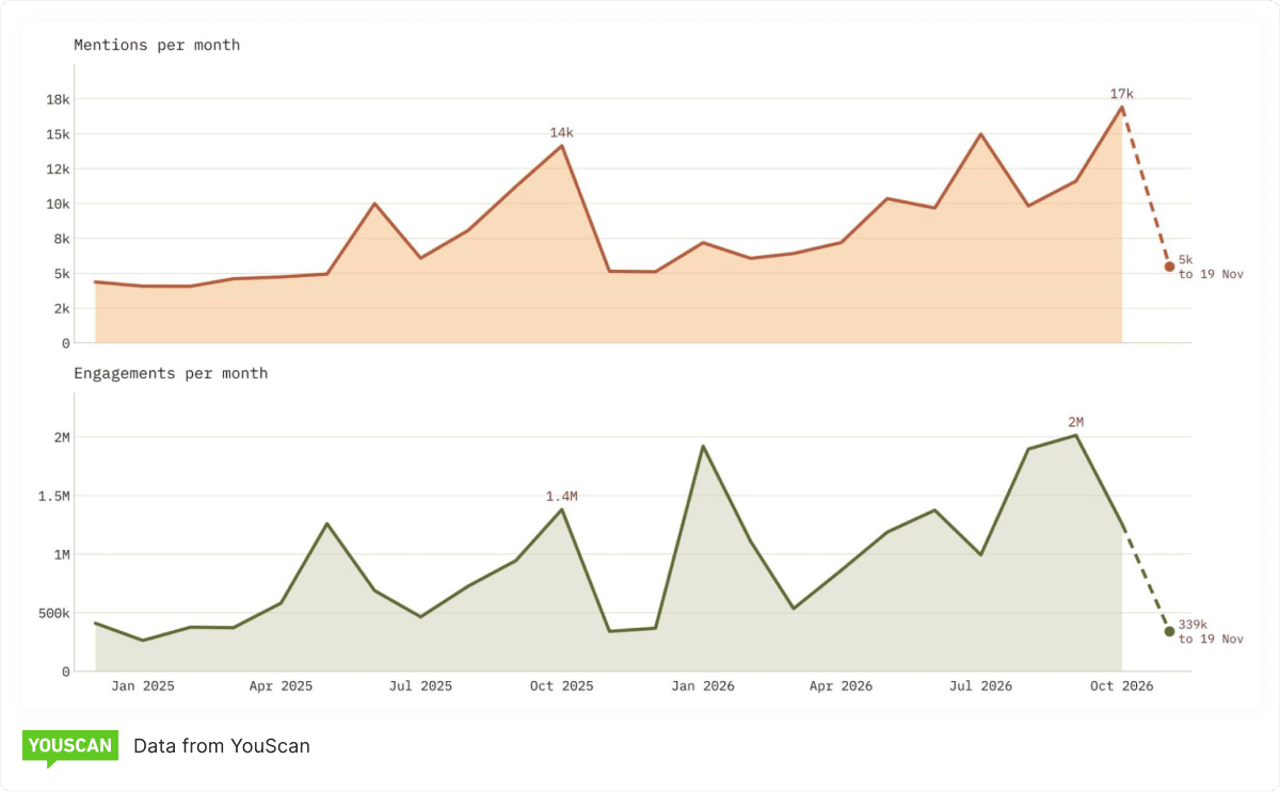
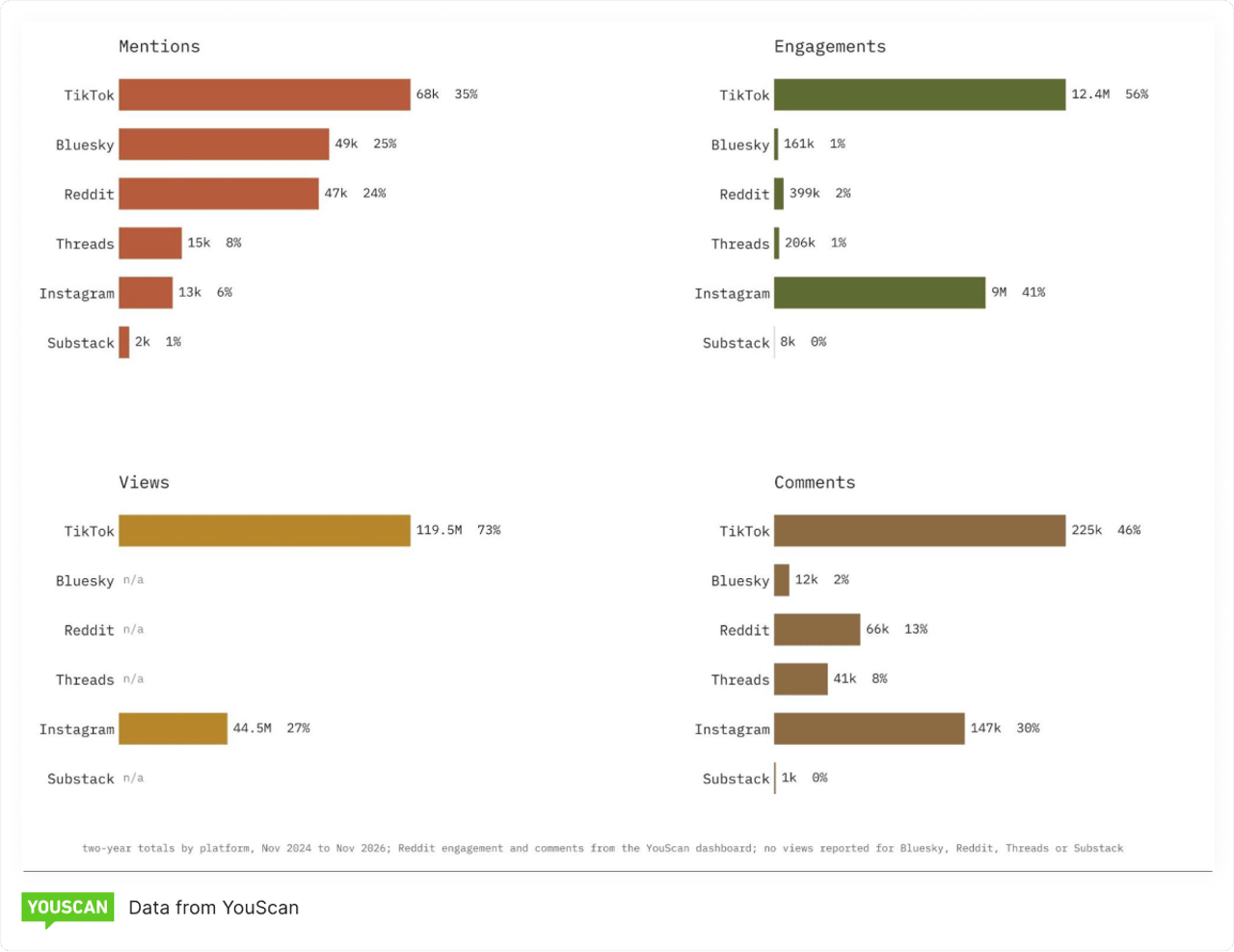
We’ve been collecting mentions of cozy or comfort horror over the last couple of years, across TikTok, Bluesky, Reddit, Threads, Instagram, and Substack. Over the last two years, we collected just under 195k mentions from 116k people, generating 22.1M engagements, 164M views, and 493k comments.
As you’ll see from the chart below, which details both overall mentions, and engagements per month over the last 2 years: cozy horror experiences a spike around Halloween but the conversation is active year-round, and has been steadily growing over the last couple of years.
Where is this happening?
From the data we can see on TikTok, the conversation is nearly global, with 162 countries tracked in our dataset.
In terms of where on social it’s happening, no single platform owns the talk, but two own the reach. TikTok is home to 35% of overall mentions, and drives over half of all engagements and over 70% of views. Instagram is only 6% of mentions but 41% of engagements. Bluesky and Reddit are each a quarter of the conversation, with thriving communities and very little of the reach. We also saw cozy horror appearing on Substack (Substack data has only been available since April this year, so is limited when compared to the other platforms).
So what are people actually talking about?
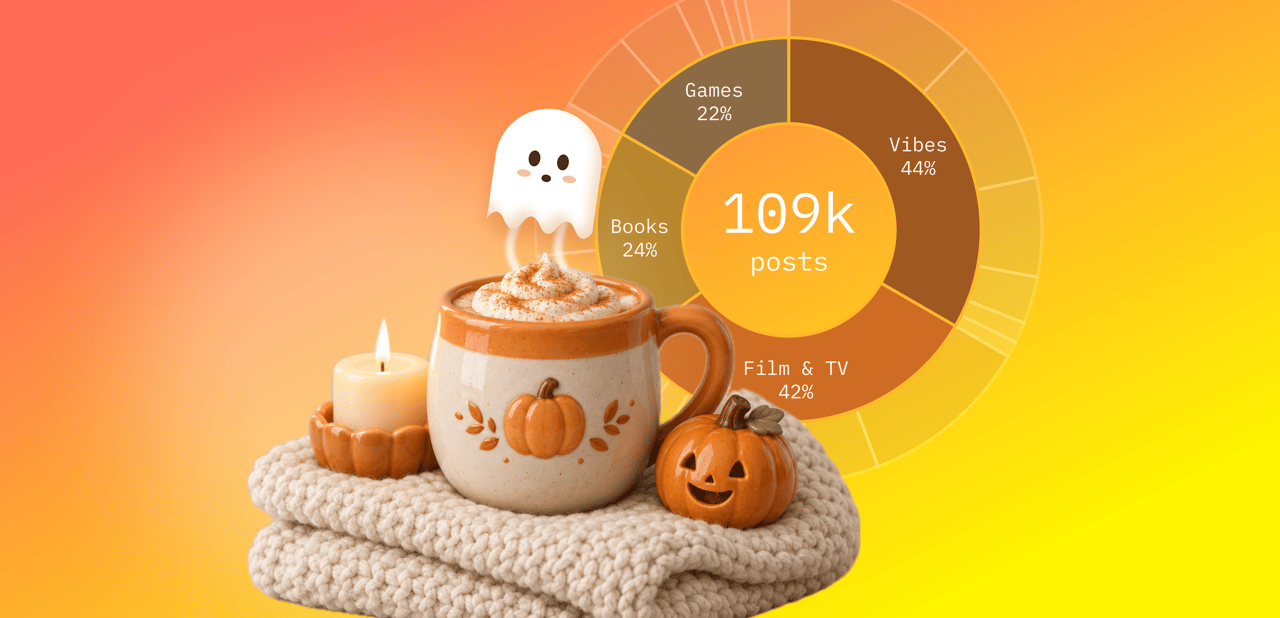
When we analysed the conversation, we found that there were four big overall themes that the majority of the conversation played into.
These were:
Film & TV, Books, Games, and ‘Vibes’, which ended up being the connective tissue of this conversation, while itself being primarily seasonal and lifestyle-based.
Below you’ll see how the conversation broke down into themes and subthemes.
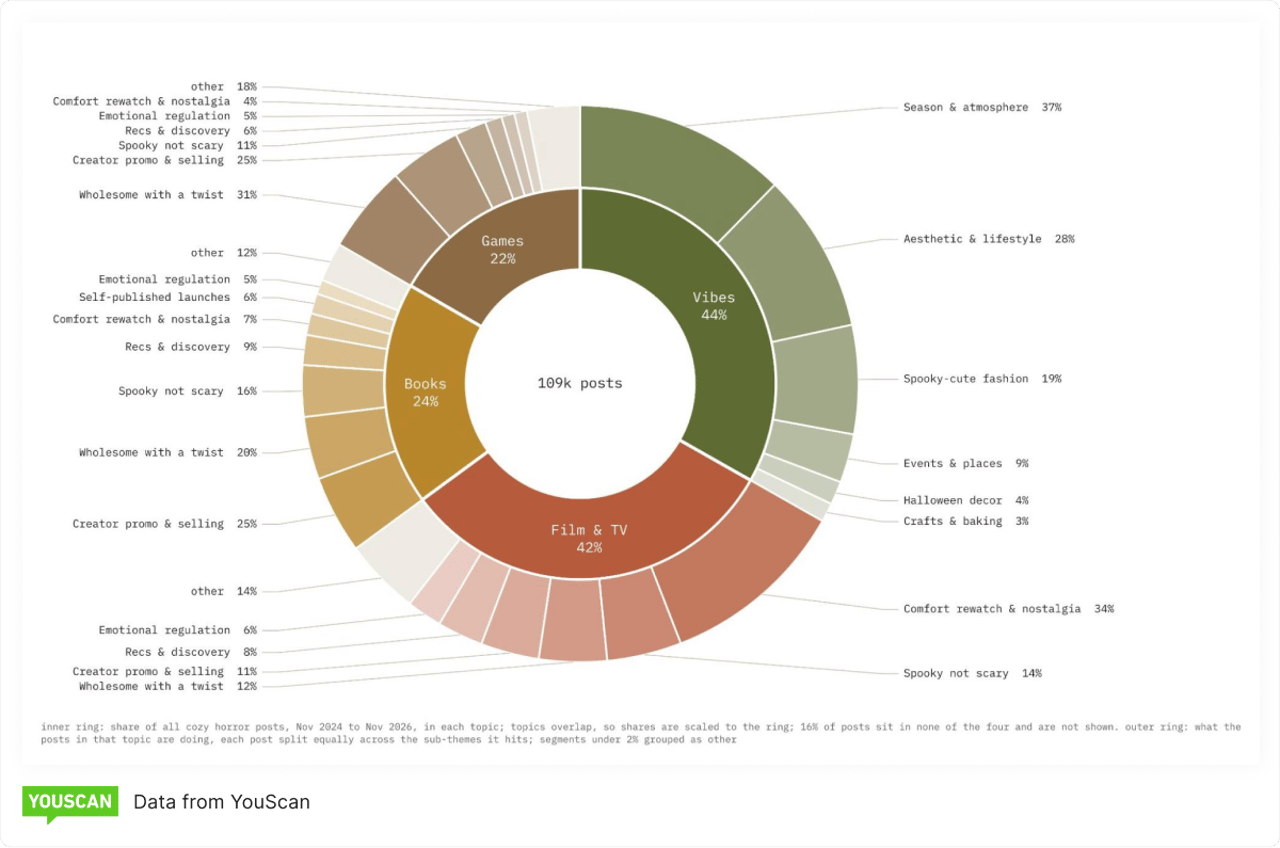
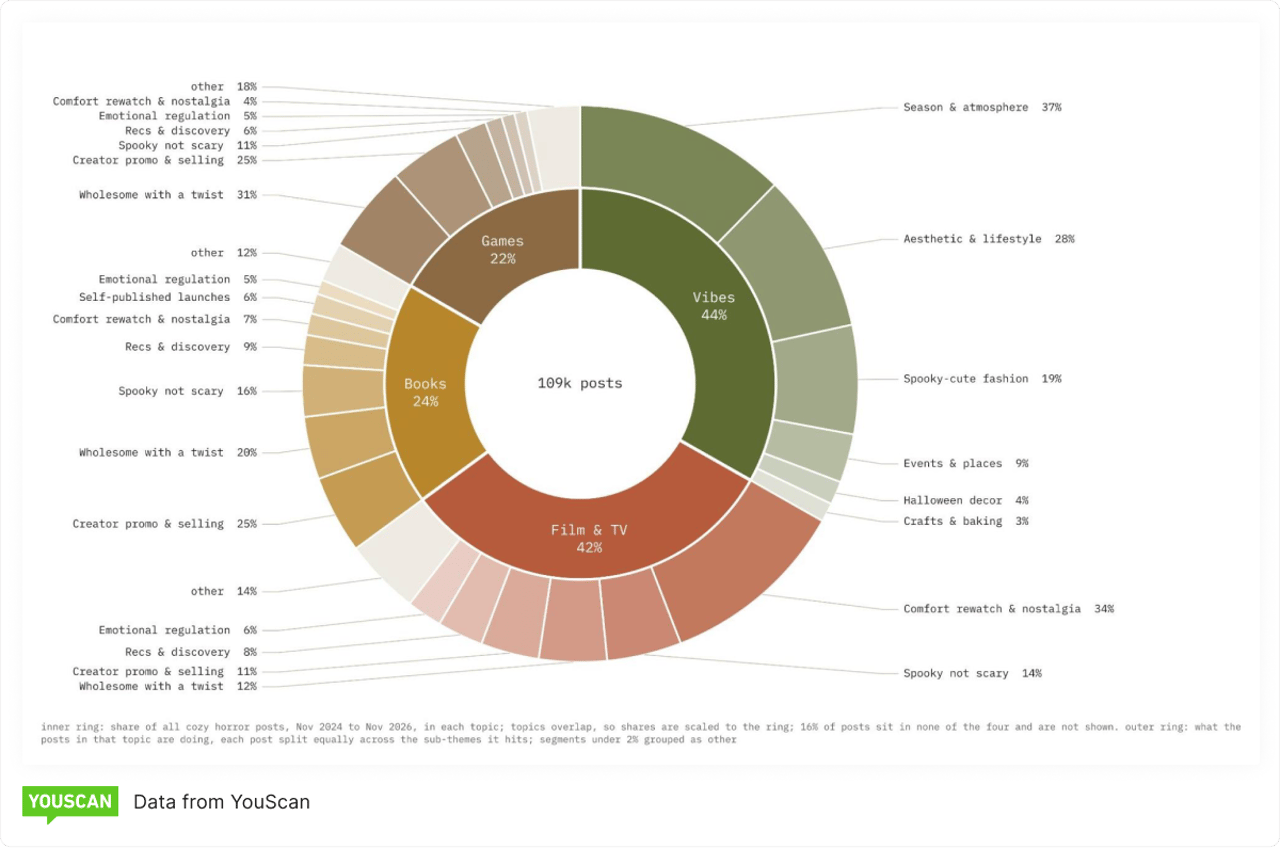
One of the most interesting findings is that the mediums barely overlap, the vibes do. There’s only a 7% overlap between film and books, 5% between film and games, and 3% between books and games, but vibes shares 21% with film, 13% with books and 8% with games. So right now, it’s like there are three specific cozy horror communities and which one you’re in depends on whether you like to watch, to read or to play.
What cozy horror sits next to
The network graph below shows all the things that show up alongside cozy horror in our search, and how they interconnect.
The three brick circles are our mediums; the green circles are the settings; the ochre circles are the practice; and the smaller brown circles are the look/aesthetic.
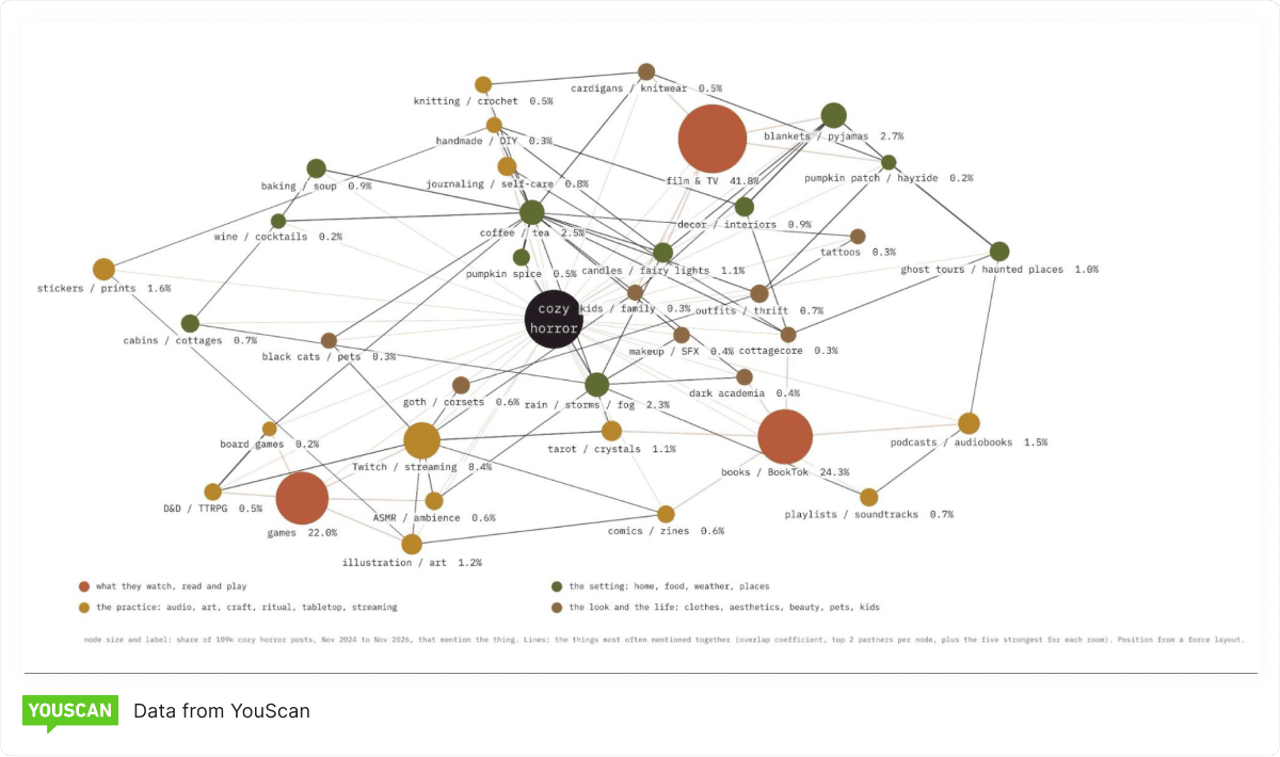
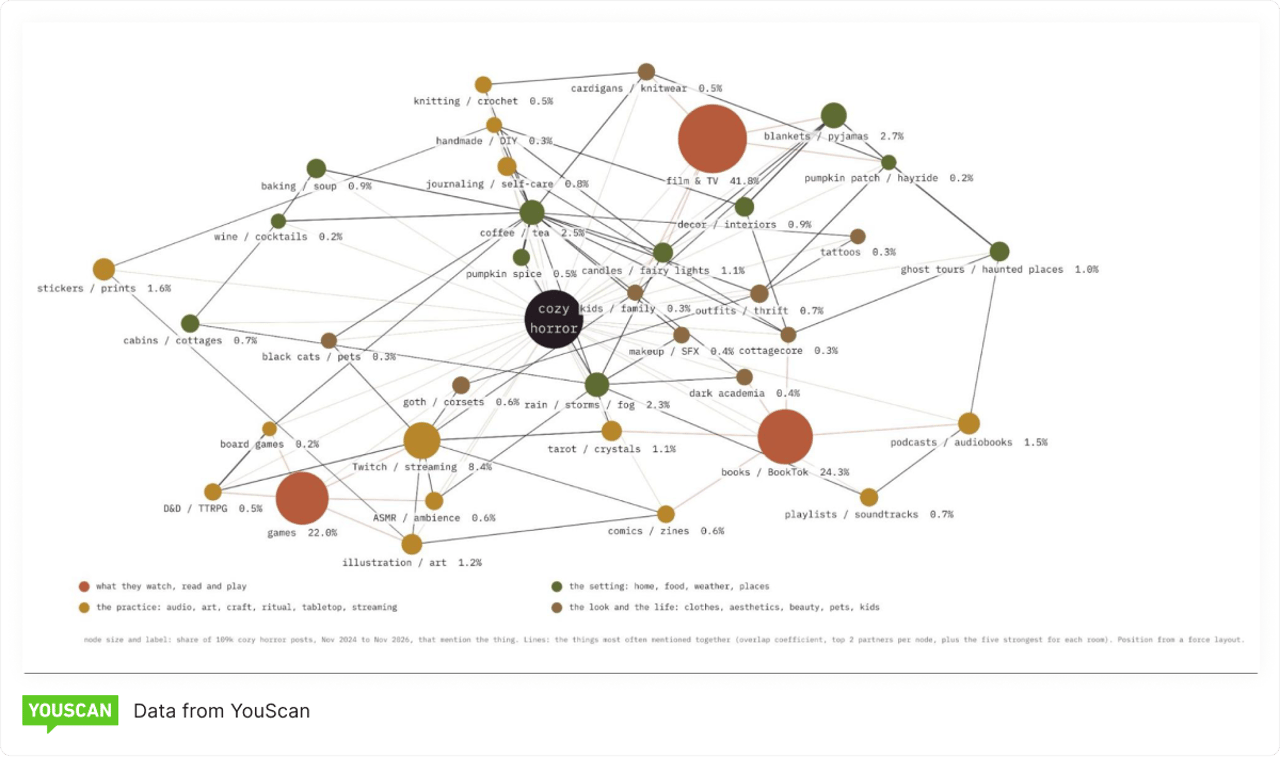
The domesticity layer belongs primarily to film and TV. People are getting cozy and nesting on the sofa with blankets and candles while they watch their favourite scary TV shows and movies.
Hot beverages split almost evenly between books and film. Coffee and tea are the drinks of choice for readers and viewers alike, and pumpkin spice still reigns supreme with this crowd.
Books are linked much more with aesthetics than any other medium. Film people barely mention dark academia, for example.
Games are a bit of a standalone. It’s not all screen-based either, with D&D and TTRPG showing up in this community. Interestingly, the biggest cluster in gaming isn’t survival horror but instead ‘cozy games’ gone dark, Stardew and Animal Crossing with something wrong in them, and ‘wholesome with a twist’ is a third of the games conversation.
Who is the audience?
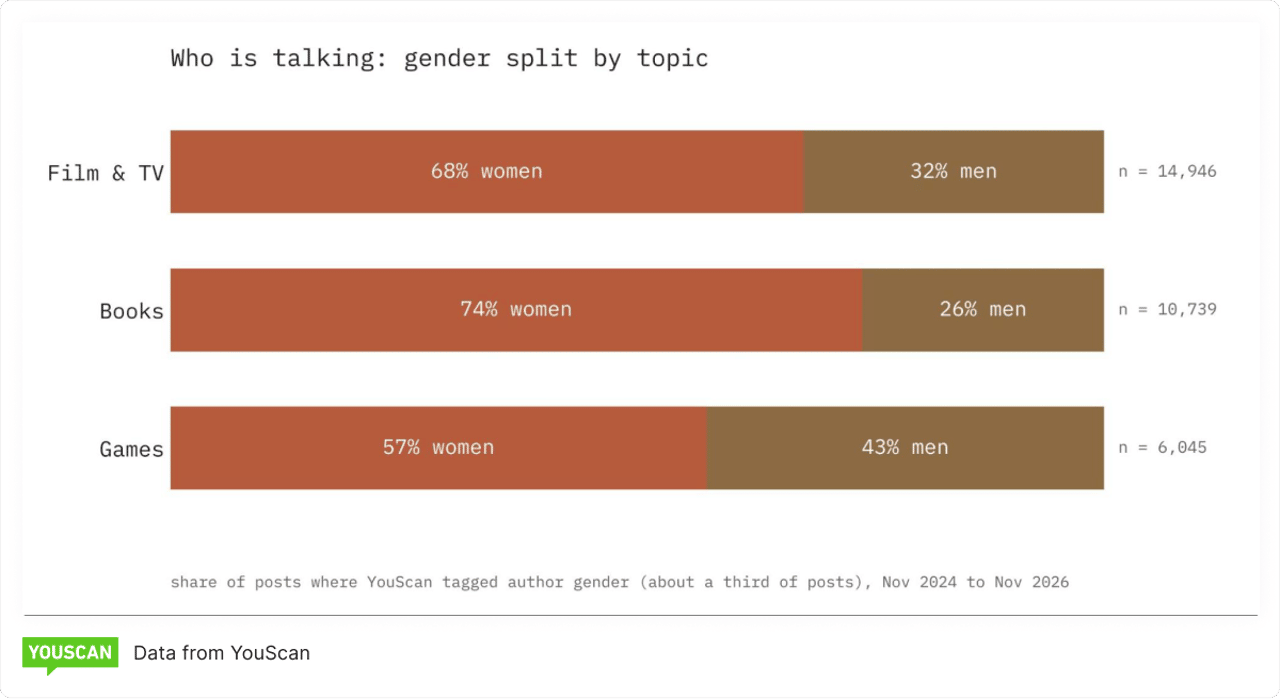
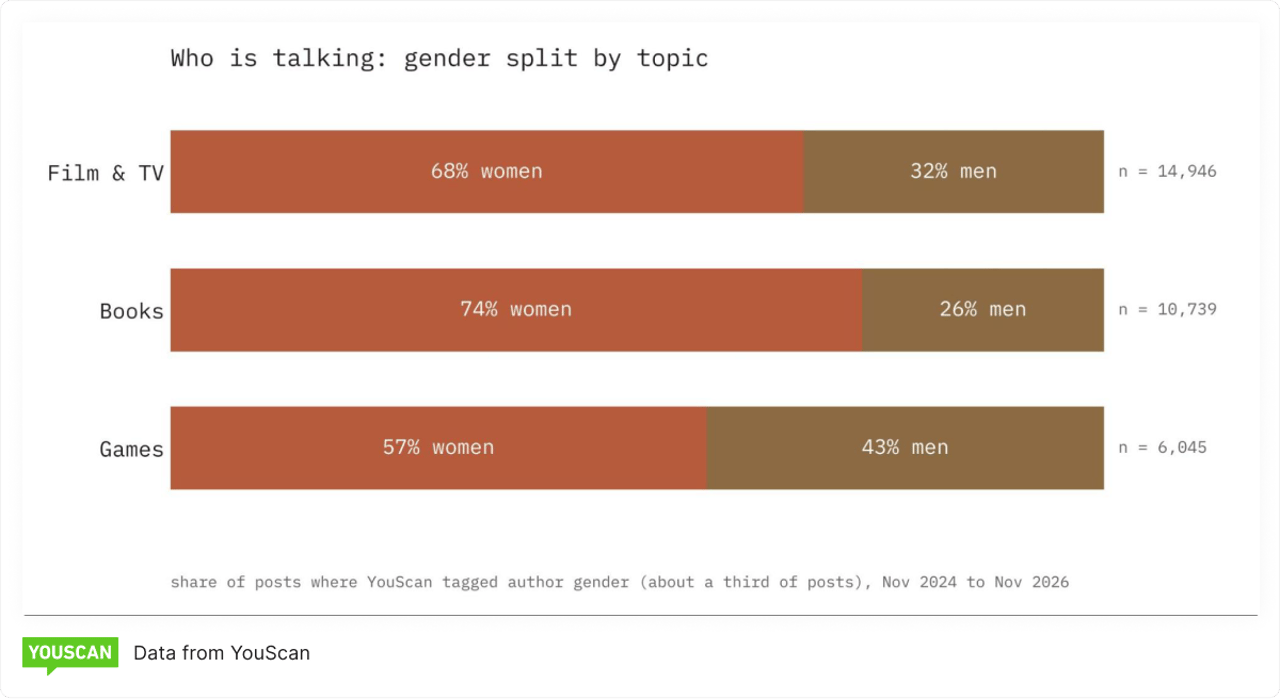
From the gender data that we’re able to access across platforms, we discovered that the cozy horror audience is more than twice as likely to be female as male.
Below you’ll see how that data breaks down around our 3 mediums, books are the most female with a 74% female audience, followed by the more traditionally male spaces of film & tv and gaming, both of which still lean heavily female.
Gaming is the one to watch
Despite games being our smallest tagged medium, it’s the fastest-growing. This is likely due to the rise of cozy gaming as a genre, generally.
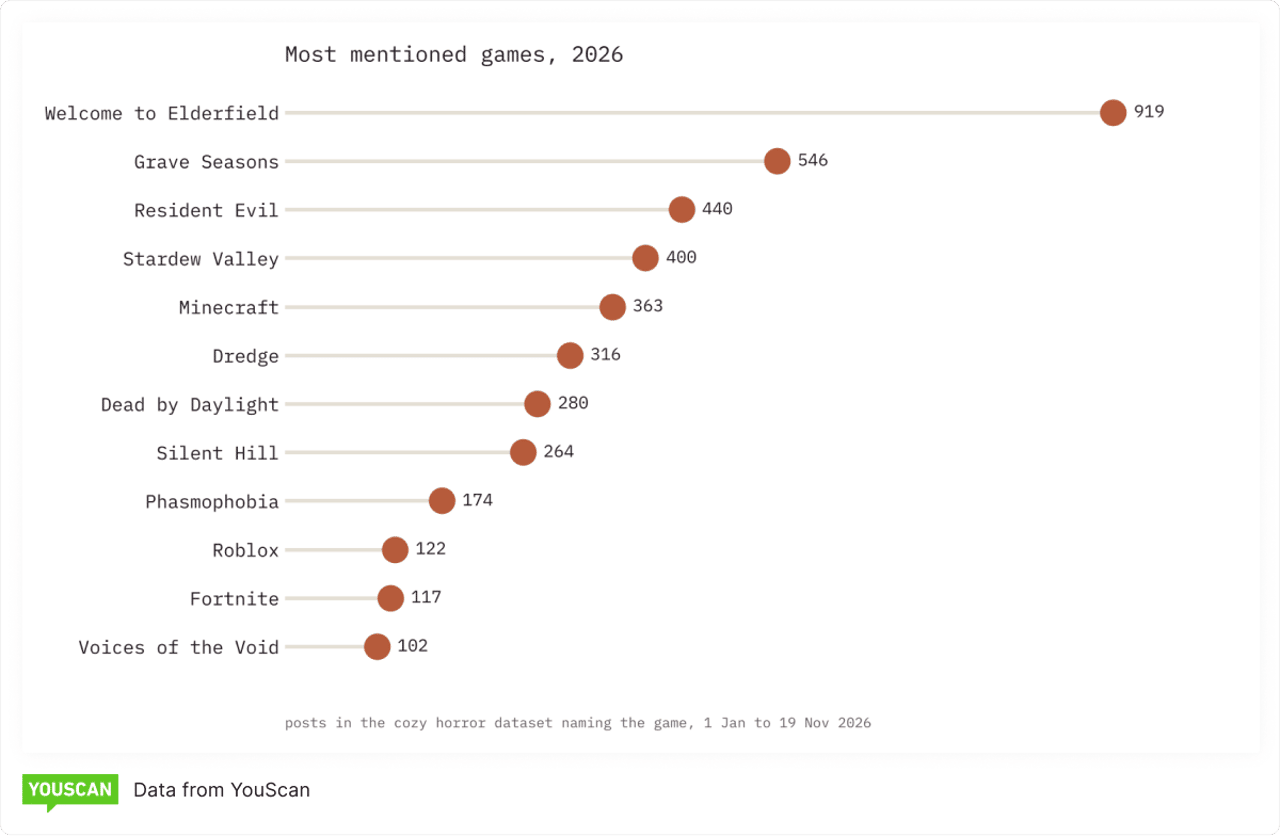
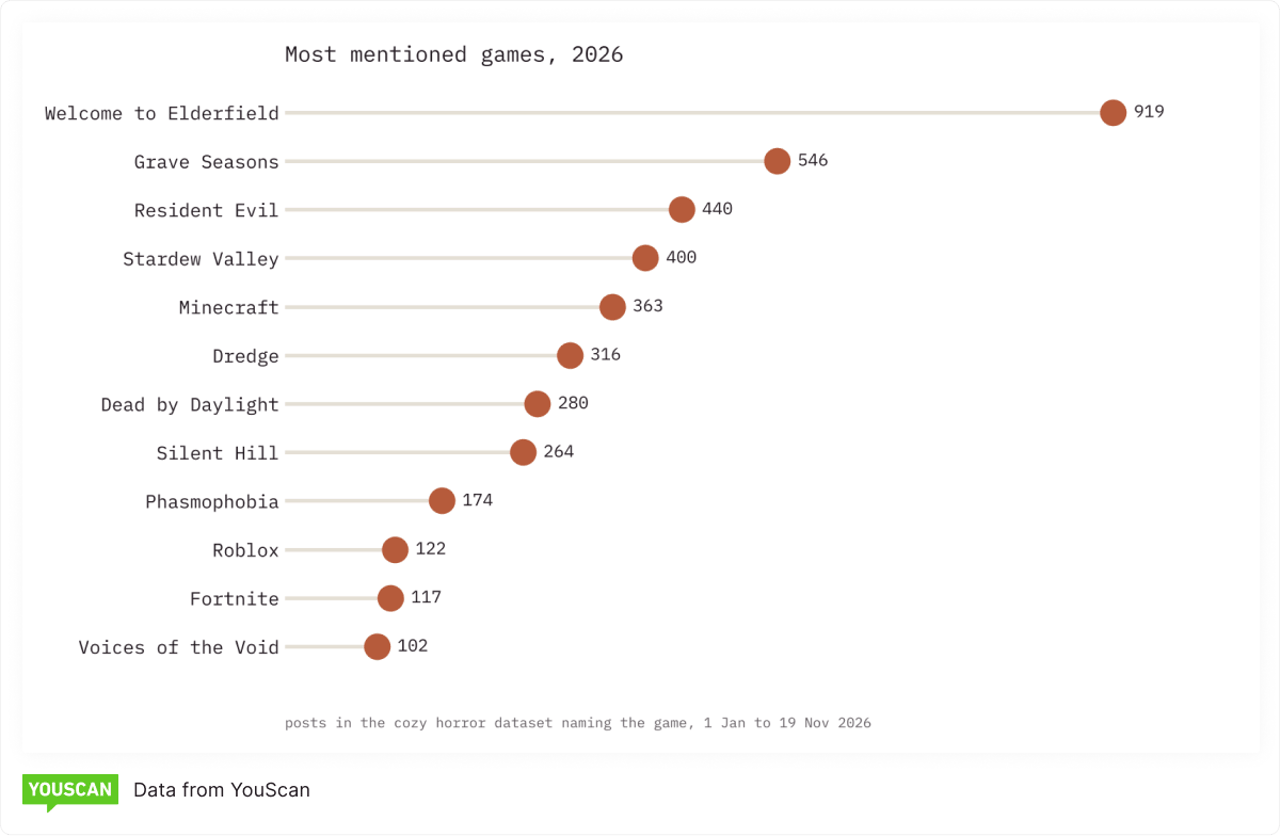
This year the conversation was all about Welcome to Elderfield, a new folk horror-inspired game. Much as we saw with film and TV, many of these games are older, suggesting that cozy and comfort horror gaming have the same desire for safety through replays that film & TV viewing around Halloween does.
It’s not just for Halloween
As we saw from the line charts at the beginning of this analysis, two-thirds of the conversation happens outside of Autumn (Sept/Oct/Nov).
One of the earlier spikes in conversation is around Summerween, which we’ve talked about previously, and continues to grow exponentially, year on year.
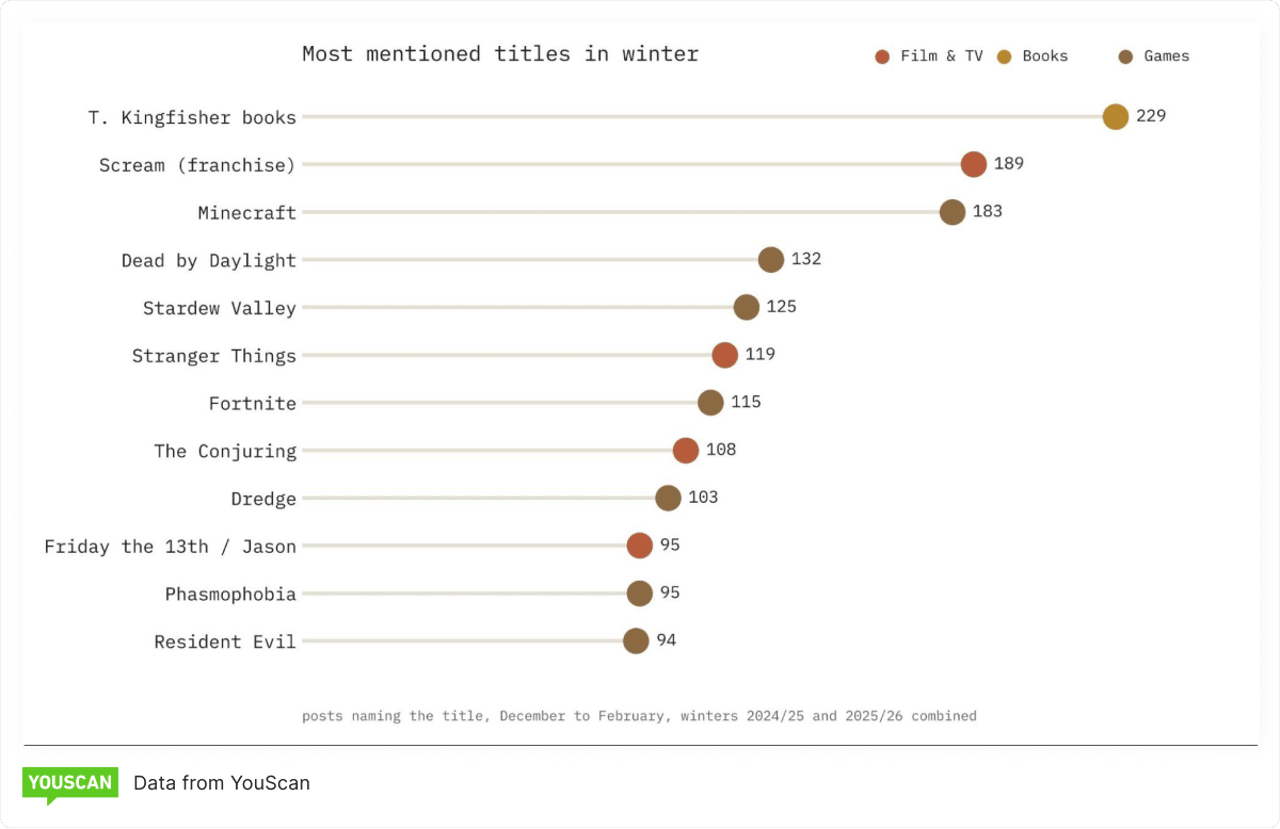
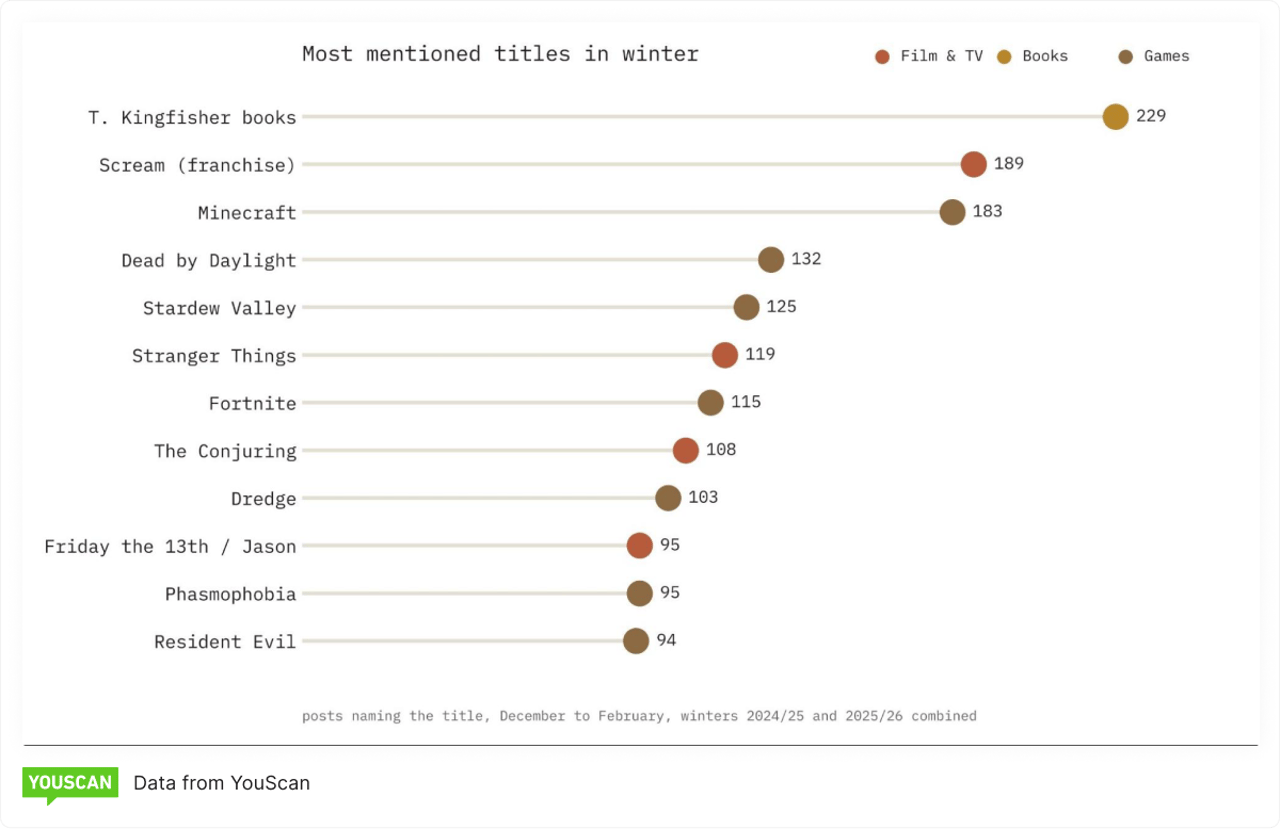
Although winter is the quietest time of the year for cozy horror (Christmas season is traditionally more associated with ghost stories than straight horror) we’re seeing the conversation around cozy horror roughly double year on year throughout the winter months.
When we look at how those mediums split out, Film and TV's share of the conversation is lowest in winter: 37% of December to February posts, against 46% in September and October. Books and games both go up in winter: books to 29% and games to 25%.
Halloween is film's season; winter belongs a little more to bookish girls and gamers.
Why should this matter to you?
Cozy horror is becoming a bona fide genre in its own right; people are using it as a term more year on year, and its rise has been slow and steady, suggesting that it’s here to stay.
It’s interesting because it crosses so many categories and is more a ‘vibe’ than a set of clearly defined tropes. And also because it’s a response to the world right now. One in five posts this summer said horror calms them down, helps them sleep, or is where they go when things are bad, which is an insight that applies well beyond the genre.
And finally, this is a pop culture conversation led by women; half the conversation mentions something you could buy, watch, play, read or subscribe to. For brands who are aligned with the audience, that’s a massive opportunity.