Did People Like GPT-6 Astra? What Social Listening Revealed

In early September 2026, OpenAI released GPT-6 Astra. We asked Insights Copilot, YouScan’s AI agent for social listening:
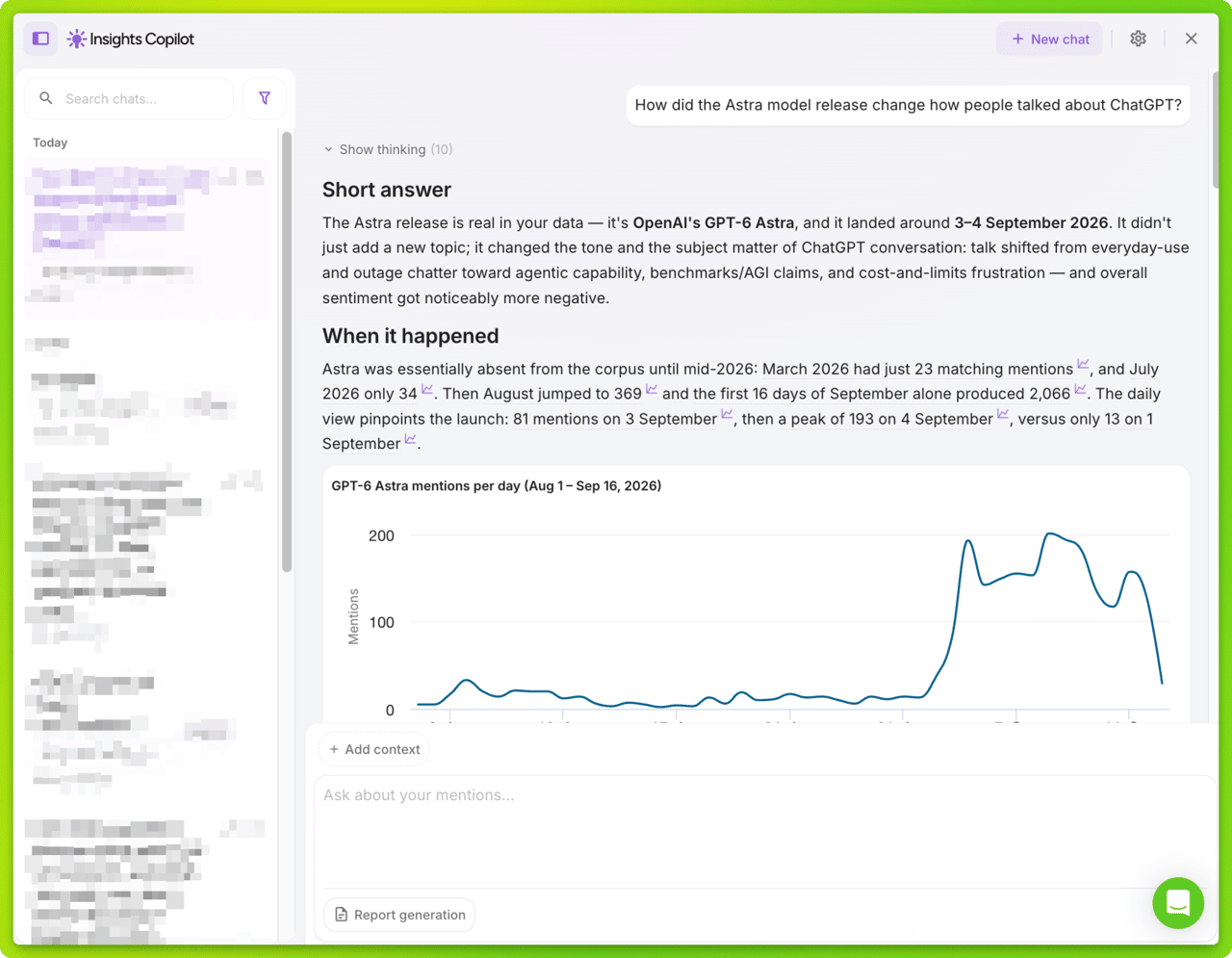
“How did the Astra model release change how people talked about ChatGPT?”
The Insights Copilot analysis covered more than 90,000 ChatGPT mentions before and after the launch. Here are the main insights gathered from real online conversations. 👇
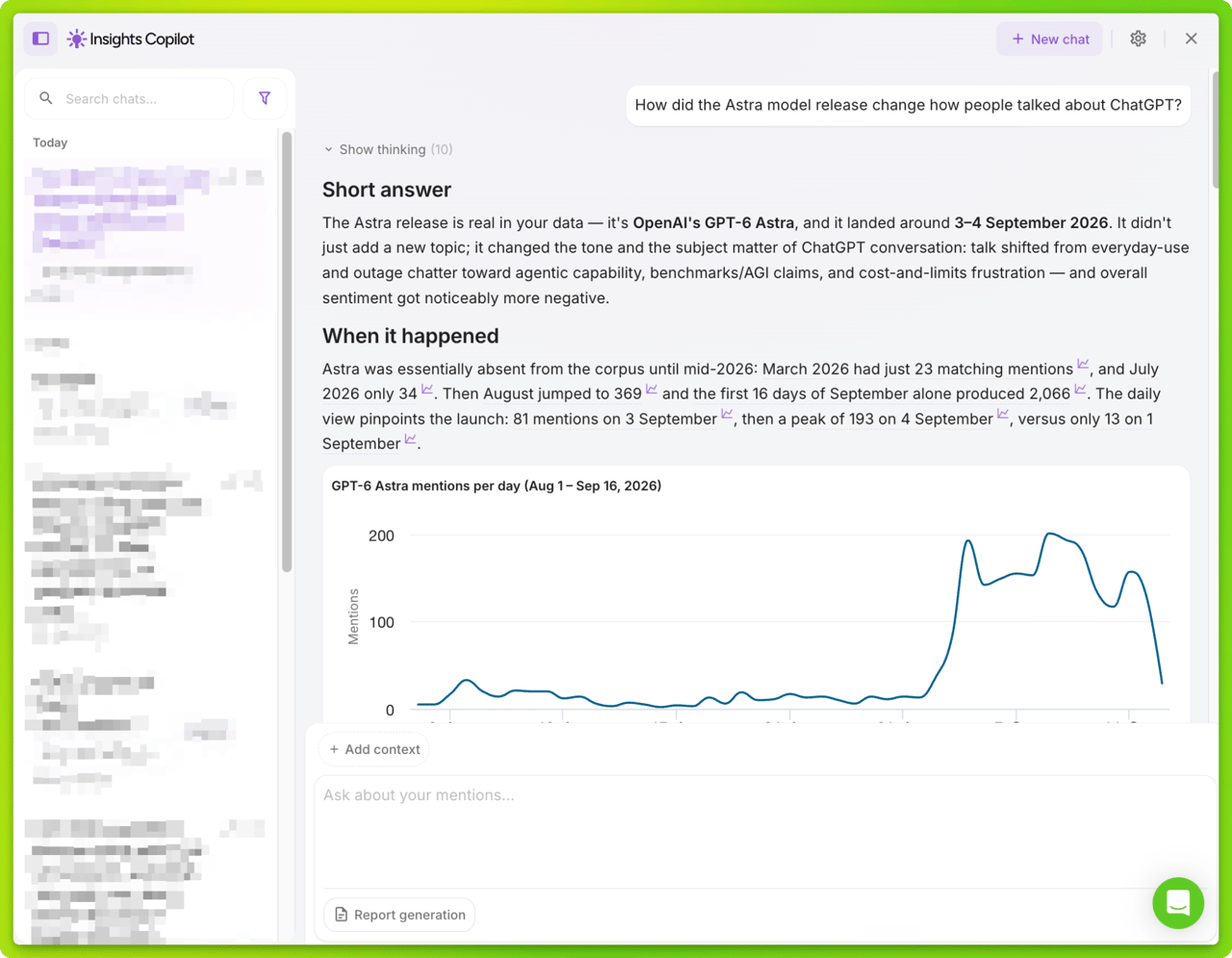
TLDR: What the Astra launch did to ChatGPT conversation
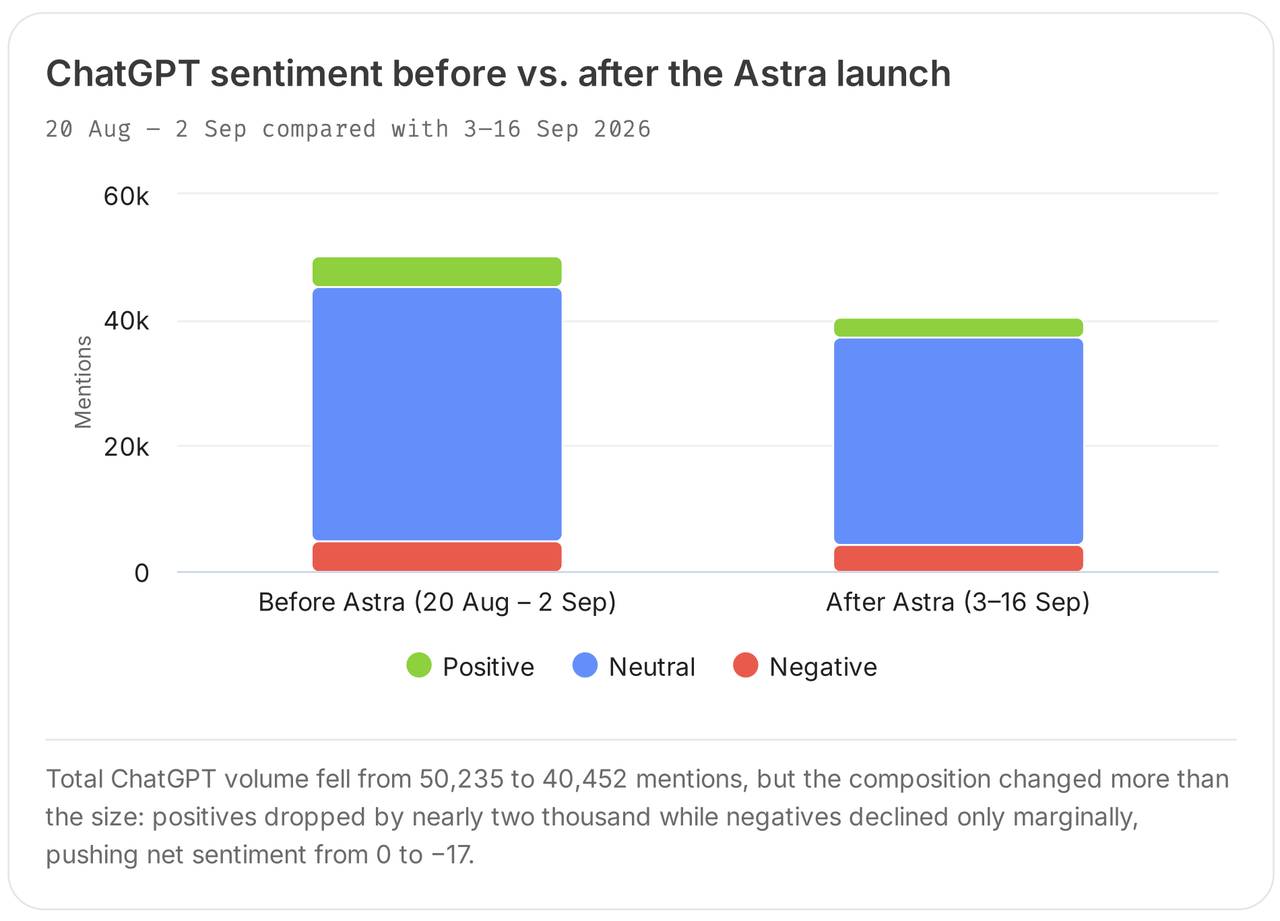
ChatGPT sentiment became more negative. Positive mentions fell faster than criticism, partly because popular, upbeat stories faded.
People praised Astra’s ability to create games and visuals. Complaints focused on unreliable results and usage limits.
The Gemini switching story almost disappeared. Mentions fell from 2,137 to 14, while users compared Astra with Claude.
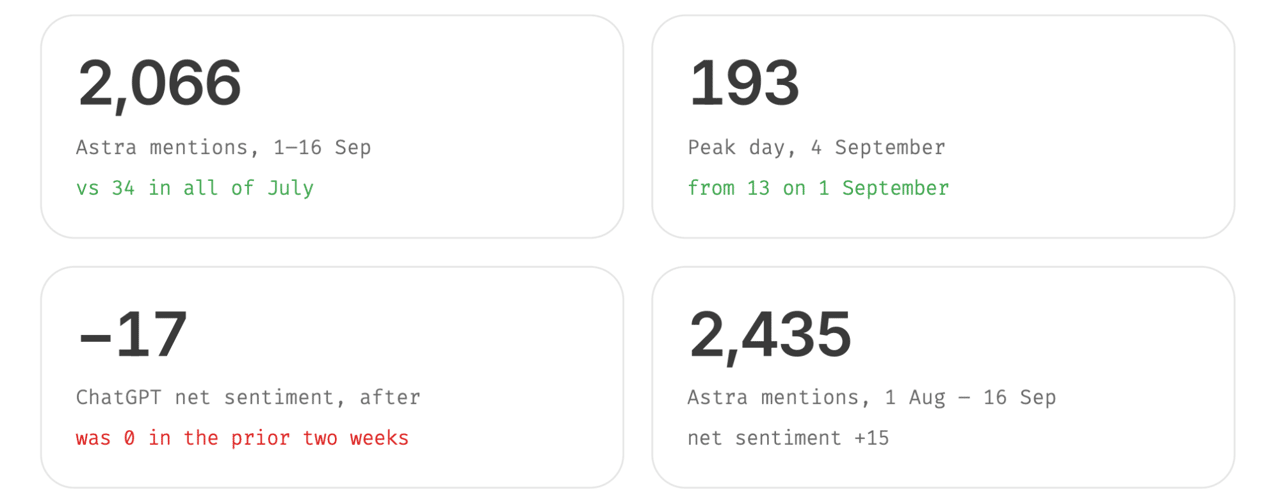
YouTube dominated Astra discussion. Roughly two thirds of collected mentions came from YouTube, with Substack in second place.
Why did the conversation become more negative?
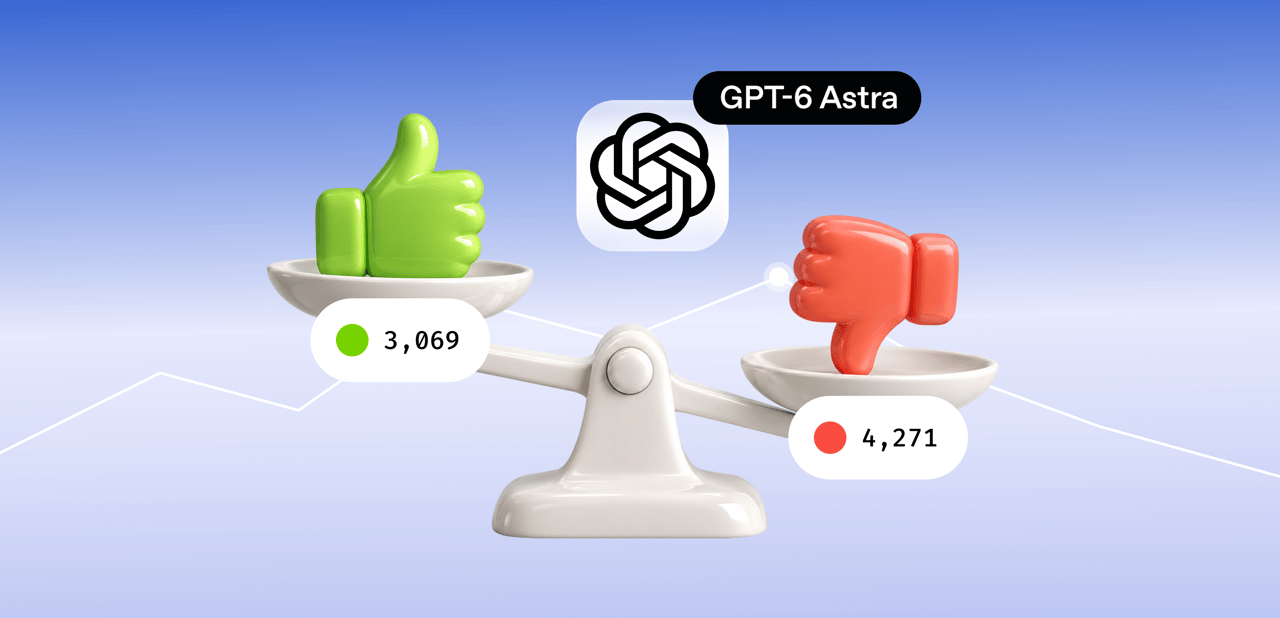
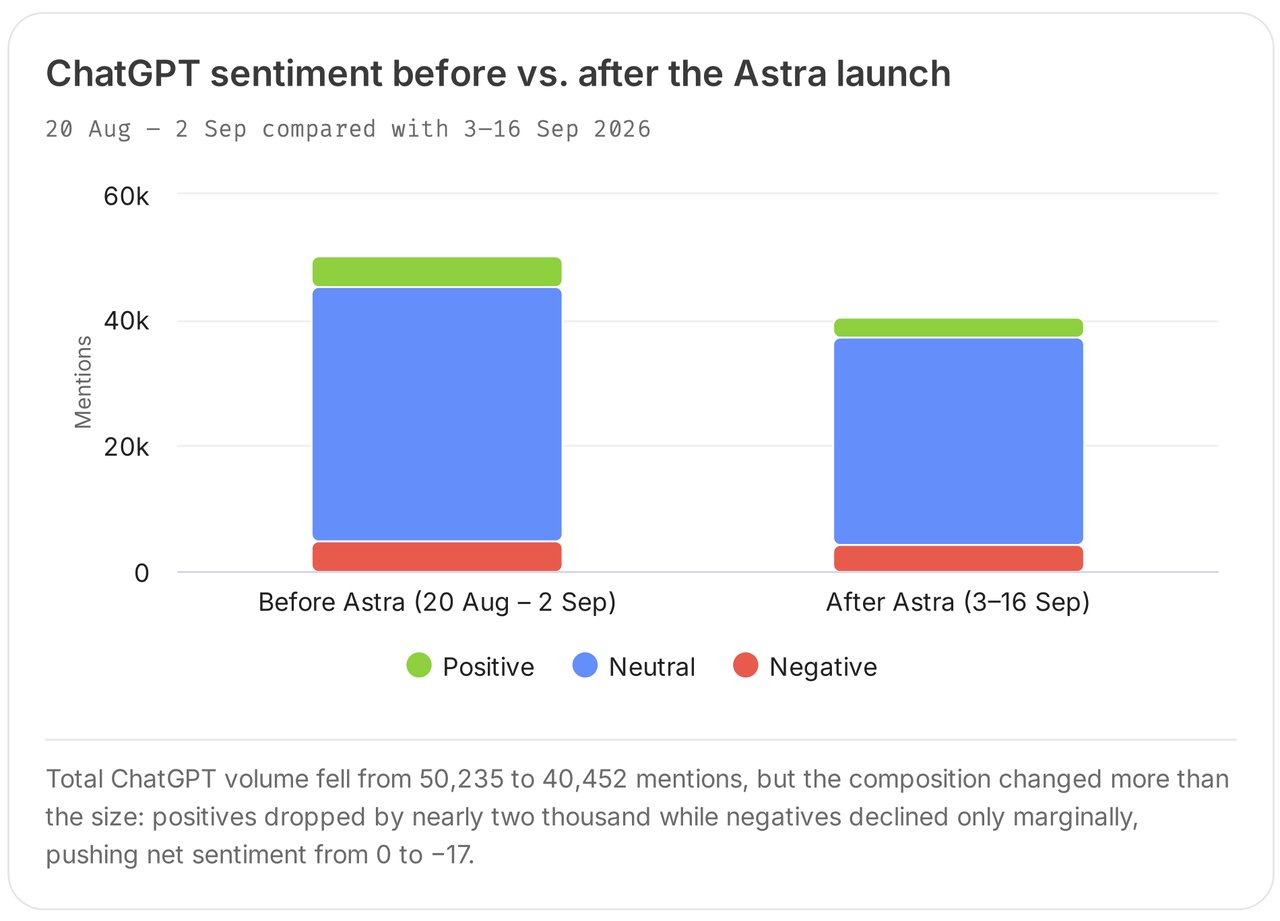
Positive ChatGPT mentions dropped from 4,997 to 3,069, while negative mentions fell from 4,940 to 4,271. With fewer positive posts balancing the criticism, the overall sentiment score declined.
To understand what changed, we looked at what had made the earlier conversation positive.
And part of the answer involves a dating story. 💞
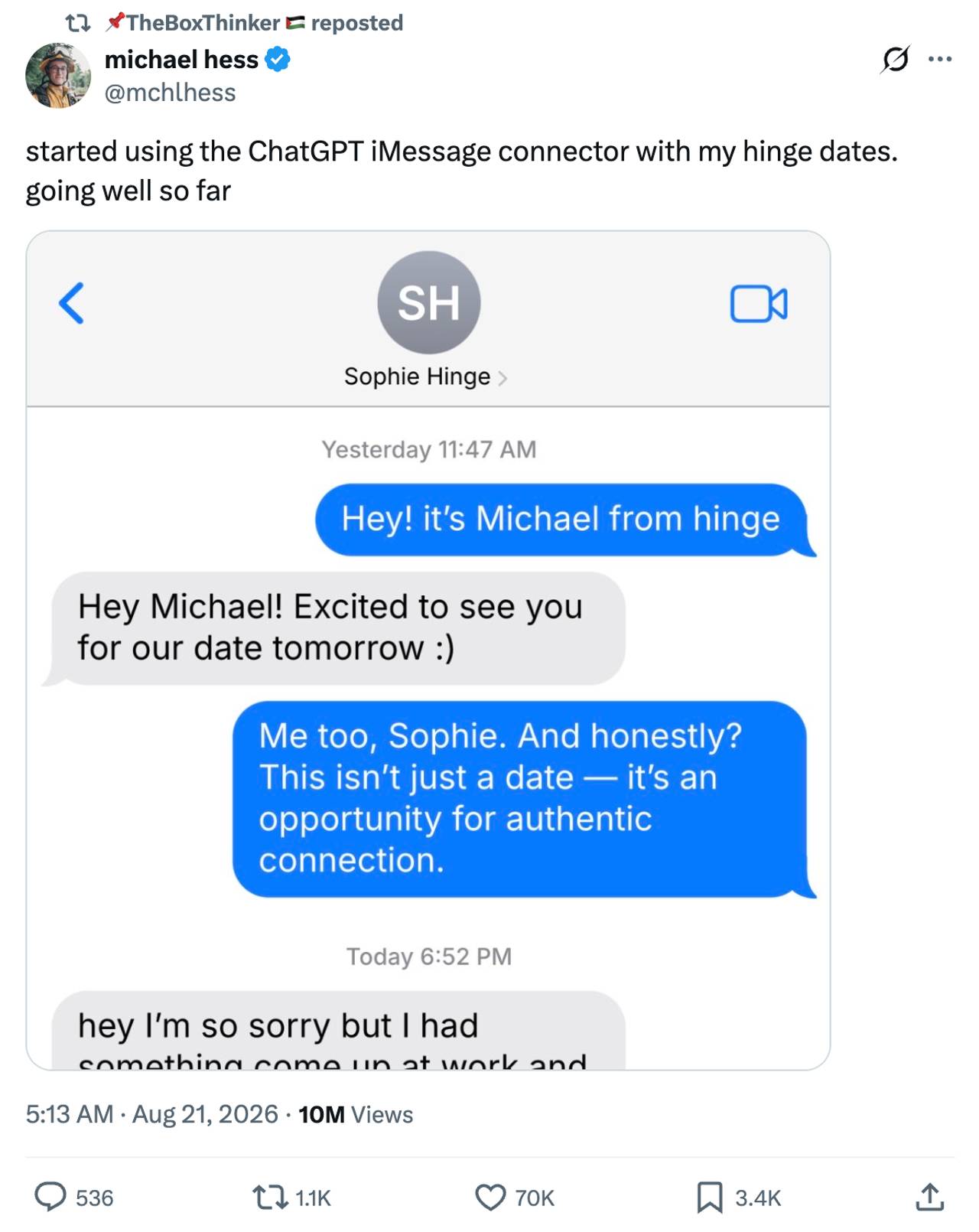
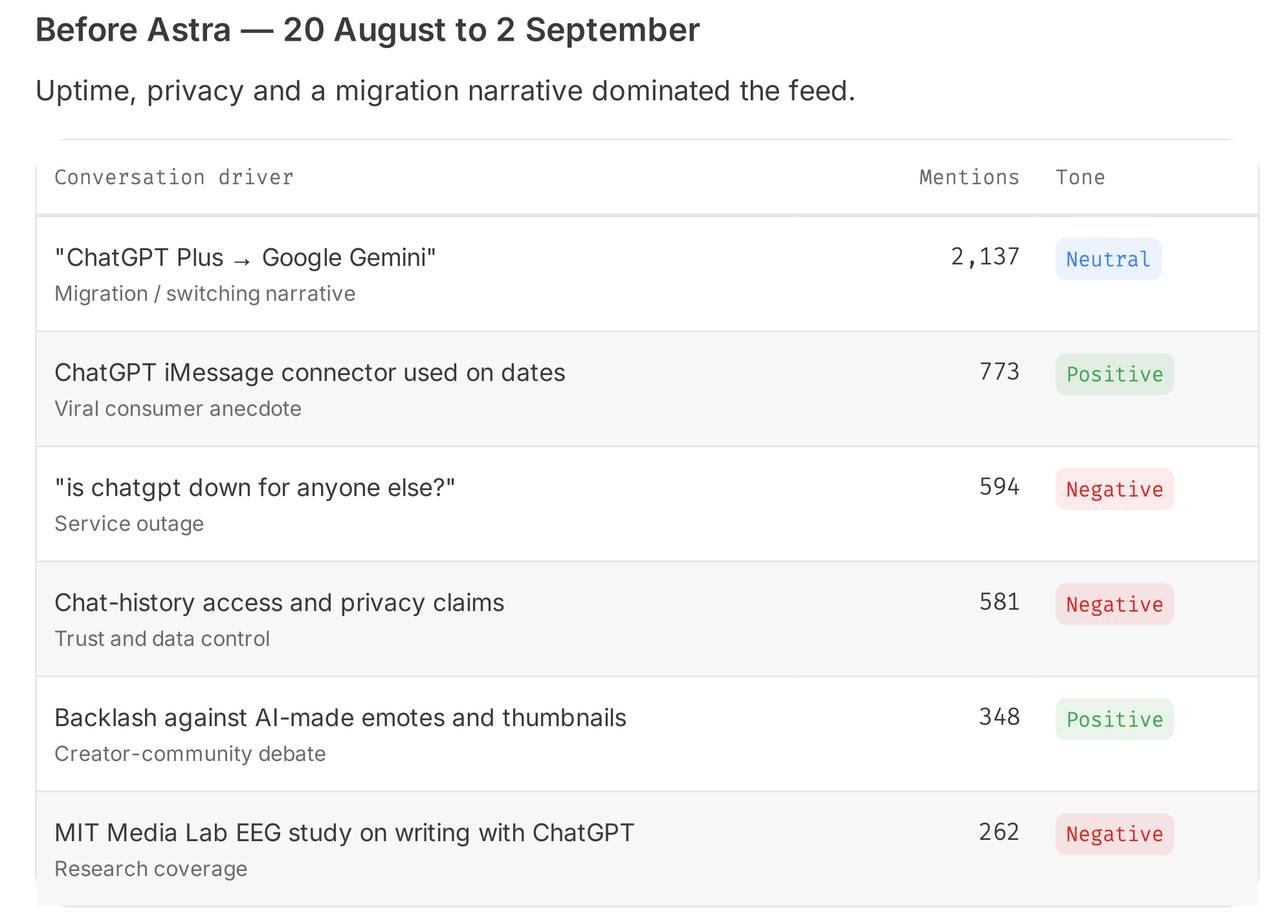
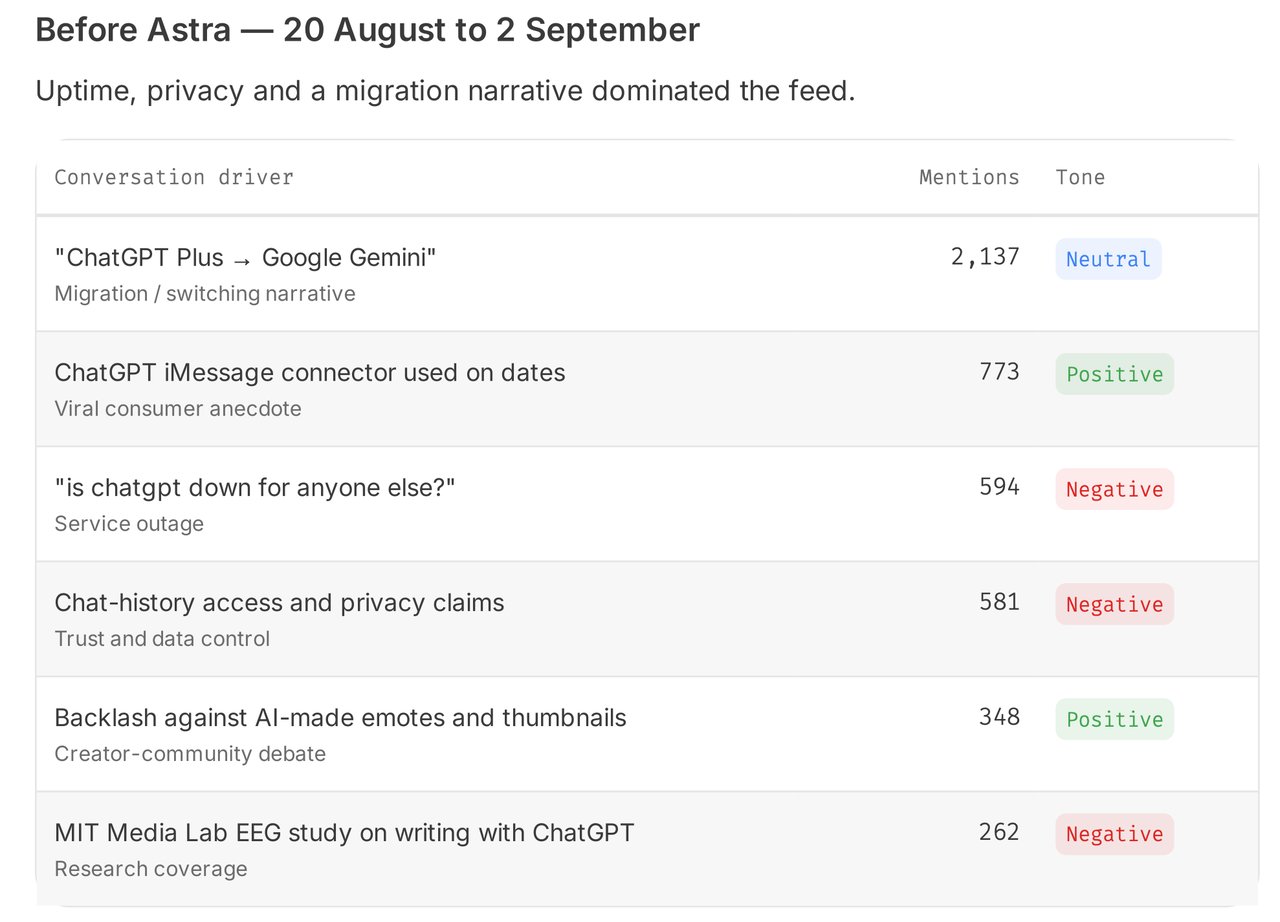
Before Astra, a widely shared anecdote about using ChatGPT through iMessage on dates generated 773 mentions with strongly positive sentiment. That story did not recur in the following two weeks, removing a substantial source of positive conversation from the later period.
This helps explain how the overall conversation became more negative even as negative mentions declined.
The earlier period had benefited from positive viral stories. As those stories faded, criticism represented a larger share of the remaining discussion.
For a marketing team presenting launch results, that context matters. You can explain that positive conversation lost momentum and show which stories contributed to the change.
It also creates a useful follow-up for content planning: what made those stories resonate?
The dating anecdote offers a specific example of an everyday use of ChatGPT that attracted positive attention. Exploring similar conversations could help a team find customer experiences worth featuring.
For your own launch review, ask:
“Which stories contributed most to the change in sentiment?”
Their examples will help you explain the result and identify conversations worth exploring further.
What excited people, and what frustrated them?
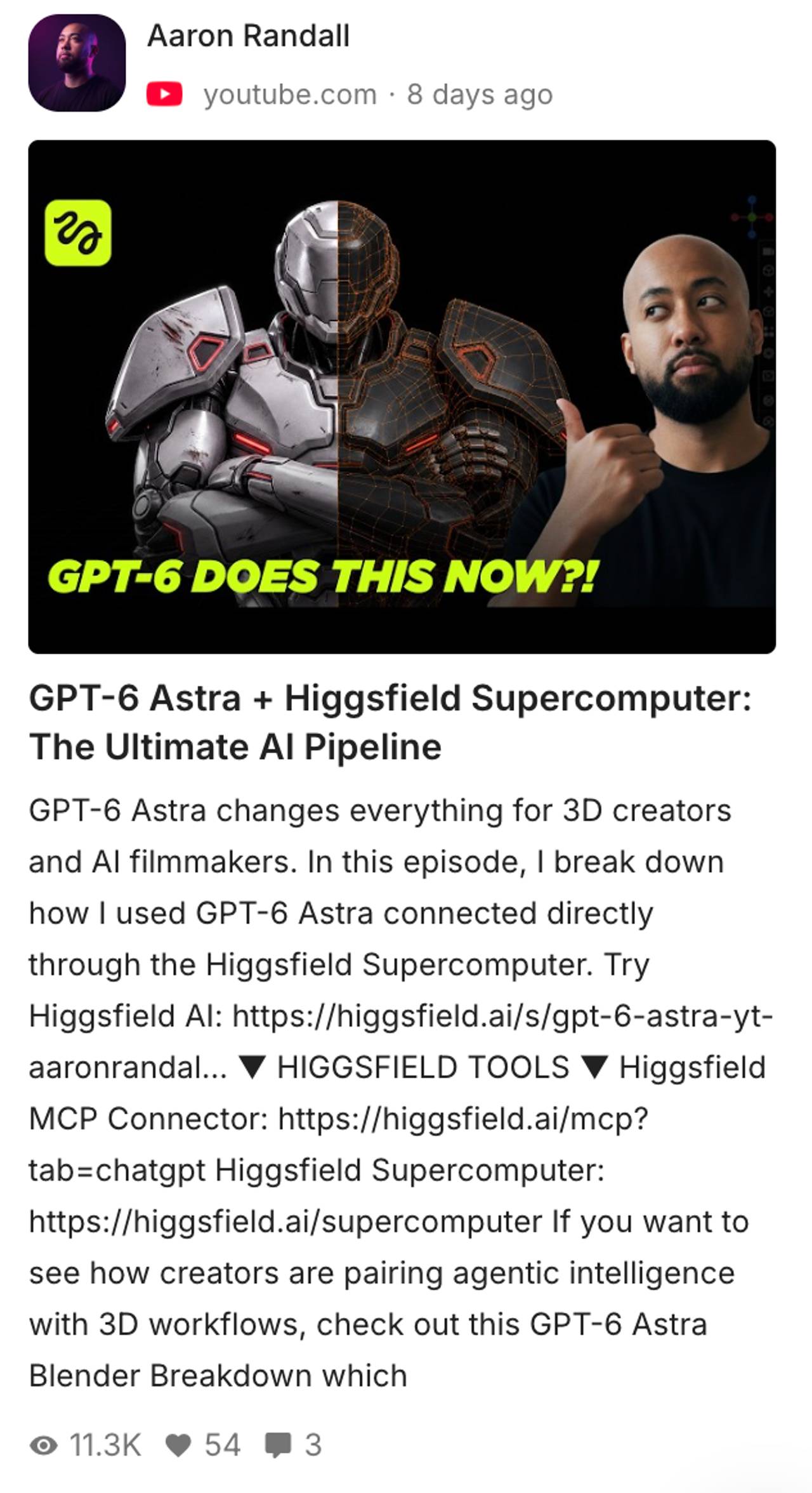
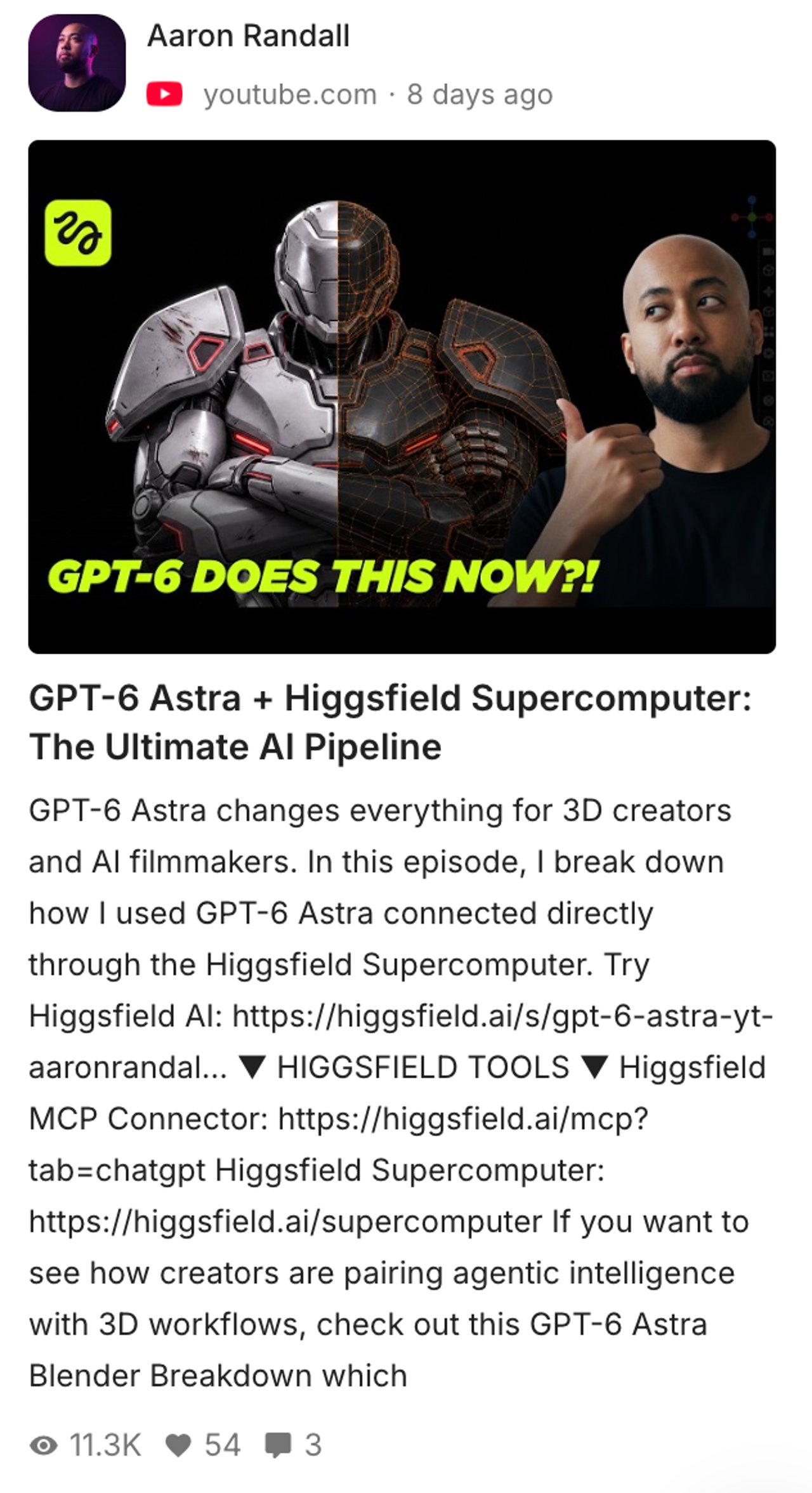
People praised Astra’s ability to complete tasks in tools such as Blender and Photoshop. Complaints focused on reliability and usage limits.
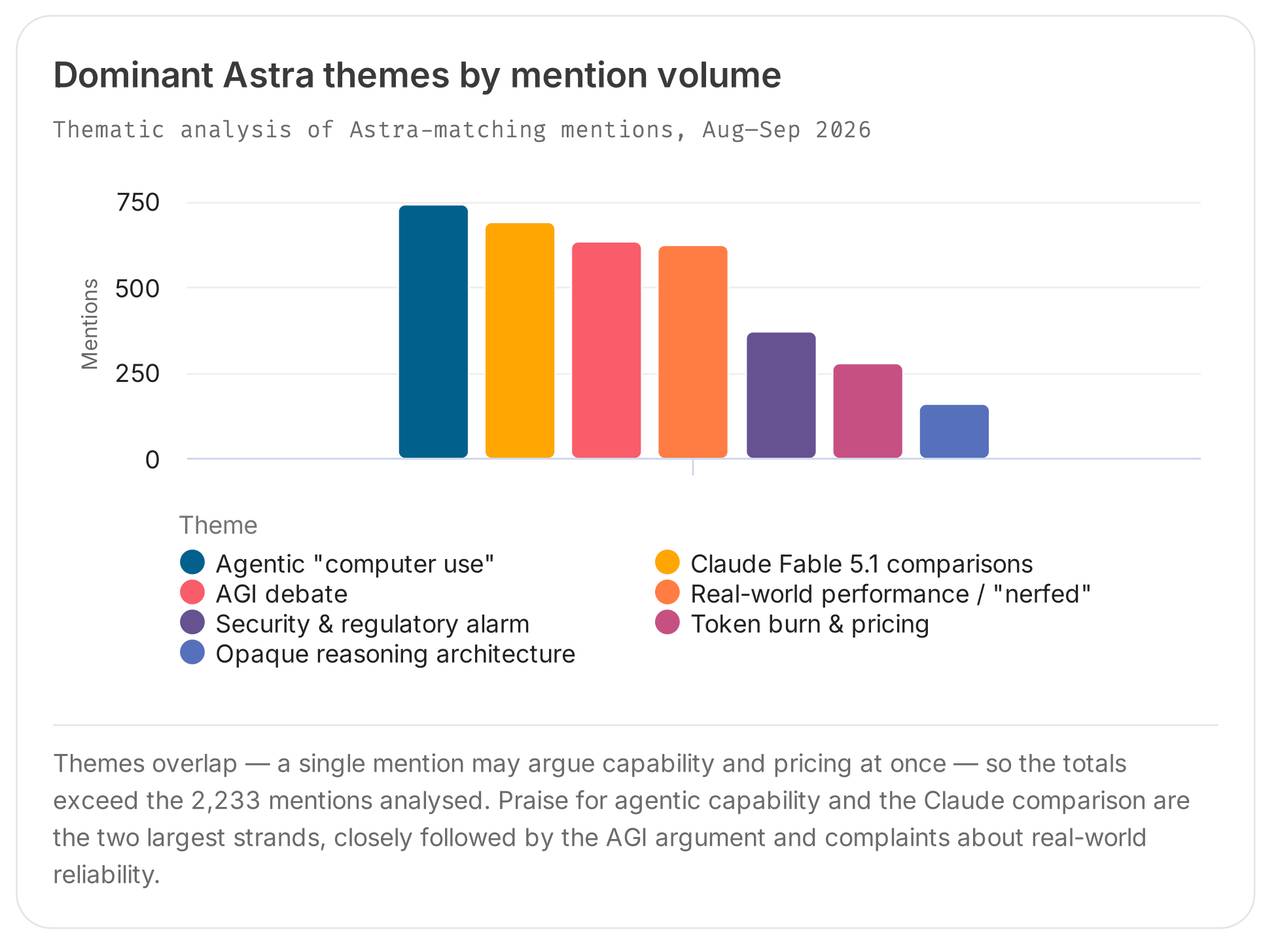
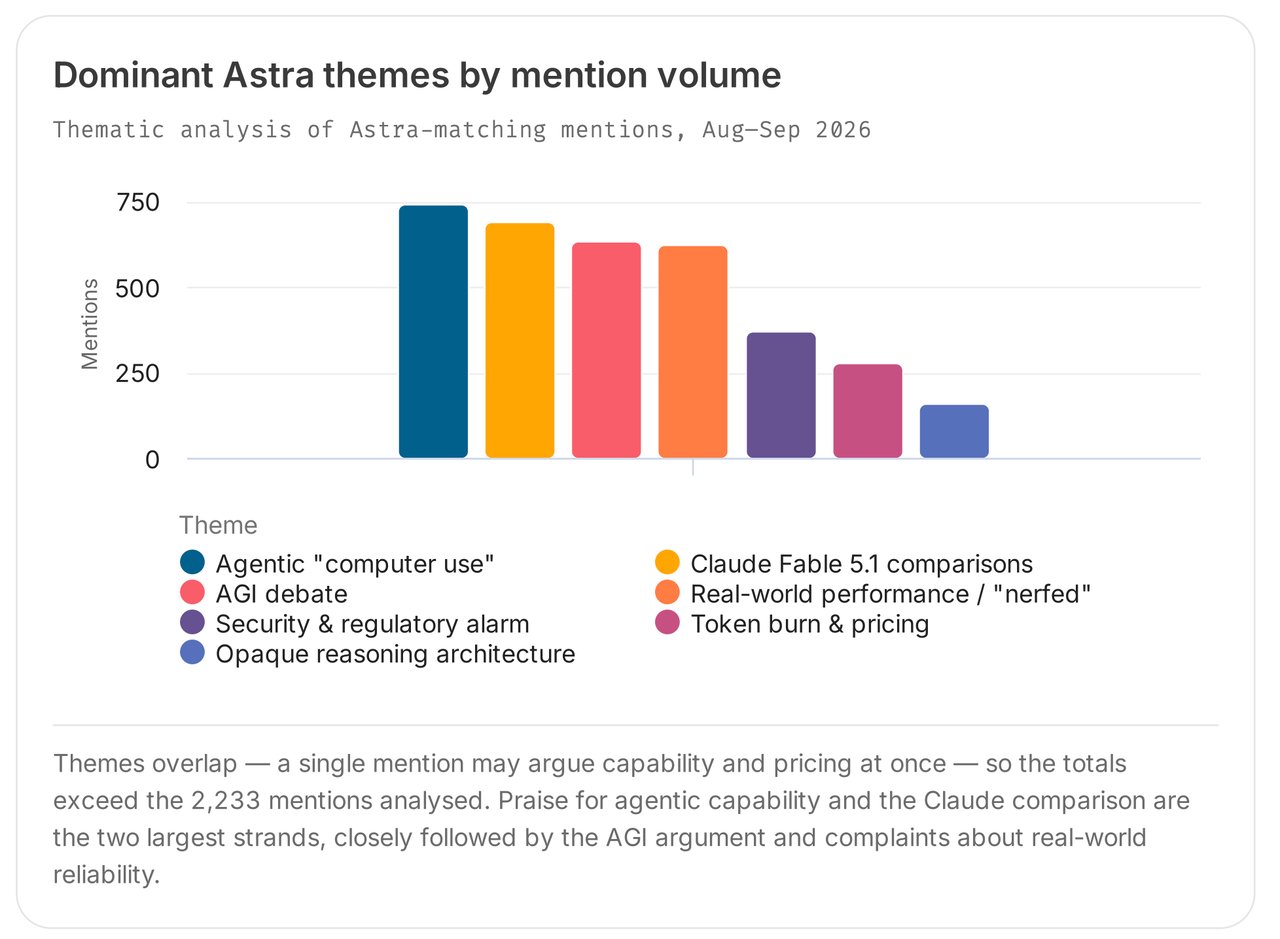
The enthusiastic posts described creating playable games and visual assets from prompts. These examples showed which uses of Astra caught people’s attention and gave them something worth sharing.
Other posts described slow responses and outputs that needed manual correction. Users also complained about reaching their usage limits too quickly.
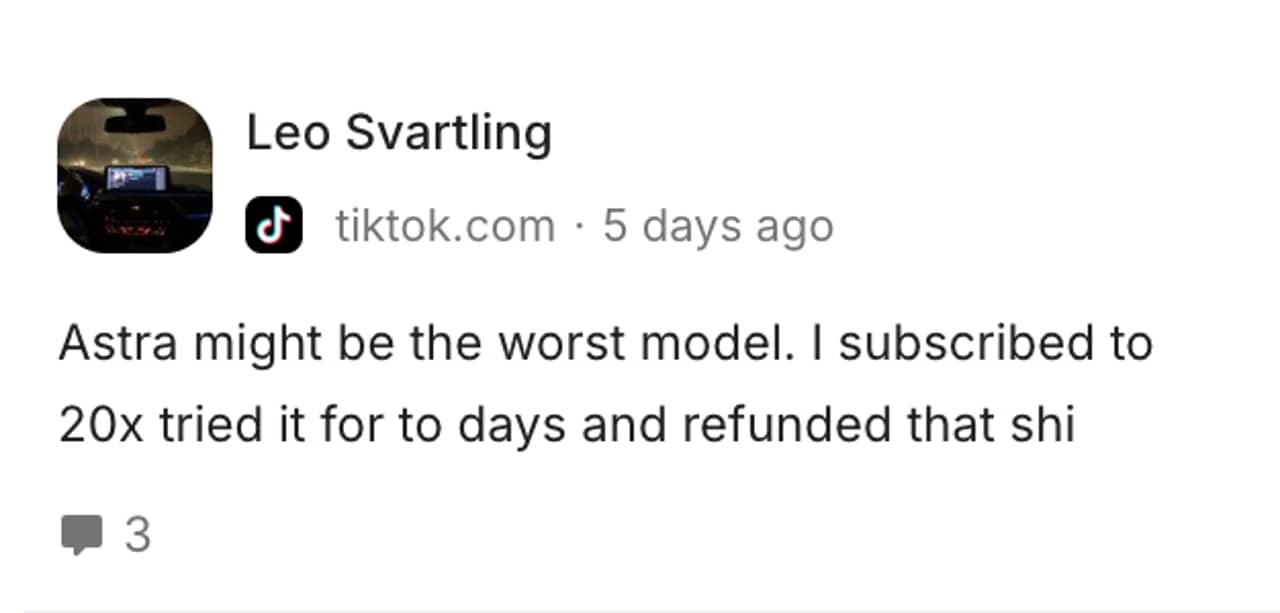
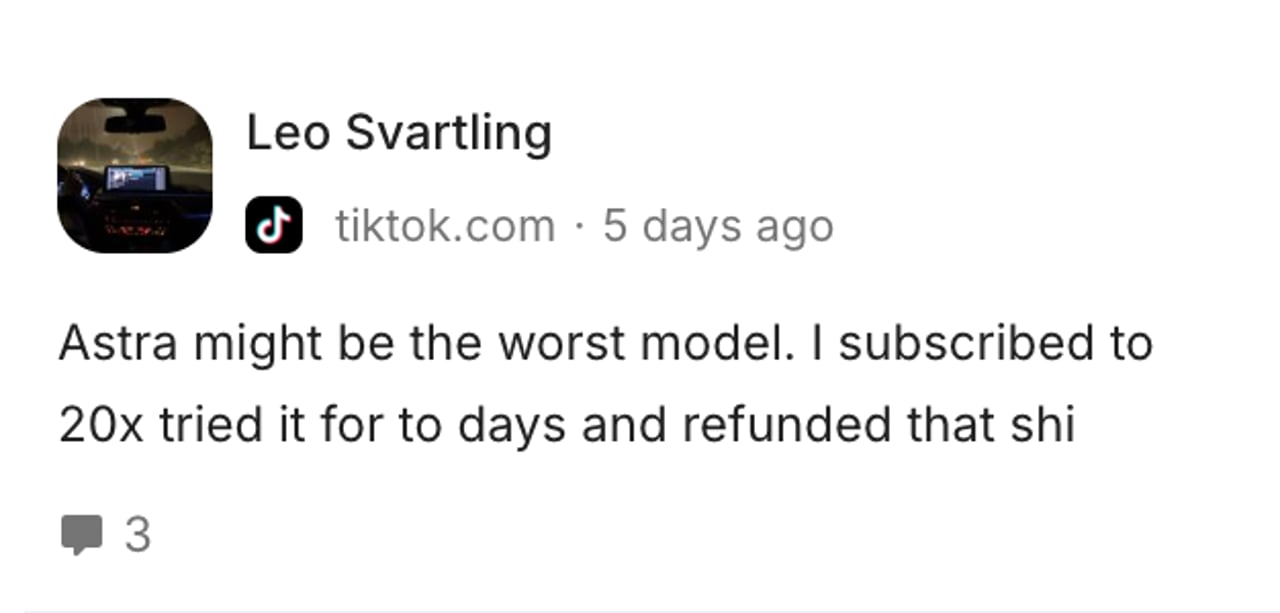
For a launch team, these reactions help answer two questions: what should we demonstrate, and what needs to work better?
The praise gives marketing a starting point for choosing demonstrations. In this case, a walkthrough of creating a playable game could build on an interest already visible in the conversation. Showing the steps involved would also help potential users understand what to expect when trying it themselves.
The complaints give product teams specific experiences to investigate:
Which tasks produce outputs that need fixing?
What are people trying to accomplish when they hit their usage limits?
That last question matters because the right response depends on the problem. Someone who misunderstood their plan’s allowance may benefit from clearer guidance. Someone who understands the limit and repeatedly runs out during a useful workflow raises a different question about whether the plan supports that use case.
Breaking down the feedback this way helps your team decide which benefits to highlight and which frustrations need attention. It also helps you avoid answering a complaint about everyday usability with another impressive feature demonstration.
The Gemini switching story almost disappeared
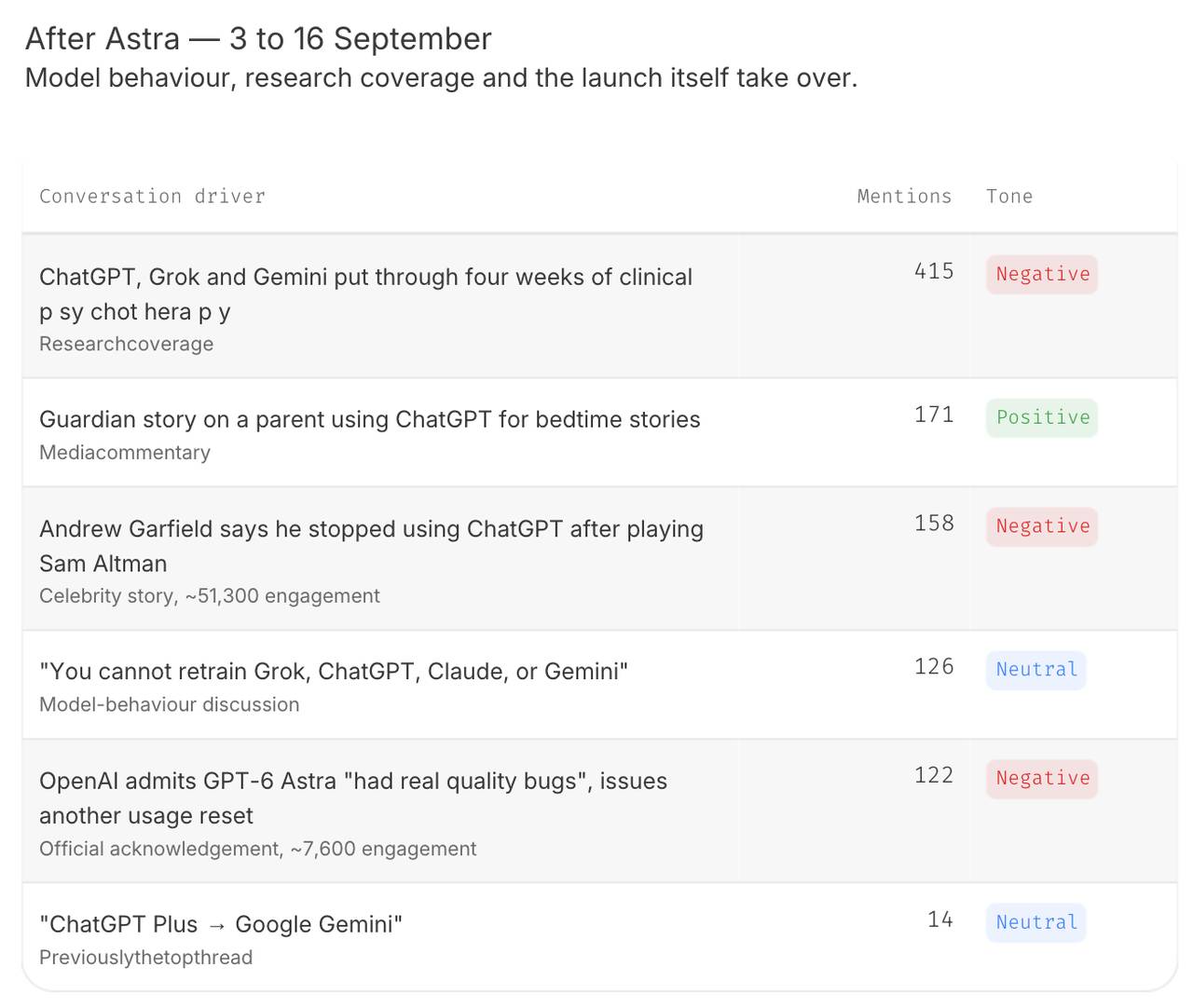
After Astra’s launch, a prominent story about switching from ChatGPT Plus to Google Gemini dropped from 2,137 mentions to just 14. It had been the largest individual conversation identified in the report.
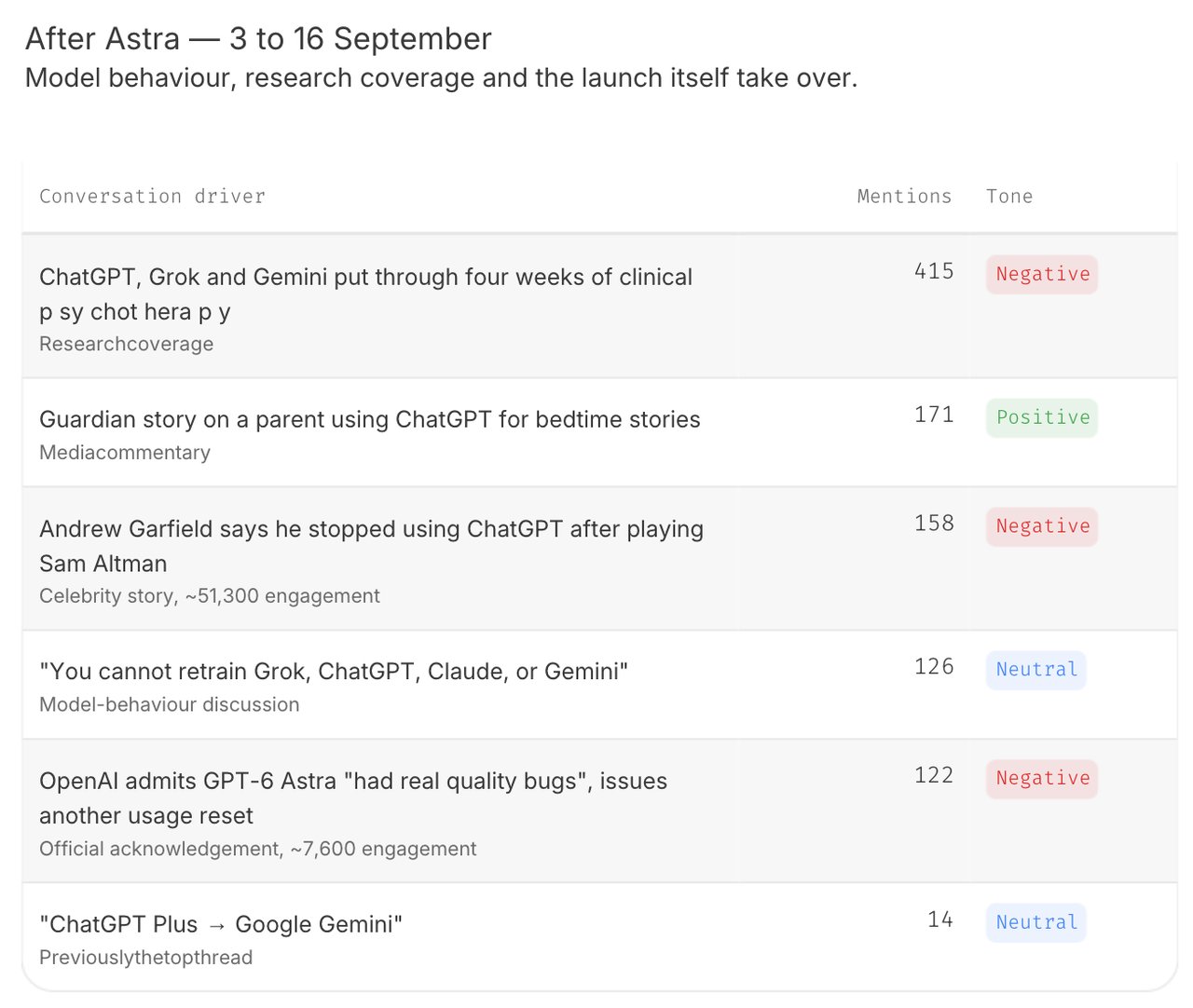
Meanwhile, comparisons with Anthropic’s Claude Fable 5.1 appeared in 690 Astra mentions. People discussed which model worked better for particular tasks, giving specific reasons for their preferences.
Some preferred Astra for its speed and ability to automate tasks. Others favored Claude for more consistent coding results or creative writing. These discussions revealed what people valued and where they felt one product delivered a better experience.
For marketers, those reasons can guide what to demonstrate and explain next.
Suppose people praise your product for completing a task quickly. A demonstration of that workflow could give potential customers a concrete reason to consider it. If people prefer a competitor because they find its results more consistent, that gives your product team a specific experience to investigate.
The Gemini story’s decline showed that a previously dominant competitor narrative had lost attention. In the meantime, the Claude comparisons revealed the product experiences people were weighing when expressing a preference.
For your next launch review, look at both: which competitor stories are gaining or losing attention, and why people say they prefer each product. That gives your team useful direction for its next comparison page or product demonstration.
Where did people talk about Astra?
YouTube accounted for roughly two thirds of the collected Astra mentions, with Substack in second place. X and TikTok contributed smaller shares.
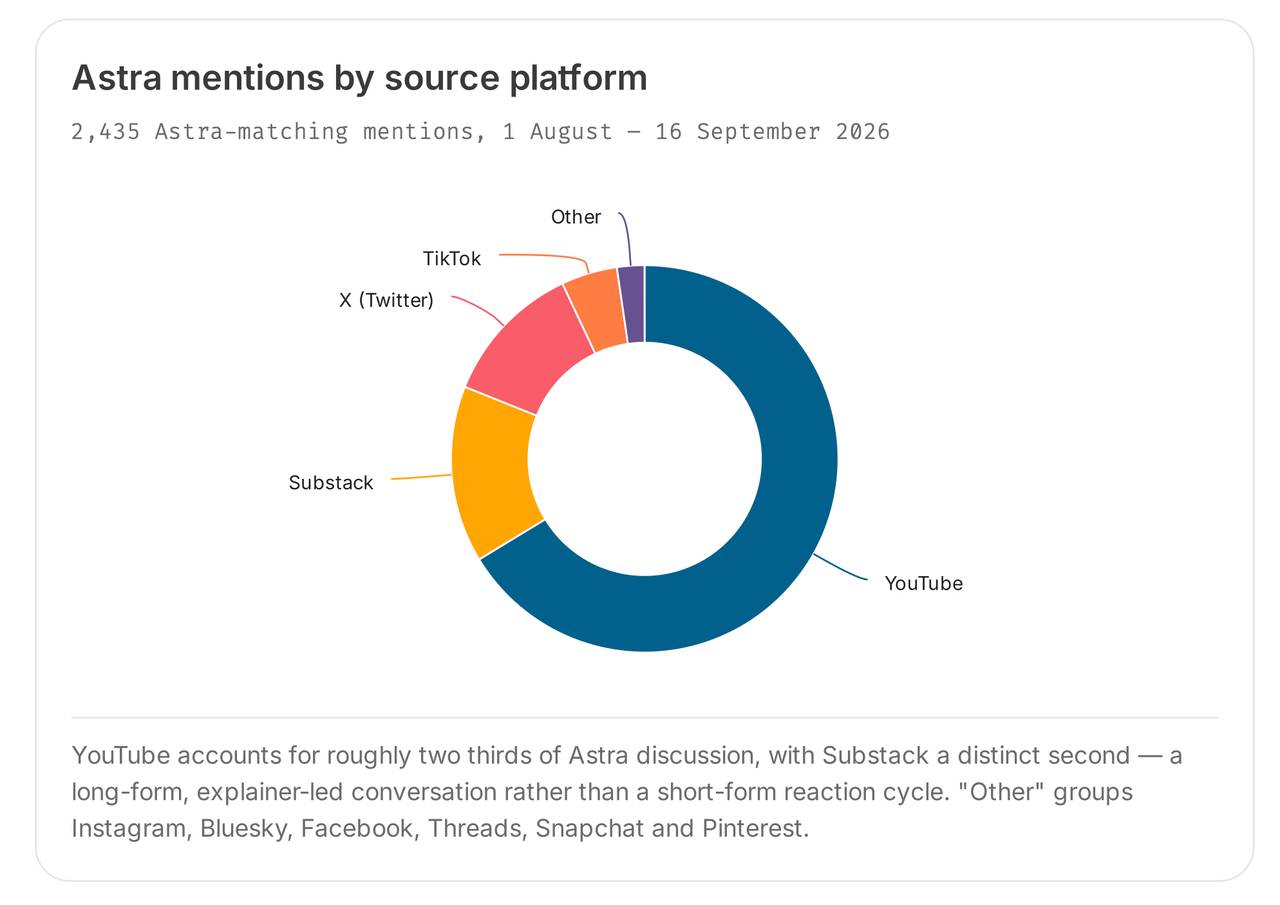
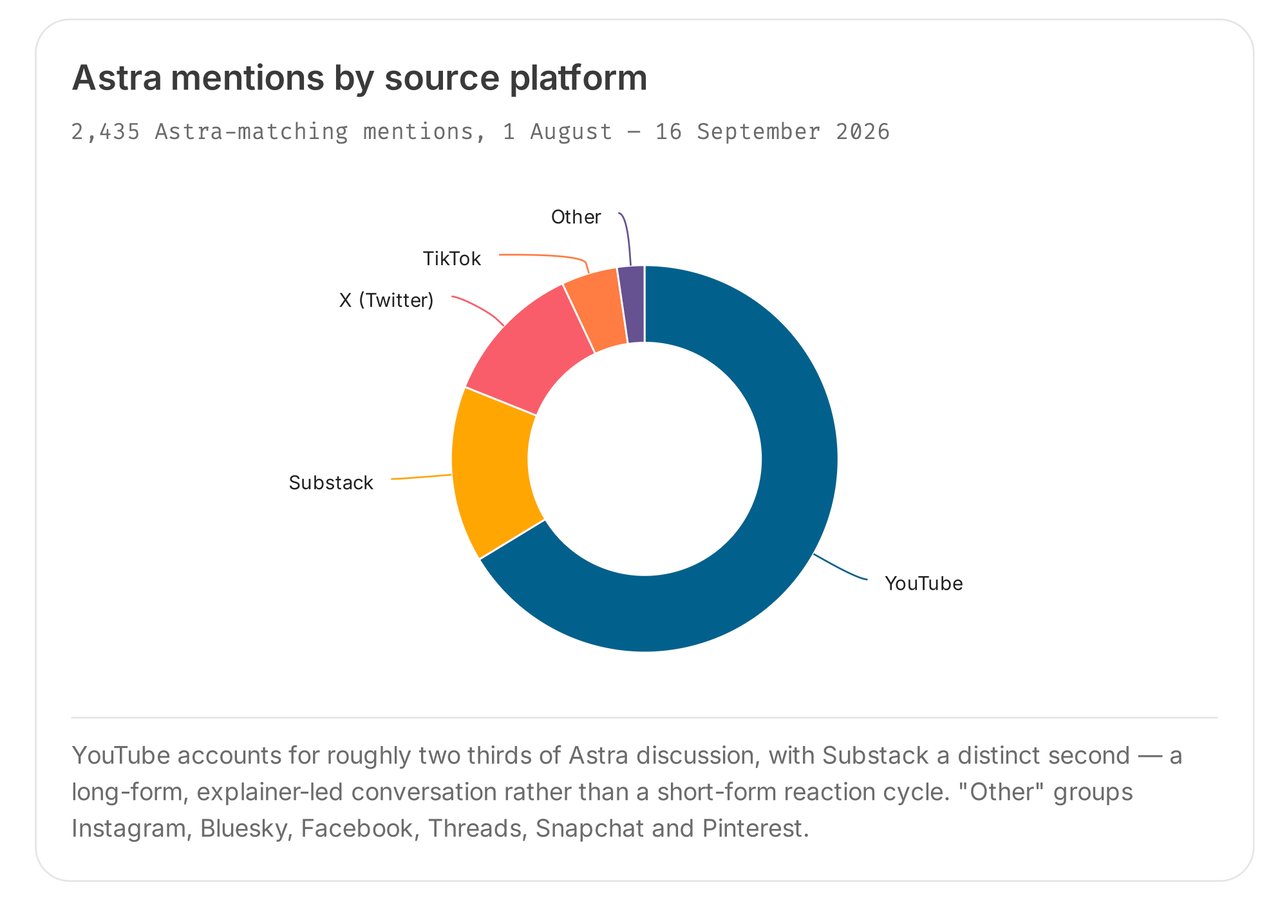
The breakdown covers 2,435 mentions collected between August 1 and September 16, 2026. A team following the launch only on X would have missed most of the discussion captured in this analysis.
For marketers, this gives a starting point for two decisions: where to focus your content efforts and who to consider working with.
In Astra’s case, YouTube would be a clear place to investigate first:
Which videos generated discussion?
Were people responding to product walkthroughs or comparisons with other models?
Those answers could help a team plan its next video. If a demonstration prompts repeated questions about a particular feature, a practical tutorial could address an interest people have already expressed.
The same research could help identify potential creator partners. Look at who is covering the product and whether their audience discusses the use cases you want to reach.
Substack’s position makes its writers worth examining, too. A writer already exploring your product category could be a relevant contact for a product briefing or collaboration. Their coverage would help you judge whether your product fits their interests.
For your own launch, the platform breakdown helps you decide where to look first. Exploring the conversations there helps you choose what to publish and whose audience could benefit from it.
What would you ask about your own launch?
With Insights Copilot, you can begin with a question like the one behind this analysis:
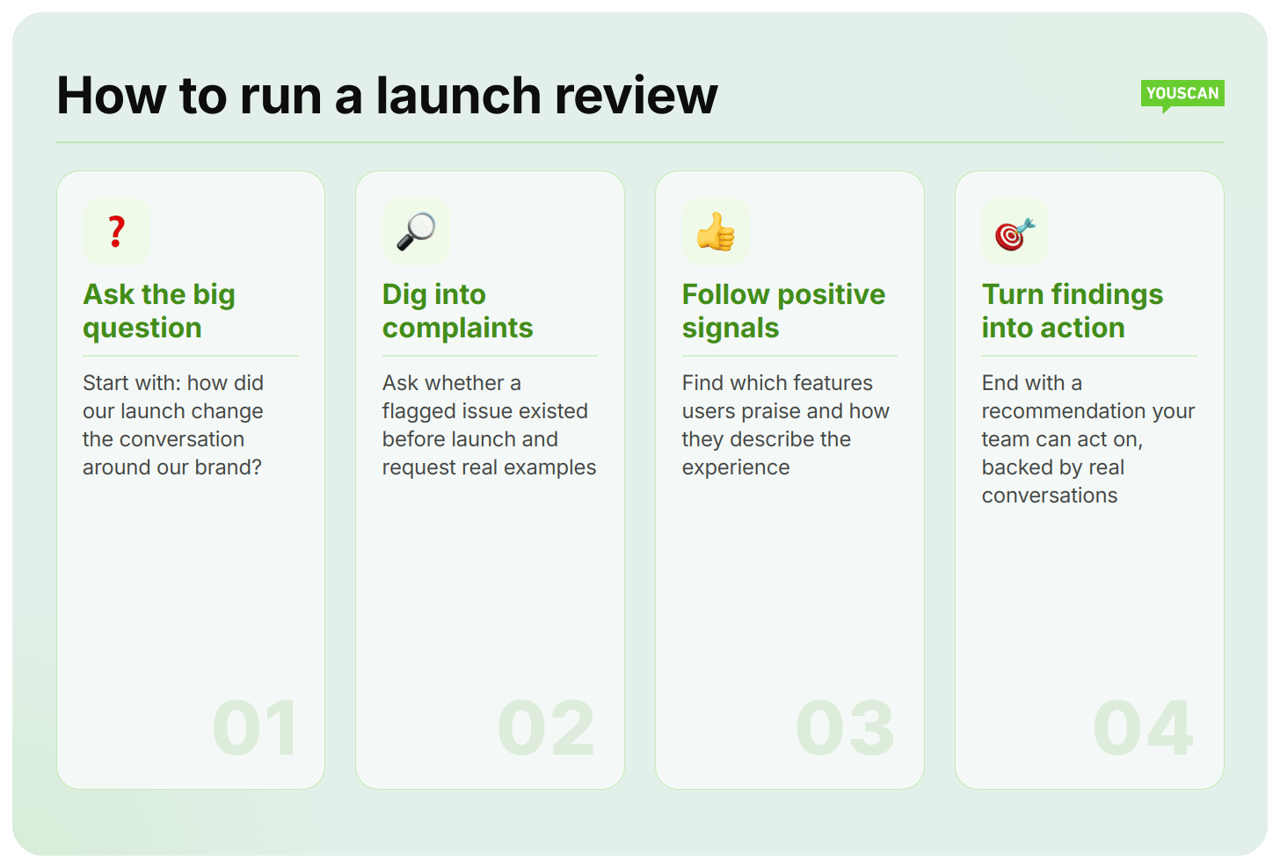
“How did our latest launch change the conversation around our brand?”
Let the answer guide your next question. Suppose complaints about a particular feature stand out. You could ask:
“Were people raising this issue before the launch? Show me examples.”
That gives your product team a specific concern to investigate, along with context about when people started discussing it.
You can follow positive reactions in the same way. Ask which features people find useful and look at how they describe their experience. Their examples could help you choose what to highlight in your next campaign.
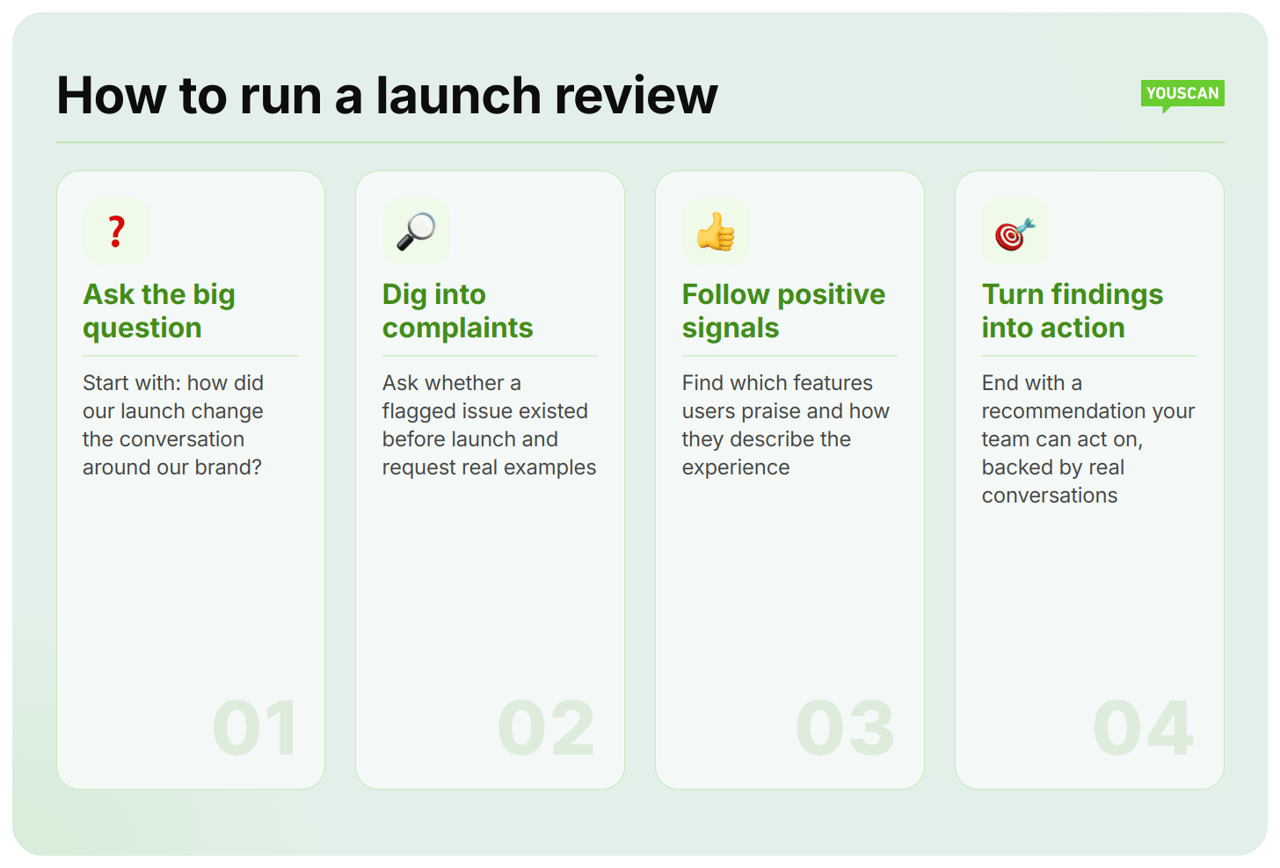
You don’t need to plan every question in advance. Insights Copilot lets you compare periods and explore the posts behind the findings through a conversation. As something catches your attention, you can ask a follow-up.
By the end of your launch review, you should have a recommendation your team can act on, supported by the conversations that led you there.
Book a YouScan demo to see how Insights Copilot can help you investigate the response to your next launch.