Best AI Detectors in 2026: 12 Tools to Keep Your Content Authentic

If you've ever stared at a piece of content wondering, "Did a human actually write this?" you're not alone. AI-generated text has exploded across every corner of the internet, from articles to student essays to social media posts. What used to take hours of human effort now happens in seconds with ChatGPT, Claude, or Gemini.
But sometimes you need to know the difference. Maybe you're a teacher grading papers, a marketer verifying influencer content, or a brand sentiment manager making sure that your press releases don't sound robotic. That's why sophisticated AI content detection tools are designed to identify AI-generated content and distinguish it from human-written text.
But not all detection tools work the same way. Some are built for educators, others for publishers, and some specifically for marketing teams. After testing dozens of options, we've found the 12 best AI detectors that actually deliver reliable results in 2026.
Why AI detectors matter in 2026
Think about how much content crosses your desk every day. Blog posts, social media updates, customer reviews, email campaigns, influencer partnerships. Now imagine if 30-40% of that content was actually AI-generated without you knowing.
This isn't paranoia—it's reality. AI-generated content has become sophisticated enough to fool most people most of the time. The problem isn't that AI writing is inherently bad, but that undisclosed AI content creates three major risks:
Loss of trust and authenticity. When customers discover that "personal" testimonials or brand stories were machine-generated, trust evaporates faster than you can say "corporate authenticity fail."
Academic integrity issues. Universities report that AI detection tools are becoming standard in academic integrity checks, with tools like Turnitin AI Detection, GPTZero, and other tools now routine parts of the grading process to ensure research integrity.
Brand safety risks. Fake reviews, AI-written content from influencers, and synthetic AI social media content can damage your brand reputation when they're discovered. Plus, platforms are getting better at spotting and penalizing artificial intelligence generated content.
What exactly is an AI detector?
An AI detector tool is a sophisticated content detector that analyzes text using advanced algorithms and machine learning to estimate how likely it is to have been written by artificial intelligence rather than a human, using patterns in word choice, sentence structure, and predictability to output a probability score.
How AI detectors work (in plain English)
AI detectors aren't magic—they're pattern-matching machines trained to spot the telltale signs that separate human writing from AI generation. Understanding how AI detectors work helps you choose the right tool and interpret results correctly.
Perplexity, burstiness, and AI-generated writing patterns
Most accurate AI detectors analyze two key metrics that reveal whether text feels "human" or "machine-like" through linguistic analysis and natural language processing techniques.
Perplexity measures predictability. Tools like GPTZero exemplify how AI detection model algorithms work by leveraging perplexity analysis. Human-written content often exhibits higher perplexity because it incorporates unexpected word choices, idioms, and creative flourishes that reflect individual thought processes. AI models tend to choose more predictable, statistically common word combinations.
Burstiness captures variation in sentence structure. Humans naturally write with bursts of short, punchy sentences mixed with longer, more complex ones. AI-generated text often falls into uniform sentence patterns that feel flat when analyzed through the detection process.
Humans are inconsistent writers by nature. We use weird phrases, go off on tangents, and vary our sentence length without thinking about it. AI models, trained to be helpful and coherent, smooth out these quirks—which ironically makes them detectable through accurate AI detection methods.
When AI detection is most useful
AI detection tools shine in specific situations where content authenticity matters:
Marketers and brand teams use them to verify that influencer posts, user-generated content, and social mentions feel authentic rather than artificially generated. This connects directly to brand safety and audience trust, helping detect AI content that might compromise brand integrity.
Teachers and institutions rely on AI detection tools to maintain academic integrity and research integrity, though
research from Stanford University revealed that false positive rates could exceed 20% for non-native English speakers when using certain detection methods.
Publishers and SEO agencies use the best AI detector tools to make sure their content doesn't trigger search engine penalties from Google search algorithms for low-quality, machine-generated text.
Here's the reality check: accurate AI detectors don't tell you "guilty or not"—they show how likely a text is AI-written so humans can make better decisions.
How to choose the best AI detector for your use case
With dozens of AI detection tools available, picking the right AI checker depends on your specific needs, accuracy requirements, and workflow preferences. Here's what to evaluate:
Accuracy and false-positive rates
This is the big one. Brian Jabarian and Alex Imas from the University of Chicago found that even the most accurate AI detector tools struggle with accuracy, particularly on shorter text passages under 50 words.
Look for detector tools that publish their false positive rates. The best AI detector tools aim for under 2% false positives, meaning they incorrectly flag human-written content as AI-generated less than 2% of the time. However, many free tool options show false positive rates of 20% or higher.
Supported AI models and languages
Different AI detectors are trained on different AI models. A tool that excels at detecting GPT-3.5 content might struggle with text from Claude, Gemini, or newer AI tools. The most reliable AI content detectors train against multiple AI models and update regularly as new generative artificial intelligence systems emerge.
Privacy and data handling
This matters more than you might think. Some AI content detection tools store or analyze your text for their own training purposes. Others, like YouScan's approach, emphasize privacy-centric positioning with commitments that submitted text won't be resold or used for training other tools.
Integrations and workflow- Google Docs and Chrome
Consider how the AI detector integrates into your existing workflow. Do you need API access for bulk processing? A Chrome extension for quick checks? Integration with Google Docs or content management systems?
Pricing, free tiers, and limits
Free versions often have word limit restrictions, while paid plans start at various price points, offering unlimited checks, bulk processing, and additional features like plagiarism detection or content rewriting suggestions.
Best AI detection tools for marketers vs. teachers vs. publishers
Different AI detection tools optimize for different use cases. Some focus on educational integrity (like Turnitin), some on SEO and content publishing, and others on marketing and social content authenticity (like YouScan's AI Detector).
The 12 best AI detectors in 2026 (ranked & reviewed)
After extensive testing across different content types, AI models, and use cases, here are the top-performing AI detection tools for 2026:
YouScan AI Detector – Best for marketers, PR & social media teams
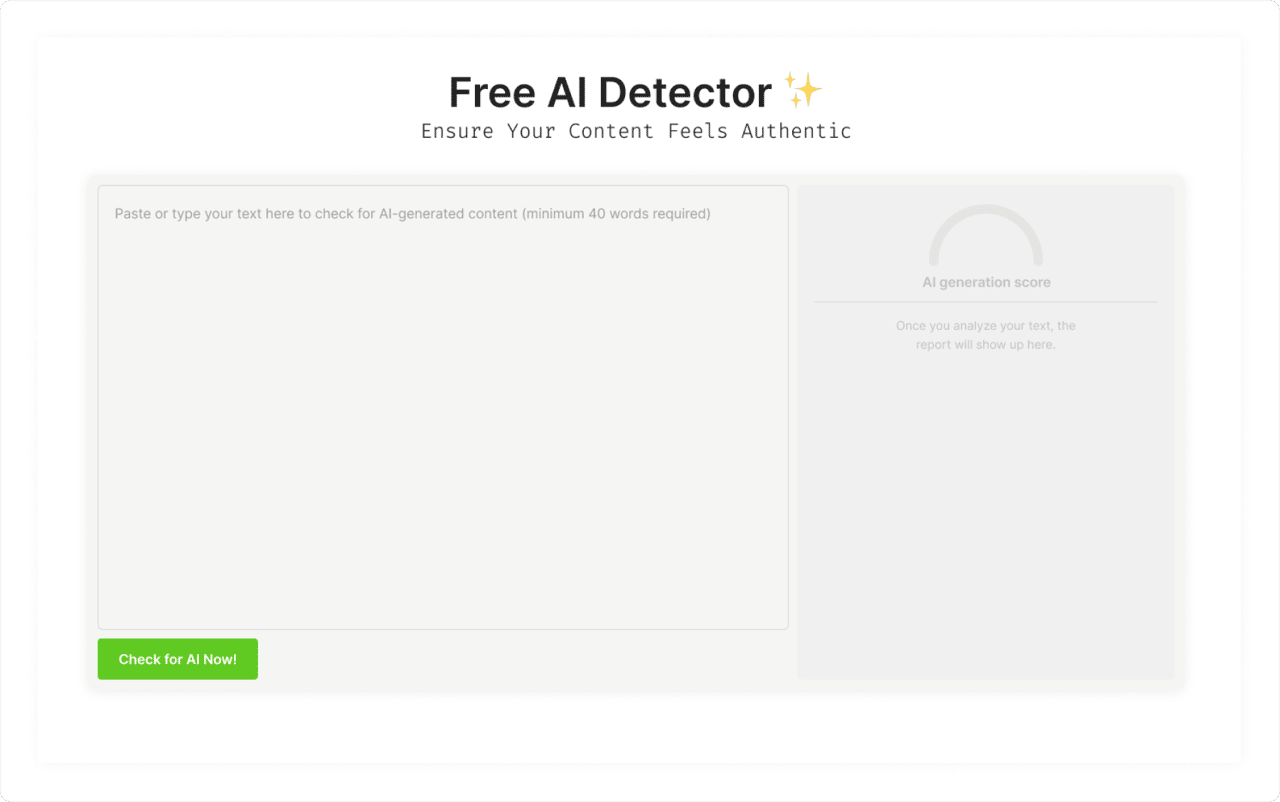
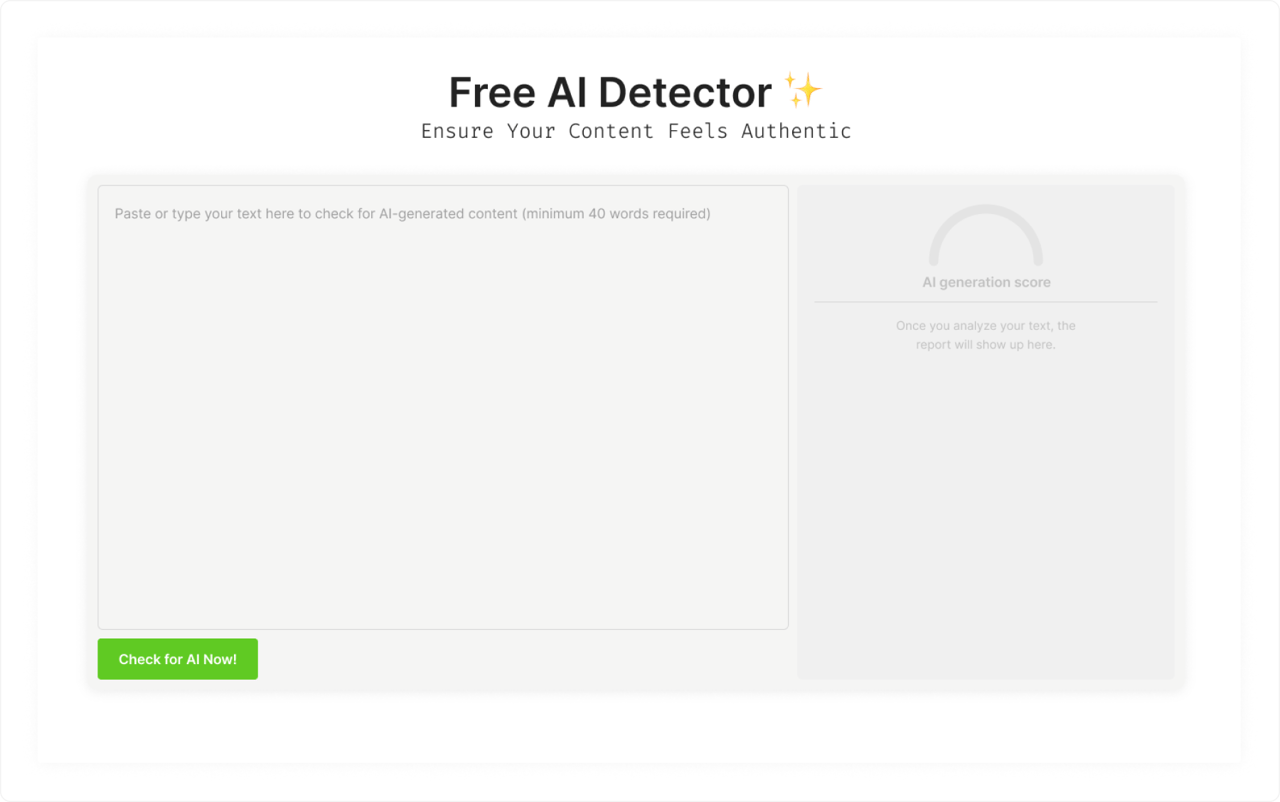
YouScan's free AI Detector tool stands out because it's built specifically for marketing professionals who need to verify content authenticity in social media, PR, and brand contexts. Unlike academic-focused tools, it's designed to help marketers ensure their AI and human content "feels authentic" and maintains brand voice.
Standout features: Real-time AI probability scoring, built from social listening models, designed specifically for every type of content a marketer or researcher can think of, from checking press releases, sponsored posts, influencer content, to user-generated content. No character word limit (min 40 words required), no login required for basic use (however, you’ll need to authenticate via Google or LinkedIn after 3 checks).
Pricing: Free tool with 3 free checks; premium features available with YouScan's full social listening platform.
Ideal use cases: Brand managers checking press releases, PR teams verifying influencer partnerships, social media managers ensuring authentic content, and marketing teams maintaining a consistent brand voice across AI-assisted content.
Winston AI – Best for high-stakes academic & publishing checks
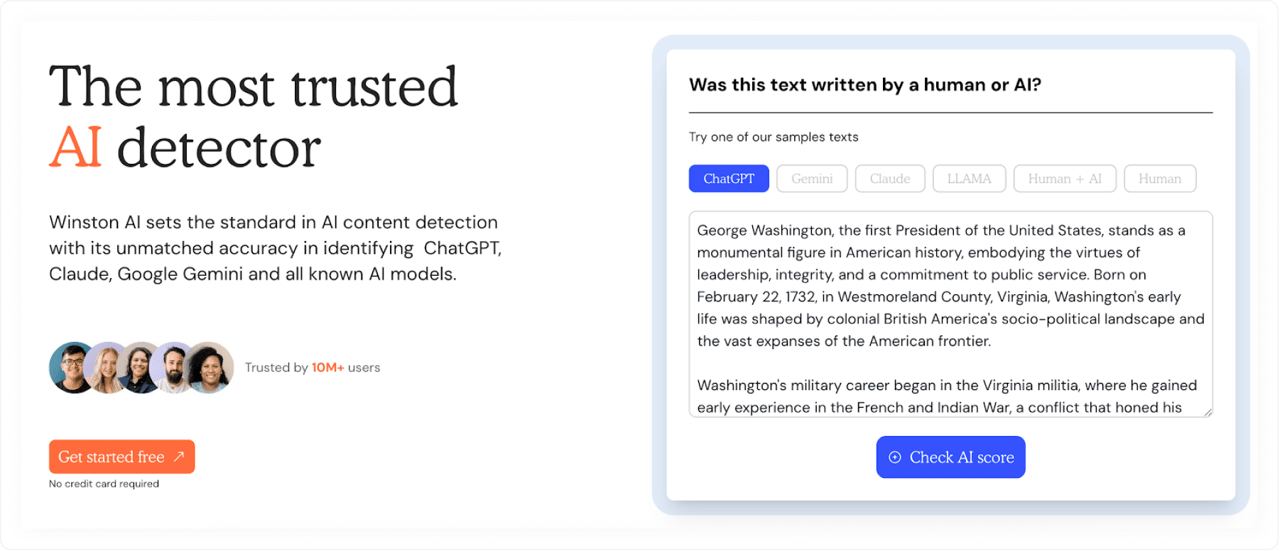
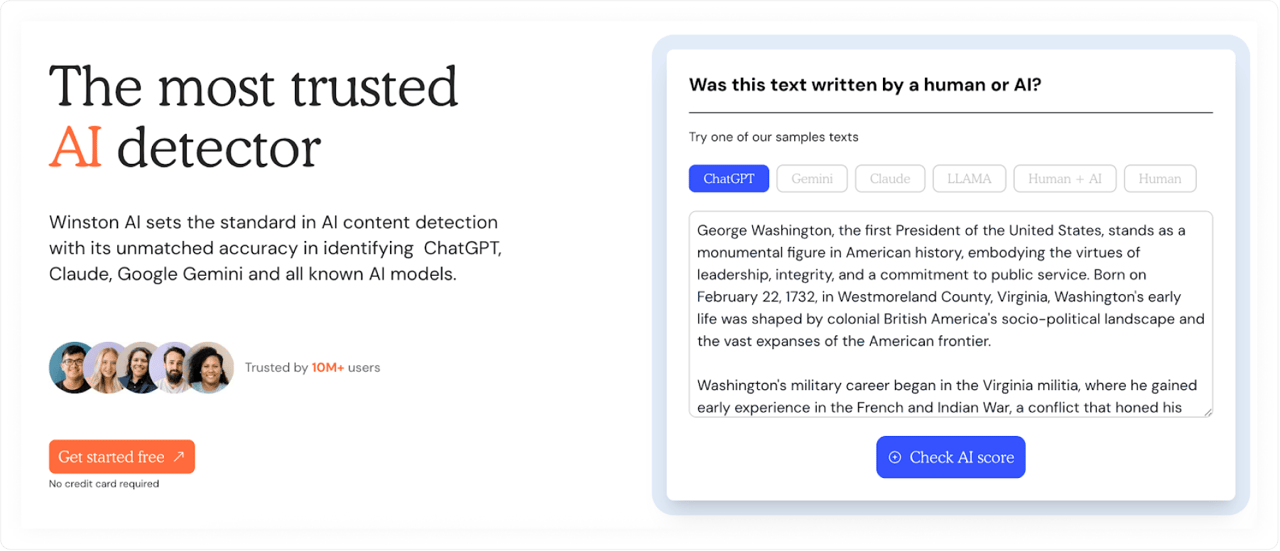
Winston AI is particularly valuable for universities and publishers who need reliable AI content detection with minimal false positives.
Standout features: Sentence-level analysis showing exactly which parts appear AI-generated, image detection capabilities, plagiarism checking integration, and a certification feature ("HUMN1") to prove content authenticity.
Pricing: Paid plans start at $12/month for individual users, with enterprise options available.
Ideal use cases: Academic institutions, research publishers, content agencies requiring high-confidence AI detection, and professional writers who need to verify their work against AI use.
Originality.AI – Best for SEO teams and publishers
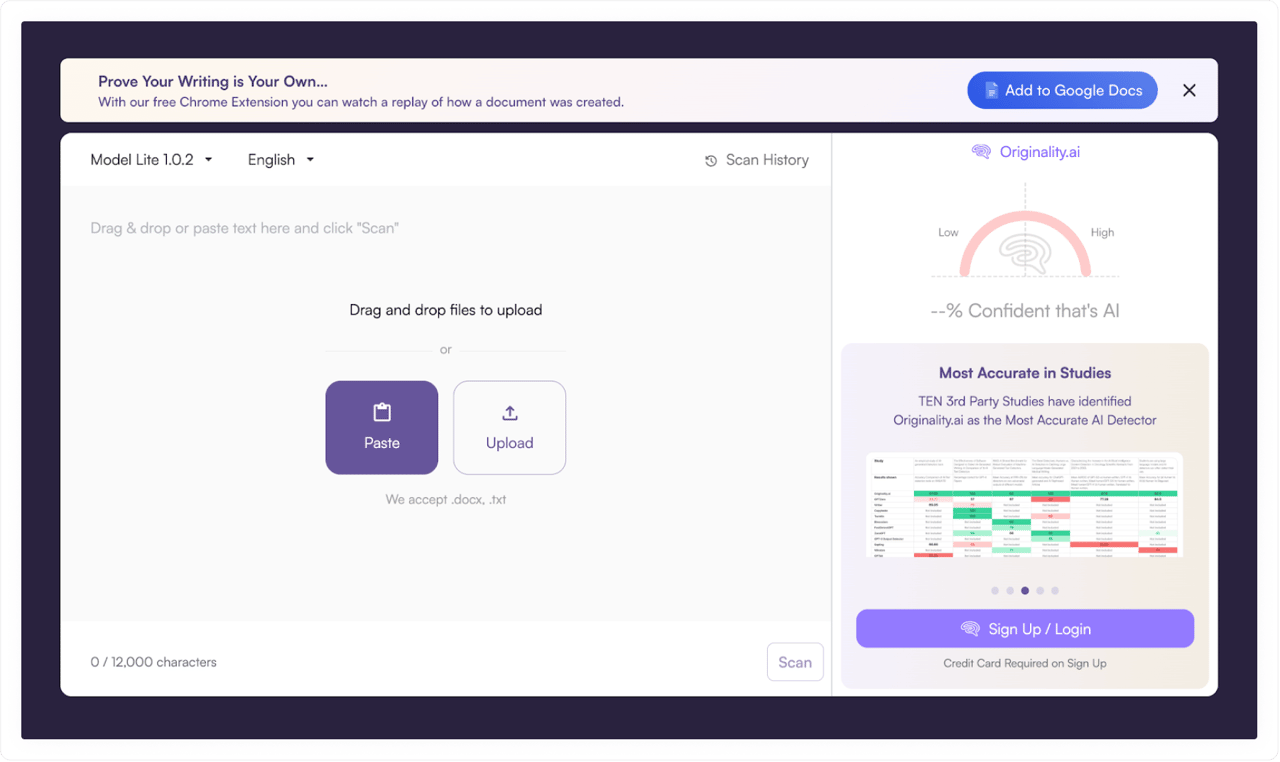
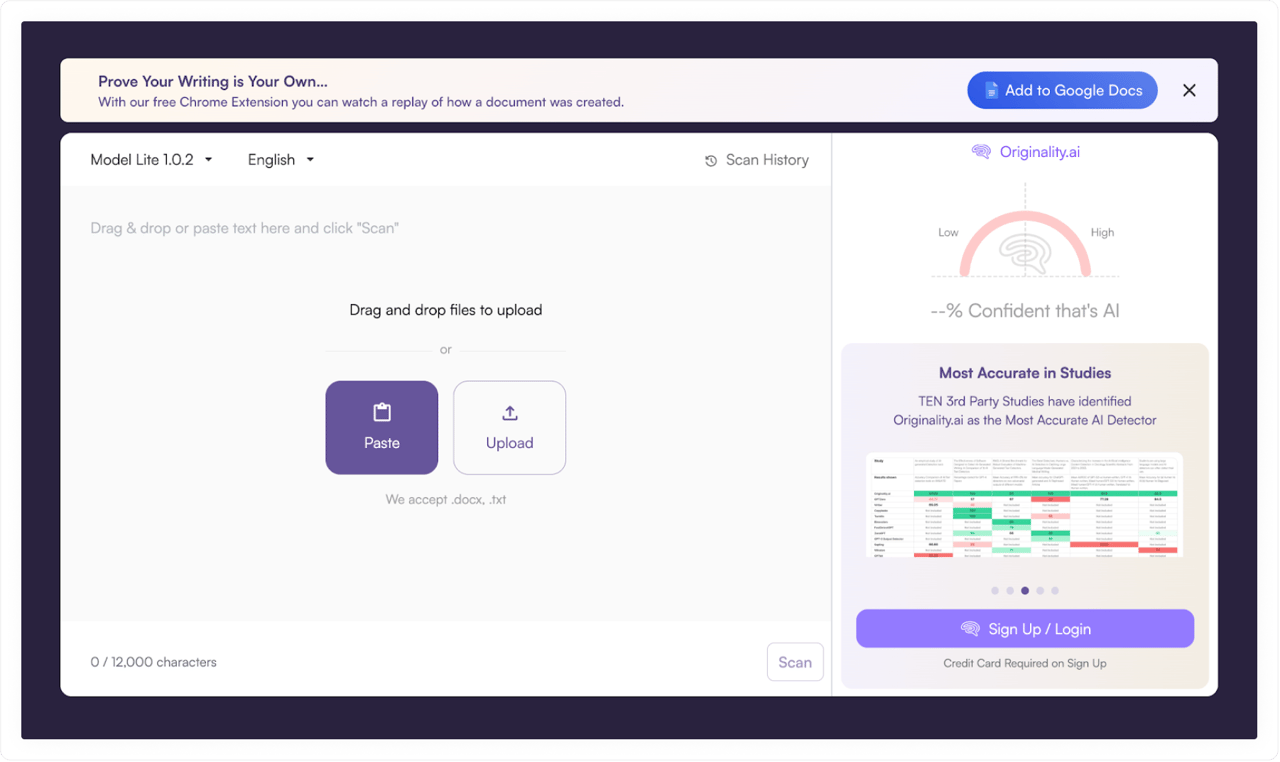
Originality.ai uses GPT-3.5 and GPT-4 text for ensure accuracy, according to independent testing. It's become the best tool choice for SEO professionals and content publishers.
Standout features: High accuracy across multiple AI models, combined plagiarism detection and AI content detection, bulk content scanning, API access for workflow integration, and detailed sentence-level analysis.
Pricing: Pay-per-credit system starting around $0.01 per credit, with monthly plans available.
Ideal use cases: SEO agencies scaling content production, publishing companies maintaining editorial standards, and content marketing teams managing large content volumes.
GPTZero – Best overall for educators & institutions
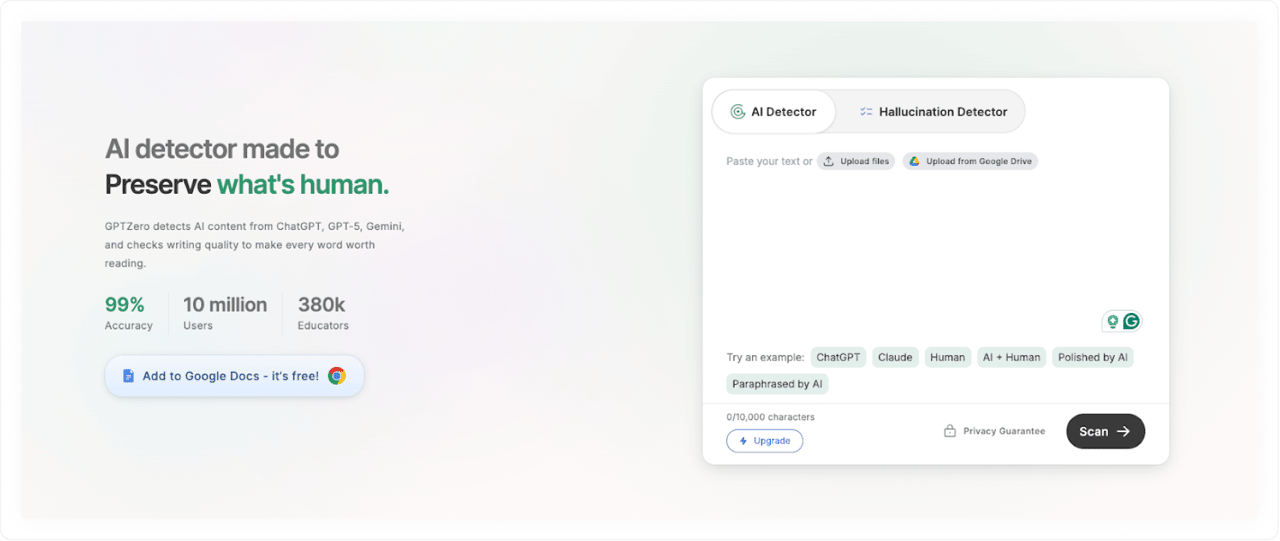
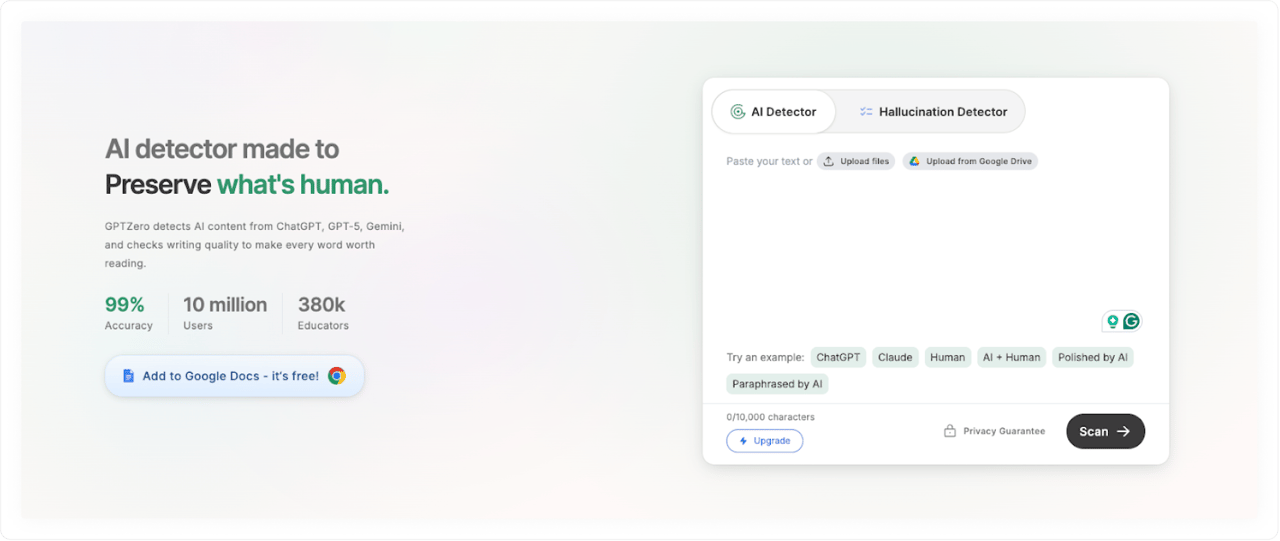
Based on hands-on testing, GPTZero is consistently rated one of the most accurate AI detector across various use cases. It's become the standard in educational settings for maintaining academic writing integrity.
Standout features: Transparent methodology, regular updates to stay ahead of new AI models, sentence-by-sentence breakdown, integration with learning management systems, bulk document processing for academic writing verification.
Pricing: Free tool available; premium plans for institutions start at $10/month per user.
Ideal use cases: K-12 schools, universities, academic publishers, educational technology companies, teachers needing reliable student work verification against AI writing.
Writefull AI Detector – Multi-model support
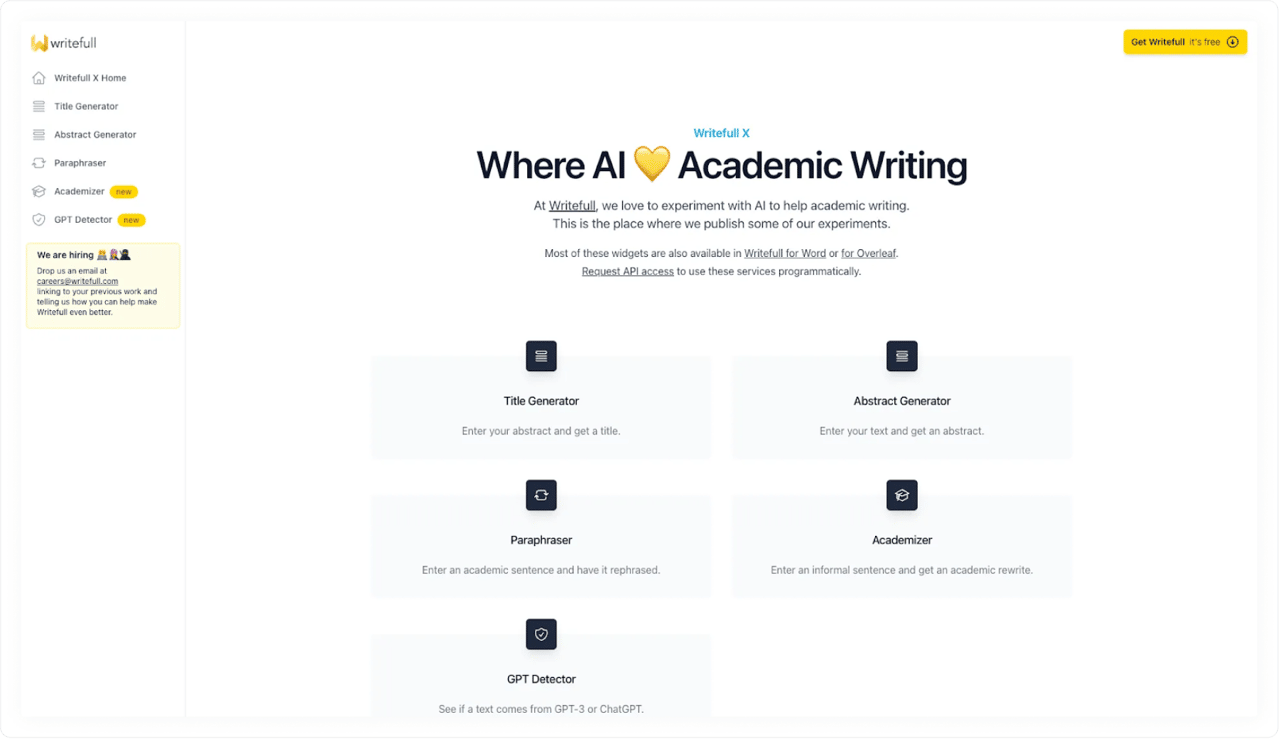
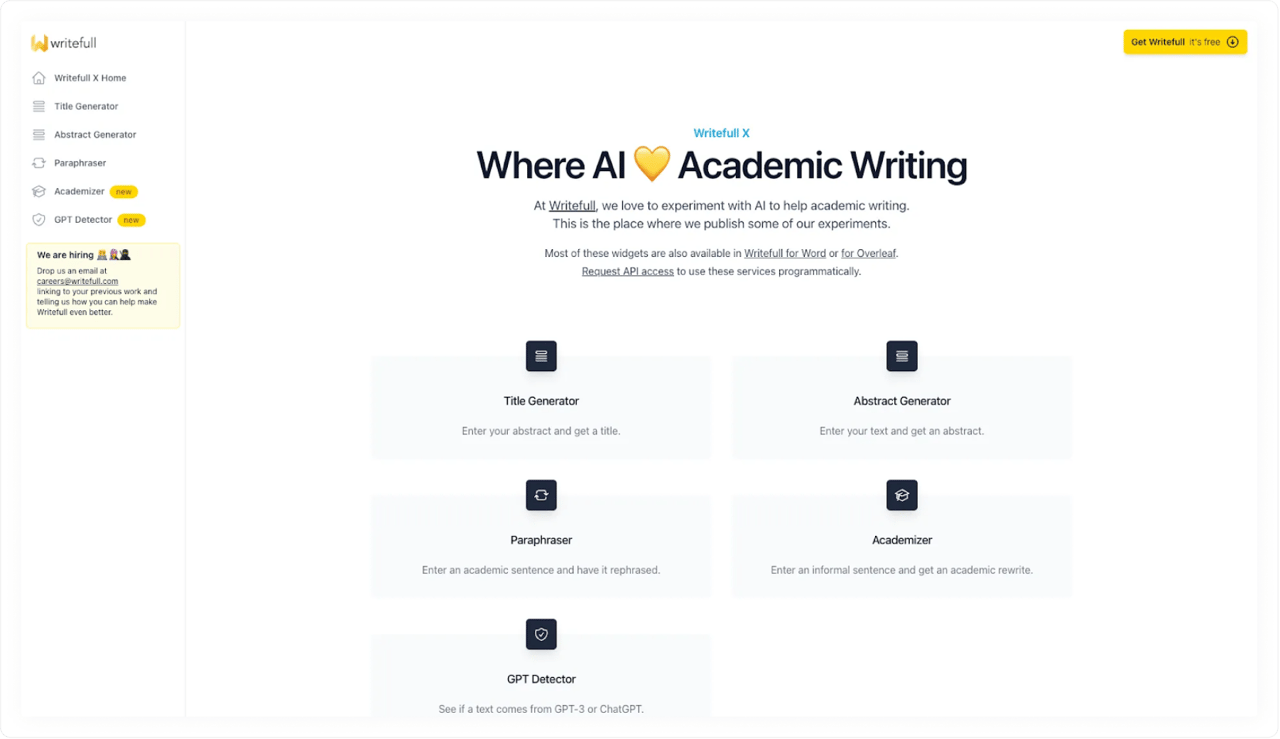
Writefull offers a completely free AI detector with no character limits or account requirements, making it accessible for quick checks across multiple AI models and AI tools.
Standout features: No signup required, multi-model AI detection (ChatGPT, GPT-4, Claude), simple interface, instant results, academic writing focus.
Pricing: Completely free with no limitations.
Ideal use cases: Students double-checking their work, researchers verifying citations, and anyone needing quick AI content verification without account setup.
Copyleaks AI Content Detector – Best for blended AI + plagiarism workflows
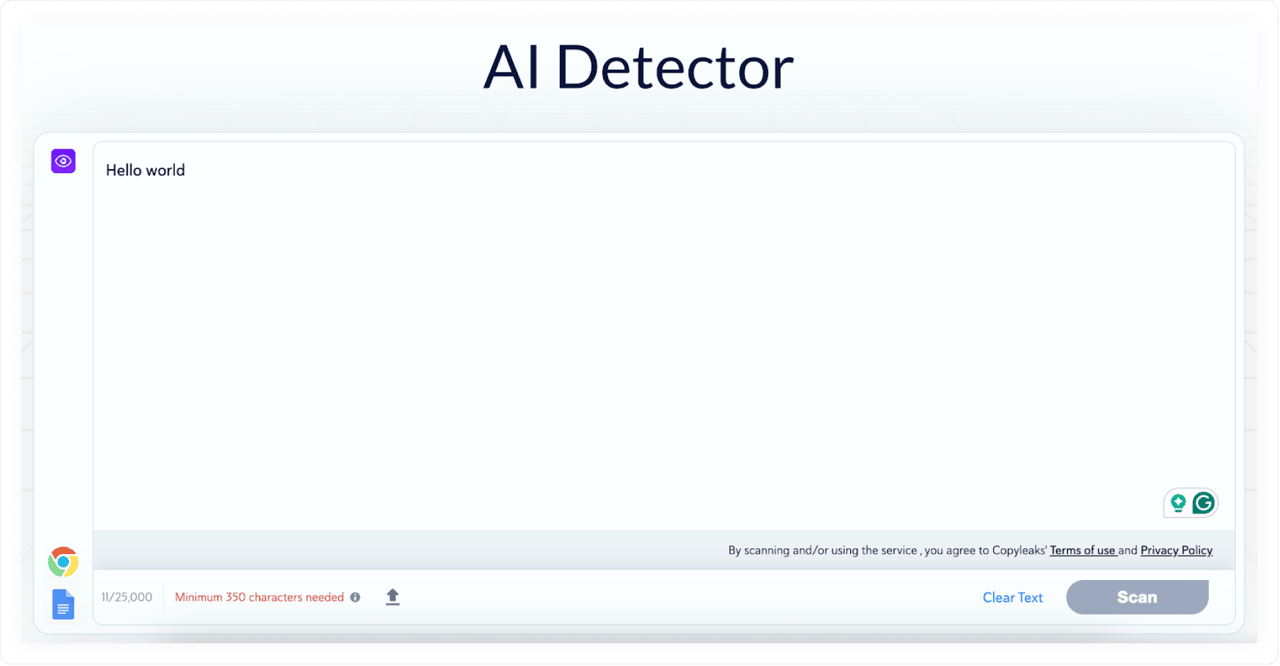
Copyleaks combines AI detection with robust plagiarism checker functionality, making it the best AI checker for institutions that need to verify both AI generation and copied content in a single detection process.
Standout features: Combined AI detection and plagiarism detection capabilities, multi-language support, API integration, enterprise-grade security, and detailed reporting for educational institutions.
Pricing: Plans start around $10/month, with institutional pricing available.
Ideal use cases: Universities needing comprehensive content verification, publishers checking both originality and authenticity, and compliance teams in regulated industries.
QuillBot AI Content Detector – Best for writers using all-in-one writing tools
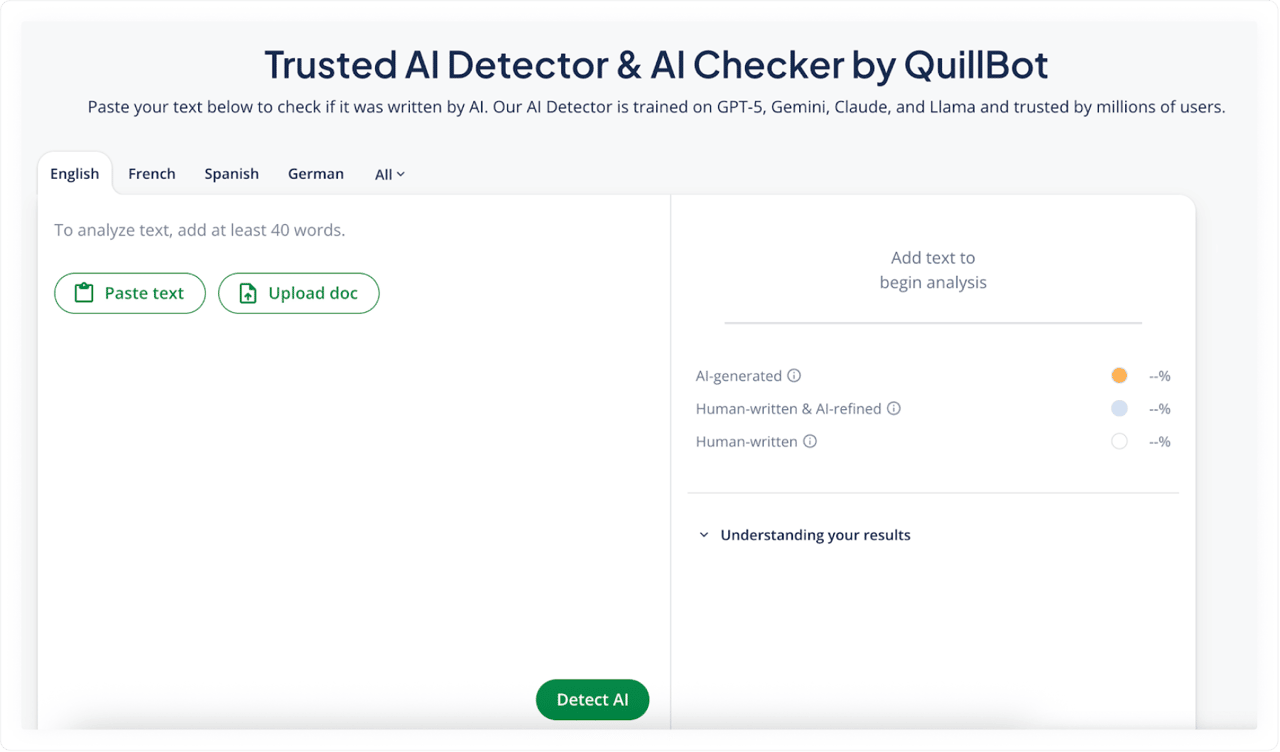
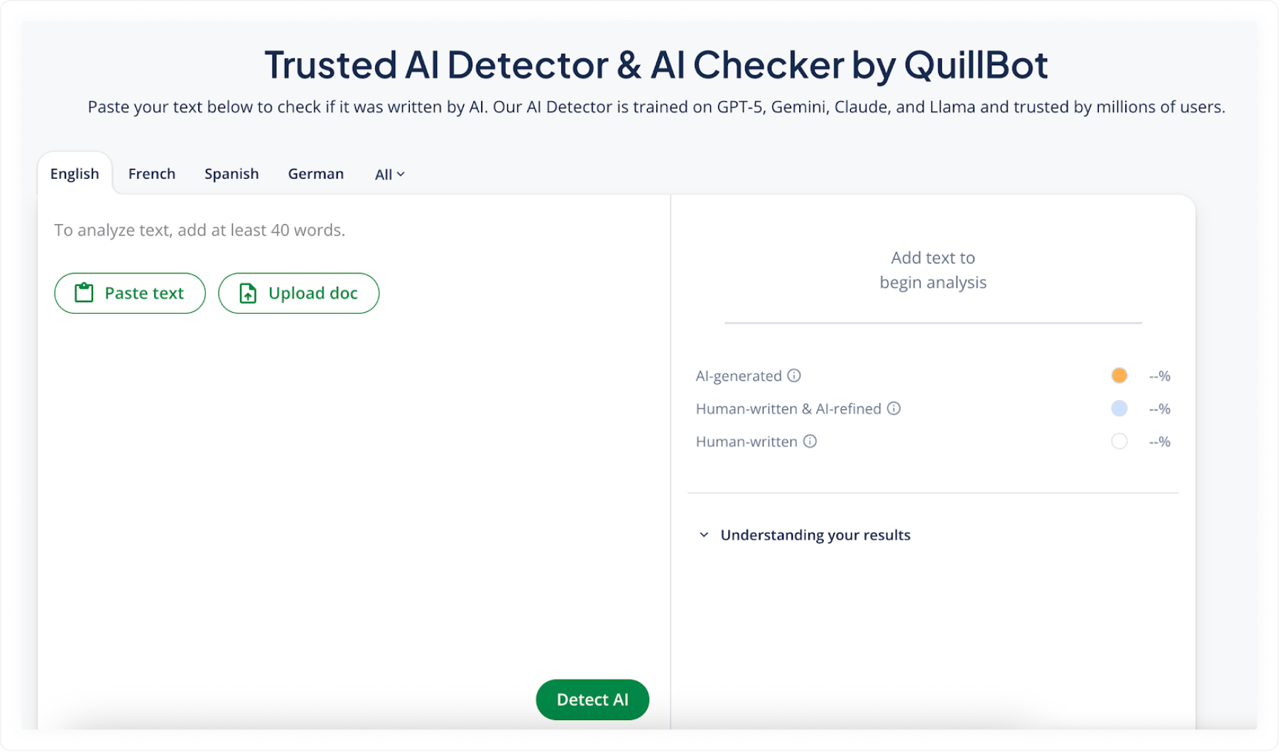
QuillBot's AI content detector integrates seamlessly with their paraphrasing tool and writing tools, making it convenient for writers who want to check their AI-assisted content within a familiar interface.
Standout features: Integration with QuillBot's writing suite, paraphrasing tool suggestions for flagged content, grammar checking alongside AI detection, user-friendly interface.
Pricing: Free tool tier with limitations; premium plans start at $8.33/month.
Ideal use cases: Content writers using AI tools for assistance, bloggers ensuring an authentic writing style, and students learning to integrate AI tools responsibly.
Pangram Labs AI Detector – Best for developers & API-based detection
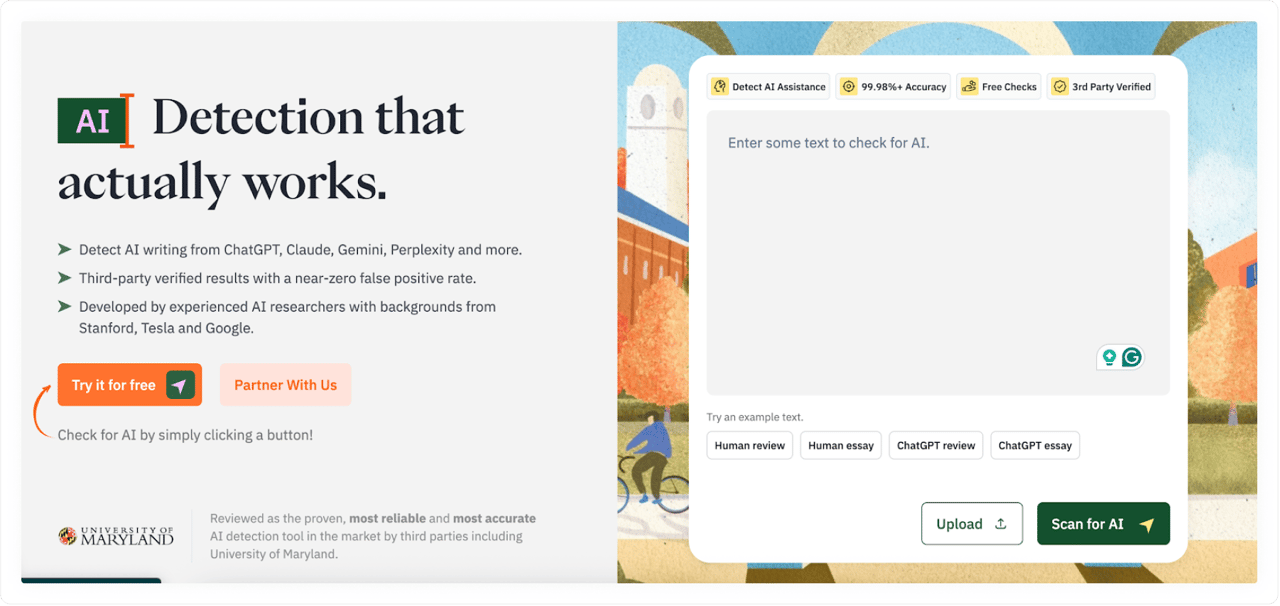
Pangram's detection accuracy has been verified by researchers at the University of Chicago and the University of Maryland, and it holds up well against humanization tools. It's designed for technical users who need reliable API access for detecting AI-generated content.
Standout features: Industry-leading false positive rate of 1 in 10,000, robust API for bulk processing, detailed confidence scores, resistance to AI humanization techniques.
Pricing: $15/month for standard access; enterprise APIs available.
Ideal use cases: Software developers integrating AI detection into platforms, content management systems requiring automated checks, and tech companies building content verification features.
ZeroGPT – Quick, free detector for casual checks
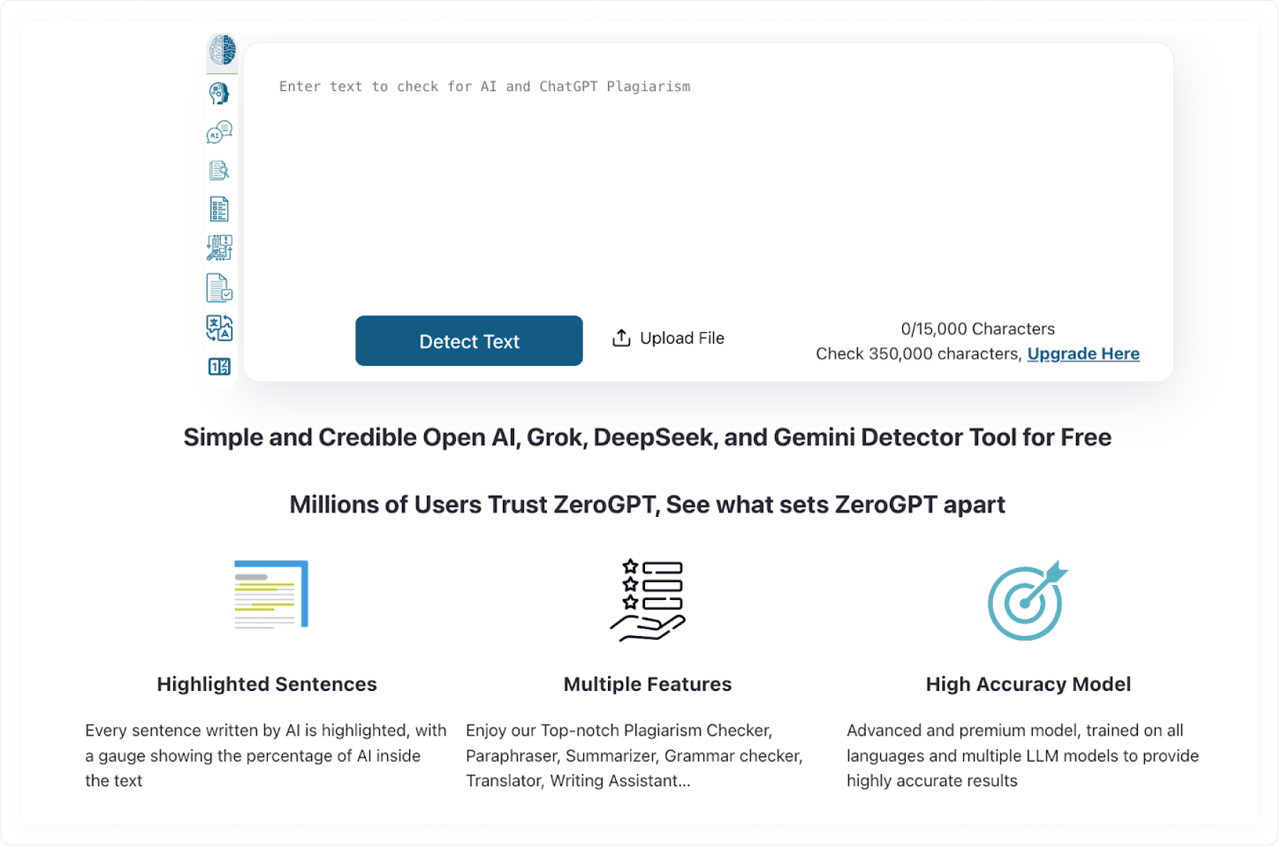
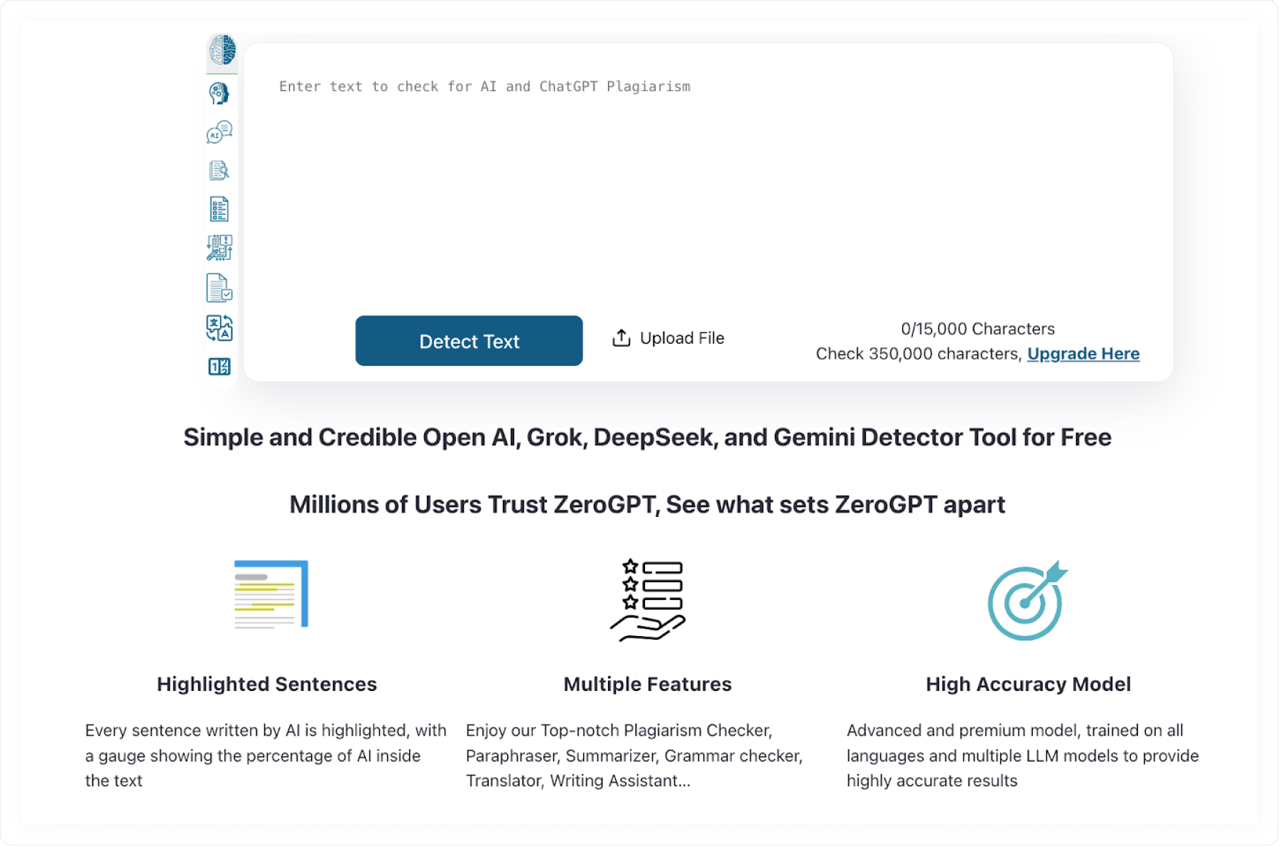
ZeroGPT provides fast, accessible AI detection with a simple interface that's perfect for quick content verification without the complexity of enterprise features.
Standout features: Free up to 15,000 characters, fast processing, simple percentage-based results, batch upload capabilities in paid tiers, mobile-friendly interface.
Pricing: Free tier; premium plans from $18.99-$26.99/month for higher limits and additional features.
Ideal use cases: Casual users checking occasional content, small businesses verifying vendor content, students double-checking assignments against potential factual errors from AI use.
Sapling AI Detector – Best for multilingual teams & real-time checks
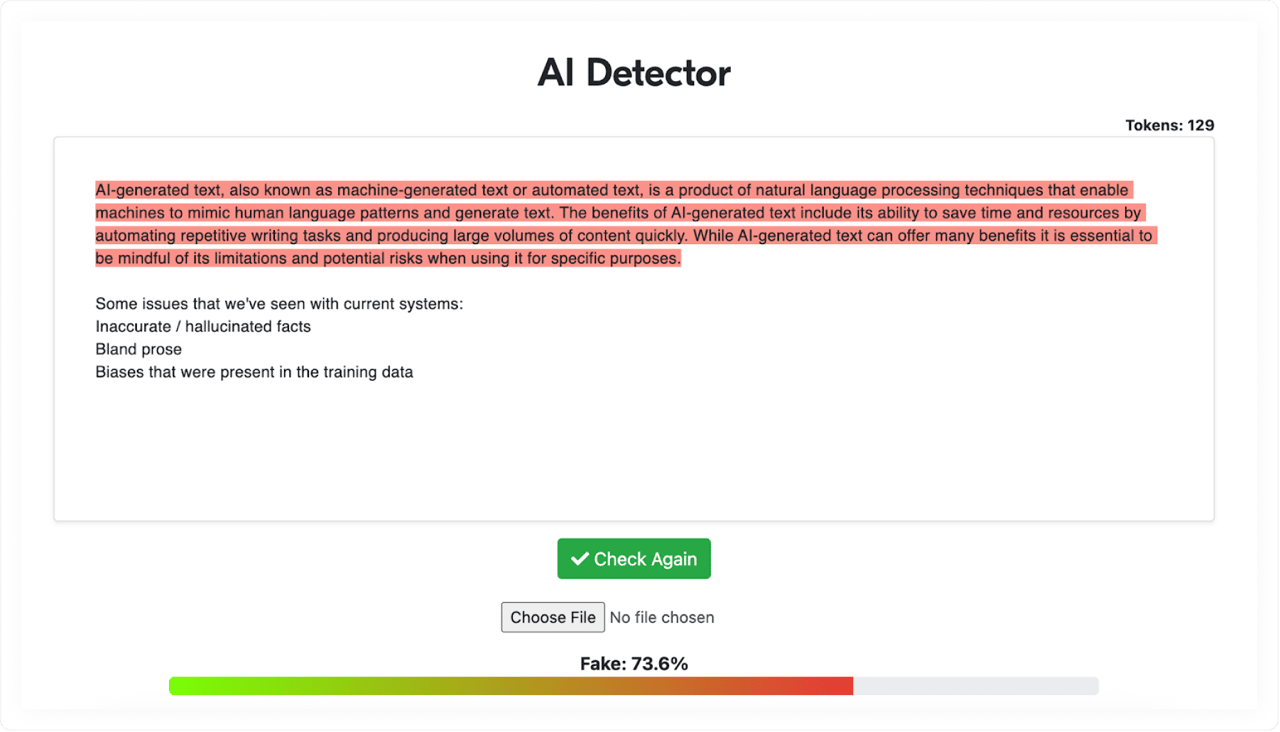
Sapling excels at detecting AI content across multiple languages and offers real-time AI detection capabilities for live content workflows.
Standout features: Multi-language AI detection, real-time API, integration with customer service platforms, team collaboration features, detailed analytics dashboard.
Pricing: Starts at $25/month; enterprise pricing available for large teams.
Ideal use cases: International companies with multilingual content, customer service teams checking AI-assisted responses, and global marketing agencies.
Writer.com AI Content Detector – Best for enterprise content governance
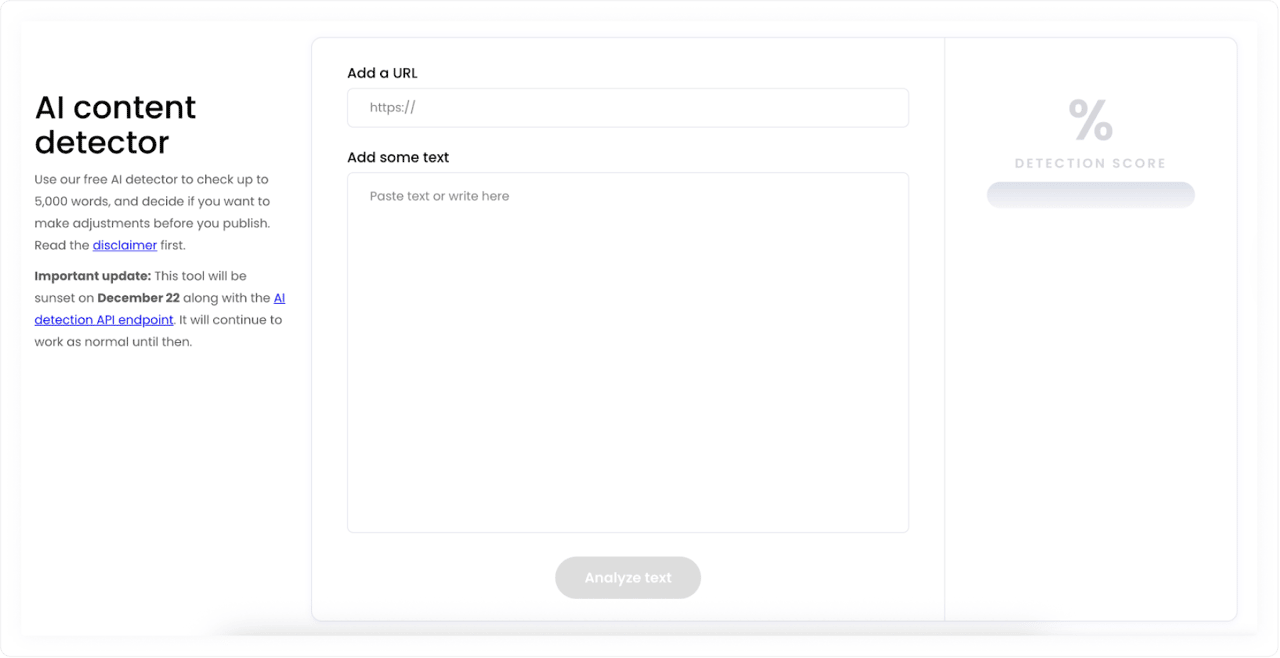
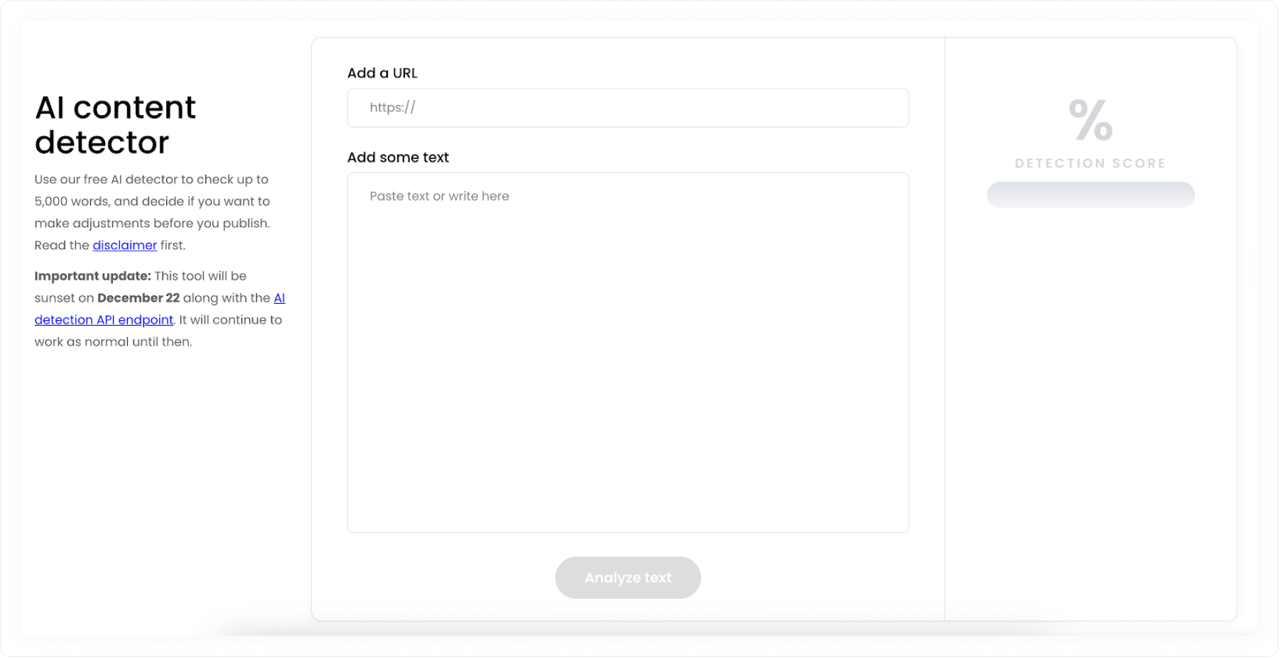
Writer.com's AI detector integrates with their broader content governance platform, making it ideal for large organizations that need AI detection as part of comprehensive content management.
Standout features: Enterprise-grade security, integration with content style guides, team management features, detailed audit trails, and compliance reporting.
Pricing: Enterprise pricing based on team size and features.
Ideal use cases: Large corporations managing brand voice, compliance teams in regulated industries, and enterprises with complex content workflows.
Turnitin AI Detection – Best for LMS-integrated academic workflows
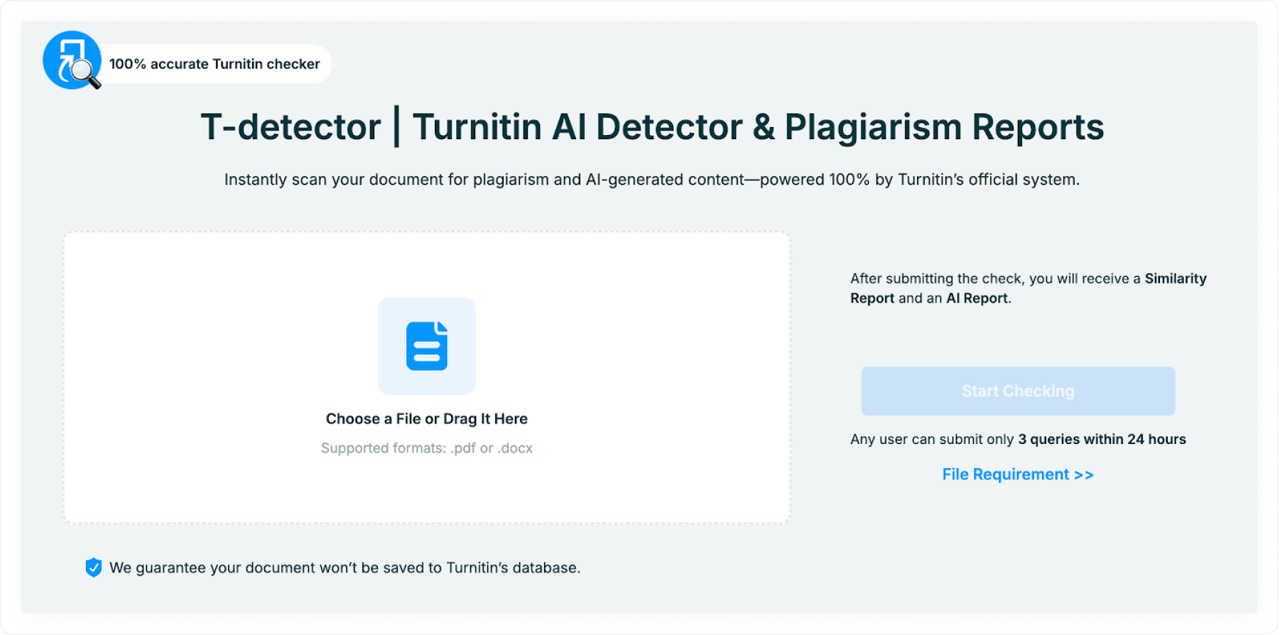
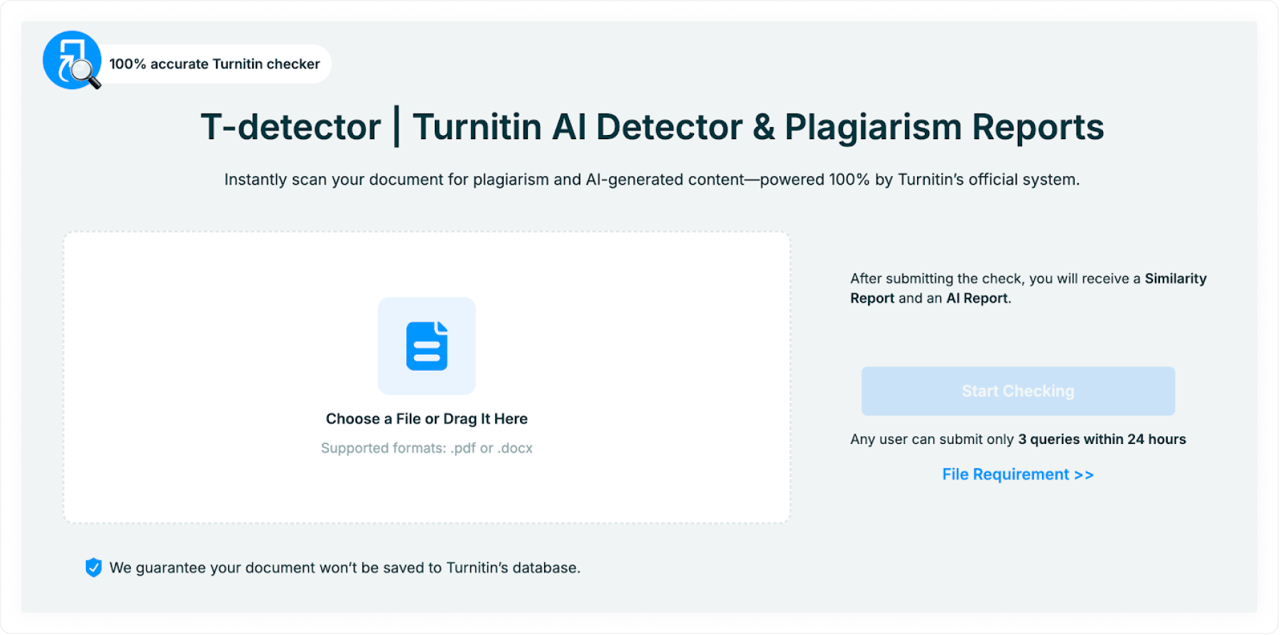
Turnitin remains the gold standard for academic institutions, offering AI detection integrated directly into learning management systems with robust reporting for educators maintaining academic integrity.
Standout features: LMS integration, institutional reporting, student feedback tools, academic integrity workflows, false positive rates around 1-2% according to company claims.
Pricing: Institutional licensing only; contact for pricing.
Ideal use cases: Universities with existing Turnitin subscriptions, K-12 schools needing integrated workflows, and academic institutions prioritizing seamless LMS integration.
Comparison table
Tool | Best For | Free Tier | Notable Features |
YouScan AI Detector | Marketing/PR teams | Yes | Social media focus |
Winston AI | Academic/Publishing | No | Sentence analysis, certification feature |
Originality.AI | SEO/Publishers | No | Bulk scanning, API access |
GPTZero | Education | Yes (limited) | LMS integration, transparent methodology |
Writefull | General use | Yes (unlimited) | Multi-model support, academic focus |
Copyleaks | Institutions | Yes (limited) | Combined plagiarism checker + ai detection |
QuillBot | Writers | Yes (limited) | Writing tool integration |
Pangram Labs | Developers | No | 1/10,000 false positive rate |
ZeroGPT | Quick checks | Yes (15k chars) | Simple interface, fast results |
Sapling | International teams | No | Multi-language support |
Writer.com | Enterprise | No | Content governance integration |
Turnitin | Academic institutions | No | LMS integration, institutional focus |
How to use AI detectors responsibly
AI detectors are powerful tools, but they're not infallible. Using them responsibly means understanding their limitations and building human judgment into your writing process and decision-making.
False positives and false negatives
Even the best AI detectors make mistakes. Research shows that false positive rates can exceed 20% for non-native English speakers and creative writing pieces. This means one in five pieces of authentic human-written text might be incorrectly flagged as AI-generated.
False negatives happen too—when AI-written text slips through undetected. This is particularly common with paraphrased or heavily edited AI content.
The stakes matter here. In academic settings, false positives can lead to wrongful accusations of cheating. In marketing, false negatives might mean publishing AI-written content that feels inauthentic to your audience.
Why you should diversify your tools
As noted by experts at the University of Chicago, different AI detection tools perform better on different types of content. Cross-checking results across multiple detector tools increases confidence in your assessment.
For high-stakes decisions, consider running content through 2-3 different AI detectors. If they all agree, you can feel more confident. If results vary widely, dig deeper with human review.
Combining detection with human review
Accurate AI detectors should inform decisions, not make them automatically. Here's how to build human oversight into your detection process:
For marketers: Have brand managers or editors review flagged content, especially high-visibility materials or crisis communications. Use YouScan's broader social media context to understand whether flagged content fits natural conversation patterns.
For teachers: Use AI detection results as starting points for conversations with students, not as definitive proof of misconduct. Many institutions now require human review before taking academic disciplinary action.
For publishers: Combine detection accuracy scores with editorial judgment about voice, style, and brand consistency.
How marketers and brands can use AI detectors in their workflow
Marketing teams face unique challenges with AI content. You might use AI tools for efficiency while still needing content that feels authentic and on-brand. Here's how AI detectors fit into modern marketing workflows:
Checking social media posts, influencer content, and UGC
Social media moves fast, but authenticity still matters. Use AI detection tools to verify that:
Influencer posts actually sound like the influencer's usual writing style
User-generated content campaigns aren't being gamed by AI-generated fake reviews
Customer testimonials reflect genuine experiences rather than synthetic praise
A hypothetical example: A beauty brand noticed its hashtag campaign suddenly featured dozens of "perfect" reviews with similar language patterns. Running suspicious posts through an AI content detection tool revealed 60% were likely AI-generated, allowing them to filter authentic customer content from synthetic noise.
Ensuring brand voice & authenticity in campaigns
AI writing tools can help your team create content faster, but they can also flatten your brand's unique voice. Use AI content detectors to check AI-assisted drafts and ensure they still sound human and on-brand.
This is particularly important for:
Press releases that need to feel authoritative and authentic
Email campaigns where personal connection drives engagement
Website copy that should reflect your company's personality
Using YouScan AI Detector inside a broader listening & analytics strategy
YouScan's AI detector integrates naturally with their social listening platform, creating a powerful workflow for brand protection:
Monitor brand mentions with YouScan's social listening capabilities
Run suspect posts through the AI detection tool to identify potentially synthetic content
Flag patterns like bot networks posting AI-written praise or attacks
This approach helps identify coordinated inauthentic behavior that could damage your brand reputation or skew your social listening data.
Conclusion: The future of AI detection and content authenticity
AI-generated content is becoming more sophisticated every month, making authenticity verification more important than ever. We're moving toward a world where the ability to verify human-written content becomes a competitive advantage.
The most successful approach combines multiple AI detection tools with human judgment. No single AI detector tool is perfect, but using several together while maintaining editorial oversight creates a content verification system.
YouScan stands out in this space by focusing specifically on marketers' needs. While other tools optimize for academic or publishing use cases, YouScan's AI detector helps brands verify influencer content, protect authenticity, and maintain trust across all digital channels. Combined with their social listening capabilities, it provides a comprehensive solution for modern brand management. Request a demo to enjoy other YouScan social listening capabilities and explore AI Detector to the fullest!
FAQs
What is an AI detector, and how does it work?
AI detectors analyze text patterns like word choice predictability (perplexity) and sentence structure variation (burstiness) using natural language processing techniques and machine learning to estimate the likelihood that content was generated by artificial intelligence rather than written by humans.
Which AI detector is most accurate in 2026?
Based on independent testing, GPTZero, YouScan, and Winston AI show the highest detection accuracy rates (99%+) for pure AI generated text. However, accuracy varies by content type, with all AI detectors struggling on short passages under 50 words.
Can AI detectors reliably spot text written by ChatGPT, GPT-5, or Gemini?
Most current, accurate AI detectors can identify AI-written text from popular ai models like ChatGPT and GPT-4 with high accuracy. However, newer generative artificial intelligence models produce increasingly human-like text, and detection accuracy decreases significantly when AI content is paraphrased or edited.
Are AI detectors 100% accurate, or can they make mistakes?
No AI detector is 100% accurate. Even the best AI detector tools show false positive rates of 1-2%, meaning they incorrectly flag human-written content as AI-generated 1-2% of the time. False positive rates can exceed 20% for non-native English speakers, making human oversight important for high-stakes decisions.