Inside the State of Social Intelligence 2026: Over 300 Practitioners Surveyed — YouScan Ranks 4th
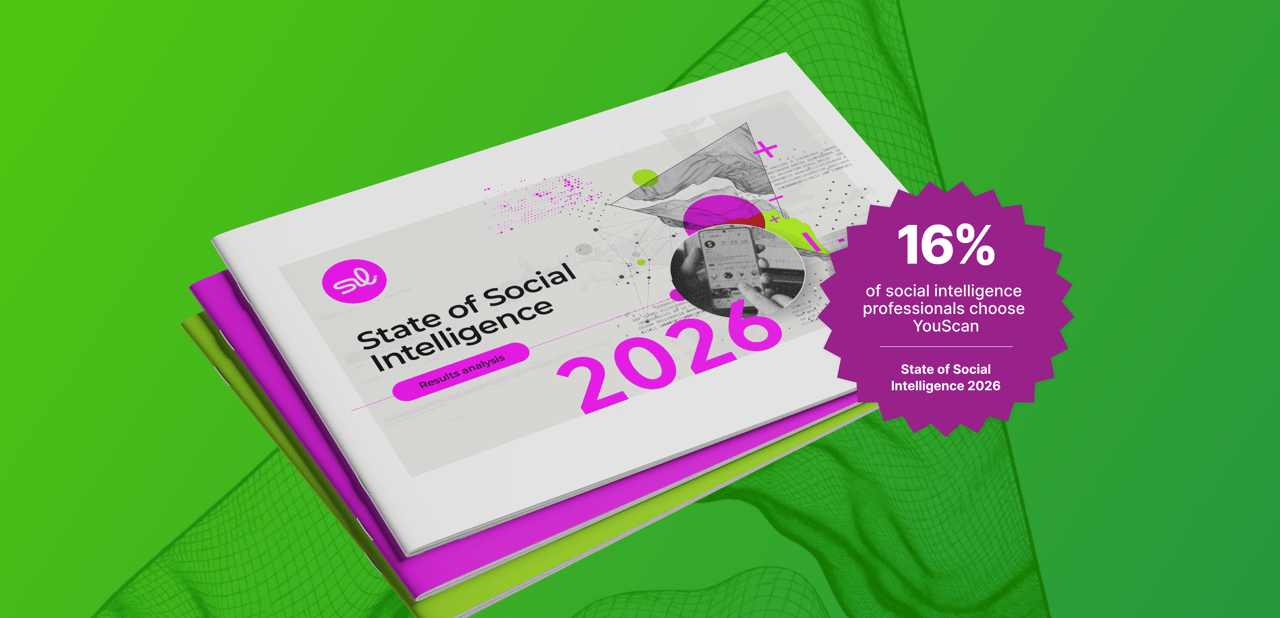

Every year, The Social Intelligence Lab surveys social listening practitioners to feel the pulse of our industry. This year’s new edition comes with a name change — social listening becomes ✨social intelligence ✨— which says a lot.
The State of Social Intelligence Report 2026 reflects a real shift in how the industry sees itself. It moves from observing online conversations to interpreting them and turning them into strategic decisions.
YouScan is proud to have sponsored this year’s report once again, and even prouder of what the data shows about where YouScan stands in the market. Keep reading to find out how folks use social intelligence, how YouScan climbed the rankings this year, and what framework is worth taking into account for this year.
It’s been a while since we used “social listening” as a go-to term because it’s just simpler and better understood, but the practice was always about understanding, about extracting insights and acting on them, not just “listening”. This year it’s official – we switch to “social intelligence” and start seriously measuring the “intelligence” part of the practice. Not just seeing the data, but understanding it. — Leonid Lytvynenko, CEO of YouScan on LinkedIn
Where YouScan stands – and how that’s shifted
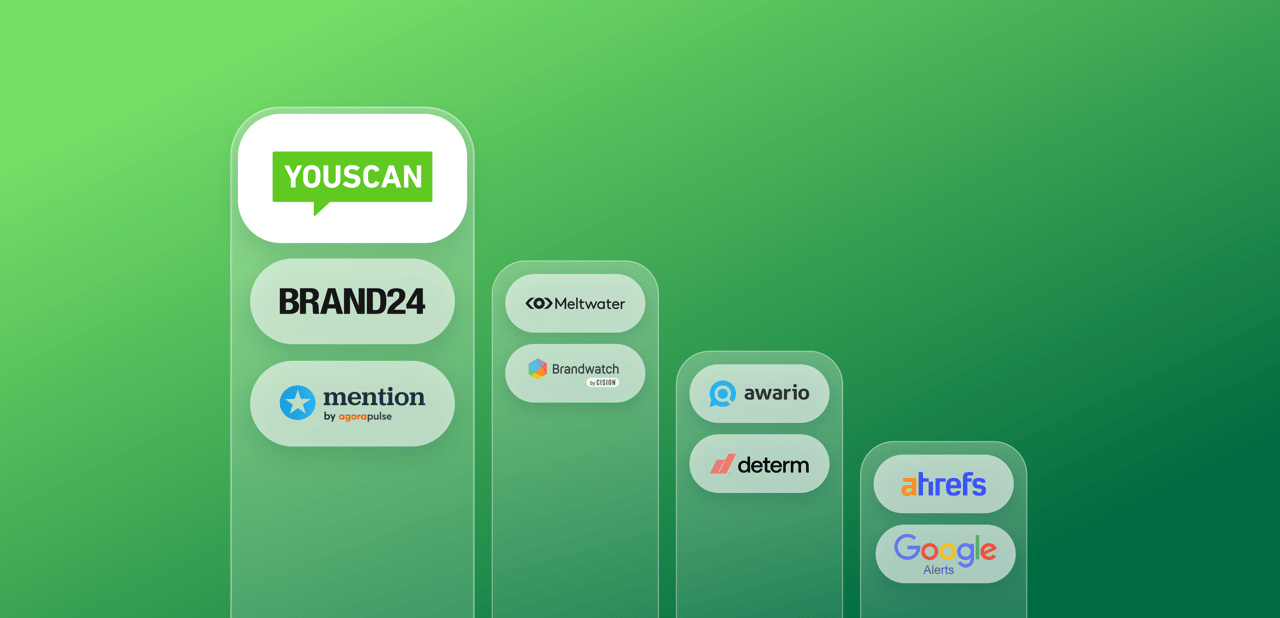
💚 As per this year’s report, YouScan climbed to 4th place among the social listening platforms that 300+ global industry professionals actively use. This way, we moved up from 10,5% to 16% — a meaningful jump in a market where tool usage is becoming less concentrated among a handful of big players.
Compared to 2025, fewer respondents are relying on just one or two dominant platforms, and market share is spreading across a wider net of vendors. That includes newer entrants (Audiense, Tubular Labs) and other tools. Not surprisingly, practitioners often mention the use of ChatGPT, Gemini, and Claude for social data analysis.
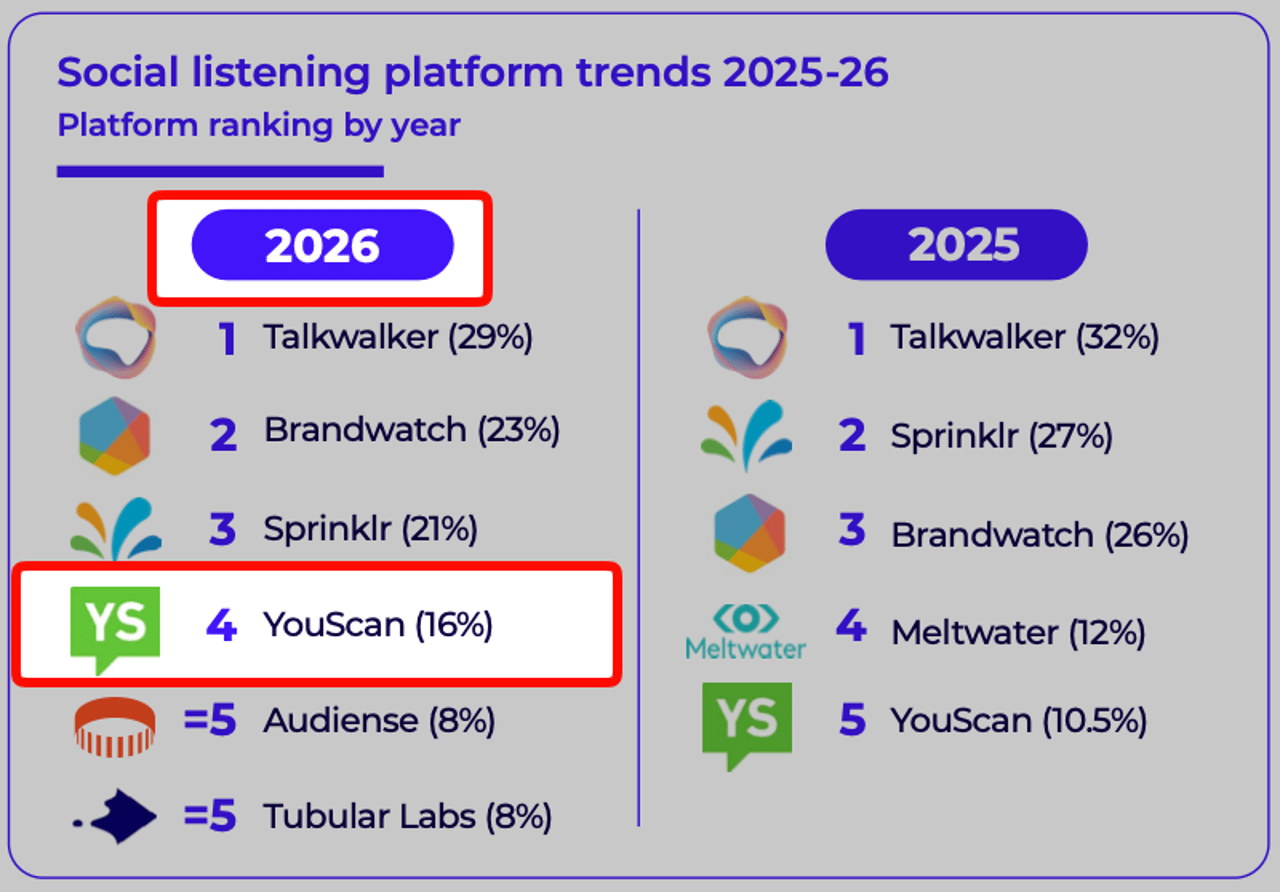
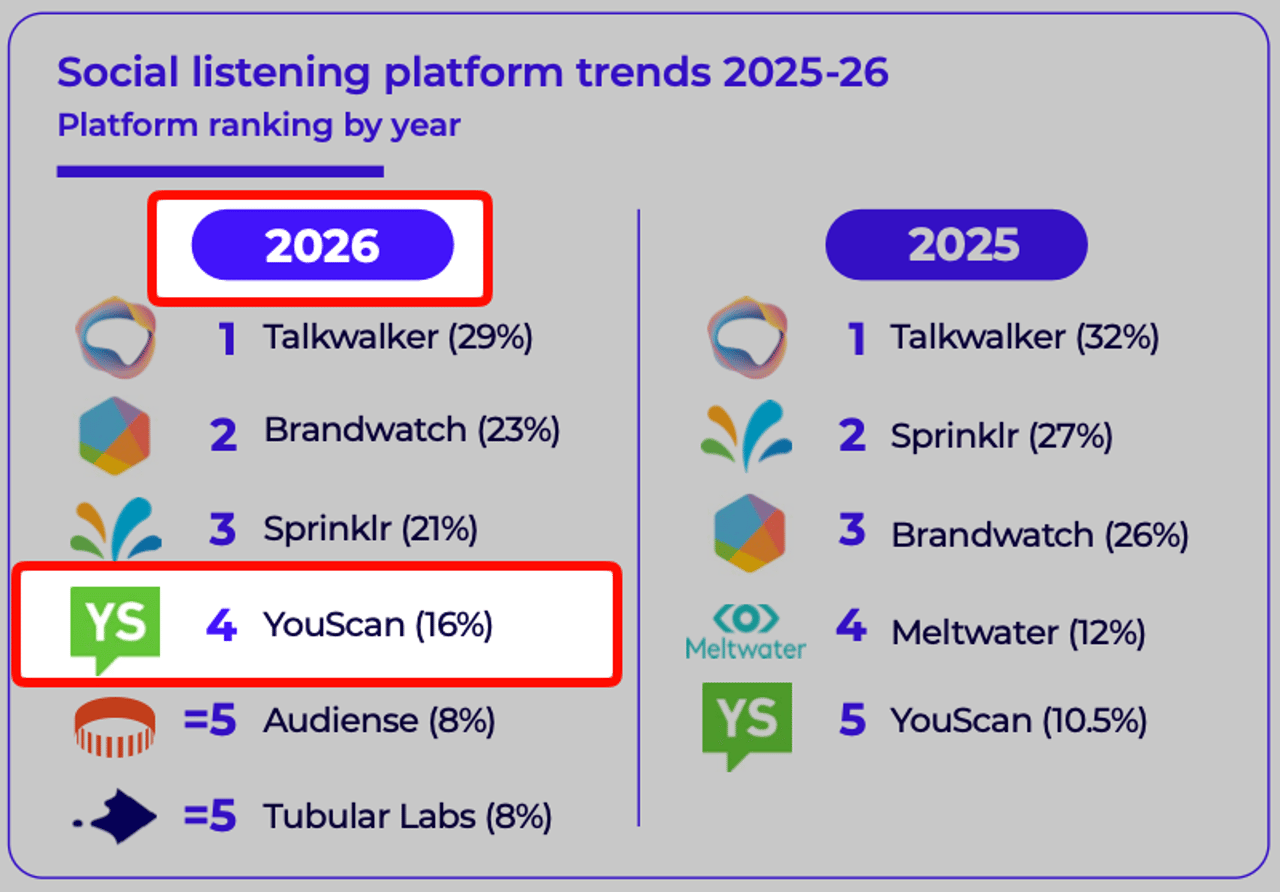
For YouScan, a jump to 4th place from 5th in 2025 is a significant step forward. Our team never cuts corners when it comes to the quality of the YouScan product and customer service we provide to clients. We appreciate that they feel it firsthand!
Actually, this is where the gist of this year’s report lies: global teams do become more selective. They don’t need as many tools as possible. The social intelligence practitioners want tools that help them drill into data, unscramble actionable insights with advanced AI capabilities, and, what’s more important, interpret what those insights mean. This is where YouScan leapfrogs the long-established competition for a reason.
The gap between confidence and interpretation
The gap isn’t about skill. Practitioners clearly know how to interpret. It’s about time. Most of the day still goes into pulling and describing data, so interpretation gets squeezed into the occasional strategy deck. Close that gap and understanding stops being a luxury. That’s the whole reason we built Insights Copilot — to hand back the hours normally lost to sorting through mentions, so the analyst can spend them on the part that matters: not just seeing the data, but understanding it.
The most striking finding in this year’s report is about people. When asked how often they interpret patterns, narratives, or meaning in social data (rather than just describing it), 80% of practitioners said they do this often or all the time. Clearly, confidence is high.
Let’s look at how organizations actually use social intelligence. Ongoing monitoring and reporting is still the most common use case, while strategic planning is where social intelligence is requested least often. Time and attention are going toward the work that moves the needle fast.
While you read this, you might wonder: “Why the contradiction?”. The State of Social Intelligence 2026 mentions four clear reasons:
Social intelligence work is dictated by others
Modern tech constrains contradiction
The definition of contradiction is confused
Social intelligence lacks a shared approach to interpretation
What’s changed in 2026 since last year
So that you get a fuller picture of the State of Social Intelligence 2026, I’d like to frame a few shifts that particularly stand out:
The positioning itself. Practitioners increasingly describe their work in the context of social intelligence rather than social listening or social analytics. This is a signal of how the discipline sees its own maturity.
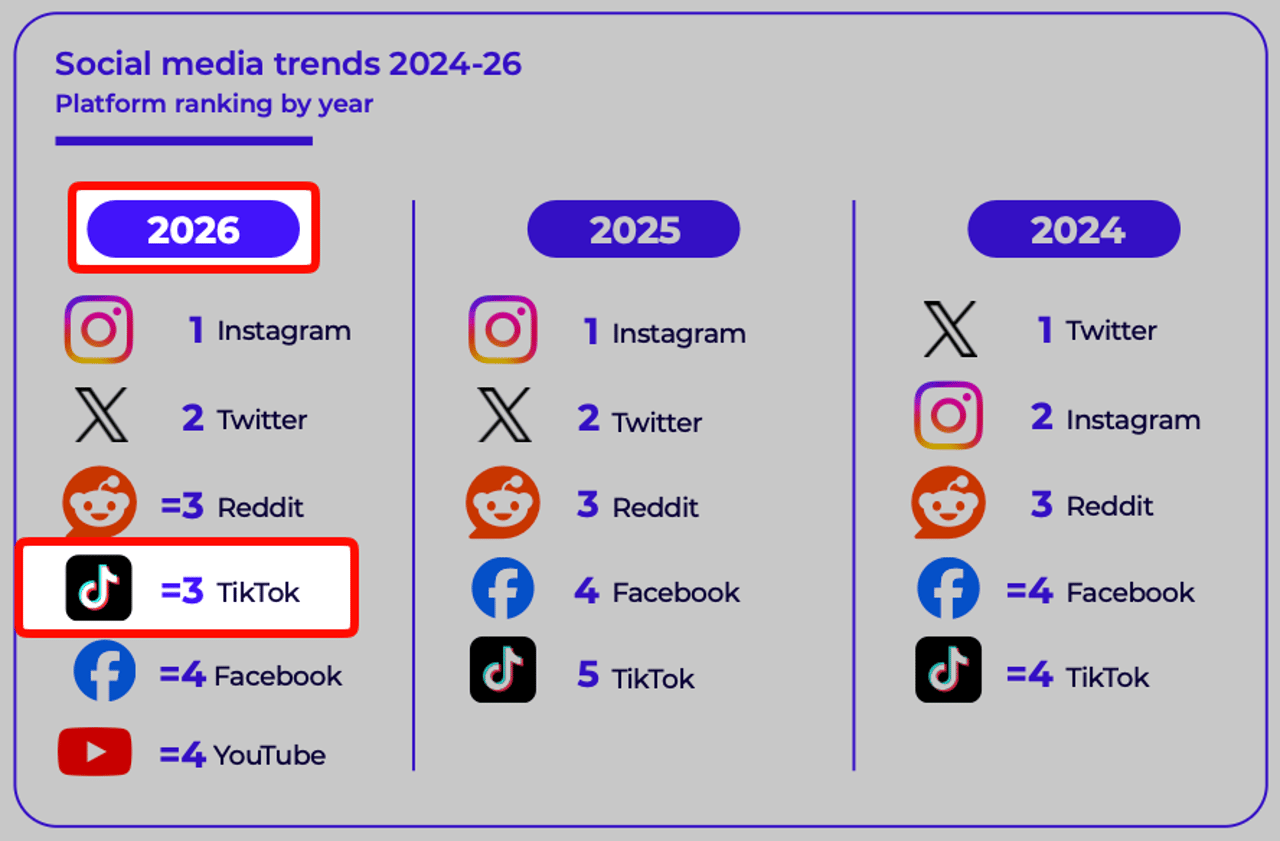
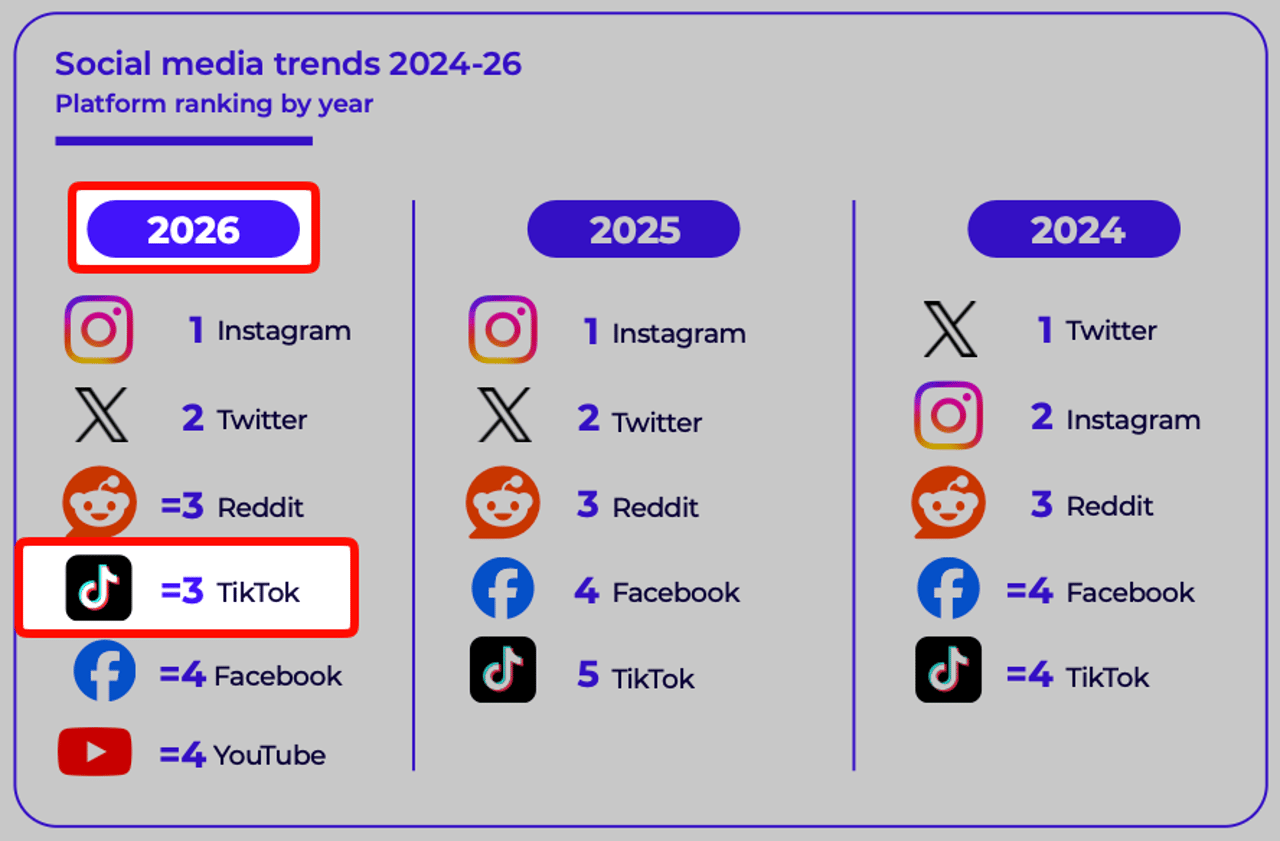
TikTok overtakes Facebook at last, with Instagram remaining a primary data source for the second year in a row. YouTube enters the top 5 for the first time — video content is now central to social intelligence practitioners, even though it might be more difficult to extract meaning from it than from text.
AI-generated answers are now a formal data source. This year, the Social Intelligence Lab asked whether analyzing LLM outputs is part of practitioners’ remit — and almost 40% already are. This is especially the case for the marketing & PR teams, rather than for those who work in social media.
This matches what we’ve been seeing. AI in this field is already part of people’s daily workflow.
As Leonid put it:
We were the first platform to give the industry Insights CoPilot with verifiable references and the ability to understand any topic; and now, three versions after its release — Insights CoPilot is still the most advanced and trusted agent for social intelligence. And these are just a few examples of the innovation happening at YouScan.
The tool stack is diversifying. Fewer teams rely on a single platform for everything. A fair share is combining a core social intelligence tool with some add-ons or other tools.
A framework worth remembering
The State of Social Intelligence Report 2026 introduces a new way of thinking about the depth of social insights.
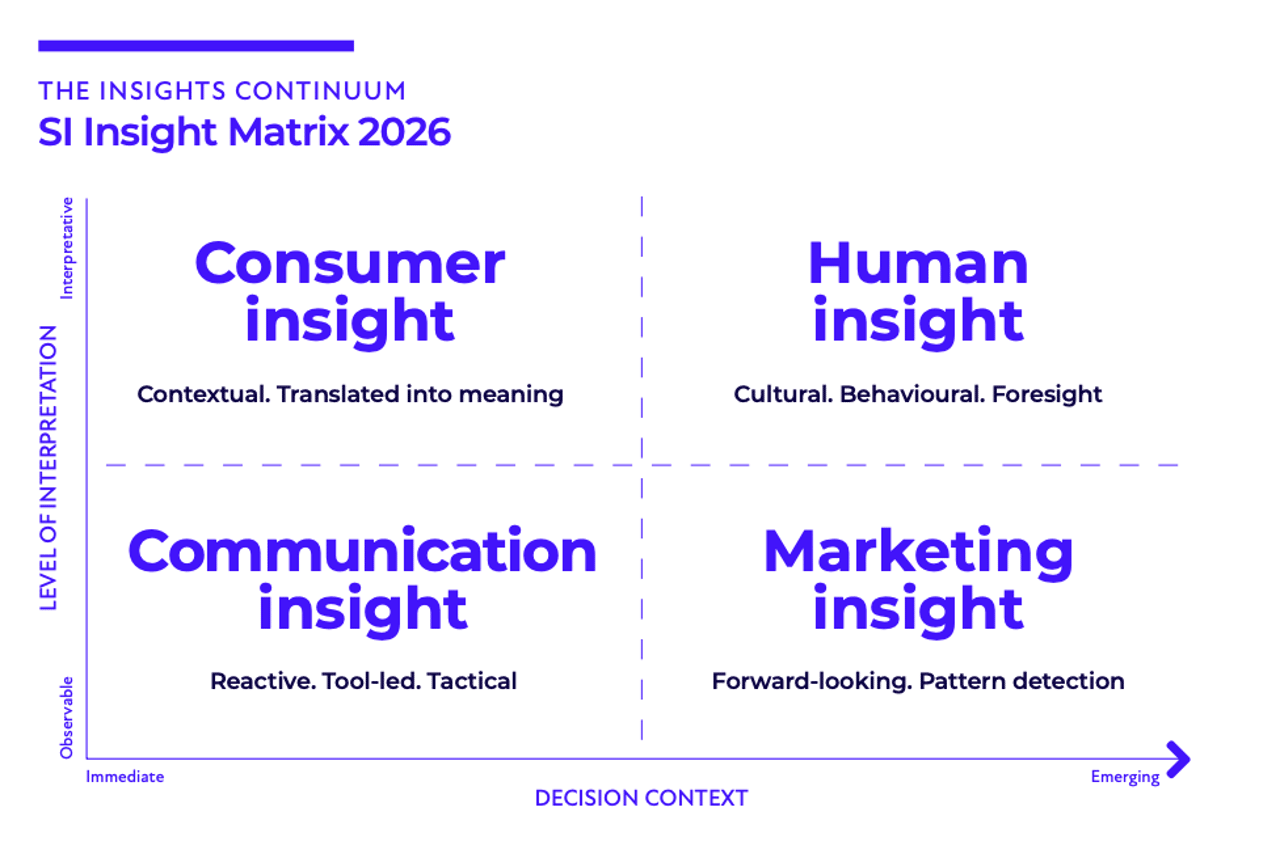
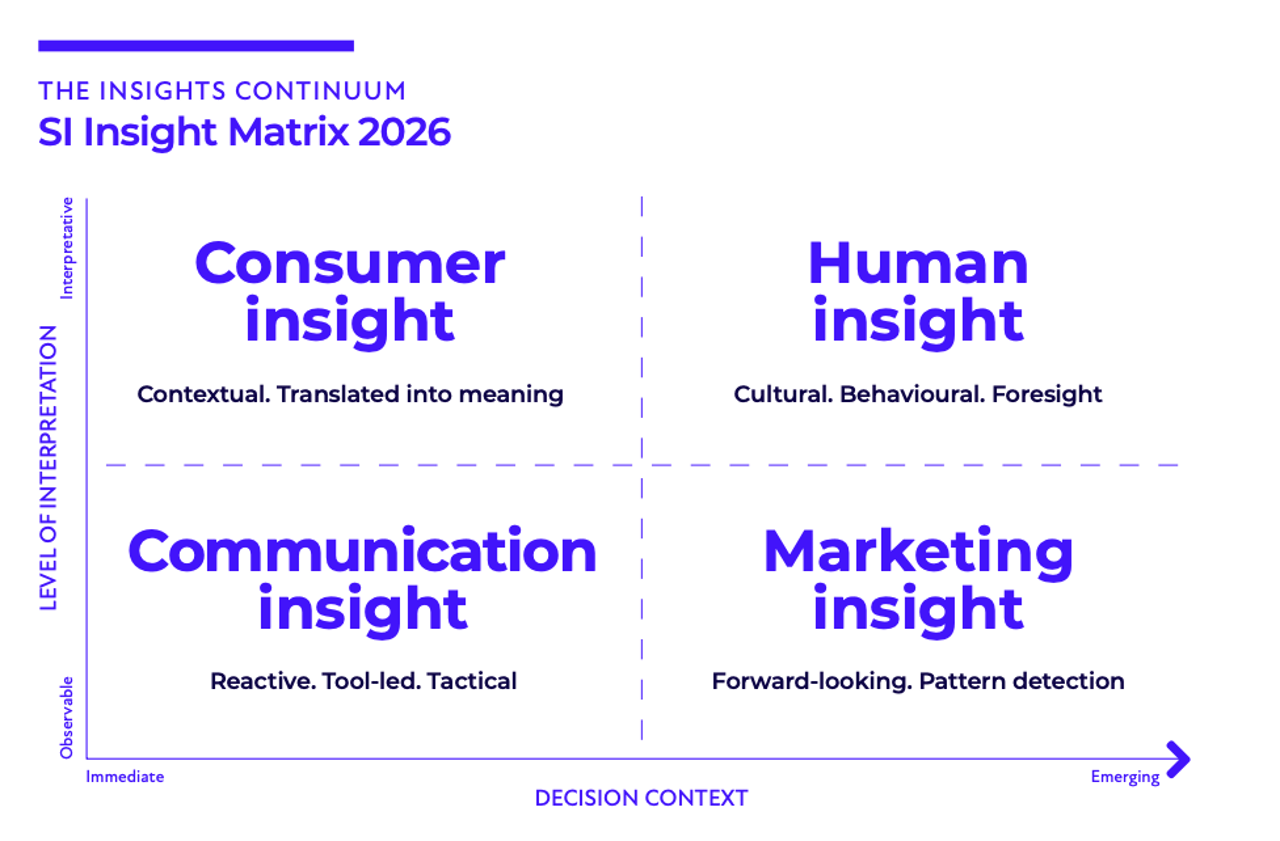
The insights analysis is sorted out into four categories of the Social Intelligence Matrix 2026:
Consumer insight which translates into meaning
Human insights which is behavioral
Communication insight which reactive and tactical
Marketing insight which help detect patterns
This is a major leap from fast, tactical output to the cultural and behavioral understanding that shapes a long-term strategy. Use this framework to check whether your insights are really insights or just well-organized observations.
Get the full picture!
This is just a taste of what the State of Social Intelligence 2026 looks like! Download the full version that covers:
How social intelligence is positioned across various departments
Where budgets are going
How confidence in interpretation shifts with experience
What teams expect to change most over the next three years