What K-Pop Demon Hunters Taught Us About Merch Timing
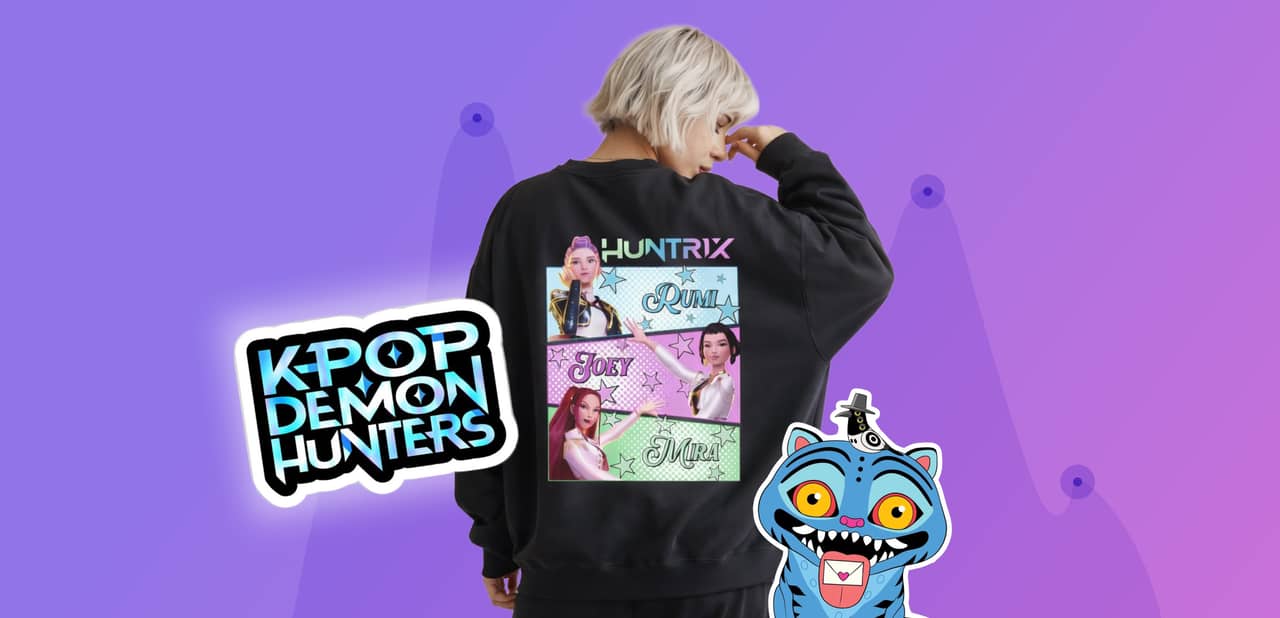

K-Pop Demon Hunters landed on Netflix in 2025 and hit a cultural sweet spot. Korean-rooted animation riding on the post-Squid Game momentum, with crossover appeal that reaches well beyond the usual anime audience.
The show resonates. But K-pop fandoms don't just watch. They commercialize what they love, and they do it fast. Way faster than most Western licensing pipelines can handle.
For a brand like Netflix, this raises urgent questions:
Is the IP genuinely taking off or just generating social noise?
Are fans actively looking to spend, and if so, on what?
Is official merch keeping pace with demand, or is a vacuum forming where unofficial sellers step in?
And when exactly is the right moment to activate partnerships before the window closes?
At Tellagence, we used YouScan's social listening and visual monitoring tools to find out. Here is what the data told us. 👇🏻
Insight 1: Fans were ready to buy. There was nothing to sell them
This is the part that should make every licensing team a little uncomfortable.
Between roughly July and September 2025, before any official merchandise existed, the fan conversation had already shifted.
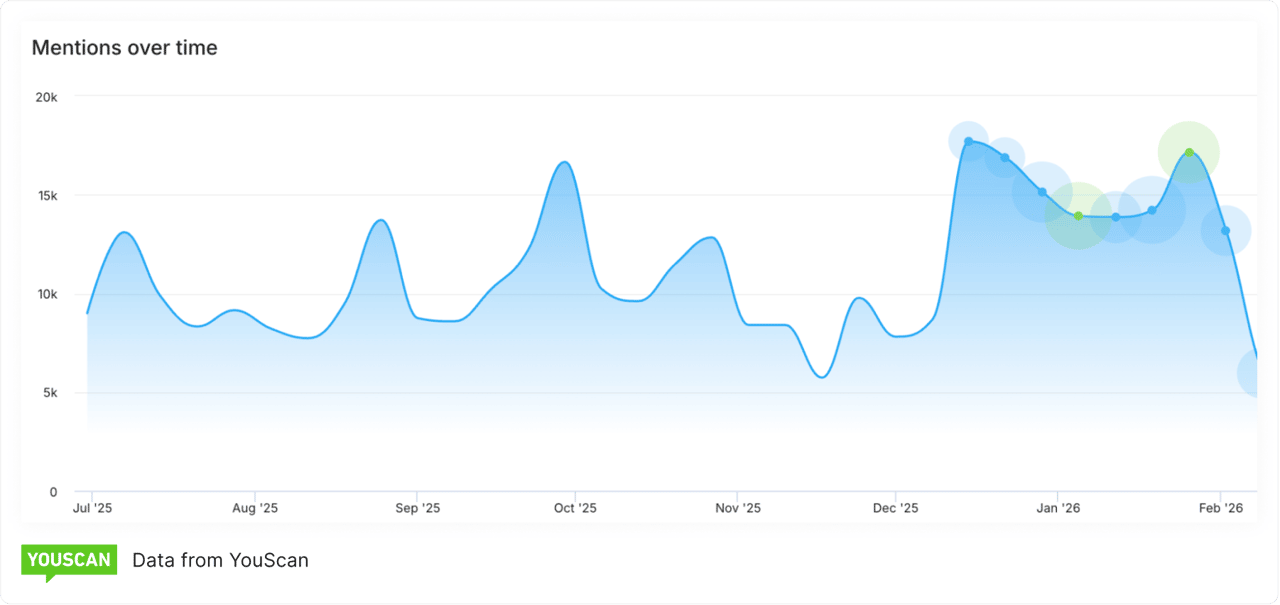
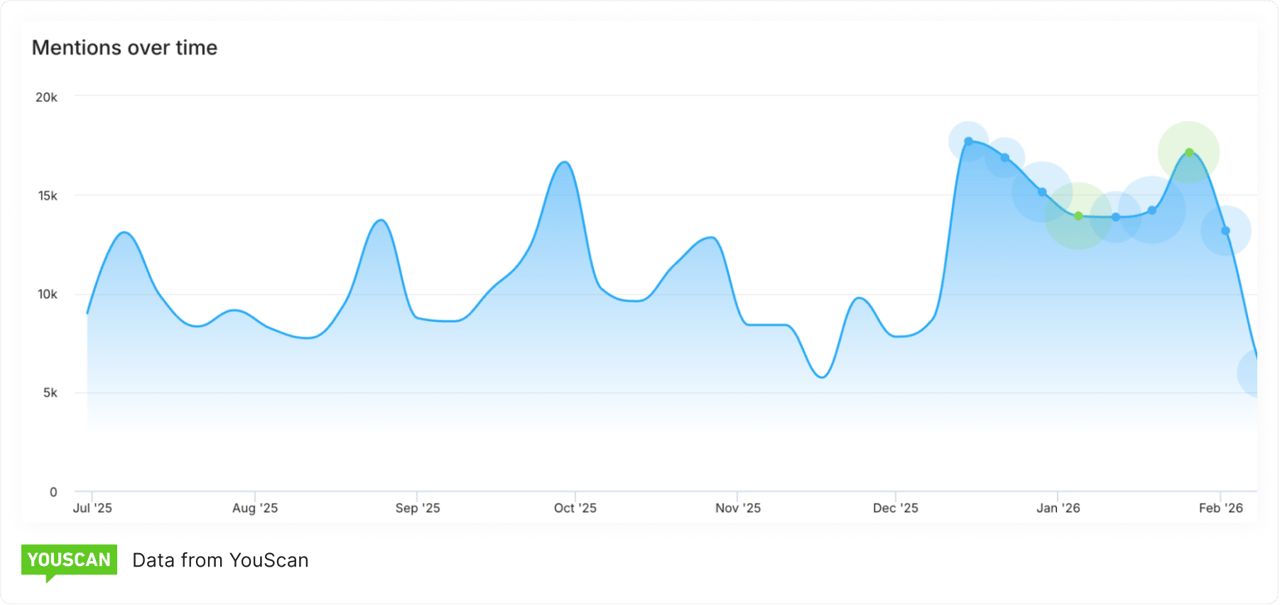
People moved past the excitement phase into something way more commercially interesting.
They were asking where to buy things, sharing mockups they had designed themselves, and requesting specific collectible items by name.
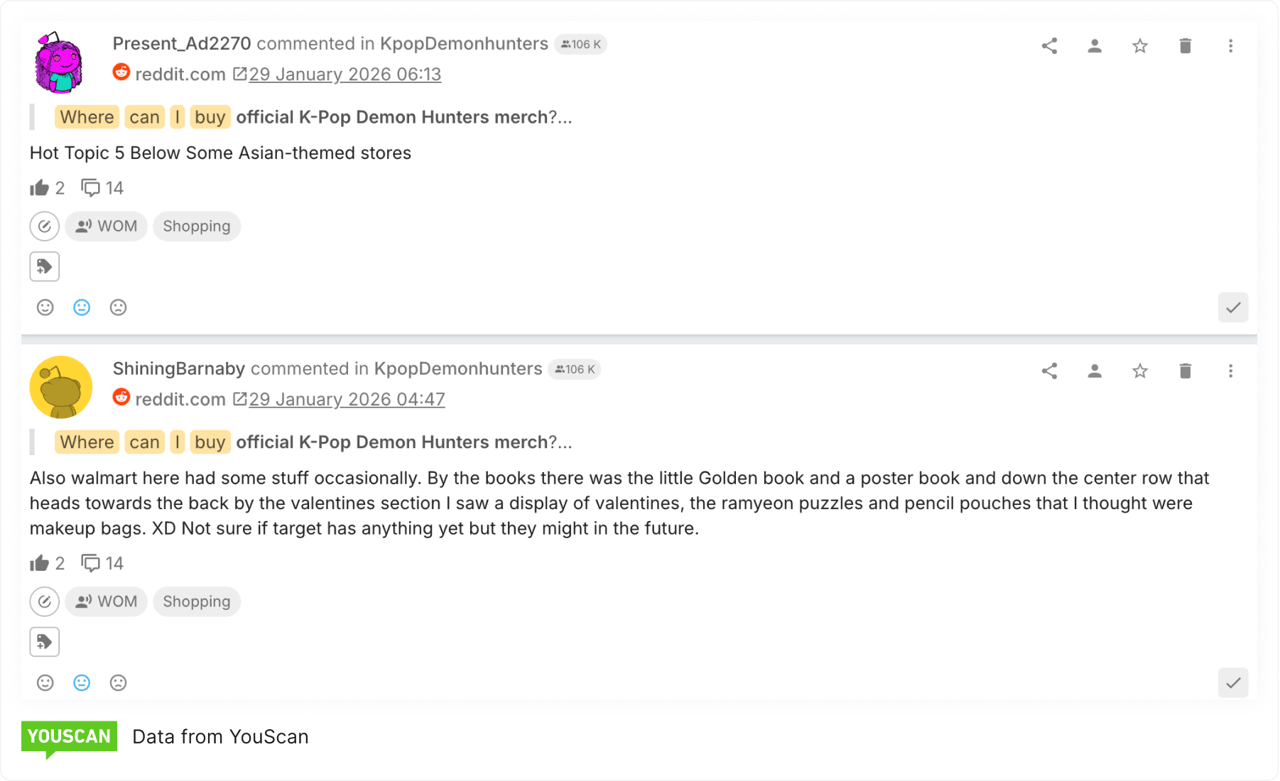
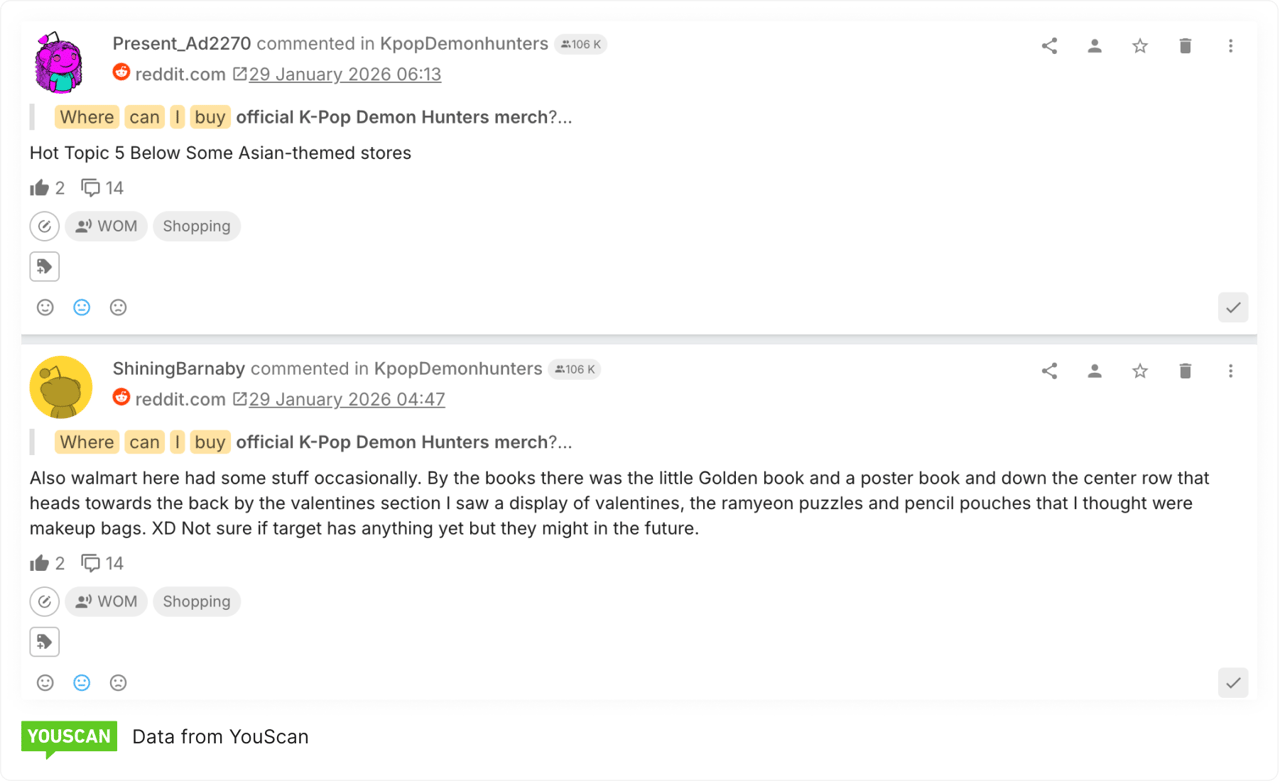
And when they could not find anything official, they built the supply chain on their own.
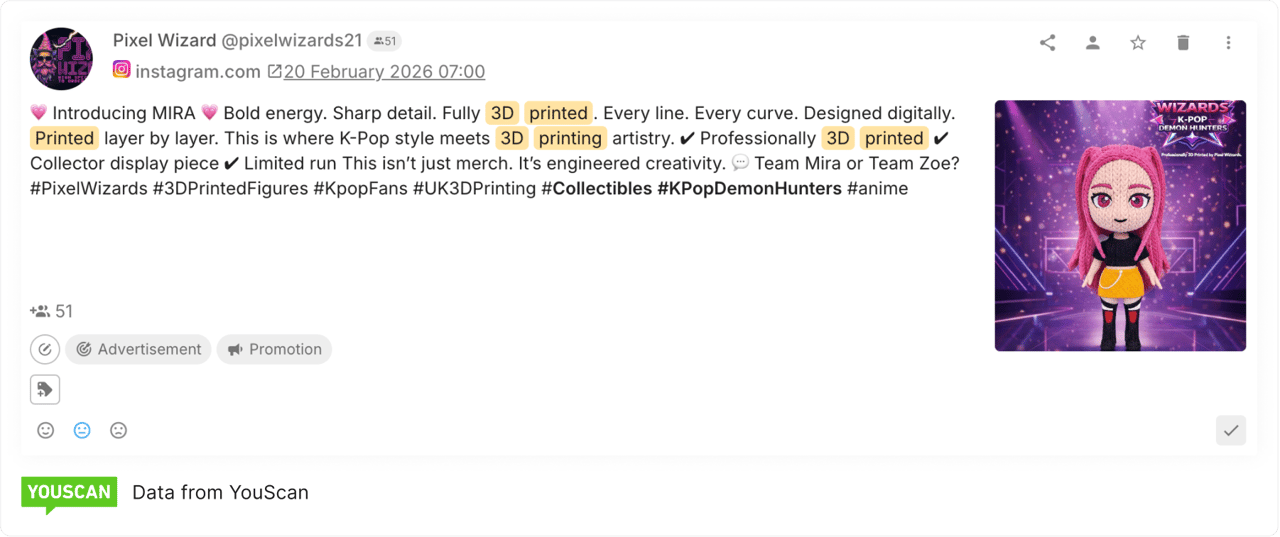
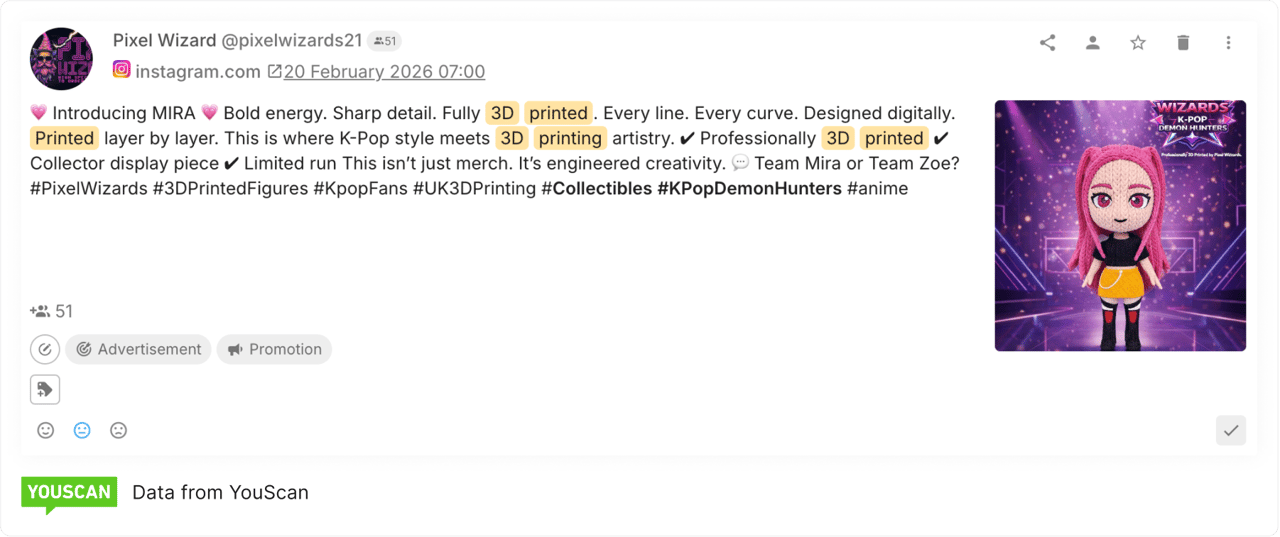
Etsy links started popping up in fan communities. DIY cosplay tutorials gained serious traction, while 3D-printed accessories circulated on TikTok and X.
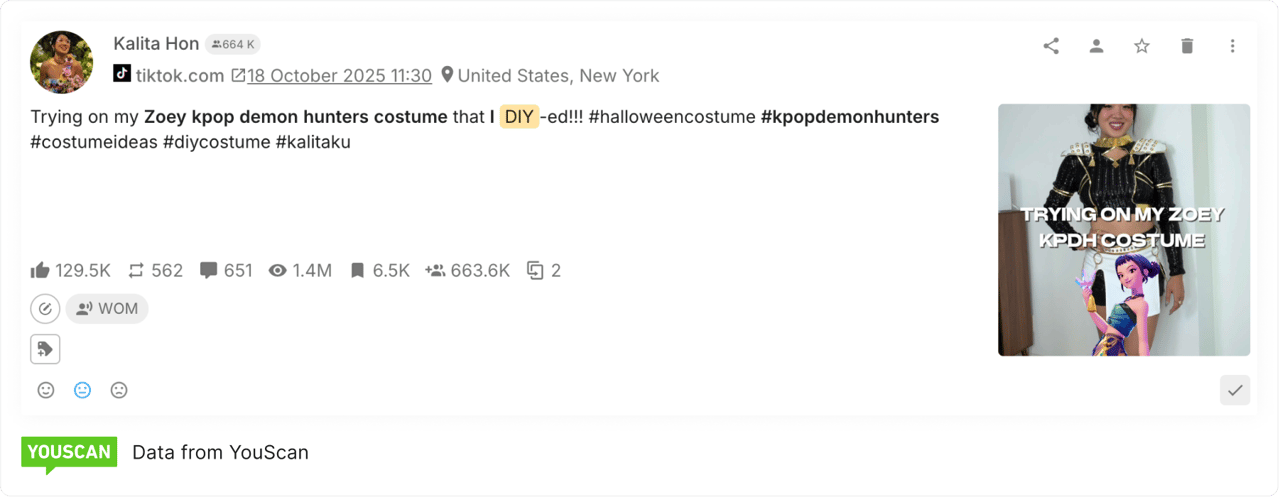
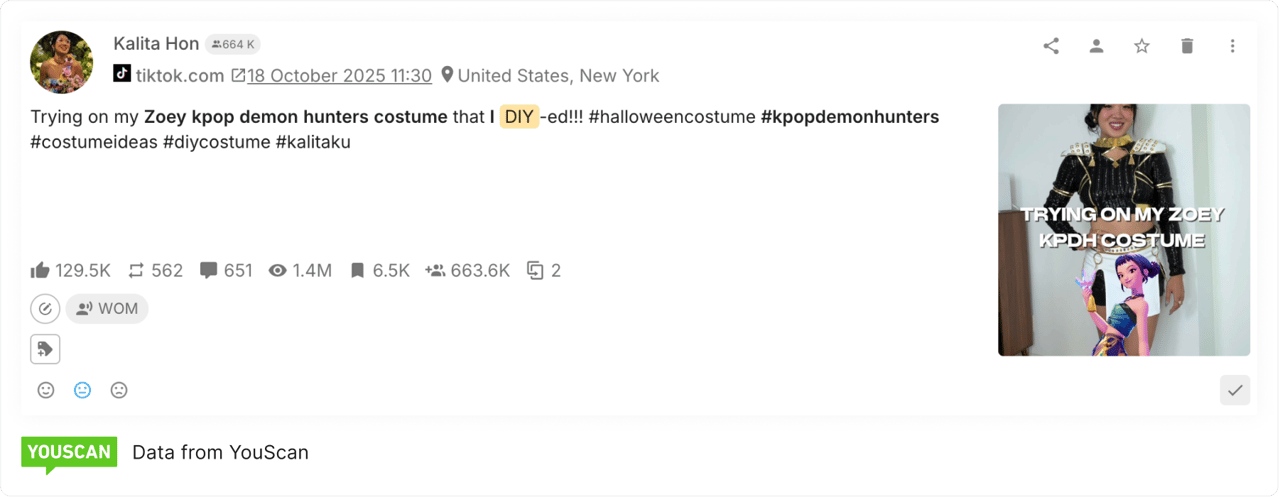
Halloween came around, and official costumes were still unavailable, so fans made their own and shared them with tens of thousands of viewers.
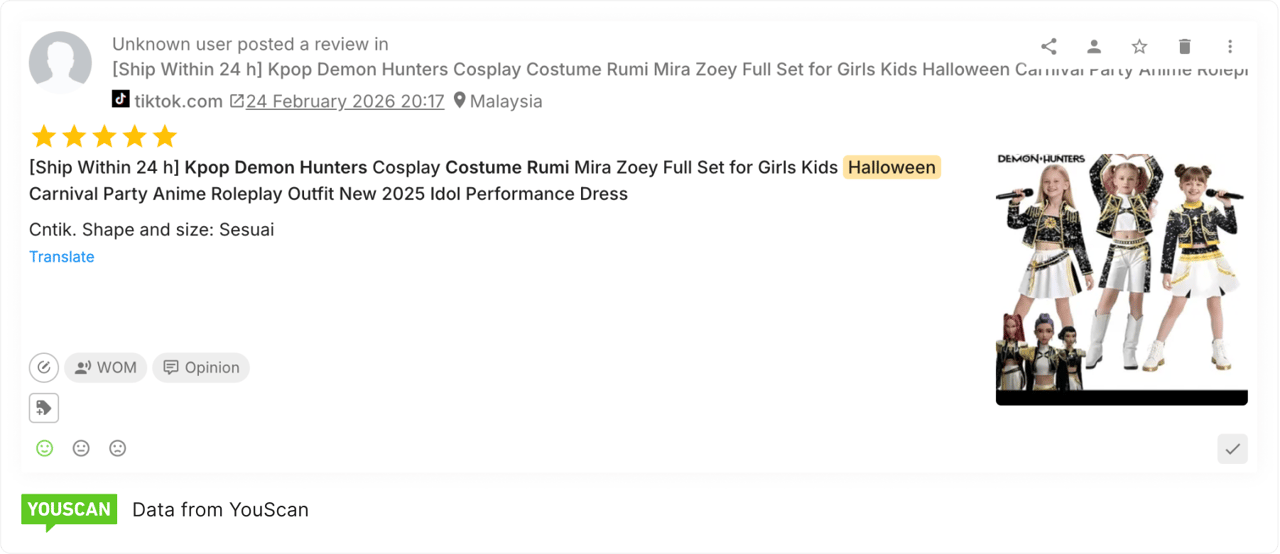
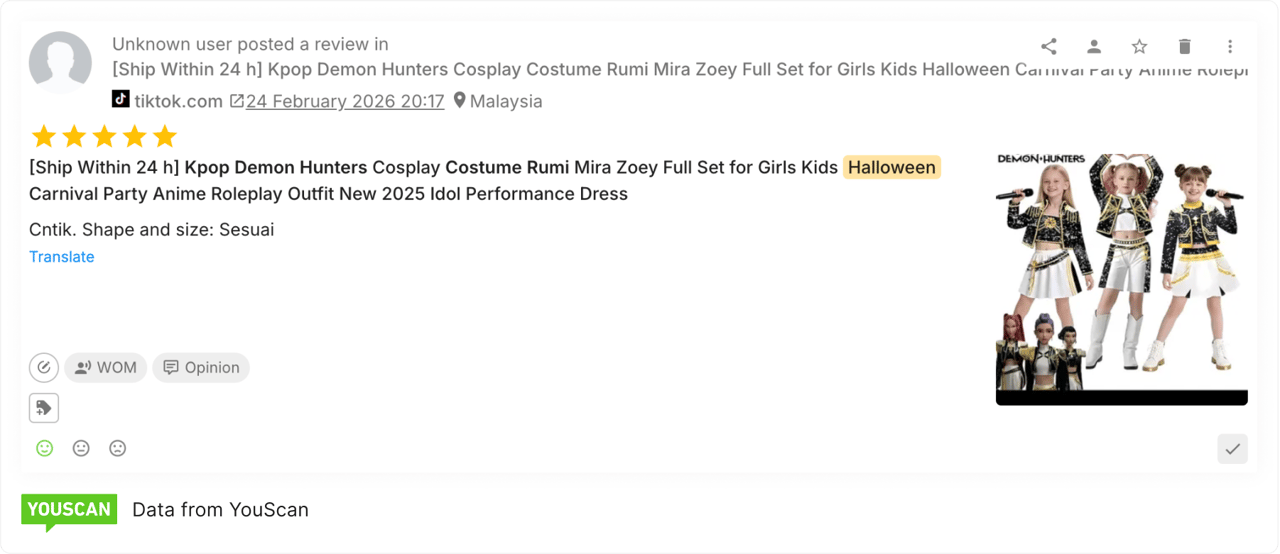
We call this a monetization vacuum. The demand is real and growing, but the official supply is absent. So the fandom fills the gap entirely on its own terms.
Here is why that matters beyond the obvious lost sales. Once unofficial products dominate the brand mentions conversation, the brand loses control in multiple directions at once.
Revenue goes to third-party sellers. Product quality varies wildly with no brand oversight. And on platforms like TikTok Shop, authenticity concerns start eroding consumer trust in the IP itself.
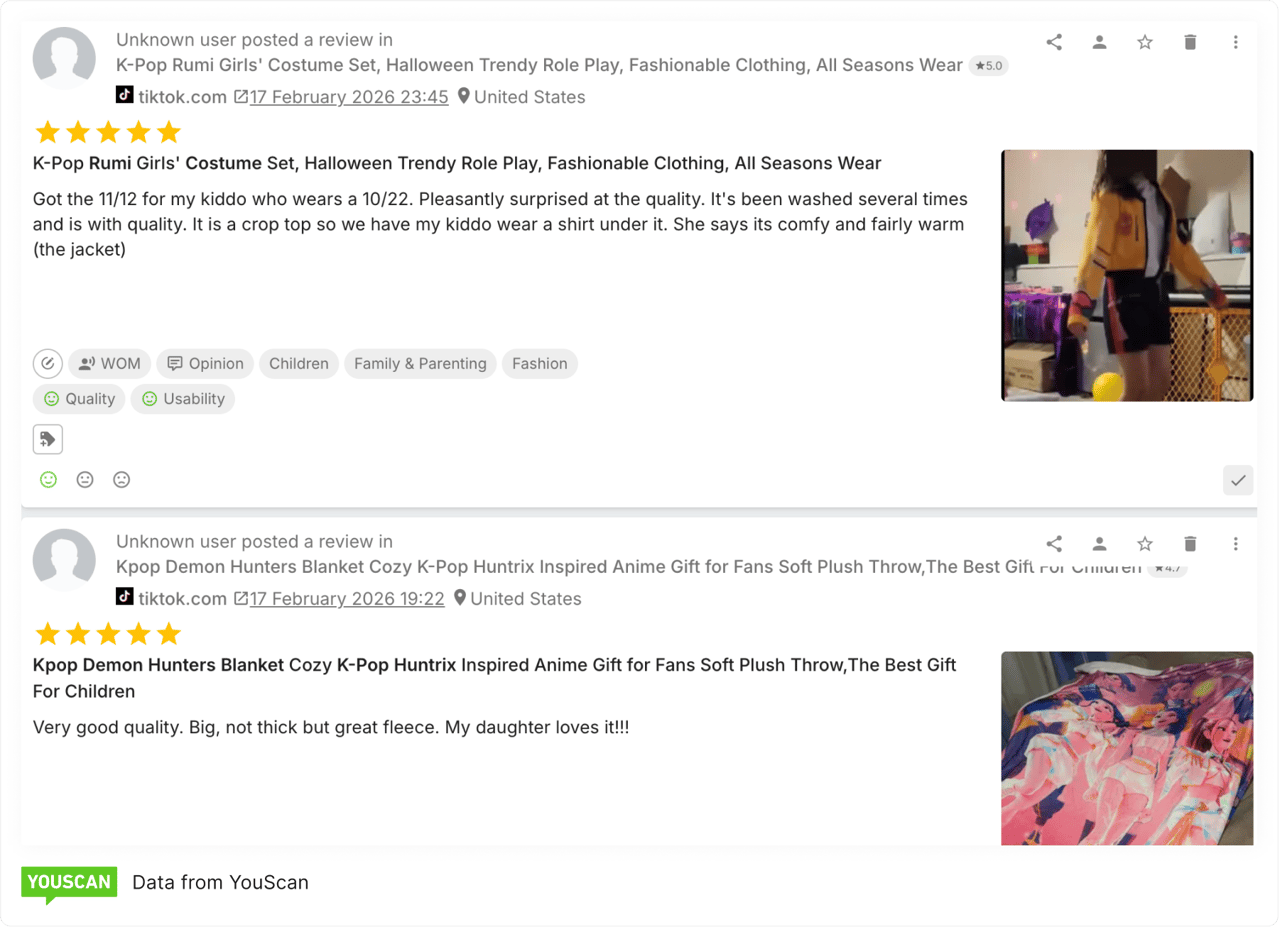
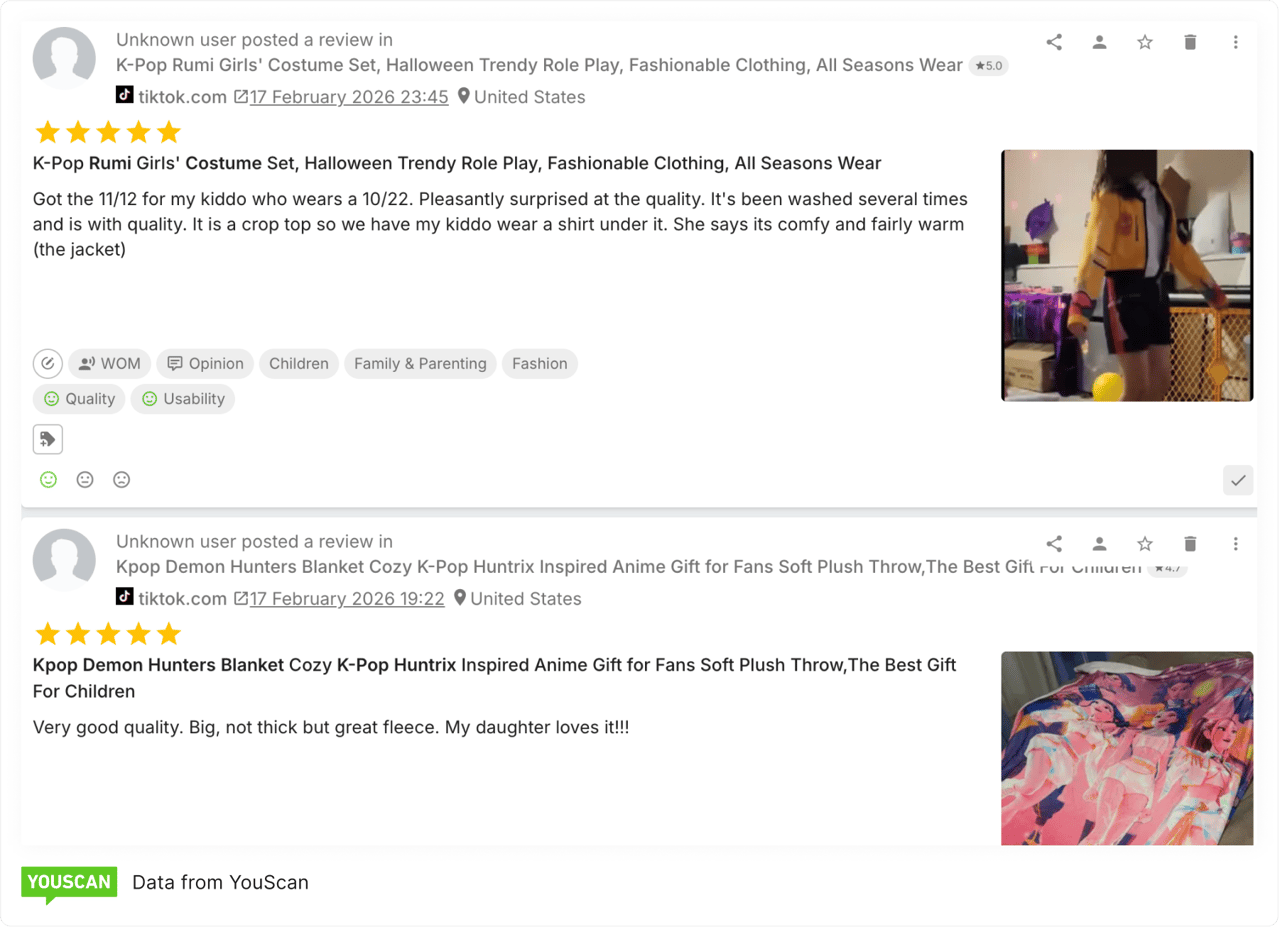
That's a lot of compounding damage from one slow licensing cycle.
Insight 2: Adults drove the first wave, kids came later
Most entertainment brands see animated IP and immediately think kids-first. The merch plan follows that assumption, heavy on lunchboxes and action figures for the under-12 crowd. Makes sense on paper, right?
K-Pop Demon Hunters played out completely differently, as we could see it with Audience Insights.
The first wave of real engagement came from adults, mostly in the 23 to 35 range. And many of them did NOT have children.
These were K-pop fans and anime enthusiasts, people already deeply plugged into Korean entertainment culture. They were the ones posting about wanting collectibles and asking for premium products by name.
Family adoption came second. Parents discovered the IP through their own social feeds, through conversations their peers were having, and then introduced it to their kids.
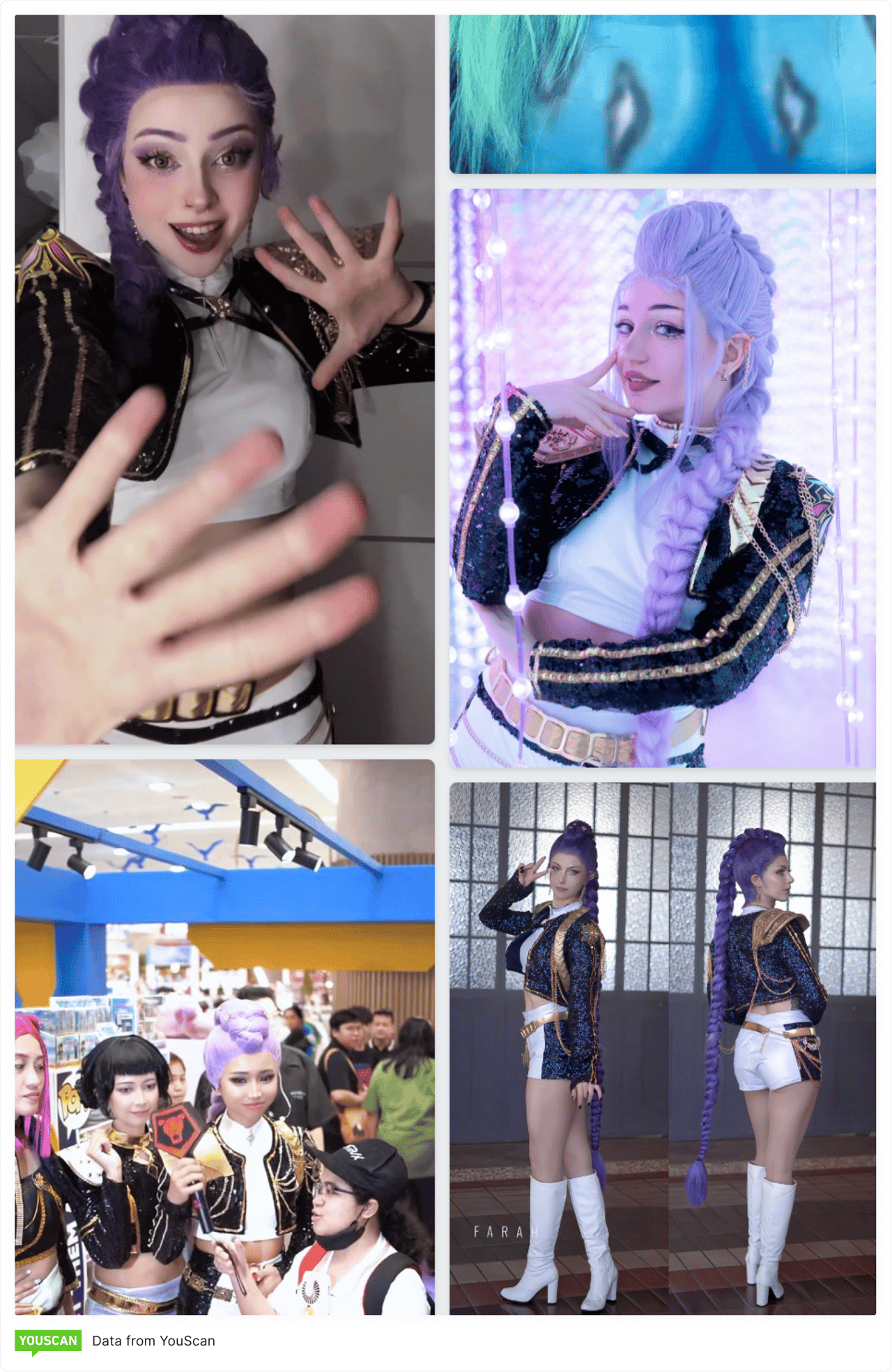
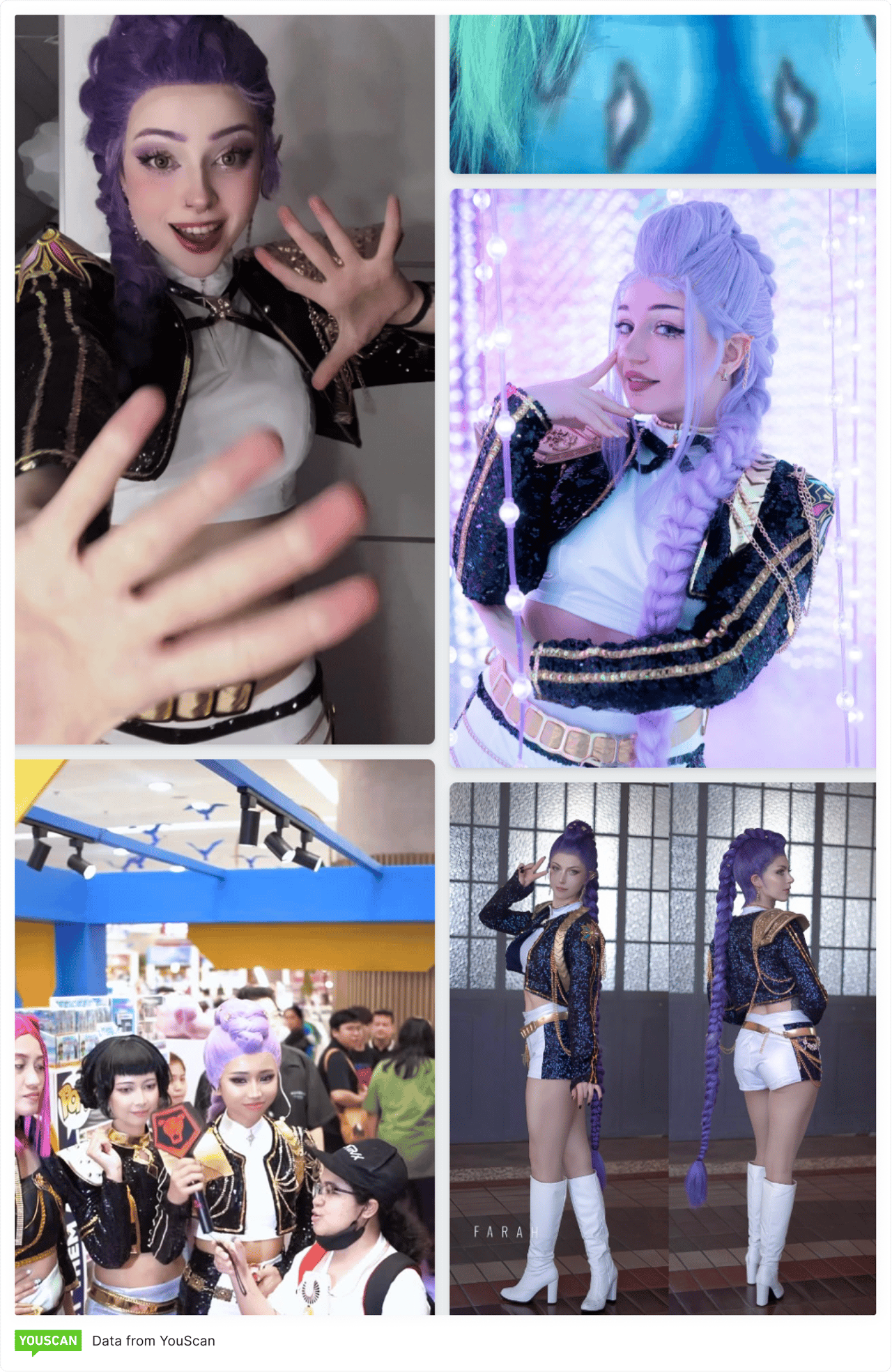
This is actually a well-documented pattern in target audience analysis for how strong cultural trends evolve. Early adopters establish legitimacy, and mainstream audiences follow later.
The practical consequence out of this story:
Brands that launch exclusively with mass-market, kid-focused merchandise in the first wave are targeting an audience that has not fully arrived yet.
The audience that IS there, the adults who are already engaged and spending, wants something completely different. They want premium collectibles, limited editions, and creator collaborations.
Curious what purchase-intent signals look like in real time for your audience? Book a YouScan demo and see how social listening surfaces these patterns before the next demand spike hits.
Insight 3: Each social media platform played a different role
In YouScan, we could track how each platform served a distinct function in the fandom ecosystem. And when you map those functions together, they form something close to a funnel, from discovery all the way through to purchase planning.
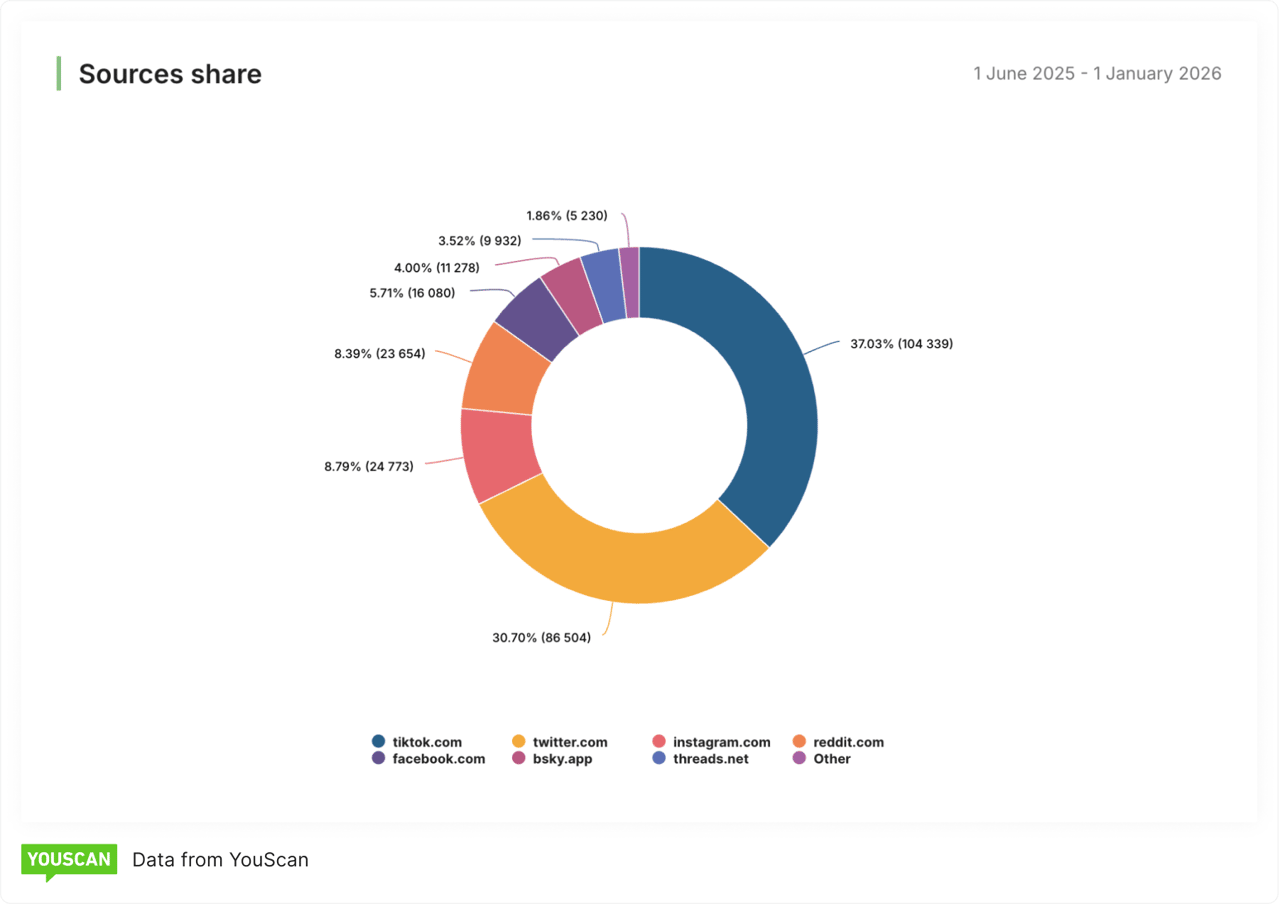
TikTok was the discovery engine
TikTok was where the visual culture around K-Pop Demon Hunters lived. Creator commerce conversations happened here, and fan-made content thrived.
But interestingly, this is also where skepticism about unofficial TikTok Shop merch listings was most vocal.
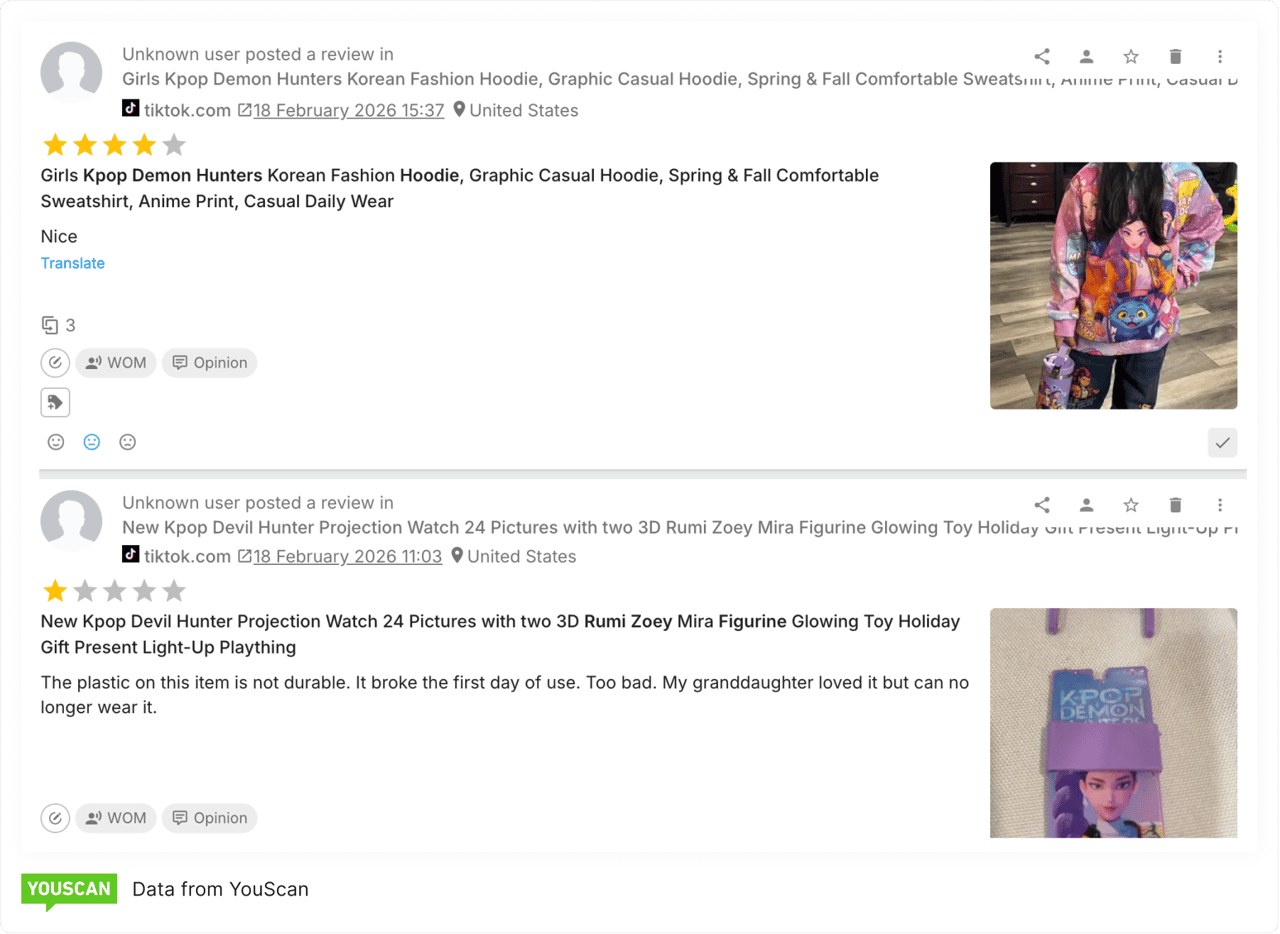
So TikTok was simultaneously driving demand and raising trust concerns. That tension is worth watching closely with TikTok monitoring.
X (formerly Twitter) functioned as the coordination hub
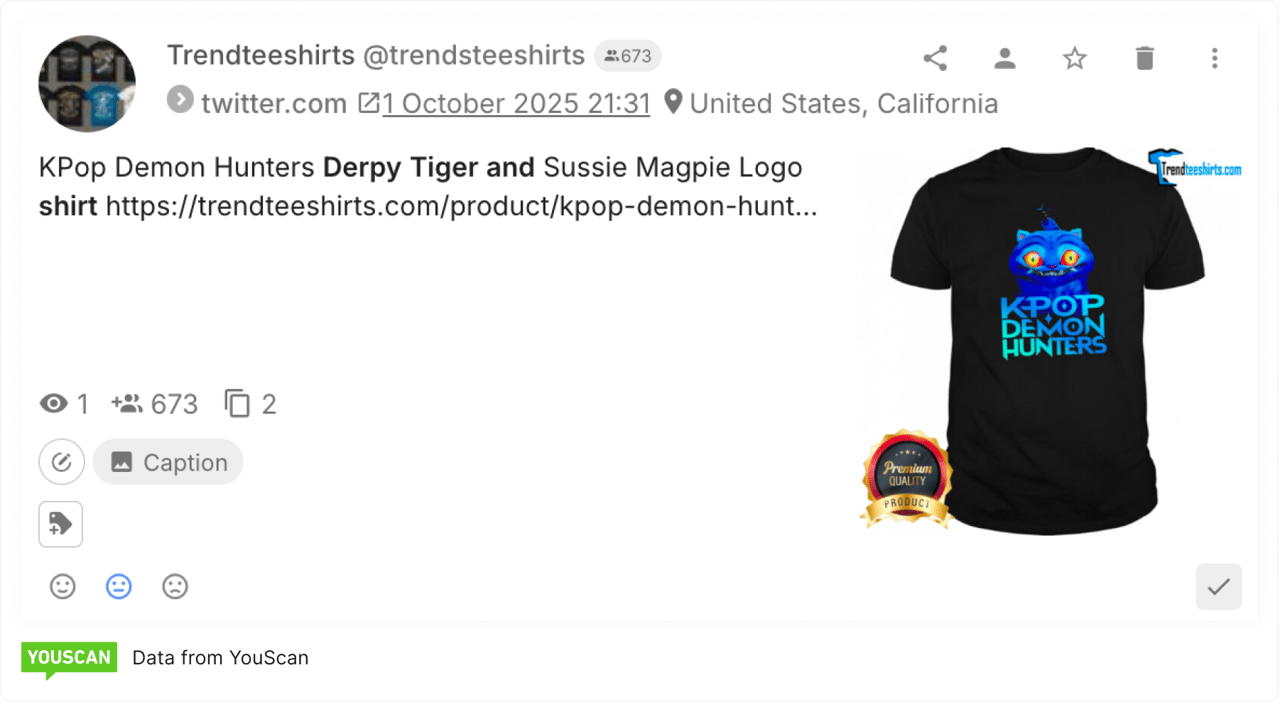
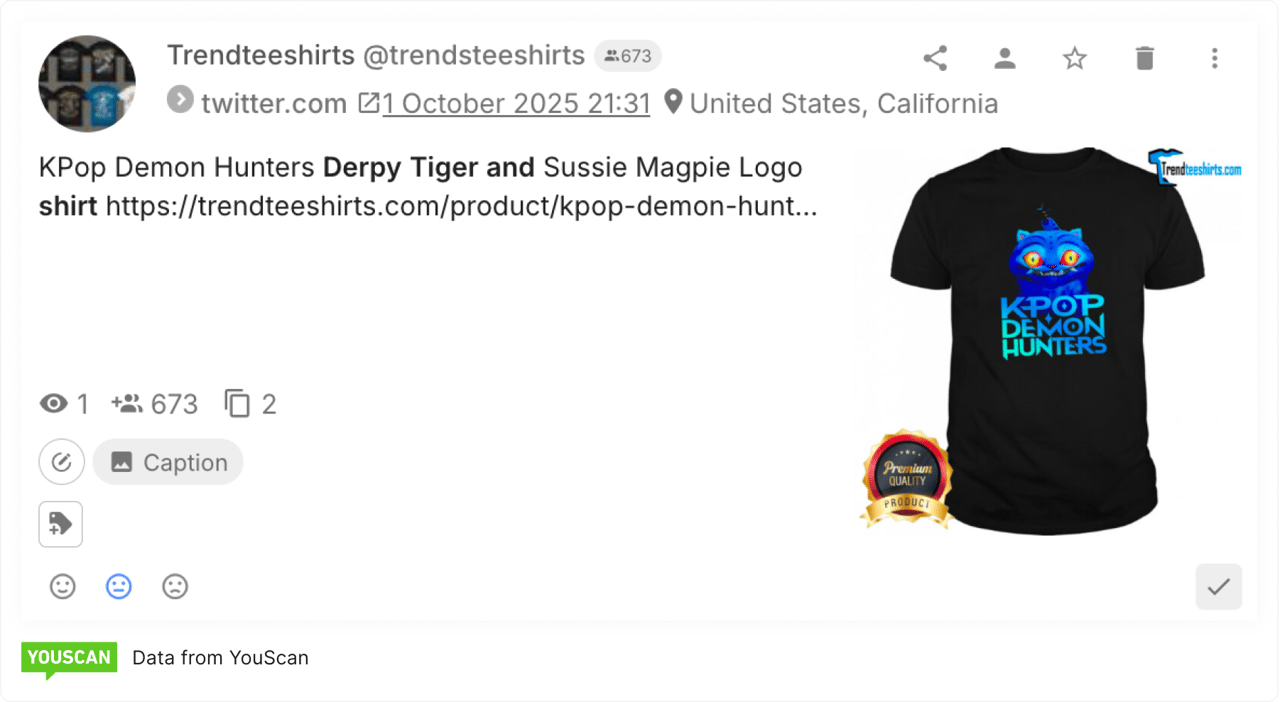
X was where fandom organized in real time: release day campaigns, hashtag pushes, collective calls for official merch, direct messages to brands and retailers.
If you want to understand the operational heartbeat of a K-pop adjacent fandom, X is the place to watch.
Instagram Reels served as an amplification layer
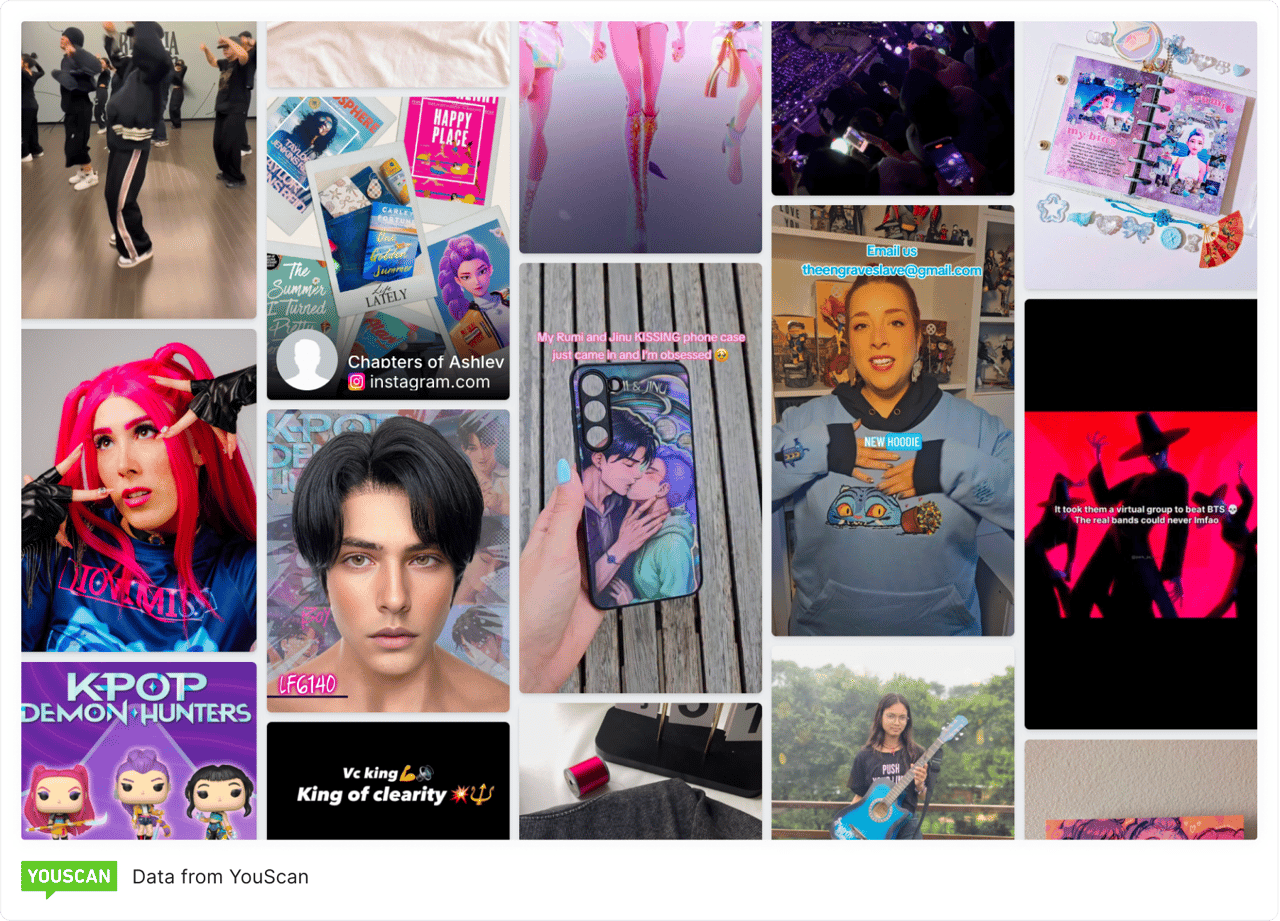
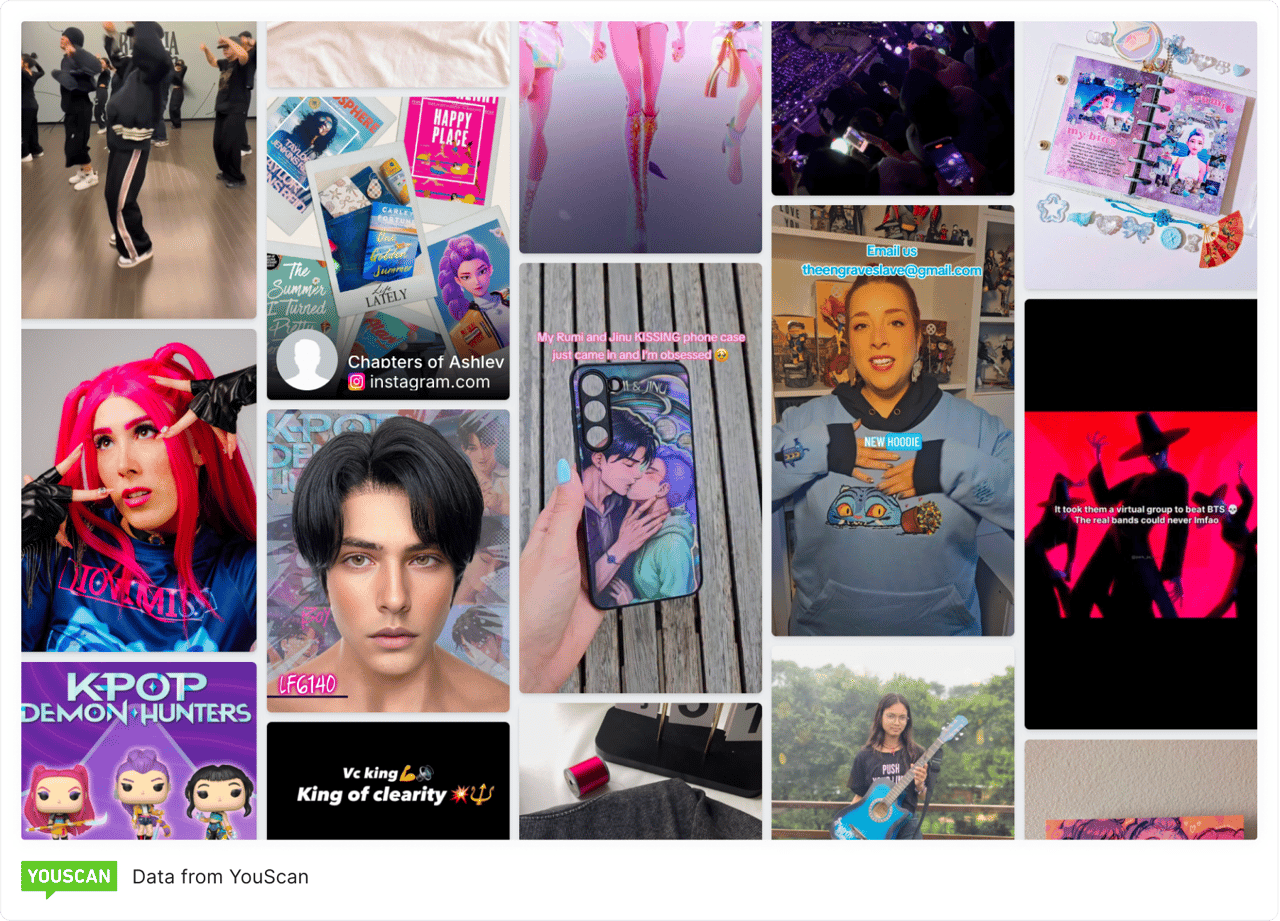
Instagram Reels was picking up content that had already gained traction on X and TikTok trends. We could clearly see it in Visual Insights.
Pinterest was a planning platform
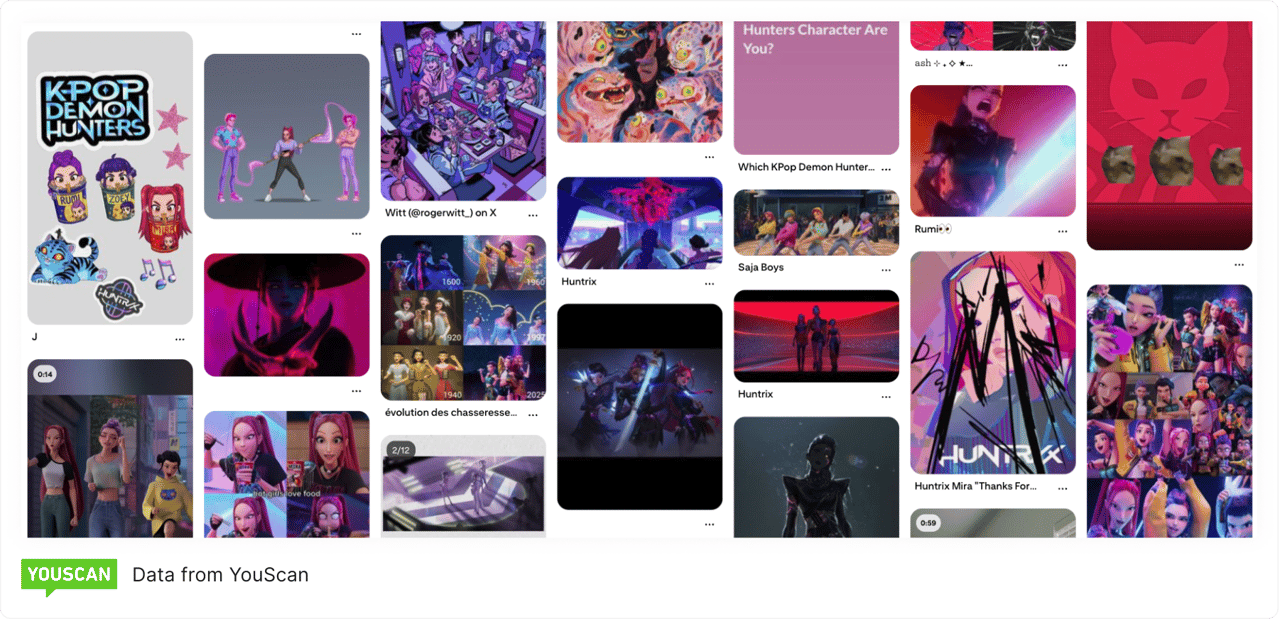
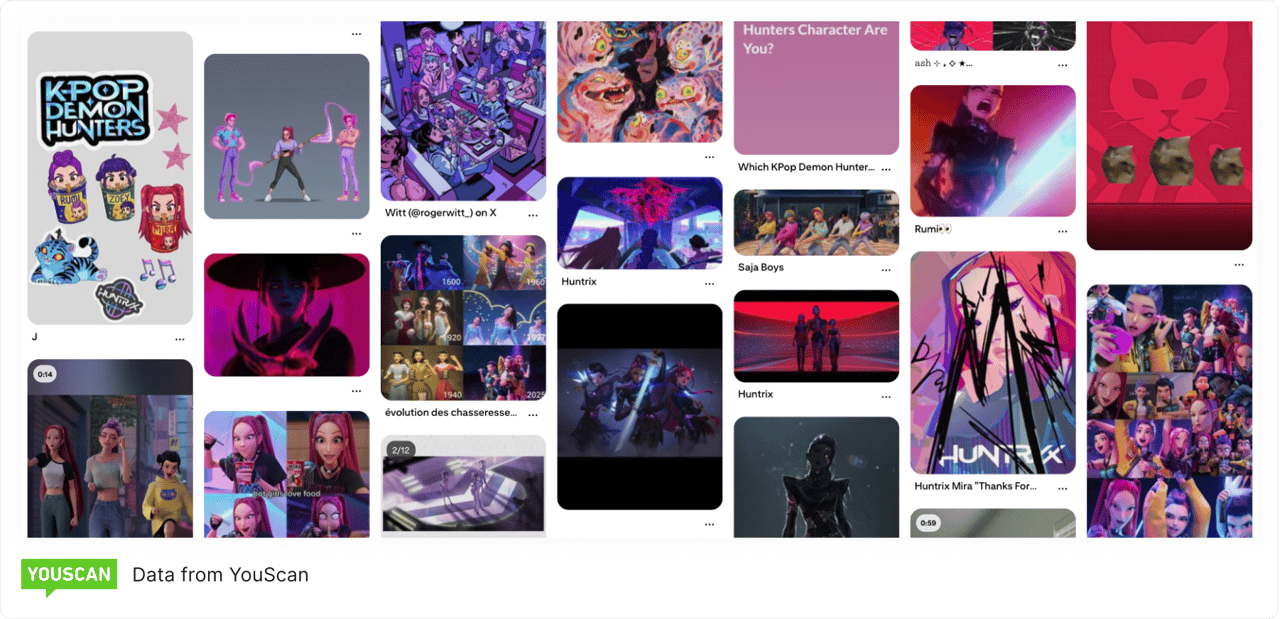
Pinterest came into the picture at a later stage, and this is where the signal gets commercially interesting. When fans move to Pinterest, they are in action mode for costume planning and gift ideas.
That behavior signals purchase readiness in a way that likes and shares on other platforms do not.
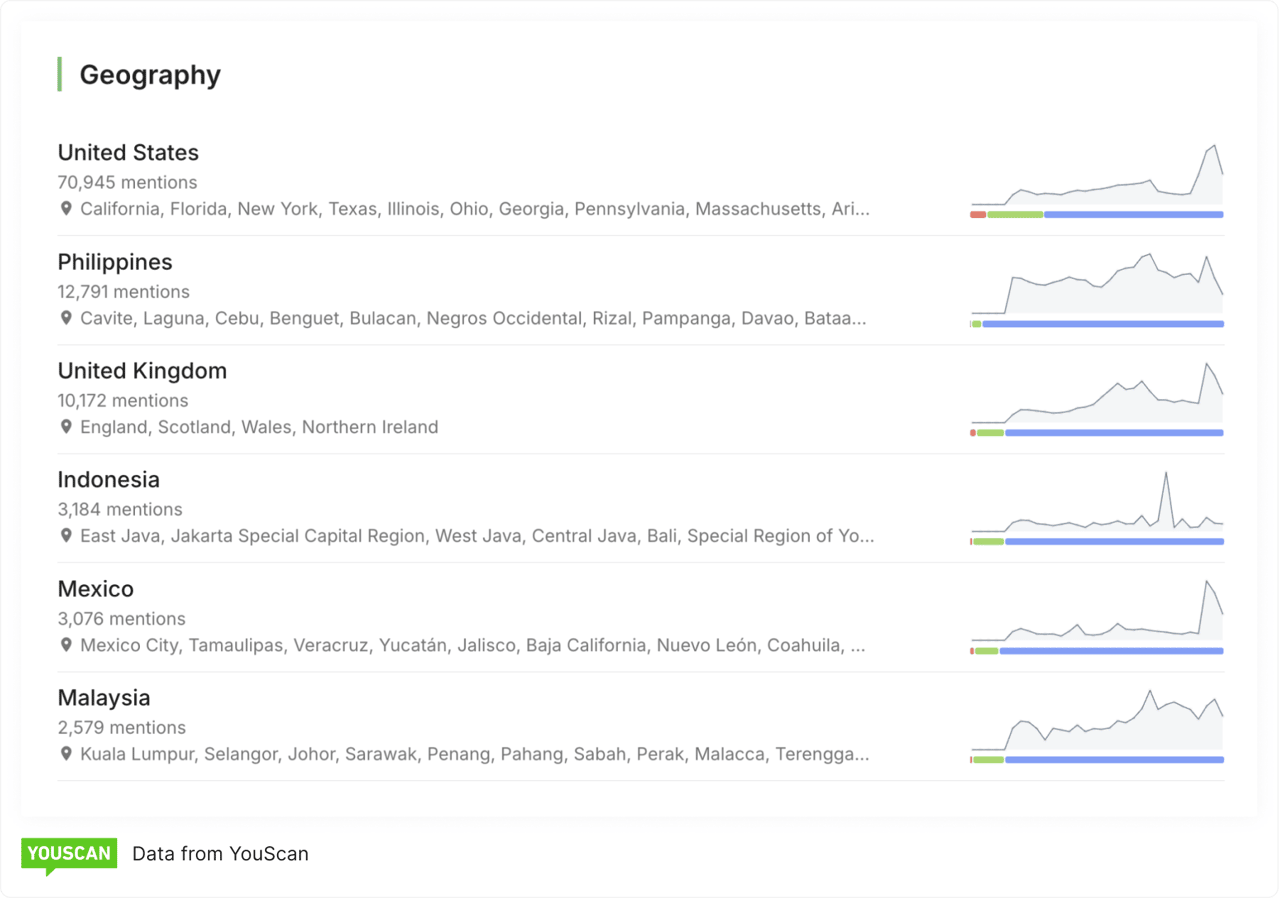
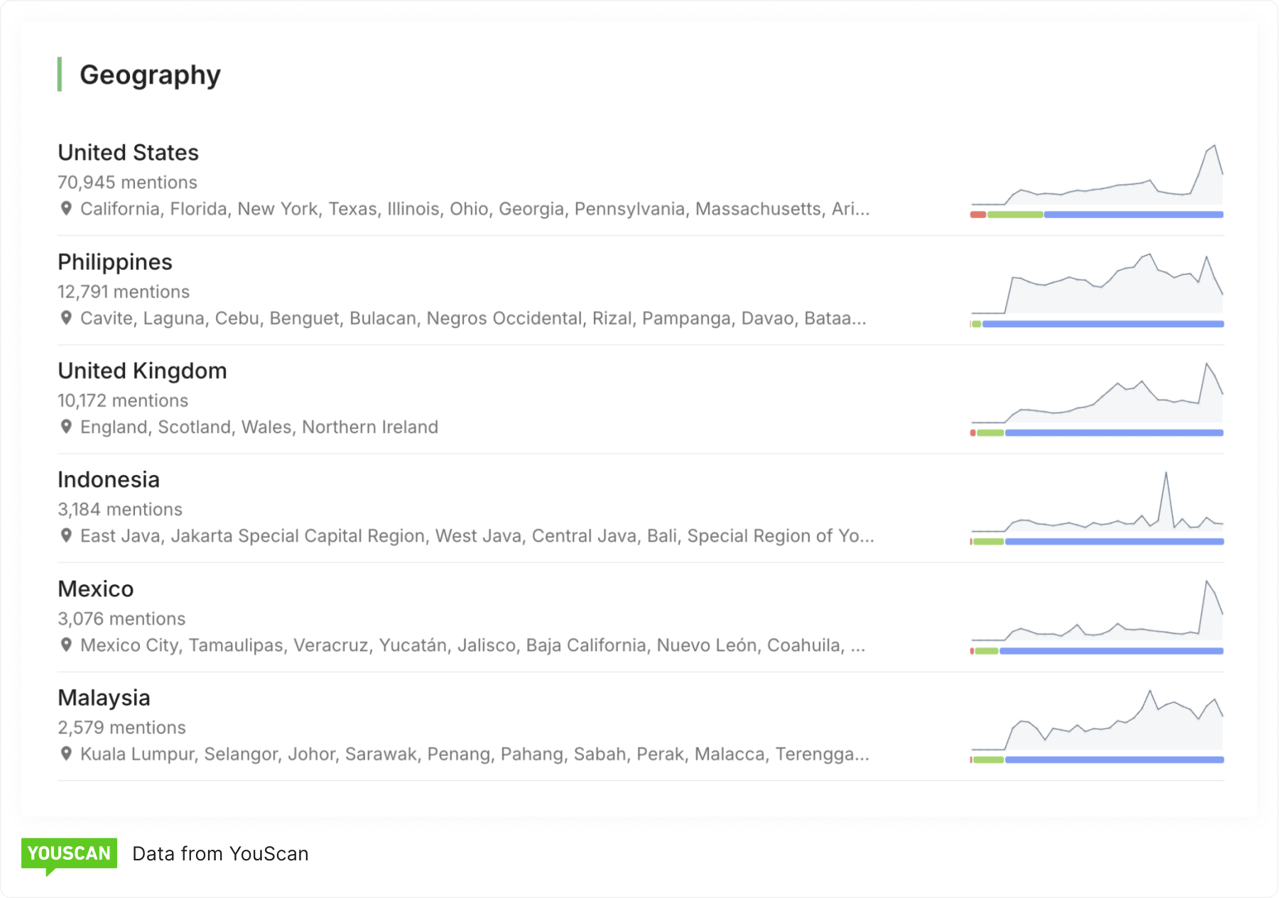
The geographic data added another layer. We saw strong engagement from Southeast Asia, especially the Philippines and Malaysia, alongside Western markets. That kind of genuine East-West cultural alignment is rare, and it signals long-term viability well beyond a single Western hype cycle.
Insight 4: The conversation didn’t die after launch
With a lot of entertainment properties, the social conversation drops off a cliff after the first few weeks. Merch interest follows the same curve. The window opens, it closes, and you are left with whatever revenue you managed to capture during that narrow peak.
K-Pop Demon Hunters did something different.
Six months after release, merch-related chatter was still active and generating fresh engagement. The conversation peaks lined up directly with specific events: partnership announcements like the Hasbro collaboration, new product reveals, sequel confirmation, and even rumors of expanded franchise development.
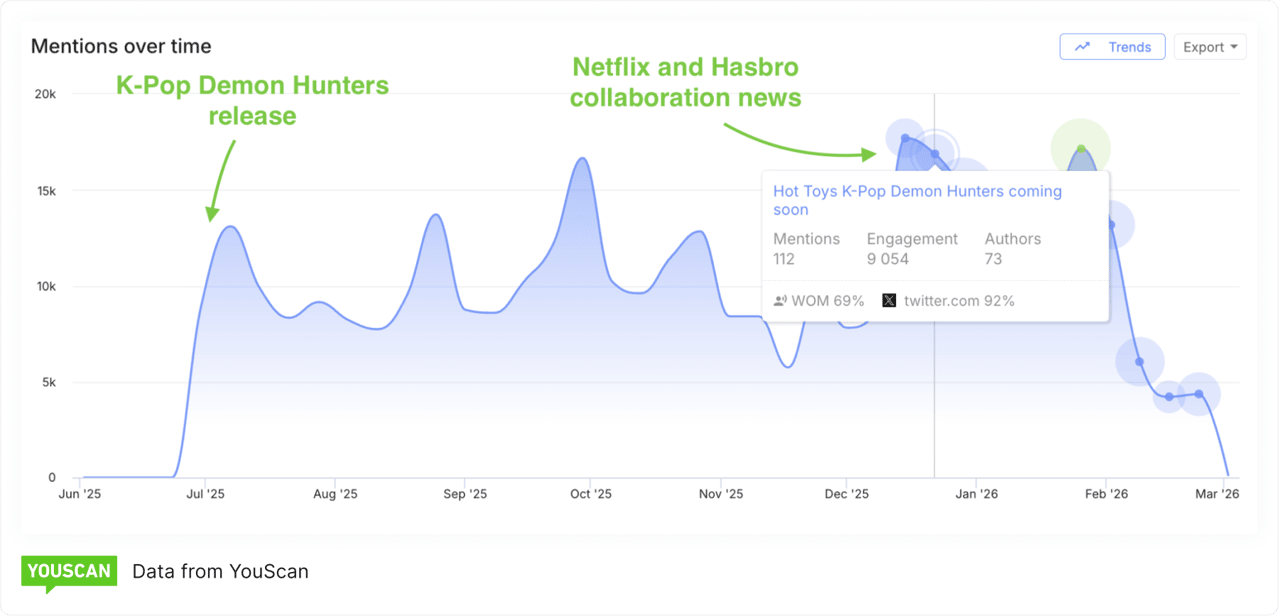
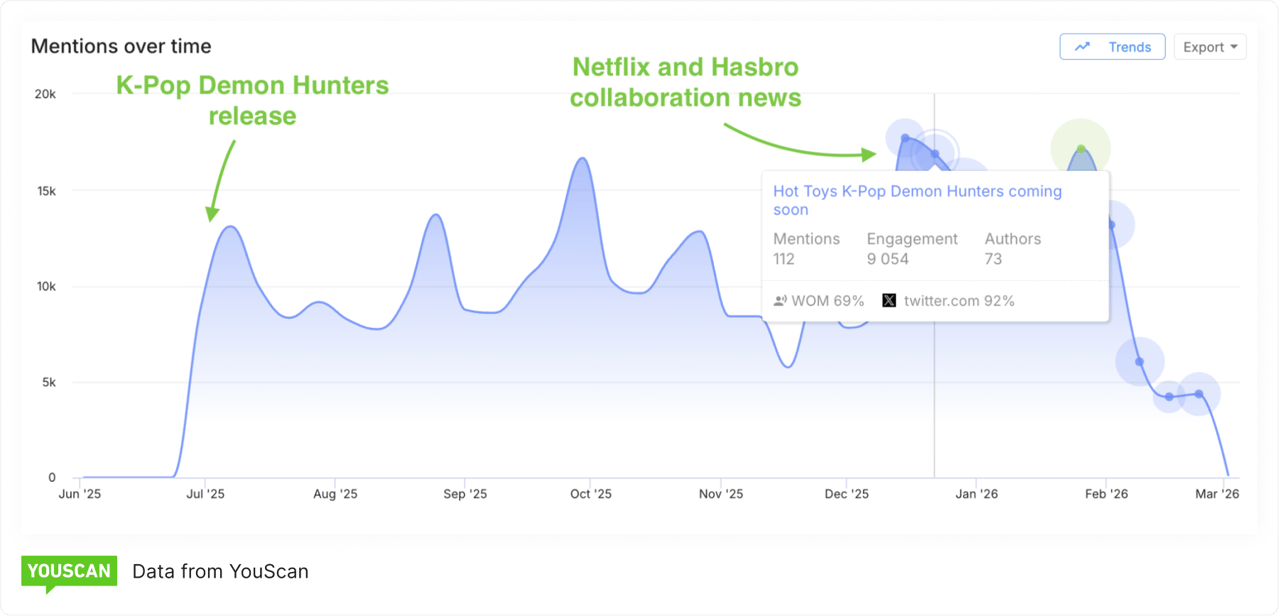
This pattern looks a lot like what we saw in the early days of Frozen. An IP with genuine franchise legs. One that can support multiple merch waves, seasonal activations, and long-term licensing partnerships over years.
Which brings me to the part nobody wants to hear. 👇🏻
Insight 5: The importance of knowing when to slow down
Frozen taught us what happens when merch momentum goes unchecked. At some point, the products become excessive. The messaging gets watered down, and the brand drifts away from the emotional core that made people fall in love with it in the first place.
K-Pop Demon Hunters resonates because of very specific things: strong identity themes, cultural authenticity, and emotional depth that adults and parents genuinely connect with.
Those are exactly the qualities worth protecting.
This is why smart monitoring tracks fatigue signals alongside growth signals:
Sentiment shifts
Declining engagement rates on merch-related content
Growing criticism about over-commercialization
All of these are data points that should trigger a strategic pause, even when the revenue is still flowing.
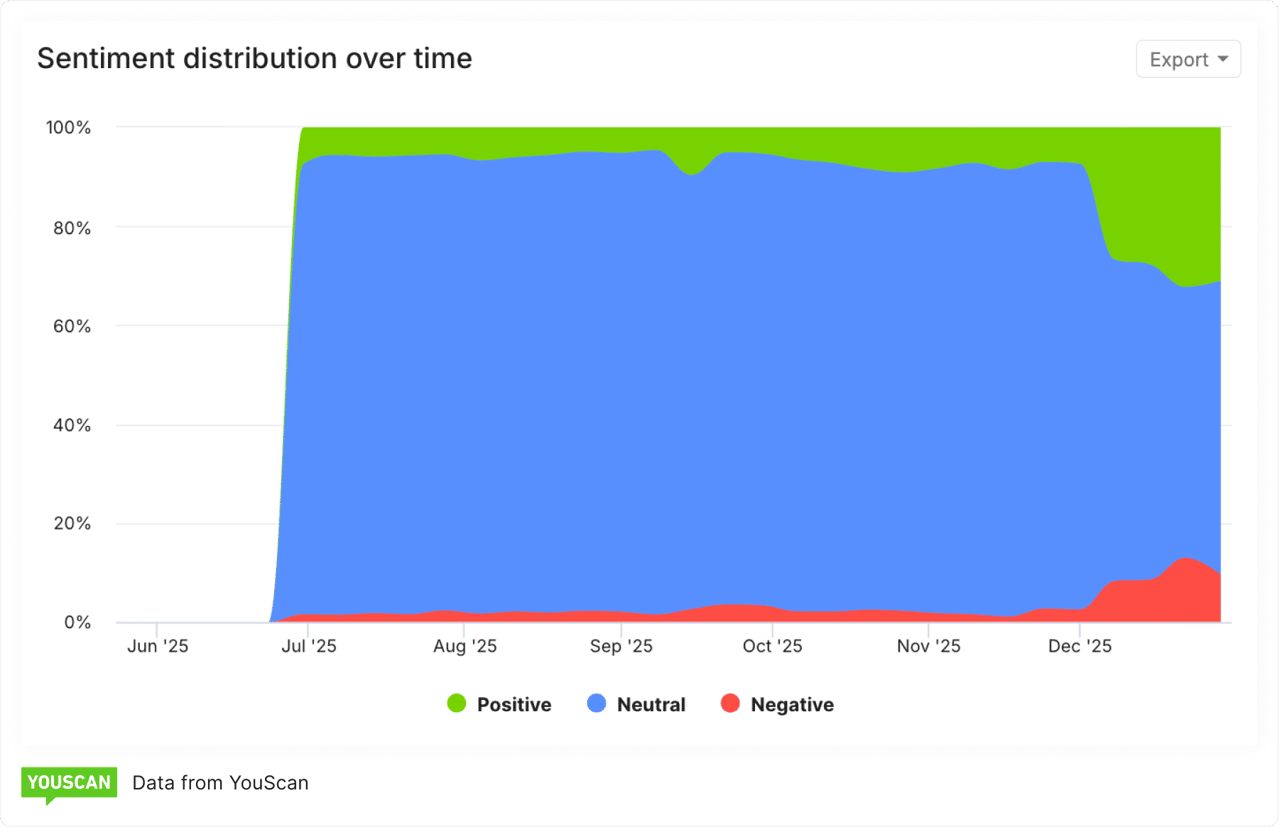
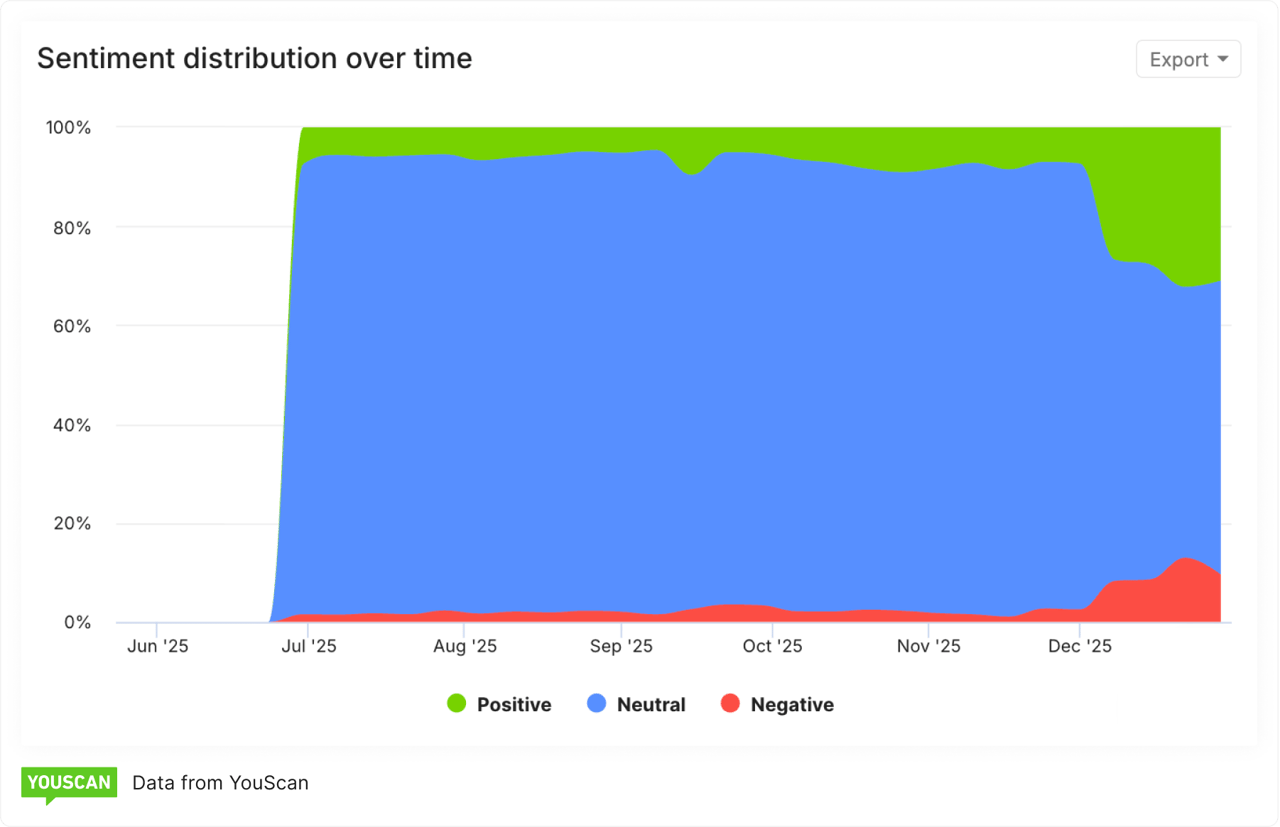
The brands that manage franchise IP well over the long term treat social listening like a throttle. They accelerate when the audience is hungry, but they ease off before the audience starts feeling overfed. That balance is everything.
So what does all of this mean for your team?
K-Pop Demon Hunters is essentially a case study in what happens when audience energy moves faster than brand infrastructure.
For a platform like Netflix, the fandom was signaling purchase intent clearly and early. The data was right there in social listening dashboards, visible months before official merch reached shelves.
Always-on social media listening with merch-intent alerts gives you the ability:
Detect demand before it peaks
Negotiate licensing earlier in the cycle
Activate creator partnerships while the audience is most engaged
Prioritize the right platforms and demographics
Reduce revenue leakage to unofficial sellers
Manage oversaturation before it damages what people love about the brand
Whether you're Netflix-scale or managing a smaller entertainment portfolio, the signals are already out there in your social data. The question is whether you are reading them early enough to act.