Influencer Marketing Guide: How to Build Campaigns That Actually Convert

Here's a pattern I've watched too many times. A brand tries influencer marketing, picks a creator with a chunky follower count, and sends a brief. Crickets. The post-mortem concludes the channel doesn't work for their target audience.
It does work. They just ran it like an ad buy.
A successful influencer marketing campaign rarely comes from one big-name post. Teams pulling real returns out of social media marketing through creators move slower. They obsess about fit before reach, write briefs that don't read like briefs, and lock down measurement before a single post goes up across social media platforms.
What is influencer marketing, really
Strip the jargon, and it's simple. Influencer marketing involves partnering with a social media influencer — someone with an audience that trusts them in a niche your brand cares about. They create content that helps promote products to people who'd never click your ads. Some of that audience, hopefully, buys. That's how influencer marketing works at the most basic level.
What's changed isn't the mechanics — celebrities have been hawking products since the 1920s. The supply has. There used to be maybe a few hundred people worth working with. Now there are millions of creators across multiple social media platforms, from teenagers with 2,000 followers to people whose audiences dwarf national TV networks.
The influencer marketing industry is on track to hit around $33 billion in 2025. Average influencer marketing ROI sits at $5.78 for every $1 spent. So no, it isn't a fad. But it isn't a free money printer either.
The four types of influencers (and which one fits your brand)
Picking the right influencers is mostly about picking the right tier. The biggest mistake I see is choosing creators by follower count. A creator with 8,000 highly engaged followers in your niche will outperform a celebrity with 8 million who barely registered the brief. The more slowly that get cited, always pick the right tier of social media influencer, not the biggest name.
Nano influencers (under 10,000 followers)
Everyday experts. A baker with 3,000 followers in their city. A vintage watch obsessive with 6,000 subscribers. Reach is small, engagement runs 5-8%, sometimes higher.
Nano creators reply to comments. They know their loyal followers. When they recommend something, the audience reads it as a recommendation, not a promotion.
Local businesses or brands selling into niche communities and niche audiences? Start here. Great for targeted campaigns where authenticity matters more than reach.
Micro influencers (10,000 to 100,000 followers)
The sweet spot for most B2B and DTC brands. Period.
Real authority in a niche. Big enough for meaningful reach, small enough to feel personal. Lower cost per partnership, higher engagement rates. Sprout Social's data backs this: micro and mid-tier creators outperform larger accounts pound for pound. Better content quality per dollar, too — they're not juggling 20 brand deals at once.
Macro influencers (100,000 to 1 million followers)
Professionals. They've turned this into a business — managers, content calendars, rate cards. Content is polished, sometimes too polished. Audiences are bigger but less tight-knit than micro creators.
Worth it when you need to enhance brand awareness at scale or reach a brand's target demographic broadly. Less worth it for conversions or precise audience targeting.
Mega influencers (1 million+ followers)
Celebrities. Six-figure-per-post creators.
They move the needle on brand visibility in ways smaller creators can't. If you have the budget and a diverse audience to reach, fine. But many of those accounts aren't actually run by the celebrity — they're run by management. Audiences can tell.
A note on virtual influencers
Virtual influencers like Lil Miquela never miss deadlines, never get cancelled. They also trade away the connection between a real person and their audience. Experimental at best.
Building a successful influencer marketing strategy
Campaigns that flop share an origin story: somebody had a budget, picked a creator, called it a day. That's not strategy. An effective influencer marketing strategy starts long before you DM anyone, and ideally sits inside your broader social media strategy.
Define your campaign goal: brand awareness, traffic, or sales
Sounds obvious. Brands still get it wrong.
Figure out what success looks like before you shop. Top-of-funnel goals like brand awareness and website traffic? Mid-funnel signups? Bottom-of-funnel direct sales? Each answer points to a different creator and a different influencer strategy. A BOFU campaign should lean on micro influencers with strong conversion histories. A TOFU influencer campaign focused on increase brand awareness can tolerate macro or mega creators with broader reach.
Match your target audience for precise audience targeting
You've probably built a customer persona. Build an influencer persona to match. Which creators does your target audience follow? Which platforms do they live on? If your buyer is on LinkedIn, an Instagram-first creator won't move the needle.
Your audience demographics need to overlap with your creator's — that's how you find suitable influencers and the right influencers for your target market. Get the overlap right and you've set up precise audience targeting that paid social ads can't touch.
Vet for brand alignment, not just numbers
Follower count is embarrassingly easy to fake. Services will sell you 10,000 followers for the price of a coffee.
Engagement rates, comment quality, audience authenticity — those matter. So does brand alignment. Does the creator's tone fit yours? Their values match your brand values? Authentic partnerships beat polished ones.
Influencer marketing tools across multiple platforms
Confession: you don't need a tool for everything. Two creator partnerships a quarter? A spreadsheet's fine.
Once you're juggling more than three or four influencer collaborations at once, that spreadsheet falls over. That's when an influencer marketing platform earns its keep — especially running across multiple platforms like Instagram, TikTok, and YouTube at once.
Influencer discovery tools find creators. The best ones don't just filter by follower count — they pull from social listening data, surfacing people already talking about your category. That's how you create an influencer marketing program that scales. Campaign management platforms handle the rest: briefs, contracts, deliverables, payments.
Social listening tools are the layer most brands skip and regret. What happens after the post goes live? Who reshared the branded content? What's the sentiment in the replies? You get deeper insights and actionable insights you can use to optimize future campaigns.
Where YouScan fits
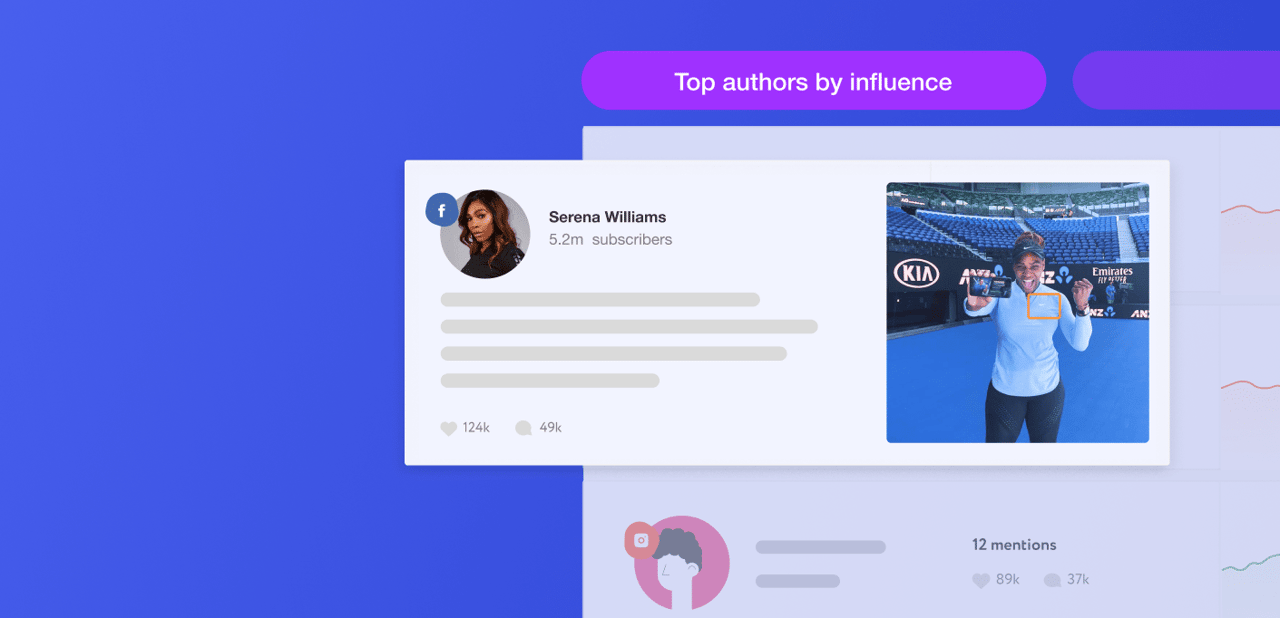
Full disclosure: this is the YouScan blog. YouScan is one of the social listening platforms built for this work. The Authors dashboard surfaces top creators by mention volume, audience size, and engagement — useful for influencer outreach and influencer discovery. Add Insights Copilot, and you can ask questions about that data in plain language.
After a campaign goes live, social listening dashboards track sentiment, reach, and conversation context — including newer sources like Moltbook monitoring, supported in English and Ukrainian.
One more if TikTok is in your mix: Tiger Finder, built for TikTok creator discovery, runs on plain-language prompts. Teams pair it with YouScan — Tiger Finder for niche creators, YouScan for what happens after.

Running an effective influencer marketing campaign
Strategy is easy to talk about. Execution is where things fall apart. Three things to get right for an effective influencer marketing campaign.
Brief, don't script
Good influencer content doesn't sound like an ad because it isn't one. Give creators creative freedom — tell them what your product does, what you need them to communicate, what to avoid. Then leave them alone.
Every word you put in a creator's mouth makes the post sound 10% more like an ad. Branded content that overrides the creator's voice is just sponsored content nobody clicks.
Disclose sponsored content properly
The FTC's rules aren't subtle. Sponsored content has to be labelled clearly — #ad or #sponsored, visible, not buried in 30 hashtags. The counterintuitive bit: audiences read undisclosed content as more sketchy, not less. Proper disclosure builds trust.
Influencer relationships and paid partnerships that compound
Most teams get this wrong. The brands actually winning at this run long-term influencer marketing campaigns with the same handful of creators over six, twelve, eighteen months. The first post moves almost nothing. The fifth shifts perception. By the tenth, the audience associates your brand with that creator. Repetition is the cheat code nobody wants to wait for. When both the brand and the creator have skin in a long-term influencer partnership, paid partnerships compound.
How you manage influencer relationships matters as much as how you find them. Pay promptly. The best influencer marketing campaigns treat creators like partners.
How to measure engagement rates, marketing campaigns, and marketing strategies
If you can't prove campaign performance, you won't get to run another one. The KPIs depend on funnel stage, but here's the floor for measuring marketing strategies that involve creators.
Engagement rates. Likes + comments + shares + saves, divided by reach. Above 3% is healthy. Above 6% is excellent.
Reach and impressions. How many unique people saw the post — not follower count, which only tells you the ceiling.
Click-through and website traffic. UTM parameters on every link. No UTMs, no proof.
Conversions and direct sales. Unique discount codes per creator, or trackable affiliate links.
Sentiment and share of voice. Are people talking about your brand more? Where social listening tools earn their fee.
Build the dashboard before the campaign goes live. Solid measurement is what unlocks every successful influencer marketing strategy you'll run next.
Common mistakes in influencer collaborations to avoid
Quick list of influencer marketing mistakes that keep wrecking otherwise decent campaigns:
Picking creators by follower count. Yes, again. Worth saying twice.
Skipping the vetting. Read the last 20 posts. Read the comments. Check for fake followers. Five minutes of diligence saves you from six-figure embarrassment.
Scripting the post to death. The whole point of working with creators is that they sound like themselves.
One-and-done. One post per creator per year scattered across 12 people doesn't build anything. Sustained influencer collaborations are where the real returns come from.
Stacking influencer spend on paid social ads without checking how they interact. Sometimes the creator post is doing the work your retargeting takes credit for. You won't know without measuring.
The short version
Pick the right tier for the job. Vet for fit before reach. Brief without scripting. Disclose properly. Measure from day one. Run partnerships long enough to compound.
None of this is rocket science. But the brands doing it consistently are the minority — which is why there's room to win.
Want to see how YouScan handles creator discovery and campaign measurement? Request a demo, and we'll walk you through it using data from your category.
FAQs
How much does influencer marketing cost?
Costs vary enormously by tier and platform. Nano influencers might post for a free product or $50-$200. Micro influencers typically charge $200-$2,000 per post depending on niche and platform. Macro and mega rates start at five figures and go up fast. The cleanest way to budget: pick your goal, work out what one conversion is worth to you, then back into how many partnerships that supports.
Does influencer marketing work for small businesses?
Yes, and often better than for large brands. Small businesses can work with nano and micro creators on tight budgets — sometimes just gifting product — and see strong returns because the audiences are tight, local, and engaged. The key is matching creator audience to your brand's target demographic precisely.
What's a good engagement rate for influencer marketing?
Above 3% is healthy. Above 6% is excellent. Nano and micro influencers regularly hit 5-10% because their audiences are smaller and more invested. Mega influencers often sit below 1.5% — the audience is huge, but the relationship is thinner.
How do I find suitable influencers for my brand?
Three approaches, used together. First, search your category hashtags and competitor mentions manually to see who's already creating relevant content. Second, use influencer discovery tools or social listening platforms to surface creators talking about your niche. Third, ask your existing customers — the ones with engaged audiences are often the best fit because they already love the product.