HR Branding: How to Build an Employer Brand That Actually Works


Your company has an employer brand whether you've built one intentionally or not. It lives in Glassdoor reviews, employee LinkedIn posts, interview horror stories shared over coffee, and the general vibe job seekers pick up when they research your organization. The question isn't whether you have one — it's whether it's telling the story you want.
HR branding is the practice of shaping how current employees, potential employees, and the broader talent market perceive your organization as a place to work. Done well, a strong employer brand reduces your cost per hire, speeds up time to hire, and builds a pipeline of people who genuinely want to join your team. Done poorly — or ignored entirely — it makes every recruiter's job twice as hard.
What is HR branding, and why does your employer brand matter?
At its core, HR branding sits at the intersection of recruitment strategy, company culture, and brand reputation. It's what your employer brand tells job seekers about your workplace environment before they ever submit an application. And those signals matter. Research from LinkedIn shows that organizations with a positive employer brand see up to 50% lower cost per hire and 28% lower turnover.
Think about it this way: if your company's reputation on review sites is sitting at two stars, most qualified job candidates will scroll right past your job descriptions, no matter how competitive the salary. A compelling employer brand works in the background — attracting high quality candidates to your career site, driving employee referrals, and making your recruitment process faster.
But here's the thing. A strong employer brand can't be faked. It has to reflect the actual employee experience — what your workplace culture looks and feels like on a random Tuesday, not just during company events or all-hands meetings.
Define your employee value proposition
Every effective employer branding strategy starts with a clear employer value proposition (EVP). This is the deal you're offering: what employees get in return for their skills, energy, and time. And no, "competitive salary and benefits" doesn't count as a real EVP. That's table stakes.
Your employer value proposition should articulate what your company stands for, including your company's mission, the career development opportunities you offer, your approach to work life balance, and the intangible things that make employees feel like they're doing more than just a job.
To build an authentic employer brand, start with your people. Run employee feedback surveys. Talk to new employees about what attracted them. Ask current employees why they stay. Look at exit interview data for patterns. The gap between what you promise and what people experience is where your employer brand either thrives or falls apart.
Some questions worth asking: Do your company values actually show up in day-to-day decisions? Do employees feel heard? Are career development opportunities real, or just talked about in onboarding?
Build a consistent employer brand across every touchpoint
One of the biggest mistakes companies make with their branding strategy is inconsistency. The career page says one thing, the hiring process communicates another, and the actual workplace environment is something else entirely. Prospective candidates notice this disconnect fast.
Consistent branding means your social media posts, career site content, job descriptions, and internal communications all tell the same story. Your organization's mission should come through clearly whether someone is reading a LinkedIn post from one of your brand ambassadors or sitting in a first-round interview.
Here's what that looks like in practice:
Job descriptions should reflect your real culture, not generic corporate language. If your team is informal and collaborative, write like it. If you value deep technical expertise, make that clear. Job seekers can tell when descriptions are copy-pasted templates.
Your career page needs to go beyond stock photos and vague mission statements. Feature employee testimonials, employee stories about real projects, and honest snapshots of what the day-to-day looks like. Employee generated content — photos, videos, social media posts from your team — performs far better than polished corporate content because it feels real.
Internal brand matters too. If your internal communications don't match your external messaging, engaged employees will eventually notice and disengage. Consistently communicating your company values internally is what turns your team into authentic brand ambassadors.
Use social media to amplify your employer branding efforts
Your social media presence is one of the most visible parts of your employer brand. Job seekers regularly check company social media platforms before applying — they're looking at what you post, how you interact, and what your employees are sharing on their own accounts.
Effective employer branding strategies on social media include sharing employee achievements and success stories, highlighting company initiatives like diversity initiatives or employee resource groups, posting behind-the-scenes content from company events, and amplifying employee stories that show what your organization stands for.
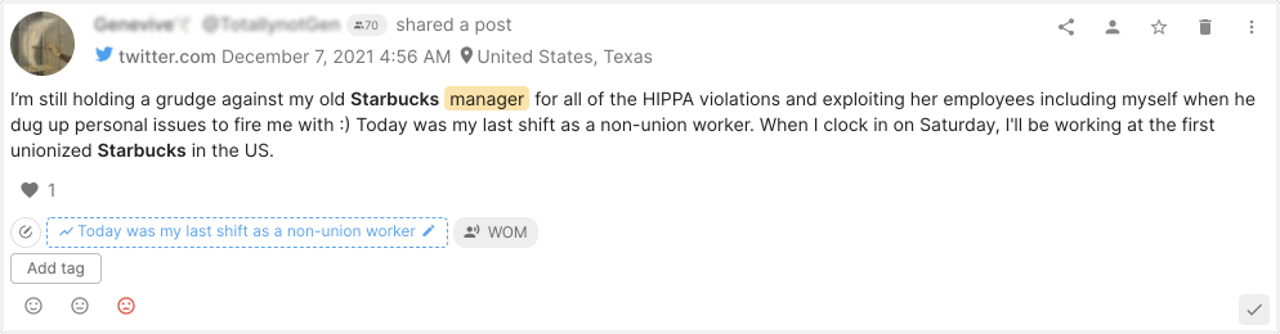
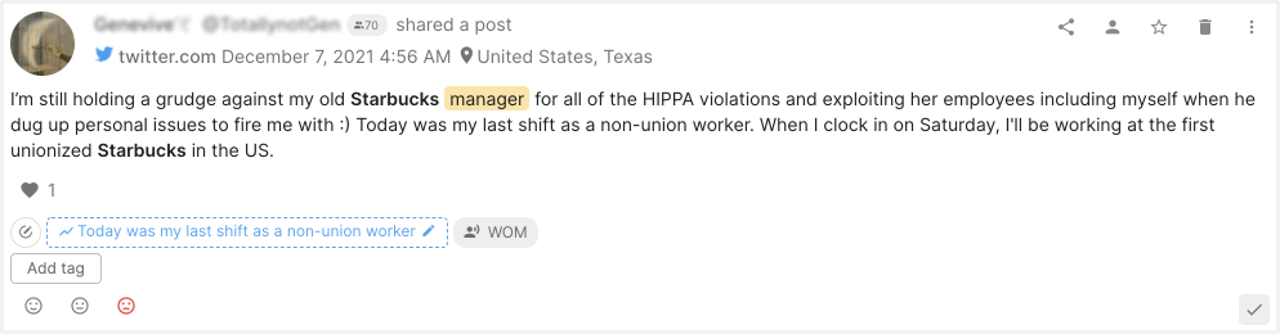
The strongest social media posts come from employees themselves. When current employees voluntarily share their experiences, it builds credibility that no corporate campaign can match. Starbucks does this well — the company celebrates employee milestones and highlights team members across different locations, generating social media posts that feel genuine rather than staged.
Tools like YouScan can help you monitor what people are saying about your employer brand across social media platforms. With social listening, you can track sentiment, catch potential reputation crises early, and find employees who are already sharing positive experiences — giving you a chance to amplify those voices. You can explore how social listening works through YouScan's social listening glossary or see real-time brand data on the
social listening dashboards.
Improve employee retention through your employer brand
Here's a reality most companies overlook: your employer brand isn't just a recruitment tool. It directly impacts employee retention. When employees feel connected to the company's mission, see their work reflected in company values, and experience the culture that was promised to them — they stay.
Employee satisfaction and employee engagement are tightly linked to how well your internal brand matches reality. Organizations that deliver on their promises see higher employee retention rates and more employee referrals, which creates a self-reinforcing cycle. Happy, engaged employees tell their networks, which attracts more like-minded talent, which further strengthens your workplace culture.
To improve employee retention, pay attention to the full employee experience — from onboarding to career growth to how you handle difficult conversations. Don't overlook company perks and benefits, but also don't rely on them as a substitute for genuine culture.
Track your results using key performance indicators like employee retention rates, time to hire, cost per hire, and employee satisfaction scores. These metrics tell you whether your employer branding efforts are working or just looking good on paper.
In 2025, YouScan has earned 6th place in the Global Most Loved Workplaces list - and this is all because of the magnificent HR and employer branding that we are developing! Trust us, such efforts don't pass without a trace.
Monitor and protect your company's reputation
Even companies with a successful employer branding strategy will face criticism. Negative reviews happen. Disgruntled former employees post on Glassdoor. Sometimes internal issues make the news. How you respond matters more than whether it happens — and according to Glassdoor, 65% of job seekers say their perception of a company improves after seeing an employer respond to a review.
The Amazon example is instructive. A string of scandals around working conditions — from activist firings to hidden COVID-19 cases — created lasting damage to the organization's reputation. The company's failure to respond meaningfully compounded the problem. Contrast that with brands that acknowledge issues head-on and show concrete changes. (For more on how companies handle these situations, see our breakdown of reputation crisis cases and PR crisis management strategies.)
Employee feedback — both positive and negative — is data. Use it. When former employees share criticism on job boards, treat it as an opportunity to fix real problems and demonstrate to potential hires that your company takes its people seriously.
Brand monitoring tools like YouScan help you track brand mentions across social media and news sites, spot reputation risks before they spiral, and understand how the talent market perceives your organization. The brands that manage their online reputation proactively are the ones that consistently attract top talent.
HR branding is an ongoing strategy, not a one-time project
Building a compelling employer brand isn't something you do once and walk away from. The talent market shifts, employee expectations change, and your company evolves. Your branding strategy needs to keep pace.
The most effective approach? Treat your employer brand like a living thing. Gather employee feedback regularly. Update your career page and job descriptions as your culture evolves. Keep your social media presence active and authentic. Measure your recruitment efforts against real data — not gut feelings. Running a periodic brand analysis can help you spot where perception and reality have drifted apart.
Organizations that commit to this see measurable results: faster hiring, lower costs, better retention, and a competitive advantage in attracting the people who will actually move the business forward. That's the real power of getting HR branding right.
Ready to see what people are saying about your brand online? Request a free YouScan demo to monitor your employer brand across social media and beyond.


FAQ
What is the difference between HR branding and employer branding?
HR branding is the broader concept of how your company is perceived as an employer. Employer branding is the strategic process within that — the deliberate steps you take to shape and promote that perception. Think of HR branding as the umbrella, and employer branding as the campaign underneath it.
Who should own employer branding — HR or marketing?
Both. HR understands the employee experience and company culture firsthand; marketing knows how to tell a story and reach an audience. The most effective employer branding efforts happen when the two collaborate with buy-in from leadership.
How do you measure the success of an employer branding strategy?
Focus on metrics tied to business outcomes: cost per hire, time to hire, employee retention rates, Glassdoor ratings, and employee referral rates. Track these over time against your baseline before branding efforts started — that's where the real picture emerges.
How long does it take to build a strong employer brand?
Most companies see early signals — better application quality, improved ratings — within three to six months. But building genuine recognition and trust among prospective candidates takes a year or more of consistent effort. Sporadic campaigns won't cut it.