
What Is Social Media Monetization? Everything You Need to Know in 2026


Billions of people are scrolling right now, and the average one burns about two hours and twenty minutes a day on social media. Sit with that for a second. That's not an audience — that's a habit. And habits are where the money hides.
Social media monetization is just the unglamorous name for collecting some of it.
Here's the honest version most guides won't hand you straight: "make money from your followers" isn't one thing. It's a dozen different things wearing the same coat, and half the advice online treats them like they're interchangeable. They're not. The method that prints cash for a beauty creator with 4,000 die-hard fans would flop for a B2B brand, and the other way around.
So this isn't a pile of hacks. It's a map of how the money actually moves, which methods earn their keep, and which ones the internet badly oversells.
What is social media monetization, really?
Strip the jargon, and it's this: earning money from your social media presence — the content, the following, the attention that comes with both.
That's the textbook line. Reality's messier.
There are basically two doors. Behind the first: the native monetization features the platforms build in — ad revenue sharing on your videos, paid subscriptions, tips during live videos, performance bonuses. Behind the second: everything that needs nobody's permission slip — sponsored content, affiliate marketing, selling your own stuff.
Most people who actually earn a living here don't pick a door. They prop both open and stack income streams until something sticks.
And the part nobody says out loud? You're not selling posts. You're renting out trust. The ad, the product, the paid membership — those are just packaging wrapped around an audience that decided to believe you.
How the money actually moves
It's a three-stage process, and you can't skip any of them. Build an audience. Earn its trust. Then — only then — put something in front of it worth paying for, or something a brand will pay to sit beside.
Stage one the platforms basically gift you. They want you to create and produce original content because it keeps users glued to the app. Stage two is the hard one, and it's entirely on you. Stage three is where you finally get to choose a method.
Quick aside for the business owners reading, since most monetization guides forget you exist: same rules. A brand with a real social media presence monetizes through sales, leads, and partnerships. Different label, same engine.
The main ways to monetize social media
Right, the methods. I'm going to have opinions about these, because somebody should — not all of them deserve your weekend.
Affiliate marketing — honestly, start here
If you do one thing from this whole article, do this. Affiliate marketing has no follower minimum, no application, no waiting around for a platform to bless you. You drop a link, someone buys, you earn commissions. That's the entire model.
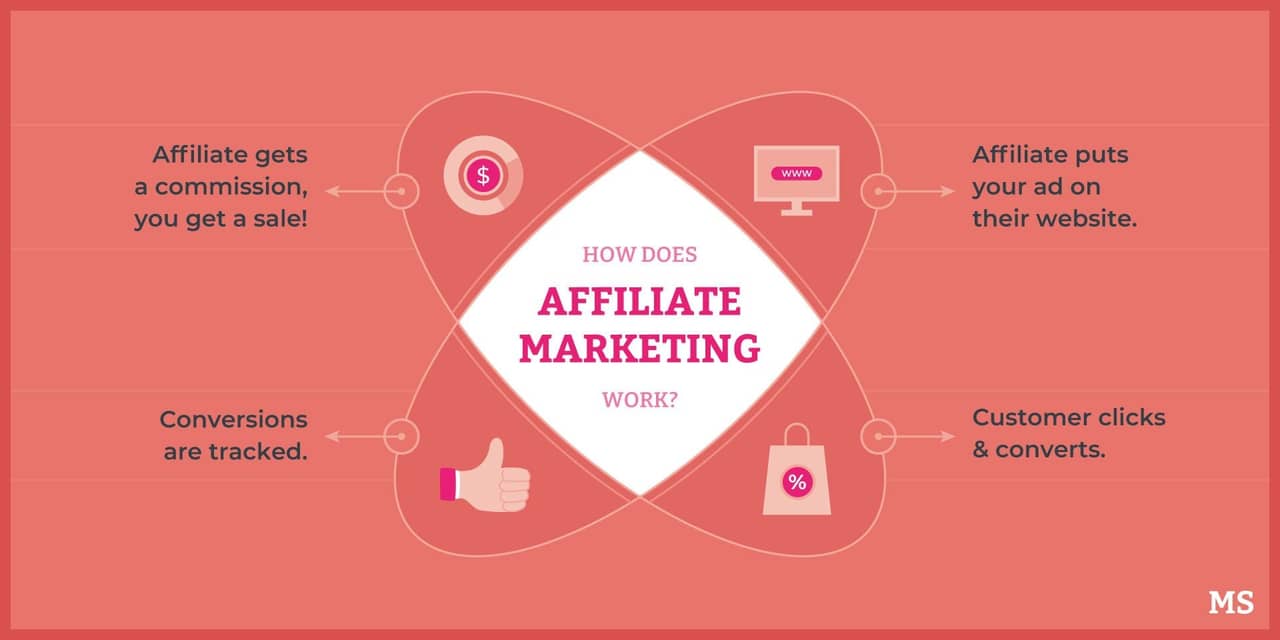
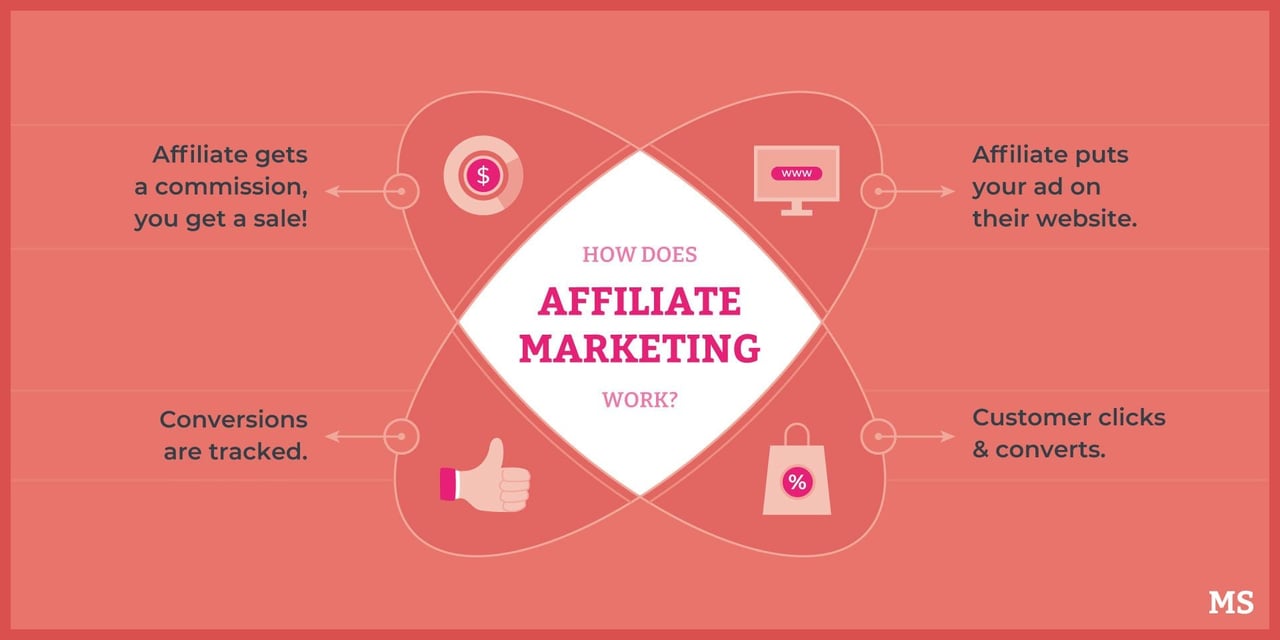
You can join an affiliate program for products you already use — especially ones already in demand with your audience — or, if you sell something yourself, spin up an affiliate program and let other creators promote it for you. It's commission based income, so you only ever pay out on a real sale. Low risk the whole way down.
Are some commissions laughably small? Sure. But a handful of the right ones, stacked, quietly beat a lot of "real" jobs.
Sponsored content and brand deals
This is the bread and butter for most influencers, and it overtakes affiliate the moment your audience gets engaged enough.
Brands aren't paying for raw reach anymore. They'd rather hand money to someone with highly engaged audiences in a tight niche or industry than to a million bored followers who'll scroll right past. A creator with 20,000 people who genuinely listen can out-earn an account ten times the size, because that recommendation actually sends customers somewhere.
Ad revenue (and why it's oversold)
Everyone wants the ad revenue fantasy: post videos, the platform runs ads, money trickles in while you sleep. And yes, ad revenue sharing is real — YouTube started it, then Facebook, TikTok, and Instagram all shipped their own version.
But here's the cold water. The per-view payout is tiny. This rewards volume and stubborn consistency, not cleverness — you've got to produce content on a schedule, not when inspiration shows up. Long form videos on YouTube pay noticeably better than short clips, though YouTube Shorts now has its own ad-supported pool if reach is your thing. Platforms sell your audience's attention to advertisers, and the sharper their targeting technology gets, the more those ad slots fetch — but you're splitting pennies until you hit serious scale.
Treat ad revenue as a bonus, not a plan.
Paid memberships and the stuff behind the paywall
Want income you can actually forecast? Paid memberships. Your followers pay a recurring fee — usually monthly — for exclusive content nobody else gets access to.
Patreon made the model famous, but you don't owe Patreon anything anymore. YouTube has channel memberships, Instagram has subscriptions, and most platforms let you lock posts behind a paywall now. Tier it: cheap seats for casual fans, a premium tier for the superfans who'd happily pay double.
One of the benefits people forget — every sign-up hands you contact details. That's lead generation hiding inside a subscription.
Live gifts and tips
During live videos, viewers send virtual gifts or tips mid-stream that turn straight into cash. TikTok LIVE Gifts, YouTube Super Thanks, Facebook Stars — same trick, different branding.
Lowest barrier on the list. On TikTok, live gifts unlock at just 1,000 followers. The catch is that it lives or dies on how loyal your live crowd is, so it rewards the people willing to show up on camera again and again.
Just selling things (Instagram and Facebook shops)
Got physical products? Set up Instagram shops and Facebook shops and let people buy without leaving the app. You'll need a business account and the platform's approval first. After that, every post is quietly a storefront.
Post regularly, tag your products, and a lazy scroll becomes a checkout. For a product business, it's one of the cleaner ways to monetize social media without buying a single ad.
Monetization features across social media platforms
Every platform has its own monetization features and — surprise — its own velvet rope. In recent years they've all piled on new ways to pay creators, then quietly moved the goalposts six months later. So treat the table below as a 2026 snapshot, not scripture. Always check what your own account actually sees in-app before you plan around a number.
Platform | Main monetization features | Rough eligibility (2026) |
YouTube | Ad revenue, channel memberships, Super Thanks, Shorts ad pool | 1,000 subscribers + 4,000 watch hours, or 10M YouTube Shorts views |
Subscriptions, branded content, Instagram shops, affiliate links | ~10,000 followers for subscriptions; affiliate at any size | |
TikTok | Creator Rewards, LIVE gifts, subscriptions, TikTok Shop | 1,000 followers for live gifts; ~10,000 for most programs |
In-stream ads, Stars, content bonuses, Facebook shops | ~10,000 followers, at the Page level | |
X (Twitter) | Ad revenue sharing, subscriptions | Verified account + post engagement thresholds |
Don't sleep on a Facebook group
Facebook monetization happens at the Page level — your personal profile doesn't count. A Facebook group is a different animal. There's no "earn" button on it, which is exactly why people undervalue it. But a tight Facebook group quietly feeds everything else you do: product drops, affiliate offers, membership pitches. Everyone in there already raised their hand. That beats a payout button.
Does follower count even matter anymore?
Short version? Way less than the gurus want you to believe.
Follower count was the whole scoreboard once. Now it's mostly vanity. Engagement and niche relevance are what brands and algorithms actually reward, and chasing a bigger number while your engagement flatlines is how people waste years. So forget audience size for a minute and focus on the people who reply, not the ones who lurk.
Why micro influencers earn money the big names can't
Micro influencers — call it 10,000 to 100,000 followers — routinely out-earn the mega-accounts on a per-follower basis. Smaller crowds, sure, but more engaged and far quicker to act on a recommendation. That's the whole ballgame, and it gives smaller creators the ability to charge real money for sponsored content.
Brands clocked this years ago. Many creators in that range make money off sponsored content and affiliate deals the giant, blurry accounts simply can't touch. And if you're a brand reading from the other side of the table, that's precisely why it pays to find micro influencers who fit your niche instead of overpaying for a famous name and a dead comment section.
So if your follower count feels small — relax. A few thousand people who trust you is a business. A million who don't is a billboard nobody reads.
How to actually start making money on social media
Enough theory. If I were starting from zero tomorrow, here's roughly the order I'd go — and notice it's an order, not a buffet. Doing all of it at once is how people burn out by week three.
Pick one platform. One. Go where your format already fits — visual stuff on Instagram and TikTok, long form videos on YouTube, talking on X. Spreading across five apps to "maximize reach" mostly just maximizes your exhaustion.
Then, before you sell anyone anything, work out what they actually want. This is the step everyone skips and everyone regrets. A social listening tool does the heavy lifting here — it shows you what people in your niche are saying across social media platforms, which brands they already love, the exact words they use. You stop guessing and start matching.
Start earning with something low-barrier — affiliate links, live gifts — while the bigger programs are still out of reach. Get one dollar through the door. It changes how you think about the whole thing.
Then stack. Once one method works, bolt on another. Ad revenue plus affiliate links plus the odd sponsored post is sturdier than betting the farm on a single payout that one algorithm tweak can vaporize.
Last thing, and it's boring, but it's the line between people who earn and people who just "post": watch what works. Which content drives the sign-ups, the clicks, the sales. Make more of that. Quietly kill the rest.
Where social listening fits in
Most monetization guides skip this, and it's the bit that separates the people who guess from the people who know. Picking your method, your niche, your brand partners — that's not a vibe. It's research.
That's the real point of AI social listening: it tells you what your audience cares about before you've sunk a dime or a week into the wrong bet.
A platform like YouScan tracks brand mentions, conversations, even the images people post across social media and other sources — so you can see which brands already hang around your space and which creators move your audience. Poke around the social listening dashboards, untangle the jargon with the social listening glossary, and for what it's worth, YouScan recently added Moltbook monitoring in English and Ukrainian. The creators and brands who do this homework first pick smarter, earn quicker, and waste a lot less.
So where does this leave you?
Social media monetization isn't a trick or a hustle. It's the bridge between an audience you've earned and the money that audience is willing to spend — through ads, sponsorships, affiliates, memberships, or your own products and services.
The method matters less than the match. Pick what makes sense for your audience and your niche, start with something that needs nobody's permission, add more as you grow. Watch what lands. Adjust when the platforms move the goalposts, because they will — repeatedly, and usually without warning.
The audience is already there, handing you more than two hours of their day.
The only question that's ever mattered is what you do with it. YouScan can help you figure it out.
FAQ
How many followers do you need to monetize social media?
Depends entirely on the method, and don't let anyone sell you a single magic number. Affiliate marketing and selling your own products? Zero. Native programs vary wildly — TikTok LIVE Gifts kick in around 1,000 followers, YouTube ad revenue wants 1,000 subscribers plus watch hours, and Instagram and Facebook features usually sit near 10,000. Pick the method first. Worry about the gate second.
How long until you actually start making money?
Longer than the "I made $10k in 30 days" crowd implies, that's for sure. An affiliate link can pay out in your first month. But steady, count-on-it income usually takes months of showing up. It compounds — slowly at first, then less slowly — once you've worked out what your audience responds to. It's a build, not a lottery ticket.
What's the easiest way to monetize social media?
Affiliate marketing, and it isn't close. No approval, no follower count minimum, you can start this afternoon. Live gifts come second if you don't mind going live and you've got even a small, loyal crowd.
Can businesses do this, or is it a creator-only thing?
Both, obviously. A business monetizes its social media presence through product sales, lead gen, Instagram and Facebook shops, and brand partnerships. It shows up as revenue instead of a creator payout, but it's the same machine underneath — an engaged audience that's ready to spend.