Meet LinkedIn Post Quality Analyzer: 5 Scores to Boost Your Posts

You spend two hours on a LinkedIn post. Hit publish.
487 views, 12 likes, 0 comments.
What went wrong?
You can't see what the LinkedIn algorithm sees. Most advice tells you to “add a hook” or “be authentic”, but nobody explains what that actually means for your specific post.
So we decided to fix this.
We built a solution: LinkedIn Post Quality Analyzer
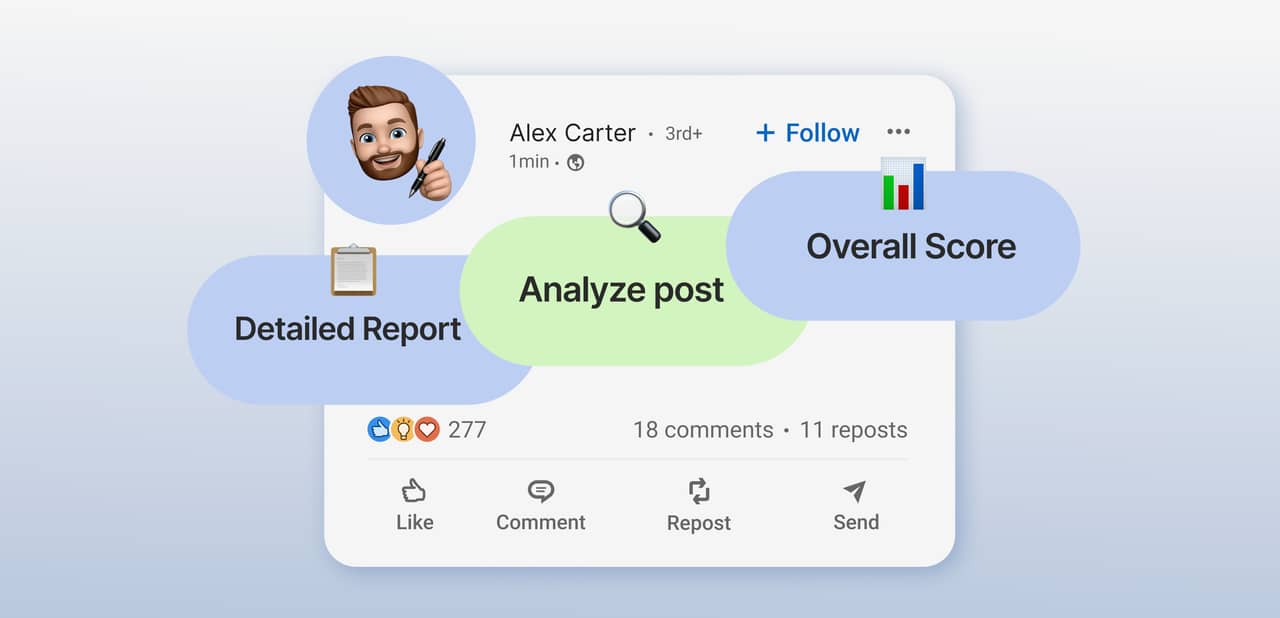
LinkedIn Post Analyzer is a free tool that reveals how the algorithm evaluates your content. The process is straightforward: paste your post, and within 30 seconds, receive 5 quality scores with specific, actionable feedback.
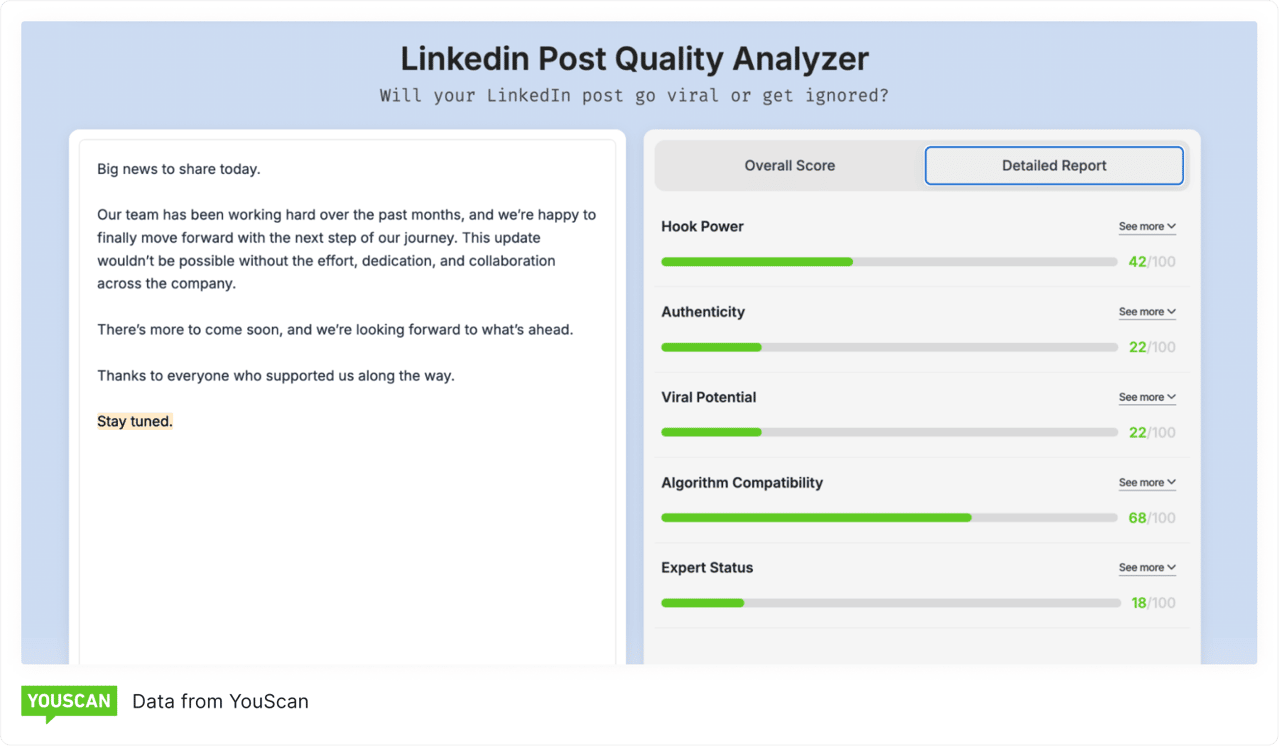
LinkedIn Post Analyzer is based on the signals the algorithm tracks:
Does your first line stop the scroll?
Does your writing sound human or AI-generated?
Will readers engage?
Are you limiting your reach unintentionally?
Does your voice establish expertise in your field?
The analysis works the same way for posts written in any language, so you can evaluate content created for any market or audience.
Paste your post. Get 5 scores in 30 seconds. Approve changes. Publish with confidence. ✅
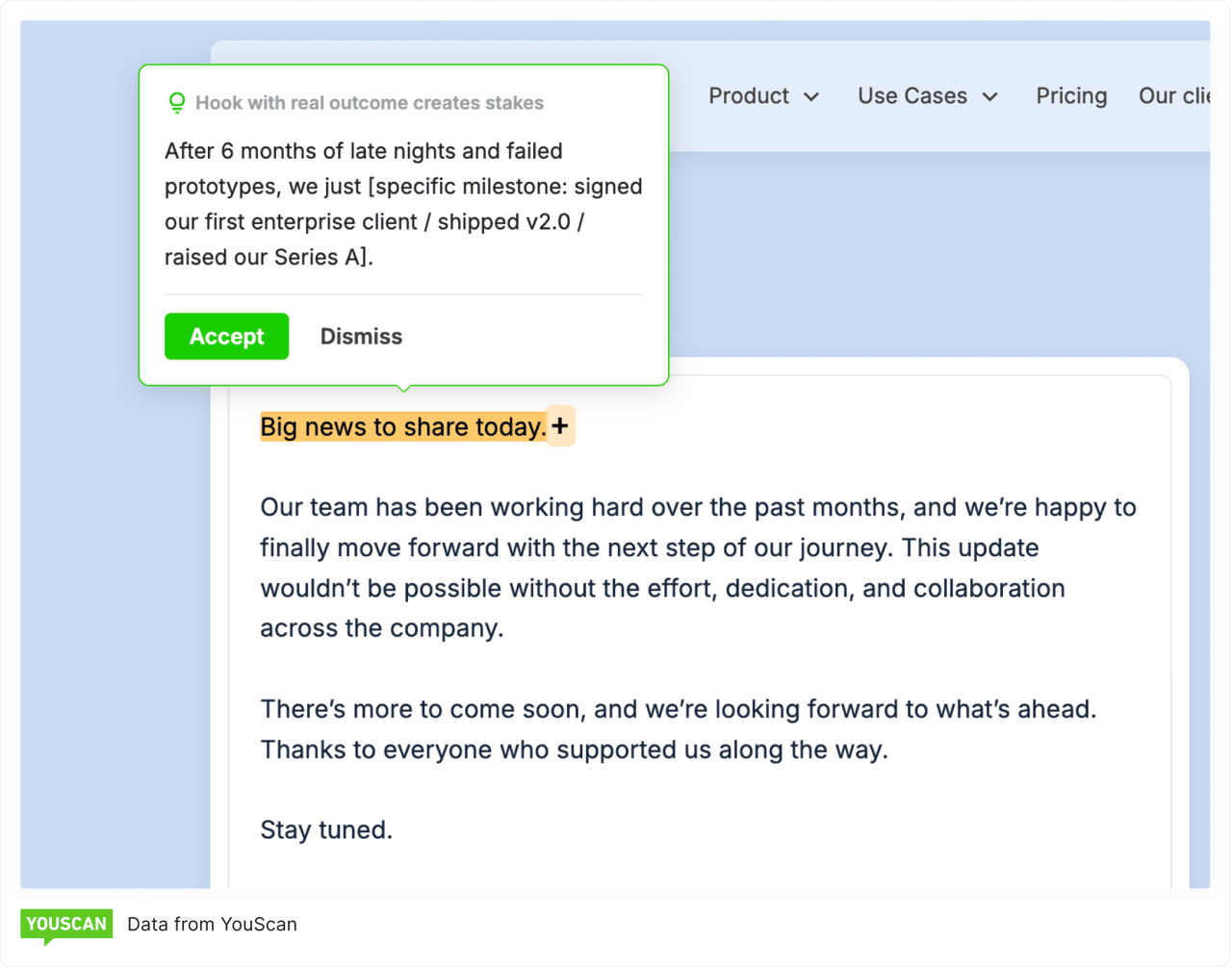
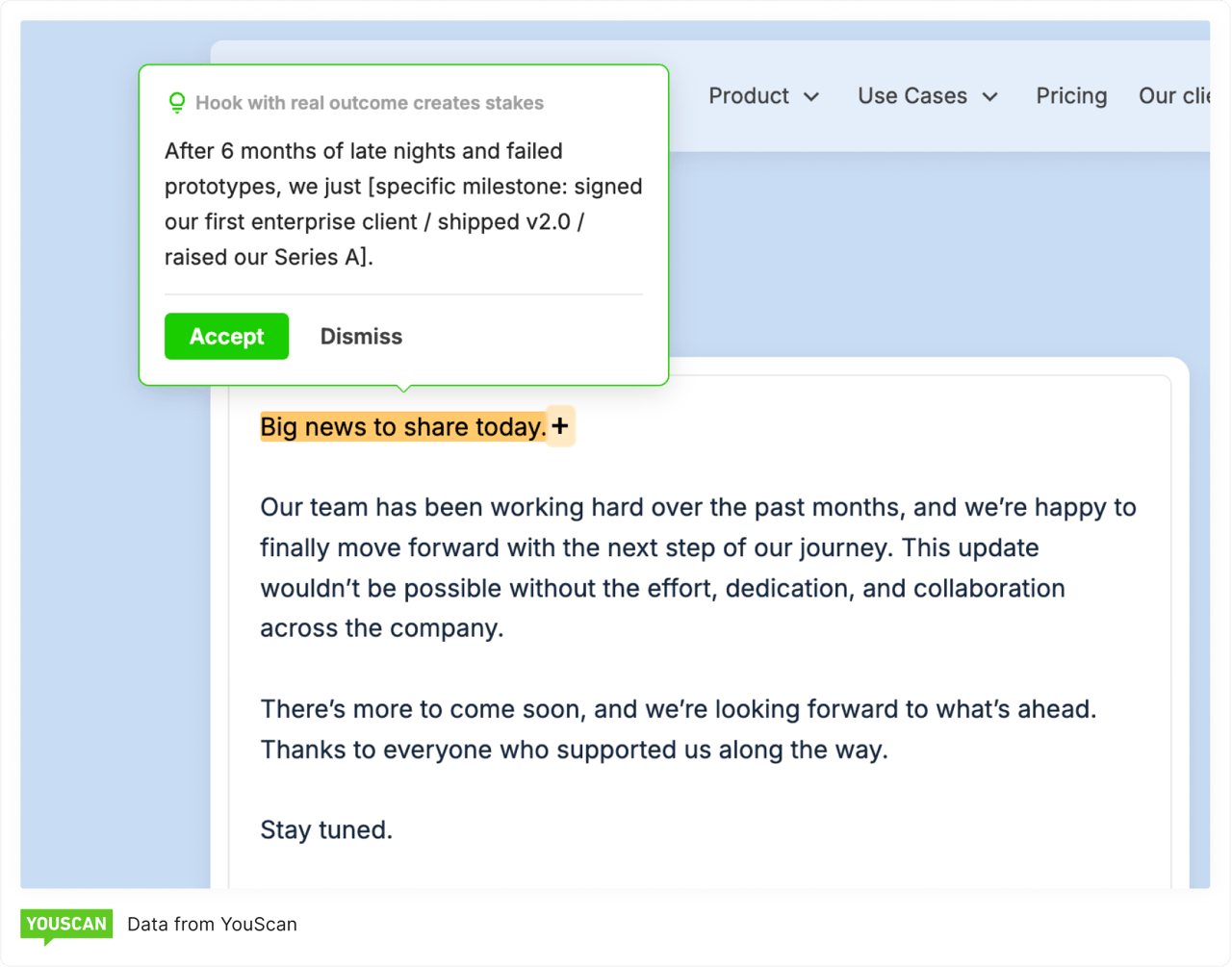
The tool is free to use, with no credit limitation. Analyzer will only ask you to authenticate using your LinkedIn or Google account credentials after a certain number of free checks. This helps us ensure fair use and prevent click spam from bots.
5 metrics that determine your LinkedIn reach
Your posts should be optimized both for LinkedIn algorithms and humans who read your content. Based on analysis of more than 10,000 posts, we identified 5 metrics that matter the most:
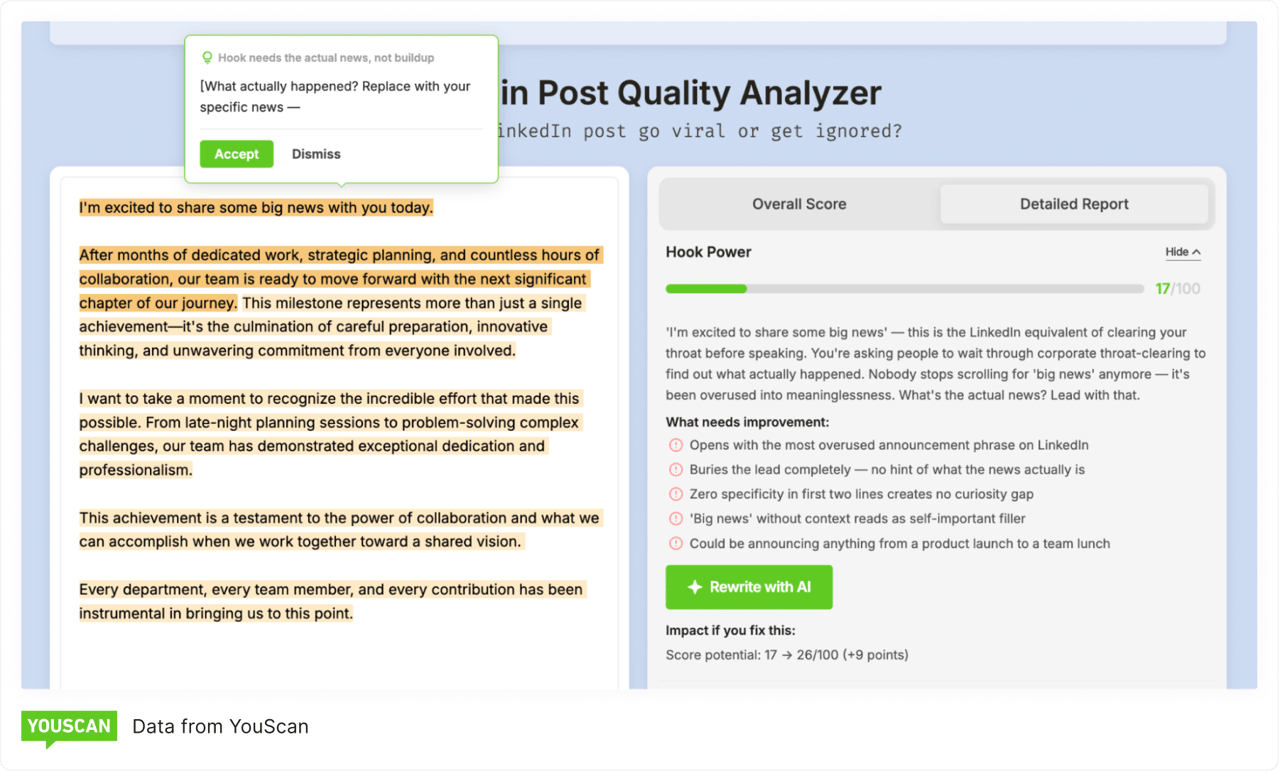
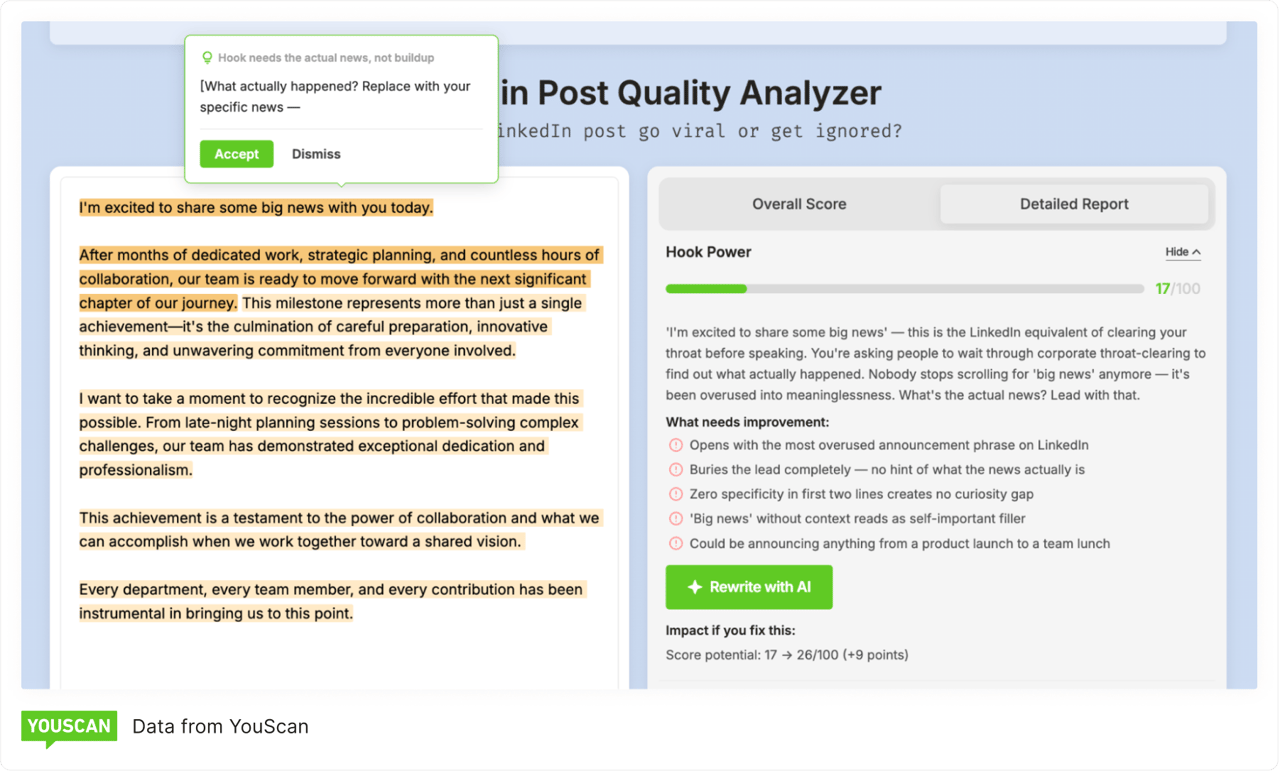
1. Hook power
Does your first line stop the scroll?
Your first line determines if someone keeps reading or scrolls. Humans process the opening in 1–2 seconds and decide whether to invest attention. The most effective hooks create curiosity, tension, or recognition.
When readers pause on your post, the algorithm interprets this as a signal of quality and shows it to more people.
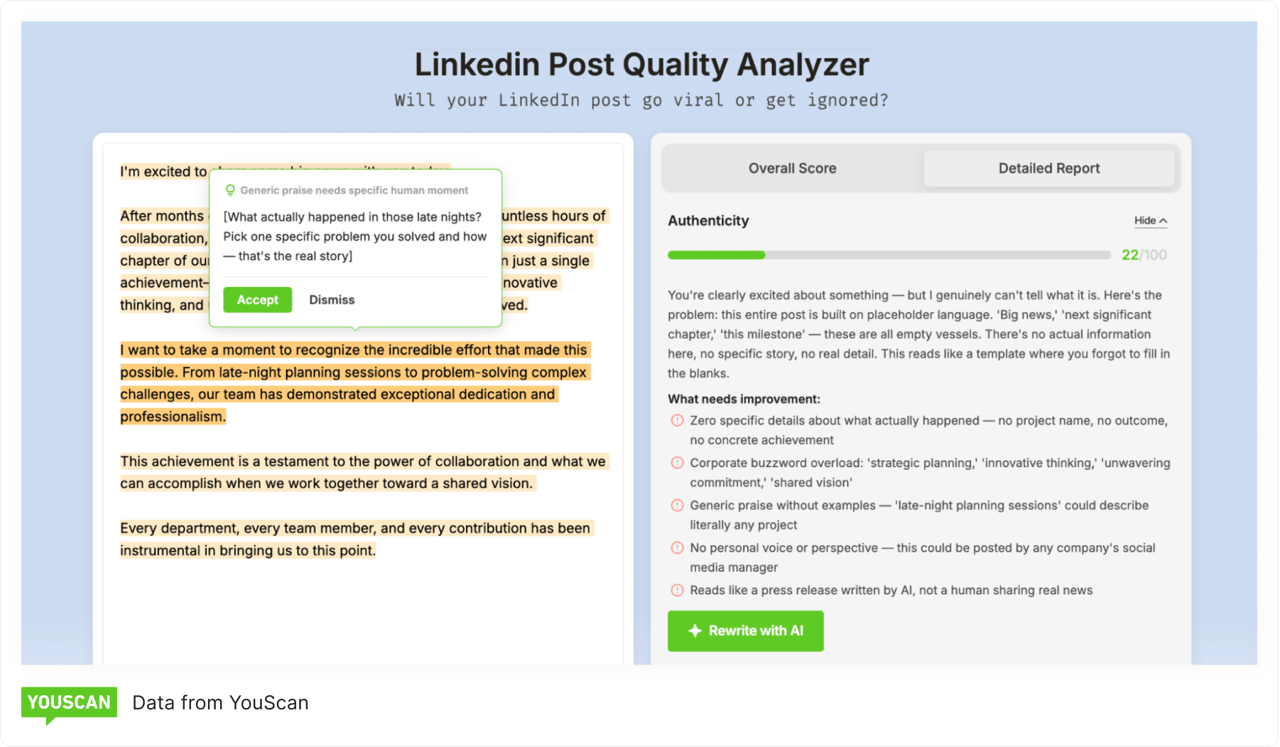
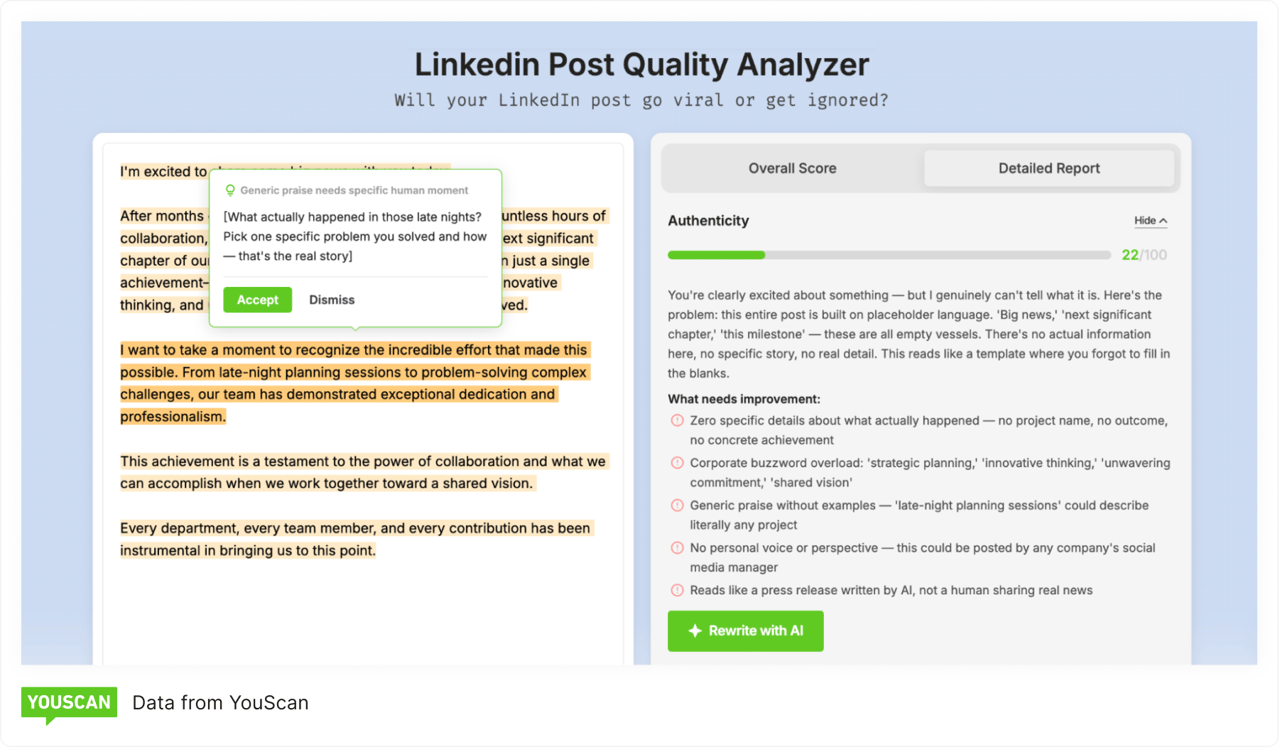
2. Authenticity
Does your writing sound human or AI-generated?
Authentic posts reveal personality, share real experiences, and use your natural voice. Readers connect with vulnerability and specificity more than polished corporate language.
The LinkedIn algorithm also tracks authenticity signals: it detects AI-generated patterns (repetitive phrasing, formal structures, buzzwords like "delve" and "leverage") and deprioritizes content that feels templated.
When you write like yourself, with specific details and conversational tone, both readers and the algorithm respond well.
3. Viral potential
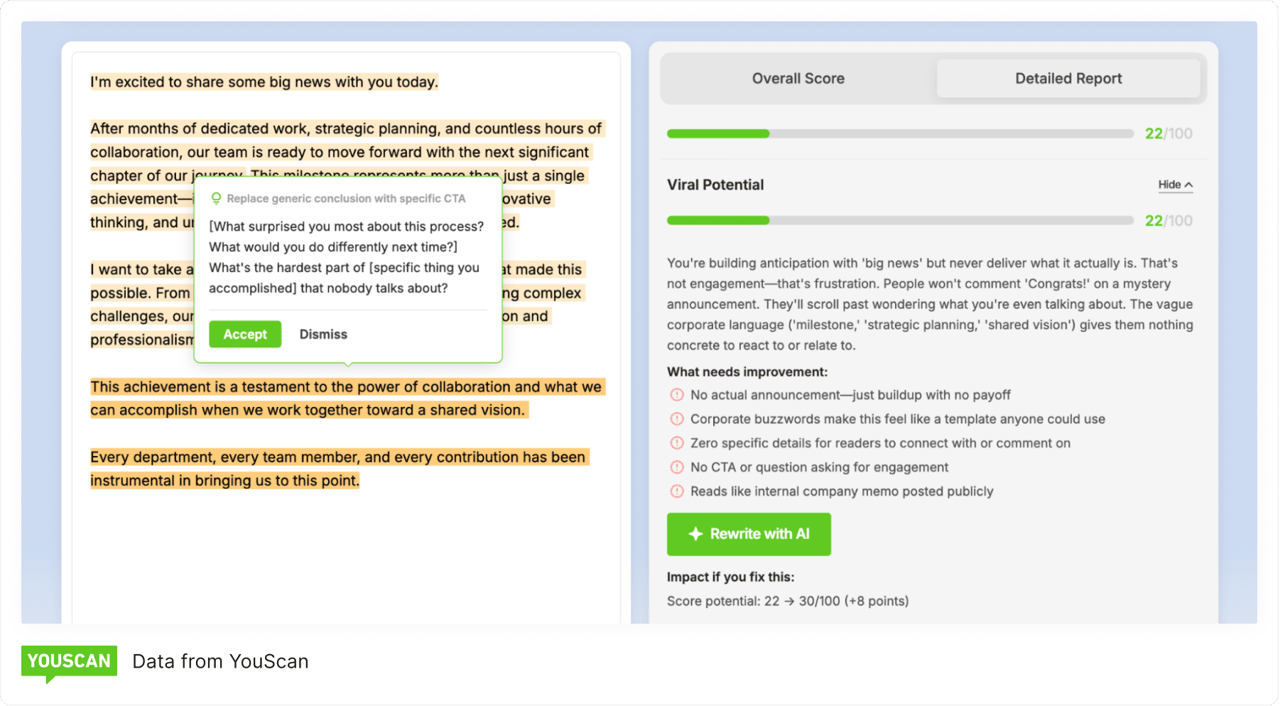
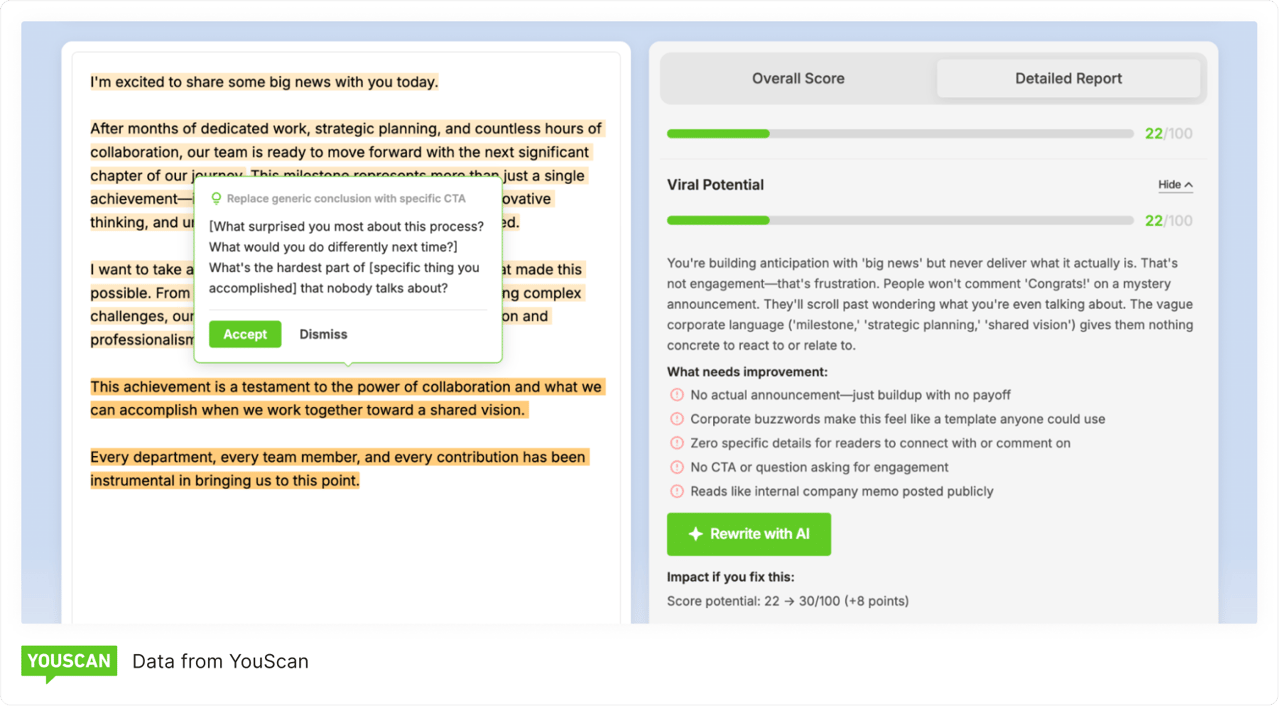
Will readers comment?
Some posts invite response, others don't. Genuine questions, specific stories, or ideas that spark debate give readers a reason to comment.
The LinkedIn algorithm measures time spent reading and interaction patterns to determine if a post resonates. When people engage, distribution expands.
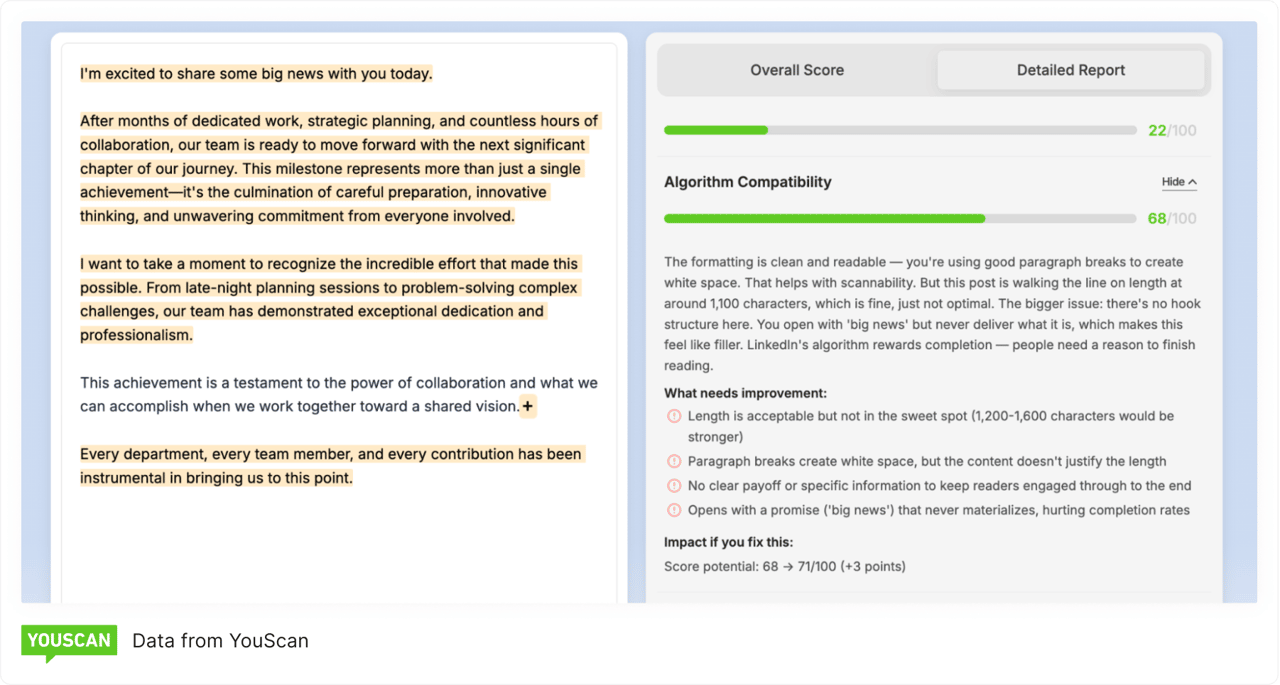
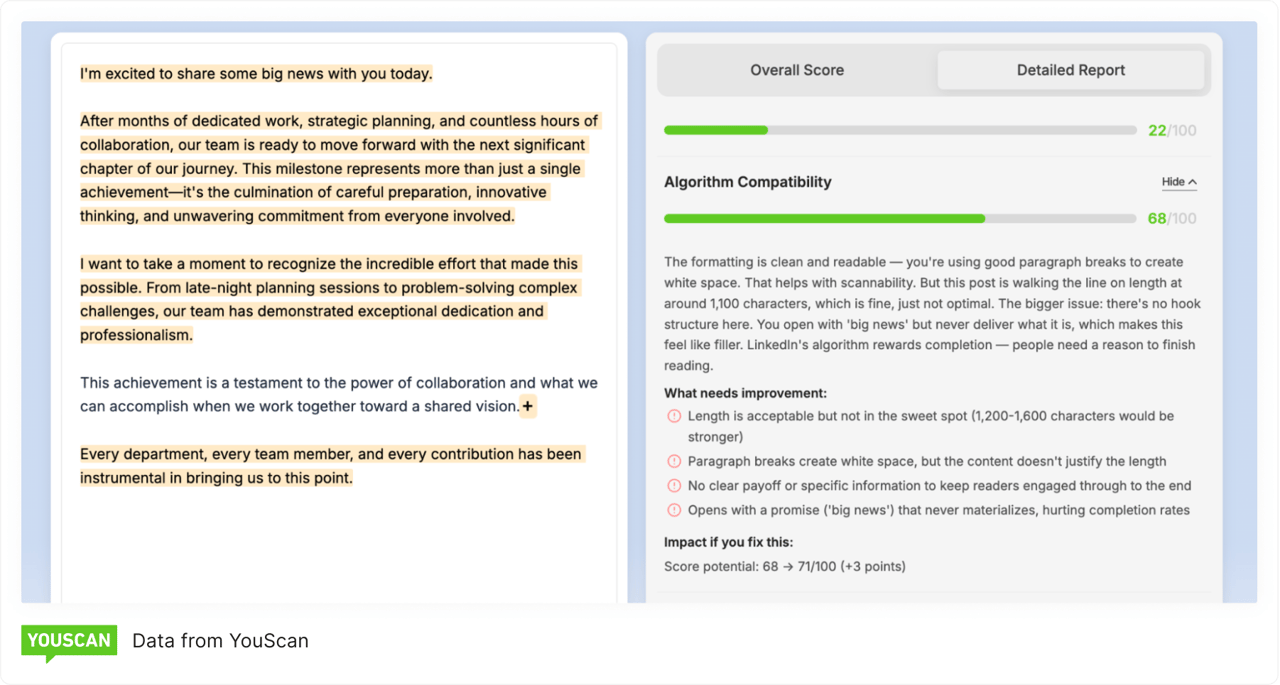
4. Algorithm compatibility
Are you limiting your reach without knowing it?
Certain technical choices limit reach regardless of content quality. External links in the post body, excessive hashtags, or tagging inactive accounts signal lower priority to LinkedIn's distribution system.
The good news: these are easy fixes once you know what to avoid.
5. Expert status
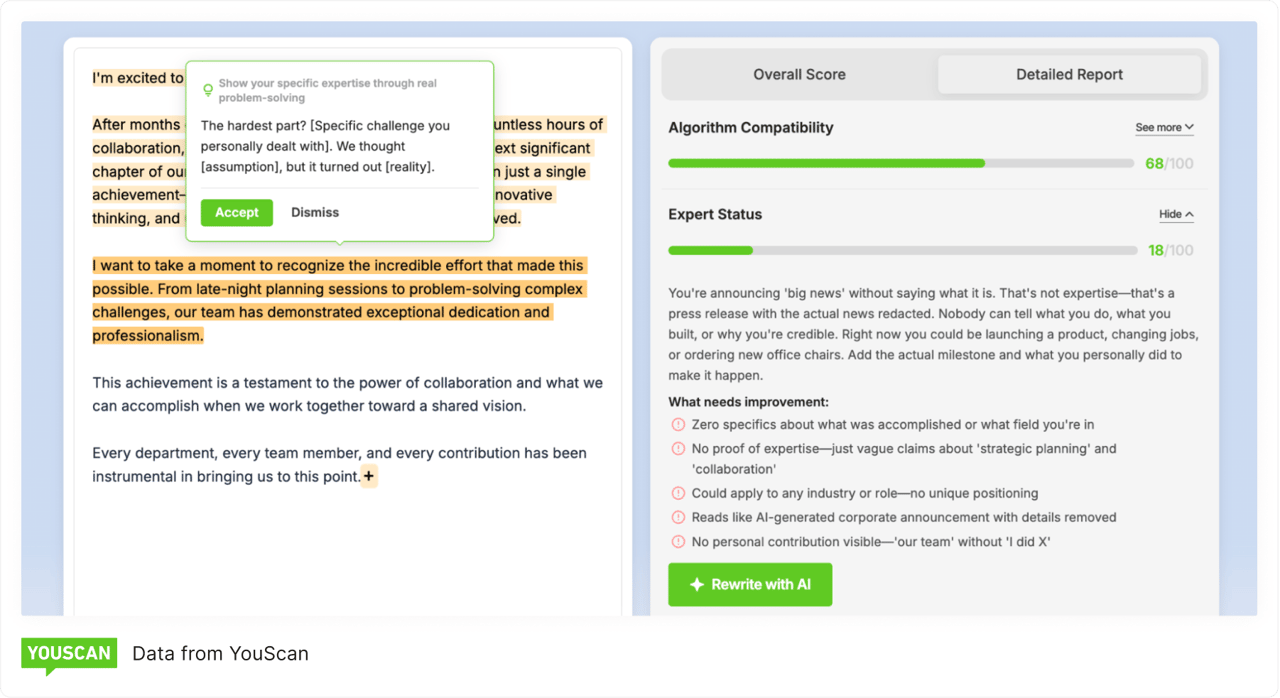
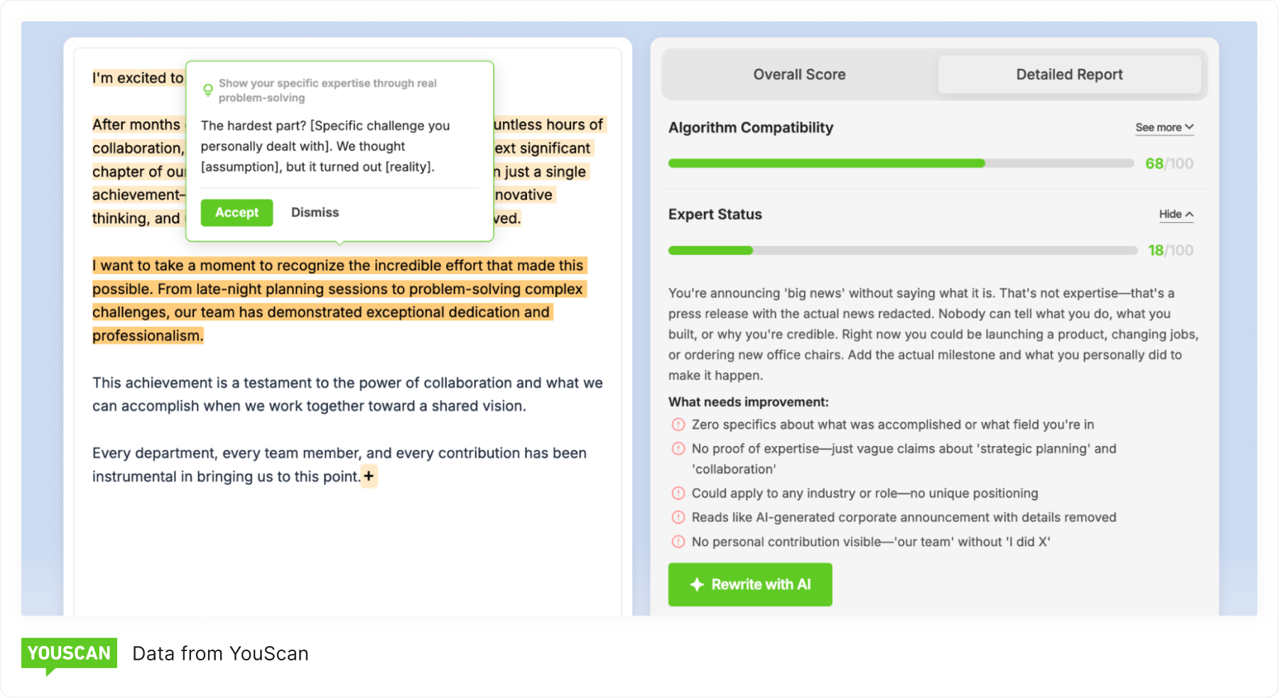
Does your voice establish expertise?
Expertise shines through when you get specific. Concrete examples, real numbers, and detailed observations are way more convincing than just making general claims.
Readers stay engaged with posts that teach them something tangible, and the algorithm prioritizes content that holds attention.
See LinkedIn Post Analyzer in action: real example
Let me show you what LinkedIn Post Analyzer actually does with a real transformation. I took a formal, corporate-style post about content marketing trends and ran it through the Analyzer.
The difference is pretty striking.
❌ Before:
“Many technology companies continue to approach content development using strategies designed for a different era.
Lengthy whitepapers, formal corporate messaging, and content exclusively targeting C-suite executives once aligned well with buyer expectations. Yet, this has fundamentally changed.
Today, 71% of B2B buyers are under 45 years old. Millennials and Generation Z now drive research processes, control purchasing budgets, and increasingly own final buying decisions.
This demographic shift requires strategic adjustment:
• Prioritize concise, accessible content over extensive documentation
• Adopt a more conversational, human-centered tone in messaging
• Distribute content through channels where these buyers actively engage, like individual thought leadership on LinkedIn, podcasts, and video platforms”
✅ After:
“I just read that 71% of B2B buyers are under 45 now. Crazy, right?
So basically, the old content playbook is pretty much dead for most tech companies.
Lengthy whitepapers, formal corporate messaging, and content exclusively targeting C-suite executives once aligned well with buyer expectations. But that's all changed now.
Now it's millennials and Gen Z doing the research, controlling purchasing budgets, and making the final calls.
I remember struggling to ditch jargon and formal tones, but once we embraced a conversational style, our content finally clicked with these buyers.
So here's what I've learned we need to do differently:
• Keep it short. Nobody's reading 50-page whitepapers in 12px font anymore.
• Talk like a real person, not a corporate robot.
• Meet readers where they actually hang out, like individual thought leadership on LinkedIn, podcasts, and video platforms.
How have you adapted your content to connect with younger B2B buyers? Any formats or channels that surprised you? Would love to hear your stories.
P.S. I’m sharing more tips and examples in the comments, check them out!”
What changed and why it works
Opening hook. Shifted from abstract observation to immediate personal reaction (“Crazy, right?”) that stops the scroll in the first 3 seconds.
Tone of voice. Moved from third-person corporate analysis to first-person story (“I remember struggling…”) that builds credibility through vulnerability.
Language specificity. Replaced vague advice (“concise content”) with vivid details (“50-page whitepapers in 12px font”) that create instant recognition.
Tone consistency. Abandoned formal language (“demographic shift requires strategic adjustment”) to practice conversational style it's advocating for (“talk like a real person, not a corporate robot”)
Engagement mechanics. Added direct questions and P.S. comment hook instead of ending with a statement. This will trigger LinkedIn's algorithm through interaction.
How and why we built this
YouScan builds insight infrastructure for brands. That means we don't just collect data, we turn messy information into clear answers.
For over a decade, we've been analyzing millions of social media posts for hundreds of companies. Every day, our AI processes conversations, detects patterns, spots trends, and tells brands what's actually working and why.
And here's what makes it unique: the same technology works whether you're analyzing a million customer conversations or just one LinkedIn post.
So that’s how we built LinkedIn Post Analyzer.
We took the same AI that helps Fortune 500 brands understand their markets and applied it to individual posts. We analyzed 10,000+ high-performing LinkedIn posts to train models that evaluate two things: what the algorithm tracks and what makes humans want to engage.
The technology that spots sentiment patterns across global markets can now tell you why your opening line isn't grabbing attention. The AI that identifies trending topics for major brands can catch when your writing sounds too formal or AI-generated.
That infrastructure also powers our Free AI Detector, built to help creators understand how human their content really sounds.
Same sophisticated analysis. Just focused on your content instead of millions of conversations.
That's the point of infrastructure. It scales. Whether you're a global brand trying to understand your market or a creator trying to figure out why your last post got only 200 views, you get the same level of intelligence.
Try LinkedIn Post Analyzer yourself
Ready to see your posts differently? Paste one into LinkedIn Post Analyzer and see what scores you get.
It's absolutely free, and takes about 30 seconds. Try LinkedIn Post Quality Analyzer today!
Share your thoughts and read user discussion on ProductHunt:

LinkedIn Post Quality Analyzer
FAQ
Does this rewrite my posts?
Not automatically, but we do suggest specific rewrites for weak spots. If your hook isn't working, we'll show you a stronger alternative. If a sentence sounds AI-generated, we'll suggest more natural phrasing. You decide what to use and what to ignore.
Do you store my posts?
We process your post to generate scores and feedback, but we don't store your content or share it anywhere. Your writing stays yours.
Is this really free?
Yes. No trial period, no credit card, no premium version upsell. We built this to be accessible to everyone.
Why would YouScan give this away for free?
Two reasons. First: we believe quality AI-feedback shouldn't be locked behind paywalls. Second: this tool is a great way to showcase YouScan AI capabilities to the broad community.
Can I use this for posts I haven't published yet?
Absolutely. That's actually the best use case, so that you can catch issues before your audience does.
What if I disagree with a score?
The tool gives you data and patterns, but you know your audience best. If a score doesn't match your experience, trust your judgment.